Terry Mattingly

New podcast: Gray Lady prints some complex Ryan Burge insights on Democrats and religion

New podcast: Gray Lady prints some complex Ryan Burge insights on Democrats and religion

Something old, something new.

Something red, something blue.

We started with something new and something blue during this week’s “Crossroads” podcast (click here to tune that in). But, as you will see, the “something old” turned out to be blue, as well.

“Blue,” of course, refers to the liberal/progressive half of the starkly divided American political scene, which also reflects, of course, divisions on moral, social, cultural and religious issues.

Oceans of mass-media ink have been poured out in recent decades by journalists covering the Religious Right and its scary impact on the Republican Party. What about the religious left — no capital letters, of course — and its impact on the Democrats?

That isn’t an important story, of course. At the start of the podcast I quoted some numbers retrieved at mid-week from some Google searches. A basic search for “Religious Right” yielded 6.5 million hits and a Google News search found 77,500 items. Do the same thing for “religious left” and you get 196,000 in the first search and 3,680 in the news search. Amazing, that.

This brings us to a New York Times op-ed essay by the increasingly omnipresent (and that’s a good thing) political scientist Ryan Burge, who contributes charts and info here at GetReligion. The headline: “A More Secular America Is Not Just a Problem for Republicans.” Here’s an early thesis statement:

Today, scholars are finding that by almost any metric they use to measure religiosity, younger generations are much more secular than their parents or grandparents. In responses to survey questions, over 40 percent of the youngest Americans claim no religious affiliation, and just a quarter say they attend religious services weekly or more.

Americans have not come to terms with how this cultural shift will affect so many facets of society — and that’s no more apparent than when it comes to the future of the Republican and Democratic Parties.

The impact on the GOP is rather obvious. While conservative religious groups remain strong in America (evangelicals are not vanishing, for example), the number of religiously unaffiliated (“nones”) continues to rise and the vague middle of the religious spectrum continues to shrink. Meanwhile, conservatives face an increasingly “woke” corporate culture and fading support on the left for old-fashioned First Amendment liberalism (think “religious liberty” framed in scare quotes).

Things get interesting — especially in the context of the Times op-ed world — when Burge discusses complications now facing Democratic Party leaders.

Please respect our Commenting Policy

What does the New York Times mean when it reports on 'religious leaders' in Afghanistan?

What does the New York Times mean when it reports on 'religious leaders' in Afghanistan?

Anyone who has read GetReligion for more than a month probably knows that I have always been concerned about the lack of press coverage of endangered religious minorities in large parts of the world — including nations such as Afghanistan.

It’s crucial to remember, when talking about religious freedom issues and the Universal Declaration of Human Rights, that it is tragically common for members of a major world religion to punish other members of their own faith because of strong disagreements about doctrine and tradition. It is common to see persecution of those who have no faith — think atheists and agnostics — as well as those who have converted to a new faith.

As a reminder, here is Article 18 of that landmark United Nations document:

Everyone has the right to freedom of thought, conscience and religion; this right includes freedom to change his religion or belief, and freedom, either alone or in community with others and in public or private, to manifest his religion or belief in teaching, practice, worship and observance.

With all of that in mind, it’s easy to understand why I was interested in this headline atop a New York Times report: “The Taliban holds first meeting of religious leaders since taking Kabul.

The key, of course, is the meaning of these two words — “religious leaders.”

If you follow news updates, you know that the ancient Jewish community in Afghanistan is long gone — unless merchant Zablon Simintov chose to attend this meeting. Was there a Catholic representative at the meeting? Were leaders of the growing underground church invited? Did they dare to come out of hiding? What about the Muslim leaders of progressive (for lack of a better word) mosques who cooperated with Western leaders during the past 20 years?

Who were these “religious leaders”?


Please respect our Commenting Policy

What a minute: What do New York Times editors think Pope Francis believes about Grindr?

What a minute: What do New York Times editors think Pope Francis believes about Grindr?

Yes, faithful readers, I saw the New York TImes story that ran under this headline: “Catholic Officials on Edge After Reports of Priests Using Grindr.” Why didn’t I write — pronto — about this story?

I guess because it seemed like an echo of an echo of an echo, fitting neatly into the template established by numerous articles in progressive Catholic media. It was an investigation of the methods and motives of a conservative Catholic blog — The Pillar, of course. TheTimes was not (#DUH) all that interested in the phenomenon that concerned The Pilliar, as in evidence that some Catholic priests have been using Grindr, that smartphone ap that a Vanity Fair feature once called “The World’s Biggest, Scariest Gay Bar.

In a way, this Times story was yet another example of an old truth: Conservatives are wrong — simplistic, at the very least — when they claim that elite mainstream news publications are “anti-religion.”

In this Times piece, it’s clear that there are good Catholics and bad Catholics and that the Gray Lady gets to tell readers who is who. This is not the same as saying that there are Catholics who want to defend church doctrines and those who want key doctrines to evolve and we (the editors) will offer coverage in which readers read accurate, fair-minded discussions about why people on each side believe what they believe.

So yes, for Times editors this is clearly a story about bad Catholic journalists. But it’s clear that the Times is not an anti-Catholic newspaper; it totally approves of the Catholic left. It’s using the same basic doctrinal lens as progressive Catholic newspapers. Click here for a famous Times op-ed explaining the basics on this: “Is the Pope Catholic?”

There are, however, two things I would like to note in this Times feature. First, read the following carefully:

The reports by the blog, The Pillar, have unnerved the leadership of the American Catholic Church and have introduced a potentially powerful new weapon into the culture war between supporters of Pope Francis and his conservative critics: cellphone data, which many users assume to be unavailable to the general public.


Please respect our Commenting Policy

Unidentified Aerial Phenomena, aliens and the quest for an alternative creator

Unidentified Aerial Phenomena, aliens and the quest for an alternative creator

The first episode of the "Ancient Aliens" cable-TV series promised to show that the growth of intelligent life on this planet had help that came from the stars.

The Prometheus Entertainment summary in 2010 asked: "If ancient aliens visited Earth, what was their legacy, and did they leave behind clues" that still exist?

The bigger question, nearly 200 episodes later, is whether aliens provided the building blocks of life itself. That's the kind of subject -- both theological and scientific -- that surfaces whenever there are debates about whether extraterrestrial life exists.

It's one thing for a recent U.S. national intelligence report -- "Preliminary Assessment: Unidentified Aerial Phenomena"-- to discuss incomplete technical data and the possibility of hostile spy drones. It was something else to say that experts had no scientific explanations for 140-plus reported "UAP" episodes.

The summary noted that 18 mysterious objects "appeared to remain stationary in winds aloft, move against the wind, maneuver abruptly or move at considerable speed, without discernable means of propulsion."

This raised familiar questions for those who have followed decades, even centuries, of debates about these mysteries: Who created these objects? Who created the beings who created them? Should this planet's religious leaders worry?

"The logic is that many people assume life is special, that human beings are uniquely purposed and created in God's image and that this life -- life made in God's image -- cannot exist anywhere else," said Stephen C. Meyer, who has a doctorate in the philosophy of science from Cambridge University.


Please respect our Commenting Policy

Thinking about the practical impact of shaming messages aimed at vaccine-resistant believers

Thinking about the practical impact of shaming messages aimed at vaccine-resistant believers

During my decades in religion-beat work, I have heard many an evangelical leader make the following sardonic observation.

Wait, I’ve also heard traditional Catholics offer variations on this theme. And there may be partisan political versions of this, as well. But that’s not my turf.

OK, here is the message: The quickest way for an evangelical to receive glowing elite press coverage and commentary (add social-media praise, after about 2000+) is to attack other evangelicals.

Now, that is not what this think piece is about. I say that, even though some vaccine-resistant religious leaders may have thought that’s what Daniel Darling, senior vice president for Communications at the NRB (think National Religious Broadcasters) was doing in his recent USA Today op-ed entitled, “Why, as a Christian and an American, I got the COVID vaccine.”

But careful readers could see that his message was way more complicated than that. If you weren’t sure about his intent, check out the lengthy interview with Darling that followed on MSNBC’s “Morning Joe” program (click here or see the YouTube at the top of the full copy of this post). The veteran evangelical leader — former head of communications for the Southern Baptist Convention’s Ethics and Religious Liberty Commission — was clearly sending two messages.

Yes, one was to religious leaders who have doubts about the COVID-19 vaccines. But he also had sobering words for their critics, whose attacks have caused anger and conflict, instead of changing minds.

Thus, what we have here is a piece of op-ed work, and the MSNBC appearance that followed, that people on both sides of this warfare need to parse carefully. This includes journalists who are covering this story — which is so not over yet.


Please respect our Commenting Policy

New podcast: When the Taliban cracks down, will all the victims be worthy of news coverage?

New podcast: When the Taliban cracks down, will all the victims be worthy of news coverage?

There’s no question that the botched U.S. efforts to evacuate at-risk people in Afghanistan is the big story of the hour, the day, the week and for the foreseeable future — especially if this turns into a grand-scale hostage nightmare.

But who is at risk? What kinds of people are trapped inside the new kingdom of the Taliban?

That was the subject that dominated this week’s “Crossroads” podcast (click here to tune that in). And as you would expect, host Todd Wilken and I were especially interested in the role that religion has been playing in this story — if journalists are willing to cover that angle.

So who is at risk? Here is a typical wording, care of an Associated Press update:

The Kabul airport has been the focus of intense international efforts to get out foreigners, Afghan allies and other Afghans most at risk of reprisal from the Taliban insurgents.

With the Taliban controlling the Afghan capital, including the airport’s outer perimeter, White House national security adviser Jake Sullivan said that U.S. citizens are able to reach the airport, but were often met by large crowds at the airport gates.

But, wait. What about the news reports that U.S. forces cannot help U.S. citizens avoid Taliban checkpoints in order to reach the airport, while British and French military personnel are doing precisely that for their own people? That’s a very hot story right now, with U.S. diplomats and the White House saying that the can work with the Taliban to ensure safety.

So let’s pause and flesh out some of the details in that AP phrase about who is at risk, as in “foreigners, Afghan allies and other Afghans most at risk.” Who is most at risk, right now?

* Obviously, American journalists have every right to focus on risks to American citizens.

* In particular, we can assume that Taliban activists are tracing Americans who have led or worked with NGOs, religious aid groups, churches. Then there are the Western-style think tanks, schools, medical groups, etc.

* Obviously, there are the thousands of Afghans who cooperated with and even worked for the U.S. government, U.S.-backed Afghan military units and the kinds of “foreign” organizations mentioned in the previous item.


Please respect our Commenting Policy

When pinning wild COVID-19 quotes on a cardinal, it helps to be precise about fine details

When pinning wild COVID-19 quotes on a cardinal, it helps to be precise about fine details

If you’re the kind of person who likes to explore the wretched underbelly of Twitter, then you need to pay close attention to the waves of snarky messages that follow announcements that famous vaccine skeptics have been hospitalized with COVID-19.

Some of these skeptics are politicians, of course. Others are religious leaders.

That brings us to the Associated Press coverage of a prominent conservative Catholic who, for journalists, is best known as a frequent critic of liberal Catholic politicians and also of some — not all — actions taken by Pope Francis. Here is the overture on one of these updates:

MADISON, Wis. (AP) — Cardinal Raymond Burke, one of the Catholic Church’s most outspoken conservatives and a vaccine skeptic, said he has COVID-19 and his staff said he is breathing through a ventilator.

Burke tweeted Aug. 10 that he had caught the virus, was resting comfortably and was receiving excellent medical care.

“Please pray for me as I begin my recovery,” the 73-year-old Burke said in the tweet. “Let us trust in Divine Providence. God bless you.”

As you would expect, the AP report — in addition to offering a litany of examples of Burke criticizing liberal Catholics — eventually provided some information about the cardinal’s views on the coronavirus pandemic. Here are the crucial paragraphs:

Burke … has criticized how governments have handled the pandemic, referring to the virus in a homily last December as the “Wuhan virus,” a derogatory term used by former President Donald Trump to describe the coronavirus and warning people that governments were manipulating them. In May 2020, he spoke out against mandatory vaccinations, saying some in society want to implant microchips in people.

He said in March 2020 that the best weapon for battling “the evil of the coronavirus” is a relationship with Jesus Christ.

The most inflammatory material, of course, is the reference to implanting “microchips.” It would really help to know more about what Burke is alleged to have said and where and when he said it.


Please respect our Commenting Policy

Trying to spot religion 'ghosts' in the dramatic fall of America's version of Afghanistan (#FAIL)

Trying to spot religion 'ghosts' in the dramatic fall of America's version of Afghanistan (#FAIL)

The whole idea of Axios, as a news publication, is to take massive, complex stories and — using a combination of bullet lists and URLs to additional information — allow readers to quickly scan through the news of the previous day. The Axios team calls this “smart brevity.”

More often than not, this turns out to be a crunched summary of the big ideas in mainstream coverage. Thus, it’s logical to look at this online newsletter’s take — “1 big thing: System failure” — on the horrific scenes that unfolded yesterday in Kabul, Afghanistan.

The big question: What did American diplomats, intellectuals and politicos miss in the big picture?

* The United States was literally run out of town after 20 years, $1 trillion and 2,448 service members' lives lost.

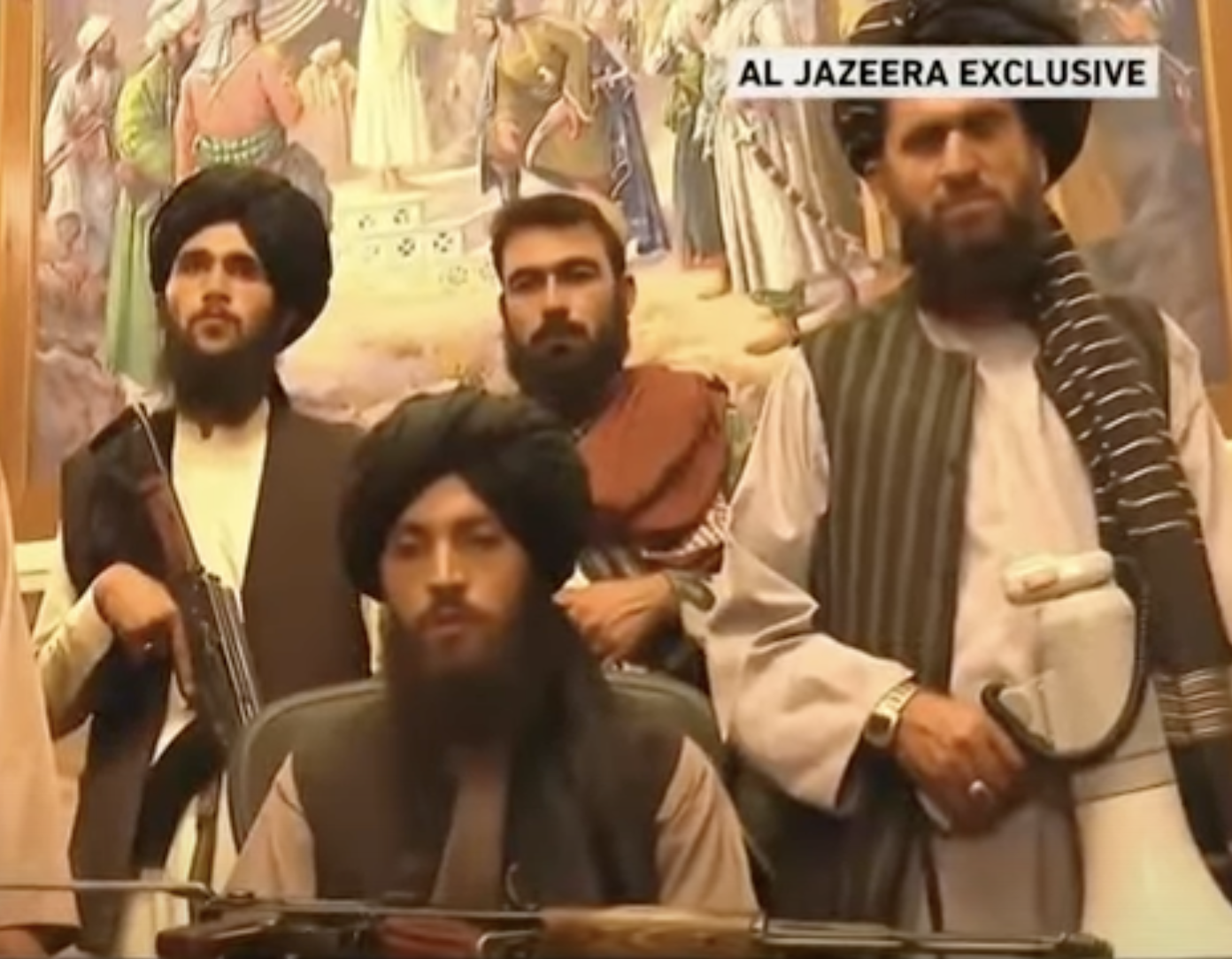
* Mohammad Naeem, the spokesman for the Taliban's political office, told Al Jazeera today: "Thanks to God, the war is over in the country."

Why it matters: A friend who spent more than a decade as a U.S. official in Afghanistan and Iraq texted me that the collapse "shows we missed something fundamental — something systemic in our intel, military and diplomatic service over the decades — deeper than a single (horrible) decision."

* As the BBC's Jon Sopel put it: "America's attempt to export liberal democracy to Afghanistan is well and truly over. …”

What were the key tasks in this “export of liberal democracy”? Here is my two-point summary.

First, the United States and its allies had to build an Afghan military that could protect this project. #FAIL

Second, the Western nation builders had to sell a vision of an Islamic culture that, somehow, embraced American values on a host of different issues — from free elections to freedom for women, from Western-style education to respect for the Sexual Revolution in all its forms. This Georgetown University faculty lounge vision of Islam needed to be more compelling than the one offered by the Taliban. #FAIL

Looking at this from a journalism perspective, I think it is more than symbolic that most of the elite media coverage of the fall of this new, alternative Afghanistan have almost nothing to say about Islam and, in particular, the divisions inside that stunningly complex world religion. Was this, in any way, a “religion story”? Apparently not. #FAIL

There is way too much coverage to look at, of course. However, it does help to look at The New York Times, since that is the straw that stirs the drink in American media. My goal was to find material that contrasted the Taliban’s vision of Islam with the vision offered by the U.S. State Department.


Please respect our Commenting Policy

Return to 'catacomb' Masses after Pope Francis issues tight rules for the Latin Mass?

Return to 'catacomb' Masses after Pope Francis issues tight rules for the Latin Mass?

It's easy for religious leaders to create new laws, but it's harder to convince believers to follow them.

At least, that's what the Benediction monk Gratian -- a canon law pioneer -- argued in the 12th century: "Laws are established when they are promulgated. … They are confirmed when they have been approved by the long term and reasoned acceptance of those who observe them."

Anyone doubting this wisdom should study Catholic social media, noted Cardinal Walter Brandmuller, the 92-year-old former leader of the Pontifical Committee for Historical Sciences. There has been a "hurricane" in the "blogger scene and other media" in response to Traditionis Custodes ("Guardians of the tradition"), the effort by Pope Francis to bind those who celebrate the traditional Latin Mass.

When confusion surrounds a new "ecclesiastical law" -- as opposed to scripture and "natural law" doctrines -- it's important to remember that its "validity … ultimately depends on the consent of those affected by it," wrote Brandmuller, at Kath.net in Germany.

"The law must serve the good of the community, and not vice versa. … If a law is not observed, or is no longer observed, whether from the beginning or after a time, it loses its binding force and becomes obsolete."

The pope's declaration has unleased waves of grief among supporters of the now retired Pope Benedict XVI and his apostolic letter Summorum Pontificum ("Of the Supreme Pontiffs"), which claimed the post-Vatican II Novus Ordo was the "ordinary form" for the modern Mass, but that the older Tridentine rite was an "extraordinary form" that could be encouraged.

This fight is "not really about rites at all, wrote Father Raymond J. de Souza, at First Things. It's about Catholic life in the age of the Internet. The Mass is the message."


Please respect our Commenting Policy