Terry Mattingly

Thinking about evangelicals and January 6: DIY independents are (still) not the whole story

Thinking about evangelicals and January 6: DIY independents are (still) not the whole story

How many Protestant denominations are there?

That’s a question I’ve been hearing as long as I have walked the religion beat. People used to toss around crazy numbers like 32,000 or 23,000, but no one takes those numbers seriously anymore. At the same time, a number like 200 sounds way low to me.

Denominations — large and small, formal and informal — remain an important part of the religion marketplace, but they are not really where the action is these days. Have you been reading the Julia Duin posts (start here and here) exploring the post-Donald Trump arguments among the Pentecostal and charismatic “prophets”? Is the clout of these emerging doctrinal tribes limited by their lack of historic brand names?

Hang in there with me for a moment. I am trying to connect an important moment in January 6th hearings on Capitol Hill with an important piece that former Southern Baptist leader Russell Moore wrote just after the riot (and has not re-upped on Twitter). Here is the crucial passage from a Washington Post report describing a key moment in the hearing that, with good cause, has provoked some debate.

In emotional testimony that recounted the abuse he received while defending the Capitol on Jan. 6, D.C. police officer Daniel Hodges said he was struck by the flags carried by members of the mob, whom he characterized as “terrorists.”

“To my perpetual confusion, I saw the thin blue line flag, a symbol of support for law enforcement more than once being carried by the terrorists as they ignored our commands and continued to assault us,” Hodges said.

He nodded to the conflict between the beliefs represented by the flags, and the actions of those holding them.

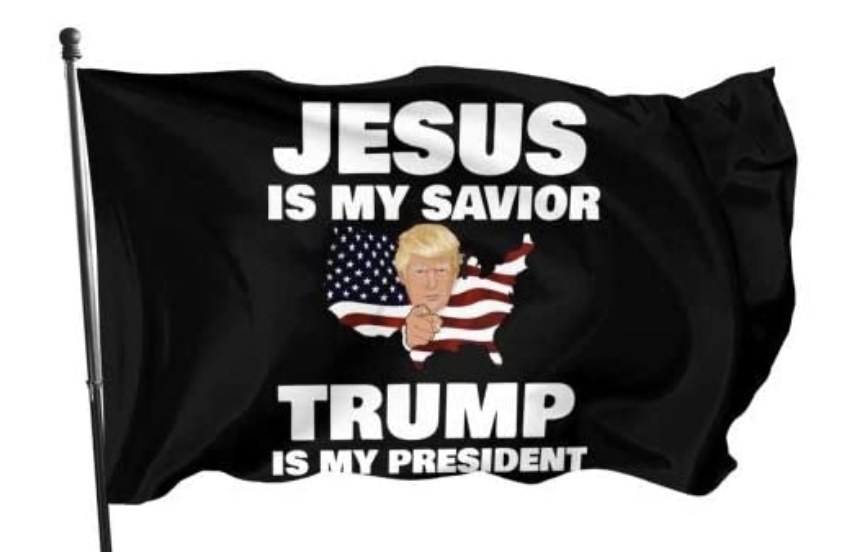
“It was clear the terrorists perceived themselves to be Christians. I saw the Christian flag directly to my front, another ‘Jesus is my savior.’ ‘Trump is my president.’ Another ‘Jesus is king,’ ” Hodges continued.

No doubt about it, lots of those marchers and the rioters who attacked the Capitol (two different groups, in terms of the legality of their actions) can accurately be called “white evangelicals” — in large part because “evangelical” has become a term with almost zero historic or doctrinal content.

The question, from the start, is whether evidence would emerge in trials indicating that any of these lawbreakers were linked to powerful evangelical Protestant denominations, ministries, schools, etc.
Please respect our Commenting Policy

New podcast: What could go wrong? NYTimes explores Facebook's religious ambitions

New podcast: What could go wrong? NYTimes explores Facebook's religious ambitions

Truth be told, I am not prone to flashbacks — even though I did come of age in the late 1960s and early 1970s.

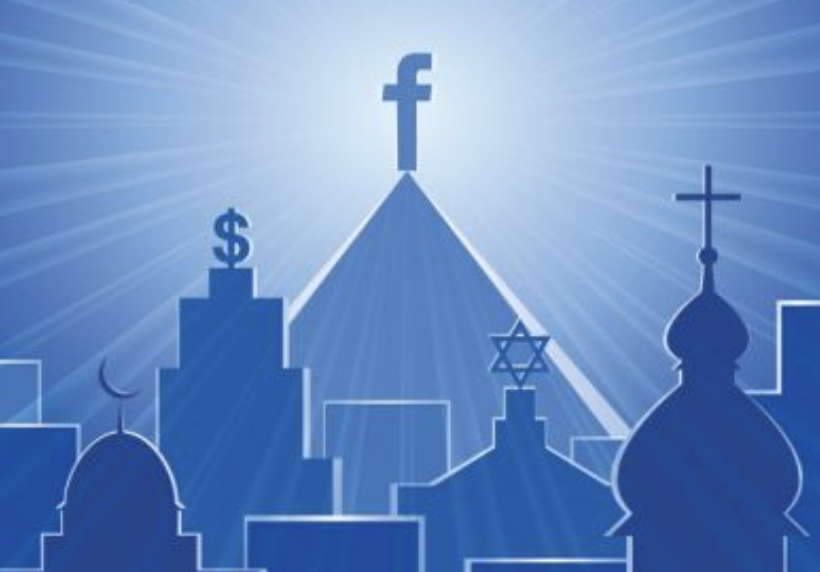
Anyway, I had a big flashback recently while reading a very interesting New York Times feature that ran with this headline: “Facebook’s Next Target: The Religious Experience.” In this case, the subhead is also crucial:The company is intensifying formal partnerships with faith groups across the United States and shaping the future of religious experience.”

Whoa. What does “shaping the future of religious experience” mean? I imagine that to learn details, readers would have to hear from some of the participants in this trailblazing online work. But there’s a problem with that. When asked about some specifics, an official with the Atlanta branch of the trendy Hillsong Church couldn’t answer, because “he had signed a nondisclosure agreement.”

Don’t you hate it when that happens?

Anyway, here’s the passage the stirred up lots of conversation, and my multi-decade flashback, during the recording of this week’s “Crossroads” podcast (click here to tune that in).

A Facebook spokeswoman said the data it collected from religious communities would be handled the same way as that of other users, and that nondisclosure agreements were standard process for all partners involved in product development.

Many of Facebook’s partnerships involve asking religious organizations to test or brainstorm new products, and those groups seem undeterred by Facebook’s larger controversies. This year Facebook tested a prayer feature, where members of some Facebook groups can post prayer requests and others can respond. The creator of YouVersion, the popular Bible app, worked with the company to test it.

Now, combine that mind-spinning information with this passage, which very gently raises the issue that millions of Americans — on the cultural right and left — are convinced that the Facebook gods have lost control of much of the information that is located on their platform:

The company’s effort to court faith groups comes as it is trying to repair its image among Americans who have lost confidence in the platform, especially on issues of privacy. Facebook has faced scrutiny for its role in the country’s growing disinformation crisis and breakdown of societal trust, especially around politics, and regulators have grown concerned about its outsize power.

This brings me to my flashback to a graduate-school class at the University of Illinois in Urbana-Champaign that changed my life.


Please respect our Commenting Policy

Religion ghosts? The New Yorker offers hellish glimpse of pedophile science in Germany

Religion ghosts? The New Yorker offers hellish glimpse of pedophile science in Germany

As Ross Douthat of The New York Times noted the other day, every now and then there is a scary news story that demands serious attention, even if readers want to avert their eyes.

That is certainly the case with a recent Rachel Aviv feature at The New Yorker than ran with this headline: “The German Experiment That Placed Foster Children with Pedophiles.

This is not a religion story. If readers do a few quick searches through the text, they will find no references to words such as “religion,” “faith,” “church” or “Bible.” The word “morality” shows up, but only in a negative context. Hold that thought.

The man at the center of this horror story is Helmut Kentler, a Sexual Revolution hero in post-World War II Germany who sincerely believed, for reasons personal and professional, that it would be a good thing for the government to fund experiments in which lonely, abandoned children were placed in the homes of male pedophiles.

This was not a religious conviction — other than the fact that it was seen as a way of attacking traditional religions.

This raises journalism questions, methinks. The unstated theme running through this stunning New Yorker piece is that the Sexual Revolution has become part of a new civil religion. On the moral and cultural left, sexual liberation helps citizens to escape the chains of the nasty old faiths. Concerning Kentler’s work, Douthat notes:

It seems almost impossible that this really happened. But the past is another country, and Aviv explains with bracing clarity how the context of the 1960s and 1970s made the experiment entirely plausible. The psychological theory of the Sexual Revolution, in which strict sexual rules imposed neurosis while liberation offered wholeness, was embraced with particular fervor in Germany, because the old order was associated not just with prudery but with fascism and Auschwitz.

If traditional sexual taboos had molded the men who built the gas chambers, then no taboos could be permitted to endure. If the old human nature had ended in fascism, then the answer was a new human nature — embodied, in Aviv’s account, by “experimental day-care centers, where children were encouraged to be naked and to explore one another’s bodies,” or appeals from Germany’s Green Party to end the “oppression of children’s sexuality,” or Kentler’s bold idea that sex with one’s foster children could be a form of love and care.

All this was part of a wider Western mood, distilled in the slogan of May 1968: It is forbidden to forbid.

This brings us to the feature’s primary discussion of “morality.”


Please respect our Commenting Policy

Return of Latter-day Saint underwear: The New York Times scratches a familiar itch

Return of Latter-day Saint underwear: The New York Times scratches a familiar itch

I’m not really sure if I am the right person to offer a critique of news coverage of the mysterious undergarments worn by the faithful in the Church of Jesus Christ of Latter-day Saints.

After all, I’m an Eastern Orthodox Christian, which is about as ancient and Trinitarian as you can get.

However, a recent New York Times piece linked to this topic does offer two perfect examples problems that your GetReligionistas see all the time when reading elite mainstream press coverage of topics that some people consider controversial and that religious leaders in a specific tradition really wish they didn’t have to keep discussing (ask Mitt Romney). Let’s start with the eyebrow-raising double-decker headline:

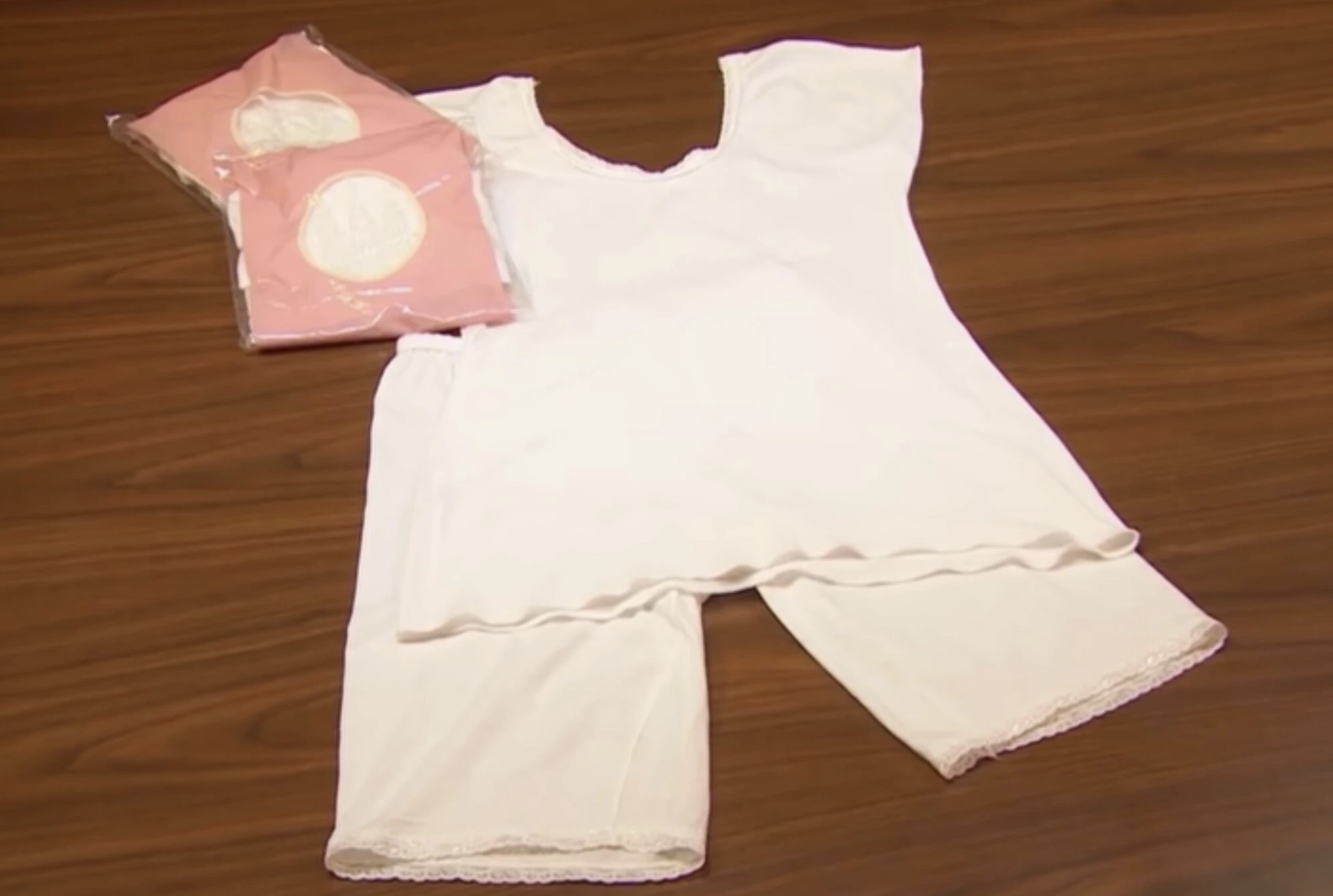
Among Mormon Women, Frank Talk About Sacred Underclothes

Frustrated by itchy, constrictive church-designed garments, they are asking for better fit, more options and “buttery soft fabric.”

Right, the world’s most influential newsroom went there. Of course, experienced religion-news readers can predict, with about 99% odds of being correct, what this story will have to say — without reading a single sentence. It has to be a story about modern women struggling in a male-dominated religious tradition that is struggling with modernity. What else could it be about?

That’s a given. In this case, the opening anecdote comes from Sasha Piton of Idaho Falls, Idaho, who is known online as @themormonhippie. Here is a crucial block of background material (cue the music):

Ms. Piton, 33, had tapped into a familiar problem that few women in the church felt bold enough to discuss publicly. Her posts drew thousands of comments and private messages, in which women vented their frustrations with the holy apparel: itchy hems, bunchy seams, pinching waistbands and even chronic yeast infections caused by fabric that does not breathe.

“It’s sacred,” one commenter wrote. “But it’s still actual underwear.”

Temple garments date back to the church’s origins in the 19th century and symbolize the wearer’s commitment to the faith, akin to the religious garments of many other faith traditions. Adult Latter-day Saints wear them after their “temple endowment,” a private membership ritual that typically takes place before missionary service or marriage. The church controls the design and manufacturing process of the garments, and sells them globally at low prices.

In my opinion, there’s quite a bit to praise in this report. However, it’s easy to two familiar problems seen in many religion-beat stories about somewhat hot-button topics. We can see No. 1 right here:


Please respect our Commenting Policy

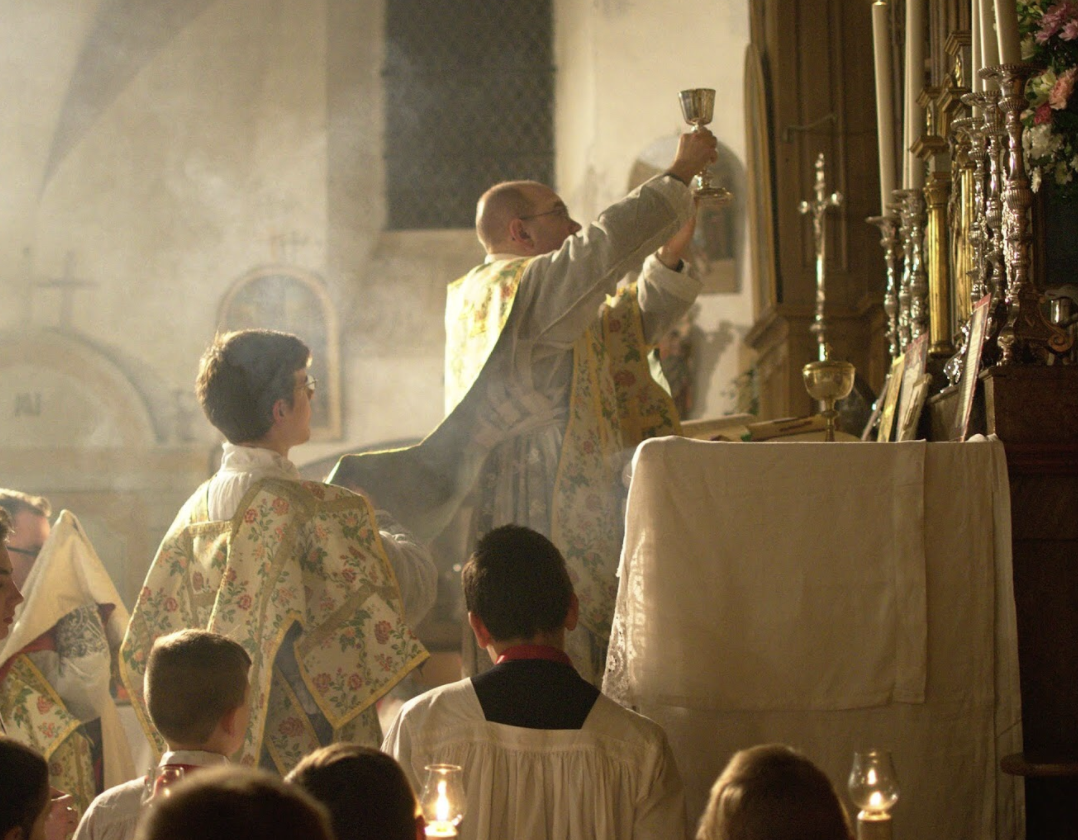
Catholic worship wars rage on: Pope Francis decides Latin Mass is too divisive to embrace

Catholic worship wars rage on: Pope Francis decides Latin Mass is too divisive to embrace

The message to Catholic traditionalists in Southwest England was blunt, yet pointed.

Because of the new Traditionis Custodes ("Guardians of the tradition") document from Pope Francis, and the wishes of Bishop Declan Lang of the Diocese of Clifton, the upcoming "Latin Mass at Glastonbury will be the final Latin Mass here."

The message delivered to another circle of believers there was quite different. As a "Clifton Diocese Initiative," the "LGBT+ Mass" series at a Bristol church would continue because the bishop "wishes to express pastoral care and concern for our Catholic LGBT+ community."

Thus, the Catholic worship wars rage on.

This bolt of liturgical lightning from Pope Francis struck one of his predecessor's signature achievements. In his 2007 apostolic letter Summorum Pontificum ("Of the Supreme Pontiffs"), the now retired Pope Benedict XVI declared that the post-Vatican II rite was the "ordinary form" for the church, but that the older Latin Mass was an "extraordinary form" and could be encouraged when requested by the faithful.

While Benedict said these rites could coexist, Pope Francis argued -- in a letter accompanying Traditionis Custodes -- that the old Latin Mass has become too divisive.

Benedict was "comforted" by his belief that the "two forms of the … Roman Rite would enrich one another," wrote Pope Francis, but some bishops now believe the Latin Mass has been "exploited to widen the gaps, reinforce the divergences, and encourage disagreements that injure the Church."

Thus, Francis declared, bishops must guarantee that any priests and laity they allow to celebrate the old rite have accepted the validity of Vatican II and its "Novus Ordo" Mass. Bishops may "designate one or more locations where the faithful adherents of these groups may gather" for approved Latin Masses, but these services may not be held in "parochial churches" and there should be no new parishes created for the extraordinary rite.


Please respect our Commenting Policy

New podcast: What kinds of Catholic fears are hiding in these Latin Mass wars?

New podcast: What kinds of Catholic fears are hiding in these Latin Mass wars?

Over the past 40 years or so, I have learned this lesson: If you are covering a controversial story and you find a key point where an activist or two in the clashing armies agree with one another, that’s probably something worth noting.

That happened this week while reading a couple of thousand words of commentary about the decision by Pope Francis to all but crush some of the growing communities of priests and traditional Catholics who choose to celebrate the old Latin Mass. To catch up on that, see: “'Where there is incense there is fire.' True, but reporters can seek voices in middle of that war.” And check out this one, too: “Ties that bind? Concerning journalism, Grindr, secrecy, homophobia and the Latin Mass.”

While recording this week’s “Crossroads” podcast (click here to check that out), I read two quotations — one from the Catholic right and one from the left. They offer two completely different takes on what’s happening in the Latin Mass wars, except that they seem to agree on one crucial reality.

The goal is to spot that common ground. Ready?

Quote No. 1 comes from conservative Amy Welborn, writing at her “Charlotte was Both” weblog:

Let’s do an Occam’s Razor on this new Motu Proprio.

It seems pretty simple to me: A number of bishops wanted the tools to restrict celebration of the Traditional Latin Mass, and Pope Francis gave it to them.

There you go.

I mean, we can talk history, ecclesiology, theology and liturgy all day long, but that’s about as basic as it gets or needs to be. I was there. Well, not literally, but I can tell you that this generation of clergy and church activists – now maybe from their late 60’s on up – were formed in a way that they cannot envision a healthy Church in which the TLM is still a part. At all.

What we see here is a papacy, backed by strategically placed cardinals loyal to this pope, that:

… in words, emphasizes synodality, accompaniment, listening, dialogue outreach to the margins and consistently condemns “clericalism” — has issued a document that embodies a rigid approach to the issue, and then restricts, limits and directs more power, ultimately, to Rome. And shows no evidence of actually “listening” to anyone except bishops who are annoyed by the TLM and TLM adherents who conveniently fit the “divisive” narrative.

Now, let’s contrast and compare that view of the conflict with the contents of quote No. 2.


Please respect our Commenting Policy

Ties that bind? Concerning journalism, Grindr, secrecy, homophobia and the Latin Mass

Ties that bind? Concerning journalism, Grindr, secrecy, homophobia and the Latin Mass

Early in my religion-beat career, a veteran Catholic leader gave me wise advice about the challenges reporters would face covering the emerging national scandals about sexual abuse by bishops and priests.

Never forget, he said, that these scandals are not about “left vs. right.” Plenty of people, across the whole spectrum of Catholic life, have secrets in the past and some in the present.

Soon after that, I heard almost exactly the same take from the late A.W. Richard Sipe, the former Benedictine monk, priest and psychotherapist who spent more than a half-century studying the sexual secrets of Catholic clergy. A strong voice for progressive Catholic causes, he served as a witness or consultant in at least 250 civil legal actions. As I wrote in an “On Religion” column, soon after Sipe’s death:

"Sooner or later it will become broadly obvious that there is a systemic connection between the sexual activity by, among and between clerics in positions of authority and control, and the abuse of children," he wrote, in a 2016 letter to his local shepherd, San Diego Bishop Robert McElroy.

"When men in authority — cardinals, bishops, rectors, abbots, confessors, professors — are having or have had an unacknowledged secret-active-sex-life under the guise of celibacy an atmosphere of tolerance of behaviors within the system is made operative."

Once again, the key is secrecy, because a fog of secrecy, sin and shame can be use to hide all kinds of painful issues.

I bring this up, of course, because of the firestorm that has greeted an investigative report from The Pillar that ran with this headline: “USCCB gen sec Burrill resigns after sexual misconduct allegations.” Here is the overture:

Monsignor Jeffrey Burrill, former general secretary of the U.S. bishops’ conference, announced his resignation Tuesday, after The Pillar found evidence the priest engaged in serial sexual misconduct, while he held a critical oversight role in the Catholic Church’s response to the recent spate of sexual abuse and misconduct scandals.

“It is with sadness that I inform you that Msgr. Jeffrey Burrill has resigned as General Secretary of the Conference,” Archbishop Jose Gomez wrote July 20 in a memo to U.S. bishops.

The key evidence was information drawn from signals on the hookup app Grindr, which a Vanity Fair feature once called “The World’s Biggest, Scariest Gay Bar.


Please respect our Commenting Policy

'Where there is incense there is fire.' True, but reporters can seek voices in middle of that war

'Where there is incense there is fire.' True, but reporters can seek voices in middle of that war

Raise your hand if you are old enough to remember the Vietnam era.

That may sound like a strange question to ask after a weekend of reading the tsunami of online reactions to the decision by Pope Francis to all but crush the 2007 Summorum Pontificum apostolic letter by the now retired Pope Benedict XVI, the document defending the use of the old Latin Mass, now called the Extraordinary Form of the Roman Rite.

Now the fighting — another sign of real divisions between Catholic bishops almost everywhere — will almost certainly be turned up to 11. As Father Raymond J. de Souza of the National Catholic Register put it: “Where there is incense there is fire.”

This brings me back to Vietnam. Here’s the phrase that jumped into my mind, about an hour or two into watching the firestorm on Catholic Twitter: “We had to burn the village in order to save it,” the popular paraphrase of a line in an Associated Press report from that era stating, “It became necessary to destroy the town to save it.”

There appear to be people on both side of the Latin Mass war who are ready to do something like that. Pope Francis has clearly stated that he believes the “ordinary” modern form of the Vatican II Mass cannot live peacefully with rules allowing many Catholics to embrace the faith’s earlier liturgical traditions.

This is an unbelievably complex story and I feel only compassion for the wire-service reporters who had to write short hard-news stories about this action by Pope Francis.

Why? At one point, I started listing some basic facts built into the foundations of this story.

Truth be told, there are:

* Latin Mass activists who reject Vatican II and, from time to time, refer to this pope simply as “Bergoglio,” meaning they still consider him to be Cardinal Jorge Mario Bergoglio of Argentina — not the real pope. They reject Vatican II, period. Pope Benedict XVI has never been in this camp.

* Progressive Catholics whose hatred of the traditional Mass and its proponents is so fierce that they are willing to roll the dice on schism. They believe the “spirit,” not the actual teachings, of Vatican II must be defended at all costs. Some of these liberal Catholics are openly sympathetic to the doctrinal “reforms” sought by German bishops, which could lead to schism in some form.


Please respect our Commenting Policy

Hot Takes: Ryan Burge on return of debates about evangelicals and QAnon (etc.)

Hot Takes: Ryan Burge on return of debates about evangelicals and QAnon (etc.)

Well, Bobby Ross, Jr., is taking the week off.

Thus, I went looking for another list of religion-news material featuring short punchy takes on lots and lots of different topics.

I settled on this VICE News chat with GetReligion contributor Ryan Burge — that must-follow guy on Twitter who is also well known for his work at the Religion in Public weblog.

To say that this punchy little video report includes some Hot Takes is an understatement. Yes, there is a flashback to the whole QAnon and evangelicalism wars.

However, let me stress that there are some producers at VICE News who are sincerely interested in the complex world of American evangelicalism and they are doing their homework. I know this because I sent about three hours with one of their production teams several months ago and I know the wide range of materials that we covered.

That video is still in a vault somewhere. It would be interesting if they turned bites of it into a bullet-list collection of takes similar to this one with the always quotable Burge.

So what shows up in this Burge blast? He put this list out on social media:

Things I discuss in this Vice News video:

QAnon

John Darby

Dispensationalism

Thomas Jefferson as the anti-Christ


Please respect our Commenting Policy