Terry Mattingly

Thinking about forced marriages (with the Forward), but also happy Catholic moms with lots of kids

Thinking about forced marriages (with the Forward), but also happy Catholic moms with lots of kids

At first glance, this weekend’s two “think pieces” appear to clash.

But readers (and viewers) who dig deeper will find two radically different looks at important and valid stories linked to marriage and family life in very different traditional religious communities — Jewish, fundamentalist Protestant and Islamic.

There is much here for religion-news professionals, and news consumers, to ponder.

One story is dark and hellish, looking at the reality of forced marriages in a few religious groups. The other glows with positive images and voices, as mothers in the United Kingdom share stories from their lives in large, traditional, Catholic families.

First, let’s look at this piece from Simi Horwitz at the Forward: “In 21st century America, where arranged child marriages remain a scourge.” The overture:

Kate Ryan Brewer’s “Knots: A Forced Marriage Story” is one disturbing, though important, documentary, one that grows increasingly unsettling as three articulate and intelligent young women matter-of-factly recount their belittling, exploitive, and ultimately dehumanizing experiences in forced marriages. Mercifully each has escaped and forged successful, independent lives; one has become a recognized outspoken activist on behalf of victims.

The filmmakers assert that the practice of arranged marriages, often involving brides who are 15 or younger, continues almost unchecked and unchallenged. In fact, the only states that require the marrying parties to be at least 18 are Delaware, New Jersey, Minnesota and Pennsylvania. Between 2000 and 2010, nearly 250,000 children in the U.S. were married, and 77 per cent were young girls wedded off to much older men. In some cases they were forced to marry their rapists in order to salvage their reputations and the family’s honor.

Please respect our Commenting Policy

New podcast: Among waves of Tulsa Massacre ink, a fine AP religion story pointed forward

New podcast: Among waves of Tulsa Massacre ink, a fine AP religion story pointed forward

The 100th anniversary of the Tulsa Race Massacre is one of those stories that punches every button that can be pushed in news coverage today, especially after months of news about the complex Black Lives Matter movement and its impact on American life.

Obviously, this is a story about history and the voices of the few survivors who are alive to talk about the impact of this event on their lives and their community. In many parts of America, this is a story that can be linked to similar horrors from the past. For starters, there were the Red Summer riots of 1919 here in Knoxville, Tenn., and elsewhere.

Obviously, this is a legal and political story right now as efforts continue to pull the details of the Tulsa Massacre into the light of day. Consider the top of this remarkable multi-media report from The New York Times: “What the Tulsa Race Massacre Destroyed.”

Imagine a community of great possibilities and prosperity built by Black people for Black people. Places to work. Places to live. Places to learn and shop and play. Places to worship.

Now imagine it being ravaged by flames.

In May 1921, the Tulsa, Okla., neighborhood of Greenwood was a fully realized antidote to the racial oppression of the time. … Brick and wood-frame homes dotted the landscape, along with blocks lined with grocery stores, hotels, nightclubs, billiard halls, theaters, doctor’s offices and churches.

Yes, many of the 13 churches in Greenwood were destroyed or damaged, as 35 square blocks were burned down. No one truly knows how many people died, but the estimate of 300 is almost certainly low, with reports of mass graves and bodies tossed in the Arkansas River. As many news reports noted, no one has ever been prosecuted the crimes linked to the massacre in and around what was known as America’s Black Wall Street.

Did the major news coverage of the anniversary — some of it staggering in its complexity and depth — cover the many religion angles of this story? Yes and no. As always, political voices and news hooks received the most attention.

But there was one Associated Press story in particular — “Tulsa pastors honor ‘holy ground’ 100 years after massacre” — that we discussed, and praised, during this week’s “Crossroads” podcast (click here to tune that in).


Please respect our Commenting Policy

Boris Johnson's Catholic wedding: Why didn't the New York Times consult a Canon lawyer?

Boris Johnson's Catholic wedding: Why didn't the New York Times consult a Canon lawyer?

When preparing news reports about a chess match, it really helps if reporters quote one or more experts on the rules of chess.

The same thing is true when covering the FIFA World Cup. At some point, it would help to have an expert define “offsides” and some of soccer’s other more complicated rules.

When covering the U.S. Supreme Court, it helps to have a reporter on the team with a law degree and some serious experience covering debates in elite courtrooms.

This brings me that New York Times article the other day about that eyebrow-raising wedding at Westminster Cathedral between the current prime minister of England and his latest of many lady friends. The double-decker question covered many essential facts:

Why Could Boris Johnson Marry in a Catholic Church?

The British prime minister was married twice before, but the church didn’t recognize those unions because they were not Catholic.

Now, this article did some things very well, including offering a crisp, clear summary of Johnson’s complicated history as a husband and lover. Read that, if you wish.

However, I was struck by two words that were missing in this article — that would be, “Canonical” and “form” — even though discussions of this legal term was all over Catholic Twitter once the secret wedding was made public.

What, pray tell, is “Canonical form”? We will get to that in a moment.

In terms of journalism basics, the crucial point is that it really would have helped if the Times team had interviewed one or two Catholic Canon lawyers who understand this term and the history behind the church’s teachings on this subject. As things turned out, readers ended up knowing more about how this rite offended the sensibilities of Catholic LGBTQ activists than the specifics of the church laws that allowed the wedding to take place.


Please respect our Commenting Policy

Thinking with Ryan Burge: Concerning young Latter-day Saints, third parties and life post-Trump

Thinking with Ryan Burge: Concerning young Latter-day Saints, third parties and  life post-Trump

There are times, when you are reading Ryan Burge on Twitter (which journalists should, of course, be doing) and you see signs that he has read some religion-news related item somewhere that has caused him to do that thing that he does — sift through lots of poll numbers looking for a new angle.

What we have here is a pair of tweets linked to a Christian Sagers think piece at The Deseret News that I had missed. The headline: “Are Latter-day Saint voters turning blue?”

That’s blue as in learning toward the Democratic Party, not feeling sad or depressed. That would be a huge news story hinting at other possible changes among centrists on moral and cultural issues.

Burge send me this comment containing what he thinks is the key question about this possible news twist.

The big question is: have younger LDS really abandoned the Republican Party? I don't think that we will ever know for sure until Trump is off the ballot completely.

So where to begin? Here is the overture in Sager’s piece, noting that a recent:

Cook Political Report concludes that all four of Utah’s congressional districts are among the most Democratic-trending in the country. Latter-day Saint voters in Arizona doubled their Democratic turnout from 2016.

Meanwhile, a Democratic activist group with whom I spoke recently is optimistic about converting Latter-day Saint women, traditionally Republican, who it believes to be rejecting the GOP in greater percentages than other religious demographics.

That candidate Donald Trump fared so poorly among members of The Church of Jesus Christ of Latter-day Saints in 2016 was met with astonishment in national media coverage and a flurry of conjectures that Latter-day Saints were up for grabs.

And yet, the political status of the Latter-day Saint voting bloc doesn’t fit into a tidy narrative. Yes, there are signs that some Latter-day Saints are reconsidering the modern GOP, but at the same time there are suggestions that Latter-day Saints remain reliably Republican.

Sure enough, there are other complications that need to be considered when looking at conservatives in this Donald Trump-warped political age.


Please respect our Commenting Policy

'On Religion' flashback to 1998: Ten years of reporting on a church-state fault line

'On Religion' flashback to 1998: Ten years of reporting on a church-state fault line

Back in the 1980s, I began to experience deja vu while covering event after event on the religion beat in Charlotte, Denver and then at the national level.

I kept seeing a fascinating cast of characters at events centering on faith, politics and morality. A pro-life rally, for example, would feature a Baptist, a Catholic priest, an Orthodox rabbi and a cluster of conservative Methodists, Presbyterians, Episcopalians and Lutherans. Then, the pro-choice counter-rally would feature a "moderate" Baptist, a Catholic activist or two, a Reform rabbi and mainline Methodists, Presbyterians, Episcopalians and Lutherans.

Similar line-ups would appear at many rallies linked to gay rights, sex-education programs and controversies in media, the arts and even science. Along with other journalists, I kept reporting that today's social issues were creating bizarre coalitions that defied historic and doctrinal boundaries. After several years of writing about "strange bedfellows," it became obvious that what was once unique was now commonplace.

Then, in 1986, a sociologist of religion had an epiphany while serving as a witness in a church-state case in Mobile, Ala. The question was whether "secular humanism" had evolved into a state-mandated religion, leading to discrimination against traditional "Judeo-Christian" believers. Once more, two seemingly bizarre coalitions faced off in the public square.

"I realized something there in that courtroom. We were witnessing a fundamental realignment in American religious pluralism," said James Davison Hunter of the University of Virginia. "Divisions that were deeply rooted in our civilization were disappearing, divisions that had for generations caused religious animosity, prejudice and even warfare. It was mind- blowing. The ground was moving."

The old dividing lines centered on issues such as the person of Jesus Christ, church tradition and the Protestant Reformation. But these new interfaith coalitions were fighting about something even more basic – the nature of truth and moral authority.


Please respect our Commenting Policy

New podcast: New York Times still ignoring religion ghosts in 'demographic winter' trends

New podcast: New York Times still ignoring religion ghosts in 'demographic winter' trends

I could, without breaking a sweat, create a list of important religion-beat news stories that are, to some degree or another, connected to the sinking birth rates in the Unites States and around the world.

Clashes between Chinese leaders and Muslims inside their borders? Decades of declining numbers of men seeking Catholic priesthood? The sharp decline in the power of “mainline” Protestant churches? American political clashes between red-zip code and blue-zip code regions, usually seen as tensions between rural and urban life. Tensions between Orthodox and progressive Jews. Soaring numbers linked to anxiety and loneliness. And so forth and so on.

So when I saw this headline in The New York Times — “Long Slide Looms for World Population, With Sweeping Ramifications“ — I immediately thought to myself, “Here we go again.” I also figured that this would be the topic for this week’s “Crossroads” podcast (click here to tune that in).

Sure enough, this new feature was the global version of a Times story several years ago that led to a GetReligion post with this headline: “New York Times asks this faith-free question: Why are young Americans having fewer babies?” As I wrote at that time:

In a graphic that ran with the piece, here are the most common answers cited, listed from the highest percentages to lowest. That would be, "Want leisure time," "Haven't found partner," "Can't afford child care," "No desire for children," "Can't afford a house," "Not sure I'd be a good parent," “Worried about the economy," "Worried about global instability," "Career is a greater priority," "Work too much," "Worried about population growth," "Too much student debt," etc., etc. Climate change is near the bottom.

The economic and cultural trends are all valid, of course. But they also point toward changes in how modern people in modern economies define and look for “meaning in life” and the beliefs that define those choices.

Think birth, marriage, vocation, death. We are talking about topics that, for several billion people on this planet, are linked to religious faith.

So what did the Times have to say?


Please respect our Commenting Policy

tmatt is far, far from his office desk: But the other GetReligionistas will carry on this week

tmatt is far, far from his office desk: But the other GetReligionistas will carry on this week

Let’s see.

How do I do this?

I need to channel the online style of Bobby Ross, Jr., the master of the short, punchy post in which a few short sentences quickly lead into tweets, photographs and bullet points.

So, the point of this little post is that I am gone for a week, or as gone as the Internet allows me to me. I am not even going to write an “On Religion” column for the Universal syndicate.

But GetReligion will stay open and you will see familiar bylines here all week. I may post a think piece at some point.

But let me offer some visual clues as to my location.

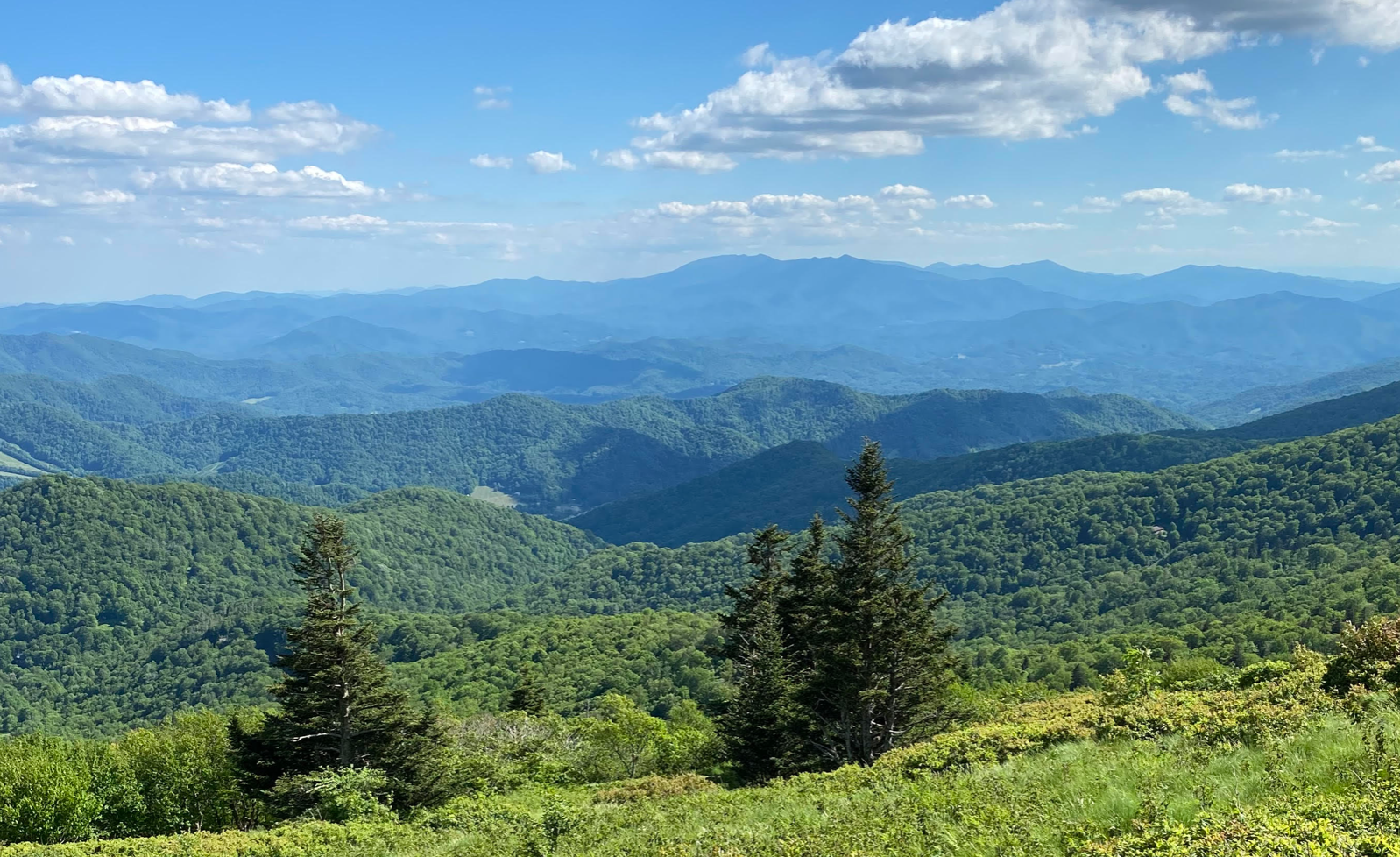
So I have departed my home in these lovely mountains:


Please respect our Commenting Policy

Bob Dylan turns 80, while Dylanologists keep arguing about signs of faith in his art

Bob Dylan turns 80, while Dylanologists keep arguing about signs of faith in his art

Night after night, Bob Dylan's 1979 Gospel concerts at San Francisco's Warfield Theatre made news for all the wrong reasons, according to angry fans.

The November 11th show opened with Dylan roaring into "Gotta Serve Somebody" from "Slow Train Coming," the first of what Dylanologists called his "born-again" albums.

"You may be a businessman or some high-degree thief," he sang. "They may call you doctor, or they may call you chief, but you're gonna have to serve somebody. … Well, it may be the Devil, or it may be the Lord, but you're gonna have to serve somebody."

To add insult to injury, these concerts included fiery sermons by Dylan, while he avoided classic songs that made him a legend.

"I was 19 years old and that was my first Dylan concert," recalled Francis Beckwith, who teaches Church-State Studies at Baylor University. "The atmosphere was highly charged. Some people booed or walked out. … There were people shouting, 'Praise the Lord!', but you could also smell people smoking weed."

Beckwith kept going to Dylan concerts, while following years of reports about whether the songwriter was still a Christian, had returned to Judaism or fused those faiths. These debates will continue as fans, critics, scholars and musicians celebrate Dylan's 80th birthday on May 24th.

With a philosophy doctorate from Fordham University in New York and a law degree from Washington University in St. Louis, Beckwith is certainly not a conventional music critic. He made headlines in 2007 when -- while president of the Evangelical Theological Society -- he announced his return to Catholicism.

To mark that birthday, Beckwith is publishing online commentaries on what he considers Dylan's 80 most important songs. The Top 10: "Like a Rolling Stone," "My Back Pages," "Stuck Inside of Mobile With the Memphis Blues Again," "Mr. Tambourine Man," "Visions of Johanna," "Tangled Up in Blue," "Blowin' in the Wind," "Precious Angel," "It's Alright, Ma (I'm Only Bleeding) and "Desolation Row."

Beckwith considered three factors -- popularity, lasting cultural significance and, finally, whether each song was "something I could listen to over and over." He stressed that Dylan's entire canon includes images and themes rooted in scripture and faith.


Please respect our Commenting Policy

Still thinking about (trigger alert) a scary Twitter topic -- Elizabeth Bruenig and motherhood

Still thinking about (trigger alert) a scary Twitter topic -- Elizabeth Bruenig and motherhood

At this point, I am a bit confused. What is the latest Twitter firestorm about Elizabeth Bruenig, the latest New York Times talent to hit the exit door for one reason or another? I may have missed a controversy or two in recent weeks.

You see, I am still stuck on the furor that greeting that essay published (May 7) just before she left the Gray Lady, the one with that terrifying headline: “I Became a Mother at 25, and I’m not Sorry I Didn’t Wait.”

I’ve been thinking about that one ever since and, thus, I have decided to treat it as a weekend think piece. But part of me still wants to argue that there was some kind of news feature that could have been written about that whole affair.

Yes, it was another example of folks in the blue-checkmark tribe losing their cool because someone triggered the urban, coastal principalities and powers. Can you say “fecundophobia”? However, this essay was also linked to some huge trends in postmodern America, especially crashing fertility rates and declines in the number of people getting married. There was news here, of some kind.

First, here is the Bruenig overture:

If someone had asked on the day of my college graduation whether I imagined I would still be, in five years’ time, a reliable wallflower at any given party, I would have guessed so. Some things just don’t change. What I would not have predicted at the time is that five years hence I would be lurking along the fringes of a 3-year-old’s birthday party, a bewildered and bleary-eyed 27-year-old mom among a cordial flock of Tory Burch bedecked mothers in their late 30s and early 40s who had a much better idea of what they were doing than I ever have.


Please respect our Commenting Policy