Terry Mattingly

New podcast: New York Times says 'Christian nationalism' tied to white 'evangelical power'

New podcast: New York Times says  'Christian nationalism' tied to white 'evangelical power'

At the 2016 Southern Baptist Convention, messengers from churches across the nation approved a resolution calling for Americans to “discontinue the display of the Confederate battle flag as a sign of solidarity of the whole Body of Christ.”

The speaker of the Mississippi House of Representatives, Philip Gunn, was there (full Baptist Press report here) as chair of the Southern Baptist Seminary board of trustees. He went home determined to help do something about his state’s flag. Mississippi’s new flag dropped the Confederate symbolism of the old, replaced by a magnolia blossom and the phrase “In God We Trust.”

This is clearly an example of a major evangelical institution using its clout — “power,” if you will.

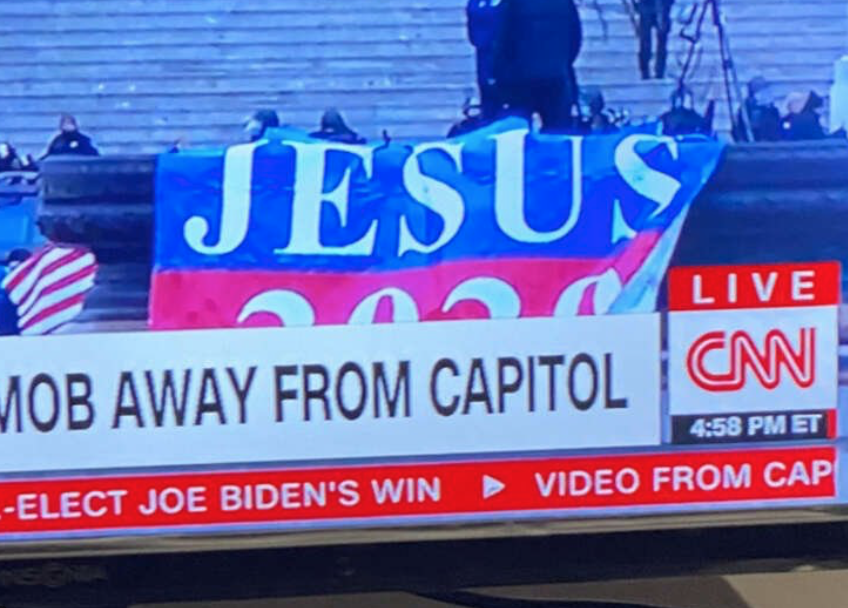
This brings us — using a back door, I will admit — to this week’s “Crossroads” podcast (click here to listen to that), which focuses on the waves of coverage about Christians symbols and banners among participants in both the “Save America March” backing Donald Trump and the deadly riot outside and inside the U.S. Capitol. How did some F-bomb screaming rioters end up chanting “Hang Mike Pence!” while others nearby played loud Contemporary Christian Music?

The hook for this rather complicated podcast discussion with host Todd Wilken was one of those voice-from-on-high, magisterial New York Times passages — with zero attribution to sources — that speaks for the Acela Zone ruling elites. The double-decker headline proclaimed:

How White Evangelical Christians Fused With Trump Extremism

A potent mix of grievance and religious fervor has turbocharged the support among Trump loyalists, many of whom describe themselves as participants in a kind of holy war.

Are we talking about ALL Trump loyalists? Or is it simply MANY of them? Hold that thought, because we will return to it shortly.

But here is the key passage that needs to be read carefully, more than once:

The blend of cultural references, and the people who brought them, made clear a phenomenon that has been brewing for years now: that the most extreme corners of support for Mr. Trump have become inextricable from some parts of white evangelical power in America. Rather than completely separate strands of support, these groups have become increasingly blended together.


Please respect our Commenting Policy

Prayers for the soul of Brian Sicknick: Did anyone ask officers faith questions after Capitol riot?

Prayers for the soul of Brian Sicknick: Did anyone ask officers faith questions after Capitol riot?

When you live somewhere, you develop friendships and contacts that survive — especially in the age of email and social media.

I lived and worked in Baltimore and Washington, D.C, for a decade-plus and my commute took me to Union Station and then past the U.S. Capitol. Many of my students had press passes on the Hill and that landmark was simply part of work-day life.

Right after the rioting last week, I received an email through church contacts requesting prayers for the “repose of the soul of a friend and U.S. Capitol Police officer, Brian,” as well as prayers for other police who were injured. Christians in the USCP and linked to it were spreading this request.

It’s impossible to read all of the coverage of the January 6th riots. But if you dig into the coverage at all, you are sure to hit detailed coverage of the “Fight for Trump” rioters who carried Christian symbols and banners inside the U.S. Capitol security zone, even while surrounded by others chanting, “Hang Mike Pence” and slogans that can’t be printed here.

Let me stress, once again, that this coverage was and is valid. The impact of QAnon in corners of white evangelicalism cannot be denied and many of other conspiracy theory believers “speak evangelical” even if they’re not churchgoers.

The note from friends in Beltway land led me to look for signs of religion-news coverage on the other side of that battle line between police and the rioters. I know the U.S. Capitol community well enough to know that there are all kinds of prayer groups and Bible studies there, on both sides of the aisle and crossing them. Do similar groups exist in the USCP? Did anyone ask if Brian Sicknick was part of such a support network?

It’s clear that Sicknick was an unusual and even inspiring man, an officer appreciated by Democrats and Republicans. We know something about his politics, naturally. He was an Air National Guard veteran who, in some ways, backed Donald Trump. Sicknick was also a critic of many mainstream Republicans.

A Washington Post story quoted Chief Master Sgt. Lance C. Endee — Sicknick’s squad leader in the guard — as saying: “I think Brian had a bigger impact on people than he would have ever realized.” That same story included this:

In a statement, Sicknick’s family said “many details regarding Wednesday’s events and the direct causes of Brian’s injuries remain unknown and our family asks the public and the press to respect our wishes in not making Brian’s passing a political issue.”


Please respect our Commenting Policy

Courage vs. civility? It doesn't help when believers join mobs in social media

Courage vs. civility? It doesn't help when believers join mobs in social media

It seemed that whenever the Rev. Daniel Darling ventured into social media, he saw the same red flags -- so he posted a commentary on "Christians and Conspiracy Theories."

"Because it's online, doesn't mean it's true," he noted. "Because a story is advanced by someone whose ideology I agree with, doesn't mean it's true. …

"For some reason, we are a people who want to believe there is a big plot behind every single thing that happens. … If you watch enough cable TV, depending on your political persuasion, you will come to think that behind every act in Congress there is a string of connected dots that go back to either George Soros (liberal) or the Koch brothers (conservative)."

This wasn't a hot take on QAnon letters or rumors of shredded Georgia ballots.

Darling wrote those words a decade ago, while leading an evangelical church near Chicago. Now he's a crucial voice for the National Religious Broadcasters and author of a book -- "A Way with Words: Using Our Online Conversations for Good" -- pleading for believers to think twice about their online lives.

"I'm not saying we should run away and hide," said Darling, in a telephone interview. "There's no way to avoid the fact that social media is a crucial part of American life. I don't think Christians have any choice about whether or not to be engaged. …

"What we need to do is be more careful when deciding where to draw lines and take stands. But, unless you're Amish, I don't see anyone sitting this one out."

It's especially important for religious leaders to warn their followers not to join the online "mobs" that are destroying America's ability to have sane public debates. In some cases, digital attacks are also threatening lives and reputations.

Consider, for example, the woke social-media attacks that fueled inaccurate mainstream news reports about Covington Catholic High School students at the 2019 March for Life. Then there were the conservative social-media warriors who embraced #pizzagate conspiracy theory claiming that prominent Democrats were linked to a global child-trafficking ring.

Did Russia steal the White House in 2016? Yes, there were mainstream-news reports. Did China, Cuba, Venezuela or some other evil force steal the 2020 election? Yes, there have been headlines on the other side of America's partisan media wars.

The result is anger and pain that has reached many pews and some pulpits.


Please respect our Commenting Policy

Thinking about, and with, Al Mohler: America's 'ordered liberty' was set afire -- by Trump

Thinking about, and with, Al Mohler: America's 'ordered liberty' was set afire -- by Trump

If you have followed the divisions inside the Southern Baptist Convention since 1979, or even earlier, you know this name — R. Albert Mohler, Jr. He was — for some — a L’enfant terrible among the conservatives in the early biblical inerrancy wars who (like him or not) grew, as president of Southern Baptist Theological Seminary, into one of the most important Southern Baptist voices of the late 20th and early 21st centuries.

It would be hard to describe the degree to which many Southern Baptists in the defeated “moderate” establishment detest Mohler, for a variety of theological, cultural and political reasons. At the same time, in the Donald Trump era, there are many in the ranks of far-right Southern Baptist life who view him as a traitor or even “politically correct.”

This is not an easy era in which to lead conservative religious institutions, even those with clout and many supporters. And it’s crucial to know that Southern Baptists leaders were, like evangelical leaders in general, sharply divided on whether to support the rise of Trump in 2015-2016. (Click here for the GetReligion typology describing six different evangelical views of Trump.)

Out of the tsunami of important statements by religious leaders following the U.S. Capitol riot, I have selected — as this weekend’s “think piece” — two articles by and about Mohler, Trump and the hellish scenes of January 6th. The first is a Houston Chronicle interview with Mohler by Robert “wut is happening?” Downen, an emerging religion-beat force in Texas and American in general. The headline: “Evangelical leader Albert Mohler says he’s horrified by chaos at Capitol, but stands by Trump vote.”

Downen notes that:

Mohler is the longtime president of the Southern Baptist Convention’s flagship seminary in Louisville, Ky., and is a contender to lead the SBC when the faith group elects a new president in June.

The evangelical leader has forcefully condemned Trump over the last half-decade, characterizing him as a sexual predator at one point and, after Trump clinched the Republican Party nomination in 2016, Tweeting simply: “Never. Ever. Period.”


Please respect our Commenting Policy

New podcast: Who stands in the middle of American politics? Often, that's a religion question

New podcast: Who stands in the middle of American politics? Often, that's a religion question

There were two major stories in American life this week, when it seemed like the world turned in a matter of minutes.

The riot at the U.S. Capitol grew out of yet another legal Donald Trump rally, with its familiar mix of hero worship, populist rage and, yes, rhetoric and symbols used by conservative, often Pentecostal, Christians. Fired up by a truly radical message from the president, many (not all) of these protestors marched to Capitol and turned into an illegal mob, crashing through security fences and then through doors and windows. Yes, some of the Christian banners and signs went with them.

We will be learning more about the makeup of that mob as participants are identified, arrest and tried — perhaps under (irony alert) Trump’s June 26th executive order authorizing a “penalty of up to 10 years’ imprisonment for the willful injury of Federal property.”

There have been waves of statements by religious leaders condemning the violence, including many by evangelicals who (a) opposed Trump, (b) reluctantly voted for him or (c) enthusiastically backed him. I expect more coverage on all of that (I’m collecting material for an “On Religion” column). Readers can start with this piece from the left, care of HuffPost.com: “Trump’s Evangelical Allies Condemn Violence At The Capitol.” It focuses on evangelicals who are still finding it hard to attack Trump, while — almost hidden at the end — noting views from some of condemned both the violence and the president’s role in it.

Let me know, via comments or email, if you see more religion-driven riot coverage.

Meanwhile, this week’s “Crossroads” podcast (click here to tune that in) centered on a GetReligion post that was written about two hours before the riots began: “Life after Georgia — Questions about a pro-life Democrat in U.S. Senate and other issues ...

The key is that victories by two Democrats (one a liberal Baptist pastor) put a very interesting conservative (and Catholic) senator at the middle of America’s increasingly divided and even bloody political map.

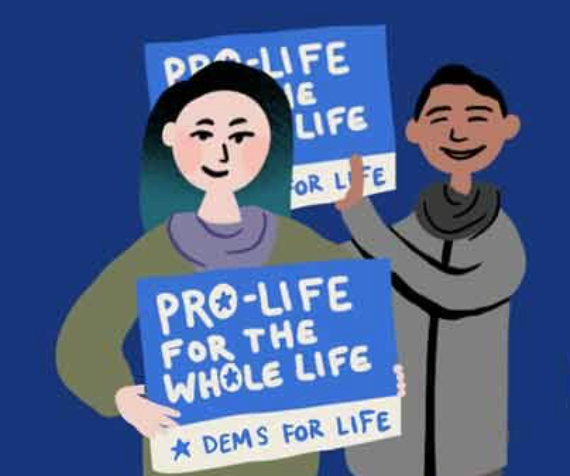
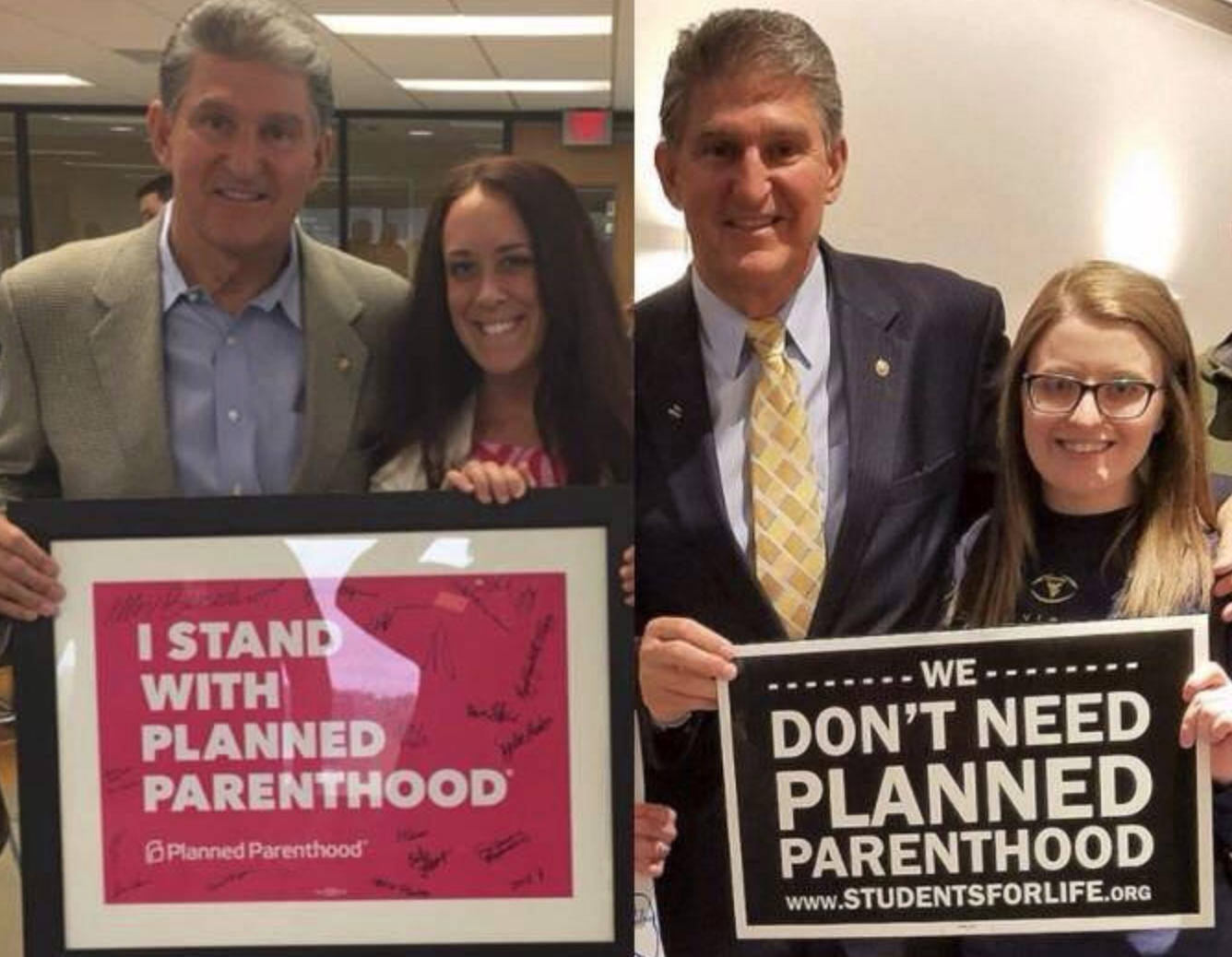
That man, Sen. Joe Manchin of West Virginia, is a living symbol of what used to be a major force in American politics — the white Southern Democrat. Although he has been endorsed by Democrats For Life, his pragmatic political views on that topic will not be found in the Democratic or Republican platforms, but do resemble the views of millions of centrist Americans.

Many Democrats, in the past, have insisted that Manchin is not really a Democrat. Well, how many want to toss him out of the party right now (with that 50-50 Senate split)?


Please respect our Commenting Policy

Life after Georgia: Questions about a pro-life Democrat in U.S. Senate and other issues ...

Life after Georgia: Questions about a pro-life Democrat in U.S. Senate and other issues ...

Once upon a time, there were these strange political unicorns called “pro-life Democrats.” They were often, but not always, part of another endangered species called “blue-dog Democrats.”

Most of these unique politicos were in the U.S. House of Representatives, but there were occasional — but increasingly rare — sightings in the U.S. Senate. After all, Tennessean Al Gore had an 84% rating with National Right to Life when he was a congressman, but that changed — for the most part — when he became a senator. And as vice president? Forget about it.

This brings us to the thought for the day, a quote drawn from a mini-firestorm in the Democratic Party back in 2017. Here is a quote from an “On Religion” column at that time:

… Democratic National Committee Chairman Tom Perez drew another bright line defining who participates in the work of his party.

"Every Democrat, like every American," he said, "should support a woman's right to make her own choices about her body and her health. This is not negotiable and should not change city by city or state by state." In fact, he added, "every candidate who runs as a Democrat" should affirm abortion rights.

What if that state is West Virginia?

Some key Democrats quickly stepped forward in 2017 — including Rep. Nancy Pelosi — to suggest that Perez wasn’t speaking for all top Democrats. Still, the party’s stance on abortion rights and funding continued to veer further and further to the cultural and religious left, eventually causing one Joe Biden to shed the last scraps of his once “centrist” stance.

This, of course, brings us to religion-beat angles in the aftermath of the Georgia earthquake, in which Democrats — Black and White — and other anti-Donald Trump voters appear to have handed the Democrats the slimmest possible control of the U.S. Senate.

This brings us to Sen. Joe Manchin of West Virginia, a conservative Democrat and active Roman Catholic who has been endorsed by Democrats for Life, even though his record on that issue has become rather complex. He remains a throwback to the days when it was perfectly normal to be a Democrat and a cultural conservative. One can imagine the pressure he faces from establishment Democrats.

Well, how many Democrats want to toss Manchin out of the party right now?


Please respect our Commenting Policy

Yearenders-palooza finale: 2020 Top 10 religion-news lists from several Getreligionistas

Yearenders-palooza finale: 2020 Top 10 religion-news lists from several Getreligionistas

OK. This is it. I promise. This is the last GetReligion #2020 Top 10 religion-news post that you’re going to see. I think. And sorry about the Kiss 2020 goodbye concert video with this post (I could not resist).

Let me be clear what this is. A few of us have already written columns or posts evaluating the results of the Religion News Association poll, like this “On Religion” column that I shared here: “Of course the pandemic was top 2020 religion-news story: But which COVID-19 story?

However, each of us — when creating our own personal lists — saw the religion-news landscape through our own lens. Thus, I thought readers might enjoy seeing all of the RNA poll items — 27 news events and trends were on the ballot — and how some of us arranged them. Some readers, for example, have expressed a desire to explore what was left OFF the list and how the items were described on the official ballot. Read it all at the RNA.org website.

As I said earlier, in the GetReligion podcast and post in which I shared my own ballot (“The year when religion news went viral, and that was a bad thing”), I thought the key was that the COVID-19 crisis was several stories in one. I thought the most important angle was the First Amendment fights, so I wrote:

According to journalists who cover religion, this was the year's biggest story: "COVID-19 pandemic claims lives of many religious leaders and laity, upends death rituals, ravages congregational finances, spurs charitable responses, forces religious observances to cancel or go online and stirs legal fights over worship shutdowns."

But there was a problem on my ballot. The RNA list included another coronavirus item focusing on religious liberty. In some cities and states, officials created pandemic regulations that claimed many institutions — from grocery stores to casinos — provided "essential services." Meanwhile, other institutions — like churches and synagogues — were deemed "non-essential."

The U.S. Supreme Court eventually ruled that religious institutions shouldn't face tougher rules than secular groups and activities. It was wrong, for example, to ban masked priests from hearing confessions – outdoors, 10 feet away from masked penitents – while consumers were lined up at liquor stores.

Ryan Burge, in a post this weekend, had a similar take at the top of his list, stressing First Amendment and Supreme Court issues. The key, he said, was this: “I made a list based on what I thought would have the most lasting impacts into 2021 and beyond.”

So that brings us to new material from other members of the team, starting with Julia Duin. She sent me an email raising another issue with the RNA results:


Please respect our Commenting Policy

Yearenders-palooza: Ryan Burge (Who else?) charts religion and politics in #2020

Yearenders-palooza: Ryan Burge (Who else?) charts religion and politics in #2020

We now know, apparently, what happens if you force political scientist Ryan Burge into lockdown — but leave the WiFi turned on.

You end up with lots and lots and lots of charts, with most of them focusing on the major role that religion plays in politics and the American public square, in general.

Burge’s work was all over the place during 2020, with good cause. He’s a contributor here at GetReligion, but we keep stressing that journalists (and news consumers) really need to follow his active Twitter feed and his work at the weblog Religion In Public. Here in that blog’s “Year in Review” feature.

Anyway, I wrote Burge and asked him to send me several crucial bytes of his work from 2020, with some quick commentary. You will see that below. I have always appreciated the fact that Ryan’s work tends to poke at stereotypes on the left and the right.

I also asked him for his take on the Top 10 religion-beat news stories and trends of 2020, using the full list of options provided at the start of the Religion News Association poll. I have already offered my own take on that poll here in an “On Religion” column and then here, in a “Crossroads” podcast.

Burge’s commentary on that poll is at the end of this post.

So let’s get started, with Burge’s charts and commentary.


Please respect our Commenting Policy

Yearenders-palooza: What do a swarm of religion websites want you to read about 2020 news?

Yearenders-palooza: What do a swarm of religion websites want you to read about 2020 news?

Once upon a time, it was normal for news organizations to produce lists of the Top 10 stories of the year, usually with the emphasis on their city, region or nation. Others focused on the concerns of their readers or the unique editorial viewpoint of the publication. Some focused on the whole world or a specific kind of news in the world.

That was then. This year, I can’t even find a hard-news Top 10 list at The Associated Press mega-promotional page for “The Year in Review.” If I missed that list somewhere, please let me know.

Here at GetReligion, we have published several items looking back and also looking forward:

* Of course the pandemic was top 2020 religion-news story: But which COVID-19 story?

* So what went wrong in #2020, other than that whole coronavirus pandemic thing?

* Final #2020 podcast: The year when religion news went viral, and that was a bad thing

* New year and many old issues: Catholic storylines journalists need to keep an eye on in 2021

* Pondering 'Things to Come,' with help from savvy thumbsuckers and backgrounders

We will have a collection of Bobby Ross, Jr., items on 2020 — from several different angles — this coming Monday.

What happened to the old Top 10 list format?

It got lost, of course, in the need to point niche readers toward specific links of topical news, features and commentaries, hoping that they will click, click, click there way through a specific website’s offerings.

There’s nothing wrong with that, of course. After all, I just hit readers with a blitz of #2020 GetReligion URLs.

Now, let me point readers toward lots of other features of this kind elsewhere, all with specialty religion-news hooks. If I missed some good ones, please let me know in our comments pages.

First, there is “Our best religion stories from a terrible year” at Religion News Service. Summary:

It’s no news that 2020 will go down as one of the worst years in recent memory. But the triple-whammy of pandemic, economic crisis and demonstrations for racial justice that left many Americans beleaguered and angry also yielded some inspiring and profound stories of faith and spiritual connection. Here are 11 stories by our staff and frequent contributors that captured moments of resilience and perseverance, and even a few moments of celebration.

Looking ahead, there is this: “RNS reporters on the big stories they expect to cover in 2021.” As a sample, here is the item from veteran religion-news scribe Bob Smietana:


Please respect our Commenting Policy