Surveys & polls

New podcast: Sex, marriage and babies are now topics too hot for preachers to handle?

New podcast: Sex, marriage and babies are now topics too hot for preachers to handle?

Hey religion-beat reporters (and even pros who cover politics): Want to find some really interesting stories?

Ask this question: What are the subjects that clergy are afraid to address in the pulpit? This was the big idea looming in the background during this week’s “Crossroads” podcast (CLICK HERE to tune that in).

For example, lots of people interpreted the silence of many super-preachers on the ethics and affairs of Donald Trump as evidence of support for him. It is much more likely (see some of the info in this “On Religion” column) that they knew the people in their pews were divided on this topic.

Thus, they were afraid to discuss it. They didn’t want to start a war.

Here’s another case study, one so old that my reporting on it predates the Internet. But I addressed the topic in this 2016 post here at GetReligion. Remember the “True Love Waits” phenomenon?

Anyway, I realize that for many people the whole "True Love Waits" thing was either a joke or an idealistic attempt to ask young people to do the impossible in modern American culture. …

What fascinated me was that, according to key "True Love Waits" leaders, they didn't struggle to find young people who wanted to take vows and join the program. What surprised them was that many church leaders were hesitating to get on board because of behind-the-scenes opposition from ADULTS in their congregations.

The problem was that pastors were afraid to offend a few, or even many, adults in their churches — even deacons — because of the sexual complications in many lives and marriages, including sins that shattered marriages and homes. Key parents didn't want to stand beside their teens and take the program's vows.

This brings me to some amazing Gallup Poll data that —as far as I can tell — didn’t receive any news coverage when it came out in 2020. There was a Twitter flurry about it the other day, which led to some people re-upping this “story” that wasn’t a “news story.”

The headline on the feature at Gallup: “Is Marriage Becoming Irrelevant?” Here is a chunk of the information that should have raised eyebrows, for reporters and preachers — including clergy who face people sitting in “red,” “conservative” pews.


Please respect our Commenting Policy

Ask this: Why did many flocks survive or thrive in pandemic, while others were hit hard?

Ask this: Why did many flocks survive or thrive in pandemic, while others were hit hard?

Does anyone remember typewriters?

Long ago, I took my very first reporting class at Baylor University. The legendary Jprof David McHam ran this lab as a mini-newsroom. McHam would sit in the “slot” of a U-shaped desk, working with students as we turned in our rough drafts.

I heard him say this many times: “The story is all here, but you wrote it in the wrong order,” or words to that effect. McHam would take his copy-desk pica pole (the birthday cake cutter of choice in newsrooms) and rip our typewriter copy into multiple horizontal pieces, before putting them in a new order, secured with a long strip of clear tape. Then he would say: “Go write the story in that order.”

More often than not, the wise Jprof found crucial information and pulled it higher in the story — if not into the lede itself. In many cases, this was information that created a tension with a simple version of the “news” in the lede. In other words, he was pushing us to acknowledge that many stories were more complex than we wanted to think they were.

With that in mind, let’s look at an important COVID-tide story from the Associated Press: “At many churches, pandemic hits collection plates, budgets.”

Note the word “many” in that headline. I think many readers would assume that the coronavirus pandemic has caused disasters in pews and pulpits and that is that. The evidence, in this story, is more complex than that — especially with a little bit of cutting and pasting. Here is the overture:

Biltmore United Methodist Church of Asheville, North Carolina, is for sale.

Already financially strapped because of shrinking membership and a struggling preschool, the congregation was dealt a crushing blow by the coronavirus. Attendance plummeted, with many staying home or switching to other churches that stayed open the whole time. Gone, too, is the revenue the church formerly got from renting its space for events and meetings.


Please respect our Commenting Policy

Is America really threatened by civil war? What is religion's role in these tensions?

Is America really threatened by civil war? What is religion's role in these tensions?

American Civil War talk is all the rage this New Year.

No, not that war, the one that cost 620,000 lives and was evoked by President Biden to castigate Senate Democrats and Republicans who are blocking passage of new election-ballot rules. Rather, The Guy refers to the drumbeat of warnings that the disunited United States may in the near future face an internal legal and economic cold war or some kind of hot war.

National Public Radio's Ron Elving reports that "not long ago the idea of another American Civil War seemed outlandish. These days, the notion has not only gone mainstream, it seems to suddenly be everywhere." He summarized anxiety-producing polls that show a polarized nation, and noted that 434,000,000 firearms are in civilian hands.

Then there's New Yorker Editor David Remnick's article "Is a Civil War Ahead?" New York Times columnist Michelle Goldberg likewise wonders, "Are We Really Facing a Second Civil War?" A Times op-ed by former National Security Council staffers Jonathan Stevenson and Steven Simon offers "the worst case scenario" in which "the United States as we know it could come apart at the seams" with "insurrection, secession, insurgency and civil war."

New January books include "The Next Civil War: Dispatches From the American Future" by novelist Stephen Marche, who sees virtually inevitable doom, and the slightly more upbeat "How Civil Wars Start and How to Stop Them" by Barbara F. Walter of the University of California San Diego. (Is it mere coincidence that The Atlantic's London writer Tom McTague is just out with "How Britain Falls Apart"?)

One typical forecaster is all the more interesting because he's Canadian. Thomas Homer-Dixon of Royal Roads University issued a New Year's Eve alarm in the influential Globe and Mail. He believes that as soon as 2025 "American democracy could collapse, causing extreme domestic political instability, including widespread civil violence. By 2030, if not sooner, the country could be governed by a right-wing dictatorship."

Outlandish?


Please respect our Commenting Policy

Wall Street Journal: Catholics are losing ground -- rapidly -- in Brazil. What else is new?

Wall Street Journal: Catholics are losing ground -- rapidly -- in Brazil. What else is new?

I’ll always remember a Spanish-speaking woman I interviewed years ago when I was doing an article for the Houston Chronicle on why Catholic immigrants from Latin America switched over to Protestantism soon after they immigrated to the United States.

The answer, this woman told me, was the Rev. Jimmy Swaggart and his radio broadcasts into Central and South America. “Before, we didn’t know we had a choice on who to believe,” is approximately what this woman told me. “But once we heard Jimmy Swaggart on the radio, we knew there was something else out there other than the Catholic Church.”

In the past 40 years, much of the population of Latin America has likewise realized they have faith options and a recent Wall Street Journal piece claims that this trend of mass conversions to Protestantism — and specifically Pentecostalism — has reached a tipping point.

This is news all of a sudden?

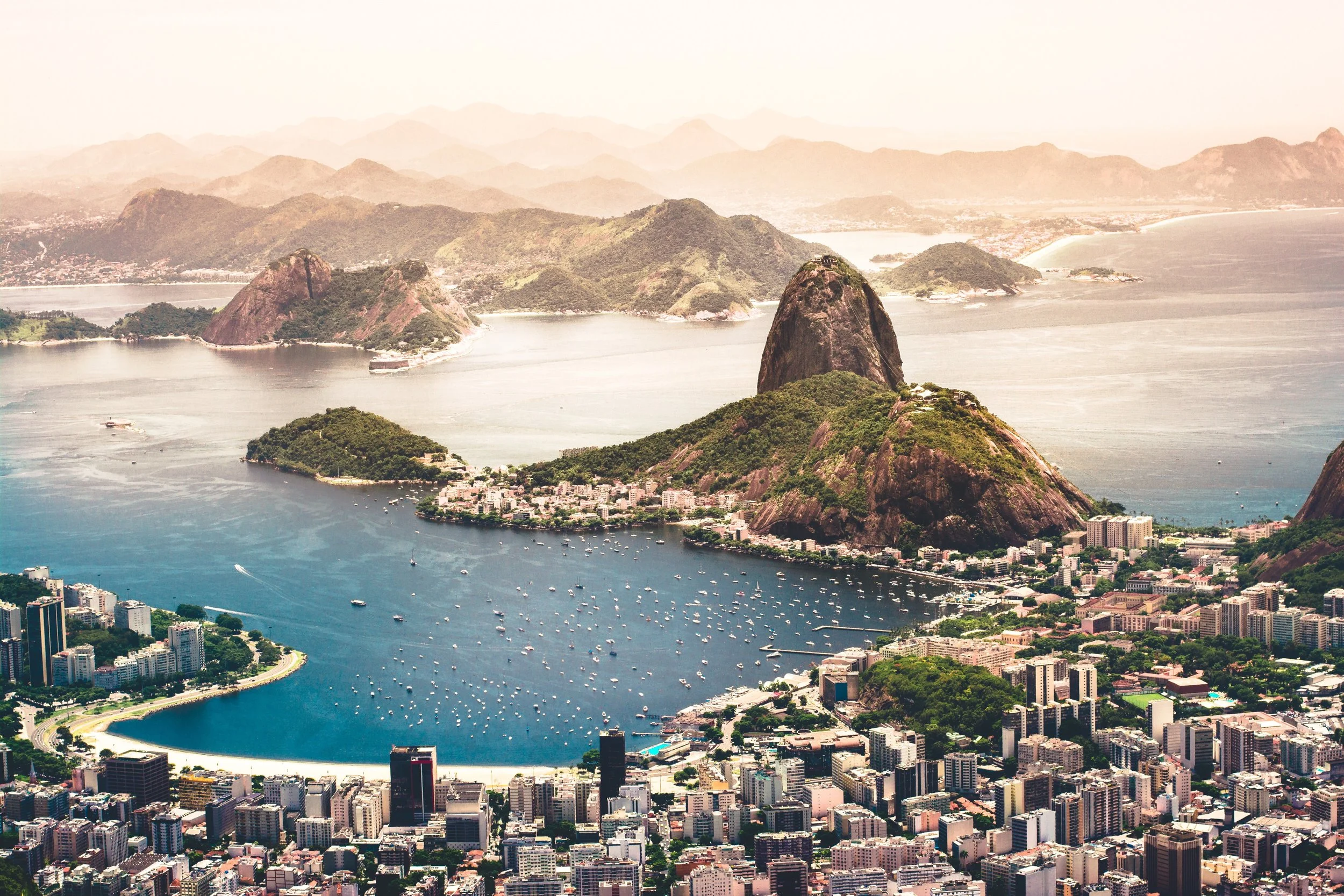
RIO DE JANEIRO—Tatiana Aparecida de Jesus used to walk the city’s streets as a sex worker, high on crack cocaine. Last year, the mother of five joined a small Pentecostal congregation in downtown Rio called Sanctification in the Lord and left her old life behind.

“The pastor hugged me without asking anything,” said Ms. de Jesus, 41, who was raised a Catholic and is one of more than a million Brazilians who have joined an evangelical or Pentecostal church since the beginning of the pandemic, according to researchers. “When you are poor, it makes so much of a difference when someone just says ‘good morning’ to you, ‘good afternoon,’ or shakes your hand,” she said.

This has been a huge advantage that the Protestants have pressed home.

These emerging Protestant flocks don’t have a shortage of priests as does the Catholic Church does –- where parishioner-to-clergy ratio mean there’s one priest per several thousand parishioners. Let’s keep reading:

For centuries, to be Latin American was to be Catholic; the religion faced virtually no competition. Today, Catholicism has lost adherents to other faiths in the region, especially Pentecostalism, and more recently to the ranks of the unchurched. The shift has continued under the first Latin American pope.


Please respect our Commenting Policy

Plug-In: A fascinating look back at the last year in the life of the Rev. Martin Luther King, Jr.

Plug-In: A fascinating look back at the last year in the life of the Rev. Martin Luther King, Jr.

Today is Martin Luther King Jr. Day, a day of remembrance for the influential civil rights leader.

Adelle M. Banks, longtime national reporter for Religion News Service, marks the holiday with a fascinating look back at King’s last full year of life.

Among the details that Banks uncovered in a review of RNS’ 1967 archives: The Baptist pastor’s “growing outspokenness against the Vietnam War and his advocacy for the poor, while it garnered support from celebrities such as Dr. Benjamin Spock, drew criticism from evangelist Billy Graham and others.”

Banks, a 27-year RNS veteran, spearheaded an exceptional 2018 project on the 50th anniversary of King’s April 4, 1968, assassination.

Those stories, still worth a read, include:

Remembering King’s last sermon with renewed hope

A faithful journey from cotton field to White House: Q&A with a sanitation worker

Three Memphis sites key to King’s legacy draw visitors

Power up: The week’s best reads

1. Why the Catholic Church Is losing Latin America: “The rise of liberation theology in the 1960s and ’70s, a time when the Catholic Church in Latin America increasingly stressed its mission as one of social justice, in some cases drawing on Marxist ideas, failed to counter the appeal of Protestant faiths,” report the Wall Street Journal’s Francis X. Rocca, Luciana Magalhaes and Samantha Pearson.

“Or, in the words of a now-legendary quip, variously attributed to Catholic and Protestant sources: ‘The Catholic Church opted for the poor and the poor opted for the Pentecostals.’”

The Journal’s story from Brazil follows The Associated Press’ recent trend piece (highlighted in last week’s Plug-in) on a surge of evangelicals in Spain, fueled by Latin Americans.


Please respect our Commenting Policy

New podcast: Reformed Church in America split points to rising tensions in Calvin country

New podcast: Reformed Church in America split points to rising tensions in Calvin country

Growing up as a Texas Baptist (long ago) I was predestined to know next to nothing about what some have called the great “northern kingdom” of American evangelicalism. Yes, we can debate whether “evangelical” is an accurate description of the Calvinist world based in Grand Rapids, Mich., and other cities and towns in the Midwest.

I had to learn some of this lingo when I moved to Central Illinois and then when I broke into religion-beat work in Charlotte, N.C., a city with every imaginable form of Presbyterian and Reformed church life.

As I mentioned in this week’s “Crossroads” podcast (CLICK HERE to listen), I quickly learned that the Reformed Church in America was a rather centrist flock, while the Christian Reformed Church was much more conservative, in terms of doctrine and culture. I would not have called either of these bodies a “Mainline Protestant” denomination.

Things change. Eventually, the RCA started arguing about the familiar subjects that have divided so many religious bodies — biblical authority and sex. This leads us to a Religion News Service report: “Reformed Church in America splits as conservative churches form new denomination.” Here is the overture:

(RNS) — On New Year’s Day, 43 congregations of the Reformed Church in America split from the national denomination, one of the oldest Protestant bodies in the United States, in part over theological differences regarding same-sex marriage and the ordination of LGBTQ clergy.

The departure of the theologically conservative congregations to the new group, the Alliance of Reformed Churches, leaves some who remain in the RCA concerned for the denomination’s survival. Before the split, the nearly 400-year-old denomination had fewer than 200,000 members and 1,000 churches.

At least 125 churches from various denominations are in conversation with ARC leaders about joining.

“Various denominations?” Hold that thought.


Please respect our Commenting Policy

Add that forthcoming U.S. House report on Jan. 6 riot to your 2022 religion news calendar

Add that forthcoming U.S. House report on Jan. 6 riot to your 2022 religion news calendar

We can expect that the U.S. House select committee investigating the Jan. 6 Capitol attack will unveil findings in time to help Democrats' Nov. 8 prospects and, thus, spur Republican ire.

Even if the report ignores the matter, this report can peg thoughtful and thorough journalistic re-examination of the religious significance of continuing furor over the nine troublesome weeks from the 2020 vote through Jan. 6. Carefully balanced, non-partisan contexting will be needed.

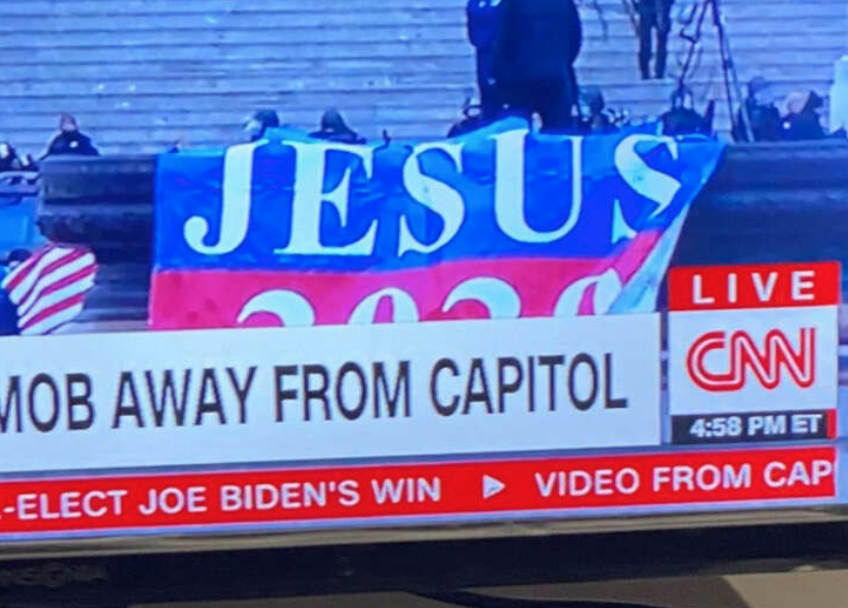
Media and amateur videos show us that -- yes -- some of the rioters uttered prayers and brandished Christian signs, slogans and symbols. Were they isolated cranks, or representative of a broader religious phenomenon, or a bit of both?

A New York Times anniversary walkup last week counted 275 defendants with federal charges for obstructing Congress, 225 or so for acts against police, and another 300 for minor trespass or disorderly conduct. So far, a fifth of these defendants have admitted legal guilt.

Importantly, the Times reported that the mob included "church leaders" (plural).

In a national newspaper, that phrase suggests not some small-time parsons from independent churches but notable media stars, denominational and "parachurch" officials, influential college and seminary thinkers, or at least local pastors from "big steeple" congregations. In fact, that reference appears to echo this Times passage that has been discussed several times here at GetReligion, referring to religious image on Jan. 6:

The blend of cultural references, and the people who brought them, made clear a phenomenon that has been brewing for years now: that the most extreme corners of support for Mr. Trump have become inextricable from some parts of white evangelical power in America.

At some point, it would be good to cite examples of “church leaders” linked to “evangelical power.”

By contrast, last year The Washington Post's Michelle Boorstein perceptively profiled certain of the rioters to highlight Americans' growing trend of concocting idiosyncratic "do it yourself" religions for themselves.


Please respect our Commenting Policy

Return of 'nuns' growing weed: A Rolling Stone puff piece on this emerging religious group

Return of 'nuns' growing weed: A Rolling Stone puff piece on this emerging religious group

Those PR-friendly, pot-puffing Sisters of the Valley are back. I’m sure that this is shocking news (#NOT) to readers who know anything about the history of this group.

Here’s a GetReligion flashback. Some reporters struggled, in early happy talk features about this group, to make it clear these “sisters” were not, in fact, some progressive Catholic order. One classic piece inspired a blog post by Catholic Deacon Greg Kandra — a CBS News professional in his career before moving to the altar — with this classic headline: “Newsweek, Go Home. You’re Drunk. Those Aren’t Nuns.

Now we have an update about the Sisters of the Valley in, logically enough, Rolling Stone. Here’s the double-decker headline on that:

Our Ladies of the Perpetual High

How a New Age order of feminist nuns is reimagining spiritual devotion and trying to heal the world — one joint at a time

Yes, some headline writers cannot resist “Our Lady” jokes, which is unfortunate. However, the second part of that headline is clear about the contents of this feature, which helps readers know what is what and who is who. This clarity is what makes this story worth reading.

Before we get to that, let me remind readers of a key point in that “thinker” that ran here at GetReligion last weekend: “Two think pieces on changes in American religious life, with a few political twists.” One of the pieces that I recommended was a Rod “Live Not By Lies” Dreher post pointing to a new blast of information from the Pew Research Center team.

Forget politics for a moment. The headline on Rod’s post — “Christianity Declines — But Not ‘Spirituality’ — is what connects that Pew data to this new Rolling Stone feature. Dreher wants to note a renewed surge in a tend that has been around for decades (think “Sheilaism”). Here is a key passage:

America continues to transition to its post-Christian reality. … One of the most interesting, and unexpected, developments is that in the US, relatively few of these people who are falling away from Christianity are becoming atheists. Rather, they are cobbling together a bespoke bricolage religion, one designed just for them.


Please respect our Commenting Policy