Supreme Court

Plug-In: Nation's religion-beat pros gather -- in person this time -- for annual conference

Plug-In: Nation's religion-beat pros gather -- in person this time -- for annual conference

BETHESDA, Md. — Let’s make this quick. I need sleep.

Seriously, I wrote this week’s post after an exhilarating — but exhausting — first day of the Religion News Association’s annual meeting.

Journalists who cover religion news — including ReligionUnplugged.com’s own Meagan Clark and Hamil Harris — convened Thursday at a hotel northwest of Washington, D.C.

It’s RNA’s first in-person conference in 2½ years.

Session topics range from expanding global religion coverage to when to label a religious group a cult. Follow the Twitter hashtag #RNA2022 to keep up with all the Godbeat discussions.

But be warned: The news doesn’t stop for any conference.

As attendees picked up their name tags Thursday morning, the U.S. Supreme Court “ruled 8-1 in favor of a death row inmate seeking to hear vocal prayers and feel his pastor’s touch as he dies,” as the Deseret News’ Kelsey Dallas reports.

“OF COURSE the Supreme Court is making me handle breaking news during my conference trip,” Dallas tweeted.

For more background on the case, see past coverage here and here.

Power Up: The Week’s Best Reads

1. Jackson invokes her Christian faith, stays mum on specifics: “Judge Ketanji Brown Jackson has put her religious faith front, center — and vague.” I love that lede by The Associated Press’ Peter Smith.

Please respect our Commenting Policy

Can someone please report on the real Ginni Thomas? The truth is out there

Can someone please report on the real Ginni Thomas? The truth is out there

If it’s late winter, it must be time to report on the U.S. Supreme Court, its upcoming decisions and particularly about its most senior justice, Clarence Thomas.

Thomas is also the lone Black justice, although that may change in that President Joe Biden is poised elect the first black woman to the high court.

Two investigative stories have come out recently about Ginni Thomas, the second wife of the Supreme Court justice, and how her political activities are allegedly compromising her famous husband. One was this New Yorker piece and the other is this lengthy New York Times Magazine piece. I’ll be critiquing the latter in a moment, but I do want to excerpt one paragraph from the New Yorker piece:

Ginni Thomas has complained that she and her husband have received more criticism than have two well-known liberal jurists with politically active spouses: Marjorie O. Rendell continued to serve on the appeals court in Pennsylvania while her husband at the time, Ed Rendell, served as the state’s governor; Stephen Reinhardt, an appeals-court judge in California, declined to recuse himself from cases in which the American Civil Liberties Union was involved, even though his wife, Ramona Ripston, led a branch of the group in Southern California.

She may have a point. When I read the adulation that that the Times accords to people like Justice Ruth Bader Ginsburg (who made no secret of her political leanings) or Hillary Clinton (who wrote the book on activist wives), Ginni Thomas may be justified in complaining.

This is not to say she doesn’t have her issues, even with her Republican friends, and I’m not objecting to the reporting on Ginni Thomas’ activities about town. Fair is fair, but I simply don’t see the same disdain and suspicion meted out to activist spouses on the Left. Whenever the latter is politically active, that’s laudable. But if it’s someone on the cultural Right –- well, they’re compromisers.

I am no expert on anything pertaining to the U.S. Supreme Court; I’ve covered two or three hearings in person over the years and that’s that. So I’ll stick to the religious content of the piece. Here are two paragraphs that appear in the middle of the piece:


Please respect our Commenting Policy

Podcast: What's the SCOTUS story? New Colorado case focuses on free speech, not religious liberty

Podcast: What's the SCOTUS story? New Colorado case focuses on free speech, not religious liberty

Here we go again?

That’s a logical question, in light of the news that — once again — church-state activists on left and right are preparing for more U.S. Supreme Court arguments involving the state of Colorado, a traditional Christian believer, LGBTQ rights and the First Amendment.

That was the news hook for this week’s “Crossroads” podcast (CLICK HERE to tune that in). But to understand that conversation, it really helps to dig into a key passage or two in the majority decision in that 2019 SCOTUS case focusing on Masterpiece Cakeshop and the Colorado Civil Rights Commission (full text .pdf here).

So, all rise. The writer is, of course, then Justice Anthony Kennedy:

The laws and the Constitution can, and in some instances must, protect gay persons and gay couples in the exercise of their civil rights, but religious and philosophical objections to gay marriage are protected views and in some instances protected forms of expression. While it is unexceptional that Colorado law can protect gay persons in acquiring products and services on the same terms and conditions as are offered to other members of the public, the law must be applied in a manner that is neutral toward religion.

The result was one of those narrow decisions much beloved by Chief Justice John Roberts.

Then, what you hear in this next passage is the sound of Kennedy punting the crucial religious-liberty decision in this First Amendment case into the mists of the future:

The outcome of cases like this in other circumstances must await further elaboration in the courts, all in the context of recognizing that these disputes must be resolved with tolerance, without undue disrespect to sincere religious beliefs, and without subjecting gay persons to indignities when they seek goods and services in an open market.


Please respect our Commenting Policy

What role will religion play in current U.S. Supreme Court nomination intrigue?

What role will religion play in current U.S. Supreme Court nomination intrigue?

When President Biden soon chooses a successor to Supreme Court Justice Stephen Breyer, journalists will need to keep in mind highly contentious religious issues, not just on matters like abortion but over how much to limit First Amendment claims of religious freedom, as in same-sex disputes, and where to draw lines on church-state separation.

Liberal, secularist and separationist voices are quick out of the gate with warnings to Biden about the Court's 6-3 conservative majority. Americans United for Separation of Church and State wants a new justice who'll be "a bulwark against the court's ultra-conservative majority, who seem set on redefining religious freedom as a sword to harm others instead of a shield to protect all of us." This lobby asserts that "our democracy depends on it."

A must-read from the cry-of-alarm forces is the analysis of numerous recent Supreme Court religion rulings from Ian Millhiser — Vox.com's specialist covering law and "the decline of liberal democracy." He asserts that a religion "revolution" is the "highest priority" of the Court's six Republican appointees, who are "rapidly changing the rules of the game to benefit" religious interests.

However, Kelsey Dallas at Salt Lake City's Deseret News tabulates that Breyer, in tandem with fellow liberal Justice Elena Kagan, voted with conservative justices in nine out of the 13 Court's decisions from 2006 to 2020 that backed religious-freedom claims.

The most illustrative example of the Jewish justice's thinking came in 2005 with two apparently contradictory rulings about Ten Commandments displays on public property. Beyer formed a 5-4 majority to permit the display on the Texas state Capitol grounds (Van Orden v. Perry) but then switched to create a 5-4 majority that outlawed displays in two Kentucky courtrooms (McCready County v. A.C.L.U.)

How come? Breyer advocated the "fullest possible" religious liberty and tolerance to avoid societal conflict.


Please respect our Commenting Policy

Catholics for Choice boldly projects its own credo before the 2022 March for Life

Catholics for Choice boldly projects its own credo before the 2022 March for Life

When progressive Catholics list their heroes in the church hierarchy most would include Cardinal Wilton Gregory of Washington, D.C.

When preparing their own lists, most conservative Catholics would include Archbishop Salvatore J. Cordileone of San Francisco.

Thus, it's important to note how these two shepherds reacted to the spectacular protest staged by Catholics for Choice during the 2022 Vigil for Life inside the Basilica of the National Shrine of the Immaculate Conception.

While worshippers gathered for overnight rites and prayers before the Jan. 21st March for Life, pro-abortion-rights Catholics -- using a nearby projector -- displayed their own beliefs on the 329-foot tower and facade of America's largest Catholic sanctuary. "Catholics for Choice" appeared inside a glowing cross, accompanied by a litany of slogans, such as "Stop stigmatizing; Start listening," "Mi cuerpo, mi decision (my body, my decision in Spanish)" and "Pro-choice Catholics you are not alone."

Archbishop Cordileone released this response, via Twitter, using language implying the actions of Satan: "The attempted desecration is enormous. Diabolical. Mother Mary, pray for them, now and at the hour of death. Amen."

Cardinal Gregory's press statement pointed readers to a specific scripture to find the context for his words: "The true voice of the Church was only to be found within The Basilica. … There, people prayed and offered the Eucharist asking God to restore a true reverence for all human life. Those whose antics projected words on the outside of the church building demonstrated by those pranks that they really are external to the Church and they did so at night -- John 13:30."

That verse describes the moment when Judas exits the Last Supper to betray Jesus: "So … he immediately went out; and it was night."

Catholics for Choice offered no apologies on Twitter: "Our faith teaches us that EVERY person, including the 1 in 4 abortion patients who are Catholic, should be able to make their own decisions about their lives and bodies without interference from the church or the state. #AbortionIsEssential!!" The group's communications director, Ashley Wilson, added: "I am tired of feeling shame and stigma for being a pro-choice Catholic. And I'm not here for people to judge my own personal relationship with God."


Please respect our Commenting Policy

Texas synagogue attack highlights press failure to consistently cover attacks against sanctuaries

Texas synagogue attack highlights press failure to consistently cover attacks against sanctuaries

The many cases of anti-Catholic vandalism have been documented by me here at GetReligion in recent years. Also well-documented have been how many professionals in the mainstream media keep overlooking such criminal activities.

These incidents — even as 2021 came to an end and now weeks into 2022 — just keep happening, yet they continue to be given little to no mainstream news coverage. It seems, at times, as if violence against religious groups — be they Catholics or otherwise — is a subject that isn’t worthy of coverage. This trend is also a lesson on how the press uses language, what terms journalists use to describe crimes and whether the story lasts just a day or for weeks and months.

Journalists also need to start asking: What are the motivations for these kinds of attacks?

A Catholic priest, parishioners and Catholic schoolchildren were among the dozens injured on Nov. 21 when authorities said Darrell E. Brook, driving an SUV, allegedly plowed into marchers during a Christmas parade in Waukesha, Wisc. Six people were killed.

The incident would get additional attention for its inability to get widespread national media coverage. Accusations quickly emerged that key facts didn’t fit the dominant media narrative.

Truth is, not all hate crimes are created equal. Crimes against Catholic churches are routinely ignored by national news outlets. We can also see a troubling journalism trend at work in coverage of the recent anti-Semitic attack against a Texas house of worship.

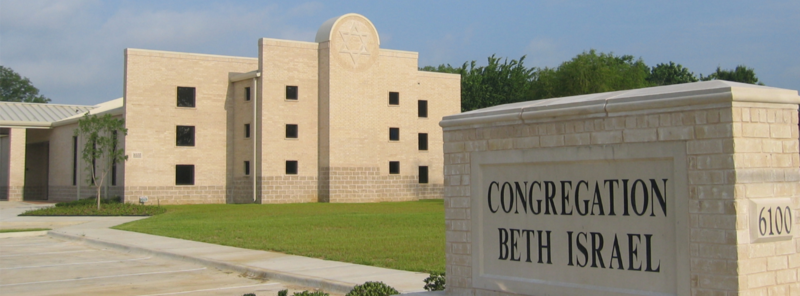
The gun-wielding suspect in that Jan. 15 synagogue attack, British citizen Malik Faisal Akram, took Rabbi Charlie Cytron-Walker and three other congregants hostage at the Congregation Beth Israel in Colleyville, Texas.

The standoff with FBI agents was an act of terrorism and resulted in Akram’s death. National news coverage was intense during the standoff — but soon evaporated.


Please respect our Commenting Policy

Plug-In: The top religion-beat stories of 2022? Here are some likely scenarios

Plug-In: The top religion-beat stories of 2022? Here are some likely scenarios

What stories will religion reporters be chasing in 2022?

Veteran Godbeat pro Kimberly Winston asked a handful of national journalists — myself included — that question on Interfaith Voices’Inspired” radio show.

“Every one of the reporters we asked had a different answer,” Winston noted.

That’s certainly true.

But a few common themes emerged.

The Washington Post’s Michelle Boorstein, The Conversation’s Kalpana Jain and I all mentioned abortion as the U.S. Supreme Court contemplates overturningor at least severely curtailing Roe v. Wade.

Other topics cited: the COVID-19’s pandemic ongoing impact on religion and the role of faith and Christian nationalism — so evident in the Jan. 6, 2021, Capitol riot — in the midterm elections.

The Los Angeles Times’ Jaweed Kaleem said he’ll be reporting on religious activism related to the climate and environment. Faithfully Magazine’s Nicola Menzie expects to keep monitoring issues of importance to Christian communities of color, such as mental health.

By the way, the 2022 question was just one part of a fascinating show in which Winston delved into how religion reporters get their stories.

I was truly captivated, except for the parts where I had to listen to my own voice. I’d highly recommend it.

Look for more predictions for the coming year — including a major global story — in this week’s Inside the Godbeat section.


Please respect our Commenting Policy

Religion news 2021: Which story was No. 1? Return of Taliban or Jan. 6 riot at U.S. Capitol?

Religion news 2021: Which story was No. 1? Return of Taliban or Jan. 6 riot at U.S. Capitol?

For journalists who braved the chaos, the Jan. 6th riot on Capitol Hill offered a buffet of the bizarre -- a throng of Proud Boys, QAnon prophets, former U.S. military personnel and radicalized Donald Trump supporters that crashed through security lines and, thus, into history.

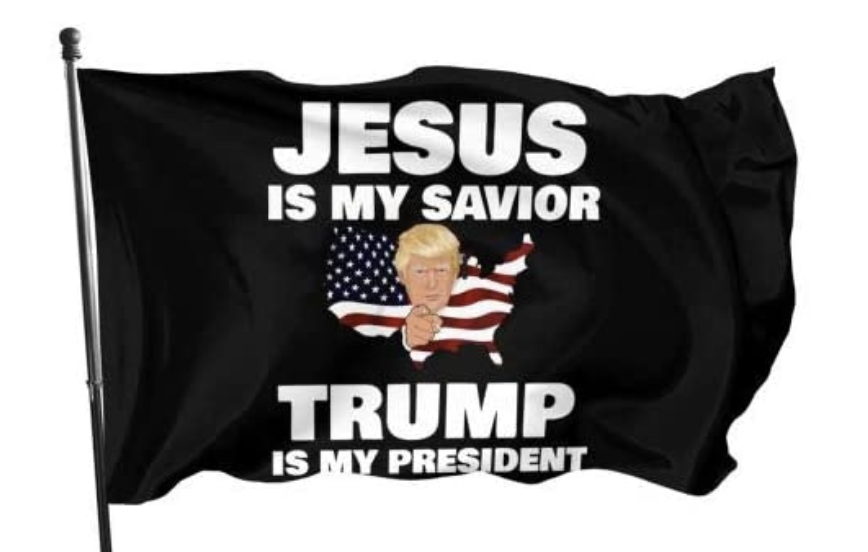
Many protestors at Trump’s legal "Save America" rally carried signs, flags and banners with slogans such as "Jesus is my Savior, Trump is my president" or simply "Jesus 2020." In this context, "Jesus saves" took on a whole new meaning.

Some of that symbolism was swept into the illegal attack on the U.S. Capitol.

In its poll addressing major religion events in 2021, members of the Religion News Association offered this description of the top story: "Religion features prominently during the Jan. 6 assault on the U.S. Capitol by pro-Trump insurrectionists. Some voice Christian prayers, while others display Christian or pagan symbols and slogans inside and outside the Capitol."

Consider, for example, Jacob Anthony Chansley -- or Jake "Yellowstone Wolf" Angeli. With his coyote-skin and buffalo-horns headdress, red, white and blue face paint and Norse torso tattoos, the self-proclaimed QAnon shaman, UFO expert and metaphysical healer became the instant superstar of this mash-up of politics, religion and digital conspiracy theories.

"Thank you, Heavenly Father … for this opportunity to stand up for our God-given inalienable rights," he said, in a video of his U.S. Senate remarks from the vice president's chair. "Thank you, divine, omniscient, omnipotent, omnipresent Creator God for filling this chamber with your white light and love. Thank you for filling this chamber with patriots that love you and that love Christ. …

“Thank you for allowing the United States of America to be reborn. Thank you for allowing us to get rid of the communists, the globalists and the traitors within our government."

That was one loud voice. A big question that must be answered, in future trials and the U.S. House investigation, is whether it's true -- as claimed by the New York Times -- that the "most extreme corners of support for Mr. Trump have become inextricable from some parts of white evangelical power in America."


Please respect our Commenting Policy

New podcast: Top Godbeat story of 2021? Look for Jan. 6 religion hooks (#DUH)

New podcast: Top Godbeat story of 2021? Look for Jan. 6 religion hooks (#DUH)

beat stories.

Trust me, I understand that preparing the ballot for this poll is a thankless job. One of the hardest tasks is finding a way to describe some of the broader trends during any given year. It’s easier — most of the time — to describe singular events.

During this week’s “Crossroads” podcast (CLICK HERE to tune that in), host Todd Wilken asked me to describe some of the patterns that I have seen in the RNA poll results through the decades.

Trend No. 1 is clear: Name the biggest political story of the year and look for a religion angle. After all, politics is the true religion of many folks who run newsrooms.

Trend No. 2 works about 76% of the time: What did the pope do this year, especially if it has any implications for U.S. political fights over moral and social issues (see trend No. 1).

Trend No. 3 comes and goes: What did liberal leaders of the Seven Sisters of Mainline Protestantism proclaim about sex and did it cause new revolts that might split their churches? Every now and then, the Southern Baptists slip in with battles over sex, race or politics (newsworthy topics, in other words).

In light of these trends, it was easy to predict that the RNA poll’s top story for 2021 would be:

Religion features prominently during the Jan. 6 assault on the U.S. Capitol by pro-Trump insurrectionists. Some voice Christian prayers, while others display Christian or pagan symbols and slogans inside and outside the Capitol.

That’s actually a careful wording and, in particular, note that the RNA leaders refrained (this must have been hard) from including a reference to “white evangelicals.”

The key, in this description, is the tension between “prominently” and “some,” as in the folks saying “Christian” prayers. It’s safe to assume that this is the rebel that they had in mind (as quoted in one of my “On Religion” columns):


Please respect our Commenting Policy