Scriptures

Thinking about AI and faith: Can a computer 'get' what it means to be truly human?

Thinking about AI and faith: Can a computer 'get' what it means to be truly human?

Every now and then, I get an email from Ira Rifkin, who for many years wrote “Global Wire” posts for GetReligion about journalism issues in international events and trends. He signed off about half a year ago with an edgy post called, “Ciao, GetReligion: Thanks, all, for my tenure. Critic that I am, though, here are some final thoughts.”

With his unique mix of Jewish and Buddhist disciplines, Rifkin was also a keen observer of new ideas and concepts linked to what mass media tends to call “spirituality,” as opposed to more conventional forms of religious faith.

Several weeks ago, he send me a URL for a Los Angeles Times feature that ran with this headline: “Can religion save us from artificial intelligence?

I immediately put it into my “think piece” file, but held on to it for a while to put some cushion between it and my podcast/post with this title: “When is preaching a 'news' story? Ah, the temptation of ChatGPT sermons.” Here is a byte of that:

Right now, one of the hot topics in the public square is the rise of artificial intelligence and, to be specific, the ChatGPT website. Thus, this week’s “Crossroads” podcast (click here to tune that in) focused on several “newsy” angles of the recent Associated Press story that ran with the headline, “Pastors’ view: Sermons written by ChatGPT will have no soul.”

During the podcast, I riffed on the whole issue that different kinds of technology can shape the content of communications in different ways. If ChatGPT sermons have a sense of “soul,” it would be a “soul” that is defined by the creator of the software and the tech platform.

The Los Angeles Times story that Rifkin sent me opens with an AI sermon hook — but the issue at the heart of the story is much, much bigger than that.

Nevertheless, it helps to start this “think piece” recommendation with that feature’s overture:

Sometimes Rabbi Joshua Franklin knows exactly what he wants to talk about in his weekly Shabbat sermons — other times, not so much. It was on one of those not-so-much days on a cold afternoon in late December that the spiritual leader of the Jewish Center of the Hamptons decided to turn to artificial intelligence.

Please respect our Commenting Policy

Podcast: Was the attack on a conservative Presbyterian school in Nashville a religion story?

Podcast: Was the attack on a conservative Presbyterian school in Nashville a religion story?

Was the attack on the elementary school at Nashville’s Covenant Presbyterian Church a religion-news story?

Of course it was, for at least four reasons that we discussed during this week’s “Crossroads” podcast (click here to tune that in).

(1) It was an attack on a conservative Christian school at a conservative Presbyterian church in a city that is often called the buckle fn the Bible Belt (although locals know that the Nashville establishment, especially in media, is left of center).

(2) Religious groups have played a major role in Tennessee debates about parental rights, education and LGBTQ issues. What does that have to do with the shooting? Hold that thought.

(3) Religious groups have played a major role in discussions of gun-control legislation in Tennessee and, in this case, it is important to avoid political labels such as “liberal” and “conservative” in that discussion.

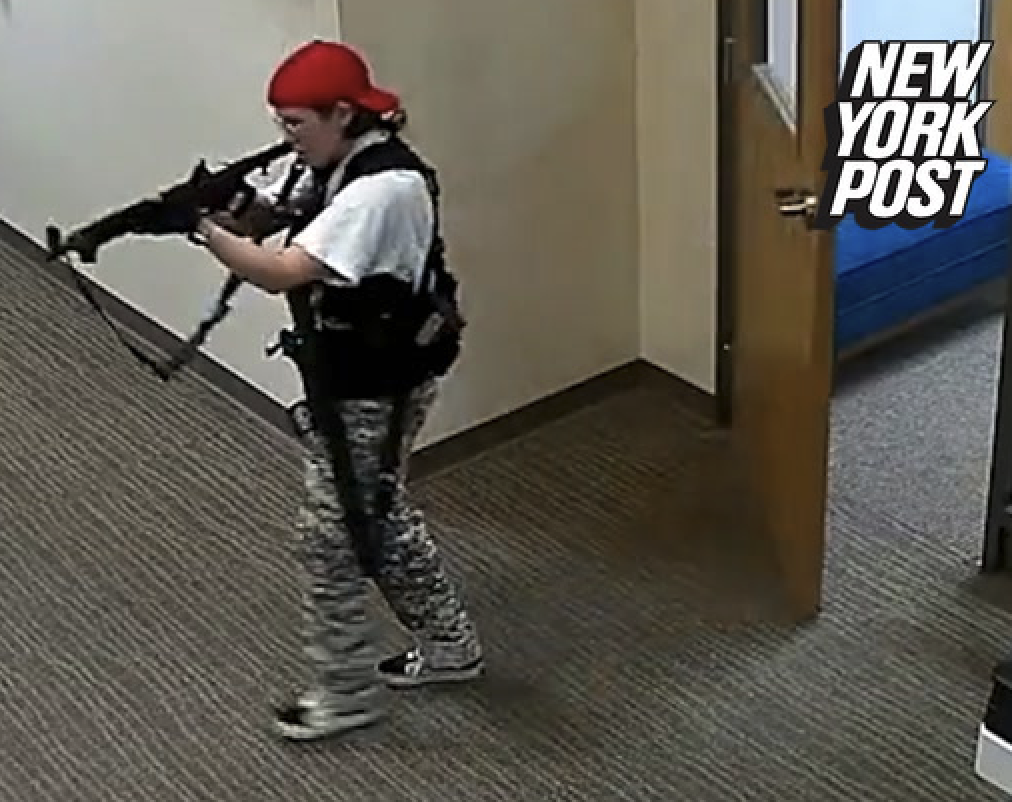
(4) The young adult who attacked the Covenant School was a former student there. Audrey Hale had recently identified as Aiden Hale in social media, with male pronouns. Hale was still living in a conservative Christian home, with a mother who both was a strong advocate of gun control and on the staff of Village Chapel in Nashville.

What else do news readers know about the shooter? That depends — in this new age of partisan, advocacy media — on which news organizations a reader follows. In most mainstream coverage, even in Nashville, questions about the life and beliefs of the shooter have all but vanished.

Consider this short paragraph late, late in a Religion News Service follow-up report: “Grief, fear haunt Nashville as residents gather to mourn in wake of Covenant shooting.”

Very little is known about the shooter, a former student at Covenant who was killed by police. The shooter reportedly left a manifesto that has not been made public. 

Really? “Very” little?


Please respect our Commenting Policy

Time to step up the mainstream coverage of transgender debates within U.S. religion

Time to step up the mainstream coverage of transgender debates within U.S. religion

News about transgender issues tends to deal with women’s athletic competitions and shelters, pronouns, girls’ locker rooms, public school sex education, competing rights claims (with parents on both sides of the dates) and resulting political and legal disputes.

There’s been less coverage of medical morality, especially concerning under-aged youths, and hardly any about how various religious groups understand gender and why.

Journalists should take notice when four vigorous arguments on the religious aspect appear in the space of just six days, as follows.

March 20: The leaders of the U.S. Conference of Catholic Bishops authorized publication (.pdf here) of an important but little-reported transgender policy. It declares that Catholic health-care agencies “must not” perform or help develop chemical or surgical procedures to transform a person’s bodily characteristics into those of the opposite sex.

The stated reasons are theological and moral. Key quotes: “We did not create human nature; it is a gift from a loving Creator,” so human dignity requires “genuine respect for this created order.” Sexual differentiation is a reality “willed by God” and a “ fundamental aspect of existence as a human being.”

Therefore, surgical and chemical techniques to switch a patient’s sexual characteristics, or puberty blockers to halt youths’ natural development, “are not morally justified.” To the bishops, such interventions are “injurious to the true flourishing of the human person” and violate doctors’ basic moral maxim to “do no harm.”


Please respect our Commenting Policy

Religion in politics, again: What is Sikhism, candidate Nikki Haley’s one-time faith?

Religion in politics, again: What is Sikhism, candidate Nikki Haley’s one-time faith?

QUESTION:

What is Sikhism, candidate Nikki Haley’s one-time religion?

THE RELIGION GUY’S ANSWER:

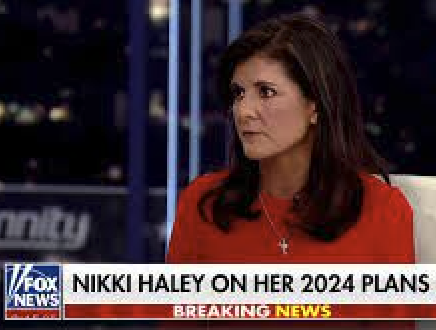
Nikki Haley, who is challenging Donald Trump for the Republican presidential nomination, was raised in the religion of Sikhism  (“SEEK-ism”) by immigrant parents from India. But soon after both Sikh and Methodist weddings she converted to husband Michael’s Christianity.

During Haley’s first run for South Carolina governor in 2010, National Public Radio posted a notably nasty piece by a fellow Indian-American who said “I’m not buying” Haley’s “Christian bit,” noting that “serious churchgoers” and political opponents suspected a “conversion of convenience” in a heavily Protestant state. However, Haley adopted Christianity at age 24 and only entered politics eight years later.

Partners in mixed marriages do have to make religious choices. Haley has repeatedly professed that she is a Christian believer but respects her family and does not criticize its religious heritage. Though a Methodist churchgoer, she occasionally attends Sikh services and has visited the faith’s holiest sanctuary, the Temple of God in Amritsar, India (known as the Golden Temple because it’s covered in gold leaf).

As a journalist, The Guy has no business examining Haley’s soul, but sees her candidacy as a good opportunity for Americans to learn more about her former faith. Sikhism claims to be the fifth-largest world religion after Christianity, Islam, Hinduism and Buddhism, though it does not evangelize and counts only a modest 30 million adherents. Still, that’s double the global number for Judaism.

Sikhism is by far the youngest of the major world religions. Its homeland is the Punjab region of northern India and adjacent Pakistan. The founder, Guru Nanak (1469-1539), was a married accountant with two sons who had a dramatic encounter with God, whence he proclaimed “there is no Hindu; there is no Muslim” and gathered a following as a spiritual teacher.

Western scholars often depict Sikhism as a classic example of syncretism (blending of different religions) or a reforming “offshoot” of Hinduism.


Please respect our Commenting Policy

Parents, schools and 'LGBTQ themes': Why is the Associated Press being so vague?

Parents, schools and 'LGBTQ themes': Why is the Associated Press being so vague?

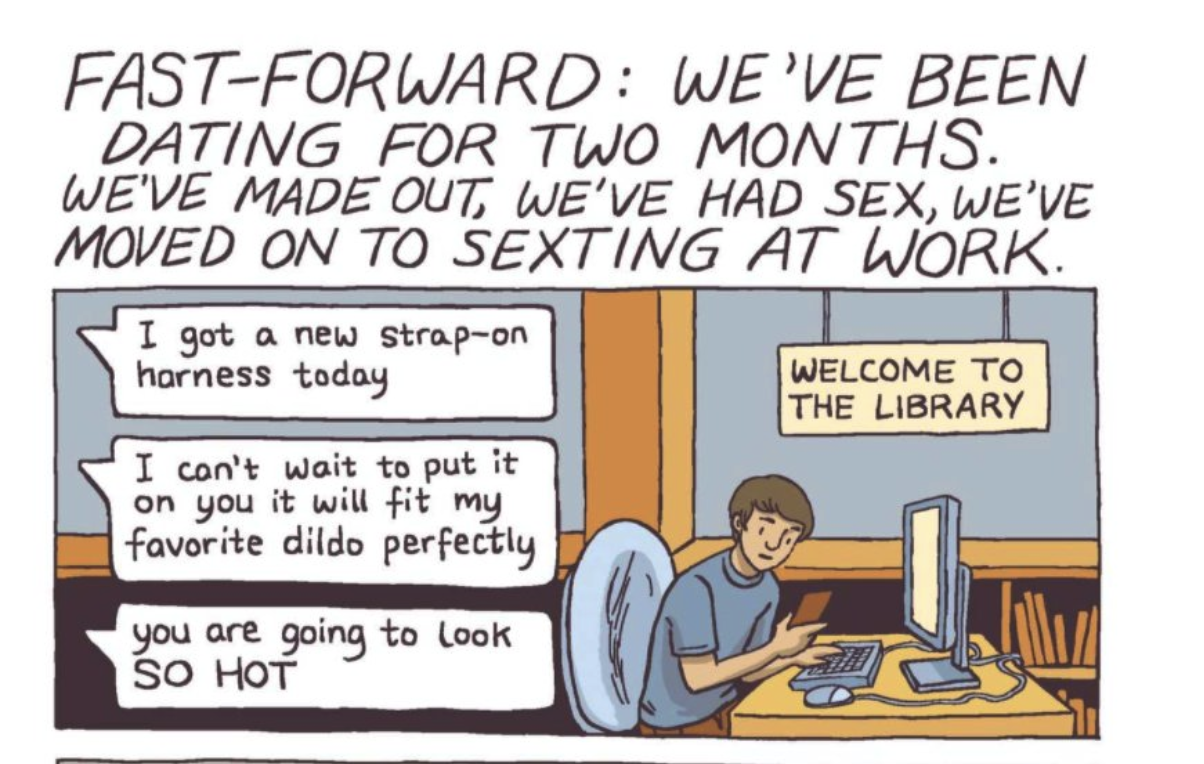
Let’s start here: I am a journalist who is married to a librarian. When it comes to First Amendment issues, we are old-school liberals. However, there are times when — in debates involving public schools, tax dollars and parental rights (without “scare quotes”) — there are First Amendment tensions that cannot be denied.

Week after week, I keep reading angry mainstream-press reports covering battles about removing LGBTQ-audience books from the libraries of schools in various red zip codes across America.

I confess that I am confused about what is happening in many of these debates. I assume that the content of proposed legislation is different in various states, but it’s hard to know the details in the news coverage. In particular, it’s hard to know if books are being removed from (a) mandatory classroom assignments, (b) recommended sex-education lists promoted to students or (c) library bookshelves — period.

Also, I am having trouble understanding the specifics of why parents are upset (and these concerns may vary from case to case). Most news reports stress that conservative (read “traditional” religious believers, either Christian, Jewish or Muslim) parents are upset about all LGBTQ content.

However, if and when journalists deem to quote parents, the parents seem upset about visual images and graphic stories that they consider to be pornographic or not age-appropriate for their children. Are their concerns valid? It’s hard to make judgements about that — since news reports never describe the details of their concerns, perhaps because the content is too strong for publication in newspapers.

With these questions in mind, let’s look at a recent Associated Press report that ran with this headline: “School library book bans are seen as targeting LGBTQ content.” Note that the headline seems to assume that books are banned from library shelves and that’s that. Here is the overture:

DES MOINES, Iowa (AP) — Teri Patrick bristles at the idea she wants to ban books about LGBTQ issues in Iowa schools, arguing her only goal is ridding schools of sexually explicit material.

Sara Hayden Parris says that whatever you want to call it, it’s wrong for some parents to think a book shouldn’t be readily available to any child if it isn’t right for their own child.


Please respect our Commenting Policy

Florida evangelicals mull Trump vs. DeSantis and, #behold, AP finds some diversity!

Florida evangelicals mull Trump vs. DeSantis and, #behold, AP finds some diversity!

Brace yourselves, readers, because I am about to praise an Associated Press story about evangelical voters, Florida and the looming clash between Gov. Ron DeSantis and former President Donald Trump.

But before we go there, let’s review two GetReligion themes about these topics.

(1) During the primaries before the 2016 presidential election, a strong army of evangelical voters provided strategic support for Trump. But just as many evangelicals voted for other GOP candidates in a very, very large Republican field. In the general election, white evangelicals — faced with a choice between Trump and Democrat Hillary Clinton — voted overwhelmingly for Trump.

This created the “81% of evangelicals just love Trump” myth, which hid some crucial divisions inside the complex and diverse world of American evangelicalism.

(2) Trump reached the White House — quite literally — because of the crucial votes of Latino evangelicals and Pentecostal believers in Florida. The growing diversity in Latino voting remained a secret hidden in clear sight until press coverage linked to the 2020 and 2022 elections, including the rise of DeSantis, who is Catholic.

This brings us to the new AP report: “Trump vs. DeSantis: Florida pastors mull conservative issues.”

While it contains some familiar mainstream press language on moral and cultural issues — battles about parental rights and sex education are about “politics,” as opposed to beliefs or doctrines — it offers information and input from a strong set of insiders and experts. Also, there is a truly shocking summary statement about evangelicals in Florida. Hold that thought. Here is the overture:

DORAL, Florida (AP) — Several of Florida’s conservative faith leaders have the ear of two early frontrunners for the 2024 Republican presidential nomination — former President Donald Trump, who lives in Palm Beach, and Gov. Ron DeSantis.

The clergy’s top political priorities are thus likely to resonate in the national campaign for the religious vote, even as both men’s agendas are still being weighed from the pulpit.

The faith leaders’ key issues include education, especially about gender and sexuality, and immigration, a particularly relevant matter in Florida, which is a destination for hundreds of thousands of newcomers and home to politically powerful Latino diasporas.

Guess what? Latino clergy have a rather complex stance on immigration, one rather similar to the views I have heard from mainstream evangelicals for a long time.


Please respect our Commenting Policy

A Jewish book that Christian strategists (and reporters) should be reading right now

A Jewish book that Christian strategists (and reporters) should be reading right now

Much of organized Judaism in the U.S. is “crumbling” and destined to suffer even worse decline in coming years, contends Rabbi Danny Schiff in his new book “Judaism in a Digital Age: An Ancient Tradition Confronts a Transformative Era” (Palgrave Macmillan).

Christian strategists face much the same cultural upheaval and should pay attention to this examination, alongside Jews and religion-beat journalists. Echoes of the “Mainline” Protestant plight are especially noteworthy. And consider the stakes for Judaism when the United States has 70% of the world Jewish population.

Schiff, a scholar with the Jewish Federation of Greater Pittsburgh, focuses on the two branches that dominated U.S. Judaism over the past century. Reform Judaism is devoutly liberal, with broad individual choice on belief and practice. Conservative Judaism is more tradition-minded — but has lately floated in Reform’s direction. The book pays less notice to the faith’s growing third main branch, Orthodoxy, because it is relatively stable as it resists modern pressures.

Here’s the situation in a numerical nutshell: As of 1990, 73% of U.S. Jews identified with these two main non-Orthodox branches. By Pew Research Center’s major Jewish survey in 2020, their combined following was down to 54%, while 32% of Jews reported “no particular identity” in terms of religion. (The Orthodox were a 9% minority that will grow due to higher birth rates.)

For Schiff, the years around 1990 were the end of an era when “partial emancipation” from past social barriers and prejudice turned to “hyper-emancipation.” Antisemitism, though still existing, was extinct in polite society.

A related sign was the prevalence of intermarriage with non-Jews, once relatively rare. By the 2010-2020 decade, 72% of marriages by the non-Orthodox were with non-Jews. Inexorably, that lowered the odds that children would follow in Judaism as adults. Added problems were widespread divorce, less marriage and lower birth rates. Finally, “barriers to leaving Jewish life are virtually non-existent.”


Please respect our Commenting Policy

Who are America's most influential women in religion? Why do they get so little ink?

Who are America's most influential women in religion? Why do they get so little ink?

International Women’s Day last week led to — naturally — a lot of news features about the female half of the human race.

The Washington Post did a piece on women in Afghanistan (as did the New York Times); Agence France Presse wrote on women who work for the Roman Curia; the Jewish Telegraph Agency covered Orthodox women who get around their religion’s prohibition against women chanting Hebrew scriptures to mixed audiences.

I would have liked to have something more diverse and wider-ranging, such as a list of top women who exert influence not only within their own religions, but who have spoken to needs or issues in the general culture. In effect, they have transcended their faith groups.

In short, who are the most influential women in American religion?

Time magazine asked a similar question about evangelicals and the magazine’s list of America’s 25 most influential evangelicals is still referred to 18 years later. Most of those named were men; if there were women, they were paired with their husbands. The only two women who made the list on their own merits were televangelist Joyce Meyer and the late Diane Knippers, president of the Institute on Religion and Democracy.

I have spent much of my professional career profiling women in religion. The first time I put together such a list was in 2014 when I was so frustrated at how so many gifted evangelical women didn’t get near the top billing in the media that men do. In a post titled “Great Women Who Will Never Be Famous,” I wrote about Miriam Adeney, Nancy Pearcey, Robin Mazyck, Susan Wise Bauer, Sarah Zacharias Davis and Dale Hanson Bourke.

I’ve now updated that list to include other religions. I avoided women who got where they are because of their husbands. I am not denigrating their accomplishments, but simply focusing elsewhere.

I do realize that women in many traditions aren’t allowed into formal religious positions, which is why my list includes activists, bloggers and others who work outside regular boundaries.

It’s a sticky wicket, this list. Should one stick with women who have the largest numbers of books written, most news coverage or most impressive social media standings? How about lesser-known women who represent important constituencies?

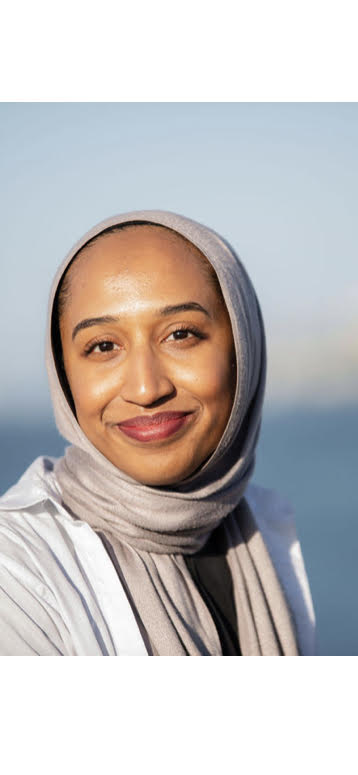
For instance, many of you may not know Nailah Dean, 30, a black/Latina California lawyer and Muslim feminist who speaks out on what she calls the “Muslim marriage crisis.”


Please respect our Commenting Policy

Why do Southern Baptists and many like-minded Protestants still bar women pastors?

Why do Southern Baptists and many like-minded Protestants still bar women pastors?

THE QUESTION:

Why do Southern Baptists and like-minded Protestants bar women pastors?

THE RELIGION GUY’S ANSWER:

Why? Simple. Because they believe that’s what the Bible teaches.

But other conservative evangelical groups see female clergy as biblically proper, for example the Assemblies of God, Evangelical Covenant Church, Free Methodist Church and Salvation Army, along with many independent congregations.

The question is timely because the June 13-14 annual meeting of the Southern Baptist Convention, America’s largest Protestant denomination, will be a landmark on this. The gathering will decide whether to expel any congregation with a women pastor, thus affirming the SBC Executive Committee’s February expulsion of five such congregations.

Among them is one of the Baptists’ biggest and most influential, Saddleback Church in California, long led by popular author Rick Warren. (See this recent GetReligion post and podcast for more information: “Women in ministry remains a hot topic in SBC life, especially at the pulpit level.”)

Among Baptists, a local congregation ordains clergy, and the SBC upholds the total decision-making independence of each local congregation, so each is free to ordain women. However, the June meeting could establish a new nationwide policy that defines women’s ordination as such a doctrinal heresy that fellowship must be severed.

Across history, Christianity has largely been led by men, as with other world religions and with most societal institutions in most times and places, Protestants have been changing that.

In the U.S., a few U.S. Protestant women were ordained beginning in the 19th Century, including by evangelical churches. In the decades after World War Two, major “mainline” Protestant denominations ended their gender barriers. Women now make up 35% of the students at campuses in the Association of Theological Schools.

Though the SBC now anchors the men-only side in the ongoing debate among evangelicals, this was not always the case.


Please respect our Commenting Policy