Scriptures

Two think pieces on changes in American religious life, with a few political twists

Two think pieces on changes in American religious life, with a few political twists

It’s time for another “think piece” weekend double-shot.

In other words, I want to point readers toward two different online features that, at first, may not seem to be related. However, when you look closer you can see the DNA that connects them.

The first is a blog post by my friend Rod “Live Not By Lies” Dreher, but I want readers to consider his post as a mere frame work around a blast of data from the Pew Research Center team. The headline on Dreher’s post states, once again, an old trend (think “Sheilaism”), but one that is being more — not less — important: “Christianity Declines — But Not ‘Spirituality’.”

Dreher points to this quotation from a recent Pew feature, which digs deeper into the center’s mine of religiously unaffiliated research:

The secularizing shifts evident in American society so far in the 21st century show no signs of slowing. The latest Pew Research Center survey of the religious composition of the United States finds the religiously unaffiliated share of the public is 6 percentage points higher than it was five years ago and 10 points higher than a decade ago.

Christians continue to make up a majority of the U.S. populace, but their share of the adult population is 12 points lower in 2021 than it was in 2011. In addition, the share of U.S. adults who say they pray on a daily basis has been trending downward, as has the share who say religion is “very important” in their lives.

Currently, about three-in-ten U.S. adults (29%) are religious “nones” — people who describe themselves as atheists, agnostics or “nothing in particular” when asked about their religious identity. Self-identified Christians of all varieties (including Protestants, Catholics, members of the Church of Jesus Christ of Latter-day Saints, and Orthodox Christians) make up 63% of the adult population. Christians now outnumber religious “nones” by a ratio of a little more than two-to-one. In 2007, when the Center began asking its current question about religious identity, Christians outnumbered “nones” by almost five-to-one (78% vs. 16%).

The recent declines within Christianity are concentrated among Protestants.

A trend this massive will affect almost every area of American life, including politics.

Please respect our Commenting Policy

Return of a Godbeat F-bomb: The 'curse of Ham,' Twelve Tribes history and a Colorado fire

Return of a Godbeat F-bomb: The 'curse of Ham,' Twelve Tribes history and a Colorado fire

Let’s start with a journalism question about the news coming out of Colorado about possible links between the Marshall Fire and a controversial religious group known as the Twelve Tribes.

The New York Times has used that popular journalism F-word — “fundamentalist” — in a major story that ran with this headline: “Colorado Wildfire Inquiry Focuses on Christian Sect.” The read-out under that headline states: “Investigators are looking at the possibility that a fire that destroyed more than 900 homes started on property owned by a fundamentalist Christian sect known as Twelve Tribes.”

Once again, we need to talk about what the word “fundamentalist” means and what it does not mean. Let me ask this question, before we proceed: Is the “Twelve Tribes” movement a “fundamentalist Christian” group in the same sense that Black or White independent Baptist churches found in many or most American cities are accurately described, in doctrinal terms, as “fundamentalist”?

Perhaps the crucial question for journalists covering this story is whether the Twelve Tribes movement is a “sect” or, in sociological terms, an actual “cult”? Hold that thought.

First, here is the overture of the Times story, showing the context for this religion-beat F-bomb:

Investigators looking into the cause of a colossal wildfire in Colorado that forced the evacuation of tens of thousands of people are focusing on a property owned by a Christian fundamentalist sect, after witnesses reported seeing a structure on fire there moments before the blaze spread with astonishing speed across drought-stricken suburbs.

Sheriff Joe Pelle of Boulder County said at a news briefing … that the property owned by Twelve Tribes, which was founded in Tennessee in the 1970s, had become a target of the inquiry after investigators ruled out the possibility that downed power lines might have sparked the fire.

With that in mind, let’s return to the pages of the journalism bible know as the Associated Press Stylebook (h/t to Bobby Ross, Jr., for checking the evolving online edition).

Let us attend.

fundamentalist The word gained usage in an early-20th-century fundamentalist-modernist controversy within Protestantism. In recent years, however, fundamentalist has to a large extent taken on pejorative connotations except when applied to groups that stress strict, literal interpretations of Scripture and separation from other Christians.

In general, do not use fundamentalist unless a group applies the word to itself.


Please respect our Commenting Policy

Sikhs, Santas and prophets: Do beards symbolize good or bad character?

Sikhs, Santas and prophets: Do beards symbolize good or bad character?

THE QUESTION:

Santa take note: Do beards symbolize good or bad character?

THE RELIGION GUY'S ANSWER:

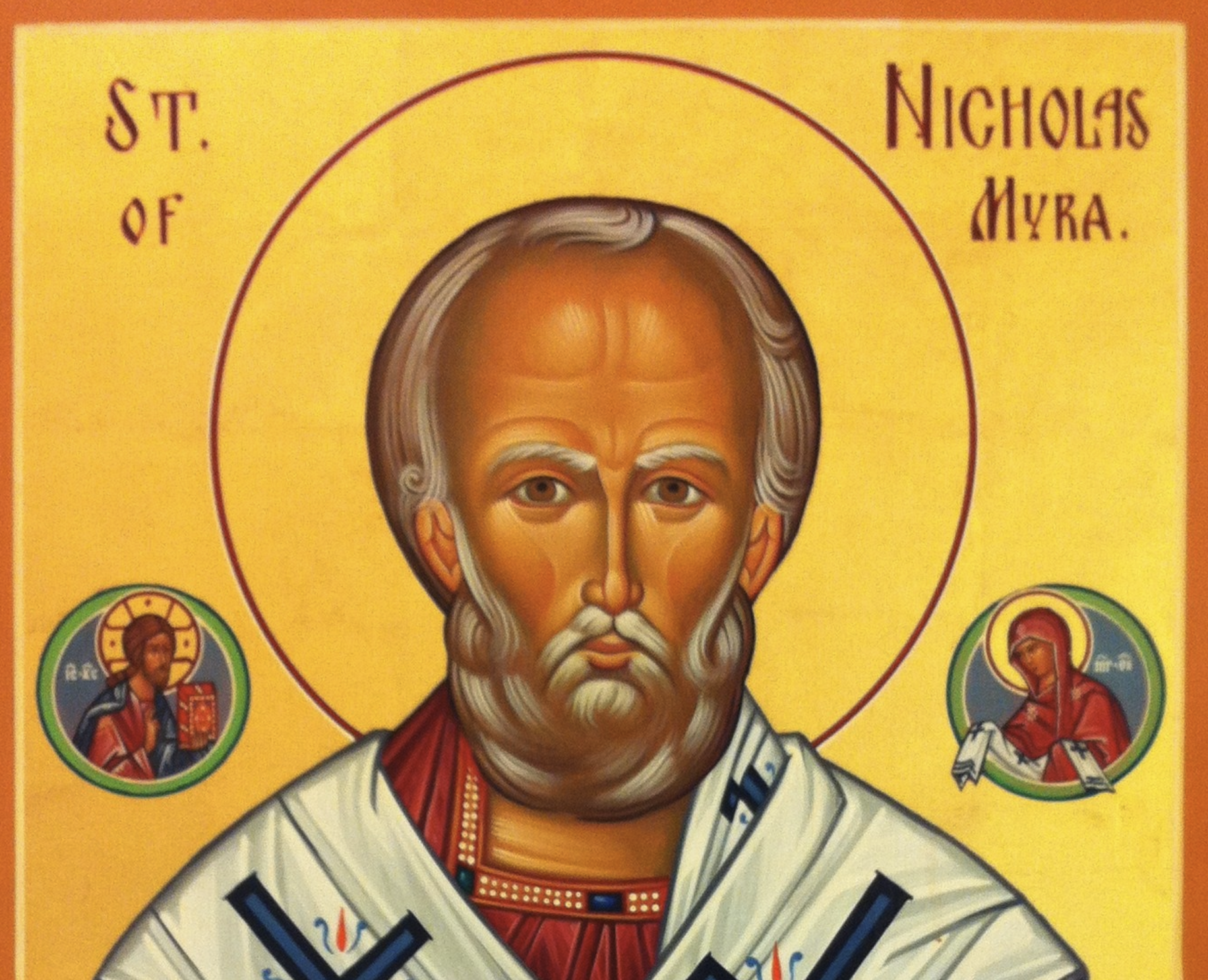
Any self-respecting Santa Claus will have actual or artificial paunch, a red suit and, perhaps most important, that luxuriant white beard. Yet notwithstanding shopping-mall Santas and St. Nicholas, as well as St. Nicholas of Myra, the bearded but monk-skinny 4th Century original, some fear that beards symbolize questionable character.

Take the New York Yankees. Please. In 1973, boss George Steinbrenner was perturbed by a player's sloppy appearance during the National Anthem and ever since no player or other employee has been allowed to have a beard or long hair "except for religious reasons." The Yankees presumably borrowed their famed appearance code from the U.S. military and police departments.

And yet. Jesus Christ is portrayed with a beard, since in the 1st Century mostly the upper crust had the time and money to bother with shaving. As for revered secular figures, Abraham Lincoln decided to become America's first bearded president for unknown reasons just after his 1860 victory (though predecessors John Quincy Adams and Martin Van Buren sported serious sideburns).

A cloud of suspicion hovers over chin whiskers in the U.S.-based Church of Jesus Christ of Latter-day Saints (nicknamed LDS and, formerly, "Mormon"). Headquarters personnel are almost always clean-shaven, and the same for young male missionary duos unless their district leader happens to allow beards.

This is not, however, a matter of doctrine.


Please respect our Commenting Policy

Old, nagging conflicts will continue to dominate religion news in the coming year

Old, nagging conflicts will continue to dominate religion news in the coming year

Yes, there will be a hotly contested U.S. election in 2022. And pretty much every secular and religious faction is keyed up awaiting the U.S. Supreme Court's decision on whether to revise or revoke its rulings that legalized abortion.

Big decisions like this typically land in late June.

Other lingering disputes on the news coverage agenda include the following.

* As the U.S. Senate struggles with a rewrite of the Catholic President Joe Biden's elephantine social-spending bill, the Catholic bishops' conference vehemently opposes any inclusion of abortion funding.

The bishops, along with Orthodox Judaism's synagogue union, also fear (.pdf here) this law will cripple funding for widespread religious preschools. In yet another church-state debate, Biden hopes to end religious exemption from anti-discrimination rules, which went into effect in January.

* Inside the world of Mainline Protestantism, the unending dispute over the Bible and LGBTQ+ issues may produce the biggest U.S. church split since the Civil War at the United Methodist Church's General Conference. Early in 2022, a commission must decide whether the twice-postponed conference, now scheduled for August 29-September 6 in Minneapolis, can finally occur despite two years of COVID-related snarls and, some say, stalling by the UMC establishment.

* The T in LGBTQ won new Methodist attention as just-retired Pennsylvania Bishop Peggy Johnson and her husband, a Methodist pastor, publicized the latter's gender transition while identifying publicly as a "cisgender" male.

Last March, a sizable body of U.S. conservatives announced plans to leave the denomination and unite with former mission churches overseas — primarily in Africa and Asia — to form the "Global Methodist Church," led temporarily by Virginia Pastor Keith Boyette (540-898-4960).


Please respect our Commenting Policy

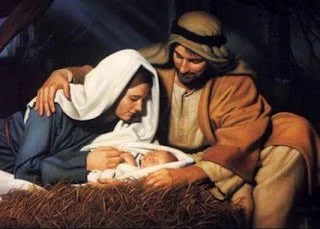
This is actually a doctrinal question: Did the infant Jesus cry?

This is actually a doctrinal question: Did the infant Jesus cry?

MARY (the appropriate name for person asking this question) ASKS: Did the infant Jesus cry?

THE RELIGION GUY'S ANSWER:

That’s a good one. A beloved Christmas carol says “the little Lord Jesus no crying he makes,” which would have been a tiny miracle.

But newborn reality -- and Christian doctrine -- are better expressed by Jesus' "tears" in “Once in Royal David’s City.” This charming children’s carol always begins the majestic “Festival of Nine Lessons & Carols" in King's College Chapel at Britain’s Cambridge University, sung by a choir of men and boys. As always, this service will be heard live at 10 a.m. (Eastern) Christmas Eve over U.S. public radio stations and internationally on the BBC.

Cecil Alexander's words:

For He is our childhood’s pattern; / Day by day, like us, He grew. / He was little, weak, and helpless; / Tears and smiles, like us, he knew. / And he feeleth for our sadness, / And He shareth in our gladness. …

The New Testament Gospels of Matthew and of Luke, which provide the earliest accounts of Jesus’ birth, tell us nothing about what his infancy or childhood were like, except for the incident of teaching in the Jerusalem Temple at age 12. But if pondered in terms of what Christianity has always believed, there’s every reason to assume the Babe of Bethlehem cried just like all other infants, and for the same physiological and emotional reasons.

That’s a solid inference from the faith’s central and mysterious belief that Jesus was God incarnate and at the same time fully a human being (“yet without sin”). The New Testament reports that just like everyone else the adult Jesus could be tired, hungry and perturbed, and experienced pain, grief and death.

In other words, truly and fully human, not inhuman.


Please respect our Commenting Policy

When is the Midnight Mass? All humor aside, there's history (and news) linked to this rite

When is the Midnight Mass? All humor aside, there's history (and news) linked to this rite

Once upon a time, before the creation of the Internet, there were these very, very powerful and all-knowing professionals known as “church secretaries.” Yes, I know that they have evolved into office managers and web czarinas.

But, long ago, if anyone needed to know something about church life, or really needed to reach the pastor (this is before smartphones, too), they called the “church secretary,” who basically served as an air-traffic-controller for everything happing in the church family.

Back in the 1980s, I wrote a news piece for The Rocky Mountain News (#RIP) about the question that church secretaries in Catholic parishes used to dread hearing over and over during the three or four days ahead of Christmas Eve. That question, of course, was: “When is the Midnight Mass?”

Honest. People would ask that and, truth be told, the Midnight Mass, in some parishes, doesn’t start at midnight. Hold that thought, because we will come back to it.

But this post, in the week before Christmas (for most Christians in America), is about the importance of the Midnight Mass and other Christmas Eve and Christmas services. You see, there are potential news stories here. Let’s discuss several of them, briefly.

First, there is an interesting fact that I learned long ago from the late Lyle Schaller, a Mainline Protestant maven who was an often-quoted expert on church growth and, as the Mainline world imploded, church survival. The easiest way to sum up the Christmas news angle that I learned from him is to share the top of a 2015 tribute column that I wrote about his work (“Lyle Schaller, the church fix-it man in rapidly changing times”):

All pastors know that there are legions of "Easter Christians" who make it their tradition to dress up once a year and touch base with God.

What can pastors do? Not much, said the late, great church-management guru Lyle Schaller, while discussing these red-letter days on the calendar. Rather than worrying about that Easter crowd, he urged church leaders to look for new faces at Christmas.


Please respect our Commenting Policy

Think pieces: Why are evangelicals evolving on doctrines linked to LGBTQ issues?

Think pieces: Why are evangelicals evolving on doctrines linked to LGBTQ issues?

Yes, this is an unusual “think piece,” in part because it is best to consider it an online debate between two major voices shaping debates in contemporary evangelicalism.

One one side is the Rev. Denny Burk, a biblical studies professor at Boyce College, which is linked to the giant Southern Baptist Theological Seminary in Louisville.

On the other side is historian and gender-studies specialist Kristin Kobes Du Mez of Calvin University, who is best known as the author of the much-discussed book “Jesus and John Wayne: How White Evangelicals Corrupted a Faith and Fractured a Nation.”

Let’s start with a short comment from Burk, who posted:

… I had an important exchange with Kristin Kobes Du Mez on social media. I won’t rehash the entire back and forth here. Some of it is linked below for your reference if you are interested in following the threads. If you boil it all down, she asked me a question, and I asked her one. She asked me whether I thought her book Jesus and John Wayne contains false teaching (to which I answered “yes”), and I asked her if she believes that homosexuality is sinful (to which she answered that she doesn’t know yet).

Hers is my question: What does it mean to state that “homosexuality is sinful”? Is this a discussion of homosexual orientation or of sexual behavior?

In other settings, people have been arguing about whether it is sinful, or perhaps simply spiritually dangerous, for celibate LGBTQ Christians to publicly and enthusiastically proclaim a gay identity. Thus, their sexual behavior does not violate centuries of Christian doctrine.

There are important lines between each of these stances and, frankly, other variations on these themes.


Please respect our Commenting Policy

United Methodist pastor who joined drag queen show? Now it's more than an RNS story

United Methodist pastor who joined drag queen show? Now it's more than an RNS story

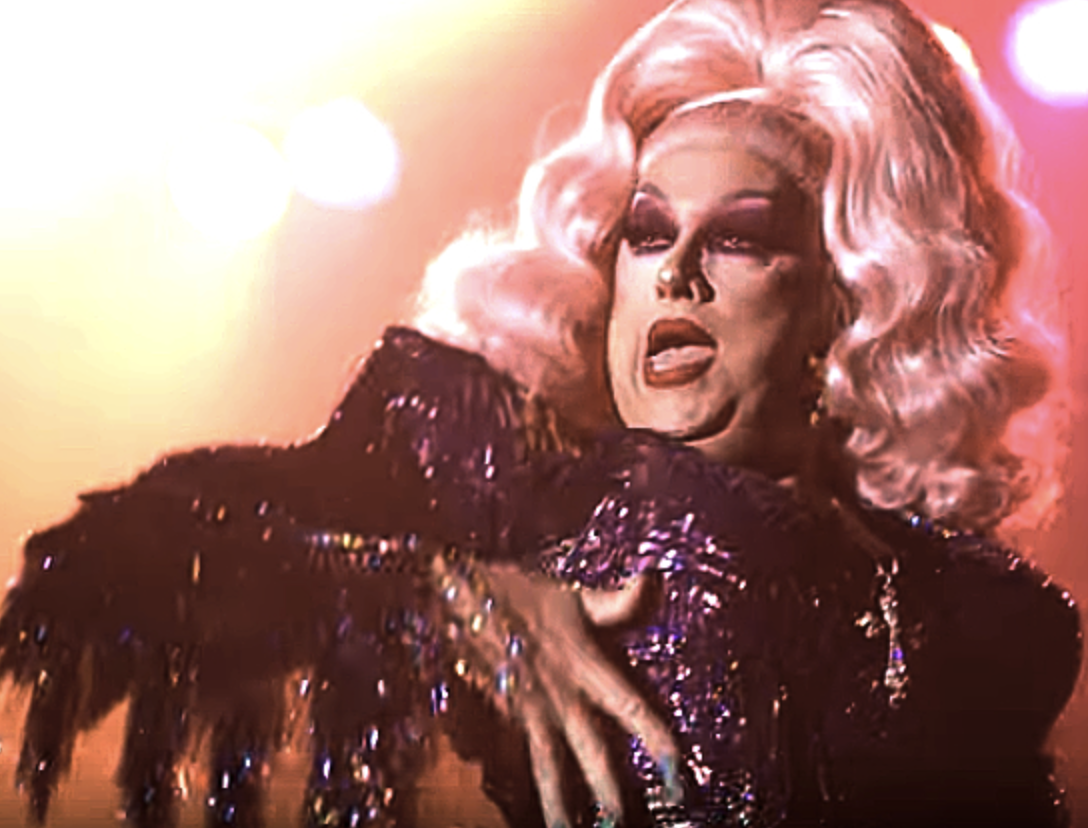
Remember the United Methodist pastor who decided to strut his stuff as a drag queen on HBO?

Well, that story is now bigger than the original Religion News Service coverage, which I discussed in this GetReligion post: “United Methodist pastor dives into HBO drag-queen culture, drawing joyful RNS applause.

That pastor is out of a job, a plot twist that drew coverage from both the Associated Press and USA Today. We will come back to those stories later in this post — especially a jaw-dropping display of slanted language in the AP report, of all places.

But this has been an archetypal RNS mainline Protestant story from the get-go and the wire service’s update contains, well, about half of the essential information that readers needed to know.

What’s missing? The same thing as the first time around — any attempt to accurately reflect the views of conservative United Methodists in the pews of this pastor’s church. It was crucial, of course, to interview United Methodists and LGBTQ activists who backed this progressive pastor. At the same time, it would have helped to interview people on the other side of the debate. Maybe?

Here is the overture of the new RNS report: “Pastor who appeared in drag on HBO’s ‘We’re Here’ forced to leave his church.

When Pastor Craig Duke appeared in drag on the HBO reality show “We’re Here,” he knew that some members of his United Methodist congregation would appreciate the episode and that others wouldn’t even watch it.

He also knew some members of his congregation support the full inclusion of LGBTQ Christians in the church and others don’t, and that would make his performance on the show a “challenging experience.”

But he didn’t think it would cost him his job.


Please respect our Commenting Policy

About that Southern Baptist 'binder' story: What do Black biblical 'inerrantists' say about CRT?

About that Southern Baptist 'binder' story: What do Black biblical 'inerrantists' say about CRT?

Reporters receive all kinds of bizarre things in the mail (analog or digital). Religion-beat reporters have been known to have some really, really bizarre items come out of nowhere.

My all-time “favorite” (I am using that term loosely) was a 35-page, handwritten manifesto detailing why — using lots of biblical references — Barbra Streisand was the Antichrist. I filed that one away. That wasn’t the case, however, with the typed, unsigned note in a plain white envelope that pointed to public documents detailing the arrest of a prominent clergyman for a sex crime committed in a public bathroom.

Journalists offered hot documents have to ask two questions:

(1) Can this information be verified as accurate?

(2) What are the motives of the person sharing the information? That question leads to another: How can those motives be explained to readers without identifying the person who provided the documents?

It goes without saying that documents from an on-the-record source will be trusted — by informed readers and “stockholders” in the story — more than those from a source demanding anonymity. The key is to give as much information as possible about the source of the information as possible, including why anonymity was acceptable in this case.

This leads us to the Nashville Tennessean story that rocked the world of Southern Baptist Convention social media, the one with this headline: “Inside the Southern Baptist Convention's battle over race and what it says about the denomination.

The entire story pivots on documents linked to a former SBC president, the Rev. James Merritt, and the Rev. J.D. Greear, the convention’s leader at the time of the events described in the story. It also helps to know that Merritt was the chair of the national convention resolutions committee in 2021.

All of this focuses on efforts to pass a 2021 SBC resolution that condemned “critical race theory” outright — by name and with no qualifications, as desired by leaders of the SBC’s most conservative churches. Here is a key passage:


Please respect our Commenting Policy