Scriptures

New podcast: Are some SCOTUS justices asking, 'Are all religious schools equal in Maine?'

New podcast: Are some SCOTUS justices asking, 'Are all religious schools equal in Maine?'

Let’s say that, in the state of Maine, there are two very different “Lutheran” schools. You could, in this hypothetical case, also say “Episcopal,” or “Presbyterian” or “Congregational.”

Leaders at one of these schools insist that their school is in “the Lutheran tradition,” and it may retain ties to a doctrinally liberal flock. The school has a chapel, but attendance is optional since its students (it may be an elite boarding school) come from all kinds of religious faiths or have no stated faith at all. Classes on hot-button moral issues — sexuality, for example — stress this church’s progressive doctrines.

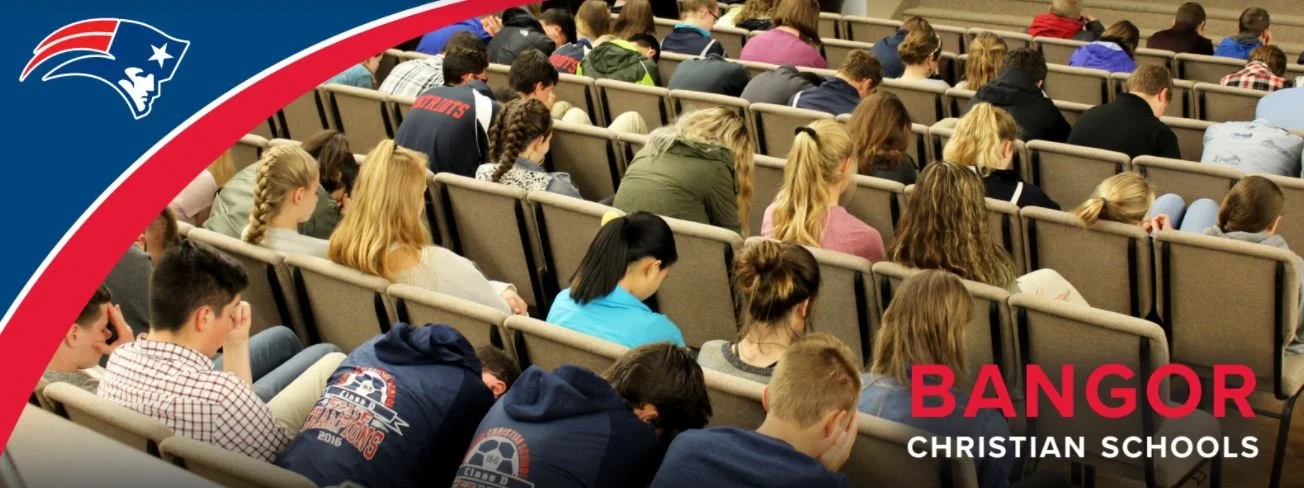
Academic life is very different at the other Lutheran school, which draws most of its students and financial support from a conservative Lutheran body. Chapel attendance is required and classes linked to moral theology are quite countercultural — defending 2,000 years of Christian tradition.

The question, in the latest church-state case at the U.S. Supreme Court, is whether the state of Maine has the power to say that the first school is eligible for tuition support — using tax dollars — because it’s policies do not clash with those in public schools. Students at the conservative school are not eligible, because its beliefs are “sectarian.”

This is tricky territory and church-state experts on the Religious Right would certainly disagree with experts from the Religious Left and secular think tanks. The question discussed in this week’s “Crossroads” podcast (click here to tune that in) is whether journalists covering this case allowed readers a chance to understand the views of activists on both sides.

Let me state, right up front, that my dueling Lutherans illustration is based on “equal access” church-state principles that emerged from a left-right coalition during the Bill Clinton administration. The big idea: If state officials create policies that affect nonprofits, they cannot back secular groups while discriminating against religious organizations. States could, however, deny aid to both. In other words, religious faith is not a uniquely dangerous form of speech or activity.

Let me state this another way. Under the separation of church and state, officials are not supposed to use tax dollars to back state-approved forms of religion. Ah! But what if some religious groups have doctrines that are consistent with state policies, while others clash with the doctrines of the state?
Please respect our Commenting Policy

Behold! The New York Times dared to explore the spiritual 'fire' inside Denzel Washington

Behold! The New York Times dared to explore the spiritual 'fire' inside Denzel Washington

Behold. It is time for me to praise — at great length — something published in The New York Times. It was even written by Maureen Dowd, of all people.

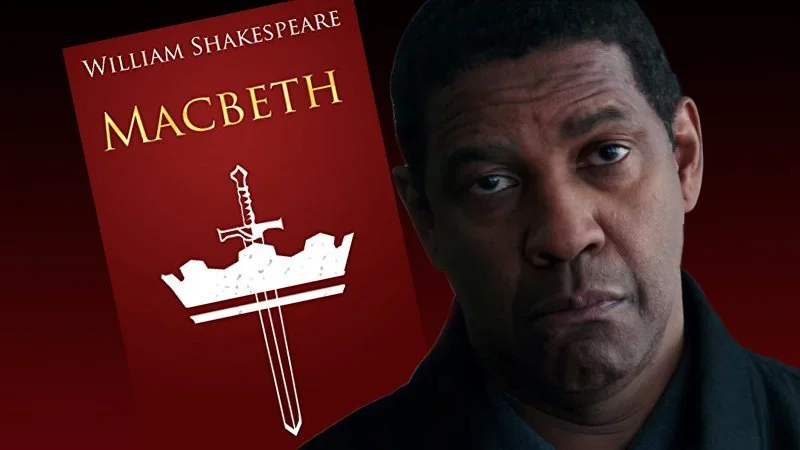
The headline on this length first-person feature: “Denzel Washington, Man on Fire.” No, this story isn’t about the stunningly violent, but at times quite biblical, 2004 movie entitled “Man on Fire.” It’s about the new film — “The Tragedy of Macbeth” — that combines the Oscar-level talents of Washington, director Joel Coen and producer-actress Frances McDormand, who is married to Coen. For Washington, playing the lead role represented a return to his theater roots with Shakespeare.

As you would expect, a Times piece by Dowd is going to include quotes from Hollywood A-listers such as Ethan Hawke, Liev Schreiber, Melissa Leo and Meryl Streep. Tom Hanks has this to say about Washington: ““He is our Brando. Nicholson. Olivier.”

However, the key to this feature is that the “fire” in the headline is both artistic and spiritual. It is, literally, a reference to Washington’s Pentecostal Christian upbringing and the Christian faith that he is not afraid to discuss in the context of his talent and his vocation.

It’s hard to know what to quote from this piece — since it covers so many bases. If you want insights into filmmaking and the complex minds of Coen and McDormand, you will find it. This isn’t a religion story. However, it’s a story that is willing to let Washington speak his mind.

The faith element enters with one of those “here I am talking to Denzel Washington” scenes that are far too common in arts and entertainment journalism. But, in this case, this tired device works. This passage is long, long, long, but essential. I will break it up, just a bit:

[Washington] said he had gotten very little sleep. He had just put the final touches on a film he directed, “A Journal for Jordan,” the true story of the romance between Dana Canedy, a former New York Times reporter and editor, and Sgt. Charles Monroe King, a soldier who was killed by a roadside bomb in Iraq, after meeting their infant son only once. It stars Michael B. Jordan and Chanté Adams and also opens widely on Christmas Day.

“It’s just a beautiful story of loss and love,” Mr. Washington said, “a story about real heroes and sacrificing, men and women who have given their lives so that we have the freedom to complain.”


Please respect our Commenting Policy

About Southern Baptist wars and the Merritt family: Here's some inside baseball worth covering

About Southern Baptist wars and the Merritt family: Here's some inside baseball worth covering

I rarely write about Southern Baptist affairs unless one of their annual conventions is at hand, but I can’t resist commenting on a fascinating sideshow happening between the highly symbolic Merritt family and their fellow conservatives.

Jonathan Merritt is the openly gay (and I assume celibate, based on previous comments) son of the Rev. James Merritt, a former president of the Southern Baptist Convention. It’s been a tough ride for the past 10 years as the younger Merritt has tried to reconcile his sexuality with his faith, while working as a news- columnist. His father has been under immense pressure as well.

The latest fracas, with a hat tip to JulieRoys.com, has to do with the elder Merritt walking away from his position as a visiting professor at Southeastern Baptist Theological Seminary in Wake Forest, N.C. The whole affair has gone unnoticed by many newsrooms, even though this is a topic that is newsworthy for a variety of reasons. Here is what Roys wrote:

Former Southern Baptist Convention President James Merritt resigned last week as a visiting professor at Southeastern Baptist Theological Seminary over controversy sparked by Merritt’s decision to share a sermon online by his son who’s gay. …

The decision came after Merritt, who’s also pastor of Cross Pointe Church in Duluth, Georgia, tweeted a link to a sermon by his son, Jonathan Merritt. The younger Merritt is a graduate of Southeastern Baptist and an author, journalist, and popular speaker. In August, Jonathan Merritt announced on Instagram that he’s gay.

“I don’t agree with my loved son @JonathanMerritt on everything to be sure,” James Merritt tweeted November 22. “But I encourage you to listen to his message on Mark 13. It is both brilliant and faithful to the gospel and the coming of Jesus!”

After that, things got really interesting. Here is the chronology:

Nov. 22 — James Merritt publishes his tweet.

Nov. 23 — The Conservative Baptist Network, a group of some 6,000 members based in Memphis, issues a statement with the headline: “Promoting homosexual preachers is not loving, biblical or Baptist.” The elder Merritt responds that same day.


Please respect our Commenting Policy

Progress for American Jews? Tis the season for lots and lots of Hanukkah junk

Progress for American Jews? Tis the season for lots and lots of Hanukkah junk

It's hard to do justice to ancient holy days in throw-pillow slogans.

Consider the Zazzle item offering a menorah with an un-orthodox number of candles, along with: "Imagine if your cellphone was at 10% but lasted 8 days. Now you understand Hanukkah."

Maybe not. Or how about the Bed, Bath & Beyond pillow stating: "Why is this night different from all other nights? Happy Hanukkah."

Actually, that's the most famous question from rites during a Passover Seder dinner.

"There's no quality control with any of this stuff. No one's being careful with decisions about what's good and what's bad," said journalist Mira Fox of the Forward, a progressive Jewish website. "The point is to sell stuff. It doesn't need to be good stuff. It's just stuff.

"Basically, it's a lot of people saying, 'We can find a way to sell stuff to Jews during the holidays, along with selling lots of stuff to everybody else.' "

Hanukkah began rather early this year, starting at sundown this past Sunday (November 28) and extending for eight days. This placed the "Festival of Lights" closer to Thanksgiving -- near the start of the merchandizing frenzy known as The Holidays.

The story at the heart of this home-centered season dates to 165 B.C., when Jews, led by the Maccabee family, defeated Greek and Syrian oppressors. When the victors reentered their temple, only one container of ritually pure oil could be found for its eternal flame. Tradition says this one-day supply burned for eight days. Thus, Jews light menorah candles during Hanukkah, one on the first night, increasing to eight.

"It's not a biblical holiday. Hanukkah is not in the Hebrew Bible. … God is not a huge part of this story," said Fox. "Honestly, I don't think a lot of people understand what this holiday is about."

That's certainly true in the American marketplace.


Please respect our Commenting Policy

Emerging split inside old mainline: Is U.S. Christianity becoming two different religions?

Emerging split inside old mainline: Is U.S. Christianity becoming two different religions?

THE QUESTION:

Is Christianity in the United States becoming two different religions?

THE RELIGION GUY'S ANSWER:

If the question above seems off the wall, at least look why it has arisen.

Two years ago, The Guy wrote that he was quite astonished by some survey research reported in "The Twentysomething Soul" (Oxford University Press) by Tim Clydesdale of the College of New Jersey and Kathleen Garces-Foley of Marymount University.

Young Americans age 30 and under, quizzed about religion, were asked how they think of God.

One option was "a personal being, involved in the lives of people today." It doesn't get any simpler or more basic than that, whether you're Jewish, Christian or Muslim. Other choices were some impersonal "cosmic life force," or a deistic creator who is "not involved in the world now," or that God does not exist.

Not surprisingly, the evangelical Protestants were virtually unanimous in embracing the first definition. But remarkably, only half of those in the predominantly white, theologically pluralistic "mainline" Protestant church bodies made that choice, while 40 percent favored the vague "life force." Young adult Catholics fell in between the two Protestant groups. (In this random sample, 30 percent were evangelicals, 18 percent Catholic, 14 percent "mainline" Protestant, and 29 percent with no religious affiliation.)

The Guy therefore posed the question whether Protestants' long-running two-party rivalry "could be evolving toward a future with two starkly different belief systems."

Now a more radical version of that scenario is explored at book length in "One Faith No Longer" (New York University Press) by Baylor University sociologist George Yancey and Ashlee Quosigk, a visiting scholar of religion at the University of Georgia. More info here.


Please respect our Commenting Policy

Modernized New Revised Standard Bible is surefire news, landing amid today's language wars

Modernized New Revised Standard Bible is surefire news, landing amid today's language wars

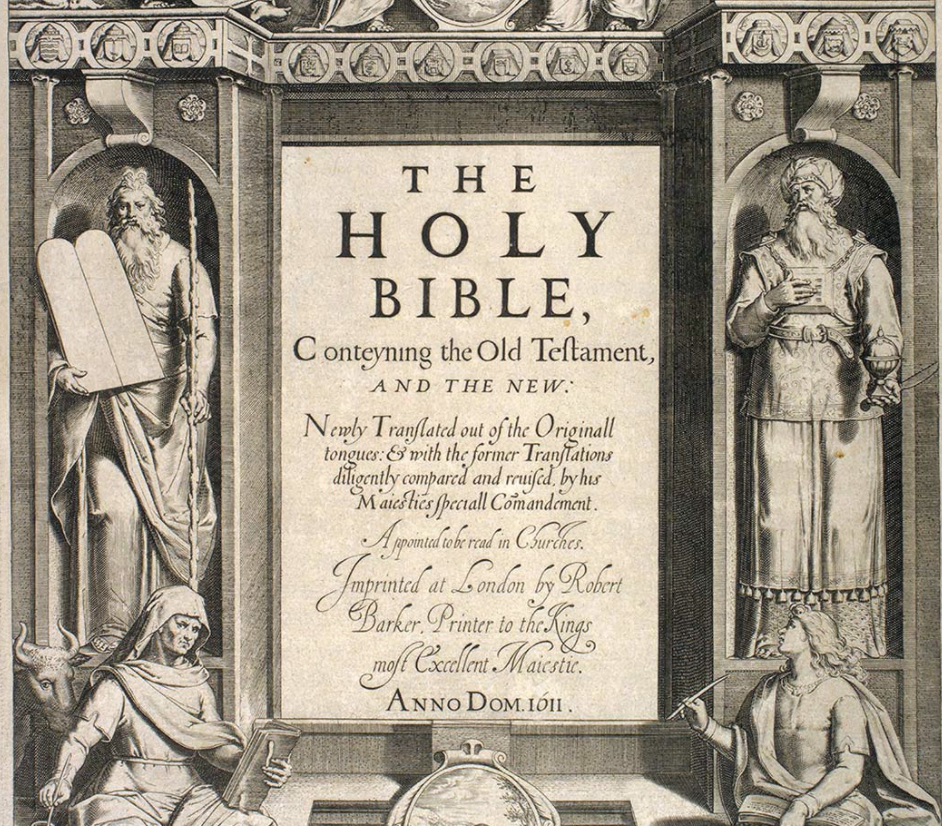
As religion writers (and historians) know, the 1611 King James Version of the Bible begat the 1952 Revised Standard Version, which begat the 1989 New Revised Standard Version which now begets the new "Updated Edition" of the NRSV.

It’s the "NRSVue" — a surefire news topic. This Bible will be available in ebook format by Christmas and in print around next May 1.

Media might issue advance articles about this production or wait for reactions to the complete text from reviewers or local clergy and parishioners. A 36-page media memo provides an advance look, accessible here. For further queries contact Friendship Press at info@friendshippress.org or CEO Joseph Crockett at joseph@frienshippress.org.

The NRSV copyright is held by the National Council of Churches, a cooperative body of the “Mainline” Protestant and Orthodox denominations. It assigned this rewrite to the Society of Biblical Literature, a professional guild of university and seminary scholars, whose 63-member team made approximately 12,000 "substantive" changes and thousands more that are trivial. The team consulted African-American church leaders, a group said to be "historically excluded" from prior Bible translation projects.

The result "improves" upon the original NRSV policy "to eliminate masculine-oriented language when it can be done without altering passages that reflect the historical situation of ancient patriarchal culture." The church council says both of its versions seek to be "as free as possible from the gender bias inherent in the English language."

A typical example is saying "brothers and sisters" when the original Greek literally said only "brothers" but was referring generally to people of both genders. The update omits footnotes that specify what the Greek said. Plural pronouns will abound, which depending on the translation can occasionally make the antecedent unclear or miss the direct force of a singular pronoun. In the rewrite, the Bethlehem "wise men" are now "magi."

Both the 1989 and 2021 renditions leave language about God undisturbed. "He" is still permitted and He remains the "Lord" and "Father."


Please respect our Commenting Policy

Queen Elizabeth II offers clear, personal sermon -- even while absent from public stage

Queen Elizabeth II offers clear, personal sermon -- even while absent from public stage

Close watchers of the British Monarchy have recently become concerned about two words describing life in Windsor Castle -- "new stage."

First there was Queen Elizabeth II's unexplained overnight hospital stay in October for "tests." Then the 95-year-old monarch missed the recent National Day of Remembrance service for Britain's war dead. She did, however, attend christening rites at All Saints Chapel for her two newest great-grandsons.

All of this represents a "new stage" in her very public life.

"She's alright, thank you very much," said Prince Charles, responding to a Sky News enquiry. "Once you get to 95, it's not quite as easy as it used to be."

The Queen has not, however, been silent. Her recent message to Church of England's General Synod -- her first absence from this gathering -- was strong and personal. It was read by her youngest son, Prince Edward, the Earl of Wessex, who rarely seeks the public spotlight.

"It is hard to believe that it is over 50 years since Prince Philip and I attended the very first meeting of the General Synod," said the prince, reading the Queen's words. "None of us can slow the passage of time; and while we often focus on all that has changed in the intervening years, much remains unchanged, including the Gospel of Christ and his teachings.

"The list of tasks facing that first General Synod may sound familiar to many of you -- Christian education, Christian unity, the better distribution of the ordained ministry. … But one stands out supreme: 'To bring the people of this country to the knowledge and the love of God.' "


Please respect our Commenting Policy

Thinking about a newsy mystery: Why are Gideon Bibles vanishing from hotel nightstands?

Thinking about a newsy mystery: Why are Gideon Bibles vanishing from hotel nightstands?

Thanksgiving is once again upon us and with it the official start of the busy holiday travel season that extends through Christmas.

As Americans continue to cope with the ongoing pandemic, travel has seen a steady increase once again. That means packed airports and bumper-to-bumper traffic on most major highways starting Wednesday. It also means more people will be staying in hotels.

This brings us to an interesting and highly symbolic news story, one that deserves coverage.

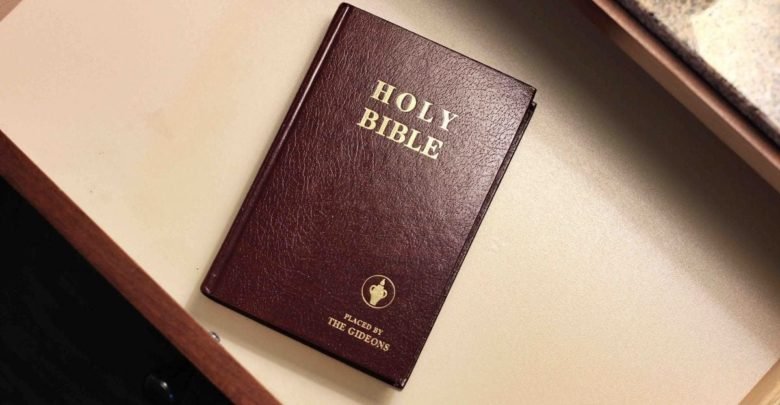
I have done my share of travel — both in the United States and internationally — over my two decades working as a journalist. The few things you could always count on for much of that time was a newspaper at the front desk, usually USA Today, and a Bible in your nightstand.

Not anymore. Print is slowly dying, and newspaper readers have migrated to the internet in recent years.

What about those Bibles?

They, too, seem to be slowly disappearing. I noticed this past summer, while on a trip to Washington, D.C., that there was no Bible in my hotel room.

The phasing out of Bibles in hotel rooms is actually part of a steady trend across the country over the past few years. In 2016, Marriott International, the world’s largest hotel chain, typically supplied both a Bible and Book of Mormon in its rooms. But the company decided that forgoing religious materials was the way to go at two of its hipper hotel brands such as Moxy and Edition. Note that both of these chains target younger guests.


Please respect our Commenting Policy

Many like to speculate: What was the biblical 'thorn in the flesh' that plagued St. Paul?

Many like to speculate: What was the biblical 'thorn in the flesh' that plagued St. Paul?

THE QUESTION:

What was the biblical "thorn in the flesh" that so plagued St. Paul?

THE RELIGION GUY'S ANSWER:

We'll never be sure. But the question is perennially fascinating.

"Thorn in the flesh" is one of many commonplace phrases we take from the Bible. It appears in 2 Corinthians chapter 12, where St. Paul writes that he knew "a man" -- modestly referring to himself -- who was "caught up into Paradise and heard things that are not to be told." He describes the aftermath of his powerful experience in verses 7-9:

To keep me from being too elated, a thorn was given me in the flesh, a messenger of Satan to torment me, to keep me from being too elated. Three times I appealed to the Lord about this, that it would leave me, but he said to me, “My grace is sufficient for you, for power is made perfect in weakness.” So, I will boast all the more gladly of my weaknesses, so that the power of Christ may dwell in me. (New Revised Standard Version)

Other English translations say "arrogant," "conceited," "lifted up," "proud" or "exalted" instead of "elated."

Christians through history have pondered what so plagued this New Testament writer and Christian founder (though we can imagine his close colleagues knew). Some say it was a interior spiritual or psychological challenge, while others see opponents, obstacles or persecution his pioneer missionary work coped with.

Many focus on the telltale word "flesh" and insist it must have been some physical malady.


Please respect our Commenting Policy