Richard Ostling

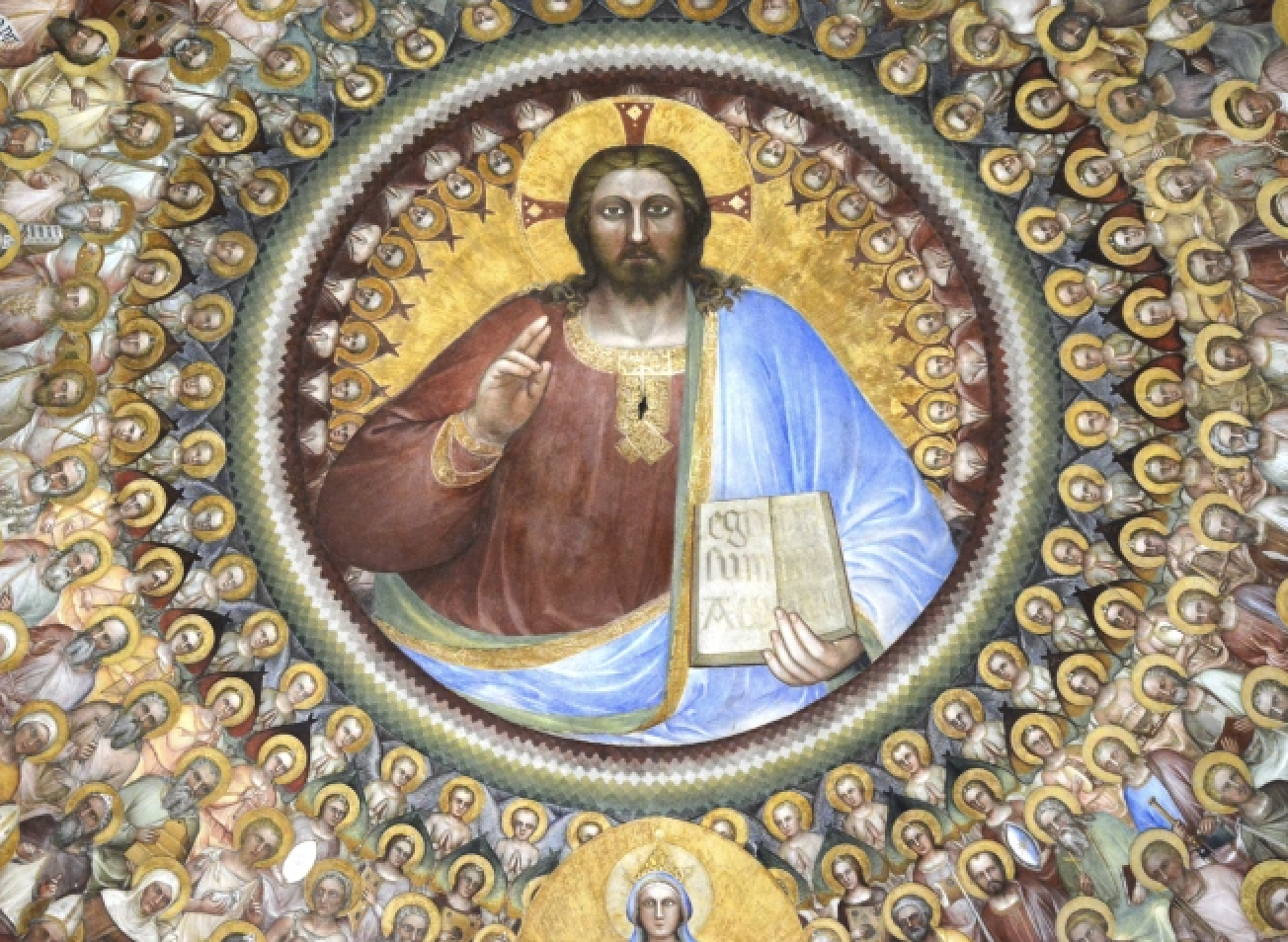
What's is behind the symbolism of shepherds and wise men worshipping newborn Jesus?

What's is behind the symbolism of shepherds and wise men worshipping newborn Jesus?

THE QUESTION:

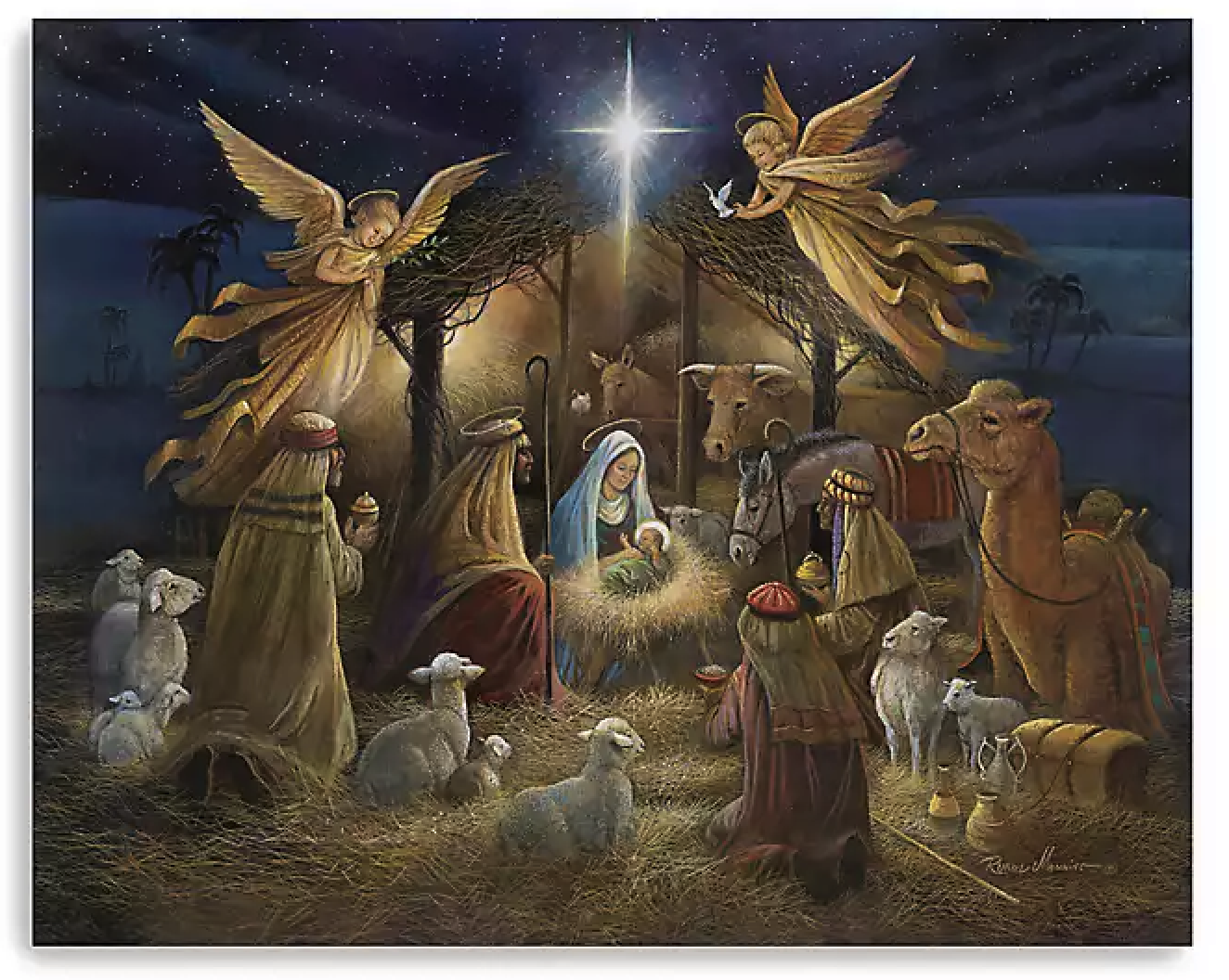
What’s signified by shepherds and wise men worshipping the newborn Jesus?

THE RELIGION GUY’S ANSWER:

The world’s most-read and most-recited narratives are quite likely the two independent and contrasting accounts of Jesus’ birth that begin the biblical Gospels of Matthew and Luke.

A particularly striking difference is that Matthew has a Jewish flavor yet features Gentile “wise men from the East” of high status and Luke, aimed at a Gentile audience, tells us of humble Jewish shepherds. Intriguingly, neither Gospel knows of the other’s visitors who came to worship the baby of Bethlehem.

Several decades later, the Book of Acts records, the earliest Christians were busily converting not only Jews but a visiting Ethiopian official, hated Samaritans and Roman occupation soldiers, and then multicultural Gentiles across the Mediterranean region.

In the Christian understanding, the birth in Bethlehem fulfilled God’s promise in calling Abraham that “by you all the families of the earth will bless themselves” (Genesis 12:3) and the revelation to the prophet Isaiah that Israel would be “a light to the nations” (42:6, 49:6, 60:3).

By the early 50s A.D., the greatest of the early missionaries to Gentiles, St. Paul, would cite the universal call of Abraham as he taught believers that “there is neither Jew nor Greek, there is neither slave nor free, there is neither male nor female; for you are all one in Christ Jesus. And if you are Christ’s then you are Abraham’s offspring, heirs according to promise” (Galatians 3:6-9 and 28-29).

Please respect our Commenting Policy

Buried story of 2022? The persecution of Christians keeps surging around the world

Buried story of 2022? The persecution of Christians keeps surging around the world

You want news?

The 2022 report from the Open Doors organization (CLICK HERE) says “persecution of Christians has reached the highest levels” since it began accumulating data for its annual “World Watch List” three decades ago. Hostile incidents have increased by 20% since just 2014, and some 360 million Christians, or 14% of the worldwide total, are said to have faced persecution, harassment, or discrimination.

Open Doors reports that it has documented the murders in one year’s time of 5,898 Christians for their faith (up 24% from the prior year); attacks on 5,110 local churches (up 14%); 3,829 abductions (a new high, up 124%); 6,175 victims held without trial; 24,678 subjected to beatings, death threats and other abuse; 6,449 with homes or businesses attacked; and 3,147 women targeted for rape or sexual harassment. 

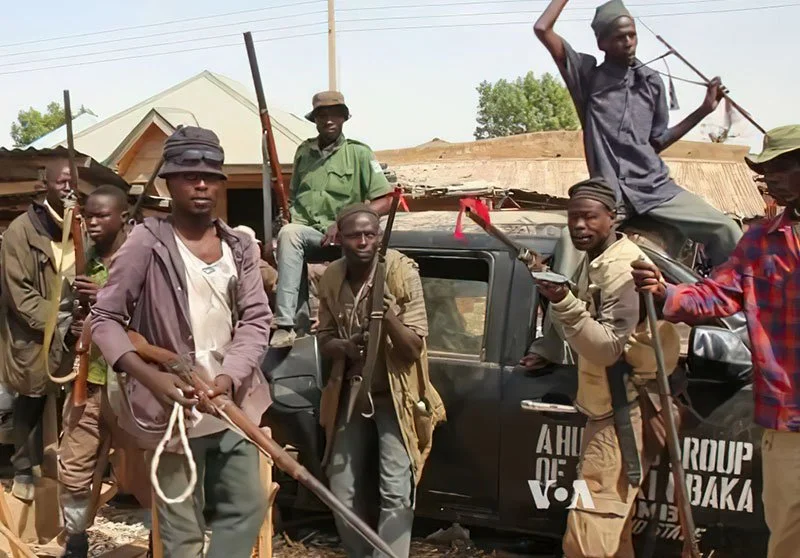
Since that report was issued, the Nigeria-based civil rights group Intersociety reports that in just that one nation 4,020 additional killings and 2,315 abductions occurred from January through October, 2022.

The Memo therefore proclaims this international upsurge the Buried Story of the Year, a major, newsworthy global scourge widely featured by religious media — yet all but ignored by much of the “Mainstream Media.”

Journalists will have another peg for remedying this sin of omission when Open Doors issues its 2023 report early in the new year.

One noteworthy media exception, timed for Christmas a year ago, was a thorough New York Times survey of widespread harassment of Christians in India. Also, Reuters this month produced a massive investigation of 10,000 forced abortions conducted by the military in chaotic Nigeria, indicating rape is a widespread tactic used to terrorize Christian women.

On a broader time frame, the Center for the Study of Global Christianity estimates that 1 million Christian martyrs were killed in the first 10 years of the 21st Century.


Please respect our Commenting Policy

That never-ending debate in modern churches: Should Christians baptize babies?

That never-ending debate in modern churches: Should Christians baptize babies?

THE QUESTION:

Unending Debate: Should Christians baptize babies?

THE RELIGION GUY’S ANSWER:

Yes or no, depending what church is answering the question.

A quote posted in August by Detroit Baptist Theological Seminary says this “debate over baptism has raged in the church for millennia” and “all sides argue passionately for their view.”

Jesus’ evangelism command to his followers in the Great Commission (Matthew 28:19) directed water baptism for church membership as observed in all types of Catholic, Orthodox and Protestant groups (except for the Quakers and Salvation Army).

Along with this, Baptists and other Protestants of like mind, view baptism as an “ordinance” to symbolize faith, not a “sacrament” where God bestows grace or regeneration. And, as discussed below, full immersion of the body in the water is their trademark practice.

Who should be baptized? Baptists et al. make a simple, straightforward argument. They see no explicit examples of infant baptism in the New Testament, only cases where baptism followed conscious conversion to a personal belief in Jesus Christ as Savior. Such “believer’s baptism,” of course, is impossible for infants and young children. The Great Commission linked baptism with religious instruction, and Acts 2:38 records that the original 3,000 Christian converts on the day of Pentecost repented for forgiveness of their sins before baptism.

Christians on the opposite side respond by citing New Testament examples where a “household” or “family” was baptized as a group and reason that young children were surely included.


Please respect our Commenting Policy

News coverage of LGBTQ issues enters mop-up phase in the religion marketplace

News coverage of LGBTQ issues enters mop-up phase in the religion marketplace

It has been a big week for the ongoing LGBTQ+ story. Even as the U.S. Supreme Court heard oral arguments in a case about how much to tolerate personal dissent against same-sex marriage, the U.S. House, the House this morning passed nationwide codification of the gay marriage right that the Court enacted by 5-4 in the 2015 Obergefell ruling.

The new law effectively concludes phase one in the unusually rapid upending of a central societal structure dating from antiquity. The next few years, the media will be covering the mop-up phase facing religious groups and individuals that uphold traditional teachings about marriage, over against anti-discrimination assertions by government, Hollywood, corporate America and private actors.

The current Supreme Court case (303 Creative LLC v. Elenis, docket #21-476) involves a Colorado website designer who does not create pages that celebrate same-sex weddings — though she serves gay customers otherwise. Her free-speech claim is opposed by, for example, Reform Judaism, many liberal Protestants and other social liberals.

Observers figure that the Court, with a more traditionalist makeup than in 2015, will back this designer’s plea and ultimately look kindly upon further religious claims under the Bill of Rights. If so, the future conflict may focus on the Carborundum tactic as the LGBTQ+ movement grinds down conservatives’ energy, time and money in long-running legal maneuvers, meanwhile building cultural pressure to marginalize conscientious objectors as simple bigots.

An opinion-page complaint against religion’s “encroachment” upon society, posted by NBC News and written by Stanford University journal editor Marcie Bianco, neatly encapsulates where this culture war appears to be heading. This is the voice from the cultural left:

Dig a bit deeper, and what this act really represents is the inflexibility of our nation’s institutions and the national entrenchment — despite constitutional assurances to the contrary — of religion.


Please respect our Commenting Policy

Why do ancient churches pray for the dead, while many modern churches do not?

Why do ancient churches pray for the dead, while many modern churches do not?

THE QUESTION:

“Why Do Catholics Pray for the Dead?”

THE RELIGION GUY’S ANSWER:

A Catholic News Agency feature for All Saints’ Day with the above headline was written by senior Rome Correspondent Hannah Brockhaus. One of The Guy’s colleagues immediately critiqued that wording because Eastern Orthodox Christians likewise pray for the dead — although in a different mode from Catholics, as we’ll see.

Perhaps the appropriate question should instead be: Why don’t Protestants pray for the dead when these other Christians have done so for many centuries?

There’s long-established history behind the practice of Christians during their earthly life praying to benefit fellow believers who are dead. This was commended by revered theologians of the early church.

By the early 5th Century, St. Augustine said “the whole Church observes this practice which was handed down by the Fathers.” He stated that through parishioners’ prayers, Masses, and donations, “there is no doubt that the dead are aided, that the Lord might deal more mercifully with them than their sins would deserve.”

The modern Orthodox catechism “The Living God” (St. Vladimir’s Seminary Press) teaches that just as Jesus and St. Stephen prayed for forgiveness even for the people who were executing them, so “the prayer of the righteous can also help to obtain forgiveness for a sinner even if he is already dead.”

At this point, Protestants will object that the Bible does not teach such a concept. Their founding principle of sola scriptura means Christian beliefs are defined solely by explicit teachings in Scripture and not by church traditions, even ones that are longstanding and deep-seated.


Please respect our Commenting Policy

Celebrities rule: How should reporters assess the name fame game in religion?

Celebrities rule: How should reporters assess the name fame game in religion?

As of the 2022 midterms, the United States had 49 million registered Democrats and 39 million registered Republicans, according to estimates from WorldPopulationReview.com.

Recent National Basketball Association and National Football League annual attendance combined came to 39 million. And last week, a religious leader named Timothy P. Broglio took charge of a U.S. organization with 67 million members.

Timothy who? That would be the archbishop who is the newly elected president of the National Conference of Catholic Bishops, who will lead the church in the U.S. through the 2024 election season and on the 2025. If you think his task is placid, note this liberal jeremiad — care of National Catholic Reporter — about his election.

Weeks before, Kristen Waggoner became a prime culture wars figure.

Kristen who? This evangelical attorney is the new president of the Alliance Defending Freedom, a legal non-profit that represents religious conservatives in matters like LGBTQ disputes, as in this critique of the Democrats’ marriage act. Her ADF is branded a “hate group” by the equally controversial Southern Poverty Law Center.

Point being that important leaders within segments of American religion are generally far less prominent than athletes, entertainers, politicians or tech billionaires. Publicity usually falls to clergy who run purchased-time broadcasts, utter political sound bites or are trapped in scandals.

Think Pat Robertson.

Things were different not so long ago when Billy Graham, and Martin Luther King Jr. and other civil rights leaders, were titanic cultural and media personalities. In an earlier time (so to speak), Time magazine would devote a cover story to Christian thinkers C.S. Lewis (1947) or Reinhold Niebuhr (1948, written by Whittaker Chambers). Presbyterian bureaucrat Eugene Carson Blake (“Can Protestants Unite?”, 1961) or U.S. Catholic Cardinals Spellman (1946) or Cushing (1964).

Since the media and the Internet are meshuga over lists (is this David Letterman’s doing?), how about a well-reported article, not about our American era’s Top 10 religious celebrities, but which ones exercise the most influence, seen or unseen?


Please respect our Commenting Policy

Whenever Donald Trump Era ends, what will America's religion landscape look like?

Whenever Donald Trump Era ends, what will America's religion landscape look like?

“Trump is toast.”

So proclaimed National Review’s Andrew McCarthy after the most shocking Republican Party flop since, oh, 1948, which was followed by the least shocking Republican event imaginable, Donald Trump’s Tuesday announcement of a third run for president.

McCarthy joins a significant lineup of conservative pundits and media in blaming the GOP’s embarrassment on Trump and his demands for 2020 election denial with resulting candidate picks. Democrats took the Grand Rapids, Michigan, area by 12.8%, for goodness sake. The former federal prosecutor contends that Trump has not only surrendered his 2024 chances but is certain to face federal indictment.

Well, no matter what such elite conservatives suppose, Trump retains a massive grassroots following. However, the first post-election poll of Republicans and Republican leaners, from YouGov, put Florida Governor Ron DeSantis as the 2024 front-runner with 42% to Trump’s 35%. A month earlier YouGov gave Trump 45% vs. DeSantis’s 35%. A poll of Texas Republicans was similar.

An intriguing Wall Street Journal package recently offered scholars’ speculations on what Russia will look like in the long term whenever Vladimir Putin’s reign ends. The media could borrow the idea to explore what the American religion landscape might look like when Donald Trump no longer rules the Republicans, whether that’s in the primaries or Election Day 2024, or Inauguration Day 2029.

If you grab the theme, also run this one past your sources: Has this secularized, former Mainline Protestant and onetime “reality” TV personality had more impact on American religion than any member of the clergy during these years?

Other assorted post-election musings.

As GetReligion often observes, Catholics are the swing vote to watch, since white evangelicals are locked into lopsided Republican loyalty (this long before the Trump years).


Please respect our Commenting Policy

Topic that's back in the news: What do world religions teach on polygamy, pro and con?

Topic that's back in the news: What do world religions teach on polygamy, pro and con?

THE QUESTION:

What do world religions believe on polygamy, pro and con?

THE RELIGION GUY’S ANSWER:

With religion, age-old issues such as polygamy vs. monogamy never disappear, and a recent Jerusalem Post article discussed Jewish practices, which we’ll examine below.

First, some terminology: What’s called “polygamy” occurs in two ways. “Polyandry” means one woman with more than one husband, a rare form found among, for instance, some Buddhists in Tibet where the husbands are commonly brothers. The familiar form technically named “polygyny” is one man with more than one wife. “Bigamy” applies when civil law makes plural marriages a crime.

All of that needs to be distinguished from modern “polyamory,” namely multiple and consensual sexual ties with various gender configurations minus marriage (see this recent GetReligion podcast and post). These range from “free love” to “open” relationships to formalized temporary or permanent sexual groupings. Notably, this movement is now acceptable within one U.S. religion. Unitarian Universalists for Polyamory Awareness is officially recognized as a “related” organization of that denomination serving members who support and promote such a sexual identity.

Polygamy has been opposed by Christianity throughout history but exists without dispute in lands dominated by the world’s second-largest religion, Islam. Most other nations make it a criminal offense. The United Nations Human Rights Commission expresses moral abhorrence and urges abolition, arguing that legal polygamy violates “the dignity of women.”

Indigenous religion that involves polygamy continues in some sectors of Africa. South Africa allows it not only for the Muslim minority but for those who maintain their traditional cultures, for example former President Jacob Zuma of the Zulu people, who has four wives. Modern India forbids polygamy even though it was part of Hindu tradition, but similarly allows it for Muslims.

In U.S. history, hostility was such that in 1856 the major pronouncement by the first convention of the newborn Republican Party declared that Congress must “prohibit in the territories those twin relics of barbarism, polygamy and slavery.”


Please respect our Commenting Policy