
Richard Ostling

Yes, this is a religion question: Year in, year out, why is January 1st New Year’s Day?

Yes, this is a religion question: Year in, year out, why is January 1st New Year’s Day?

THE QUESTION:

Why is January 1st New Year’s Day?

THE RELIGION GUY’S ANSWER:

There’s a religious angle here, as with almost any major aspect of human culture past and present. Our January 1 observance stems from ancient paganism. The numbering of “2021,” as with every year, reflects the global reach of Christianity. And the specific day everyone reckons to be January 1 was fixed by the Catholic Church during the Reformation and Counter-Reformation hostilities.

Alongside this conventional calendar, many faiths observe their own religious new years by calculations apart from the January 1 tradition.

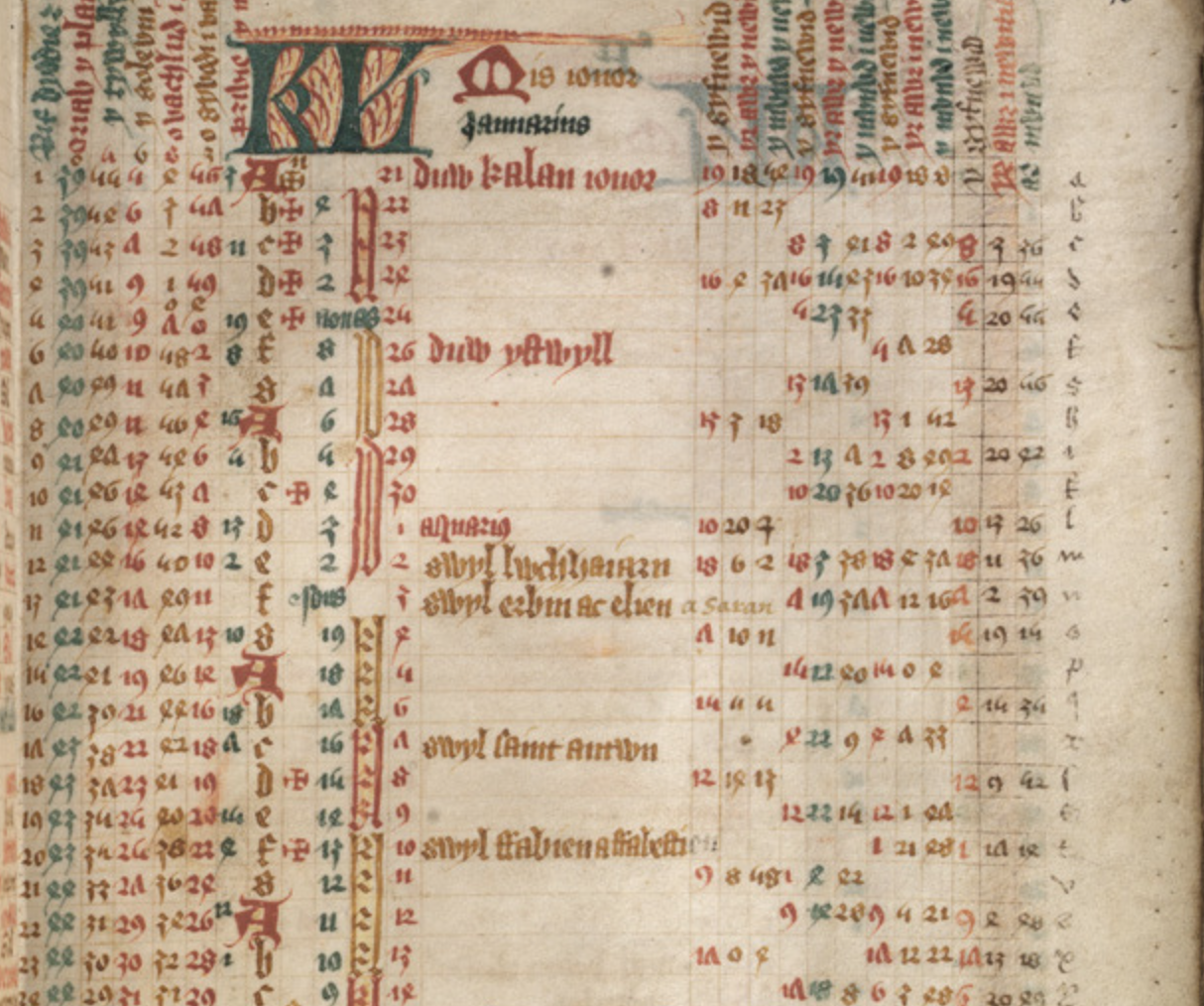
The perpetually valuable Encyclopaedia Britannica tells us that worship of the Roman god Janus, with his festival (on January 9th, not the 1st) in the month eventually named for him was practiced even before the legendary founding of the city of Rome in 753 B.C. Janus was the animistic divinity of doorways (januae) and archways (jani). The idea of auspicious entrances and exits, endings and beginnings, eventually applied to turn of the year. January 1 officially replaced March 1 as the start of Rome’s year in 153 B.C..

Due to this pagan background, much of Christian Europe came to reject January 1 observances and celebrated the new year on Christmas Day or March 25, the feast of the Annunciation (the angel Gabriel’s message to Mary that she would bear the divine Son).

The year is the length of time the earth makes one circuit around the sun, but the day upon which a year begins is an arbitrary choice. In 46 B.C., Julius Caesar kept Rome’s January 1 starting point but reworked the “Julian calendar” to better fit with astronomy. The Julian system gained widespread use all the way until A.D. 1582, when Pope Gregory XIII ordered the “Gregorian calendar” cleanup that is universal today.

The Julian system figured that a year lasts roughly 365 days plus 1/4 of a day, so it added one day in the “leap year” every four years.

Please respect our Commenting Policy

Yearenders-palooza: What do a swarm of religion websites want you to read about 2020 news?

Yearenders-palooza: What do a swarm of religion websites want you to read about 2020 news?

Once upon a time, it was normal for news organizations to produce lists of the Top 10 stories of the year, usually with the emphasis on their city, region or nation. Others focused on the concerns of their readers or the unique editorial viewpoint of the publication. Some focused on the whole world or a specific kind of news in the world.

That was then. This year, I can’t even find a hard-news Top 10 list at The Associated Press mega-promotional page for “The Year in Review.” If I missed that list somewhere, please let me know.

Here at GetReligion, we have published several items looking back and also looking forward:

* Of course the pandemic was top 2020 religion-news story: But which COVID-19 story?

* So what went wrong in #2020, other than that whole coronavirus pandemic thing?

* Final #2020 podcast: The year when religion news went viral, and that was a bad thing

* New year and many old issues: Catholic storylines journalists need to keep an eye on in 2021

* Pondering 'Things to Come,' with help from savvy thumbsuckers and backgrounders

We will have a collection of Bobby Ross, Jr., items on 2020 — from several different angles — this coming Monday.

What happened to the old Top 10 list format?

It got lost, of course, in the need to point niche readers toward specific links of topical news, features and commentaries, hoping that they will click, click, click there way through a specific website’s offerings.

There’s nothing wrong with that, of course. After all, I just hit readers with a blitz of #2020 GetReligion URLs.

Now, let me point readers toward lots of other features of this kind elsewhere, all with specialty religion-news hooks. If I missed some good ones, please let me know in our comments pages.

First, there is “Our best religion stories from a terrible year” at Religion News Service. Summary:

It’s no news that 2020 will go down as one of the worst years in recent memory. But the triple-whammy of pandemic, economic crisis and demonstrations for racial justice that left many Americans beleaguered and angry also yielded some inspiring and profound stories of faith and spiritual connection. Here are 11 stories by our staff and frequent contributors that captured moments of resilience and perseverance, and even a few moments of celebration.

Looking ahead, there is this: “RNS reporters on the big stories they expect to cover in 2021.” As a sample, here is the item from veteran religion-news scribe Bob Smietana:


Please respect our Commenting Policy

Pondering 'Things to Come,' with help from savvy thumbsuckers and backgrounders

Point of personal privilege. "Things to Come" is the title of a Religion Guy favorite, Dizzy Gillespie's jazz pulse-pounder from 1946 that's ever contemporary. Check out this remarkable high school performance just last year.

Turning to our beat's things to come in 2021 and beyond, here are some savvy thumbsuckers and backgrounders you might have missed.

Evangelicals and the ineludible Donald J. Trump — The outgoing President, who told Religion News Service this year he's "a non-denominational Christian," hopes to control the Republican Party through 2024 with attendant media visibility. His politically crucial following among white Catholics may well fade, but what will his digital dominance mean for those ultra-loyal white evangelical Protestants?

GetReligion contributor and political scientist Ryan Burge, who emerged as never before this year as the go-to guy on religion and U.S. politics, says the evangelical "brand" is not as tarnished by Trump as many suppose. Two major surveys show little variation in Americans identifying with the movement -- currently 34.6% -- over the past decade. Another Burge opus reinforces The Guy's observation on Trump-era political and moral chasm between evangelical leadership and the grassroots.

Speaking of evangelical leaders, none has done more significant work than attorney David French in two decades defending freedom for religious groups and individuals, especially on secular campuses. He says he's seen up front the "astonishing intolerance and even outright hatred" that a relentless "illiberal left" is aiming against good-hearted believers. (Did that help the Republicans in November?)

French's weekly religion column for TheDispatch.com has become a must-read, though few fellow conservatives will cheer when he turns to fiery anti-Trump sermons. One column branded "Christian Trumpism" as "idolatry" that threatens American law and order. Another contended that evangelicals bring hostility upon themselves over issues like race and immigration that face the U.S. in the 2020s.

An election eve reflection by Christianity Today's new CEO Timothy Dalrymple took a more temperate approach to these issues.

American Christianity in “free fall”? — Last year's big Pew Research report on the decline of U.S. Christianity provoked historian Philip Jenkins to respond that those "nones" who tell pollsters their religion is "nothing in particular" are surprisingly religious.


Please respect our Commenting Policy

Want to see scholars fight? Ask if the book of Isaiah mentions a 'virgin birth'

THE QUESTION:

Should Bibles speak of a “virgin” birth in Isaiah 7:14?

THE RELIGION GUY’S ANSWER:

No less than 38 U.S. orchestras featured Handel’s “Messiah” in annual Christmas concerts during the 2015-16 season, making it “the runaway most-performed work,” according to a Baltimore Symphony survey. The beloved 1741 oratorio about Jesus Christ is also perhaps the most-performed piece across all of musical history — if we exclude “Happy Birthday to You.”

In this COVID Christmas, audiences must make do without live performances, but they may recall Handel’s setting for one of the Bible’s most-debated verses: “Behold, a virgin shall conceive and bear a son,” from Isaiah 7:14. This Old Testament verse is quoted in the New Testament’s Matthew 1:23 as foretelling Jesus’s birth to the Virgin Mary.

In Isaiah’s account, the Southern Kingdom of Judah based in Jerusalem faced military peril from an alliance the rival Northern Kingdom of Israel forged with Syria. Through the prophet Isaiah, God reassured Judah’s faithless King Ahaz that the kingdom of David would survive, giving the “sign” that the woman’s newborn son would be named Immanuel, meaning “God is with us.”

Verse 16 then proclaims that before this boy would be old enough to tell right from wrong, Judah’s enemies would fall. That indicates the prophecy applied literally or symbolically to a birth in Isaiah’s own time, possibly the prophet’s own son although Scripture never specifies who it was. In Christians’ “double meaning” interpretation, this prophecy applied both to Isaiah’s day and the coming of Jesus Christ seven centuries later.

(In addition to Matthew, the separate New Testament tradition in Luke 1:26-35 also reports that Jesus was born of a virgin, without quoting Isaiah.)

However, is “virgin” the right translation of the Hebrew word almah in Isaiah 7:14?


Please respect our Commenting Policy

Fights over First Amendment rights will likely top religion-beat agenda in 2021 and beyond

What's on the agenda for journalism about religion in the United States in 2021 and beyond?

Ongoing fights about the First Amendment and religious liberty are likely to prove the most newsworthy, but two other themes deserve attention.

A prior Religion Guy Memo here at GetReligion surveyed the competing partisan concepts of "religious freedom" that face the United States and the incoming Joe Biden-Kamala Harris administration, with potential for big conflicts if Democrats win both Senate runoffs in Georgia.

One aspect is religious groups' desire to be exempt from anti-discrimination laws so they can hire doctrinally like-minded employees, while qualifying for federal grants. Lame duck Labor Secretary Eugene Scalia (son of the late Supreme Court justice) wrapped up the Donald Trump years with an important "final rule" to nail down and clarify exemption rights. It goes into effect a dozen days before Biden's inauguration.

Understandably, much news like this was all but ignored by media focused on COVID-19developments and President Trump's remarkable, fruitless efforts to erase the 2020 election returns, supported at the U.S. Supreme Court by 60 percent of House Republicans and the GOP attorneys general of 18 states.

Labor's “final rule” policies could be re-examined in the Biden years. The huge text (.pdf here) provides journalists full documentation on religious employment disputes as seen from the conservative side of the culture wars, and summarizes 109,000 officially filed comments pro and con.

The rule clarifies that exempt groups need not be connected to specific house of worship (as with many schools and Protestant "parachurch" organizations) and that even for-profit companies can qualify if they have "a substantial religious purpose." It states that "religion" covers not only creedal beliefs but "all aspects of religious observance and practice." The rule allows exemptions of religious groups that provide "secular" help, relying on the 9th Circuit appeals ruling in Spencer v. World Vision (read text here).

Importantly, Labor's new rule says religious organizations cannot ignore anti-discrimination protections regarding "sexual orientation" and "gender identity" in situations where "there is no religious basis for the action."


Please respect our Commenting Policy

The end is near! Here's a 2020 end-of-the-year feature with an online religious hook

We cannot say goodbye to 2020 fast enough, what with a disease-ridden planet and, in the United States, a remarkably rancid political fight and aftermath.

So here is a safe prediction: Mainstream news-media professionals and their loyal readers will be more enthusiastic than usual about this-year-is-ending articles.

Consider BibleGateway.com, which claims to be "the world's most-visited Christian Website," and articles it posted here and here about the themes, words and sentences that dominated 2020 scriptural searches. This site provides searchable full texts of dozens of English translations of the Bible as well as in many other languages.

The Gateway data have been noticed by editors at a handful of religious sites but not, so far as The Guy could find, outlets for general audiences that would also be interested.

The story could be enriched beyond the initial press releases by asking Gateway content manager Jonathan Petersen (616-656-7159 and jonathan.petersen@biblegateway.com) for more details on the number of people who searched for each item and how trends have varied over recent years.

A few specifics to get you thinking about this. Four subject areas generated 10 times more searches in 2020 than 2019.

First, societal-related terms such as justice, equality, oppression and racism. The results directed searchers to such verses as "when justice is done it brings joy to the righteous, but terror to evildoers" (Proverbs 21:15) and "learn to do right; seek justice; defend the oppressed" (Isaiah 1:17).

Second, "pandemic" and disease-related terms hit a high point during the spring lockdown, with searches pointing to "I will take away sickness from among you" (Exodus 22:25) and "I will bring health and healing" (Jeremiah 33:6).

Theme three was politics and government. Bible references included the urging of prayers "for kings and all those in authority, that we may live peaceful and quiet lives in all godliness" (1 Timothy 2:1-2) and the perpetually debated "let everyone be subject to the governing authorities" (Romans 13:1f).

Fourth, there was the inevitable increase of interest in Bible prophecy, Jesus Christ's Second Coming and the end times.


Please respect our Commenting Policy

How should Biden-era Americans understand 'religious freedom' and First Amendment?

THE QUESTION:

What does American “religious freedom” now mean?

THE RELIGION GUY’S ANSWER:

Protection of Americans’ “free exercise” of religion has been guaranteed by the Bill of Rights for 229 years and counting.

Until recently, people generally agreed on what this means. The debates involved whether this constitutional right should be exercised or restricted in specific, unusual situations. For example, the Supreme Court has permitted the Santeria faith to conduct ritual slaughter of animals, and exempted Amish teens from mandatory high school attendance laws.

Now this principle is swept up into culture wars that divide the population and the two political parties. In October, the Brookings Institution, a moderately liberal think tank, issued a lengthy white paper titled “A Time to Heal, A Time to Build” with recommendations on religion policy for the U.S. president. It states that the older consensus “began breaking down as new issues emerged, particularly around the struggle for LGBTQ equality.” Brookings consulted 127 experts on church and state for this document, though few were from the so-called “religious right.”

Consider some history: Back in 1993, Democrats were central in passage of the federal “Religious Freedom Restoration Act.” Then-Congressman Chuck Schumer, who is Jewish, introduced the bill in the House, where it won 170 co-sponsors and easily passed by voice vote. In the Senate, Ted Kennedy, a Catholic, was the Senate co-sponsor with Republican Orrin Hatch, a Latter-day Saint, and the act was approved 97–3. President Bill Clinton, a Protestant, enthusiastically signed it into law.

The act states that government cannot “substantially burden” the “exercise of religion,” even when the burden applies to people generally, unless limiting of the freedom is “the least restrictive means” to further a “compelling governmental interest.” Those whose freedom is wrongly suppressed have the right to “obtain appropriate relief” in court. (This restored prior U.S. Supreme Court doctrine that the court had shelved in its 1990 Smith ruling.)

That was then.


Please respect our Commenting Policy

At last, it's time for reporters to look abroad, with decline of Islam in Iran a brewing story

Enough with U.S. politics and punditry. How about more news-media reportage on major developments abroad?

One top hot spot in the coming Joe Biden era is Iran, with the regime's intensified rivalry with Arab neighbors led by Saudi Arabia, ongoing hatred toward a supposedly satanic United States and ambitious pursuit of nuclear weapons.

Journalists give far less notice to Iran's religious situation, perhaps because they tend to emphasize Islam's dominant Sunni branch more than the minority Shi'ism that became Persia's official faith in 1501, and because we assume rigid theocracy is frozen in place and that's that.

But what if the religo-political rule so famously imposed in 1979 upon this large and pivotal land has lost so much public respect that we see "the near collapse of official Iranian Islam"? That startling quote comes from Baylor University historian Philip Jenkins in a column for The Christian Century. If true, that's a huge story just waiting for thorough examination through interviews with stateside experts or, for media so equipped, on-the-ground coverage.

The new edition of the authoritative World Christian Encyclopedia says its sources report that starting around 2002, Iran's Islamic rule has inspired the quiet spread of small underground Christian fellowships with thousands involved -- some say a million -- despite the fact that those forsaking Islam face prison, even death. This has been discussed in niche Christian circles online, but that’s about it.

Jenkins is iffy on the extent of Christian growth, since hard evidence is lacking, but is confident about Islam's collapse due to an important opinion survey in Iran last summer by a Dutch organization.

What is happening? Only 78% of the Iranians sampled believe in God in any sense, and just 32% consider themselves to be Shi'a Muslims any longer. A mere one-fourth expect the coming Imam Mahdi (messiah), a fundamental tenet of Shi'ism.

"The vast majority of mosques are all but abandoned, even during great celebrations" on the Islamic calendar, Jenkins reports.

His sardonic comment: "Forty years of ruthless theocracy will do that to a country."


Please respect our Commenting Policy

Question: What is the world's worst government on religious liberty? Clearly, it's China

THE QUESTION:

What is the world’s worst government in terms of restricting religious liberty?

THE RELIGION GUY’S ANSWER:

China. No contest.

That’s shown in an elaborate Pew Research Center accounting issued this month that covers all categories of official religion restrictions in 198 nations and territories as of 2018. The Communists who rule the world’s largest population expend incredible efforts on their atheistic crusades, and are equal opportunity offenders who attack both faith in general and a variety of specific religions.

Global religious conditions over-all are getting worse, Pew reports. It calculates there are other highly troublesome governments in this descending order of oppression: Iran, Malaysia, Maldives, Syria, Russia, Algeria, Tajikistan, Turkmenistan, Egypt, Eritrea, Indonesia, Saudi Arabia, Uzbekistan, Vietnam, Myanmar, Iraq, Morocco, Singapore, Kazakhstan, Azerbaijan, Turkey, Brunei, Mauritania, Western Sahara and Yemen. (North Korea information is lacking).

Though Pew doesn’t say this, you’ll see most of the worst are Communist, or Muslim or post-Communist and Muslim.

Yet one of the most distressing crackdowns is in Buddhist Myanmar (a.k.a. Burma), with its forced displacement of at least 14,500 Rohingya Muslims. As with China’s mistreatment of Muslims, noted below, ethnic and religious enmity are combined.

Examples of other problems: Uzbekistan put at least 1,500 Muslims in prison on charges of extremism. Tajikistan’s new religion law gives the regime control over appointment of Muslim imams, religious education, and foreign travel, and there’s been a roundup of Jehovah’s Witnesses. Thailand has arrested hundreds of Christian and Muslim refugees fleeing mistreatment in Pakistan and Vietnam. Methodist missionaries were forced out of the Philippines for investigating human rights abuses.

Pew separately lists countries on a “Social Hostilities Index,” referring to serious harassment of religions by private individuals and groups as opposed to governments (though governments often encourage or turn a blind eye to these problems). Here, India has the worst track record.


Please respect our Commenting Policy