Religious Liberty

So ... where are the hidden converts to Christianity in Afghanistan? Can reporters find them?

So ... where are the hidden converts to Christianity in Afghanistan? Can reporters find them?

There’s an online discussion happening now among religion writers about all the uncovered religion angles of the current mess in Afghanistan.

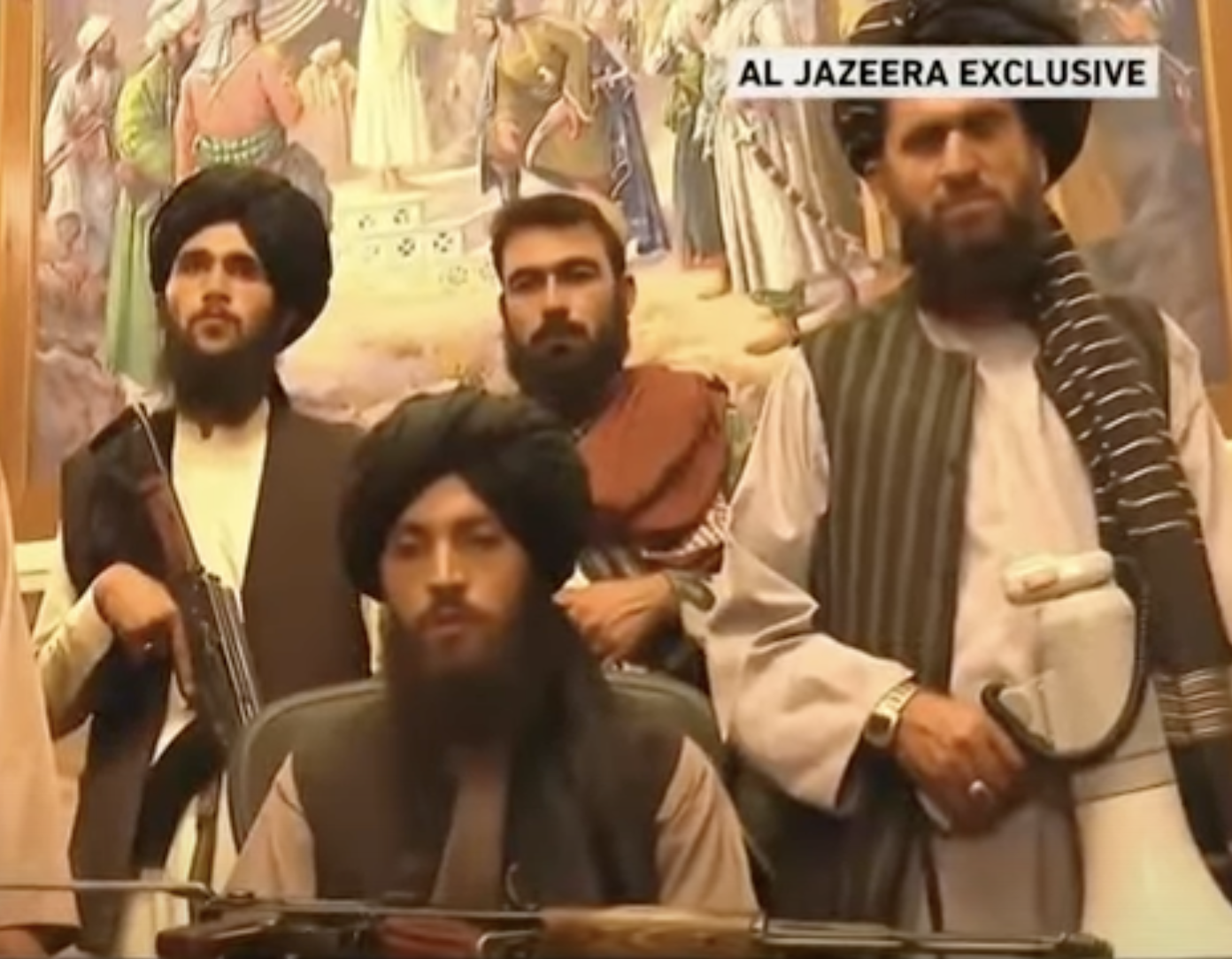
The crux of the Afghanistan quagmire is religious, not simply political. It’s not just some guerrilla group taking over the country. It’s a radical Islamist group that aims to drag Afghanis back to the 7th century. There’s a reason why Afghanistan is vying with North Korea for the world’s worst country in terms of religious persecution.

The question nagging at some of us is what’s not getting covered in the daily drama of thousands of hapless people trying to leave the country despite the Taliban hordes gathered outside the airport. Also, sadly, there are the Marines inside the perimeter who are likewise keeping many people from getting on planes. (The Wall Street Journal has been covering the latter situation better than anyone else).

And on Wednesday, Catholic News Service reported that people who qualify for refugee status, including Christians, are being barred by the State Department from boarding outgoing military flights. Soo, who’s coming to the rescue? Political commentator Glenn Beck, that’s who. CNA says he’s raised $28 million via his Nazarene Fund to fly 20 jets into Kabul and pick up stranded Christians. This is an amazing story but where is the mainstream coverage?

While my co-writer Clemente Lisi covered the Catholics marooned in this desperate place, I’ve been focusing on coverage of evangelical Protestants, the only other religious group of any size that’s trapped there. (There were Sikhs and Hindus in Afghanistan as well, but they read the tea leaves after terrorists killed 25 Sikhs in March of 2020. After last year’s attack, those who could leave the country, left.)

Recently, India offered to take the estimated 650 Sikhs and Hindus who remain, a move that’s gotten criticism by Indian Muslims who want to get some of their friends out as well, according to the New York Times.

But, right now, there are no government or sympathetic Vatican officials out there willing to fish out the surprising number of evangelical Protestants who have somehow cropped up in this forbidding terrain. We read news accounts of “missionaries” who are stranded in country and I want to know: What missionaries? What converts? Does anyone have facts?

It’s nearly impossible to get reputable statistics at this point and all the news I found was anecdotal and scattered.


Please respect our Commenting Policy

What does the New York Times mean when it reports on 'religious leaders' in Afghanistan?

What does the New York Times mean when it reports on 'religious leaders' in Afghanistan?

Anyone who has read GetReligion for more than a month probably knows that I have always been concerned about the lack of press coverage of endangered religious minorities in large parts of the world — including nations such as Afghanistan.

It’s crucial to remember, when talking about religious freedom issues and the Universal Declaration of Human Rights, that it is tragically common for members of a major world religion to punish other members of their own faith because of strong disagreements about doctrine and tradition. It is common to see persecution of those who have no faith — think atheists and agnostics — as well as those who have converted to a new faith.

As a reminder, here is Article 18 of that landmark United Nations document:

Everyone has the right to freedom of thought, conscience and religion; this right includes freedom to change his religion or belief, and freedom, either alone or in community with others and in public or private, to manifest his religion or belief in teaching, practice, worship and observance.

With all of that in mind, it’s easy to understand why I was interested in this headline atop a New York Times report: “The Taliban holds first meeting of religious leaders since taking Kabul.

The key, of course, is the meaning of these two words — “religious leaders.”

If you follow news updates, you know that the ancient Jewish community in Afghanistan is long gone — unless merchant Zablon Simintov chose to attend this meeting. Was there a Catholic representative at the meeting? Were leaders of the growing underground church invited? Did they dare to come out of hiding? What about the Muslim leaders of progressive (for lack of a better word) mosques who cooperated with Western leaders during the past 20 years?

Who were these “religious leaders”?


Please respect our Commenting Policy

New podcast: When the Taliban cracks down, will all the victims be worthy of news coverage?

New podcast: When the Taliban cracks down, will all the victims be worthy of news coverage?

There’s no question that the botched U.S. efforts to evacuate at-risk people in Afghanistan is the big story of the hour, the day, the week and for the foreseeable future — especially if this turns into a grand-scale hostage nightmare.

But who is at risk? What kinds of people are trapped inside the new kingdom of the Taliban?

That was the subject that dominated this week’s “Crossroads” podcast (click here to tune that in). And as you would expect, host Todd Wilken and I were especially interested in the role that religion has been playing in this story — if journalists are willing to cover that angle.

So who is at risk? Here is a typical wording, care of an Associated Press update:

The Kabul airport has been the focus of intense international efforts to get out foreigners, Afghan allies and other Afghans most at risk of reprisal from the Taliban insurgents.

With the Taliban controlling the Afghan capital, including the airport’s outer perimeter, White House national security adviser Jake Sullivan said that U.S. citizens are able to reach the airport, but were often met by large crowds at the airport gates.

But, wait. What about the news reports that U.S. forces cannot help U.S. citizens avoid Taliban checkpoints in order to reach the airport, while British and French military personnel are doing precisely that for their own people? That’s a very hot story right now, with U.S. diplomats and the White House saying that the can work with the Taliban to ensure safety.

So let’s pause and flesh out some of the details in that AP phrase about who is at risk, as in “foreigners, Afghan allies and other Afghans most at risk.” Who is most at risk, right now?

* Obviously, American journalists have every right to focus on risks to American citizens.

* In particular, we can assume that Taliban activists are tracing Americans who have led or worked with NGOs, religious aid groups, churches. Then there are the Western-style think tanks, schools, medical groups, etc.

* Obviously, there are the thousands of Afghans who cooperated with and even worked for the U.S. government, U.S.-backed Afghan military units and the kinds of “foreign” organizations mentioned in the previous item.


Please respect our Commenting Policy

When pinning wild COVID-19 quotes on a cardinal, it helps to be precise about fine details

When pinning wild COVID-19 quotes on a cardinal, it helps to be precise about fine details

If you’re the kind of person who likes to explore the wretched underbelly of Twitter, then you need to pay close attention to the waves of snarky messages that follow announcements that famous vaccine skeptics have been hospitalized with COVID-19.

Some of these skeptics are politicians, of course. Others are religious leaders.

That brings us to the Associated Press coverage of a prominent conservative Catholic who, for journalists, is best known as a frequent critic of liberal Catholic politicians and also of some — not all — actions taken by Pope Francis. Here is the overture on one of these updates:

MADISON, Wis. (AP) — Cardinal Raymond Burke, one of the Catholic Church’s most outspoken conservatives and a vaccine skeptic, said he has COVID-19 and his staff said he is breathing through a ventilator.

Burke tweeted Aug. 10 that he had caught the virus, was resting comfortably and was receiving excellent medical care.

“Please pray for me as I begin my recovery,” the 73-year-old Burke said in the tweet. “Let us trust in Divine Providence. God bless you.”

As you would expect, the AP report — in addition to offering a litany of examples of Burke criticizing liberal Catholics — eventually provided some information about the cardinal’s views on the coronavirus pandemic. Here are the crucial paragraphs:

Burke … has criticized how governments have handled the pandemic, referring to the virus in a homily last December as the “Wuhan virus,” a derogatory term used by former President Donald Trump to describe the coronavirus and warning people that governments were manipulating them. In May 2020, he spoke out against mandatory vaccinations, saying some in society want to implant microchips in people.

He said in March 2020 that the best weapon for battling “the evil of the coronavirus” is a relationship with Jesus Christ.

The most inflammatory material, of course, is the reference to implanting “microchips.” It would really help to know more about what Burke is alleged to have said and where and when he said it.


Please respect our Commenting Policy

With the Taliban takeover, world Islam -- and the press -- have much at stake in the future

With the Taliban takeover, world Islam -- and the press -- have much at stake in the future

The return of Taliban rule after 20 years will likely produce the typical mayhem and murder when a regime suddenly collapses. Longer-term, immense challenges face the people of Afghanistan under the "Islamic Emirate" and, externally, the takeover will intensify a host of international military, security, political and humanitarian problems.

But much is also at stake for world Islam, a crucial aspect that the media have tended to slight thus far, as tmatt has already observed here at GetReligion. Journalists may be witnessing a new phase in what Georgetown University expert John Esposito has called a long-running "struggle for the soul of Islam."

The fallout could last for years, or even a generation, because it will be highly difficult to again dislodge Taliban control — from within or without. Though plans are unknown, Afghanistan’s rulers may well reimpose harsh practices that had provoked widespread condemnation (without, however, losing religiously freighted diplomatic recognition by Saudi Arabia). And they could again provide a strategic national sanctuary from which terrorists could target innocent civilians in the despised West.

The key, of course, is that all this would be proclaimed as God's will, enacted in the name of Islam and for its benefit. The Taliban announce religious zeal for a strict construction of Islam's dominant Sunni branch in their very name, which derives from "student" in the Pashto language.

Militant movements that include the Taliban have achieved special appeal for youthful Muslim devotees and some government backing. They have variously claimed religious sanction for destruction of historic artifacts, torture, mutilation, beheading and stoning to death, execution without trial, kidnaping for ransom, forced marriages and sexual slavery, drug trafficking and thievery, killing of envoys and charity workers, and persecution not only of Christians and Jews and Yazidis but even moreso of fellow Muslims who dissent (see scholar Paul Marshall’s book “Silenced: How Apostasy and Blasphemy Codes are Choking Freedom Worldwide“). Not to mention banning music and movies, kites and dolls.

The most severe consequences have fallen upon Muslim girls and women, not merely put under strict clothing mandates, but denied human rights, education beyond age 10 or careers outside the home.


Please respect our Commenting Policy

Trying to spot religion 'ghosts' in the dramatic fall of America's version of Afghanistan (#FAIL)

Trying to spot religion 'ghosts' in the dramatic fall of America's version of Afghanistan (#FAIL)

The whole idea of Axios, as a news publication, is to take massive, complex stories and — using a combination of bullet lists and URLs to additional information — allow readers to quickly scan through the news of the previous day. The Axios team calls this “smart brevity.”

More often than not, this turns out to be a crunched summary of the big ideas in mainstream coverage. Thus, it’s logical to look at this online newsletter’s take — “1 big thing: System failure” — on the horrific scenes that unfolded yesterday in Kabul, Afghanistan.

The big question: What did American diplomats, intellectuals and politicos miss in the big picture?

* The United States was literally run out of town after 20 years, $1 trillion and 2,448 service members' lives lost.

* Mohammad Naeem, the spokesman for the Taliban's political office, told Al Jazeera today: "Thanks to God, the war is over in the country."

Why it matters: A friend who spent more than a decade as a U.S. official in Afghanistan and Iraq texted me that the collapse "shows we missed something fundamental — something systemic in our intel, military and diplomatic service over the decades — deeper than a single (horrible) decision."

* As the BBC's Jon Sopel put it: "America's attempt to export liberal democracy to Afghanistan is well and truly over. …”

What were the key tasks in this “export of liberal democracy”? Here is my two-point summary.

First, the United States and its allies had to build an Afghan military that could protect this project. #FAIL

Second, the Western nation builders had to sell a vision of an Islamic culture that, somehow, embraced American values on a host of different issues — from free elections to freedom for women, from Western-style education to respect for the Sexual Revolution in all its forms. This Georgetown University faculty lounge vision of Islam needed to be more compelling than the one offered by the Taliban. #FAIL

Looking at this from a journalism perspective, I think it is more than symbolic that most of the elite media coverage of the fall of this new, alternative Afghanistan have almost nothing to say about Islam and, in particular, the divisions inside that stunningly complex world religion. Was this, in any way, a “religion story”? Apparently not. #FAIL

There is way too much coverage to look at, of course. However, it does help to look at The New York Times, since that is the straw that stirs the drink in American media. My goal was to find material that contrasted the Taliban’s vision of Islam with the vision offered by the U.S. State Department.


Please respect our Commenting Policy

Yo, New York Times editors: Why edit faith out of obit for the 'Mother Teresa' of Africa?

Yo, New York Times editors: Why edit faith out of obit for the 'Mother Teresa' of Africa?

If you know anything about old-school journalism, then you have heard this mantra — “who, what, when, where, why and how.” During my nearly three decades as a journalism and mass media professor, I used to refer to these essential building blocks of hard-news reporting as the “W5H” formula.

Clearly, when you are dealing with the life story of a woman who sacrificed everything in order to help poor, suffering, abandoned children, the “why” factor in that equation is going to be especially important.

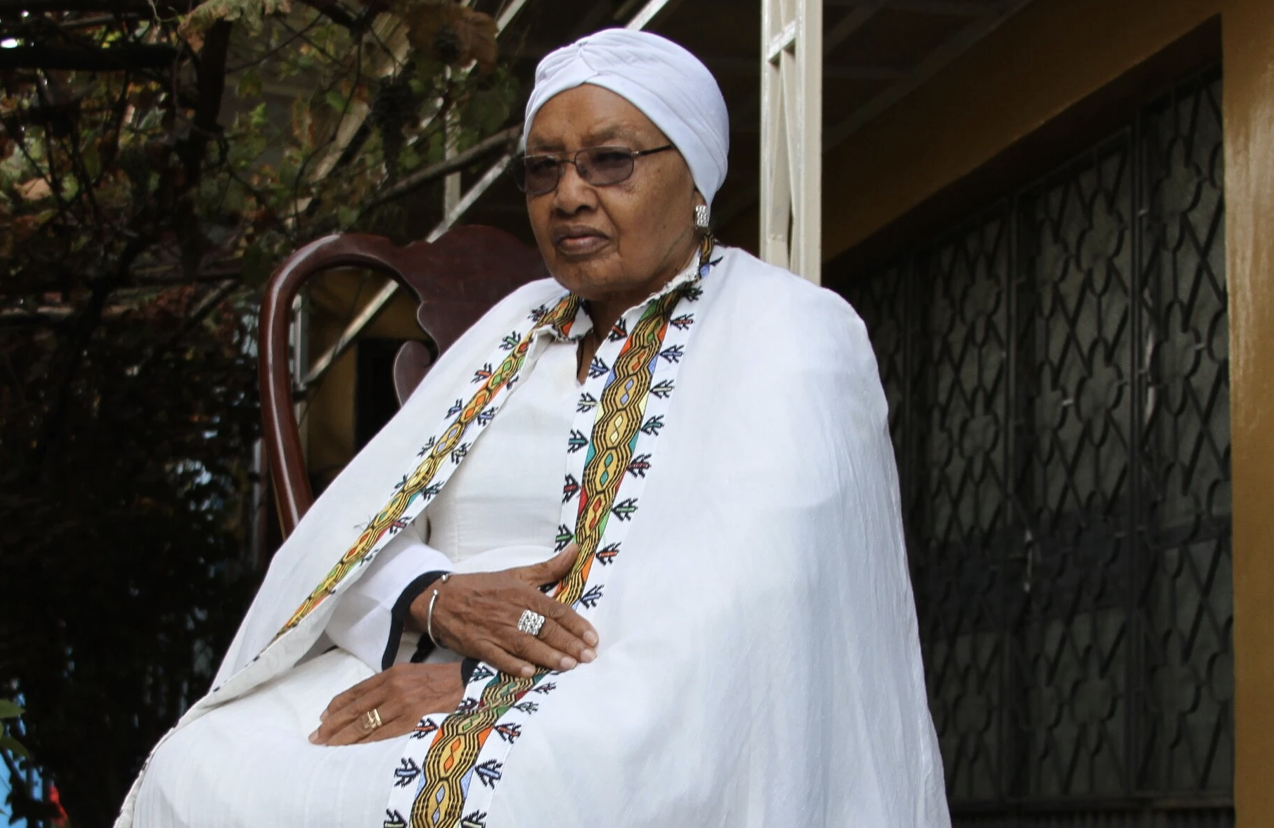
This brings us to two very different news reports about the death of one of modern Ethiopia’s most beloved figures, a woman who was frequently described as a living saint. Here is the New York Times headline: “Abebech Gobena, the ‘Mother Teresa’ of Africa, Dies at 85.” And here is the overture:

Abebech Gobena was returning from a pilgrimage to the holy site of Gishen Mariam, about 300 miles north of the Ethiopian capital, Addis Ababa, when she saw the woman and her baby.

It was 1980, and Ms. Gobena was passing through an area recently stricken by drought and an accompanying famine. All along the road were bodies — many dead, some dying, some still able to sit up and ask for food.

“There were so many of these hungry people sprawled all over, you could not even walk,” she said in a 2010 interview with CNN. She handed out what little she had — a loaf of bread, a few liters of water.

The word “holy” in the lede is rather important, since we are talking about Coptic Orthodox monastery of Gishen Mariam.

According to ancient traditions, Gishan Mariam is the location of a piece of the cross on which Jesus was crucified. It was a gift from St. Helena, the mother of Constantine I, and came to Ethiopia as a gift from the Patriarch of Alexandria. A festival called “Meskel,” celebrating the finding of the cross, is a major event in Ethiopian life.

So the story begins with Gobena returning from a pilgrimage to this holy site, which almost certainly tells us something about this woman’s life. This is interesting, since the Times piece does not include any of the following words — “Christian,” “Orthodox,” “Coptic,” “faith” or “saint.”

Would it make a difference, for example, to know that the small amount of water Gobena was carrying, which he gave to those who were suffering, was holy water that she was carrying home from the shrine to be used for rites of blessing and healing?


Please respect our Commenting Policy

Press braces for the Supreme Court's big one: Religion and abortion (phase I)

Press braces for the Supreme Court's big one: Religion and abortion (phase I)

In late July the U.S. Supreme Court's in-box was clogged with dozens of secular and religious briefs that oppose its 1973 Roe v. Wade decision, which established women's right to abortion, further defined in the 1992 Planned Parenthood v. Casey case.

Next up, watch for briefs that back the high Court's existing abortion-rights regime, which are due by mid-September. There should be keen journalistic interest in which religions decide to bless "pro-choice" policies and why, with likely contentions that 1st Amendment religious liberty requires legalized abortion even as other Christian and Jewish thinkers disagree.

The media are well aware that the Court's upcoming decision in the Dobbs v. Jackson Women's Health case (docket #19-1392) will be epochal, and the new briefs show the issue is as politically contentious as ever.

Dobbs involves rigid abortion limits even before fetal "viability" as legislated by Mississippi.

In response, fully 25 of the 50 states, all with Republican attorneys general, are asking the Court to scuttle Roe and Casey. Also, 87% of the Republicans in the U.S. House and Senate, from 40 states, want the two decisions overturned "where necessary" while lower courts clean up legal muddles. Also filing on this side are 396 legislators in 41 states.

Briefs also come from "pro-life" or religious physicians, nurses, and attorneys, "pro-family" organizations, and notable intellectuals like John Finnis of the University of Oxford, Robert George of Princeton University (click here for his recent tweetstorm), and Mary Ann Glendon of Harvard Law School.

Also Dr. Ben Carson, the world-renowned pediatric neurosurgeon and Donald Trump Cabinet member. He argues not from his Seventh-day Adventist faith but from embryology, saying the existence of a "new unique human life" at conception is "objective scientific fact. " He considers life to be a "natural right" that "does not depend on theology."

Writers will find a similar approach in the most important religious organization brief.


Please respect our Commenting Policy

Twist on familiar assimilation questions: Where are trends leading Islam in U.K. (and U.S.)?

Twist on familiar assimilation questions: Where are trends leading Islam in U.K. (and U.S.)?

THE QUESTION:

Where are current trends leading Islam in the U.K. (and what about the U.S.)?

THE RELIGION GUY'S ANSWER:

As in the United States, the Muslim minority population is growing steadily in the United Kingdom, up 107% since 2001 to exceed 3 million -- even as participation in many Christian churches declines.

The odds are good that British society will be reshaped by the inner workings among followers of the world's second-largest religion. That underscores the importance of the new book "Among the Mosques: A Journey Across Muslim Britain" (Bloomsbury) by Ed Husain.

This depiction of Britain is rather unnerving, though France apparently faces a more fraught situation. There the enforcement of "laicite," rigid separation of religion from the state originally aimed at Christianity, limits sensitivity to Muslim concerns and adds to long-running alienation and failure to assimilate. Current disputes, for instance, involve public schools' headscarf bans and unwillingness to provide alternatives to pork on cafeteria menus.

British author Husain is a practicing Muslim, political consultant and adjunct professor at America's Georgetown University. A sympathizer with militant "Islamism" in his younger days, he now advocates a tolerant and modernized form of the faith and that shapes his narrative.

Just before COVID-19 hit, Husain toured London and five other cities in England, two in Scotland, and one each in Wales and Northern Ireland, mingling with fellow believers and non-Muslims at the grass roots to discern trends. His knowledge of the faith, reputation as an author on Islam, study overseas and command of languages like Arabic and Urdu aided the sort of access denied to outside investigators.

While older British Muslims tended to assimilate, he found, many more recent immigrants are suspicious or hostile toward their adopted nation and their neighbors, isolating to create what's somewhat a country within a country.


Please respect our Commenting Policy