Religious Liberty

Life after Georgia: Questions about a pro-life Democrat in U.S. Senate and other issues ...

Life after Georgia: Questions about a pro-life Democrat in U.S. Senate and other issues ...

Once upon a time, there were these strange political unicorns called “pro-life Democrats.” They were often, but not always, part of another endangered species called “blue-dog Democrats.”

Most of these unique politicos were in the U.S. House of Representatives, but there were occasional — but increasingly rare — sightings in the U.S. Senate. After all, Tennessean Al Gore had an 84% rating with National Right to Life when he was a congressman, but that changed — for the most part — when he became a senator. And as vice president? Forget about it.

This brings us to the thought for the day, a quote drawn from a mini-firestorm in the Democratic Party back in 2017. Here is a quote from an “On Religion” column at that time:

… Democratic National Committee Chairman Tom Perez drew another bright line defining who participates in the work of his party.

"Every Democrat, like every American," he said, "should support a woman's right to make her own choices about her body and her health. This is not negotiable and should not change city by city or state by state." In fact, he added, "every candidate who runs as a Democrat" should affirm abortion rights.

What if that state is West Virginia?

Some key Democrats quickly stepped forward in 2017 — including Rep. Nancy Pelosi — to suggest that Perez wasn’t speaking for all top Democrats. Still, the party’s stance on abortion rights and funding continued to veer further and further to the cultural and religious left, eventually causing one Joe Biden to shed the last scraps of his once “centrist” stance.

This, of course, brings us to religion-beat angles in the aftermath of the Georgia earthquake, in which Democrats — Black and White — and other anti-Donald Trump voters appear to have handed the Democrats the slimmest possible control of the U.S. Senate.

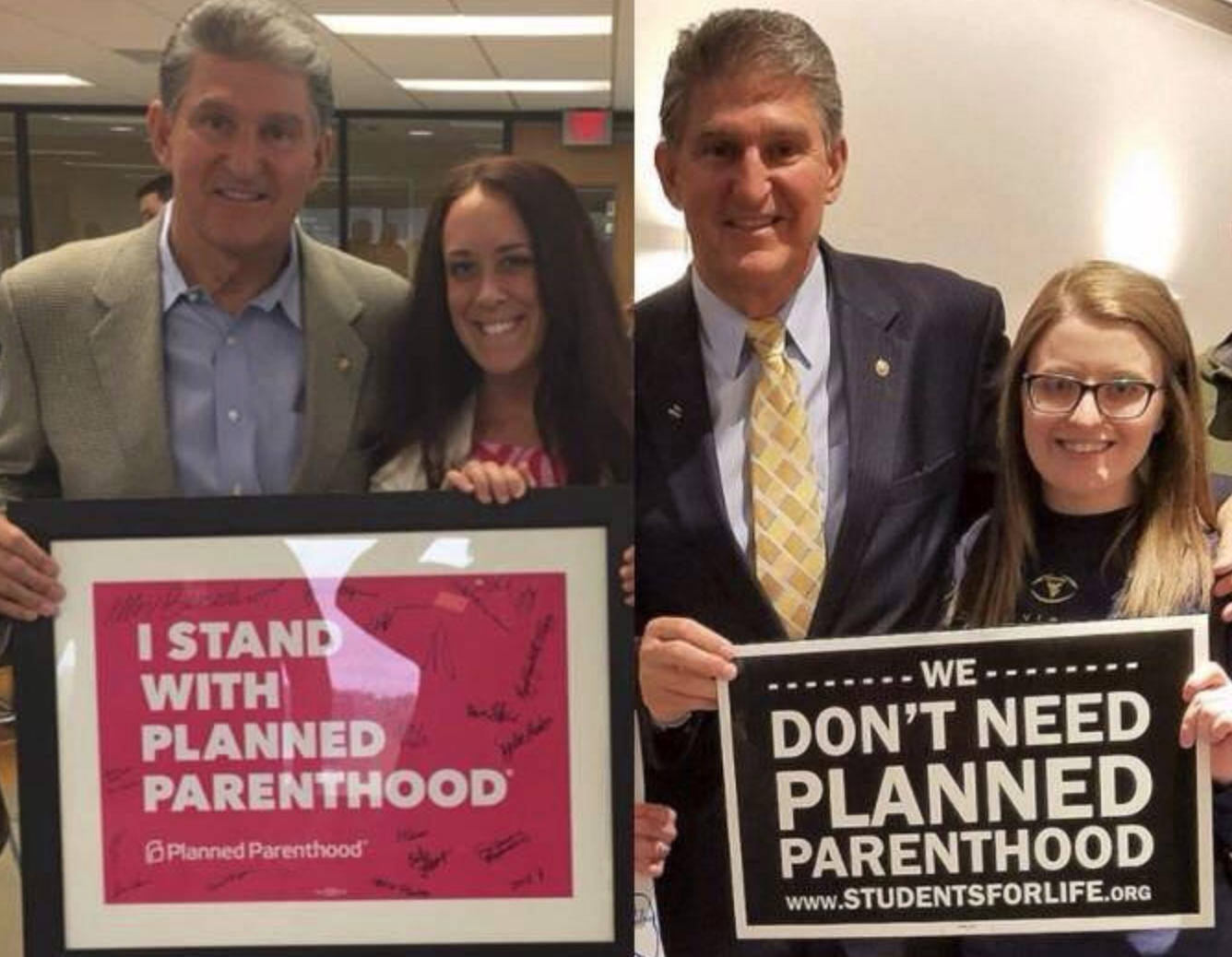
This brings us to Sen. Joe Manchin of West Virginia, a conservative Democrat and active Roman Catholic who has been endorsed by Democrats for Life, even though his record on that issue has become rather complex. He remains a throwback to the days when it was perfectly normal to be a Democrat and a cultural conservative. One can imagine the pressure he faces from establishment Democrats.

Well, how many Democrats want to toss Manchin out of the party right now?

Please respect our Commenting Policy

Yearenders-palooza finale: 2020 Top 10 religion-news lists from several Getreligionistas

Yearenders-palooza finale: 2020 Top 10 religion-news lists from several Getreligionistas

OK. This is it. I promise. This is the last GetReligion #2020 Top 10 religion-news post that you’re going to see. I think. And sorry about the Kiss 2020 goodbye concert video with this post (I could not resist).

Let me be clear what this is. A few of us have already written columns or posts evaluating the results of the Religion News Association poll, like this “On Religion” column that I shared here: “Of course the pandemic was top 2020 religion-news story: But which COVID-19 story?

However, each of us — when creating our own personal lists — saw the religion-news landscape through our own lens. Thus, I thought readers might enjoy seeing all of the RNA poll items — 27 news events and trends were on the ballot — and how some of us arranged them. Some readers, for example, have expressed a desire to explore what was left OFF the list and how the items were described on the official ballot. Read it all at the RNA.org website.

As I said earlier, in the GetReligion podcast and post in which I shared my own ballot (“The year when religion news went viral, and that was a bad thing”), I thought the key was that the COVID-19 crisis was several stories in one. I thought the most important angle was the First Amendment fights, so I wrote:

According to journalists who cover religion, this was the year's biggest story: "COVID-19 pandemic claims lives of many religious leaders and laity, upends death rituals, ravages congregational finances, spurs charitable responses, forces religious observances to cancel or go online and stirs legal fights over worship shutdowns."

But there was a problem on my ballot. The RNA list included another coronavirus item focusing on religious liberty. In some cities and states, officials created pandemic regulations that claimed many institutions — from grocery stores to casinos — provided "essential services." Meanwhile, other institutions — like churches and synagogues — were deemed "non-essential."

The U.S. Supreme Court eventually ruled that religious institutions shouldn't face tougher rules than secular groups and activities. It was wrong, for example, to ban masked priests from hearing confessions – outdoors, 10 feet away from masked penitents – while consumers were lined up at liquor stores.

Ryan Burge, in a post this weekend, had a similar take at the top of his list, stressing First Amendment and Supreme Court issues. The key, he said, was this: “I made a list based on what I thought would have the most lasting impacts into 2021 and beyond.”

So that brings us to new material from other members of the team, starting with Julia Duin. She sent me an email raising another issue with the RNA results:


Please respect our Commenting Policy

Yearenders-palooza -- Bobby Ross Jr. with positive, poignant ways to look at 2020 religion news

Yearenders-palooza  -- Bobby Ross Jr. with positive, poignant ways to look at 2020 religion news

A church shooting. Deadly twisters. Racial justice protests. And the biggest news in this tumultuous year: COVID-19.

These were among the most memorable stories that I covered in 2020.

Here is my personal year-end Top 10 list, mostly in chronological order:

• Texas church shooting: A gunman opened fire at the West Freeway Church of Christ in White Settlement, Texas, killing two worshipers before an armed member fatally shot him. While the attack occurred at the end of 2019, it remained an important story in 2020. In the immediate aftermath, I covered a members-only prayer vigil, recounted minister Britt Farmer’s experience and explained why Farmer chose to talk to me. I profiled victims Richard White and Tony Wallace. Later, I moderated a panel discussion on church shootings. And I wrote about the church’s emotional return to its auditorium.

Women in the church: My Christian Chronicle colleagues and I produced an in-depth package of stories on women’s roles in Churches of Christ. I focused on two distinct congregations: an Arlington, Texas, church that embraces traditional gender roles and a Los Angeles church that has added female elders.

Tennessee tornadoes: On my last flight before COVID-19 grounded me, I traveled to Middle Tennessee to report on tornadoes that cut an 80-mile swath of death and destruction. I highlighted the leading role that Churches of Christ played in the disaster relief effort. I interviewed a church teen who was serving her community while grieving her 4-year-old friend, Hattie Jo Collins. I covered the funeral for a Christian family killed in the storm. And I reflected on how sadness gave way to gladness on the Sunday after the tornadoes.

COVID-19: As of this moment, the global pandemic has killed 1.8 million people around the world.


Please respect our Commenting Policy

Yearenders-palooza: Ryan Burge (Who else?) charts religion and politics in #2020

Yearenders-palooza: Ryan Burge (Who else?) charts religion and politics in #2020

We now know, apparently, what happens if you force political scientist Ryan Burge into lockdown — but leave the WiFi turned on.

You end up with lots and lots and lots of charts, with most of them focusing on the major role that religion plays in politics and the American public square, in general.

Burge’s work was all over the place during 2020, with good cause. He’s a contributor here at GetReligion, but we keep stressing that journalists (and news consumers) really need to follow his active Twitter feed and his work at the weblog Religion In Public. Here in that blog’s “Year in Review” feature.

Anyway, I wrote Burge and asked him to send me several crucial bytes of his work from 2020, with some quick commentary. You will see that below. I have always appreciated the fact that Ryan’s work tends to poke at stereotypes on the left and the right.

I also asked him for his take on the Top 10 religion-beat news stories and trends of 2020, using the full list of options provided at the start of the Religion News Association poll. I have already offered my own take on that poll here in an “On Religion” column and then here, in a “Crossroads” podcast.

Burge’s commentary on that poll is at the end of this post.

So let’s get started, with Burge’s charts and commentary.


Please respect our Commenting Policy

Yearenders-palooza: What do a swarm of religion websites want you to read about 2020 news?

Yearenders-palooza: What do a swarm of religion websites want you to read about 2020 news?

Once upon a time, it was normal for news organizations to produce lists of the Top 10 stories of the year, usually with the emphasis on their city, region or nation. Others focused on the concerns of their readers or the unique editorial viewpoint of the publication. Some focused on the whole world or a specific kind of news in the world.

That was then. This year, I can’t even find a hard-news Top 10 list at The Associated Press mega-promotional page for “The Year in Review.” If I missed that list somewhere, please let me know.

Here at GetReligion, we have published several items looking back and also looking forward:

* Of course the pandemic was top 2020 religion-news story: But which COVID-19 story?

* So what went wrong in #2020, other than that whole coronavirus pandemic thing?

* Final #2020 podcast: The year when religion news went viral, and that was a bad thing

* New year and many old issues: Catholic storylines journalists need to keep an eye on in 2021

* Pondering 'Things to Come,' with help from savvy thumbsuckers and backgrounders

We will have a collection of Bobby Ross, Jr., items on 2020 — from several different angles — this coming Monday.

What happened to the old Top 10 list format?

It got lost, of course, in the need to point niche readers toward specific links of topical news, features and commentaries, hoping that they will click, click, click there way through a specific website’s offerings.

There’s nothing wrong with that, of course. After all, I just hit readers with a blitz of #2020 GetReligion URLs.

Now, let me point readers toward lots of other features of this kind elsewhere, all with specialty religion-news hooks. If I missed some good ones, please let me know in our comments pages.

First, there is “Our best religion stories from a terrible year” at Religion News Service. Summary:

It’s no news that 2020 will go down as one of the worst years in recent memory. But the triple-whammy of pandemic, economic crisis and demonstrations for racial justice that left many Americans beleaguered and angry also yielded some inspiring and profound stories of faith and spiritual connection. Here are 11 stories by our staff and frequent contributors that captured moments of resilience and perseverance, and even a few moments of celebration.

Looking ahead, there is this: “RNS reporters on the big stories they expect to cover in 2021.” As a sample, here is the item from veteran religion-news scribe Bob Smietana:


Please respect our Commenting Policy

Pondering 'Things to Come,' with help from savvy thumbsuckers and backgrounders

Point of personal privilege. "Things to Come" is the title of a Religion Guy favorite, Dizzy Gillespie's jazz pulse-pounder from 1946 that's ever contemporary. Check out this remarkable high school performance just last year.

Turning to our beat's things to come in 2021 and beyond, here are some savvy thumbsuckers and backgrounders you might have missed.

Evangelicals and the ineludible Donald J. Trump — The outgoing President, who told Religion News Service this year he's "a non-denominational Christian," hopes to control the Republican Party through 2024 with attendant media visibility. His politically crucial following among white Catholics may well fade, but what will his digital dominance mean for those ultra-loyal white evangelical Protestants?

GetReligion contributor and political scientist Ryan Burge, who emerged as never before this year as the go-to guy on religion and U.S. politics, says the evangelical "brand" is not as tarnished by Trump as many suppose. Two major surveys show little variation in Americans identifying with the movement -- currently 34.6% -- over the past decade. Another Burge opus reinforces The Guy's observation on Trump-era political and moral chasm between evangelical leadership and the grassroots.

Speaking of evangelical leaders, none has done more significant work than attorney David French in two decades defending freedom for religious groups and individuals, especially on secular campuses. He says he's seen up front the "astonishing intolerance and even outright hatred" that a relentless "illiberal left" is aiming against good-hearted believers. (Did that help the Republicans in November?)

French's weekly religion column for TheDispatch.com has become a must-read, though few fellow conservatives will cheer when he turns to fiery anti-Trump sermons. One column branded "Christian Trumpism" as "idolatry" that threatens American law and order. Another contended that evangelicals bring hostility upon themselves over issues like race and immigration that face the U.S. in the 2020s.

An election eve reflection by Christianity Today's new CEO Timothy Dalrymple took a more temperate approach to these issues.

American Christianity in “free fall”? — Last year's big Pew Research report on the decline of U.S. Christianity provoked historian Philip Jenkins to respond that those "nones" who tell pollsters their religion is "nothing in particular" are surprisingly religious.


Please respect our Commenting Policy

New year and many old issues: Catholic storylines journalists need to keep an eye on in 2021

I am not a very good prognosticator. Yet this is the time of year that forces many journalists to do just that.

What will 2021 bring? That’s the big question following a 2020 that will forever remain a year where the world was held hostage by a pandemic. It was also a year where we had a combative presidential election and a reawakened social justice movement that brought our divided politics out into our streets. Could any of us have accurately predicted what 2020 would have been like? I don’t think so.

That hasn’t stopped many from trying to predict what next year will be like. The vaccine could bring with it prosperity and freedom again, but a new strain of the virus has forced much of Europe into lockdown once again. A lot of what 2021 will look like — in terms of religion and faith — will depend on the virus and how politicians choose to handle it.

It’s true that the pandemic exposed all kinds of issues in our society. The journalism that is tasked with objectively reporting these issues so that citizens can make informed decisions failed us miserably, a trend that was years in the making, but peaked in 2020 with the presidential election. My post from this past June highlighted this extremely difficult realization for me after more than 20 years in the business. Here’s the main thrust of that post:

News coverage — be it about politics, culture or religion — is largely made up of crimes (in the legal sense) or lapses in judgement (in a moral one). But the news media has changed in the Internet age, primarily because of social media. Facebook, Twitter and TikTok, to name just three, allows users — everyday people — to pump out content. That content can take many forms — from benign observations to what’s called hot takes — for all to read and see.

Truth, fact checking and context are not important. What matters are likes and followers. What we have now is something some have called “The Great Awokening” and it appears to have forever transformed our political discourse and the journalism that tries to report on it.

Mainstream news organizations, in their quest for clicks amid hope of figuring out a new business model, now mirror the content we all see on social media platforms. Newsrooms loaded with a younger generation who grew up in this environment have imposed their own woke politics as their morality thermometer.

The news media both underplayed COVID-19 and then hyped it, only to pause their concern in the wake of the George Floyd protests. For a list of 2020 media misses, check out this roundup.

That’s in the past now, but we will indeed be talking about 2020 for years and decades to come. Instead of trying to predict the future, the aim of this post is to advise mainstream journalists on what the major Catholic news storylines will be over the next 12 months — in the United States and the world.


Please respect our Commenting Policy

So what went wrong in #2020, other than that whole coronavirus pandemic thing?

End of the year wrap-up features are a great time to study the priorities that shape the news produced by many powerful newsrooms. There’s no way around the fact that creating a Top 10 list of “big” stories is an exercise in which editors state that some stories (or entire genres) are more important than others.

Back in the fall of 1981, when I started researching my graduate project (short version here) at the University of Illinois in Urbana-Champaign, I had several conversations with the late George Cornell of the Associated Press. He was a trailblazer on the religion beat — period.

Cornell said many things that stuck with me, For example, he said that — over the decades — he kept a file of annual reports about the AP’s Top 10 news stories. It was extremely rare, he noted, to have a year in which there were not five or more stories containing obvious links to religious facts, themes or historic trends. Yet the religion beat remained a one-man operation and a low priority with editors.

Cornell may or may not have said that these stories were “haunted” by religion. All I know is that, in 2003, his insight was on my mind when Doug LeBlanc and I started work on what would become GetReligion.org and, while doing so, created the concept of “religion ghosts” that haunt many major news stories.

So what was 2020 all about, other than the the COVID-19 pandemic?

From coast to coast, many news consumers will see an Associated Press report with a headline something like this one: “A divided nation asks: What’s holding our country together?” This is a political story, of course, since that is what really matters in life. Here’s the overture:

Elections are meant to resolve arguments. This one inflamed them.

Weeks after the votes have been counted and the winners declared, many Americans remain angry, defiant and despairing. Millions now harbor new grievances borne of President Donald Trump’s baseless claims of election fraud. Many Democrats are saddened by results that revealed the opposition to be far more powerful than they imagined.

And in both groups there are those grappling with larger, more disquieting realizations: The foundations of the American experiment have been shaken — by partisan rancor, disinformation, a president’s assault on democracy and a deadly coronavirus pandemic.

Now, there are lots of ways to define the bitter schism at the heart of American life and that list includes several obvious factors. But what is the factor that Cornell would note is missing and, in fact, is linked to several of those hot-button topics?


Please respect our Commenting Policy

Of course the pandemic was top 2020 religion-news story: But which COVID-19 story?

Of course the pandemic was top 2020 religion-news story: But which COVID-19 story?

There was never any question whether the global coronavirus pandemic would be named the most important religion-news story in 2020.

The question was which faith-driven COVID-19 story -- out of a dozen or so -- would top the Religion News Association's Top 10 list.

According to journalists who cover religion, this was the year's biggest story: "COVID-19 pandemic claims lives of many religious leaders and laity, upends death rituals, ravages congregational finances, spurs charitable responses, forces religious observances to cancel or go online and stirs legal fights over worship shutdowns."

But there was a problem on my ballot. The RNA list included another coronavirus item focusing on religious liberty. In some cities and states, officials created pandemic regulations that claimed many institutions -- from grocery stores to casinos -- provided "essential services." Meanwhile, other institutions -- like churches and synagogues -- were deemed "non-essential."

The U.S. Supreme Court eventually ruled that religious institutions shouldn't face tougher rules than secular groups and activities. It was wrong, for example, to ban masked priests from hearing confessions -- outdoors, 10 feet away from masked penitents -- while consumers were lined up at liquor stores.

These conflicts continued. In a symbolic pre-Christmas press conference, Virginia Governor Ralph Northam explained why he thought religious groups should be willing to move their activities online and stay there -- for now.

"This year we need to think about what is truly the most important thing," Northam explained, in a Richmond press conference. "Is it the worship or the building? For me, God is wherever you are. You don't have to sit in the church pew for God to hear your prayers."

Bishop Robert Barron of the Catholic Archdiocese of Los Angeles was not amused. The problem with this"secularized, Protestant-ized" view of worship, he said, is that it doesn't work for believers with ancient traditions that don't work online, such as offering communicants consecrated bread and wine.


Please respect our Commenting Policy