Politics

Podcast: God knows, there's more to rising tensions in country music than politics

Podcast: God knows, there's more to rising tensions in country music than politics

Gentle readers, here is the GetReligion question for this week.

Here we go: Who would you trust to know more about the complex cultural, moral, religious and, yes, political world of country music — the editors of Rolling Stone magazine or the late, great Johnny Cash?

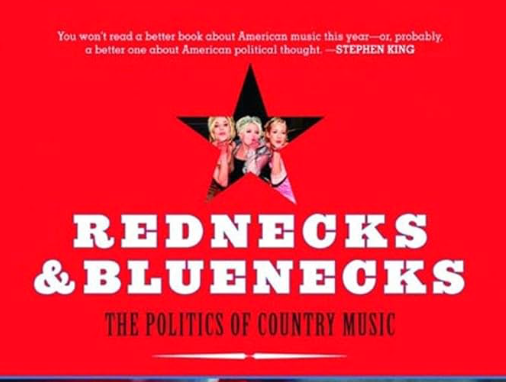
I asked this question during this week’s “Crossroads” podcast (CLICK HERE to tune that in), which focused on a Rolling Stone feature with this headline: “The Culture Wars Are Tearing the Close-Knit Country Music Community Apart.”

To cut to the chase, these country music fights are all about politics — of course. And also, it’s totally new (#NOT) for country stars to speak out on issues of culture, morality, family, politics, economics, race, etc. Forget that Hank Williams guy, Jimmie Rodgers, Merle Haggard, Loretta Lynn and lots of other superstars.

People like Cash. It helps to read this next quote slowly and imagine the Man in Black’s voice-of-God singing and speaking tones

:… When asked to describe his musical values, Cash preached country gospel: "I love songs about horses, railroads, land, judgment day, family, hard times, whiskey, courtship, marriage, adultery, separation, murder, war, prison, rambling, damnation, home, salvation, death, pride, humor, piety, rebellion, patriotism, larceny, determination, tragedy, rowdiness, heartbreak and love. And mother. And God."

Yes. there’s some politics in there — along with some other important topics.


Please respect our Commenting Policy

Plug-In: Does traditional worship have a prayer post-pandemic? New reports offer info

Plug-In: Does traditional worship have a prayer post-pandemic? New reports offer info

Last week we highlighted the return of a Washington state high school football coach who won the right to pray on the field.

Now, after just one game back, coach Joe Kennedy has resigned, “citing family concerns and a lack of support from school district officials,” as the Washington Times’ Mark A. Kellner reports.

In other news, X owner Elon Musk is accusing the Anti-Defamation League of, well, defamation, “claiming that the nonprofit organization’s statements about rising hate speech on the social media platform have torpedoed X’s advertising revenue,” CNN’s Jordan Valinsky writes. At the heart of this battle is an Orthodox Jewish activist who is being defended by, wait for it, Musk.

Musk’s threat to sue the antisemitism watchdog extends the platform’s war of words, Religion News Service’s Yonat Shimron notes. At the heart of this battle is an Orthodox Jewish activist who is being defended by, wait for it, Musk.

Meanwhile, Ukraine’s Greek Catholic bishops told Pope Francis that his praise for Russia’s imperial past “pained” Ukrainians, as The Associated Press’ Nicole Winfield details.

This is our weekly roundup of the top headlines and best reads in the world of faith. Our big story concerns the state of worship attendance and giving after COVID-19.

What To Know: The Big Story

Post-pandemic challenges: For houses of worship, encouraging signs that a rebound is taking place are evident in a new study.


Please respect our Commenting Policy

New take on culture wars? American Muslims clash with the Sexual Revolution

New take on culture wars? American Muslims clash with the Sexual Revolution

In terms of Islamic doctrine, alcohol is "haram," or forbidden, and the Quran is blunt: "O ye who believe! Strong drink and games of chance and idols and divining arrows are only an infamy of Satan's handiwork."

But it isn't hard to find Muslims that never boarded that bandwagon.

"There are Muslims who drink and get drunk. That's a fact, but that doesn't mean they can change what Islam teaches," said Yasir Qadhi, dean of the Islamic Seminary of America, near Dallas. "That's a sin. We all sin. But we cannot change our faith to fit the new norms in society."

Under normal circumstances, it wouldn't be controversial for Islamic leaders to affirm that their faith teaches absolute, unchanging truths about moral issues -- including subjects linked to sexuality, marriage and family life.

But Muslims in America never expected to be called "ignorant and intolerant" because they want public-school leaders to allow children to opt out of academic work that clashes with their faith. But that's what is happening in Montgomery County, Maryland, and a few other parts of the U.S. and Canada, where Muslim parents have been accused of cooperating with the cultural right, said Qadhi.

"That is so painful. … Truth is, we are not aligning with the political left or right," he added. "You cannot put Islam into a two-party world, where you have to choose the Democrats or the Republicans and that is that."

On the legal front, a Maryland district court recently ruled that parents do not have "a fundamental right" to avoid school activities that challenge their faith. The legal team for a coalition of Muslims, Jews, Orthodox Christians, evangelicals and others quickly asked the Fourth Circuit Court of Appeals to reconsider the Mahmoud v. McKnight decision.

At the same time, Muslim leaders are debating a May 23 statement -- "Navigating Differences: Clarifying Sexual and Gender Ethics in Islam" -- signed by more than 200 Muslim leaders and scholars, representing a variety of Islamic traditions.


Please respect our Commenting Policy

True or false: Angry Muslim parents in Maryland have joined the Religious Right?

True or false: Angry Muslim parents in Maryland have joined the Religious Right?

Faced with a throng of worried parents, Montgomery County Councilmember Kristin Mink met with a few Muslim protestors to hear their objections to the "LGBTQ+ inclusive texts" that school teachers would be using with their children.

The Maryland Democrat was not amused by what she heard.

"This issue has unfortunately put … some, not all of course, Muslim families on the same side of an issue as white supremacists and outright bigots," said Mink, in early June. "The folks I have talked with here today, I would not put in the same category as those folks, although, you know, it's … complicated."

Public-school efforts to promote equity, she added, are "not an infringement on, you know, particular religious freedoms."

This public statement stunned a coalition of Muslims, Orthodox Christians, evangelicals, Jews and others committed to a Maryland policy that allowed students to avoid some activities focusing on family life, gender change and same-sex relationships. These parents, for starters, objected to the use of books such as "Born Ready: The True Story of a Boy Named Penelope," "Rainbow Revolutionaries: Fifty LGBTQ+ People Who Made History" and "Pride Puppy!", an ABC book familiarizing preschool and kindergarten children with the sights and sounds encountered when attending Pride marches.

In the spring, Montgomery County officials limited use of the opt-out policy, while releasing a notice stating that "teachers will not send home letters to inform families when inclusive books are read in the future."

Council on American-Islamic Relations leaders -- citing documents from an open-records request -- noted that officials also encouraged teachers to "scold, debate or 'disrupt the either/or thinking' of … students who express traditional viewpoints" on gender, family life and sexuality. Also, students should be instructed not to use "hurtful," "negative" words.

This parental rights battle has now moved to courtrooms, like so many other religious liberty cases that have recently reached the U.S. Supreme Court.


Please respect our Commenting Policy

Thinking about the abaya, a garment causing new mosque-and-state conflicts in France

Thinking about the abaya, a garment causing new mosque-and-state conflicts in France

It’s back to school time across much of the world, but nowhere has the annual ritual drawn more attention than in France.

This attention comes after French officials said they will bar children in public schools across the country from wearing the “abaya,” a full-length robe used by some Muslim women to convey modesty.

The rationale for the ban, they said, was to stem a growing number of disputes in its secular schools. But critics of the new measure called it discriminatory, fueling another debate across France regarding the way Muslim women dress. Debates about immigration played a role in this, as well.

France, which prides itself on its secularism in public institutions, has since 2004 barred middle and high school students from wearing any symbols that have religious meaning, including a cross, a yarmulke or head scarf.

Since 2010, it has also been against the law to wear a face-covering veil in public. Last year, lawmakers placed a ban on hijabs and other “conspicuous religious symbols” in sports competitions. Earlier this summer, France’s top administrative court ruled against allowing body-covering “burkini” — a head-to-ankle piece of swimwear — in public pools for religious reasons, arguing it violated the principle of government neutrality toward religion.

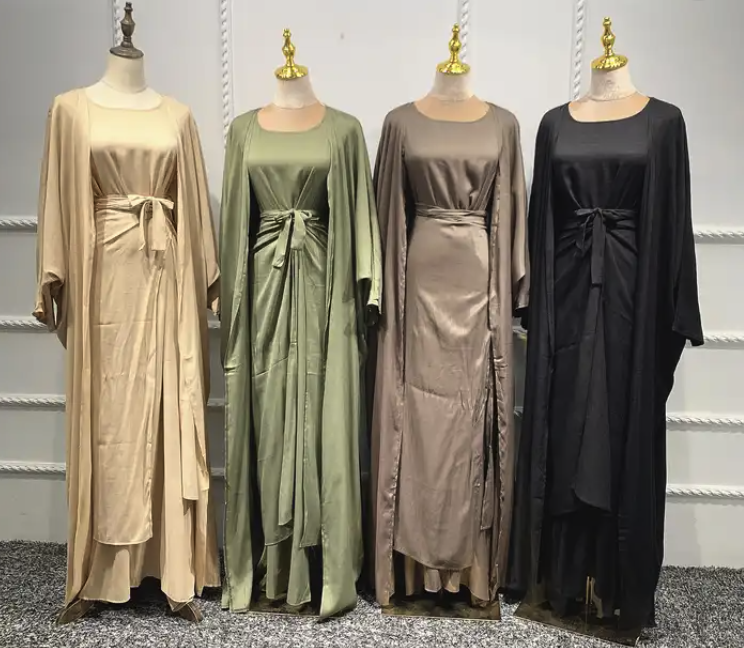
What is the abaya? It is a flowing dress that covers both arms and legs but not the head or hands.

While the robe is popular in Arab-majority countries, it does not have a clear religious meaning. it is mostly worn by Muslim women who want to follow the Quran’s teachings regarding modesty.

Some Muslims consider the female body — with the exception of the face and hands — “awrah,” which means it should be concealed in public and not to be seen by men.


Please respect our Commenting Policy

Podcast: Let's play, 'Name that pope!' The Pope Francis vs. St. Pope John Paul II edition

Podcast: Let's play, 'Name that pope!' The Pope Francis vs. St. Pope John Paul II edition

Nearly a decade ago, I wrote my “On Religion” anniversary column (No. 26 at that time) about a game that Catholics seemed to be playing in cyberspace.

Some called this game, “Name that pope!” At this stage of Catholic life, early in the Pope Francis era, quite a few Catholics were frustrated with the many journalists who claimed there were striking differences — on social justice, poverty, the environment and peace — between the new pope and the previous two occupants of the Throne of St. Peter.

Pope Benedict XVI and St. Pope John Paul II were, you see, stern conservatives obsessed with clashes between centuries of Catholic moral theology and the Sexual Revolution. Pope Francis offered a kinder, more compassion vision focusing (all together now) on social justice, poverty, the environment and peace.

That old “Name that pope!” game played a pivotal role in this week’s “Crossroads” podcast (CLICK HERE to tune that in). We were talking about a new Associated Press story that ran with this headline: “Pope says some ‘backward’ conservatives in US Catholic Church have replaced faith with ideology.

Hold that thought, as we return to the earlier edition of “Name that pope!” Let’s run through this unedited chunk of that column:

Start with this quotation: "The reservation of the priesthood to males, as a sign of Christ the Spouse who gives himself in the Eucharist, is not a question open to discussion."

Name that pope: That's Pope Francis, believe it or not.

Round two: "It is deplorable that homosexual persons have been and are the object of violent malice in speech or in action. Such treatment deserves condemnation from the church's pastors wherever it occurs."

Name that pope: That's Pope Benedict XVI.

Round three: "If we refuse to share what we have with the hungry and the poor, we make of our possessions a false god. How many voices in our materialist society tell us that happiness is to be found by acquiring as many possessions and luxuries as we can! ... Instead of bringing life, they bring death."


Please respect our Commenting Policy

New York Times offers a fascinating look at France's painful religion and immigration puzzle

New York Times offers a fascinating look at France's painful religion and immigration puzzle

Religion is very complicated in France. It’s almost as complicated as anti-religion traditions in France.

This makes it very hard for journalists to draw a line between the “good” religious believers and the “bad” religious believers, as well as the “good” anti-religion leaders and the “bad” anti-religious leaders.

For example, if a politician opposes public displays of religious tradition by Muslims, is that “good” anti-religion or “bad” anti-religion? After all, it could be see as logical after generations of French opposition to similar symbolic gestures by Catholics, Jews, etc. Ah, but what this action can be seen as opposition to European Union support for welcoming immigrants, no matter what?

Those seeking a quick glance at recent scenes in this complicated drama can surf through these GetReligion posts — “France's high court clears up burkini's legality; mainstream media still muddy the waters” and “More secular attacks on burkinis: The New York Times explains why this is not about religion.”

As with the burkini battles, France is now wrestling with another conflict about women, especially school girls, who choose to be modest for bad reasons. The New York Times has published a solid, fascinating report that ran with this complicated (which is fitting) double-decker headline:

France to Ban Full-Length Muslim Robes in Public Schools

Religious symbols are already banned in French schools, but the abaya — a loosefitting robe worn by some Muslim women — was in a gray area. Critics called the measure discriminatory

Ah, but what if there is nothing distinctively or historically Muslim about a particular garment?

What is the difference between a “good” evening gown that is dramatic (and modest) and a “bad” everyday gown that is dramatic and modest? The issue, of course, is whether the gown is worn for religious reasons. In this overture, note the distinction between an “abaya” and the “niqab,” which covers the face. (Oh, and note “children” in the lede, as opposed to “girls.”)

France will bar children in public schools from wearing the abaya, a loosefitting, full-length robe worn by some Muslim women, the government said this week. It said the measure was necessary to stem a growing number of disputes in its secular school system.


Please respect our Commenting Policy

Plug-In: The March On Washington, 60 years later -- looking back with faith

Plug-In: The March On Washington, 60 years later -- looking back with faith

Is it time for fall yet? We’re enduring yet another triple-digit day in my home state of Oklahoma, and I’m ready for cooler temperatures.

But you signed up for religion news, not a weather report, so let’s start with this: Belief in the prosperity gospel is on the rise among churchgoers, according to a Lifeway Research report by Marissa Postell Sullivan.

Meanwhile, yet another Roman Catholic diocese in California has filed for bankruptcy, the Washington Post’s Paulina Villegas reports.

“The San Francisco Archdiocese is the third Bay Area diocese to file for bankruptcy after facing hundreds of lawsuits brought under a California law approved in 2019 that allowed decades-old claims to be filed by Dec. 31, 2022,” The Associated Press’ Olga R. Rodriguez notes.

At Christianity Today, Kate Shellnutt explains how the Christian Standard Bible has found its place in a crowded evangelical market.

This is our weekly roundup of the top headlines and best reads in the world of faith. Our big story concerns Monday’s 60th anniversary of the Aug. 28, 1963, March on Washington.

What To Know: The Big Story

Evolution of activism: “The March on Washington of 1963 is remembered most for the Rev. Martin Luther King Jr.'s “I Have a Dream” speech — and thus as a crowning moment for the long-term civil rights activism of what is sometimes referred to as the ‘Black Church.’”

That’s the lede from The Associated Press’ David Crary, who adds important context:

At the march, King indeed represented numerous other Black clergy who were his colleagues in the Southern Christian Leadership Conference. But the march was the product of sustained activism by a broader coalition. Black and white labor leaders, as well as white clergy, played pivotal roles over many months ahead of the event.

Moreover, the Black Church was not monolithic then — nor is it now.


Please respect our Commenting Policy