Politics

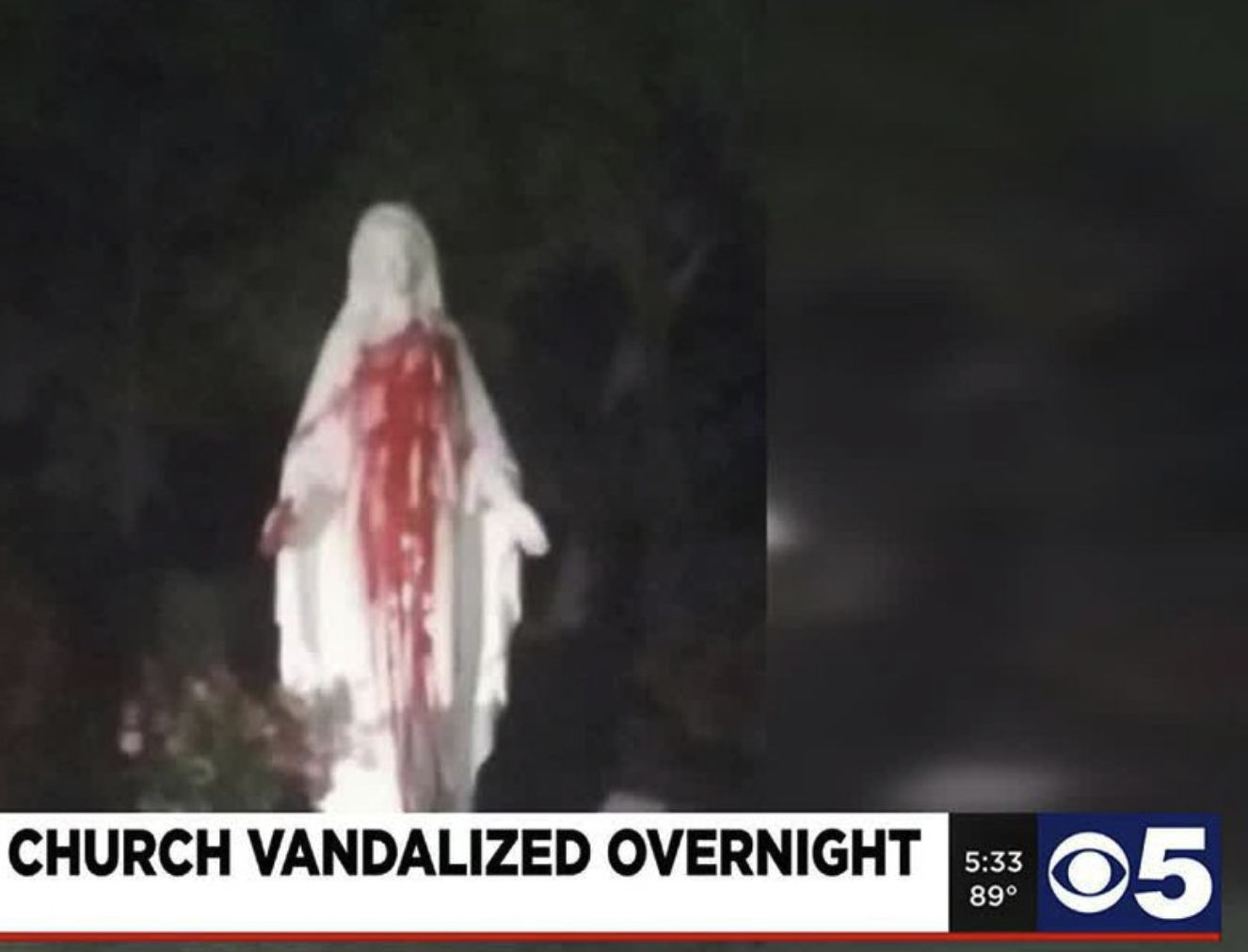
Of course the fall of Roe was 2022's top religion-beat story (including those church attacks)

Of course the fall of Roe was 2022's top religion-beat story (including those church attacks)

In the years before Roe v. Wade, one of America's largest Christian flocks struggled to find a way to condemn abortion, while also opposing bans on abortion.

A 1971 resolution said: "Some advocate that there be no abortion legislation, thus making the decision a purely private matter between a woman and her doctor" while others "advocate no legal abortion," permitting it "only if the life of the mother is threatened." Thus, it backed legislation allowing "abortion under such conditions as rape, incest, clear evidence of severe fetal deformity, and carefully ascertained evidence of the likelihood of damage to the emotional, mental, and physical health of the mother."

After the 1973 Roe decision, the same body stressed the "limited role of government" in abortion questions, while supporting a "full range of medical services and personal counseling" for expectant mothers.

That was the Southern Baptist Convention -- before its conservative wing gained control, creating a powerful cultural force against abortion rights.

Churches were always active in abortion debates, with some embracing centuries of doctrine on the sanctity of human life, while overs became strategic abortion-rights supporters. Thus, journalists in the Religion News Association named the Supreme Court decision to overturn Roe v. Wade as the year's top American religion-news story. Now churches -- left and right face -- face the challenge of proclaiming certainties while many states seek compromise.

Stressing politics, the RNA stated: "The Supreme Court overturns the 1973 Roe v. Wade precedent and says there is no constitutional right to abortion, sparking battles in courts and state legislatures and driving voters to the November polls in high numbers. More than a dozen states enact abortion bans, while voters reject constitutional abortion restrictions in conservative Kansas and Kentucky and put abortion rights in three other states' constitutions."

This poll avoided other religion-news elements of this story, such as acts of violence against churches -- especially Catholic parishes -- and crisis pregnancy centers, ranging from vandalism to arson, from the interruption of sacred rites to the destruction of sacred art. Protestors marched at the homes of SCOTUS justices and police arrested an armed man who threatened to invade the house of Justice Brett Kavanaugh.

This year, the RNA added an international list, selecting Russia's war against Ukraine as the top story, in part because of bitter tensions between the Russian Orthodox Church and the new Orthodox Church of Ukraine, backed by the United States and the Orthodox Ecumenical Patriarchate in Turkey.


Please respect our Commenting Policy

Funny press release or valid news? Becket team salutes its 2022 public-square Scrooge

Funny press release or valid news? Becket team salutes its 2022 public-square Scrooge

Religion-beat reporters (and columnists) get lots of strange press releases and letters from folks trying to get their pet issues covered.

My all-time favorite, during my Denver years, was a 50-page (at least) handwritten treatise on why superstar Barbara Streisand was the Antichrist. That created a steady stream of amused editors to my desk. I should have had the courage to write about it.

Most press releases are written by people who have absolutely no idea what newsrooms consider to be news or even what topics the reporter/columnist targeted with the release has written about in the past.

Christmas is a HUGE time for religion-beat press releases. This is logical because some newsrooms — those without religion-beat pros, ironically — struggle to find holiday story angles, year after year after year.

This year, I received one release that made me laugh out loud, in a good way. It came from a legal think tank that has made lots of news, in recent decades, with successful arguments at the U.S. Supreme Court. I have, for a decade-plus, received variations on this release from The Becket Fund for Religious Liberty, but this one (#GASP) really should have received some coverage.

It was about this year’s winner of the “Ebenezer Award,” saluting the “most outrageous and scandalous offenders of the Christmas and Hanukkah season.” This year’s winner: The government powers that be in King County, Washington. (Click here for previous winners.)

Here’s some of the press-release background:

King County's "Workforce Equity Manager" for the Department of Human Resources, Gloria Ngezaho, recently authored and issued a memo, titled "Guidelines for Holiday Decorations for King County Employees," where she states that workers may not "appear to support any particular religion" and bans them from displaying religious symbols in any "virtual workspace." …

King's County has refused to back down on their outlandish efforts to squash the religious expression of their employees during one of the most sacred times of the year for people of faith.

Did this story receive any mainstream press coverage?


Please respect our Commenting Policy

Top trends of 2022? There are plenty of political and religion stories in these tweets

Top trends of 2022? There are plenty of political and religion stories in these tweets

It’s certainly been a volatile year on social media (#DUH).

Twitter is my platform of choice. It does exactly what I need it to do because it’s such a visual medium.

Post a graph. Write 50 or 60 words and then wait a few minutes to see what happens.

In many ways, it’s the antithesis of what it means to be an academic. We are taught to qualify every statement, to never engage in hyperbole, to use 1,000 words when 500 would do. Twitter has been teaching me over the last five years about how to visualize data in the simplest manner possible. It’s taught me that if the average reader can’t understand the point I’m trying to make in 280 characters, then it’s probably not worth making.

Then, Elon Musk bought the whole company. I can’t say that I agree with every decision that he is making in steering the Blue Bird Site, but I honestly don’t have a great alternative. So, I will go down with the ship, I suppose.

But, the end of the year always offers a nice opportunity to pause and reflect on what “worked” on Twitter. Out of the nearly 1,400 tweets I sent this year, I wanted to take the opportunity to catalog the five tweets that got the most retweets in 2022. Here they are in reverse order.

5. Education and Religion

I swear I could post a variation of this one once a month and it would get a ton of attention. It’s a really simple bit of analysis, to be honest.

The conclusion is straightforward and widely known among quantitative scholars of American religion. Folks with a higher level of education are more likely to align with a religious tradition and less likely to say that they are a religious “none.”

This reality replicates in every dataset that I’ve ever seen. Yet, it comes as an absolute shock to people on Twitter. Why is that? Any thoughts?


Please respect our Commenting Policy

What's up in 2023? The Guy offers a first draft of a religion-beat agenda

What's up in 2023? The Guy offers a first draft of a religion-beat agenda

The new year could be climactic for two aspects of LGBTQ issues, first, the rights of religious and conservative dissenters within liberalized western culture, and second, the ongoing conflicts within church groups.

What should journalists be prepared to cover?

By June, the U.S. Supreme Court will decide the 303 Creative case, in which a website designer — based on First Amendment claims — seeks exemption from Colorado’s anti-discrimination law to avoid work on postings that celebrate same-sex weddings (background here). The Court might broadly define what rights various forms of religious traditionalists have in a host of legal conflicts facing e.g. U.S. religious colleges, social-service agencies and individual businesses now that same-sex marriage is legalized.

Inside a specific religion brand, this could be a pivotal year for the global Anglican Communion with its 46 national branches and some 85 million baptized members. A mid-January meeting of bishops in the “mother” Church of England may well decide dioceses can permit same-sex weddings. That historic change would then need approval from clergy and lay delegates at the February 6–9 General Synod.

Such a move would add explosive potential to the April 17-21 meeting in Kigali, Rwanda, of the Global Fellowship of Confessing Anglicans (“GAFCON”), long vexed by liberal moves in England, the United States and elsewhere in declining First World churches. GAFCON unites the heads of 10 Anglican branches, three of which alone (Kenya, Nigeria, Uganda) encompass half the world’s Anglicans. GAFCON’s chairman, Archbishop Foley Beach (admin@anglicanchurch.net and 724-266-9400), heads a church of conservatives who’ve left the U.S. Episcopal Church and Anglican Church of Canada.

Already, key archbishops have boycotted global Anglican confabs, continuing a slow-motion breakup that began decades ago. Will the maneuvers in England and elsewhere provoke a huge, definitive break from the London-based Anglican Communion by churches in GAFCON and the related Global South Fellowship of Anglican Churches?

The United Methodist Church could be on the brink of the biggest U.S. Protestant split since the Civil War. That’s a huge story at the local, regional, national and global levels.


Please respect our Commenting Policy

Final 2022 podcast: What parts of the Roe v. Wade story deserved additional coverage?

Final 2022 podcast: What parts of the Roe v. Wade story deserved additional coverage?

Everyone had to know that the fall of Roe v. Wade would be the top pick in the Religion News Association’s annual poll to determine the Top 10 religion-beat stories of 2022. That would have been the case, even if the RNA hadn’t created two lists this year, one for U.S. stories and one for international stories.

Why? I’ve been following this poll closely since the late 1970s and once interviewed the legendary George Cornell of the Associated Press about his observations on mainstream religion-news coverage trends during his decades on the beat.

Let’s briefly review some of the factors that shape this list year after year, since this topic was discussed during the final 2022 “Crossroads” podcast (CLICK HERE to tune that in). This episode was recorded while we wrestled with rolling power blackouts here in the frigid hills of East Tennessee. See if you can guess where we had to do a patch and start again!

First of all, the RNA top story will almost always be a hot political event or trend — with a religion angle. Politics, after all, is REAL news. Think White Evangelicals and Bad Man Orange. Second, it helps if stories feature clashes between religion and sex, usually in one of the progressive Mainline Protestant churches or, ideally, Roman Catholicism. Think Joe Biden, Catholic bishops and just about anything (especially if Pope Francis is involved). After that, you have slots for wars, natural disasters and newsy papal tours.

The fall of Roe v. Wade had it all, putting a core Sexual Revolution doctrine at risk, to one degree or another, depending on the blue, red or purple state involved.

I will not run through the contents of the whole RNA list. However, it’s interesting to note the wordings in some poll items, paying attention to what is included and what is NOT included therein. For example, here is No. 1 in the U.S. list:

The Supreme Court overturns the 1973 Roe v. Wade precedent and says there is no constitutional right to abortion, sparking battles in courts and state legislatures and driving voters to the November polls in high numbers. More than a dozen states enact abortion bans, while voters reject constitutional abortion restrictions in conservative Kansas and Kentucky and put abortion rights in three other states’ constitutions.

What is missing in that complex item?


Please respect our Commenting Policy

Buried story of 2022? The persecution of Christians keeps surging around the world

Buried story of 2022? The persecution of Christians keeps surging around the world

You want news?

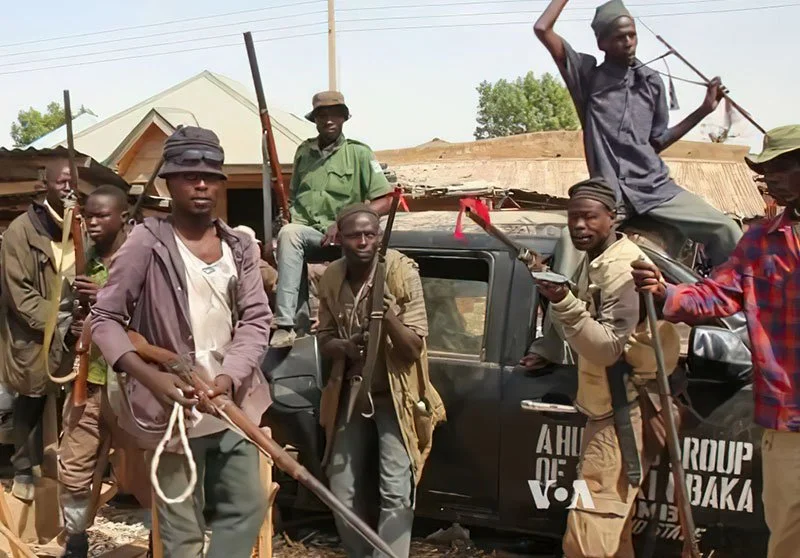
The 2022 report from the Open Doors organization (CLICK HERE) says “persecution of Christians has reached the highest levels” since it began accumulating data for its annual “World Watch List” three decades ago. Hostile incidents have increased by 20% since just 2014, and some 360 million Christians, or 14% of the worldwide total, are said to have faced persecution, harassment, or discrimination.

Open Doors reports that it has documented the murders in one year’s time of 5,898 Christians for their faith (up 24% from the prior year); attacks on 5,110 local churches (up 14%); 3,829 abductions (a new high, up 124%); 6,175 victims held without trial; 24,678 subjected to beatings, death threats and other abuse; 6,449 with homes or businesses attacked; and 3,147 women targeted for rape or sexual harassment. 

Since that report was issued, the Nigeria-based civil rights group Intersociety reports that in just that one nation 4,020 additional killings and 2,315 abductions occurred from January through October, 2022.

The Memo therefore proclaims this international upsurge the Buried Story of the Year, a major, newsworthy global scourge widely featured by religious media — yet all but ignored by much of the “Mainstream Media.”

Journalists will have another peg for remedying this sin of omission when Open Doors issues its 2023 report early in the new year.

One noteworthy media exception, timed for Christmas a year ago, was a thorough New York Times survey of widespread harassment of Christians in India. Also, Reuters this month produced a massive investigation of 10,000 forced abortions conducted by the military in chaotic Nigeria, indicating rape is a widespread tactic used to terrorize Christian women.

On a broader time frame, the Center for the Study of Global Christianity estimates that 1 million Christian martyrs were killed in the first 10 years of the 21st Century.


Please respect our Commenting Policy

Battles over 'Holy Rus' -- Centuries of history behind the bitter Orthodox schism in Ukraine

Battles over 'Holy Rus' -- Centuries of history behind the bitter Orthodox schism in Ukraine

After the Soviet Union's collapse, Orthodox Christians throughout the Slavic world celebrated the slow, steady, construction of churches after decades of persecution.

In 2004, the poet Nina Borodai wrote a long prayer -- "Song of the Most Holy Theotokos (Greek for God-bearer)" -- seeking the prayers of St. Mary for the lands of "Holy Rus," a term with roots dating to the 988 conversion Prince Vladimir of Kiev.

"Mother of God, Mother of God / … All Holy Rus prays to you / And valleys and mountains and forests. … / Consecrate all the churches to you," wrote Borodai (computer translation from Russian). "Domes, domes in the sky are blue / I can't count the bells / The ringing floats, floats over Russia / Mother Rus is awakening."

Borodai's prayer of joy and repentance was an unlikely spark for an explosion of religious conflict inside Ukraine. Leaders of the Ukrainian Orthodox Church -- with centuries of canonical ties to Russian Orthodoxy -- face Security Service of Ukraine accusations of collusion with President Vladimir Putin of Russia. Some churches have been seized or padlocked as pressures rise for conversions to the rival Orthodox Church of Ukraine, officially born in 2019 with recognition by Ecumenical Patriarch Bartholomew I of Istanbul and Western governments.

In November, an OCU priest posted a video showing laypeople singing Borodai's poem after a service inside the Kiev Pechersk Lavra, the font of Slavic monasticism since its birth in 1051 in caves above the Dnieper River. Monastery critics made headlines by claiming the video proved the monks -- part of the historic UOC -- are disloyal to Ukraine. Lavra visitors, according to the New York Times, were "cheering for Russia."

Days later, security forces raided the monastery and, in the weeks since, officials have accused bishops and priests of aiding Russia. They released photos of Russian passports, theological texts in Russian and pamphlets criticizing the newly created Ukrainian church.

The UOC synod responded by pleading for fair, open trials of anyone accused, while noting: "From the first day of the invasion of Russian troops, the Ukrainian Orthodox Church has condemned this war and has consistently advocated the preservation of the sovereignty, independence and territorial integrity of Ukraine. Our believers, with God's help and the prayers of their fellow believers, courageously defend their Motherland in the ranks of the Armed Forces of Ukraine. … Memory eternal to all victims of this terrible war!"

This echoed waves of UOC statements condemning the invasion.


Please respect our Commenting Policy

Escaping that 'comfort zone': Press keeps missing obvious religion news at '22 World Cup

Escaping that 'comfort zone': Press keeps missing obvious religion news at '22 World Cup

The World Cup in Qatar continues to roll along into the semifinals. So far, the premier soccer tournament — and arguably the planet’s biggest sporting event — has showcased skill, drama and even some upsets. 

What the tournament has also generated are plenty of different kinds of storylines for news reporters and sports writers to focus on. As is the case with sporting events in general there are lots of storylines connected to religion that have gone unnoticed. 

It should come as no surprise that sports writers, and very often their editors back in the newsroom, don’t “get” religion. Go-to websites such as Fox Sports and ESPN, for instance, have failed to cover obvious stories in the past. They’ve also failed to do it in regards to the 2022 World Cup. For starters, think location, location and location. Why? Click here.

There are a few faith storylines — on and off the field — that did get coverage. Some of that coverage was great; some not so great.  

An example of a very good piece came via The New York Times. The newspaper found a way to discuss Qatar’s use of migrant workers to build stadiums and other infrastructure projects related to the World Cup in a new way.

The feature, which ran on a Sunday during Advent, looked at Qatar’s only Catholic church, located on the outskirts of the capital city Doha — in an area in which the government sanctions eight houses of worship, from Anglican to Eastern Orthodox. This feature, written by John Branch, is one of the rare times when a sports writer left his or her “comfort zone” and ventured outside the bubble of stadiums and press conferences to cover a story. 

Here’s the key section, showing why this story matters

Qatar is a nation deeply rooted in Islam. Calls to prayer can be heard five times a day throughout Doha. World Cup stadiums have prayer rooms for fans, and some staff at the games will stop what they’re doing to kneel in prayer.


Please respect our Commenting Policy