Politics

Elizabeth the Great: Why do many journalists choose to edit faith out of her Christmas talks?

Elizabeth the Great: Why do many journalists choose to edit faith out of her Christmas talks?

The Queen is dead. God save the King.

It’s hard to edit the religion content out of that equation. However, when journalists are asked to deal with the death of the queen who was, it can be argued, the most famous woman of the past 100 years, there are plenty of important, “real,” issues to deal with other than the state of her soul and her Christian faith.

I spent most of yesterday afternoon and evening watching the BBC Global coverage of the death of Queen Elizabeth II, as opposed to, shall we say, American “telly.” The BBC focused on the death of one of the greatest, if not “the” greatest, monarchs in Great Britain’s history. There were many references to her Christian faith. American television, for the most part, offered discussions of the death of a great celebrity. If I have been too harsh with that judgment, please send me some quality URLs.

How to approach this totally justified tidal wave of coverage? I think the easiest way to search out the religion-beat content is with two specific online searches.

First, search Google News for “Queen Elizabeth” and “Christmas.” Elizabeth the Great was known, of course, for her dignified and timely Christmas addresses — an essential part of the season for Brits and those who love all things British. The vast majority of the mainstream-media obits for the queen contain references to her Christmas talks — sort of.

What did she say in these very personal messages? That’s the key.

This leads to my second Google News search, for “Queen Elizabeth” and “Christian.” This is where the mainstream press — unless I have missed something, somewhere — offer, well, something like this. In the religious press, readers will find many, many pages of content, such as this feature from Premier Christianity, a niche UK religion website: “Queen Elizabeth II served Christ.”

There was, however, this Washington Post feature with a hopeful title: “Queen Elizabeth II, in her own words: Her most memorable remarks.” After all, it did include a section with this title: “Annual Christmas speeches.” These talks were, readers are told, “peppered with words of wisdom, faith and occasionally personal reflections from the nonagenarian.” However, this is what the Post offered:

“In the old days the monarch led his soldiers on the battlefield and his leadership at all times was close and personal. Today things are very different,” she said in her first televised Christmas broadcast in 1957. “I cannot lead you into battle, I do not give you laws or administer justice but I can do something else, I can give you my heart and my devotion to these old islands and to all the peoples of our brotherhood of nations.”

Please respect our Commenting Policy

Fellowship of Christian Athletes wins an 'equal access' case, even if LATimes missed that

Fellowship of Christian Athletes wins an 'equal access' case, even if LATimes missed that

Once upon a time, back in the days of the Bill Clinton White House, there was a strong church-state coalition that stretched, basically, from the Assemblies of God to the Unitarians. The legal activists in this coalition didn’t agree on everything, but they did agree on some basic First Amendment principles that helped defend believers in a wide variety of religious minorities.

If you know the history of that era, you can sense that a few important words are missing from the recent Los Angeles Times report (behind a paywall) that ran at Yahoo!News with this aggressive headline: “Court says San Jose school district must recognize Christian club that excludes LGBTQ kids.”

That headline, of course, could have noted — somehow — that the this victory for the Fellowship of Christian Athletes was based on the same legal principles that defend the First Amendment rights of LGBTQ support groups at the same school.

The key is that there are two crucial words — “equal access” — that are missing from this rather solid story, which includes enough quoted material from voices on both sides for readers to figure out what is going on (if they have a background in church-state studies). Hold that thought.

First, here is the Times overture:

In spring 2019, a teacher at Pioneer High School in San Jose posted a message on his classroom whiteboard questioning a "Sexual Purity" statement that a club for Christian student athletes was requiring its leaders to sign.

The club's statement said sexual relationships should exist only between married, heterosexual couples. The teacher wrote that he was "deeply saddened" that a club on the public school campus made its leaders "affirm" those ideas, and he asked students what they thought.

The resulting firestorm led to the San Jose Unified School District rescinding recognition of the Fellowship of Christian Athletes for excluding LGBTQ students in violation of the district's nondiscrimination policy. In response, the club and its international parent organization sued in federal court, alleging religious discrimination.

On Monday, the Fellowship of Christian Athletes won a major victory when a three-judge panel of the U.S. 9th Circuit Court of Appeals ordered the club be reinstated as an official student group for the current school year while litigation between the parties continues in the lower district court.

Shutting down the FCA violated the “nondiscrimination policy”?


Please respect our Commenting Policy

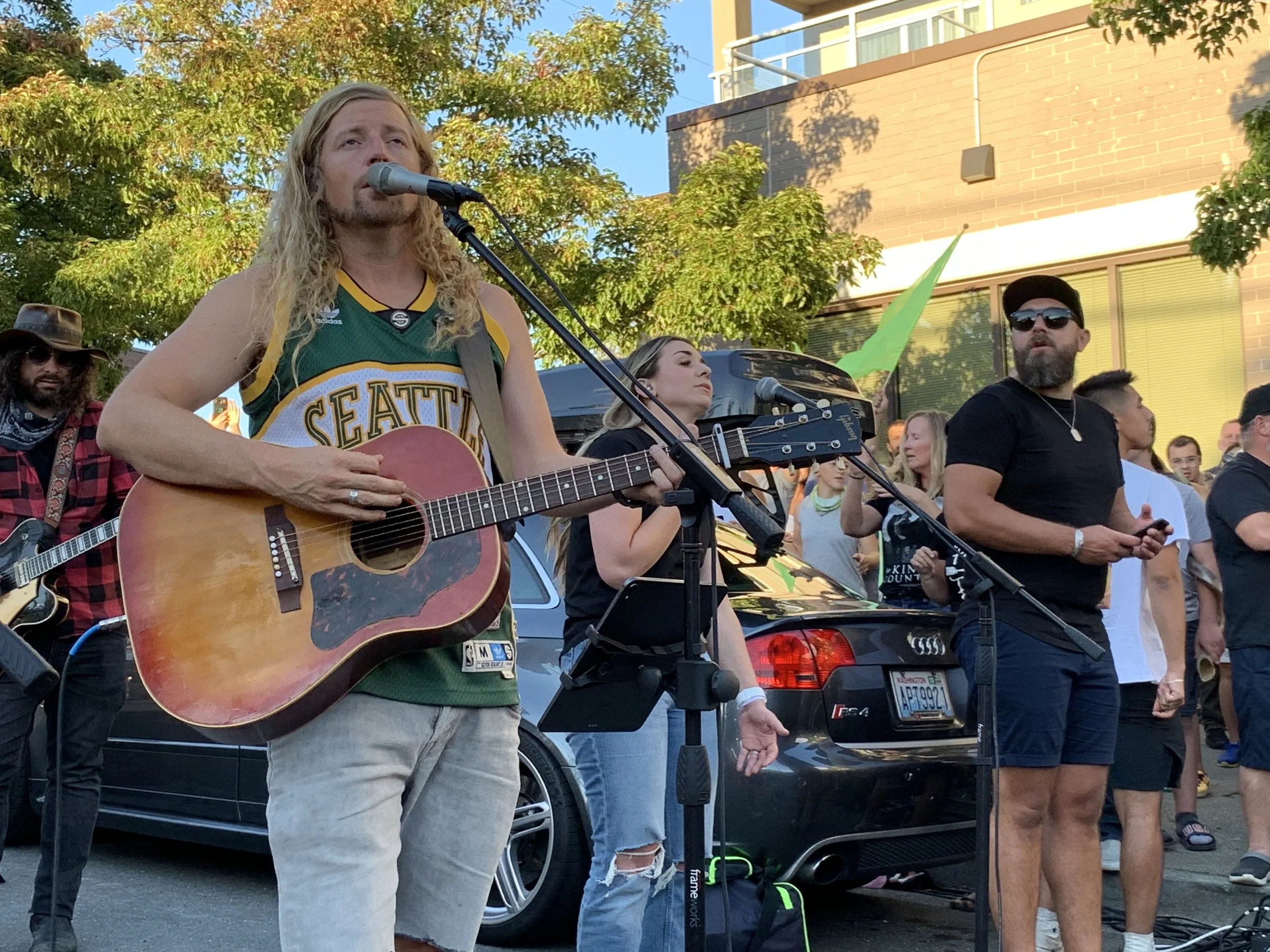
New stories on New Apostolic Reformation, Sean Feucht keep assuming a right-wing takeover

New stories on New Apostolic Reformation, Sean Feucht keep assuming a right-wing takeover

I’ve been complaining for years that journalists aren’t schooling themselves adequately on the prophetic movement (among charismatics) that some call the New Apostolic Reformation (NAR). Since the Jan. 6 uprising, they’ve started writing about it.

But be careful what you wish for. Not all that glitters is gold. I’ve read more than a few stories that sound like something out of a horror flick: An ominous theocratic movement involving millions of people, under uber-controlling leaders with a few White Christian nationalists thrown in.

The two pieces I’ll be addressing is Elle Hardy’s Aug. 23 story in The New Republic: “The Right-Wing Christian Sect Plotting a Political Takeover,” and Rolling Stone’s July 11 story on Sean Feucht. Both typify current Christian trends as scary movements with an end game of sending Donald Trump to the White House in 2024 and sending America back to the Middle Ages.

Hardy’s story had ambitious goals. It began with a summation of this movement starting from 1994 with a revival at a church once known as the Toronto Airport Vineyard. Also known as a “laughing revival” for the odd laughing fits folks had, it made major changes in North American Christianity and swept across the English-speaking world. (Three years later, I was interviewing folks in Iceland who said they were dramatically influenced by Canadian missionaries spreading its benefits.)

All this grew into the NAR, the author says, and (drum roll):

And they have one clear goal in mind — ruling over the United States and, eventually, the world.

NAR, as it’s often called, is a shadowy movement, rather than an organization; many who are considered a part of it deny that it even exists. Broadly, it seeks to return church structures to the fivefold ministry of the Bible (defined roles of apostle, prophet, evangelist, pastor, and teacher). The key roles in this pecking order are prophets, who have the visions, and apostles, the anointed ones who put ideas and networks into practice and, critically, to whom everyone else must submit.

OK. I did my first master’s thesis (in 1992) on authority and submission practices in the charismatic communities that were so popular among evangelicals in the 1960s and 1970s, plus I wrote a 2009 book that deals substantially with this issue. And I can tell you that the NAR folks did learn a thing or two about the mess caused by the 1970s “discipleship movement” which was deeply into one submitting oneself to an elder who was himself (usually this person was male) submitted to a higher elder in a hierarchical line reaching up to a small group of people.

They’re not going that same route today.


Please respect our Commenting Policy

Bonus podcast: Clemente Lisi on news about 'good' Catholics, as opposed to 'bad' ones

Bonus podcast: Clemente Lisi on news about 'good' Catholics, as opposed to 'bad' ones

Here is a question from the news, sort of, that cuts to the heart of this bonus GetReligion podcast by Clemente Lisi, taken from his on-air visit this week with Todd Wilken at Lutheran Public Radio (CLICK HERE to tune that in).

If Gov. Ron DeSantis started carrying a rosary, and talking about it quite a bit in the context of his Catholic faith (think President Joe Biden), would journalists in major newsrooms see this as a good thing or a bad thing? Possible answers: “Yes,” “No” and “You need to ask?”

Go ahead, if you want to, and think about it in the context of these recent posts: “Concerning the right-wing rosary attack — was that Atlantic feature really 'news'?” and “Tip for reporters — Don't assume what Catholics believe based on politics or Internet memes.”

In reality, the spark for this podcast came from Religion Dispatches piece the other day, by exevangelical trans scribe Chrissy Stroop, with this headline: “Media fail to acknowledge that 2024 hopeful Ron DeSantis is as Catholic as Biden.” Hold that thought.

The Religion Dispatches piece included commentary on a March 22 GetReligion post with this headline: “As Florida's DeSantis wages culture war, his Catholic faith isn't news — unless it's used to attack him.” By the way, editors there failed to note that Lisi is Catholic, as opposed to evangelical, which seems relevant.

Here is the key passage from the Lisi post:

The two things that lots of people don’t want to read about these days is the coronavirus pandemic and Donald Trump, part of a larger trend regarding news fatigue in this country. Unfortunately, this post will mention both and only because it is about Ron DeSantis.

The Florida governor has been in the news the past few years because of his connection to the former president and a virus that paralyzed the planet for two years. A hero to the right and bogeyman to the left, DeSantis has received plenty of mainstream news coverage — much of it one-sided — because of his use of so-called culture war issues to push legislation.

DeSantis, who is running for re-election and among the favorites to run for the White House in 2024, has been a lightning rod for Democrats and a focus of criticism from the mainstream press. … While the coverage has predictably focused on politics, the religion-news hooks in these stories have largely been ignored — unless they were highlighted to be used against him.


Please respect our Commenting Policy

What if mass media can't get rid of misinformation (or agree on what the term means)?

What if mass media can't get rid of misinformation (or agree on what the term means)?

Panelists on the final episode of the media-analysis show “Reliable Sources,” axed after three decades by CNN’s incoming management, gave voice to widespread angst about America’s news and information environment.

Rampant misinformation is among the top concerns these days. Social media have blocked COVID discussions regarded as misleading. The Biden Administration launched an Orwellian-sounding Disinformation Governance Board under the Department of Homeland Security, but quickly shelved the effort.

By the way, “misinformation” means incorrect knowledge of any sort, whereas “disinformation” is false knowledge that’s spread deliberately.

One commentator recommends that we all chill.

Only sheer “arrogance” could create “confidence that we can accurately and productively root out misinformation,” contends Isaac Saul, who heads up www.ReadTangle.com, an online newsletter that offers non-partisan summaries of the best arguments from various sides of political issues. (Check it out.) He titled a July article “Misinformation Is Here To Stay (And That’s OK).

The Guy does not necessarily embrace all of Saul but considers his contentions important for media toilers, critics and consumers to ponder. Thus this Memo condenses the essence as follows.

For starters, Saul cleverly notes that many things each of us believes right will prove “utterly wrong” and history proves it. As recently as a century ago, doctors believed in bloodletting cures using leeches or scalpels. U.S. women had just obtained the vote over against the common belief they were too emotional. The Milky Way was the outer limit of the universe.

Only two decades ago, experts were telling us mass opioid prescriptions were safe and that switching from paper to plastic bags would save trees and thus help the environment. More recently, Twitter and Facebook barred accurate New York Post reportage on Hunter Biden’s loaded (in several senses of that word) laptop, and established sources branded as a conspiracy theory COVID’s origin in a China lab leak, now regarded as possible or even likely. Add your own examples.


Please respect our Commenting Policy

Tip for reporters: Don't assume what Catholics believe based on politics or Internet memes

Tip for reporters: Don't assume what Catholics believe based on politics or Internet memes

There are moments in journalism that stand out more than others. One of those moments is when a certain piece — whether it’s a news story, analysis or opinion — gets a lot of attention by a large group of people for good and/or for bad reasons.

For a set of bad reasons, The Atlantic piece on the weaponization of the rosary was that piece for many Catholics and those who keep a watchful eye on media coverage of matters pertaining to the largest Christian denomination in the United States.

The piece — not necessarily a news story, but it was not labeled as commentary or even analysis — became a viral conversation topic among many family and friends over the last week. While the issue of Christian nationalism is important to understand, the bigger discussion — and questions I had to field — was more like this: What’s wrong with journalism these days?

That’s the central preoccupation of many — especially those of us who have been doing this for decades. (For more on that, please check out tmatt’s post and podcast from this past Friday. This view of what was going on in this piece may shock you.)

There were many lines from the Atlantic piece that stood out, but one that did most was this one:

The theologian and historian Massimo Faggioli has described a network of conservative Catholic bloggers and commentary organizations as a “Catholic cyber-militia” that actively campaigns against LGBTQ acceptance in the Church. These rad-trad rosary-as-weapon memes represent a social-media diffusion of such messaging, and they work to integrate ultraconservative Catholicism with other aspects of online far-right culture. The phenomenon might be tempting to dismiss as mere trolling or merchandising, and ironical provocations based on traditionalist Catholic symbols do exist, but the far right’s constellations of violent, racist, and homophobic online milieus are well documented for providing a pathway to radicalization and real-world terrorist attacks.

There’s the thesis of the piece, the connect-the-dots language linking strange behavior to current tensions in Catholic life in America.

There’s plenty to unpack here, but the reality is that citing a few political websites claiming to represent Catholic thought and then adding a smattering of social media memes is no way to gauge for what anyone really thinks and believes.


Please respect our Commenting Policy

Plug-In: Why my old school district pulled 41 books from libraries -- including the Bible

Plug-In: Why my old school district pulled 41 books from libraries -- including the Bible

I don’t remember the Keller Independent School District making national headlines when I was a student here in the 1980s. Even back then, this North Texas community — which began with a railroad extension from Fort Worth in the 1850s — was growing.

But in my time at Keller High School, then the district’s only high school, Keller was still more farm town than burgeoning suburb. We had one grocery store along U.S. 377 and no McDonald’s — I drove to nearby North Richland Hills to flip Quarter Pounders my junior and senior years.

An old gray water tower that proclaimed “Keller: Home of the Indians” greeted visitors to our town, referring to the school mascot. I edited the student newspaper The Wigwam, played sousaphone in the marching band and graduated 23rd in a class of about 300 in 1986. The next year, our former drum major, Michelle Royer, won the Miss USA Pageant — the biggest news I recall from those days.

My parents still live in the area, so I visit frequently and have witnessed Keller’s explosive growth, including multiple exits along Interstate 35.

This week, I’ve watched with interest as the Keller school district’s decision to remove 41 books from its libraries, including the Bible and an illustrated version of “Anne Frank’s Diary,” has made headlines everywhere from the Texas Tribune to the New York Times. What in the world is happening?

Basically this: The national culture wars have come to the local school board. And not just in Keller.

A previous Plug-in highlighted stories by the Fort Worth Star-Telegram’s Emily Brindley and The Tennessean’s Liam Adams on school board candidates campaigning on Christianity and conservatism.

Each of the books pulled in Keller — including the Bible — was challenged by a parent, lawmaker or other community member in the last year, USA Today’s Jeanine Santucci reports.

The Washington Times’ Mark A. Kellner points out:

“Anne Frank’s Diary: The Graphic Adaptation” is an illustrated version of the bestselling classic written by a young Jewish girl in the Netherlands as she and her family hid from Nazi occupation forces. The story ended when the Franks were captured and sent to concentration camps; Anne and her sister Margot died, most likely of typhus, in the Bergen-Belsen camp. Her father Otto survived and published the diary, which had been hidden by his secretary, after the war.


Please respect our Commenting Policy

Podcast: Concerning the right-wing rosary attack -- was that Atlantic feature really 'news'?

Podcast: Concerning the right-wing rosary attack -- was that Atlantic feature really 'news'?

No doubt about it. The early favorite for the wild headline of 2022 has to be “How the Rosary Became an Extremist Symbol” atop that viral feature from The Atlantic. And that now-deleted graphic with the rosary made of bullet holes? That will show up in media-bias features for years (maybe decades) to come.

Yes, I know that the editors tried to tone that down with a replacement headline — but it’s the original screamer that perfectly captured the article’s thesis. Oh, and the editors updated a mistake in the second line of the original headline with that new sub-headline: “Why are sacramental beads suddenly showing up next to AR-15s online?”

Attention Atlantic editors: Here is a quick guide to the seven Roman Catholic sacraments. Correction, please.

So here was the first question in this week’s “Crossroads” podcast (CLICK HERE to tune that in). It’s a question your GetReligionistas have been asking more often in the past decade (even before Orange Man Bad): What WAS this thing? A news feature? A piece of blunt analysis? An opinion screed? And here’s the question I saw several people ask: Did the Atlantic editors set out to publish an anti-Catholic classic?

Here’s my hot take: I think the Atlantic editors thought they were publishing a PRO-Catholic piece that set out to defend GOOD Catholics who want to change centuries of church teachings from the BAD Catholics who want to defend those teachings, especially orthodox doctrines on marriage, sexuality, abortion, etc.

Why do I think that? Here is the crucial part of the article, from my point of view, starting with the overture:

Just as the AR-15 rifle has become a sacred object for Christian nationalists in general, the rosary has acquired a militaristic meaning for radical-traditional (or “rad trad”) Catholics. On this extremist fringe, rosary beads have been woven into a conspiratorial politics and absolutist gun culture. These armed radical traditionalists have taken up a spiritual notion that the rosary can be a weapon in the fight against evil and turned it into something dangerously literal.

Their social-media pages are saturated with images of rosaries draped over firearms, warriors in prayer, Deus Vult (“God wills it”) crusader memes, and exhortations for men to rise up and become Church Militants.


Please respect our Commenting Policy

ProPublica punts when digging into why the Family Research Council calls itself a church

ProPublica punts when digging into why the Family Research Council calls itself a church

Sadly, ProPublica, the independent journalism organization that does a ton of investigative work, has no designated religion beat professional. But occasionally they do cover religion, including this recent piece on the Washington, D.C., based Family Research Council (FRC).

Sadly, the piece doesn’t come near the level of other ProPublica investigative works, for the reasons I’ll describe below.

The issue at hand is the FRC’s designation of itself as a church, a move that nonprofits sometimes make to evade IRS reporting requirements on how contributions are spent. For those of us who’ve spent any time in Washington, the idea of the FRC being a church is somewhat amusing, as everyone knows it operates more like an issues-driven think tank.

The question of what does or does not constitute a church has bubbled for years, including when the IRS resisted calling Scientology a church. It finally did so in 1993.

During the Obama administration from 2008-2011, Sen. Charles Grassley, an Iowa Republican, investigated six televangelists who weren’t making their financial records public. It was after this time that religious activist groups began reconstituting themselves as churches.

When the chief executive of Mozilla resigned in 2014 following release of donor records showing he had contributed toward banning same-sex marriage, more groups decided that becoming a “church” was the only way to insure their donor records remained secret. Other groups made the jump in anticipation of government interference in the hiring and firing of employees, when decisions are based on disagreements about doctrinal and lifestyle covenants.

The Family Research Council’s multimillion-dollar headquarters sit on G Street in Washington, D.C., just steps from the U.S. Capitol and the White House, a spot ideally situated for its work as a right-wing policy think tank and political pressure group.

From its perch at the heart of the nation’s capital, the FRC has pushed for legislation banning gender-affirming surgery; filed amicus briefs supporting the overturning of Roe v. Wade; and advocated for religious exemptions to civil rights laws. Its longtime head, a former state lawmaker and ordained minister named Tony Perkins, claims credit for pushing the Republican platform rightward over the past two decades.

With whom or what denomination is Perkins ordained?


Please respect our Commenting Policy