Politics

Plug-In: Pope Francis in Canada -- five key facts to look for in the news coverage

Plug-In: Pope Francis in Canada -- five key facts to look for in the news coverage

Pope Francis traveled to Canada this weekend.

The purpose of the Catholic leader’s seven-day trip: to apologize to Indigenous peoples for abuses at church-run residential schools.

In advance of his visit, which started Sunday, here are five key facts:

1. It’s a “one-of-a-kind” papal trip.

Christopher White, the National Catholic Reporter’s Vatican correspondent, reports:

When he touches down in Edmonton, Alberta, Francis will find a dramatically altered scene than that of past airport arrivals. Gone will be the jubilant sights and sounds of marching bands and cheering crowds.

When he arrives on the ground — almost certainly via hydraulic lift, given that his limited physical mobility has added another layer of complication to this difficult trip — the first hands he will shake will be that of Indigenous elders and survivors of residential schools. Indigenous drummers will provide background percussion and there will be no customary meetings with the head of state or speeches to civic authorities on his first day in the country.

2. Francis will find a nation where Catholicism is in decline.

Jessica Mundie, a fellow for the National Post, explains:

The role of the Catholic Church in society is not what it once was. What used to be a pillar in the social and political life of communities has now, for some, become the building they pass on the way to the grocery store. Its reputation has been tarnished by sex abuse scandals in Canada and around the world, and after last summer, when hundreds of suspected unmarked graves were discovered on the sites of past residential schools, many were reminded of the church’s role in this country’s controversial history.

Canadian Catholics are hoping that a visit from the Pope, which includes stops in Quebec City and Iqaluit, and meetings with First Nations, can begin to address past wrongs.

Please respect our Commenting Policy

Podcast: Are many Bible Belt military families losing faith in the U.S. armed services?

Podcast: Are many Bible Belt military families losing faith in the U.S. armed services?

On Feb. 1, 2004, GetReligion co-founder Doug Leblanc opened the digital doors here at GetReligion and our first post went live. The headline: “What we do, why we do it.

I tweaked that post a bit in 2019, but left the main point intact. The key was that GetReligion was going to try to spot what I called religion “ghosts” in hard-news stories in the mainstream press. What, precisely, was a religion “ghost”? I raise this issue once again because this week’s “Crossroads” podcast (CLICK HERE to tune that in) focused on a “ghost” question in a very important topic in the news. Hold that thought.

That first post opened with Americans sitting down to read their newspapers or watch television news.

They read stories that are important to their lives, yet they seem to catch fleeting glimpses of other characters or other plots between the lines. …

One minute they are there. The next they are gone. There are ghosts in there, hiding in the ink and the pixels. Something is missing in the basic facts or perhaps most of the key facts are there, yet some are twisted. Perhaps there are sins of omission, rather than commission.

A lot of these ghosts are, well, holy ghosts. They are facts and stories and faces linked to the power of religious faith. Now you see them. Now you don’t.

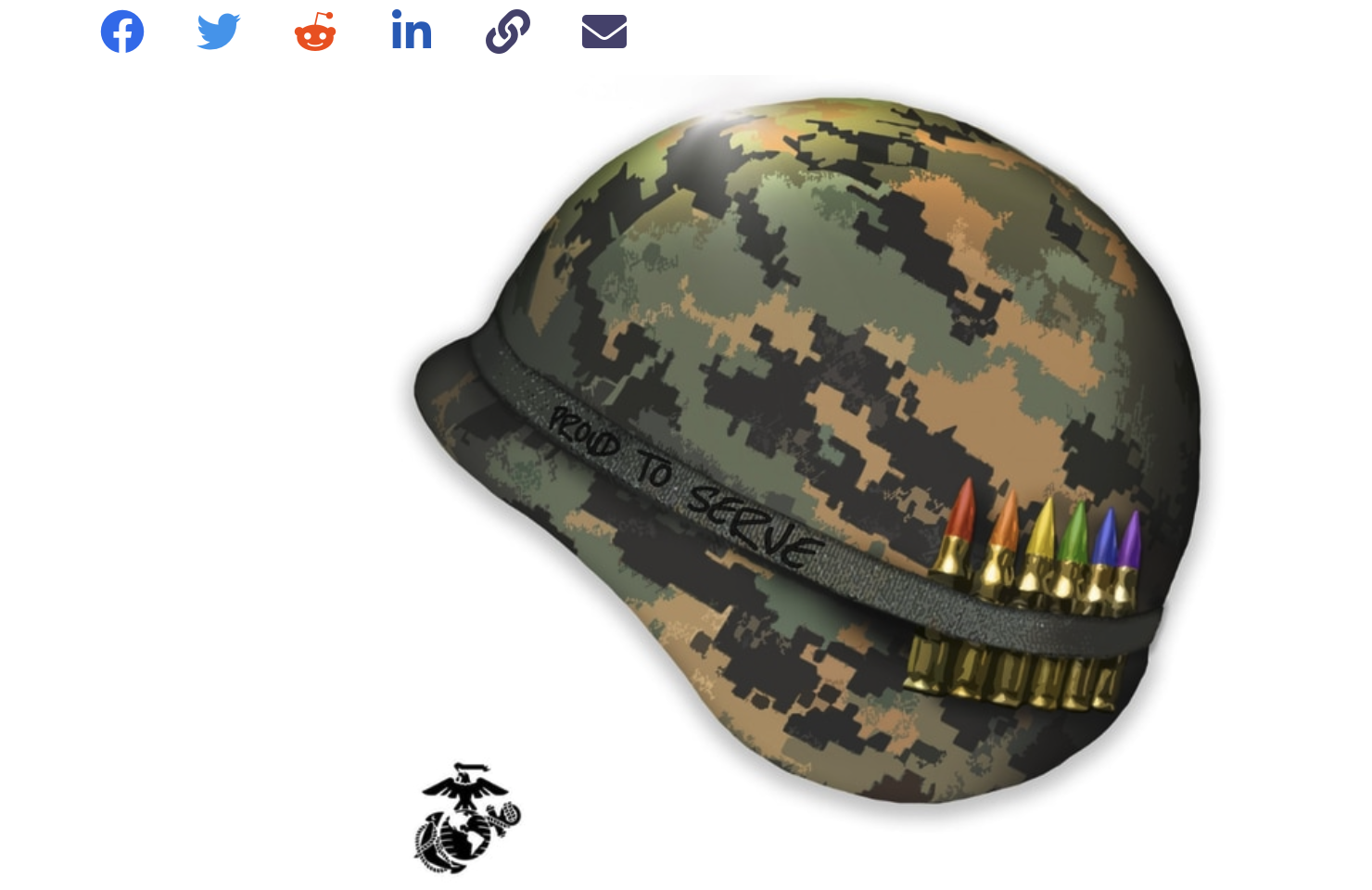
This brings us to a recent Associated Press report with this headline: “Army cuts force size amid unprecedented battle for recruits.” There are zero references to religion in this report, which is kind of the point.

Is there a religion “ghost” somewhere in this story? Here are some crucial paragraphs:

With just two and a half months to go in the fiscal year, the Army has achieved just 50% of its recruiting goal of 60,000 soldiers, according to Lt. Col. Randee Farrell, spokeswoman for Army Secretary Christine Wormuth. Based on those numbers and trends, it is likely the Army will miss the goal by nearly 25% as of Oct. 1. …


Please respect our Commenting Policy

What's the role of religion as social trust unravels in American public life?

What's the role of religion as social trust unravels in American public life?

Time for a Religion Guy Memo that sidesteps the onrushing news of the moment for a broader-brush assessment of America and American religion that the media need to be thinking about.

Last Saturday, CNN host Michael Smerconish asked whether the United States is experiencing “a national nervous breakdown,” and conducted a (non-scientific) online poll in which 78% of 22,000-plus viewers answered “no” to this question: “Are concerns about America’s unraveling overblown?”

Devastating documentation on the situation came the morning after Independence Day from the Gallup Poll’s annual survey on the population’s confidence in the various institutions that lead, bind and shape the nation.

The Gallup organization stands out among pollsters for its data on identical or similar questions across many years. Writers who pursue this will want to examine the year-by-year “confidence in institutions” data, which in many cases date back to 1973.

Since this is GetReligion, we start with how much confidence this year’s 1,015 respondents have in “the church or organized religion.”

The following numbers combine the “a great deal” and “quite a lot” answers to yield a confidence index. (The poll’s other choices were “some,” “very little,” “none” and “no opinion.”) Note that these percentages track opinions among the general public, not just Americans who are personally involved or knowledgeable about religion.

Simply put, the populace’s confidence in organized religion has hit rock bottom in 2022 at 31%, compared with a 52% majority as recently as 2009, and consistent scores of 60% or better from 1973 through 1985. Digging into the internals we find 46% confidence among self-identified Republicans vs. a paltry 26% among Democrats.

What happened? The Guy sees no clear pattern of immediate reactions to, for instance, news eruptions regarding Catholic priestly predators or the abortion or the same-sex marriage disputes, though gradual accumulating impact seems likely. There’s possibly a bit of damage from a Christian faction’s visible conservative politicking, particularly in the Trump years, but even that is debatable.

The Guy proposes an explanation based upon all institutions gauged by the poll.


Please respect our Commenting Policy

Abstinence may be 'in' again, but don't expect big-time media to give it a fair hearing

Abstinence may be 'in' again, but don't expect big-time media to give it a fair hearing

Some three weeks have passed since the Supreme Court dumped Roe v. Wade and the torrent of angry pro-abortion-rights pieces fills the pages of nearly every news publication out there.

Outlets like the New Yorker, for instance, just keep pumping them out at a rate that you have to wonder when they turned into the public voice of Planned Parenthood. The editors are, of course, preaching to their choir of faithful readers.

I’ll also say that the anti-abortion folks have been totally unprepared for the never-ending waves of attacks and, yes, some of the lies that have followed the ruling. I’m seeing precious few of their opinions out there in the secular media. Maybe they’re being blocked; hard to tell.

The underlying assumption of the argument is the gospel of the Sexual Revolution — people have a right to sex whenever, however, wherever and with whomever. This right is a modern invention. Most societies attempted to chaperone their teens and encouraged their offspring married young. They also punished adultery quite severely. One’s ‘right’ to sex was hedged in enormously.

Today, the thought of limiting one’s desires is equal to an obscenity in our culture, which is why the antidote to abortion –- abstinence -– draws such howls of protest. How dare anyone tell us no? And so an Religion News Service led a story on abstinence with these paragraphs:

(RNS) — In front of a room of middle schoolers, a youth minister in rural North Carolina scribbles “hand-holding” and “kissing” on the bottom of a whiteboard. He then writes “intercourse” on the top of the board. Between the gap, he draws a thick line, indicating that sex before marriage — anything more than kissing, actually — crosses a literal line of purity.

It’s a scene the Rev. Amelia Fulbright, now the transitional pastor of the Congregational Church of Austin, recalls from her childhood, when she attended a ministry-led sex-ed course.

The reporter chose someone from a liberal denomination, or responded to a a PR message from that church, to arrive at this inevitable conclusion.


Please respect our Commenting Policy

Pew gap in blue America? David French and Ryan Burge offer much to think about

Pew gap in blue America? David French and Ryan Burge offer much to think about

If you have followed GetReligion over the past decade or two then you have probably spotted some common themes linked to ongoing news trends (and I’m not talking about the musings of one Bill “Kellerism” Keller).

Here is a quick refresher with a few big ones:

* The press tends to ignore the RELIGION side of liberal faith groups, focusing only on their political stands.

* One of the biggest news stories of the late 20th century was the demographic implosion of Mainline Protestantism, leaving a public-square void filled, for the most part, by evangelicals.

* The rise of nondenominational evangelicals, with zero ties to existing evangelical power structures, has really confused lots of political reporters.

* It’s hard to do accurate, balanced, fair-minded journalism in an age when the technology pushes people into concrete media silos full of true believers. Preaching to the choir, alas, is good for business (but not for America).

* Newsroom managers need to hire experienced, trained religion-beat pros. That helps prevent lots of tone-deaf mistakes.

Here is one more. The political “pew gap” is real. Citizens who are committed members of traditional faiths tend to have radically different beliefs than those who are not. All together now: “Blue Movie.

This brings me to a rare business-week “think piece” built on a remarkable David French piece at The Dispatch that will be helpful to journalists who are — to name one trend GetReligion jumped on in 2016 — trying to make sense of the changing choices of Latino (as opposed to Latinx) voters. After watching the chatter on Twitter, I have added two relevant tweet-charts from Ryan Burge, a helpful scholar who cooperates with GetReligion. That French headline:

The God Gap Helps Explain a 'Seismic Shift' in American Politics

The most important religious divide isn't between right and left, but between left and left

The Big Idea: A funny thing happened on the way to that Democratic dream of dominating the future with a multiethnic coalition fighting a lily-white GOP.


Please respect our Commenting Policy

Podcast: Experts call the Unification Church a 'cult,' and that word requires explanation

Podcast: Experts call the Unification Church a 'cult,' and that word requires explanation

It has been a long time since I have done a podcast post about a developing news story only one day after I wrote the original post on that topic.

However, yesterday’s post — “New York Times report says the Unification Church is a 'church' and it's as simple as that” — turned out to have some old issues connected to it that, when discussed in this week’s “Crossroads” episode, took us back into a familiar journalism minefield. (To get to the actual podcast, JUST CLICK HERE.) Can you say “cult”?

Before we get to the old issue of journalists (and academics) struggling to define “cult,” let’s look at some of the ways and religious and political language are woven into the story of the assassination of former Prime Minister Shinzo Abe of Japan — primarily through the family history of Tetsuya Yamagami, who was arrested after the shooting. This is from The Guardian:

Tetsuya Yamagami has confessed to killing the former Japanese prime minister during a campaign speech on Friday. He blamed the global religious movement — whose members are often referred to as Moonies — for bankrupting his family, and believed that Abe had championed its activities in Japan.

The Japan branch of the church has confirmed that Yamagami’s mother is a member, but declined to comment on the suspect’s claims that she had made a “huge donation” more than 20 years ago that left the family struggling financially.

The branch’s president, Tomihiro Tanaka, told a press conference that Yamagami’s mother became a follower in the late 1990s, adding that the family had suffered financial ruin around 2002.

As I mentioned in the first post, it’s normal to call the Unification Church a “church” on first reference, since that is it’s primary name — as opposed to the Holy Spirit Association for the Unification of World Christianity or the Family Federation for World Peace and Unification.

The journalism issue here is how reporters describe this religious movement in follow-up references and how much material news reports include about the messianic claims of its founder, the Rev. Sun Myung Moon. Let’s return to the Guardian report:

Moon, who died in 2012, said he had had a vision aged 15 in which he was told by Jesus to complete his unfulfilled mission to restore humanity to a state of “sinless” purity.


Please respect our Commenting Policy

New York Times report says the Unification Church is a 'church' and it's as simple as that

New York Times report says the Unification Church is a 'church' and it's as simple as that

I have received several texts and emails about a recent New York Times story that ran with this headline: “Suspect in Abe Shooting Held a ‘Grudge.’ Scrutiny Falls on a Church.”

If you run a quick search for “church” in this report, you will find the term used 25 times. That’s quite a few uses of what appears to be, for the Times team, a word with no specific meaning.

Thus, we need to do that GetReligion thing that we do. Let’s look at some online dictionaries and see what the word “church” means. This Dictionary.com reference is typical and we need to see several of its secondary definitions:

church:

* a building for public Christian worship.

* public worship of God or a religious service in such a building: to attend church regularly.

* (sometimes initial capital letter) the whole body of Christian believers; Christendom.

* (sometimes initial capital letter) any division of this body professing the same creed and acknowledging the same ecclesiastical authority; a Christian denomination: the Methodist Church.

What’s the basic issue here? As one veteran journalist put it, in a text about this Times report: “I didn’t know the Unification Church was a Christian church.”

Once again we need to talk about how journalists use, or don’t use, tricky words such as “sect” or even “cult” — which may affect how news publications use a word like “church.” When dealing with the Holy Spirit Association for the Unification of World Christianity and the work of the late Rev. Sun Myung Moon, we also need to pay attention to the word “messiah.”

The bottom line: Moon’s movement called itself a “church” and identified it’s leader as either (lines tend to blur) a messiah or “the” new messiah. The problem with the Times report is that readers are told that this is a “church” and that is that — no additional information is needed.


Please respect our Commenting Policy

Americans who oppose abortion: Who are they in terms of demographics, faith and ideology?

Americans who oppose abortion: Who are they in terms of demographics, faith and ideology?

It’s more than likely the most important Supreme Court case in my lifetime: the overturning of Roe v. Wade means that each individual state gets to decide if and how it will regulate abortion inside its boundaries. According to NPR, that means that at least 20 states will effectively ban abortion in the coming weeks.

When the draft of the Dobbs opinion was leaked back in early May, I put together a thread of graphs about abortion opinion from a variety of angles and came to a clear conclusion: an outright ban is not where most American are when it comes to the issue of abortion.

But, now that Dobbs has been decided and many abortion clinics have been forced to shut their doors across the United States, who are the ones cheering this decision the most? Put simply: who favors an all-out ban on abortion and how does this subset of Americans compare to the general public? That’s the aim of this post — a deep dive into a descriptive analysis of those who favor a total ban on abortion.

The data comes from the 2020 Cooperative Election Study. The statement is simple enough: “Do you favor or oppose making abortions illegal in all circumstances.”

When I post this question on Twitter, there is always someone in the replies who tries to parse this statement. They don’t know how to deal with the phrase “all circumstances.” [Editor’s note: See recent Pew Research Center poll for more information.]

After conducting surveys for more than a decade, I can say that the average survey taker spends about two seconds reading each question and just responds with their gut. In this case, they more than likely interpreting the question to mean, “I’m completely opposed to abortion.”

In the 2020 CES that equals out to just under 20% of the American population. In a sample of 61,000 folks, that equals out to 12,093 individuals (weighted). So, my N size is just fine to proceed with this analysis.


Please respect our Commenting Policy

Podcast: New York Times probes abortion 'abolitionist' movement, but buries the big story

Podcast: New York Times probes abortion 'abolitionist' movement, but buries the big story

Where is the whole “life after Roe v. Wade” story headed? And while we are asking questions, shouldn’t we be saying “life after Dobbs v. Jackson Women’s Health Organization,” since that is now the defining U.S. Supreme Court decision?

Anyway, during last week’s “Crossroads” podcast (“America is splitting, says trending Atlantic essay. This is news? Actually, it's old news”), I predicted that we would be seeing more mainstream press coverage of crisis pregnancy centers — an old story hook that is, sure enough, getting lots of ink all of a sudden (see this Julia Duin post and also this one by yours truly).

I also predicted that major newsrooms would discover the abortion “abolitionists,” a small but loud flock of activists who reject all compromises in laws to restrict abortion, including exceptions for victims of rape and incest. The key: They want laws that prosecute women who have abortions, not just the people who perform abortions.

I made that prediction for two reasons, a good reason and a bad reason. First, this is a valid story, because these activists are making noise in some crucial settings (hold that thought). However, this story also allows blue-zone newsrooms to focus lots of attention on these specific anti-abortion activists (NPR reports here and then here) whose views are outrageous to most Americans, while downplaying efforts by moderate and even centrist pro-life groups seeking more nuanced legislation, mostly in “purple” states.

This brings us to this week’s “Crossroads” episode (CLICK HERE to tune that in), which focuses on a New York Times story that ran with this headline: “Abortion Abolitionists Want to Punish Women for Abortion.” This story continues some important information. Please read it. However, it also downplays (this is strange) its most important information about the abolitionists, while dedicating lots of ink to yet another independent social-media preacher who provides lots of scary quotes. Let’s start with the overture:

Hours after the Supreme Court overturned Roe v. Wade last week, a man with a wiry, squared-off beard and a metal cross around his neck celebrated with his team at a Brazilian steakhouse. He pulled out his phone to livestream to his followers.

“We have delivered a huge blow to the enemy and to this industry,” the man, Jeff Durbin, said. But, he explained, “our work has just really begun.”

A brief pause: Why isn’t it “the Rev. Jeff Durbin”? This raises big questions: What evangelical body or denomination ordained this man? Where did he go to seminary? Does he have ties to institutions in mainstream evangelicalism?

OK, continuing.


Please respect our Commenting Policy