Politics

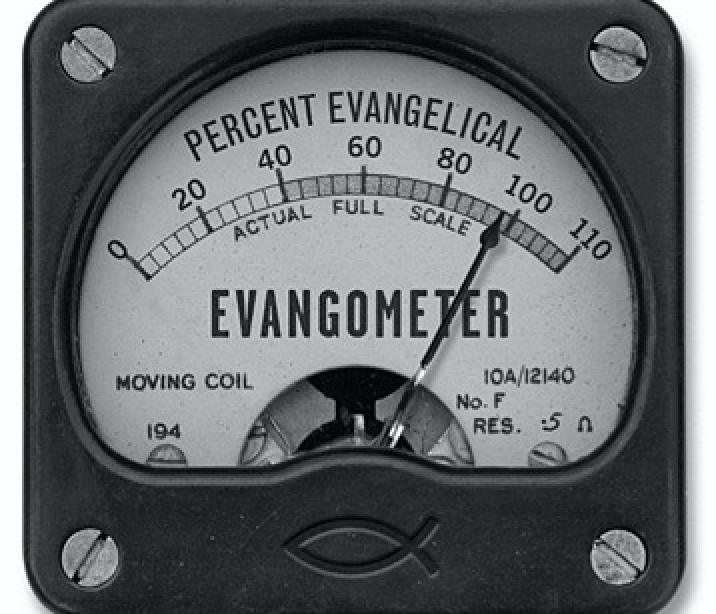
NPR report: Americans are 'sorting' themselves into red vs. blue zones (religion ghost alert)

NPR report: Americans are 'sorting' themselves into red vs. blue zones (religion ghost alert)

I absolutely love specific, symbolic details in Big Picture stories based on trends in statistics and culture.

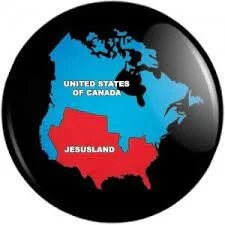
During what we could call America’s “Divided We Fall” era (let’s hope that it passes), there are all kinds of ways to illustrate the tensions between blue citizens and red citizens. NPR recently did a feature — “Americans are fleeing to places where political views match their own“ — that had a great cultural detail way down in the script that suggested there’s more to this divide than politics.

The key fact: In the 2020 election, Joe Biden “won 85% of counties with a Whole Foods and only 32% of counties with a Cracker Barrel.”

What was missing in this fine, must-read story? It’s that issues of faith, morality and culture have just as much to do with America’s blue-red schism as politics. As the old saying goes, partisan politics is downstream from culture. If you have doubts about that, check out this GetReligion commentary on the classic 2003 “Blue Movie” essay in The Atlantic. Author Thomas B. Edsall observes:

Early in the 1996 election campaign Dick Morris and Mark Penn, two of Bill Clinton's advisers, discovered a polling technique that proved to be one of the best ways of determining whether a voter was more likely to choose Clinton or Bob Dole for President. Respondents were asked five questions, four of which tested attitudes toward sex: Do you believe homosexuality is morally wrong? Do you ever personally look at pornography? Would you look down on someone who had an affair while married? Do you believe sex before marriage is morally wrong? The fifth question was whether religion was very important in the voter's life.

Respondents who took the "liberal" stand on three of the five questions supported Clinton over Dole by a two-to-one ratio; those who took a liberal stand on four or five questions were, not surprisingly, even more likely to support Clinton. The same was true in reverse for those who took a "conservative" stand on three or more of the questions.

Note the religion question in that mix. Thus, the Big Idea in this Edsall essay?

According to Morris and Penn, these questions were better vote predictors—and better indicators of partisan inclination—than anything else except party affiliation or the race of the voter (black voters are overwhelmingly Democratic).

The new NPR piece, while stressing politics, does contain a few killer cultural details. The religious elements of the story? There are hints, but that is all.


Please respect our Commenting Policy

Plug-In: Canadian trucker protests echo U.S. Christian nationalism? Press says 'yes'

Plug-In: Canadian trucker protests echo U.S. Christian nationalism? Press says 'yes'

“Honk if you love Jesus.”

That headline on a recent story by the Ottawa Citizen’s Blair Crawford sets the scene as the Canadian newspaper explains “Why so many Evangelical Christians have joined the ‘Freedom Convoy.’”

Unfamiliar with the Freedom Convoy? The Wall Street Journal explains the protest in Canada’s capital city this way:

Since late January, downtown Ottawa has served as a parking lot for hundreds of heavy-duty trucks, pickup trucks and other vehicles, operated by individuals who say they are fed up with the social restrictions and vaccine mandates meant to contain the spread of Covid-19.

Back to the faith angle: The Ottawa newspaper notes:

At the ongoing demonstration … Jesus references and Bible quotes share space alongside “F*ck Trudeau” signs. The evangelical Christian message of love and peace clashes with reports of Ottawa residents being harassed for wearing masks, houses displaying the rainbow pride flag vandalized and the sight of Confederate flags and swastikas among the demonstrators. At one booth on Wellington Street you could get buttons with the yellow Star of David, likening the plight of Jewish people in Nazi Germany to the unvaccinated.

CBC News’ Jorge Barrera reports that “For many inside the freedom convoy, faith fuels the resistance.”

According to Barrera’s story:

Christian faith — with an overtly evangelical feel — flows likes an undercurrent through the Freedom Convoy in Ottawa.


Please respect our Commenting Policy

Thinking about Orthodox history and the complex West vs. East divisions in Ukraine

Thinking about Orthodox history and the complex West vs. East divisions in Ukraine

First things first, as I wade into “think piece” territory once again. I am, of course, a convert to Eastern Orthodox Christianity. I converted into parishes linked to the ancient church of Antioch (currently based in Damascus) and now attend a growing parish in the Orthodox Church in America, which grew out of the work of Russian Orthodox missionaries long ago.

Why clear that up? It’s important, in light of some of the complex issues linked to the threat of war in Ukraine. I have been to Kiev twice and was blessed to worship with monks in the Kiev Pechersk Lavra. I know more than a few Russian and Eastern European Orthodox believers and I don’t think I’ve met anyone who is overly fond of Vladimir Putin (to say the least). Attempting to understand what many Russians think and believe about Ukraine has nothing to do with approving of Putin or wanting to see an invasion by Russian troops.

Moving on. The other day I spent an hour or so on the telephone with GetReligion patriarch Richard Ostling, working through some of the unbelievably complex and explosive issues surrounding Ukraine and the churches therein. The results are in an Ostling “Memo” with this headline: “In reportage on Russia and Ukraine, don't neglect the importance of two rival churches.

May I encourage GetReligion readers to check that out or even, if you read this piece before, glance through the two sections of it, in light of ongoing events?

Ukraine's ecclesiastical history, like its political history, is highly complex. The saga began with the A.D. 988 "baptism of Rus" in Kyiv (Russians prefer "Kiev") when Prince Vladimir proclaimed Orthodoxy the religion of his realm and urged the masses to join him in conversion and baptism.

Russians see Christendom's entry into Eastern Europe as the origin of their homeland and the Russian Orthodox Church. Russian President Vladimir Putin cites this history to support his claim for Ukraine as a client area within greater Russia instead of a validly independent nation. His post-Soviet Kremlin maintains close bonds with the Russian Church's Moscow Patriarchate, which in turn has centuries of ecclesiastical authority within Ukraine.

The key to all of this is understanding that highly European (with Catholic roots) Western Ukraine is a radically different place — in terms of language and faith — than Eastern Ukraine, with strong ties to Russian history and culture.

Is there one Ukraine?


Please respect our Commenting Policy

Here we go again: What ails U.S. evangelicalism and where is this movement headed?

Here we go again: What ails U.S. evangelicalism and where is this movement headed?

It's hard to imagine a print article more eye-catching than a lead item in The New York Times Sunday Review that sprawls over three pages, or to imagine a more prominent scribe than columnist David Brooks. The February 6 Brooks opus lionized "the dissenters trying to save evangelicalism."

Save from what? "Misogyny, racism, racial obliviousness, celebrity worship, resentment, and the willingness to sacrifice principle for power" — that last phrase targeting disciples of Donald Trump.

We're at the publicity apex for what Brooks, and movement outsiders and insiders, are calling a "crisis" for this conservative Protestant movement. In recent months The Guy has, less elegantly, pondered a "crack-up. Thus:

* “Are we finally witnessing the long-anticipated (by journalists) evangelical crack-up?

* “Latest angles on Trump-era 'evangelicals,' including questions about the vague label itself.”

* “Concerning evangelical elites, Donald Trump and the press: The great crack-up continues.”

* “Journalism tips on: (1) Evangelical crack-ups, (2) campus faith fights, (3) COVID exemptions.”

This struggle will continue to need fair-minded journalistic attention, simply because this loosely-organized and variegated movement remains the largest and most dynamic segment of American religion. To a considerable extent, as evangelicalism goes, so goes the nation. Both are polarized, troubled and scandal-ridden.

On this topic it's always necessary to remember we're talking about WHITE evangelicals because Black Protestants, though often evangelical in style and substance, form a distinctly separate subculture (which "mainstream" media typically ignore alongside their fixation on the white variety).

A related preliminary point: What is an "evangelical" anyway?


Please respect our Commenting Policy

Maybe angry Christians should try chanting 'Pray for Biden' instead of 'Let's go Brandon'?

Maybe angry Christians should try chanting 'Pray for Biden' instead of 'Let's go Brandon'?

In the beginning, there was an obscene chant at the Talladega Superspeedway that NBC producers urgently needed to ignore during a live broadcast.

Interviewing winner Brandon Brown, reporter Kelli Stavast pretended the NASCAR crowd was chanting, "Let's go Brandon!" -- not cursing President Joe Biden.

The rest is history, as the wink-wink slogan soaked into political jargon and mass media. What shocked the Rev. Seth Carter -- a young Southern Baptist pastor in Kentucky -- was when church people began baptizing "Let's go Brandon!" into common speech.

"To be clear, I am no supporter of our president's actions or policies. In no way do I feel support for him welling up inside of me," he wrote, in a Baptist Press commentary.

"However, I recognize that my feelings can never be the proper guide of the attitude I am to have toward him. As a Christian and a believer in the inspired, inerrant and infallible Word of God contained in the Bible, the truth of God's Word is what ought to guide my attitude toward President Biden (or any other leader for that matter)."

Christians could try chanting, "Pray for Biden," he said. They need to see Biden the way the apostles Peter and Paul viewed "the evil emperor of their day, Nero."

Carter noted this First Peter passage: "Submit yourselves for the Lord's sake to every human institution, whether to a king as the one in authority, or to governors as sent by him for the punishment of evildoers and the praise of those who do right." Writing to the Colossians, Paul said: "Walk in wisdom toward outsiders, making the best use of the time. Let your speech always be gracious, seasoned with salt."

In response, the conservative Capstone Report website published an editorial claiming that "Baptist Pravda, err, Press" had demanded "submission to regime's lies."


Please respect our Commenting Policy

Podcast: Strategic cardinal floats trial balloon, saying Catholic LGBTQ doctrines are wrong

Podcast: Strategic cardinal floats trial balloon, saying Catholic LGBTQ doctrines are wrong

If you follow political news, you’re probably familiar with the concept of a “trial balloon.”

One online dictionary definition states: “A trial balloon is a proposal that you mention or an action that you try in order to find out other people's reactions to it, especially if you think they are likely to oppose it.”

Here’s a famous example. Let’s say that the Obama White House wants to shift its stance on gay marriage, once the president has reached a point — in 2012 — where he may or may not need strong support from social-conservative Black church leaders. Thus, it was a surprise, kind of, when Vice President Joe Biden, went on “Meet the Press” and said that he was “absolutely comfortable” with same-sex marriages.

The White House needed to know (1) how other Democrats would respond, (2) how Black-church leaders would respond and (3) how potential conservative critics would respond, including Catholic leaders in America. Central to all of this, of course, is how this “trial balloon” is framed in the coverage by elite media. It took very little time for Barack Obama to get on board.

During this week’s “Crossroads” podcast (CLICK HERE to tune that in), we looked at a complex drama unfolding in the European leadership of the Catholic church. The key player is Cardinal Jean-Claude Hollerich, archbishop of Luxembourg, and a leader — the term is “relator general” — in the Pope Francis team leading the Synod on Synodality on the future of the Catholic faith. Depending on who one talks to, this synod is either a chance to listen to Catholics around the world or the front door to Vatican III.

But here is the key quote from Hollerich, drawn from an interview with the German Catholic news agency KNA.) This is part of a collection of blunt, verbatim statements from Hollerich collected at L’Espresso:

“The Church’s positions on homosexual relationships as sinful are wrong. I believe that the sociological and scientific foundation of this doctrine is no longer correct. It is time for a fundamental revision of Church teaching, and the way in which Pope Francis has spoken of homosexuality could lead to a change in doctrine.


Please respect our Commenting Policy

What role will religion play in current U.S. Supreme Court nomination intrigue?

What role will religion play in current U.S. Supreme Court nomination intrigue?

When President Biden soon chooses a successor to Supreme Court Justice Stephen Breyer, journalists will need to keep in mind highly contentious religious issues, not just on matters like abortion but over how much to limit First Amendment claims of religious freedom, as in same-sex disputes, and where to draw lines on church-state separation.

Liberal, secularist and separationist voices are quick out of the gate with warnings to Biden about the Court's 6-3 conservative majority. Americans United for Separation of Church and State wants a new justice who'll be "a bulwark against the court's ultra-conservative majority, who seem set on redefining religious freedom as a sword to harm others instead of a shield to protect all of us." This lobby asserts that "our democracy depends on it."

A must-read from the cry-of-alarm forces is the analysis of numerous recent Supreme Court religion rulings from Ian Millhiser — Vox.com's specialist covering law and "the decline of liberal democracy." He asserts that a religion "revolution" is the "highest priority" of the Court's six Republican appointees, who are "rapidly changing the rules of the game to benefit" religious interests.

However, Kelsey Dallas at Salt Lake City's Deseret News tabulates that Breyer, in tandem with fellow liberal Justice Elena Kagan, voted with conservative justices in nine out of the 13 Court's decisions from 2006 to 2020 that backed religious-freedom claims.

The most illustrative example of the Jewish justice's thinking came in 2005 with two apparently contradictory rulings about Ten Commandments displays on public property. Beyer formed a 5-4 majority to permit the display on the Texas state Capitol grounds (Van Orden v. Perry) but then switched to create a 5-4 majority that outlawed displays in two Kentucky courtrooms (McCready County v. A.C.L.U.)

How come? Breyer advocated the "fullest possible" religious liberty and tolerance to avoid societal conflict.


Please respect our Commenting Policy

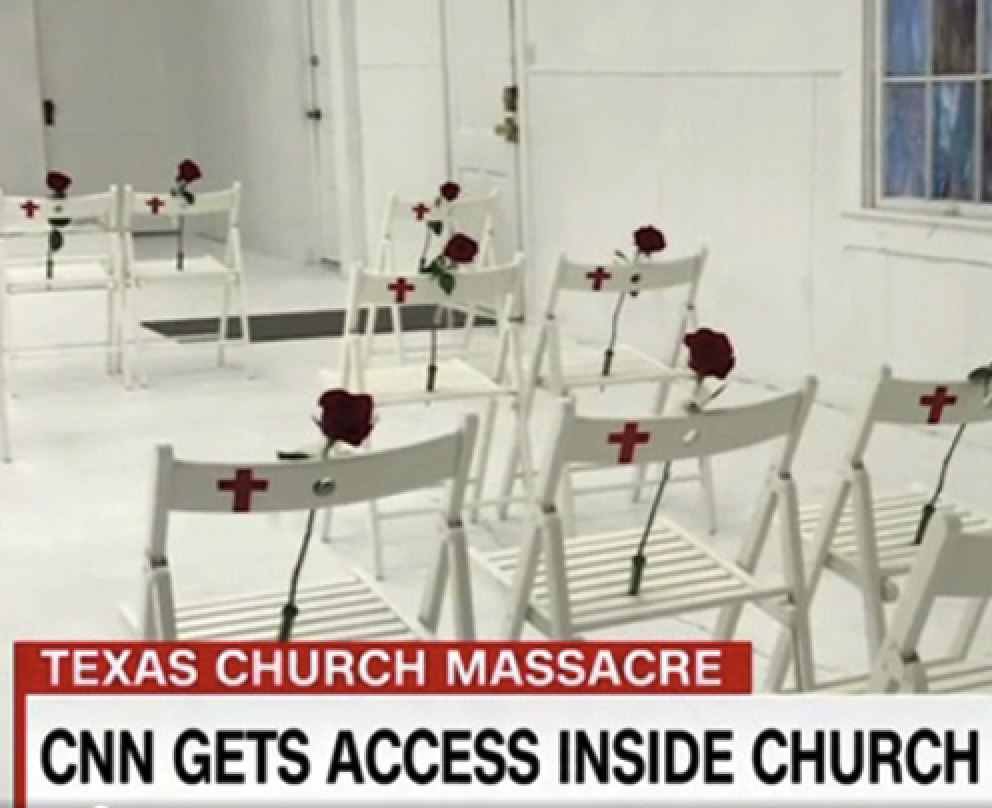
Once again, why avoid religious questions in the 2017 Sutherland Springs church massacre?

Once again, why avoid religious questions in the 2017 Sutherland Springs church massacre?

Consider, for a moment, a hypothetical case in which an angry anti-abortion activist massacres worshippers gathered at a liberal church known for its advocacy of abortion rights.

What about a radicalized Muslim attacking a synagogue? A gunman decked out in Make America Great Again clothing attacking a mosque?

Would facts about the identities of these shooters, as well as their previous statements and actions, be considered relevant in follow-up stories? We are, of course, wrestling — again — with the “Why?” component in the journalism mantra, "Who," "What," "When," "Where," "Why" and "How."

In this case, we are dealing with background materials in media coverage of a development in the 2017 massacre at the First Baptist Church in Sutherland Springs, Texas. Here’s the New York Times headline: “Air Force Ordered to Pay $230 Million to Victims of 2017 Church Shooting.” The overture states:

A federal judge ordered the U.S. Air Force … to pay more than $230 million to the survivors and the families of the victims of a 2017 shooting at a Texas church because the Air Force had failed to report the gunman’s criminal history.

In his ruling, Judge Xavier Rodriguez of the U.S. District Court for the Western District of Texas wrote that the Air Force could have blocked the gunman, Devin P. Kelley, who had served on an Air Force base in New Mexico, from buying the rifle he used to kill 26 people on Nov. 5, 2017, at the First Baptist Church in Sutherland Springs, Texas.

For its failure to report Mr. Kelley’s 2012 conviction for domestic assault, the Air Force must pay damages to the victims for their “pain and suffering, mental anguish, disfigurement, impairment and loss of companionship,” the judge wrote. He added that the case was “unprecedented in kind and scope.”

After previous commentary on this massacre, some readers noted that — reacting to detailed coverage in European newspapers — it wasn’t automatically relevant that Kelley was an outspoken atheist.

That is a valid point. However, my question is whether it is worthy of discussion (perhaps one or two sentences in news reports) that he had, in arguments on social media, expressed virulently anti-Christian beliefs and made remarks that suggested he was unstable.


Please respect our Commenting Policy

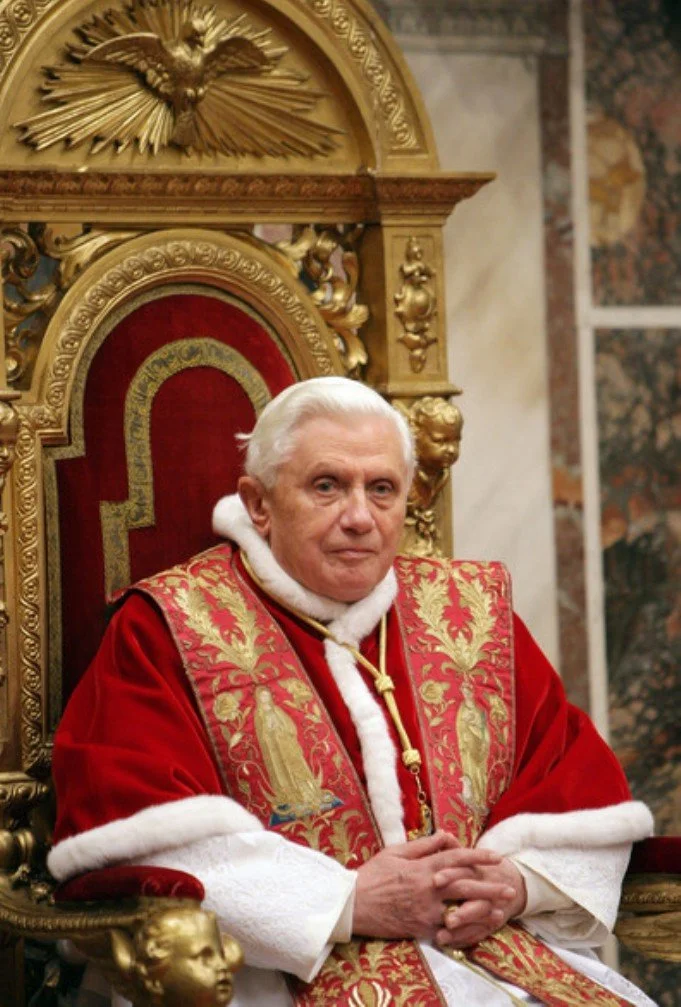
Pope Benedict's blunder and ensuing media coverage have put his legacy on the line

Pope Benedict's blunder and ensuing media coverage have put his legacy on the line

It has been 20 years since The Boston Globe broke open the decades of sexual abuse by Catholic priests, dragging into the light a hellish story that had lingered on the edge of elite media coverage since the 1980s (see this GetReligion post: “That gap between 1985 and 2002”).

Two decades later, this is a story that continues in the form of questions about who in the Catholic hierarchy knew what and when in a variety of dioceses around the world.

The issue wasn’t limited to Boston. Predator priests were everywhere — a scandal that may have been unearthed in the United States, but one that continues to plague other parts of the world.

The focus the past few weeks has been on Germany and the involvement of Benedict XVI in the handling of some abuse cases, decades before he became a key church official in Rome and, eventually, pope. This was also long before the church — in part due to his leadership — adopted stricter policies on how to handle cases of clergy sexual abuse.

This is a complex subject for journalists to cover, in part when events in the past are viewed through the lens of present church policies and standards. How is the press doing?

Here’s a timeline of these fast-moving developments. This latest chapter in the decades-long clergy sex abuse saga began on Jan. 20 when a law firm released a report, commissioned by the German church, to look into how cases of sexual abuse were handled in Munich between 1945 and 2019. Benedict, the former Cardinal Joseph Ratzinger, headed that archdiocese from 1977 to 1982, when he was named to head the Vatican’s Congregation for the Doctrine of the Faith.

The report’s authors found that Ratzinger failed to stop the abuse in four cases. The report also faulted his predecessors and, this is crucial, his successors for their own misconduct in allowing clergy accused of sex abuse to stay in ministry.

The 2,000-page report also criticized Cardinal Reinhard Marx, currently the archbishop of Munich and Freising, for his role in two cases dating back to 2008. Marx offered his resignation to Pope Francis last year, saying he was willing to take responsibility for his part in the sexual abuse crisis. Francis did not accept the resignation, which says something about what this pontiff thinks of the German prelate.


Please respect our Commenting Policy