Politics

In Afghanistan, believers in religious minorities have every reason to go underground

In Afghanistan, believers in religious minorities have every reason to go underground

There's a logical reason that Taliban forces have not been accused of destroying any churches in Afghanistan.

"That's the dirty little secret. There were no churches before the Taliban returned to power," said Nina Shea, director of the Hudson Institute's Center for Religious Freedom and a human-rights activist for 30 years. "Christians were already underground because of the constant threats to their lives, so they didn't have any church buildings to blow up."

Everyone remembers the shocking videos when desperate Afghans chased a U.S. military plane on a Kabul runway, pleading to be among those evacuated. At least two people fell to their deaths after clinging to a plane during takeoff.

Ever since, there have been reports about the dangers faced by those left behind, especially Afghans with ties to the U.S. military, the fallen government or workers in secular or religious non-profit groups that remained behind to continue humanitarian work.

Christians, Hindus, Sikhs, Ahmadis, Shia Muslims and members of other religious minorities are also living in fear.

"They are all on the run. They are all in hiding," said Shea, reached by telephone. "People are being hunted down and beaten and are threatened with death if they don't betray members of their families who are considered apostates" by the Taliban.

It's impossible not to discuss religious freedom during this crisis, she added. "Everything the Taliban does is about religion. Religion is involved when they hang people for violating their approach to Islamic law or when they attack women and girls who want to go to school. For the Taliban, this is all connected."

The problem is that religious freedom concerns are often drowned out during debates about politics, economics, climate change and other issues in violent flashpoints around the world.
Please respect our Commenting Policy

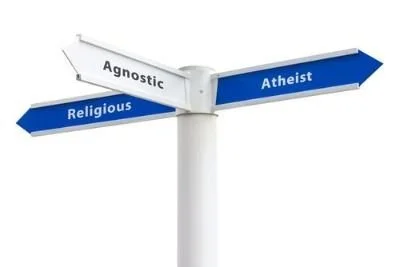
Relevant question for modern Democrats: Are agnostics just 'light' versions of atheists?

Relevant question for modern Democrats: Are agnostics just 'light' versions of atheists?

It’s something that I’ve said before during presentations that felt right, but I wasn’t 100% sure — “Agnostics are a light version of atheists.”

Agnostics seem to get overlooked when it comes to talking about the nones. I know that when I’m writing about the extremes of American religion, I tend to focus on atheists the most. And, in evangelical media circles, there’s never an agnostic philosophy professor — it’s always an atheist.

So, are agnostics just a slightly more religious, slightly less liberal version of atheists? I dug through some data and I think I can say that the answer is pretty clear — “yes.”

A quick aside about the theological differences between the two groups. Atheists, by definition, believe that there is no Higher Power. They contend that everything in the world has scientific explanations and not Divine ones.

Agnostics are a bit more ambivalent about that. While atheists state, “There is no God,” agnostics would say that they don’t know if God exists and there’s no way to prove that either way. The term agnostic was coined by Thomas Henry Huxley in 1869, when he stated “(agnostic) simply means that a man shall not say he knows or believes that which he has no scientific grounds for professing to know or believe.”

Let’s compare those two groups on the religious questions that exist on the Cooperative Election Study to get a sense of their theological differences.

When asked how important religion is to their lives, 92% of atheists say “not at all” while another five percent say “not too.” Agnostics are a bit more ambivalent with 74% saying “not at all” and 20% saying “not too important.”

When it comes to church attendance, the same general pattern emerges — neither group goes to services that much but atheists are even less apt to admit to any church attendance (88% say that they never go vs. 72% of agnostics).

Finally, when it comes to prayer, the gap grows larger.


Please respect our Commenting Policy

In reportage on Russia and Ukraine, don't neglect the importance of two rival churches 

In reportage on Russia and Ukraine, don't neglect the importance of two rival churches 

On top of the 2014 seizure of Crimea and years of infiltration in eastern borderlands, Russia now poses a more severe threat to neighboring Ukraine.

Whether the nation faces a military invasion, or even a World War 2.5, or less bloody subversion and hoped-for domination, journalists these next few years will need to understand and depict the religious aspect of Ukraine's rising nationalism and resistance against Russian expansionism.

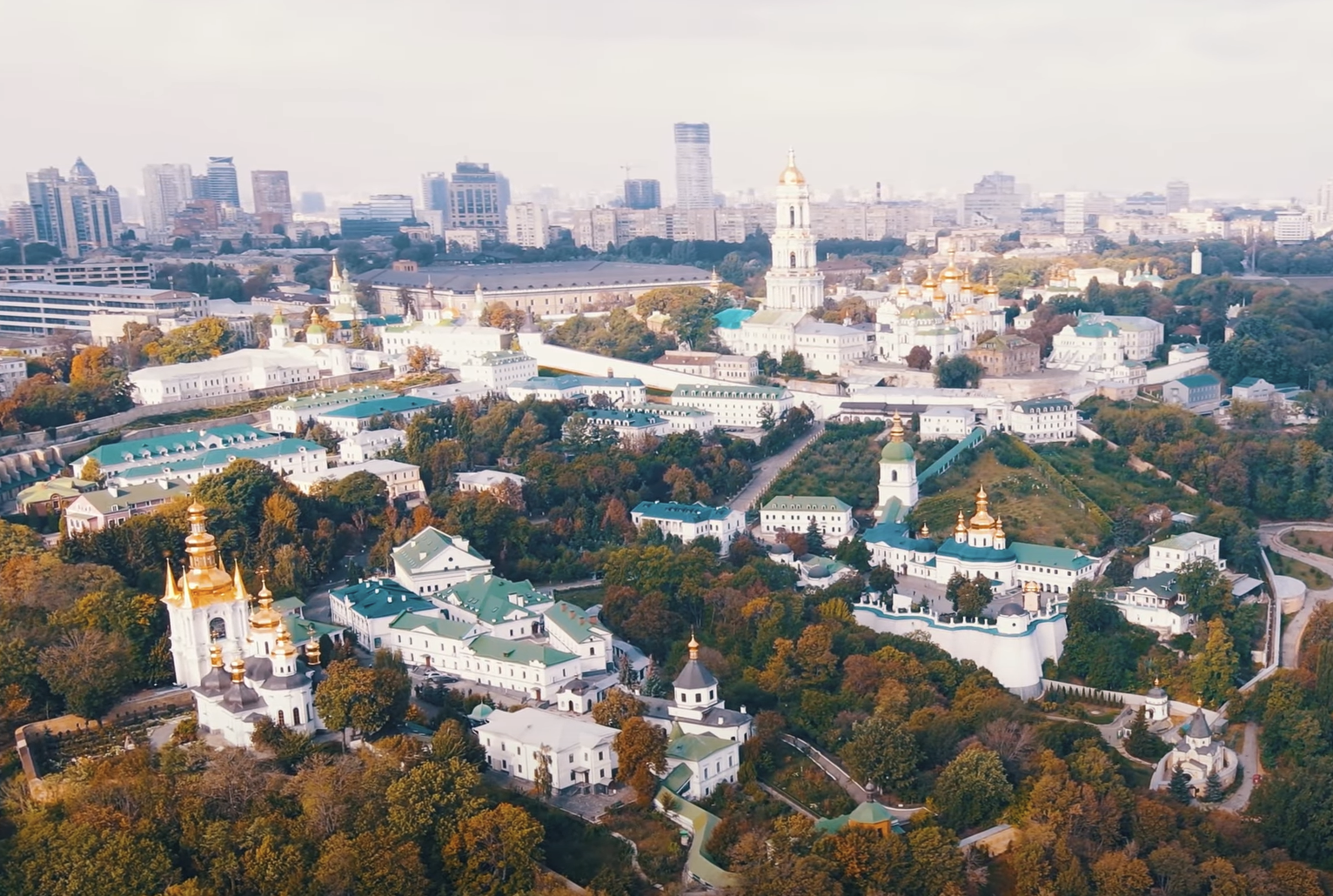
Here are some basics. Russia and Ukraine contain by far the two largest national populations in Eastern Orthodox Christianity. The new World Christian Encyclopedia edition (which belongs in every media and academic library) counts 114 million Orthodox in Russia for 79% of the population, and 32 million in Ukraine for 73%.

Terminology note for writers: "Eastern Orthodox" is the precise designation for such churches, related historically to the Ecumenical Patriarchate based in Turkey, that affirm the definition of Jesus Christ's divinity by the Council of Chalcedon (A.D. 451). The separate branch of so-called "Oriental Orthodox" is non-Chalcedonian; its largest national church is in Ethiopia.

Ukraine's ecclesiastical history, like its political history, is highly complex. The saga began with the A.D. 988 "baptism of Rus" in Kyiv (Russians prefer "Kiev") when Prince Vladimir proclaimed Orthodoxy the religion of his realm and urged the masses to join him in conversion and baptism.

Russians see Christendom's entry into Eastern Europe as the origin of their homeland and the Russian Orthodox Church. Russian President Vladimir Putin cites this history to support his claim for Ukraine as a client area within greater Russia instead of a validly independent nation. His post-Soviet Kremlin maintains close bonds with the Russian Church's Moscow Patriarchate, which in turn has centuries of ecclesiastical authority within Ukraine.


Please respect our Commenting Policy

Reporting on white Christian nationalists? Try talking with some of these Americans in person

Reporting on white Christian nationalists? Try talking with some of these Americans in person

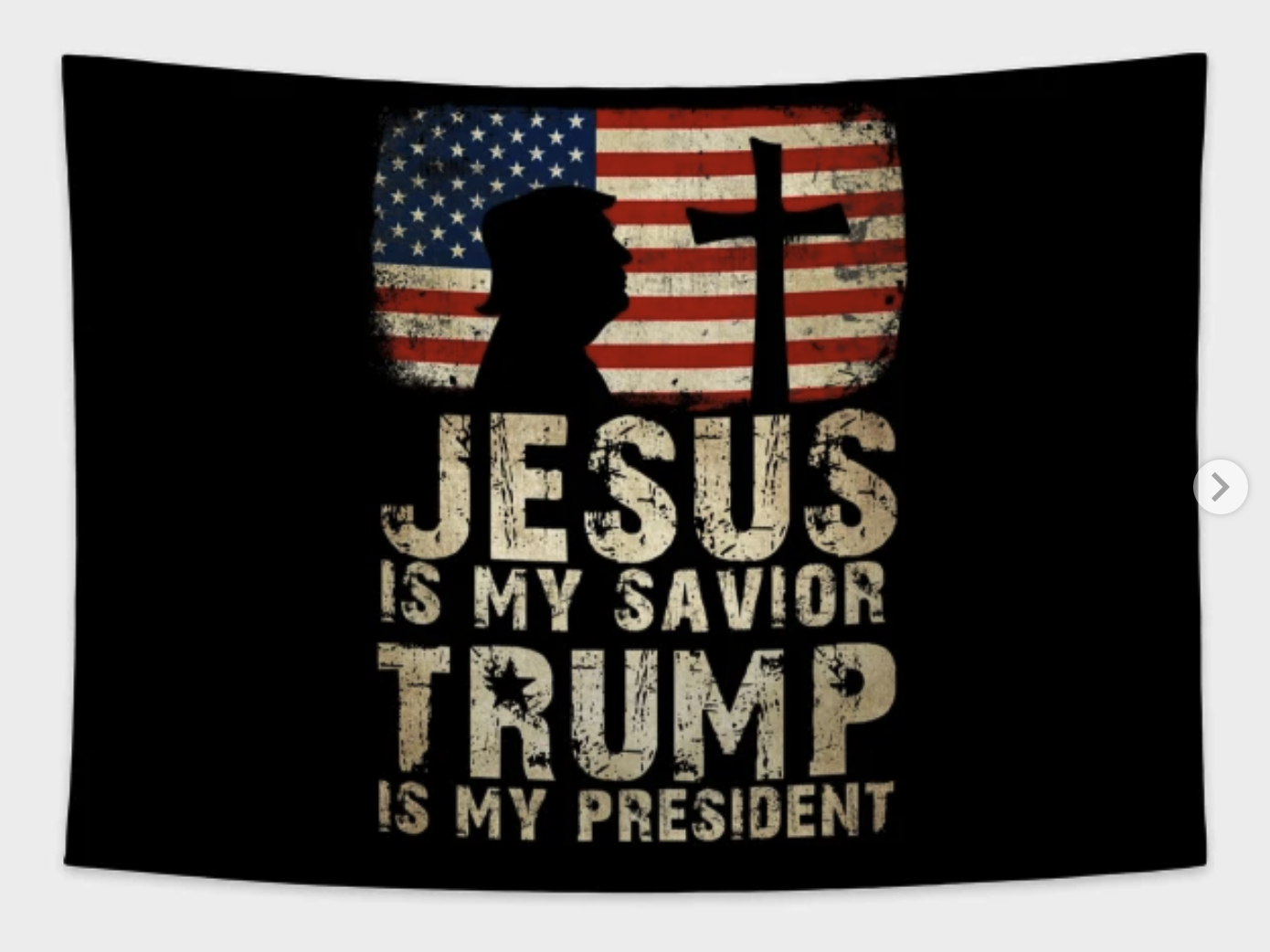
“White Christian nationalism” (WCN) has become quite the bogeyman in contemporary religion coverage, even though few reporters seem to have spent much time actually engaging with people in the flocks led by said nationalists.

Instead, journalists read their social media, watch their YouTube videos and talk with sources drawn from a rather predictable list of activists and experts who oppose the bogeyman.

But that does not a complete story make. Readers end up with, at best, half of a debate.

One outlet that’s building or staking its reputation on WCN continuing to be a thing is Religion News Service, which has been rolling out stories on the topic since last September, thanks to a grant from the Pulitzer Center. The latest story in its “White Christian Nationalism since the Jan. 6 Attack” series ran Jan. 26 here. It began:

When supporters of former President Donald Trump rallied near the White House on Jan. 6 of last year, a boisterous pocket of young men waving “America First” flags broke into a chant: “Christ is King!” It was one of the first indications that Christian nationalism would be a theme of the Capitol attack later that day, where insurrectionists prayed and waved banners that read “Proud American Christian.”

It also announced the presence of followers of Nick Fuentes, a 23-year-old white nationalist and former YouTube personality who was subpoenaed this month by the U.S. House of Representatives committee investigating the Capitol attack. …

“Christ is King” is not controversial in itself: The phrase is rooted in Christian Scripture and tradition. But Fuentes’ supporters have given it a different connotation. They have chanted it at anti-vaccine protests and the anti-abortion March for Life, some of them holding crucifixes aloft. It was heard in March, at an America First conference, where Fuentes delivered a speech saying America will cease to be America “if it loses its white demographic core and if it loses its faith in Jesus Christ.” Fuentes also declared the country “a Christian nation.”

There are a bunch of academics and other sources quoted here but what appears to be the central thesis –- that WCN is bleeding into the mainstream institutions and life of conservative Christianity –- was not proven by a long shot.


Please respect our Commenting Policy

Plug-In: 'We have to stop hate' -- Why it's important to keep remembering the Holocaust

Plug-In: 'We have to stop hate' -- Why it's important to keep remembering the Holocaust

To Anna Salton Eisen and her son, Aaron Eisen, International Holocaust Remembrance Day was personal.

George and Ruth Salton — Anna’s parents and Aaron’s grandparents — survived the Holocaust.

But many of the Eisens’ family members did not.

The United Nations Holocaust Memorial Museum notes that in 2005:

The United Nations General Assembly designated January 27 — the anniversary of the liberation of Auschwitz-Birkenau — as International Holocaust Remembrance Day.

On this annual day of commemoration, the UN urges every member state to honor the six million Jewish victims of the Holocaust and millions of other victims of Nazism and to develop educational programs to help prevent future genocides.

Last week, the U.N. General Assembly passed a resolution condemning Holocaust denial and “urging all nations and social media companies ‘to take active measures to combat antisemitism and Holocaust denial or distortion,’” The Associated Press’ Edith M. Lederer reports.

The new resolution sends a strong message, Aaron Eisen said Thursday in an online panel discussion hosted by ReligionUnplugged.com.

“This resolution had a lot of the same language as the resolution in 2005 about Holocaust Remembrance Day — that we need to combat Holocaust denial, teach the Holocaust to future generations to prevent genocide and also commend those places where the Nazi concentration camps have been preserved,” Aaron said.

“It's very important for the future generations to get this education — in the museums, at the camps, through the Arolsen Archives,” he added. “It's a very important day for our family and for all civilization to really take these lessons to heart.”

Anna Eisen, a founding member of Congregation Beth Israel in Colleyville, Texas, where the rabbi and three others were taken hostage recently, echoed her son.


Please respect our Commenting Policy

Catholics for Choice boldly projects its own credo before the 2022 March for Life

Catholics for Choice boldly projects its own credo before the 2022 March for Life

When progressive Catholics list their heroes in the church hierarchy most would include Cardinal Wilton Gregory of Washington, D.C.

When preparing their own lists, most conservative Catholics would include Archbishop Salvatore J. Cordileone of San Francisco.

Thus, it's important to note how these two shepherds reacted to the spectacular protest staged by Catholics for Choice during the 2022 Vigil for Life inside the Basilica of the National Shrine of the Immaculate Conception.

While worshippers gathered for overnight rites and prayers before the Jan. 21st March for Life, pro-abortion-rights Catholics -- using a nearby projector -- displayed their own beliefs on the 329-foot tower and facade of America's largest Catholic sanctuary. "Catholics for Choice" appeared inside a glowing cross, accompanied by a litany of slogans, such as "Stop stigmatizing; Start listening," "Mi cuerpo, mi decision (my body, my decision in Spanish)" and "Pro-choice Catholics you are not alone."

Archbishop Cordileone released this response, via Twitter, using language implying the actions of Satan: "The attempted desecration is enormous. Diabolical. Mother Mary, pray for them, now and at the hour of death. Amen."

Cardinal Gregory's press statement pointed readers to a specific scripture to find the context for his words: "The true voice of the Church was only to be found within The Basilica. … There, people prayed and offered the Eucharist asking God to restore a true reverence for all human life. Those whose antics projected words on the outside of the church building demonstrated by those pranks that they really are external to the Church and they did so at night -- John 13:30."

That verse describes the moment when Judas exits the Last Supper to betray Jesus: "So … he immediately went out; and it was night."

Catholics for Choice offered no apologies on Twitter: "Our faith teaches us that EVERY person, including the 1 in 4 abortion patients who are Catholic, should be able to make their own decisions about their lives and bodies without interference from the church or the state. #AbortionIsEssential!!" The group's communications director, Ashley Wilson, added: "I am tired of feeling shame and stigma for being a pro-choice Catholic. And I'm not here for people to judge my own personal relationship with God."


Please respect our Commenting Policy

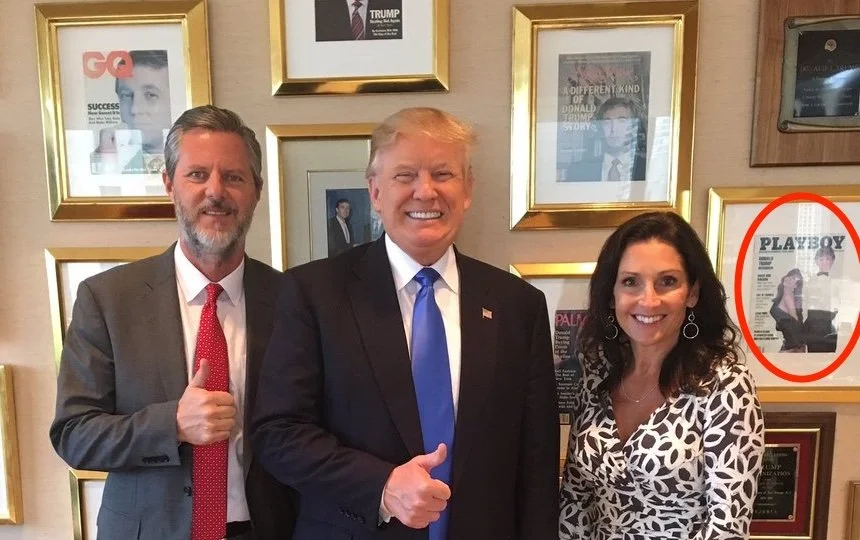
Podcast: As it turns out, it was totally logical for Jerry Falwell, Jr., to embrace Donald Trump

Podcast: As it turns out, it was totally logical for Jerry Falwell, Jr., to embrace Donald Trump

When reading That. Vanity. Fair. Article, it will help to focus on the obvious answer to the big question that will immediately pop into your head (especially if you happen to be a journalist).

The question: Why did Jerry Falwell, Jr., choose to talk to a magazine with a solid footprint on the American cultural and journalistic left?

The answer: Falwell is a lawyer who, at the moment, has a number of pressing legal issues in his life. To put this in D.C. Beltway lingo, he appears to be “hanging a lantern” on his problems. Here is one online definition of that term:

"Hang a lantern on your problem” was entered into the political lexicon in the 1980s by Chris Matthews, a former chief of staff to Speaker of the House of Representatives Tip O’Neill. Matthews explained “hang a lantern on your problem” to the New York (NY) Times in 1987: “The first step is, admit you have a problem; that gives you credibility. The second step is to use that credibility to redefine your problem, or use the problem for your own purposes.”

As I explained during this week’s “Crossroads” podcast (CLICK HERE to tune that in), it is interesting to read the Vanity Fair piece and, with a mental highlighter pen (a real one if you get the analog magazine), mark the questions that Falwell chooses to answer and the ones that he declines to answer. Then, repeat the process with the questions that are answered and rejected by other key voices — think Giancarlo “pool boy” Granda and legal representatives for Liberty University.

This process will yield insights into two of the most obvious plot lines in this soap-opera mess, as in its steamy Miami-angle sex scandal and the ugly legal wars between Jerry Falwell, Jr., and the shamed leaders of Liberty University.

Once you’ve done that, you’re read to dig into the deeper elements of this story, which are clearly visible in the long, long, long second deck of it’s double-headline:


Please respect our Commenting Policy

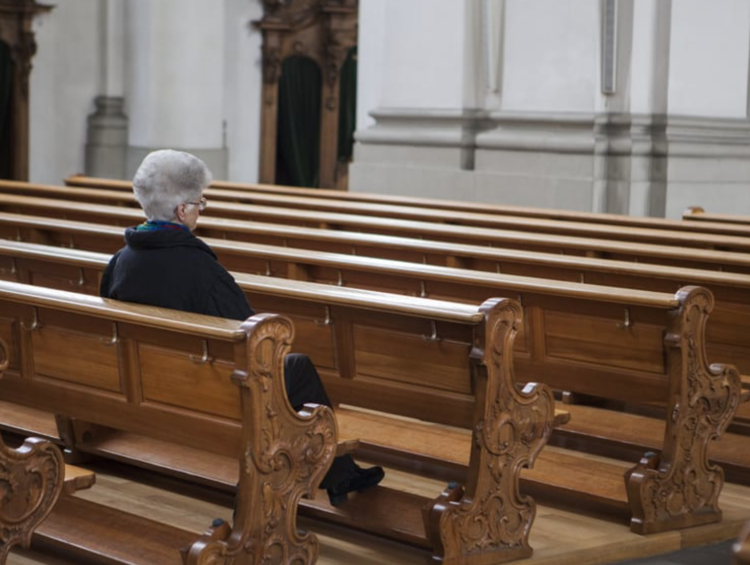
In post-pandemic America, will sagging church health damage public health? 

In post-pandemic America, will sagging church health damage public health? 

America's religious congregations have, over all, suffered steady erosion in attendance, membership and vitality since around 2000.

Analysts fret that worse may occur after the current COVID-19 emergency finally subsides because myriads of members are now accustomed to worshiping online rather than in person or they may skip services altogether.

At the same time, there is evidence that, while decline is common, a majority of congregations report that they have survived or even grown during the past two years. This is a complex subject. As a recent Associated Press story noted:

Gifts to religious organizations grew by 1% to just over $131 billion in 2020, a year when Americans also donated a record $471 billion overall to charity, according to an annual report by GivingUSA. Separately, a September survey of 1,000 protestant pastors by the evangelical firm Lifeway Research found about half of congregations received roughly what they budgeted for last year, with 27% getting less than anticipated and 22% getting more.

This is an important news topic, no matter what. Even secularized news consumers should be interested when social science researchers tell us that sagging participation could not just damage religious institutions but create a public health "crisis." In our age of solitary, do-it-yourself forms of spirituality, research indicates, regular in-person attendance at worship services is central to the well-being of children, adults and society.

This important assertion does not come from religious propagandists but Harvard's Institute for Quantitative Social Science. Building upon two decades of scholarship, the institute in 2016 launched its distinctive "Human Flourishing Project" to focus on the impact the family, workplace, education and religion have on peoples' well-being. Their survey samples are large and they say their methodology improves upon past research.

Key findings document differences between Americans who regularly attend worship versus those who never attend.


Please respect our Commenting Policy

Texas synagogue attack highlights press failure to consistently cover attacks against sanctuaries

Texas synagogue attack highlights press failure to consistently cover attacks against sanctuaries

The many cases of anti-Catholic vandalism have been documented by me here at GetReligion in recent years. Also well-documented have been how many professionals in the mainstream media keep overlooking such criminal activities.

These incidents — even as 2021 came to an end and now weeks into 2022 — just keep happening, yet they continue to be given little to no mainstream news coverage. It seems, at times, as if violence against religious groups — be they Catholics or otherwise — is a subject that isn’t worthy of coverage. This trend is also a lesson on how the press uses language, what terms journalists use to describe crimes and whether the story lasts just a day or for weeks and months.

Journalists also need to start asking: What are the motivations for these kinds of attacks?

A Catholic priest, parishioners and Catholic schoolchildren were among the dozens injured on Nov. 21 when authorities said Darrell E. Brook, driving an SUV, allegedly plowed into marchers during a Christmas parade in Waukesha, Wisc. Six people were killed.

The incident would get additional attention for its inability to get widespread national media coverage. Accusations quickly emerged that key facts didn’t fit the dominant media narrative.

Truth is, not all hate crimes are created equal. Crimes against Catholic churches are routinely ignored by national news outlets. We can also see a troubling journalism trend at work in coverage of the recent anti-Semitic attack against a Texas house of worship.

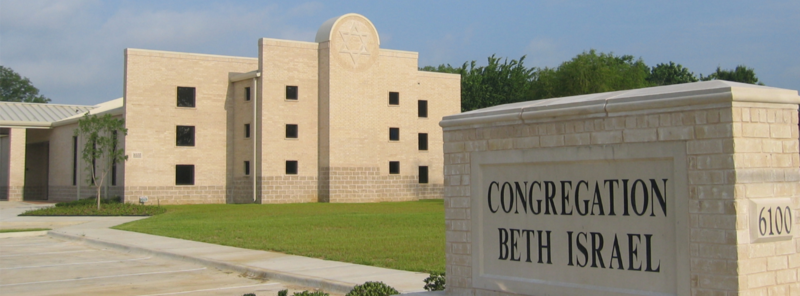
The gun-wielding suspect in that Jan. 15 synagogue attack, British citizen Malik Faisal Akram, took Rabbi Charlie Cytron-Walker and three other congregants hostage at the Congregation Beth Israel in Colleyville, Texas.

The standoff with FBI agents was an act of terrorism and resulted in Akram’s death. National news coverage was intense during the standoff — but soon evaporated.


Please respect our Commenting Policy