
People

Podcast: 'Young men are puttin' themselves six feet in the ground' and other suicide news

Podcast: 'Young men are puttin' themselves six feet in the ground' and other suicide news

Here’s a sad question for the day: How many opioid overdoses could be classified as suicides?

There’s no way to know, is there? If people are trying to bury their pain, depression and anxiety in pills or needles, how would public officials know — without a suicide note — that an overdose was intentional? What if victims are on a path suggesting that they simply don’t care whether they live or die?

Suicides involving guns are much more definitive.

This brings us to some of the issues discussed during this week’s “Crossroads” podcast (CLICK HERE to to tune that in), which focused on a totally religion-free Associated Press story that ran with this headline: “US suicides hit an all-time high last year.

As you would expect, this report featured lots of tragic numbers and then tried to answer the “why” question in the classic journalism mantra “who,” “what,” “when,” “where,” “why” and “how.” In this case, the “why” and the “how” factors were one and the same.

GetReligion readers will not be surprised that I suggested there were cultural, moral and religious questions looming over this topic. Since I live in Southern Appalachia, I offered some research tips for how religion-beat journalists — if editors were to give them a chance — could find ways to broaden this topic to include trends (such as opioid overdoses) linked to the suicide numbers. Hold that thought.

First, here is the AP overture:

NEW YORK (AP) — About 49,500 people took their own lives last year in the U.S., the highest number ever, according to new government data posted Thursday.

The Centers for Disease Control and Prevention, which posted the numbers, has not yet calculated a suicide rate for the year, but available data suggests suicides are more common in the U.S. than at any time since the dawn of World War II.

Please respect our Commenting Policy

Russell Moore on Christians who are switching churches or hitting exit doors -- period

Russell Moore on Christians who are switching churches or hitting exit doors -- period

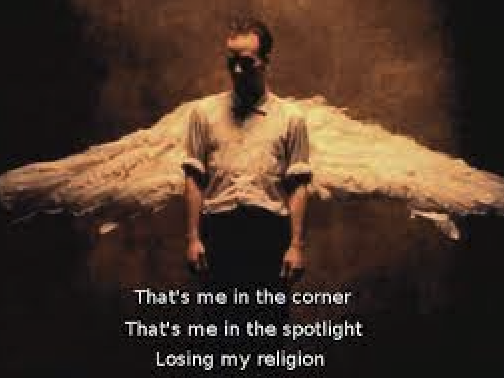
“Book of the Month” is certainly an appropriate label for Russell Moore’s “Losing Our Religion: An Altar Call for Evangelical America,” released July 25 by Sentinel. I am borrowing that label, of course, from that venerable subscription club and corporate partner during The Guy’s days working with the old Time Inc.

The bottom line: Pretty much every religious professional will want to take a look at what this central figure has to say.

Ditto for journalists who write about religion.

Moore is, yes, controversial and opinionated but also thoughtful and knowledgeable, so it’s worth absorbing his latest plea for a thorough overhaul of this sprawling and complex Protestant movement (with some pertinence for Catholics, too).

This might be the right time for religion-beat pros to offer yet another broad look at evangelical pitfalls and prospects. The Twitter (er, X) traffic on this new Moore book will continue to be lively.

There’s a possible peg when Moore chats with Beth Moore (no relation), another prominent exile from the Southern Baptist Convention (SBC), in Houston on August 9, which will be live-streamed (details at www.russellmoore.com).

Moore famously opposed Donald Trump’s 2016 candidacy on moral grounds when many other evangelical thinkers carefully kept their qualms private. His 2020 private admonition to executives of the SBC, which later leaked, depicted years of “the most vicious guerilla tactics” against him, especially his activism on issues linked to sexual abuse cases and cover-ups and mishandled race relations. He’s now one of seven ministers at Immanuel Church in Nashville, a congregation with ties to evangelicals in several denominations (including Anglicanism) and part of the Acts 29 network (www.acts29.com).


Please respect our Commenting Policy

Time to dig into World Religions 101: Does Vivek Ramaswamy's Hinduism shape his politics?

Time to dig into World Religions 101: Does Vivek Ramaswamy's Hinduism shape his politics?

Vivek Ramaswamy — and his Hindu background — is the hot new flavor in religion reporting this week, with pieces coming out in Rolling Stone and Religion News Service. The New York Times did a piece earlier in July.

Yet, the outlet asking the best questions on this relevant topic may be Globely, a website that tracks international news. We will get to that in a moment. Ramaswamy

For those of you who don’t yet know, Ramaswamy is running for president — the second Hindu to do so since Tulsi Gabbard ran in 2020. In terms of interviewing actual Hindus, RNS came out on top.

Their numbers in this country are about 1% of the populace — 3 million maybe — and they are overwhelmingly first-generation immigrants, educated and majority male. According to this Pew Research data, they aren’t particularly observant religiously and they tend to be well-off.  

Let’s dig in.

First, a gripe: As someone who’s studied the false, independent Christian prophets who swore up and down that Donald Trump would be re-elected president in 2020, it’s beyond annoying when publications choose those folks to represent the beliefs of mainstream Christianity.

Not only did RNS do this in Monday’s story, but sadly, Rolling Stone does the same in their recent story.

Quoting Omaha, Neb., pastor Hank Kunneman — one of the prophets who got it wrong — and applying terms like “Christian nationalist” to anyone to the right of President Joe Biden is giving a big megaphone to this extreme wing of Christianity.

Rolling Stone proclaims:

VIVEK RAMASWAMY IS getting a hard look by Republicans willing to entertain alternatives to Donald Trump, especially as Ron DeSantis continues to flounder. The 37-year-old biotech entrepreneur has surged into third place in several national polls, ahead of prominent Republicans like Mike Pence, Nikki Haley, and Tim Scott.

Ramaswamy is also a practicing Hindu, and though he has been campaigning as an anti-abortion religious conservative, his non-Christian faith is a major stumbling block for many in the GOP’s evangelical base. He’s been on a charm offensive with these evangelical audiences, but the outreach appears to be backfiring, at least among the Christian nationalist set.


Please respect our Commenting Policy

Washington Post fires distress rockets about another religious liberty vs. LGBTQ+ case

Washington Post fires distress rockets about another religious liberty vs. LGBTQ+ case

Yes, here we go again. The first time I read through this Washington Post story — “Firing of gay Catholic school teacher could test latest Supreme Court ruling” — I thought it was another botched mainstream press story about a case in which a doctrinally defined academic community (in this case a Catholic school) fired a teacher who could not affirm the school’s doctrines (think Catholic Catechism).

That’s part of what is happening here. Once again, the journalists involved in reporting and editing this story failed to mention whether the school did or did not require teachers, staff and students to sign a covenant in which they affirmed Catholic teachings or, at the very least, agreed not to take public actions that rejected them.

That’s a classic “ministerial exception” case. The key issue is whether administrators have clearly stated the role that a doctrinal covenant plays in the life of their school. Hold that thought.

But this story has another goal — which is to fire distress rockets that the U.S. Supreme Court’s recent 303 Creative decision could strengthen the case of religious school leaders that want to employ faculty members and staff who affirm the teachings of their faith. The key word here is “bolster,” as in this secondary definition: “support or strengthen; prop up.” Look for that in the Post overture:

When Lonnie Billard announced on Facebook in October 2014 that he was engaged to his partner of 14 years, he knew not everyone in his social circles would celebrate the news. Same-sex marriage had only been legal in his home state of North Carolina for two weeks.

“If you don’t agree with this,” he wrote, “keep it to yourself.”

He received only congratulations in reply. But two months later, while the substitute teacher and his fiancé were celebrating Christmas with one of his colleagues at Charlotte Catholic High School, Billard mentioned that he hadn’t heard from the school about filling in during her post-holiday vacation.

That’s when Billard learned he was no longer being employed by the Catholic school because he was marrying a man. Billard sued the school for sex discrimination and won in 2021. That decision is being challenged by a nonprofit firm involved in multiple high-profile fights on behalf of religious conservatives, which says last month’s U.S. Supreme Court decision in favor of a web designer who did not want to work for gay couples bolsters its case.

In other words, the 303 Creative case might strengthen the already established First Amendment right of doctrinally defined religious institutions — think voluntary associations and private schools — to hire and fire personnel based on doctrinal standards. That would be bad. There is no need for the Post to consider how these First Amendment cases would defend the rights of progressive believers.


Please respect our Commenting Policy

Plug-In: The Saturday Night Live protest by Sinéad O'Connor was a sign of anger to come

Plug-In: The Saturday Night Live protest by Sinéad O'Connor was a sign of anger to come

After a busy day of flying from Oklahoma City to Los Angeles and then driving to San Diego, I filed this week’s newsletter a bit late.

Confession time: I forgot how slowly everything moves in Southern California, from baggage claim to the rental car line to the clogged highways. I just ran out of time Friday before needing to take care of more important matters.

Without further delay, let’s jump right into our weekly roundup of the top headlines and best reads in the world of faith. We start with Wednesday’s death of Sinéad O’Connor at age 56.

What To Know: The Big Story

Sinéad O’Connor’s protest: The Irish singer-songwriter — who famously ripped up Pope John Paul II’s photo on “Saturday Night Live” in 1992 — condemned clergy sex abuse early, but America didn’t listen, the New York Times’ Liam Stack recounts.

In her native country, O’Connor was a lonely voice for change until Ireland changed with her, according to the NYT’s Ed O’Loughlin.

The Catholic Church’s abuse scandals “made Ireland more secular, and more understanding of her criticisms,” O’Loughlin’s story notes.

Career-altering flashpoint: The Associated Press’ Holly Meyer examines O’Connor’s legacy:

More than 30 years later, her “Saturday Night Live” performance and its stark collision of popular culture and religious statement is remembered by some as an offensive act of desecration. But for others — including survivors of clergy sex abuse — O’Connor’s protest was prophetic, forecasting the global denomination’s public reckoning that was, at that point, yet to come. O’Connor, 56, died Wednesday.


Please respect our Commenting Policy

Podcast: Struggles to control the Covenant School 'manifesto' are getting more complex

Podcast: Struggles to control the Covenant School 'manifesto' are getting more complex

If you follow social-media hashtags involving these words — “Nashville,” “Covenant” and “manifesto” — you know that nothing major has happened that would allow news consumers to read on-the-record facts about the motives of shooter Audrey Hale.

Of course, under current Associated Press style that name would be “Aiden,” since this troubled individual had claimed that identity in social media as part of a gender transition.

The mysteries — in terms of journalism, law and politics — surrounding this mass shooting in a small Christian school have only grown more complex. What kind of mysteries? That was the subject of this week’s “Crossroads” podcast (click here to tune that in).

There have been minor developments that I didn’t know about at the time we recorded, such as the New York Post story noting:

Audrey Elizabeth Hale, the 28-year-old trans artist killed by police after opening fire on a private Christian elementary school in Nashville, Tennessee, covered her clothes in handwritten messages before her deadly assault in late March, according to an autopsy report.

The report acknowledges that Hale identified as a trans male but officially lists her as female. 

She was carrying a knife inscribed with her chosen name, Aiden, according to the autopsy. … The report included new details about the attack — including the revelation that Hale’s clothes were covered in handwritten notes, drawings and numbers. 

The report also noted that Hale wore a plastic anklet inscribed with “508407.”

What do these mysterious message say? What do they mean? Ah, more mysteries that authorities will not discuss.

Also, police have followed up on a death threat aimed at a conservative media figure involved in efforts to release the writings that Hale left behind to explain his-her motives for the attack. A website called Just the News reported:

A Tennessee man has been charged in connection with a threat against conservative journalist and talk radio show host Michael Patrick Leahy over Leahy's lawsuit to obtain the Nashville school shooter manifesto, allegedly telling Leahy, "I'm willing to go to prison to end you." 

The emailed threat also said:


Please respect our Commenting Policy

Plug-In: More Moore on values voters and what appears to be a permanent Trump effect

Plug-In: More Moore on values voters and what appears to be a permanent Trump effect

Among the week’s intriguing headlines: Pope Francis is hurrying to bolster his progressive legacy as his health problems increase, the Wall Street Journal’s Francis X. Rocca reports.

In Israel, the political rise of ultra-Orthodox Jews is shaking the nation’s sense of identity, the WSJ’s Dov Lieber and Shayndi Raice note. A related major vote is expected as soon as Sunday.

In the U.S., a crowded field of GOP presidential candidates is vying for the Christian Zionist vote as Israel’s rightward shift spurs protests, according to The Associated Press’ Tiffany Stanley.

Also, “the Robert F. Kennedy boomlet is over,” Semafor’s Benjy Sarlin opines. Before it ended (or not, since he isn’t that interested in mainstream press views), the Democratic presidential candidate gave an exclusive, nearly 40-minute interview to Jewish News Syndicate’s Menachem Wecker.

The King’s College in New York is canceling fall classes and laying off faculty but insists it’s not closing, as Emily Belz at Christianity Today and Meagan Saliashvili at Religion News Service explain.

This is our weekly roundup of the top headlines and best reads in the world of faith. We start with former President Donald Trump’s lingering hold on right-wing voters.

What To Know: The Big Story

More of the same: “One of former President Donald Trump’s most steadfast evangelical critics said he expects Trump to be the Republican nominee in 2024, and that the years since Trump’s election in 2016 have been an ‘apocalypse.’”

“There’s a wide-open choice, and still you have a majority in the Republican primary behind Trump,” Christianity Today editor-in-chief Russell Moore tells Yahoo News’ Jon Ward. “I would be shocked if he’s not the Republican nominee.” Moore has a new book, ”Losing Our Religion: An Altar Call for Evangelical America,” which releases July 25.


Please respect our Commenting Policy

Podcast: WPost finds a 'good' religion vs. 'bad' religion sermon in small-town Georgia

Podcast: WPost finds a 'good' religion vs. 'bad' religion sermon in small-town Georgia

If you grew up in the Bible Belt or in the heavily churched Midwest, you know that a good sermon is supposed to contain (all together now) “three points and a poem.”

This week’s “Crossroads” podcast (click here to tune that in) focused on a Washington Post sermon that ran with this headline: “A small-town Georgia preacher fills pews by leaving no one out.

It’s possible that the author of this highly doctrinal news story understood the basics of Southern preaching. Hold that thought, because we will return to it. But first: The Big Idea of this sermon is stated in absolute terms — there is “good” religion and there is “bad” religion. Let they who have ears, let them hear (or whatever the new language is in this case).

I. It is always appropriate to open a sermon with a conversion story that illustrates the preacher’s Big Idea. This grab-a-tissue Washington Post feature could not be more explicit about that:

HARTWELL, Ga. — At night, the worn sign looks like a beacon in the darkness out front of the modest, red-brick Mt. Hebron Baptist Church.

The tired, it reads. The poor. And huddled masses. Welcome home.

In this small town in the rural northeast corner of Georgia, it’s the kind of message that assures Teri Massey she is loved for being who she is — a message 180 degrees from the one she heard in the Baptist church where she spent her teens into her 40s, where her grandfather, father and brother all held leadership positions.

When Massey came out in 2004, shortly after meeting the woman she later would marry, the congregation in that other small Georgia town responded by campaigning to send her to conversion therapy and holding prayer vigils outside her home.

She found Mt. Hebron a few years ago through a friend. Pastor Grant Myerholtz, whose usual preaching attire is T-shirt and jeans, met her and her wife at the door. They listened carefully as he stood in the pulpit and proclaimed: All are welcome.

“It was like this load was off of me,” Massey, 63, recalled last week.

There are good churches and there are bad churches. Got that.

II. This is an age in which churches need to change their doctrines if they want to, well, grow (or at the very least get good coverage from blue-zip-code elite newsrooms).

Thus, this Post story offers a very clear thesis statement as Point II.


Please respect our Commenting Policy

A nuanced look at Portland Archbishop Sample? Journalists aren't coming up with it

A nuanced look at Portland Archbishop Sample? Journalists aren't coming up with it

It must be a trend: Catholic bishops are laying down the law these days on the use of preferred pronouns, cross-dressing and other accoutrements of transgender individuals on their property – and they’re not getting a lot of love from the media over it.

The latest fight is within the Archdiocese of Portland (Ore.), but the dioceses of Des Moines, St. Paul and Minneapolis and Springfield, Ill. have taken similar stands. So I am curious a decision by the Catholic archbishop of Portland has created such a ruckus. Could it be because of the ultra gay-friendly ethos of the area? The Oregonian’s headline made it clear where it stood: “Portland-area Catholic schools are at a crossroads over transgender, nonbinary student rights.”

Hundreds of Portland area families whose children attend Catholic schools are protesting western Oregon Archbishop Alexander Sample’s guidance that schools under the church’s umbrella not recognize transgender and nonbinary students’ pronouns and identities.

Sample quietly released the 17-page document in January, when it was billed as a “teaching and formation resource” and not a mandate for the 41 archdiocesan schools, which stretch from Portland to Medford and include Central Catholic High School and 15 K-8 schools in Portland.

Nowhere in the rest of the piece is the statistic of “hundreds” of families supported although I read elsewhere that more than 1,000 people signed a petition opposing the archbishop.

The news of Catholic resistance to Sample was broken in the middle of Pride Month, a true insult in left-left Portland. (Note: I attended college there, had my first newspaper job in the Portland suburbs, have friends and family there, and I swoop through town at least once or twice a year, so I have more than a glancing knowledge of the place).


Please respect our Commenting Policy