People

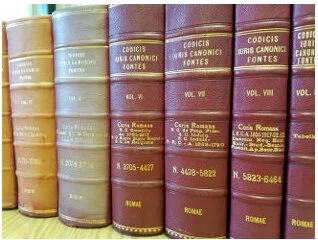
Boris Johnson's Catholic wedding: Why didn't the New York Times consult a Canon lawyer?

Boris Johnson's Catholic wedding: Why didn't the New York Times consult a Canon lawyer?

When preparing news reports about a chess match, it really helps if reporters quote one or more experts on the rules of chess.

The same thing is true when covering the FIFA World Cup. At some point, it would help to have an expert define “offsides” and some of soccer’s other more complicated rules.

When covering the U.S. Supreme Court, it helps to have a reporter on the team with a law degree and some serious experience covering debates in elite courtrooms.

This brings me that New York Times article the other day about that eyebrow-raising wedding at Westminster Cathedral between the current prime minister of England and his latest of many lady friends. The double-decker question covered many essential facts:

Why Could Boris Johnson Marry in a Catholic Church?

The British prime minister was married twice before, but the church didn’t recognize those unions because they were not Catholic.

Now, this article did some things very well, including offering a crisp, clear summary of Johnson’s complicated history as a husband and lover. Read that, if you wish.

However, I was struck by two words that were missing in this article — that would be, “Canonical” and “form” — even though discussions of this legal term was all over Catholic Twitter once the secret wedding was made public.

What, pray tell, is “Canonical form”? We will get to that in a moment.

In terms of journalism basics, the crucial point is that it really would have helped if the Times team had interviewed one or two Catholic Canon lawyers who understand this term and the history behind the church’s teachings on this subject. As things turned out, readers ended up knowing more about how this rite offended the sensibilities of Catholic LGBTQ activists than the specifics of the church laws that allowed the wedding to take place.

Please respect our Commenting Policy

Did Winston Churchill believe in God? Why did Churchill urge his nation to pray?

Did Winston Churchill believe in God? Why did Churchill urge his nation to pray?

THE QUESTION:

Did Winston Churchill believe in God?

THE RELIGION GUY'S ANSWER:

Sorta. Maybe. Depends what you mean.

The question and that answer are raised in the new book "Duty & Destiny: The Life and Faith of Winston Churchill" (Eerdmans) by Grove City College historian Gary Scott Smith, whose prior works include "Faith and the Presidency from George Washington to George W. Bush."

It's fair to say that during World War Two Churchill saved the United Kingdom and with that the broader prospects for democracy and the defeat of tyranny. In the prior century, the Civil War President Abraham Lincoln had saved the United States and the very possibility of democracy. These two great statesmen, the subjects of an immense number of books, are rather similar -- and similarly mysterious -- when it comes to religious faith.

Lincoln's story is well told in "Abraham Lincoln: Redeemer President" (also from Eerdmans) by Princeton Professor Allen Guelzo. Never a baptized church member and a youthful skeptic, Guelzo wrote, Lincoln when leading the nation through unprecedented crisis experienced a spiritual turn. This convinced him that only a moral revolution to end slavery could bring meaning to the war's horrid slaughter.

Thus he wrought the Emancipation Proclamation, announced in 1862 and proclaimed in 1863 and then, definitively, the 13th Amendment, which abolished slavery as of December 6, 1865, after he had been assassinated.

Churchill (1874-1965) underwent conventional baptism and confirmation in the Church of England. In the upper-crust mode, his neglectful and non-religious parents left his upbringing to boarding schools (with their mandatory chapels) and especially to his beloved nanny. Elizabeth Everest, a devout Christian, immersed the lad in prayer and study of the Bible, which through life he would quote at length by memory.


Please respect our Commenting Policy

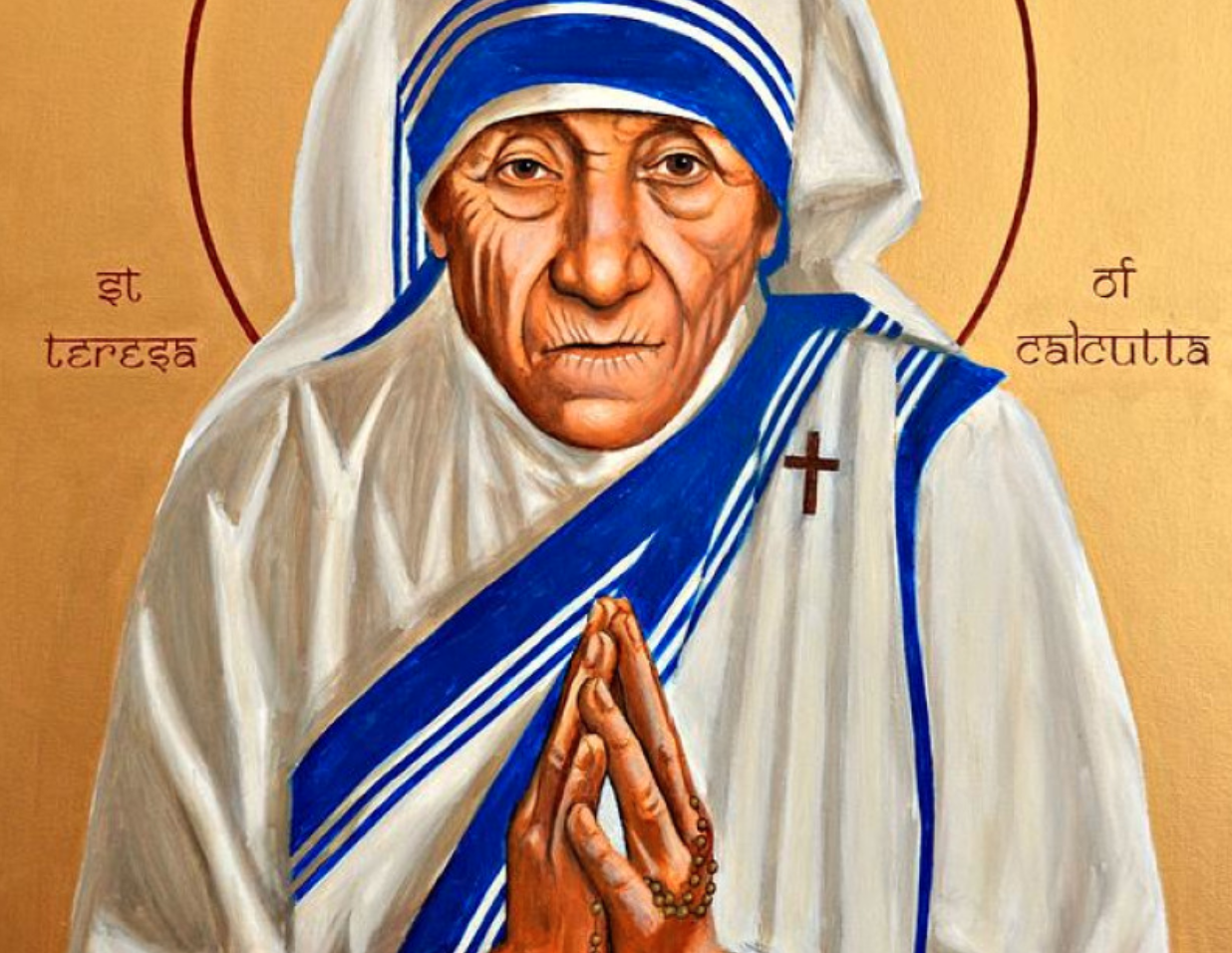
Another trial by media: In defense of Mother Teresa and why she is a saint, not a 'cult leader'

Another trial by media: In defense of Mother Teresa and why she is a saint, not a 'cult leader'

Historical figures are going through another mass-media reckoning. They have been for some time. Some with good reason.

Christopher Columbus? Understandable given what was unleashed by his arrival from Europe.

Thomas Jefferson? A paradox that’s worth examining given his ability to pen the Declaration of Independence and also own slaves. In some cases, there is evidence that he fathered children with them.

Other figures haven’t been so obvious. Following the tragic murder of George Floyd last May, many statues were toppled or removed across the United States, including those of 18th century Spanish priest Junipero Serra, Abraham Lincoln and Mahatma Gandhi. These weren’t so obvious to explain. I’m not sure those who damaged them knew either.

This takes me to the latest reckoning: Mother Teresa, now known as Saint Teresa of Calcutta.

Yes, that Mother Teresa. The diminutive woman who dedicated her life to helping “the poorest of the poor” in India. And the same one who was awarded the Nobel Peace Prize in 1979 and Pope Francis canonized a saint in 2016. Turns out she was a cult leader.

Michelle Goldberg penned an opinion piece in The New York Times, which ran Saturday on its website, under the headline: “Was Mother Teresa a cult leader?”

With a headline like that, is it possible the thesis will be that she wasn’t?


Please respect our Commenting Policy

Bob Dylan turns 80, while Dylanologists keep arguing about signs of faith in his art

Bob Dylan turns 80, while Dylanologists keep arguing about signs of faith in his art

Night after night, Bob Dylan's 1979 Gospel concerts at San Francisco's Warfield Theatre made news for all the wrong reasons, according to angry fans.

The November 11th show opened with Dylan roaring into "Gotta Serve Somebody" from "Slow Train Coming," the first of what Dylanologists called his "born-again" albums.

"You may be a businessman or some high-degree thief," he sang. "They may call you doctor, or they may call you chief, but you're gonna have to serve somebody. … Well, it may be the Devil, or it may be the Lord, but you're gonna have to serve somebody."

To add insult to injury, these concerts included fiery sermons by Dylan, while he avoided classic songs that made him a legend.

"I was 19 years old and that was my first Dylan concert," recalled Francis Beckwith, who teaches Church-State Studies at Baylor University. "The atmosphere was highly charged. Some people booed or walked out. … There were people shouting, 'Praise the Lord!', but you could also smell people smoking weed."

Beckwith kept going to Dylan concerts, while following years of reports about whether the songwriter was still a Christian, had returned to Judaism or fused those faiths. These debates will continue as fans, critics, scholars and musicians celebrate Dylan's 80th birthday on May 24th.

With a philosophy doctorate from Fordham University in New York and a law degree from Washington University in St. Louis, Beckwith is certainly not a conventional music critic. He made headlines in 2007 when -- while president of the Evangelical Theological Society -- he announced his return to Catholicism.

To mark that birthday, Beckwith is publishing online commentaries on what he considers Dylan's 80 most important songs. The Top 10: "Like a Rolling Stone," "My Back Pages," "Stuck Inside of Mobile With the Memphis Blues Again," "Mr. Tambourine Man," "Visions of Johanna," "Tangled Up in Blue," "Blowin' in the Wind," "Precious Angel," "It's Alright, Ma (I'm Only Bleeding) and "Desolation Row."

Beckwith considered three factors -- popularity, lasting cultural significance and, finally, whether each song was "something I could listen to over and over." He stressed that Dylan's entire canon includes images and themes rooted in scripture and faith.


Please respect our Commenting Policy

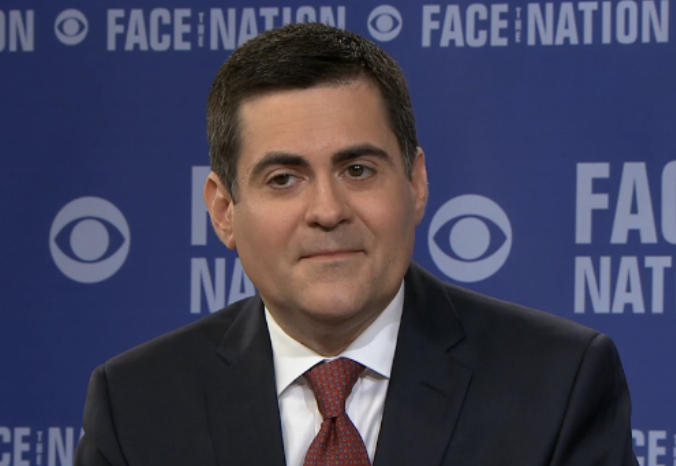
When covering Moore's exit from SBC power, scribes should ponder what made him 'liberal'

When covering Moore's exit from SBC power, scribes should ponder what made him 'liberal'

This may be a strange place to start when discussing early news coverage of the Rev. Russell Moore moving from the Ethics & Religious Liberty Commission — the crucial Southern Baptist camp in Beltway land — to what looks like a Christianity Today think tank on theology and public life.

So be it. This is where we will start — with the whole Moore is “too liberal” thing.

What does “liberal” mean in that curse that has been tossed about in Baptist social media?

Remember that one of Moore’s primary duties in Washington, D.C., has been to help Southern Baptists defend against attacks on religious liberty and the First Amendment in general. With that in mind, let me return to a question that I have been asking here at GetReligion — while focusing on the role that labels play in American journalism — for a decade or so. This is from a 2015 post:

What do you call people who are weak in their defense of free speech, weak in their defense of freedom of association and weak in their defense of religious liberty (in other words, basic First Amendment rights)?

The answer: I don't know, but it would be totally inaccurate — considering the history of American political thought — to call these people "liberals."

So what do you call someone, like Moore, who has been defending free speech, defending the freedom of association and defending religious liberty?

Wait. For. It. You can accurately call him a “liberal” in that context. In this framework, the New York Times editorial pages and, in many cases, the American Civil Liberties Union, are now — what? What is the accurate term, these days?

Note that this struggle to define “liberal” was at the heart of the celebrated clash between Bari Weiss and the Times. I would argue that it was part of the newsroom warfare that led to the ousting of Liz Spayd as the Times public editor (when she dared to ask if the newspaper was committed to fair, accurate coverage of half of America). It’s at the heart of the growing tensions between gay-rights icon Andrew Sullivan and the LGBTQ establishment. I could go on and on.

But back to another cluster of issues linked to Moore.


Please respect our Commenting Policy

New podcast: Yes, election of first trans/queer/gender fluid ELCA bishop was a big story

New podcast: Yes, election of first trans/queer/gender fluid ELCA bishop was a big story

Imagine that you are a pastor or a layperson in the Lutheran Church-Missouri Synod, the Wisconsin Evangelical Lutheran Synod or one of the other conservative Lutheran bodies in the United States.

So you sit down with your morning coffee and pop open your email and you see that friends and family have sent you emails enquiring about a headline that they saw on Twitter or somewhere else in today’s complicated news marketplace.

In this case, the headline is from the New York Times and it states: “U.S. Lutheran Church Elects Its First Openly Transgender Bishop.

The problem, of course, is that the “U.S. Lutheran Church” doesn’t exist There is no one denomination that fits that description. Or perhaps the person sending you the email saw, somewhere, the Religion News Service headline that ran with this headline: “Lutherans elect Megan Rohrer first transgender bishop.” Second verse, same as the first.

When it comes to Lutheranism, many journalists continue to struggle when describing who is who and what is what. This brand-name problem was the first layer of the complex issues — in terms of church doctrine and journalism style — that we explored in this week’s “Crossroads” podcast. Click here to tune that in.

The denomination that elected Bishop-elect Rohrer was, of course, the Evangelical Lutheran Church in America, one of the “Seven Sisters” — we may need to make that “Seven Siblings” — of liberal Protestantism.

But what happens if you put that denominational brand name in a headline (besides the fact that it’s way too long for most newspaper layouts)? If you do that, you have to explain the presence of “evangelical,” which has become a near curse word in a news context. And, hey, “Lutheran” by itself sounds more important. Damn the accuracy, full speed ahead.

This brings us to the key hook for this podcast: There was little or nothing surprising about the progressive ELCA electing a trans (if that is the best term, in this case) bishop.


Please respect our Commenting Policy

The U.S. Census story and its hooks for religion news (plus a personal note about Rachel Zoll)

The U.S. Census story and its hooks for religion news (plus a personal note about Rachel Zoll)

The first round of 2020 U.S. Census data (with much more to come) is big news as states gain and lose seats in the U.S. House and politicos enter the wild decennial joust to gerrymander federal and state district lines to their advantage.

But here's another journalistic thought: What does the Census mean for religion?

Tony Carnes of the "A Journey Through NYC Religions" website provides an early example, analyzing possible implications for New York City that other writers could emulate for their own cities, towns or regions.

Editor Carnes (disclosure: a personal friend) is a professional sociologist leading a team that has spent years tracking religion developments in Gotham, notably at the neighborhood level. Despite the town's secular image, Carnes and company have documented that, starting in the late 1970s, thousands of new churches, synagogues, mosques and temples have been built. Such activity was continuing until the COVID-19 pandemic struck.

Carnes counts the populations moving in and moving out from the American Community Survey between 2010 and 2014 as updated by Census numbers for 2018. This shows a city gradually becoming less African-American (population down 96,000) and Hispanic (down 50,000). The gainers are non-Hispanic Whites (up 200,000) and Asians (up 97,000). We'll soon know if these trends continued in 2020.

Carnes calls that "a startling change in the racial/ethnic profile of the city, and it is also found in other cities in the United States."


Please respect our Commenting Policy

Passing of the guard at the Associated Press; the rise of Ministry Watch and the Roys Report

Passing of the guard at the Associated Press; the rise of Ministry Watch and the Roys Report

The death of a well-known religion reporter; a new job announcement from a beat veteran and a spotlight on two feisty independent religion news organizations is what concerns me this week.

Tmatt had previously offered an update on the health of Rachel Zoll, a former Associated Press religion specialist who came down with glioblastoma, a brain cancer that has no cure, in early 2018. That was only a few months after another religion-beat pro, Jeffrey Weiss of the Dallas Morning News, died of the exact same malady.

Last week, Zoll died at the age of 55 at her home in Massachusetts. She reported on religion for AP for 17 years.

There have been lots of tributes, so I’ll spotlight this Associated Press obit atop the list.

Zoll covered religion in all its aspects, from the spiritual to the political, and her stories reached a global audience. But her influence was far greater than that. Other publications often followed her lead, and AP staffers around the world depended on her generosity and guidance.

Zoll was at the forefront of coverage of two papal transitions, the clergy sex abuse scandal in the Catholic Church, and tensions within many denominations over race, same-sex marriage and the role of women.

She often broke news, as in 2014, when she was the first to report Pope Francis’ appointment of Blase Cupich to become the new archbishop of Chicago.

Fellow GetReligionista Dick Ostling, who was at AP from 1998-2006, wrote this:

My partner Rachel was simply a delight to work with and a personality enjoyed by everyone who knew her -- and who competed with her. But in broader and more historical terms she exemplified all that's needed in reporting and especially with a complex and emotion-laden field like religion. She was of course quick and accurate but those are the basics for any Associated Press writer. And then, remarkably intelligent. She knew her stuff and knew she needed to learn ever more stuff to handle this beat.


Please respect our Commenting Policy

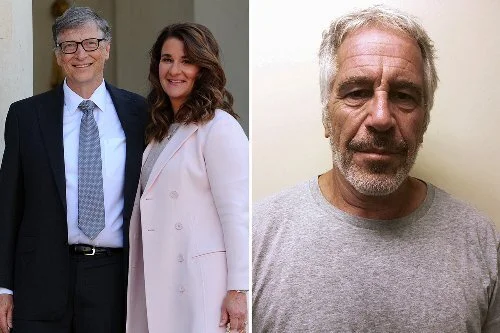
Religion ghosts in Bill and Melinda Gates split? There are some old questions to ask ...

Religion ghosts in Bill and Melinda Gates split? There are some old questions to ask ...

I have written quite a few headlines over the past four decades or so and read a kazillion more. Still, I have to admit that a news headline the other day in The Washington Post stopped me in my tracks: “If Bill and Melinda Gates can’t make a marriage work, what hope is there for the rest of us?

I immediately assumed this was some kind of first-person commentary.

However, it appears that this was a news feature — using the break-up of one of the world’s richest couples as a chance to examine the marital stress caused by COVID-19 lockdowns, life changes for aging Baby Boomers and the resulting need for professional counseling. Here’s the overture:

Just imagine how many hours of couples therapy you can afford when you’re among the world’s richest people. Or the shared sense of purpose you could forge while raising three children and running a $50 billion charitable foundation with your spouse.

Then imagine that it’s not enough to keep you together.

In announcing their decision to divorce, Bill and Melinda Gates cited the work they’d done on their marriage, and a mutual sense of pride in their children and philanthropy. But, they said in identical joint statements shared on Twitter, “we no longer believe we can grow together as a couple in this next phase of our lives.”

Now, for millions of Americans it would be logical to ask another question whenever a couple faces a crisis of this kind. It’s a kind of two-edged sword question that can be carefully worded as follows: Did religions and-or moral issues have anything to do with the break-up of this marriage?

All of the initial coverage that I saw didn’t include any religion/moral information at all. There is a chance that these questions will be asked in the days ahead, now that the Wall Street Journal and other publications have added a rather problematic name to the cast list in this drama — Jeffrey Epstein.

However, I had already opened a digital file folder on this topic because my pre-Internet (think dead tree pulp) files on this couple included a lengthy 1997 Time magazine feature with this headline: “In Search of the Real Bill Gates.” This long-ago article included several details of interest, including at least two of the religious-moral nature. We will take the less famous of these two details first:


Please respect our Commenting Policy