
Marriage & Family

What's the faith background of the Episcopal Church's new leader?

What's the faith background of the Episcopal Church's new leader?

AN EPISCOPALIAN ASKS:

Can you tell us something more about the presiding bishop of our [Episcopal] Church? I’ve heard only upbeat things about him from people who have met and heard him. Will he be a Marco Rubio -- a very effective speaker who can connect with people?

THE RELIGION GUY’S ANSWER:

Perhaps so. Here’s some information about the personable Michael Bruce Curry, 62, who was installed this month as the new presiding bishop of America’s troubled Episcopal Church. Some U.S. denominations lack such a solo head while the Episcopalians grant their chief unusually centralized power and, moreover, his term runs till 2024.

The questioner’s pitch for Republican Rubio brings to mind Hillary Clinton’s 2016 hope to become the nation’s first woman president following its first African-American president. The Episcopalians have done the opposite. Curry, the first African-American to head this rather elite and overwhelmingly white church, succeeds its first female presiding bishop, Katharine Jefferts Schori.

Jefferts Schori was a surprise choice in 2006 because she never led a prominent parish or diocese. She spent only five years as bishop of Nevada (currently with 5,444 souls). By contrast, Curry has 15 years of seasoning as bishop of the Raleigh-based North Carolina diocese, the nation’s sixth largest with 50,218 active members.

Rather like Barack Obama’s notable keynote speech to the Democrats’ 2004 convention that helped win the 2008 nomination, Curry delivered a rousing sermon at the church’s 2012 convention and was elected presiding bishop at the next one.
Please respect our Commenting Policy

Colorado Springs motives? So far, one is clear: Pro-life pastor/officer died defending life

Colorado Springs motives? So far, one is clear: Pro-life pastor/officer died defending life

Faced with headlines about violence at an abortion facility, the late Cardinal John O'Connor of New York City took to the pulpit and, digging into the writings of the Catholic Catechism, Pope John Paul II and Gandhi, stated the obvious. Do you remember that very candid quote?

"If anyone has an urge to kill someone at an abortion clinic, they should shoot me," said the late Cardinal John O'Connor, preaching to his New York City flock in 1994. "It's madness. It discredits the right-to-life movement. Murder is murder. It's madness. You cannot prevent killing by killing."

The cardinal added, in an online forum:

"Where does this spiral end? How is it limited? Surely, we are all as tired of abortion as we are tired of murder. But we must fight murder without conforming to it or condoning it," wrote the cardinal. ... Let us attend to God's revelation: 'Do not be conquered by evil, but conquer evil with good' (Romans 12: 21).

Now, I bring this up as law officials in Colorado Springs begin the process of digging into the history of the man arrested as the gunman in the horrifying standoff at a Planned Parenthood. Apparently, Robert Lewis Dear has a previous criminal record.

And what about motive? Here is a recent update, as posted at The Colorado Springs Gazette:

The Associated Press reports Colorado Springs Mayor John Suthers says authorities aren't ready to discuss a possible motive of the gunman who attacked a Planned Parenthood clinic there, but says people can make "inferences from where it took place."
Suthers says investigators have interviewed Dear, but that authorities still want to learn more about him, suggesting that his mental health was part of the investigation.

Now in this case, the tragic reality is that it is much easier to articulate the motives of the local police officer who was one of the first responders and lost his life in the fighting.

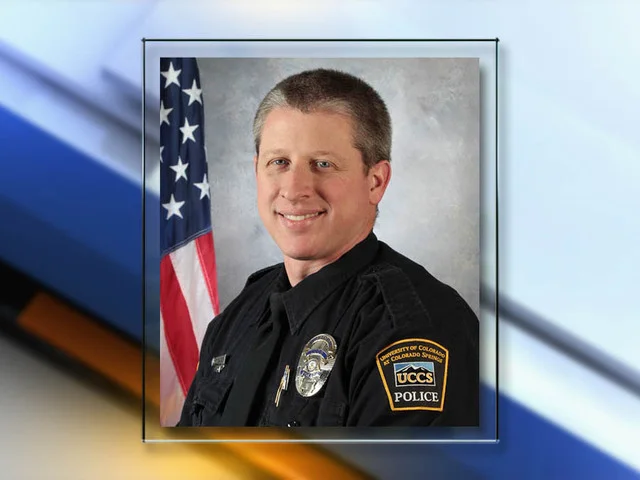
The officer's name: The Rev. Garrett Swasey.

Are you seeing that title -- "The Rev." -- in front of his name?


Please respect our Commenting Policy

Might this be the lede? Democrats allow pro-life Catholic to run (and win) in Louisiana

Please raise your hand if you are getting more and more tired of political labels, especially when they are linked to issues of religion, culture and morality. Can I get a witness?

During the recent elections in that crazy alternative universe called Louisiana, Republicans struggled to pin a liberal label, of some kind, on the Democrat who was willing to be the latest sacrificial victim in the race for governor. Everyone knows that Louisiana is a deep red, culturally conservative state, so the Democrat was given little chance to win.

It helped, of course, that the heavily favored Republican U.S. Sen. David Vitter did almost everything he could to self destruct. Cue up that campaign ad at the top of this post.

So the Democrat won. How did The Washington Post choose to label this unlikely victory? 

Completing a long-shot bid that ran counter to the conservative tide sweeping the Southern states, Democratic state Rep. John Bel Edwards was elected governor of Louisiana on Saturday, defeating his Republican rival, U.S. Sen. David Vitter. ...
A jubilant crowd of Edwards supporters greeted news of the Democrat’s win at the venerable Monteleone Hotel in New Orleans’s French Quarter as a brass band led an impromptu “second line” celebration through the packed ballroom.
Addressing the crowd, Edwards said, “I did not create this breeze of hope that’s blowing across our state, but I did catch it.” He reached out to supporters of his Republican opponent, pledging to be a governor “for all the people of Louisiana,” and congratulated voters for not giving in to the “deep cynicism about our politics and our future.”

So what was the key in this victory?


Please respect our Commenting Policy

Daily Beast approaches satire territory when 'reviewing' Carson's congregation

Tina Brown, who founded The Daily Beast, will readily admit the news site’s name is an homage to Evelyn Waugh’s novel “Scoop,” in which the newspaper tub-thumping for war was called “The Beast.”

But Brown’s website approached satire not only in its name when it sent a reporter to poke around a congregation with which this writer is intimately familiar, the Spencerville Seventh-day Adventist Church in Silver Spring, Maryland. In its report, Brown’s reporter demonstrated a breathtaking lack of basic knowledge about religion -- certainly about Christianity -- or even what people do when they go to worship services these days. Click here to read that story.

Disclosure: I’ve been a member at Spencerville since 2003, have attended weekly worship there, and still am on the rolls, not having yet transferred my records to a local Adventist congregation in Utah.

Oh, some fellow named Dr. Ben Carson is a member there, along with his family. You might have heard about his connections to the Seventh-day Adventist faith.

It’s not unusual for the press to poke around the church of a presidential candidate’s choice, especially if that church is either little-known or perhaps controversial. In 2008, Trinity United Church of Christ was put under a media microscope not only because Barack Obama was a member there. but also because the Rev. Jeremiah Wright, the pastor, had issued many sermons that were, shall we say, a bit caustic about America and its role in the world. Four years later, The Church of Jesus Christ of Latter-day Saints had a media-led “Mormon Moment” when Mitt Romney, a lifelong member, returned missionary and former bishop, ran for the presidency.

Now it’s Adventism’s turn.


Please respect our Commenting Policy

AFP serves up some Kellerism: Getting hitched, sort of, as a threesome in Brazil

Every now and then, I run into what appears to be a piece of GetReligion writing, only it isn't here at GetReligion.

It's no surprise when you see this from former GetReligionistas such as the Rev. George Conger, M.Z. Hemingway or Mark Kellner. But what about this piece -- "AFP on 3-Woman Marriage: Using News for Propaganda" -- by one Tom Hoopes at the Gregorian Institute at Benedictine College, Kansas?

Truth be told, this is a basic paragraph-by-paragraph story dissection, as practiced here on many occasions by Hemingway or, long ago, by the blog's co-founder, Doug LeBlanc (whose name remains in our contributors list because I refuse to remove it, since he's still out there helping behind the scenes).

As it turns out, Hoopes spent a decade as executive editor of The National Catholic Register and had some experience as a mainstream journalist and political press secretary, as well.

So what is he up to in this blog item? Let's look at a few pieces of this:

Fisking is a now-rarer art from the early days of blogging, kept nobly alive as by Father John Zuhlsdorf, whose blog ... helps us see what everything really says.
But when I read a story from Agence-France Presse news agency about the debut of court-sanctioned polyamory, I couldn’t resist using the “Zisking” style of emphasis and added comments. ...
Rio de Janeiro (AFP) -- Three’s a crowd? Not in Brazil, where three women have defied deeply conservative trends in Congress and wider traditional mores by celebrating a polyamorous civil union. [Not long ago, President Obama and Hillary Clinton were both against gay marriage. Now, suddenly, you need to be in the grip of “deeply conservative trends” to be against multiple spouses?]


Please respect our Commenting Policy

Religion ghosts in the Silicon Valley suicides? It would have helped to ask that question

If you have been following mainstream religion-news coverage in recent decades, like quite a few GetReligion readers (and all of our writers), then you know the byline of Hanna Rosin, who once covered the beat for The Washington Post. If you have followed her work since then, both in her books and in The Atlantic, you know that her interest in topics linked to religion, culture and family life remains strong and her skills as a reporter and word stylist are unquestioned.

In recent days, several GetReligion readers have sent me URLs to her new Atlantic cover story on "The Silicon Valley Suicides."

One of the messages perfectly captured the message in the others: "See any ghosts in this one?"

This is a stunning story and it was worth reading to the very end. That said, I found it amazingly haunted and free of the moral and religious depth usually found in Rosin's work.

Ghosts? Totally haunted.

The story opens with the story of the suicide of at popular athlete and super-achieving student named Cameron Lee, the kind of normal young man who went out of his way to join friends for morning donuts and make people feel at home.

You need to read this one long passage to grasp the tone of Rosin's piece:

That morning the school district’s superintendent, Glenn “Max” McGee, called Kim Diorio, the principal of the system’s other public high school, Palo Alto High, to warn her, “This is going to hit everyone really hard.” McGee was new to the district that year, but he’d known the history when he took the job. The 10-year suicide rate for the two high schools is between four and five times the national average. Starting in the spring of 2009 and stretching over nine months, three Gunn students, one incoming freshman, and one recent graduate had put themselves in front of an oncoming Caltrain. Another recent graduate had hung himself. While the intervening years had been quieter, they had not been comforting.


Please respect our Commenting Policy

It's closing time: Symbolic date invites press analysis of liberal Protestant seminaries

It's closing time: Symbolic date invites press analysis of liberal Protestant seminaries

Attention religion-beat scribes: Nov. 12, 2015, carries high symbolism for “mainline” Protestantism, which for centuries exercised such broad influence over U.S. faith and culture.

On that date Andover Newton Theological School, the oldest U.S. institution for graduate-level clergy training with a 208-year history, announced it is no longer ”financially sustainable” due to falling enrollment and must sell its leafy 23-acre campus outside Boston.

The school, which has “historic” links with the United Church of Christ and American Baptist Churches, plans two more years of operation while it ponders two radical proposals: either relocate and merge within a larger institution (preliminary talks are under way with Yale’s Divinity School) or else switch to ministry apprenticeships with basic coursework but no full-service residential campus.

As explanatory sessions ensue with Andover Newton students on  November 17 and December 3, and with alumni on November 20, it’s a timely moment for newswriters to assess future prospects for America’s Protestant seminaries.

The ever-solid G. Jeffrey MacDonald (himself a U.C.C. minister) reports in Religion News Service that to preserve an $18 million endowment, Andover Newton is paying its bills through a mortgage line of credit. Based on an interview with Daniel Aleshire, executive director of the Association of Theological Schools, MacDonald says  this and seminary trauma elsewhere is “the fallout from decades of declining membership numbers in mainline denominations,” noting that their seminary enrollments have dropped 24 percent since 2005.

At Andover Newton, enrollment totalled 271 students in the last A.T.S. report. Only 40 percent were full-time and only 25 percent lived on campus, compared with the 450 full-time students a generation ago. Enrollment is 63 percent female, and the average student age is 49.

The school requires no creed of the faculty, and instead defines itself doctrinally by “core values” like integrity, innovation, openness, understanding, academic freedom and the sustainability of creation. The school emphasizes “multifaith education” and 10 percent of its students are non-Christians (variously identified as Unitarian Universalist, Jewish, Muslim, Baha’i, Muslim, agnostic or atheist).


Please respect our Commenting Policy

Mormons, baptism and children of gay parents: The drama intensifies

It’s a gift that keeps on giving. In terms of news value, the decision by leaders of the Church of Jesus Christ of Latter-day Saints to deny baptism to under-age children of gay parents is impossible to leave alone. I wrote about the initial coverage a week ago but a lot has happened since then.

If you've been hiding under a rock recently, here's how the Salt Lake Tribune describes the current situation:

No part of the new LDS policy on same-sex couples has generated more controversy -- and criticism -- than its prohibition against Mormon rituals for their children.
Stories flooding social media tell of canceled baby blessings, postponed baptisms, aborted priesthood ordinations and withdrawn missionary applications. Even many devout Mormons -- including congregational and regional leaders — report distress, despondence and despair over the upheaval.

Opponents of the church’s decision -- and there are many -- have helped things along by having a photogenic mass resignation of their church membership last Saturday. Being that a similar rally has already been scheduled for next Saturday, methinks the organizers are going to continue this media campaign for as long as they can. Most people in the news business can sniff out a manufactured event, so I'll be interested to see who covers Rally #2. Keep you eye on The New York Times, where editors appear ready to go to the mattresses.

What’s also helped the protesters' cause is there’s been no official comment from LDS leaders except for a 10-minute video placed on the church’s web site on Nov. 6 and a statement a few days later clarifying the new policy.

Not a smart move by the church, because their opponents are winning the media battle hands down.


Please respect our Commenting Policy

Big picture: How can religious traditionalists shift strategies in cultural conflicts?

 Big picture: How can religious traditionalists shift strategies in cultural conflicts?

Big picture, it would be hard to over-state the impact of the U.S. Supreme Court’s legalization of same-sex marriage upon believers who uphold longstanding religious tradition. The resulting soul-searching is a theme worth careful journalistic treatment going forward.

One fruitful avenue would be seeking reactions from prime sources to three future options proposed by a package of articles in the current issue of Christianity Today, the influential evangelical monthly.

The cover offers a degree of optimism: “Have No Fear: How to Flourish in a Time of Cultural Weakness.”

That’s the tone of the lead article by two authors better known for politics than religion, Washington Post columnist Michael Gerson and Peter Wehner of the Ethics and Public Policy Center. Both were speechwriters and then top policy advisors in the George W. Bush White House. Armed with a foundation grant, they interviewed many evangelical writers, academicians and non-profit leaders, with varied reactions, then drew their own conclusions.

Gerson and Wehner scan history, noting how rarely authentic Christians have exercised full political power. Key quote: “When Christians find themselves on the losing side of Supreme Court decisions, it isn’t cause for despair. Nor does it preclude them from doing extraordinary things.”

Realistically, they say, believers must simply adjust to a world of same-sex marriage. Any bids to reverse this culture shift “will be spectacularly unsuccessful.” But “this does not mean they have to endorse gay marriage.” Traditionalists must remain vigilant in protecting “vital religious liberty,” which is a mark of the healthy society.


Please respect our Commenting Policy