Mainline

Podcast: Why are churches closing? There are many forces at work, but doctrine still matters

Podcast: Why are churches closing? There are many forces at work, but doctrine still matters

For years, there was a simple answer to the old question: Why do some churches grow, while others shrink?

You simply bought a copy of the 1972 book “Why Conservative Churches Are Growing: A Study in Sociology of Religion” by the late National Council of Churches leader Dean M. Kelley and that provided information answering lots (but not all) of the big questions. It was crucial that this groundbreaking book was written by a mainline Protestant insider, as opposed to a Southern Baptist or Assemblies of God leader.

Of course, everyone knew that some churches grew because of location, location, location. Also, there were always a few liberal churches that grew because of talented preachers or other strengths. Like I said: Kelley answered lots of church-decline questions, but not all of them.

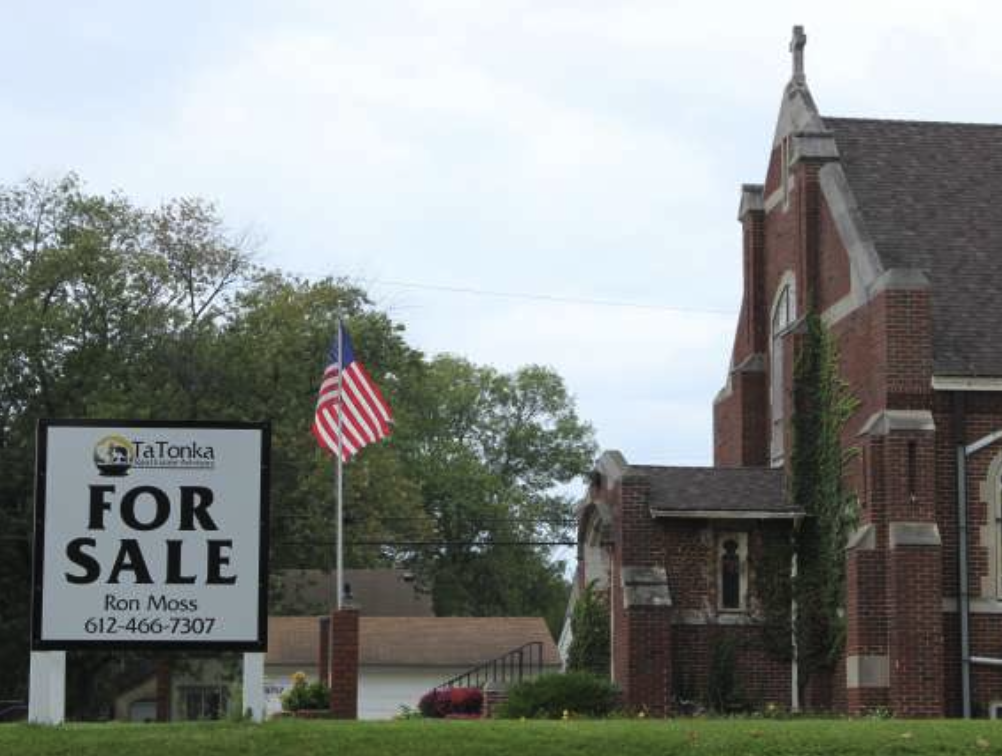
What about 2022 in post-pandemic church life? For starters, many churches will never be post-pandemic — because many congregations (and maybe denominations or communions) were changed forever and we will see more evidence of that in the next few years.

All of this is an overture to this week’s “Crossroads” podcast (CLICK HERE to tune that in) which focuses on a must-read feature story by Godbeat veteran Bob Smietana. The headline at Religion News Service: “For a small Chicago church, closing down was an act of faith.” This was a personal, heartfelt story for Smietana, since this was a congregation that he once called home.

Like so many pastors around the United States, the Rev. Amanda Olson has kept one eye on the Bible and another on the evolving religious landscape.

She knew change was coming to the church in America.

Yet she hoped her congregation might be spared the worst of it.

“Everyone thinks that churches are going to close,” said Olson, the longtime pastor of Grace Evangelical Covenant Church on Chicago’s North Side. “But nobody thinks it is going to be their church.”


Please respect our Commenting Policy

What will American Protestantism look like after the wars inside the 'Seven Sisters' are done?

What will American Protestantism look like after the wars inside the 'Seven Sisters' are done?

Over decades, the map of U.S. Protestantism has been redrawn by splits over the authority and interpretation of the Bible that eventually focused on the LGBT dispute. Now we have a major case study that journalists will need to cover at the local, regional, national and global levels.

A balanced coalition of leaders in the large United Methodist Church (UMC) developed a treaty for mutually respectful separation — the Reconciliation and Grace Through Separation protocol — for that’s currently degenerating into a wasteful fight like other groups have suffered.

Reporters and concerned readers will want to dive into these commentaries and news stories:

* Look at a United Methodist timeline: Why are conservatives going nuclear with lawsuits?

* What happened to United Methodists’ proposal to split the denomination?

* Time is Running Out for Traditionalist United Methodists!

* For United Methodists, the center is not holding

* Special sessions of United Methodist annual conferences 2022

* United Methodist Church bishops mount defense amid conservative attacks (paywall protected)

* Liberal Bishops Have Redefined United Methodist Polity

The current maneuvers by the North American UMC establishment may well limit the number of dropouts joining the Global Methodist Church. Its vision has been to unite a million or more U.S. Methodist evangelicals with the growing Methodist churches in Africa and Asia, creating an effective and innovative international denomination dedicated to defending current Methodist doctrines. This could help counteract some U.S. conservatives’ drift into Christian nationalism. Is that still feasible?


Please respect our Commenting Policy

Podcast: Journalists should ask if faith-based schools clearly state their doctrines on sexuality

Podcast: Journalists should ask if faith-based schools clearly state their doctrines on sexuality

I forget who originally came up with the term “Romeaphobia.”

This can be defined as the hatred or fear of all things that can be viewed as links to Roman Catholicism or the early church in general. Obviously, this affects issues linked to worship and church governance. However, in my experience (I grew up in Texas), many evangelicals (especially Baptists) have a fear of clear, authoritative doctrinal statements that, you know, might be interpreted as “Roman” creeds. All together now: We are “Bible Christians” and that’s that.

I am not saying this to take a shot at my heritage (I am very thankful for the deep faith and examples of my family and my father was a Southern Baptist pastor). The reason I mention this up is because, in my opinion, this anti-creedal Romeaphobia is playing a major role in an important news story all over America. This was the hook for this week’s “Crossroads” podcast (CLICK HERE to tune that in).

Does this USA Today headline sound familiar? It should, for readers from sea to shining sea: “Christian Florida school tells parents gay and transgender students must 'leave immediately'.”

My goal here is to offer advice to reporters who want to do accurate, fair-minded coverage of these church-state skirmishes (let’s hope there are some out there). I’m also offering press-relations advice to terrified leaders of Christian schools at all levels, from kindergartens to colleges. The Romeaphobia angle? That takes us into legal nuts-and-bolts questions about these conflicts.

Let’s start with the rather familiar USA Today overture:

A Florida-based Christian school sent out an email informing parents that LGBTQ-identifying students "will be asked to leave the school immediately."

According to the email obtained by NBC News, the top administrator of Grace Christian School in Valrico, Florida, Barry McKeen, sent the email to the families for the kindergarten-grade 12 school on June 6. He later confirmed and doubled down on the policy in an Aug. 18 video on the school's official Facebook page.

The June email read: "We believe that any form of homosexuality, lesbianism, bisexuality, transgender identity/lifestyle, self-identification, bestiality, incest, fornication, adultery and pornography are sinful in the sight of God and the church. Students who are found participating in these lifestyles will be asked to leave the school immediately."

For starters, private schools — liberal and conservative — have First Amendment rights, including the right to clearly state their foundational doctrines and, thus, disciplines that apply to staff, faculty and students. Tip No. 1 for reporters and church leaders: Get to know the details of the UNANIMOUS 2011 U.S. Supreme Court decision commonly referred to as the Hosanna Tabor case.

But we need to figure out what actually happened in this Florida case.


Please respect our Commenting Policy

A religion, academic and business story: Is there a 'best' Bible to use and quote?

A religion, academic and business story: Is there a 'best' Bible to use and quote?

RACHAEL ASKS:

Is there a Bible that’s the most accurate?

THE RELIGION GUY’S ANSWER:

Almost all the varied 20th and 21st Century English translations on sale are sufficiently accurate and can be relied upon, though debates will never end on some details.

The first and fundamental aspect of accuracy is experts’ shared consensus on the best available texts in the original languages of Hebrew and Greek that underlie all translations, based upon a far richer body of surviving manuscripts than we have for other ancient writings. Here’s a somewhat over-simplified rundown.

Hebrew versions of the Jewish Bible or Tanakh, which Christians call the Old Testament, employ Judaism’s authoritative Masoretic Text. The ancient Hebrew language did not use written vowels, so medieval scholars known as Masoretes added “vowel points,” markings that standardized oral traditions on the correct readings of the words. This led to the 9th Century Aleppo Codex, corroborated by the 11th Century Leningrad Codex and other rabbinical manuscripts.

These carefully preserved texts are virtually identical in wording, though with some variations in pointing, and provide the basis for Jewish and Christian Bibles. The 15th Century emergence of printed Bibles further standardized the Hebrew text. The 20th Century rediscovery of biblical books among the 2,000-year-old ”Dead Sea Scrolls” added certain variations that translators consider.

With the New Testament, thousands of Greek manuscripts and fragments from Christianity’s early centuries exist. Today’s translators work from a standard “eclectic” Greek version formulated from these by specialists in “textual criticism” who decide which variants are closest to the original writings. Technical note: “earliest” does not necessarily mean “best” manuscript.

The resulting shared resource for translations is the German Bible Society’s continually updated text with all important variations, most recently the 2017 “Nestle-Aland Greek New Testament, 28th Edition, with Critical Apparatus.” Major translations undergo periodic tweaking based on this ongoing work. A prominent evangelical, the late Bruce Metzger of Princeton Theological Seminary, was the American leader in this international project.

Modern English Bibles provide candid footnotes that alert readers to important textual variants, which rarely affect basic biblical doctrines.


Please respect our Commenting Policy

Is America's religion cup half-empty or half-full? Two new takes on the omnipresent 'nones'

Is America's religion cup half-empty or half-full? Two new takes on the omnipresent 'nones'

The uber-trend in 21st Century American religion is the increase in “nones” who cite no religious affiliation or identity when pollsters phone. Last December, the Pew Research Center reported that 29% of the adult population currently self-describes as either atheist, agnostic or — by far the biggest category — “nothing in particular” regarding religion.

Thus the media and religious professionals will want to examine two new assessments of the situation.

Religion’s cup looks half-empty, a familiar scenario, in the book “Reorganized Religion: The Reshaping of the American Church and Why It Matters” by Bob Smietana. But the cup is half-full for a team at Baylor University’s top-flight Institute for Studies of Religion, whose findings are summarized in a (paywalled) Wall Street Journal item. For access to the full academic report on "nones" research (Interdisciplinary Journal of Research on Religion, volume 18, article 7), contact the institute at ISR@baylor.edu or 254 -710-2841.

Smietana is a well-positioned veteran guide as a Religion News Service national reporter, formerly with the Nashville Tennessean and Christianity Today magazine. His book is especially useful for journalists new to the religion beat as he surveys this generation’s dire data of decline, mingled with interviews of assorted dropouts and questers.

His over-all theme is that America and Americans depend on what’s called “organized religion,” actual face-to-face gatherings now weakened by both COVID and societal undertow. Organized secularism simply cannot offer a substitute for building and serving communities. Pointed questions are posed by Eboo Patel, the founder of Interfaith America raised Ismaili Muslim, summed up as follows by Smietana.

“What would happen if all the religious and faith-based institutions in your community disappeared? All the churches and schools, the hospitals and medical clinics, homeless shelters and food pantries, all the tutoring programs and benevolence funds. Who would pick up the slack? Who would tutor kids, resettle refugees, run shelters for battered women, and devote themselves to the whole host of charitable activities, large and small, that faith groups do?”

That doesn’t even touch help to individuals that nobody notices or the religious aspect of religion, the inherent need to worship, the sense of wholeness and purpose within a puzzling cosmos that faith can provide, or the resulting emotional and even physical well-being demonstrated in many secular studies.


Please respect our Commenting Policy

Religion-beat crash: RNS wades into intersectional fight between LGBTQ clout and race

Religion-beat crash: RNS wades into intersectional fight between LGBTQ clout and race

The journalism nightmare begins with an email, a text or, in the old days, a telephone call or a photocopy of a document in the mail.

Sources may or may not demand to remain anonymous. They want your newsroom to dive into a controversy that — in most cases — involves money, sex, power and what violations of religious law, criminal laws or both.

The source has tons of information on one side of a conflict that has two sides, or more. There is no way to write the story without multiple voices speaking — but only one side will talk. Nine times out of 10, there are legitimate issues of confidentiality, often legalities linked to counseling or medical care.

The reporter describes all of this to an editor. It’s clear this story will require untold hours of research (money, in newsroom terms) and, if the story ever pans out, the result will be long and complicated. The editor’s eyes glaze over. The question: Why is this story worth the time, money and effort?

I got one of those calls, long ago, about the sex life and financial times of PTL’s Jim Bakker. Eventually Charlotte Observer editors passed, pulling me off that lead. I left and, years later, a great reporter (see the essential Charles E. Shepard book) pulled the evolving threads together for a Pulitzer.

I cannot imagine how many emails and calls Robert Downen and Houston Chronicle reporters fielded before being allowed to dig into years of sexual abuse in the Southern Baptist Convention. I’m waiting for the book.

All of this is a long introduction to the challenges that, I suspect, loom over this double-decker Religion News Service headline:

Why the largest US Lutheran denomination apologized to a Latino congregation

It’s been a ‘perfect storm’ of charismatic personalities and a heightened awareness of racism, all brewing in one of the country’s whitest denominations

But the story doesn’t open with issues linked to race.

What we see in this unbelievably complicated story is a head-on collision between key elements of postmodern theories about “intersectionality.” Think race, sex, gender, economics and the demographic realities facing the declining world of oldline liberal Protestantism.


Please respect our Commenting Policy

At Lambeth 2022, many Anglican bishops could not 'walk together' to the altar

At Lambeth 2022, many Anglican bishops could not 'walk together' to the altar

While Canterbury is urging Anglicans to keep "walking together," the 2022 Lambeth Conference demonstrated that many of the Anglican Communion's bishops can no longer even receive the Eucharist together.

Doctrinal conflicts over biblical authority and sexuality have raged for decades, with growing churches in the Global South clashing with the shrinking, but wealthy, churches in England, America and other Western regions. During this 12-day conference, which ended Sunday (August 8), conservatives from Africa, Asia and elsewhere declined to receive Holy Communion with openly gay and lesbian bishops. Several provinces -- including the massive Church of Nigeria -- boycotted Lambeth 2022 altogether.

"For the large majority of the Anglican Communion the traditional understanding of marriage is something that is understood, accepted, and without question, not only by bishops but their entire church," said Archbishop of Canterbury Justin Welby, in a mid-conference address. "To question this teaching is unthinkable, and in many countries would make the church a victim of derision, contempt and even attack."

Bishops in the Anglican minority, he added, "have not arrived lightly at their ideas. … They are not careless about Scripture. They do not reject Christ. But they have come to a different view on sexuality after long prayer, deep study and reflection on understandings of human nature. For them, to question this different teaching is unthinkable."

Throughout Lambeth 2022, the Global South Fellowship of Anglican Churches -- representing about 75% of Anglican church attendance -- pushed to reaffirm a 1998 Lambeth resolution that "homosexual practice" is "incompatible with Scripture," while also urging Anglicans to "oppose homophobia." It stressed centuries of doctrine that "sexuality is intended by God to find its rightful and full expression between a man and a woman in the covenant of marriage, established by God in creation, and affirmed by our Lord Jesus Christ." That earlier resolution passed with 526 votes in favor, 70 opposed and 45 abstentions.

Writing to Lambeth participants, Welby said the "validity" of that resolution "is not in doubt" and that the "whole resolution is still in existence."

However, the archbishop did not allow a vote on the issue and he said he would not, as requested by Anglican primates in the past, discipline the unorthodox.


Please respect our Commenting Policy

Religious Left returns to RFRA: Washington Post explores a crucial Florida abortion showdown

Religious Left returns to RFRA: Washington Post explores a crucial Florida abortion showdown

For 18 years, GetReligion has argued that mainstream news organizations need to pay more attention to the Religious Left. Yes, I capitalized those words, just like the more familiar Religious Right.

The Religious Right has been at the heart of millions news stories (2,350,000 or so Google hits right now, with about 61,600 in current news). The Religious Left doesn’t get that much ink (322,000 in Google and 2,350 or so in Google News), in part — my theory — because most journalists prefer the word “moderate” when talking about believers in the small, but still media-powerful world of “mainline” religion.

But there is a church-state legal story unfolding in Florida that cries out for coverage of liberal believers — with an emphasis on the details of their doctrines and traditions, as opposed to politics. Doctrines are at the heart of a story that many journalists will be tempted to cover as more post-Roe v. Wade politics.

I suspect, if and when this story hits courts (even the U.S. Supreme Court), journalists will need to do their homework (#FINALLY) on the Religious Freedom Restoration Act of 1993. The big question: What does religious liberty (no “scare quotes”) look like from a Unitarian point of view? Hold that thought.

First, here is the headline on a long Washington Post feature: “Clerics sue over Florida abortion law, saying it violates religious freedom.” Here is the overture:

When the Rev. Laurie Hafner ministers to her Florida congregants about abortion, she looks to the founding values of the United Church of Christ, her lifelong denomination: religious freedom and freedom of thought. She taps into her reading of Genesis, which says “man became a living being” when God breathed “the breath of life” into Adam. She thinks of Jesus promising believers full and abundant life.

“I am pro-choice not in spite of my faith, but because of my faith,” Hafner says.

She is among seven Florida clergy members — two Christians, three Jews, one Unitarian Universalist and a Buddhist — who argue in separate lawsuits … that their ability to live and practice their religious faith is being violated by the state’s new, post-Roe abortion law. The law, which is one of the strictest in the country, making no exceptions for rape or incest, was signed in April by Gov. Ron DeSantis (R), in a Pentecostal church alongside antiabortion lawmakers such as the House speaker, who called life “a gift from God.”

The lawsuits are at the vanguard of a novel legal strategy arguing that new abortion restrictions violate Americans’ religious freedom, including that of clerics who advise pregnant people.


Please respect our Commenting Policy

Podcast: More Americans are losing faith in God, but press should dig for deeper details

Podcast: More Americans are losing faith in God, but press should dig for deeper details

When looking for commentary on trends in Gallup poll numbers about religion, it never hurts to do a few online searches and look for wisdom from the late George Gallup, Jr.

Reporters should also consider placing a call to John C. Green, a scholar and pollster who has followed trends in religion and politics for decades. Of course, it always helps to collect files of charts from political scientist Ryan Burge, a GetReligion contributor who is an omnipresent force on Twitter (and buy his latest book, “20 Myths about Religion and Politics in America”).

Gallup, Green and Burge (#DUH) played prominent roles in this week’s “Crossroads” podcast (CLICK HERE to tune that in), which focused on a Religion News Service story (via the Washington Post) about a now-familiar trend in America’s public square. That headline: “Poll: Americans’ belief in God is dropping.” The overture:

Belief in God has been one of the strongest, most reliable markers of the persistence of American religiosity over the years. But a new Gallup Poll suggests that may be changing.

In the latest Gallup Poll, belief in God dipped to 81 percent, down six percentage points from 2017, the lowest since Gallup first asked the question in 1944.

This raises an obvious question: Who is losing faith in God?

This news report links the trend to politics (#DUH, again) and makes a very interesting connection, in terms of cause and effect. Read this carefully:

Belief in God is correlated more closely with conservatism in the United States, and as the society’s ideological gap widens, it may be a contributor to growing polarization. The poll found that 72 percent of self-identified Democrats said they believed in God, compared with 92 percent of Republicans (with independents between at 81 percent).

In recent years there has been a rise in the number of Americans who acknowledge being Christian nationalists — those who believe Christian and American identities should be fused.

“It could be that the increase in the number of atheists is a direct result of Christian nationalism,” said Ryan Cragun, a sociologist at the University of Tampa who studies the nonreligious.

I’ll provide some additional details in the rest of the post to back up what I’m about to say. The big idea in this story, interpreting these latest Gallup numbers, appears to be this: Lots of young people in liberal and progressive forms of religion are so upset about the rise in vaguely defined Christian nationalism that they openly declaring that they are atheists and agnostics.

Say what?


Please respect our Commenting Policy