Mainline

And this just in: The Episcopal Church gets more sobering news from the book of numbers

And this just in: The Episcopal Church gets more sobering news from the book of numbers

My very first experience with The Episcopal Church (TEC) was on a youth group mission trip to Huntsville, Ala. We were with a group called World Changers, which was an evangelical organization that helped organize free labor from young people for individuals who did not have the ability to pay for home repairs. Some groups were tasked with painting, others were focused on cleaning up yard debris, while my group put a new roof on a house in the Alabama heat.

For reasons I can’t fully recall, our youth group was going to be in Alabama on a Sunday morning and the organizers at World Changers had decided that the teenagers from First Baptist of Salem, Ill., would visit the local Episcopal congregation.

I have to admit — I had absolutely no idea what was going on. I was raised in a very low-church fashion in a Southern Baptist Church. No vestments, no stoles, no creeds, and no communion each Sunday. I remember sitting in the pews and thinking how different it was, and coming to the realization that I didn’t know about any faith tradition outside my own.

I have a lot of affinity for Episcopalians. In fact, my American Baptist Church has latched on to many aspects of the liturgy followed in TEC. We say the creed each Sunday, we read the lectionary, we recite the Lord’s Prayer and we sing the Doxology and the Gloria Patria. I like the rituals that can be found in TEC.

What I also enjoy is that the Episcopalians are really good at data collection.

There’s no denomination that compares to how meticulous they are in collecting annual statistics and making them publicly available. That makes it very easy for me to write a post about what’s going on with Episcopalians. I wrote one such post last year entitled, “The Death of the Episcopal Church is Near.” It has easily become the most popular article on this website over the past 12 months.

I now have data from 2020 and my conclusion hasn’t changed. The Episcopal Church is in serious trouble.

Some of it may be pandemic related, but some of it is clearly not. The end is coming fairly rapidly for the TEC as it exists today. Let me explain.


Please respect our Commenting Policy

Ciao, GetReligion: Thanks, all, for my tenure. Critic that I am, though, here are some final thoughts

Ciao, GetReligion: Thanks, all, for my tenure. Critic that I am, though, here are some final thoughts

I’ve been a contributor to GetReligion since 2015, when founder Terry Mattingly recruited me over salad at an Annapolis mall eatery. I’m grateful that he did.

Seven years is, for me, a hefty professional run. But nothing lasts for ever. Change is constant. In short, this is my last regular GetReligion post.

During my time here I’ve noticed what I consider an imbalance in the stories GetReligion bloggers generally choose to critique. It is this: The underwhelming and frequently inaccurate religion news coverage too often offered by “mainstream media” is criticized at GetReligion on a near-daily basis. The ignorance of important religion details and the coverage’s overall poor quality are often attributed to mainstream journalists’ “secular,” or “progressive,” worldviews.

Another regular criticism is that mainstream media journalists view everything through a zero-sum political lens. This, goes the argument, renders them incapable of understanding or communicating religious complexity as it’s actually lived by believers living outside the blue-state mindset. Politics is all that really matters, is the trope.

hese broadsides are standard GetReligion fare. Importantly, the accusations are generally on target. It’s more than a coincidence that the GetReligion team members behind this website have decades of experience in the mainstream press.

Religion journalism has suffered greatly in this Internet era. Relatively few news outlets ever invested in upping their religion coverage. Today, even fewer do. Blame that on journalism’s downward economic spiral brought about by the World Wide Web explosion — a major theme here at GetReligion.

However, what’s too often missed here is criticism of the similar lackluster coverage originating in clearly conservative media. At GetReligion, conservative-market media more often than not get a pass. This is, in part, because conservative media’s most popular content is offered by right-wing commentators who make little to no effort to hide their biases and whose stock in trade is pure opinion.


Please respect our Commenting Policy

Podcast: Are many Bible Belt military families losing faith in the U.S. armed services?

Podcast: Are many Bible Belt military families losing faith in the U.S. armed services?

On Feb. 1, 2004, GetReligion co-founder Doug Leblanc opened the digital doors here at GetReligion and our first post went live. The headline: “What we do, why we do it.

I tweaked that post a bit in 2019, but left the main point intact. The key was that GetReligion was going to try to spot what I called religion “ghosts” in hard-news stories in the mainstream press. What, precisely, was a religion “ghost”? I raise this issue once again because this week’s “Crossroads” podcast (CLICK HERE to tune that in) focused on a “ghost” question in a very important topic in the news. Hold that thought.

That first post opened with Americans sitting down to read their newspapers or watch television news.

They read stories that are important to their lives, yet they seem to catch fleeting glimpses of other characters or other plots between the lines. …

One minute they are there. The next they are gone. There are ghosts in there, hiding in the ink and the pixels. Something is missing in the basic facts or perhaps most of the key facts are there, yet some are twisted. Perhaps there are sins of omission, rather than commission.

A lot of these ghosts are, well, holy ghosts. They are facts and stories and faces linked to the power of religious faith. Now you see them. Now you don’t.

This brings us to a recent Associated Press report with this headline: “Army cuts force size amid unprecedented battle for recruits.” There are zero references to religion in this report, which is kind of the point.

Is there a religion “ghost” somewhere in this story? Here are some crucial paragraphs:

With just two and a half months to go in the fiscal year, the Army has achieved just 50% of its recruiting goal of 60,000 soldiers, according to Lt. Col. Randee Farrell, spokeswoman for Army Secretary Christine Wormuth. Based on those numbers and trends, it is likely the Army will miss the goal by nearly 25% as of Oct. 1. …


Please respect our Commenting Policy

Pew gap in blue America? David French and Ryan Burge offer much to think about

Pew gap in blue America? David French and Ryan Burge offer much to think about

If you have followed GetReligion over the past decade or two then you have probably spotted some common themes linked to ongoing news trends (and I’m not talking about the musings of one Bill “Kellerism” Keller).

Here is a quick refresher with a few big ones:

* The press tends to ignore the RELIGION side of liberal faith groups, focusing only on their political stands.

* One of the biggest news stories of the late 20th century was the demographic implosion of Mainline Protestantism, leaving a public-square void filled, for the most part, by evangelicals.

* The rise of nondenominational evangelicals, with zero ties to existing evangelical power structures, has really confused lots of political reporters.

* It’s hard to do accurate, balanced, fair-minded journalism in an age when the technology pushes people into concrete media silos full of true believers. Preaching to the choir, alas, is good for business (but not for America).

* Newsroom managers need to hire experienced, trained religion-beat pros. That helps prevent lots of tone-deaf mistakes.

Here is one more. The political “pew gap” is real. Citizens who are committed members of traditional faiths tend to have radically different beliefs than those who are not. All together now: “Blue Movie.

This brings me to a rare business-week “think piece” built on a remarkable David French piece at The Dispatch that will be helpful to journalists who are — to name one trend GetReligion jumped on in 2016 — trying to make sense of the changing choices of Latino (as opposed to Latinx) voters. After watching the chatter on Twitter, I have added two relevant tweet-charts from Ryan Burge, a helpful scholar who cooperates with GetReligion. That French headline:

The God Gap Helps Explain a 'Seismic Shift' in American Politics

The most important religious divide isn't between right and left, but between left and left

The Big Idea: A funny thing happened on the way to that Democratic dream of dominating the future with a multiethnic coalition fighting a lily-white GOP.


Please respect our Commenting Policy

Americans who oppose abortion: Who are they in terms of demographics, faith and ideology?

Americans who oppose abortion: Who are they in terms of demographics, faith and ideology?

It’s more than likely the most important Supreme Court case in my lifetime: the overturning of Roe v. Wade means that each individual state gets to decide if and how it will regulate abortion inside its boundaries. According to NPR, that means that at least 20 states will effectively ban abortion in the coming weeks.

When the draft of the Dobbs opinion was leaked back in early May, I put together a thread of graphs about abortion opinion from a variety of angles and came to a clear conclusion: an outright ban is not where most American are when it comes to the issue of abortion.

But, now that Dobbs has been decided and many abortion clinics have been forced to shut their doors across the United States, who are the ones cheering this decision the most? Put simply: who favors an all-out ban on abortion and how does this subset of Americans compare to the general public? That’s the aim of this post — a deep dive into a descriptive analysis of those who favor a total ban on abortion.

The data comes from the 2020 Cooperative Election Study. The statement is simple enough: “Do you favor or oppose making abortions illegal in all circumstances.”

When I post this question on Twitter, there is always someone in the replies who tries to parse this statement. They don’t know how to deal with the phrase “all circumstances.” [Editor’s note: See recent Pew Research Center poll for more information.]

After conducting surveys for more than a decade, I can say that the average survey taker spends about two seconds reading each question and just responds with their gut. In this case, they more than likely interpreting the question to mean, “I’m completely opposed to abortion.”

In the 2020 CES that equals out to just under 20% of the American population. In a sample of 61,000 folks, that equals out to 12,093 individuals (weighted). So, my N size is just fine to proceed with this analysis.


Please respect our Commenting Policy

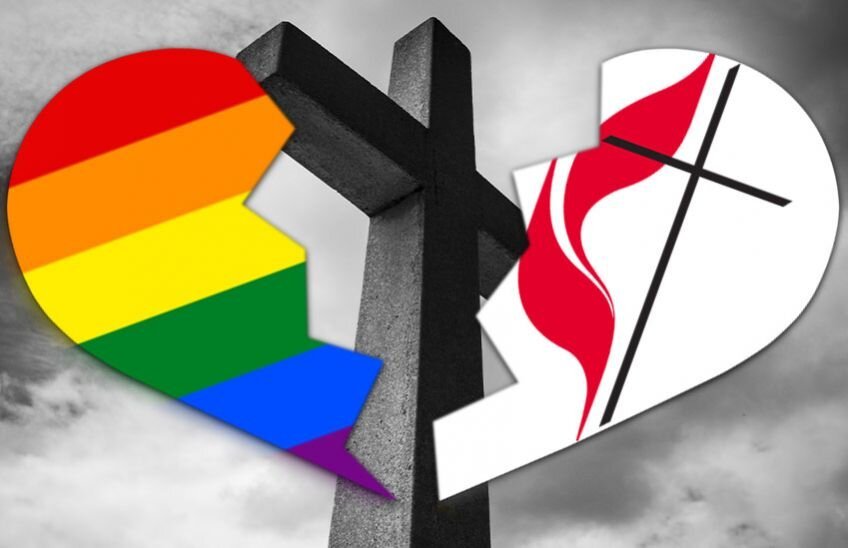
United Methodist conflict hits Bible Belt pews, while Tennessean report omits crucial facts

United Methodist conflict hits Bible Belt pews, while Tennessean report omits crucial facts

If you have followed United Methodist warfare for the past 40 years or so, as I have, you know that this is a local, regional, national and global story that is only getting more complex now that it has reached pews in local churches.

For years, the key battles were between activists in the global UMC majority (primarily growing churches in Africa and Asia) and the North American UMC establishment (rooted in agencies, seminaries and shrinking blue-zip-code flocks).

At the moment, the fiercest battles are in parts of the Midwest and the Bible Belt where doctrinally conservative churches (usually rural and suburban) will square off with establishment leaders based in big-city-friendly regional conferences. You can see this drama in a recent Tennessean story: “As United Methodists in Tennessee navigate schism, 60 churches leave denomination.” Here’s the overture:

As 60 churches in West and Middle Tennessee leave the United Methodist Church, churches in East Tennessee are so far sticking around but passionately debating denomination policies.

The departures and disagreements were features of recent annual meetings for Tennessee’s two UMC conferences, illustrating the regional variation of the ongoing schism in the UMC.

In May, the split within the UMC solidified when a new "traditionalist" denomination splintered from the UMC for churches with more conservative theological and cultural views, including on sexuality and gender.

When the new Global Methodist Church launched, the pace of churches leaving the UMC was expected to intensify.

Yes, there is that problematic word once again — “schism.” In this recent post — “In terms of church history, should the United Methodist break-up be called a 'schism'?” — I argued, for several reasons, that it’s more accurate to call what is happening a “divorce.”

Without repeating all of that, the crucial point is that group given the “traditionalist” label is, in fact, the majority in the GLOBAL denomination that has, for several decades, won tense votes defending the doctrines in the UMC’s Book of Discipline. The group seeking to change these doctrines is the entrenched North American establishment. According to the Tennessean framing, the majority is creating the “schism,” while the establishment minority represents the doctrinal heart of the denomination.

Instead of a “schism,” many in the denomination — a coalition on the doctrinal left and right —negotiated is a “divorce” plan that could save years of additional pain and millions of dollars in legal fees. That plan is the “Reconciliation and Grace Through Separation” protocol, which remains in limbo after establishment leaders twice delayed the vote, citing COVID-19 fears.

This Tennessean story never mentions this important document.


Please respect our Commenting Policy

Gen Z and trends in religious faith and practice: Looking at 2021 and beyond

Gen Z and trends in religious faith and practice: Looking at 2021 and beyond

It’s been nearly two years since I’ve written a post about the precarious religious position of Generation Z (those born after 1995), and with data from late 2021 available it seems like a prime opportunity to update what we know about their religious inclinations.

Because almost all surveys only contact adult Americans (18+), we can’t get a full picture of the entirety of Gen Z, but just the oldest members of this generation. Thus, here I am analyzing those between the ages of 18 and 25 years old.

Let’s start broadly, comparing the religious composition of different generations beginning with the Silent Generation (who were born between 1925 and 1945).

In this generation, half of all respondents indicated that they were Protestant, while 22% said that they were Catholic. Just 8% of the Silent Generation say that they were atheists or agnostics and nearly the same share describe their religion as “nothing in particular” (10%). In sum, the oldest Americans are 72% Christian and 18% none.

Now, for Generation Z things are much different.

Just 22 % of the youngest adults describe themselves as Protestant — a more than 50% decline from the Silents. Catholics make up 14% of Gen Z, an eight percentage-point dip from the Silent Generation.

Of course, the share of nones is much larger. Seventeen percent of young people describe their religion as atheist or agnostic, and 31% say that they are attached to no religion in particular. Taken together, 36% of Gen Z are Christians, while 48% are nones.

For journalists, there is the news hook: This is the first generation in history in which the nones clearly outnumber the Christians.


Please respect our Commenting Policy

Podcast: What happens at Calvin doesn't stay at Calvin. True, so what now for LGBTQ wars?

Podcast: What happens at Calvin doesn't stay at Calvin. True, so what now for LGBTQ wars?

Back in the spring, we did a GetReligion podcast that was accompanied by a post with this title: “What parents (and journalists) can learn from LGBTQ debates at Calvin.

The Big Idea in that podcast was that Calvin University isn’t just another Christian college — it’s the base camp for a kind of Reformed intellectual A-team that punches way, way, way above its weight in the Council For Christian Colleges and Universities (the global network in which I worked and taught for a quarter of a century or so). Thus, I stated: “What happens at Calvin doesn’t stay at Calvin.”

If you have followed Calvin closely in recent decades, you know that a significant chunk of its faculty believes (this is my summary) that those who truly honor and teach the great Reformed Tradition of Calvinism know that it’s time for new Reformers (that would be them) to reform the out-of-date theological conclusions of their ancestors. You can see similar streams of thought among Methodists, Anglicans, Catholics and even (in a few zip codes) the Eastern Orthodox.

With that in mind, it’s time for this week’s “Crossroads” episode (CLICK HERE to tune that in), which offers an update on Calvin and tensions inside its denomination, care of a Religion News Service story with this headline: “Christian Reformed Church codifies homosexual sex as sin in its declaration of faith.” Actually, if you read carefully, the CRC affirmed 2,000 years of Christian teaching that (a) sex outside of marriage is a sin and (b) Christian marriages unite a man and a women. Here is the overture of that RNS story:

(RNS) — The Christian Reformed Church, a small evangelical denomination of U.S. and Canadian churches, voted … at its annual synod to codify its opposition to homosexual sex by elevating it to the status of confession, or deration of faith.

The 123-53 vote at Calvin University in Grand Rapids, Michigan, caps a process begun in 2016 when a previous synod voted to form a study committee to bring a report on the “biblical theology” of sexuality.

The vote, following a long day of debate, approves a list of what the denomination calls sexual immorality it won’t tolerate, including “adultery, premarital sex, extra-marital sex, polyamory, pornography and homosexual sex.”

“The church must warn its members that those who refuse to repent of these sins — as well as of idolatry, greed, and other such sins — will not inherit the kingdom of God,” the report says. “It must discipline those who refuse to repent of such sins for the sake of their souls.”

Just asking: That “what the denomination calls” language is interesting. Doesn’t that kind of imply that these teachings belong to the CRC alone — as opposed to being doctrines affirmed by the world’s largest Christian bodies, such as the Roman Catholic Church, Eastern Orthodoxy, Third World Anglicans and most evangelical and Pentecostal believers.


Please respect our Commenting Policy

Another SCOTUS win for 'equal access,' whether most journalists realized this or not

Another SCOTUS win for 'equal access,' whether most journalists realized this or not

For a decade or more, U.S. Supreme Court justices have been arguing about the separation of church and state. What we keep seeing is a clash between two different forms of “liberalism,” with that term defined into terms of political science instead of partisan politics.

Some justices defend a concept of church-state separation that leans toward the secularism of French Revolution liberalism. The goal is for zero tax dollars to end up in the checkbooks of citizens who teach or practice traditional forms of religious doctrine (while it’s acceptable to support believers whose approach to controversial issues — think sin and salvation — mirror those of modernity).

Then there are justices who back “equal access” concepts articulated by a broad, left-right coalition that existed in the Bill Clinton era. The big idea: Religious beliefs are not a uniquely dangerous form of speech and action and, thus, should be treated in a manner similar to secular beliefs and actions. If states choose to use tax dollars to support secular beliefs and practices, they should do the same for religious beliefs and practices.

At some point, it would be constructive of journalists spotted these “equal access” concepts and traced them to back to their roots in the Clinton era (and earlier). But maybe I am being overly optimistic.

You can see these tensions, kind of, in the Associated Press coverage of the new SCOTUS decision that addressed a Maine law that provided tax funds for parents who chose secular private schools, but not those who chose religious schools. The headline of the main report stated, “Supreme Court: Religious schools must get Maine tuition aid.”

Chief Justice John Roberts wrote the opinion for the majority in this 6-3 ruling. In this story, “liberal” is used to describe the majority.

“Maine’s ‘nonsectarian’ requirement for its otherwise generally available tuition assistance payments violates the Free Exercise Clause of the First Amendment. Regardless of how the benefit and restriction are described, the program operates to identify and exclude otherwise eligible schools on the basis of their religious exercise,” Roberts wrote.

The court’s three liberal justices dissented. “This Court continues to dismantle the wall of separation between church and state that the Framers fought to build,” Justice Sonia Sotomayor wrote.


Please respect our Commenting Policy