Mainline

Anglicans are wrestling with 'climate change' in their pews: Will they adapt and survive?

Anglicans are wrestling with 'climate change' in their pews: Will they adapt and survive?

Journalist Michael Kinsley famously added a twist to American politics when he redefined a "gaffe" as when "a politician tells the truth -- some obvious truth he isn't supposed to say."

As the Rev. Neil Elliot of the Anglican Church of Canada discovered, this term also applies to religious leaders.

After seeing 2018 General Synod reports, the denomination's research and statistics expert produced an analysis that included this: "Projections from our data indicate that there will be no members, attenders or givers in the Anglican Church of Canada by approximately 2040."

Reactions to his candor varied, to say the least.

"I think of it very much like … people's responses to climate change," said Elliot, updating his earlier remarks in a video posted by Global News in Canada.

Signs of church "climate" change? In the early 1960s, Anglican parishes in Canada had nearly 1.4 million members. But that 2018 report found 357,123 members, with an average Sunday attendance of 97,421. The church had 1,997 new members that year, while holding 9,074 burials or funerals.

Canada's national statistics agency reported that 10.4% of all Canadians were Anglicans in 1996, but that number fell to 3.8% in 2019.

People have one of three reactions when faced with these kinds of numbers. The first "is denial. People are saying, 'We're, we're … It's not happening,' " said Elliot, while counting the options on one hand. "Then there's people who say, 'We can stop it.' And then there's people who say, 'We can adapt.'

"The adapt language is much more rare and I'm only starting to hear it on the media in the last few months. … That's what I'm trying to get us to do within the Anglican church. It's, 'How do we adapt to it?' not, 'How do we stop it?' or … people burying their heads in the sand."

Please respect our Commenting Policy

Ask this: Why did many flocks survive or thrive in pandemic, while others were hit hard?

Ask this: Why did many flocks survive or thrive in pandemic, while others were hit hard?

Does anyone remember typewriters?

Long ago, I took my very first reporting class at Baylor University. The legendary Jprof David McHam ran this lab as a mini-newsroom. McHam would sit in the “slot” of a U-shaped desk, working with students as we turned in our rough drafts.

I heard him say this many times: “The story is all here, but you wrote it in the wrong order,” or words to that effect. McHam would take his copy-desk pica pole (the birthday cake cutter of choice in newsrooms) and rip our typewriter copy into multiple horizontal pieces, before putting them in a new order, secured with a long strip of clear tape. Then he would say: “Go write the story in that order.”

More often than not, the wise Jprof found crucial information and pulled it higher in the story — if not into the lede itself. In many cases, this was information that created a tension with a simple version of the “news” in the lede. In other words, he was pushing us to acknowledge that many stories were more complex than we wanted to think they were.

With that in mind, let’s look at an important COVID-tide story from the Associated Press: “At many churches, pandemic hits collection plates, budgets.”

Note the word “many” in that headline. I think many readers would assume that the coronavirus pandemic has caused disasters in pews and pulpits and that is that. The evidence, in this story, is more complex than that — especially with a little bit of cutting and pasting. Here is the overture:

Biltmore United Methodist Church of Asheville, North Carolina, is for sale.

Already financially strapped because of shrinking membership and a struggling preschool, the congregation was dealt a crushing blow by the coronavirus. Attendance plummeted, with many staying home or switching to other churches that stayed open the whole time. Gone, too, is the revenue the church formerly got from renting its space for events and meetings.


Please respect our Commenting Policy

Is America really threatened by civil war? What is religion's role in these tensions?

Is America really threatened by civil war? What is religion's role in these tensions?

American Civil War talk is all the rage this New Year.

No, not that war, the one that cost 620,000 lives and was evoked by President Biden to castigate Senate Democrats and Republicans who are blocking passage of new election-ballot rules. Rather, The Guy refers to the drumbeat of warnings that the disunited United States may in the near future face an internal legal and economic cold war or some kind of hot war.

National Public Radio's Ron Elving reports that "not long ago the idea of another American Civil War seemed outlandish. These days, the notion has not only gone mainstream, it seems to suddenly be everywhere." He summarized anxiety-producing polls that show a polarized nation, and noted that 434,000,000 firearms are in civilian hands.

Then there's New Yorker Editor David Remnick's article "Is a Civil War Ahead?" New York Times columnist Michelle Goldberg likewise wonders, "Are We Really Facing a Second Civil War?" A Times op-ed by former National Security Council staffers Jonathan Stevenson and Steven Simon offers "the worst case scenario" in which "the United States as we know it could come apart at the seams" with "insurrection, secession, insurgency and civil war."

New January books include "The Next Civil War: Dispatches From the American Future" by novelist Stephen Marche, who sees virtually inevitable doom, and the slightly more upbeat "How Civil Wars Start and How to Stop Them" by Barbara F. Walter of the University of California San Diego. (Is it mere coincidence that The Atlantic's London writer Tom McTague is just out with "How Britain Falls Apart"?)

One typical forecaster is all the more interesting because he's Canadian. Thomas Homer-Dixon of Royal Roads University issued a New Year's Eve alarm in the influential Globe and Mail. He believes that as soon as 2025 "American democracy could collapse, causing extreme domestic political instability, including widespread civil violence. By 2030, if not sooner, the country could be governed by a right-wing dictatorship."

Outlandish?


Please respect our Commenting Policy

Variations on old questions: What do U.S. churches believe on transgender issues?

Variations on old questions: What do U.S. churches believe on transgender issues?

THE QUESTION:

What do U.S. churches believe on the transgender issue?

THE RELIGION GUY'S ANSWER:

As with American society at large, churches' consideration of the sensitive transgender issue emerged only recently and rather suddenly, compared with their decades-long-debate over whether to leave behind the Christian tradition against sexual activity in gay and lesbian relationships. The religious implications go well beyond political agitation over "bathroom bills," athletic competition or women's shelters.

Transgenderism is part of a broader gender-fluidity movement. A recent survey by the interfaith Religion News Service asked readers to identify themselves as either female, male, transgender, trans woman or MTF, trans man or FTM, intersex, questioning, non-binary, genderqueer, gender fluid, agender or "other."

Among theologically flexible "Mainline" Protestants, a key breakthrough was the Evangelical Lutheran Church in America's September installation of Megan Rohrer of California, its first transgender-identified bishop. Rohrer was barred from the clergy until a 2009 policy change, so was originally ordained by the independent Extraordinary Lutheran Ministries, which works for full LGBT inclusion. (Oddly, that organization suspended Rohrer from membership in December over alleged and unspecified "racist words and actions.")

The United Methodist Church is expected to split this year over the older same-sex disagreement, exactly 50 years after the first floor debate at a governing General Conference. In October, religious media reported the gender transition of the formerly "cisgender" Methodist pastor married to Peggy Johnson, the just-retired bishop for eastern Pennsylvania, Delaware and eastern Maryland. But last month Indiana Methodists removed Pastor Craig Duke from his congregation over drag queen shows and drag education to express solidarity with his daughter, who identifies as pansexual.


Please respect our Commenting Policy

Two think pieces on changes in American religious life, with a few political twists

Two think pieces on changes in American religious life, with a few political twists

It’s time for another “think piece” weekend double-shot.

In other words, I want to point readers toward two different online features that, at first, may not seem to be related. However, when you look closer you can see the DNA that connects them.

The first is a blog post by my friend Rod “Live Not By Lies” Dreher, but I want readers to consider his post as a mere frame work around a blast of data from the Pew Research Center team. The headline on Dreher’s post states, once again, an old trend (think “Sheilaism”), but one that is being more — not less — important: “Christianity Declines — But Not ‘Spirituality’.”

Dreher points to this quotation from a recent Pew feature, which digs deeper into the center’s mine of religiously unaffiliated research:

The secularizing shifts evident in American society so far in the 21st century show no signs of slowing. The latest Pew Research Center survey of the religious composition of the United States finds the religiously unaffiliated share of the public is 6 percentage points higher than it was five years ago and 10 points higher than a decade ago.

Christians continue to make up a majority of the U.S. populace, but their share of the adult population is 12 points lower in 2021 than it was in 2011. In addition, the share of U.S. adults who say they pray on a daily basis has been trending downward, as has the share who say religion is “very important” in their lives.

Currently, about three-in-ten U.S. adults (29%) are religious “nones” — people who describe themselves as atheists, agnostics or “nothing in particular” when asked about their religious identity. Self-identified Christians of all varieties (including Protestants, Catholics, members of the Church of Jesus Christ of Latter-day Saints, and Orthodox Christians) make up 63% of the adult population. Christians now outnumber religious “nones” by a ratio of a little more than two-to-one. In 2007, when the Center began asking its current question about religious identity, Christians outnumbered “nones” by almost five-to-one (78% vs. 16%).

The recent declines within Christianity are concentrated among Protestants.

A trend this massive will affect almost every area of American life, including politics.


Please respect our Commenting Policy

Old, nagging conflicts will continue to dominate religion news in the coming year

Old, nagging conflicts will continue to dominate religion news in the coming year

Yes, there will be a hotly contested U.S. election in 2022. And pretty much every secular and religious faction is keyed up awaiting the U.S. Supreme Court's decision on whether to revise or revoke its rulings that legalized abortion.

Big decisions like this typically land in late June.

Other lingering disputes on the news coverage agenda include the following.

* As the U.S. Senate struggles with a rewrite of the Catholic President Joe Biden's elephantine social-spending bill, the Catholic bishops' conference vehemently opposes any inclusion of abortion funding.

The bishops, along with Orthodox Judaism's synagogue union, also fear (.pdf here) this law will cripple funding for widespread religious preschools. In yet another church-state debate, Biden hopes to end religious exemption from anti-discrimination rules, which went into effect in January.

* Inside the world of Mainline Protestantism, the unending dispute over the Bible and LGBTQ+ issues may produce the biggest U.S. church split since the Civil War at the United Methodist Church's General Conference. Early in 2022, a commission must decide whether the twice-postponed conference, now scheduled for August 29-September 6 in Minneapolis, can finally occur despite two years of COVID-related snarls and, some say, stalling by the UMC establishment.

* The T in LGBTQ won new Methodist attention as just-retired Pennsylvania Bishop Peggy Johnson and her husband, a Methodist pastor, publicized the latter's gender transition while identifying publicly as a "cisgender" male.

Last March, a sizable body of U.S. conservatives announced plans to leave the denomination and unite with former mission churches overseas — primarily in Africa and Asia — to form the "Global Methodist Church," led temporarily by Virginia Pastor Keith Boyette (540-898-4960).


Please respect our Commenting Policy

New podcast: Top Godbeat story of 2021? Look for Jan. 6 religion hooks (#DUH)

New podcast: Top Godbeat story of 2021? Look for Jan. 6 religion hooks (#DUH)

beat stories.

Trust me, I understand that preparing the ballot for this poll is a thankless job. One of the hardest tasks is finding a way to describe some of the broader trends during any given year. It’s easier — most of the time — to describe singular events.

During this week’s “Crossroads” podcast (CLICK HERE to tune that in), host Todd Wilken asked me to describe some of the patterns that I have seen in the RNA poll results through the decades.

Trend No. 1 is clear: Name the biggest political story of the year and look for a religion angle. After all, politics is the true religion of many folks who run newsrooms.

Trend No. 2 works about 76% of the time: What did the pope do this year, especially if it has any implications for U.S. political fights over moral and social issues (see trend No. 1).

Trend No. 3 comes and goes: What did liberal leaders of the Seven Sisters of Mainline Protestantism proclaim about sex and did it cause new revolts that might split their churches? Every now and then, the Southern Baptists slip in with battles over sex, race or politics (newsworthy topics, in other words).

In light of these trends, it was easy to predict that the RNA poll’s top story for 2021 would be:

Religion features prominently during the Jan. 6 assault on the U.S. Capitol by pro-Trump insurrectionists. Some voice Christian prayers, while others display Christian or pagan symbols and slogans inside and outside the Capitol.

That’s actually a careful wording and, in particular, note that the RNA leaders refrained (this must have been hard) from including a reference to “white evangelicals.”

The key, in this description, is the tension between “prominently” and “some,” as in the folks saying “Christian” prayers. It’s safe to assume that this is the rebel that they had in mind (as quoted in one of my “On Religion” columns):


Please respect our Commenting Policy

United Methodist pastor who joined drag queen show? Now it's more than an RNS story

United Methodist pastor who joined drag queen show? Now it's more than an RNS story

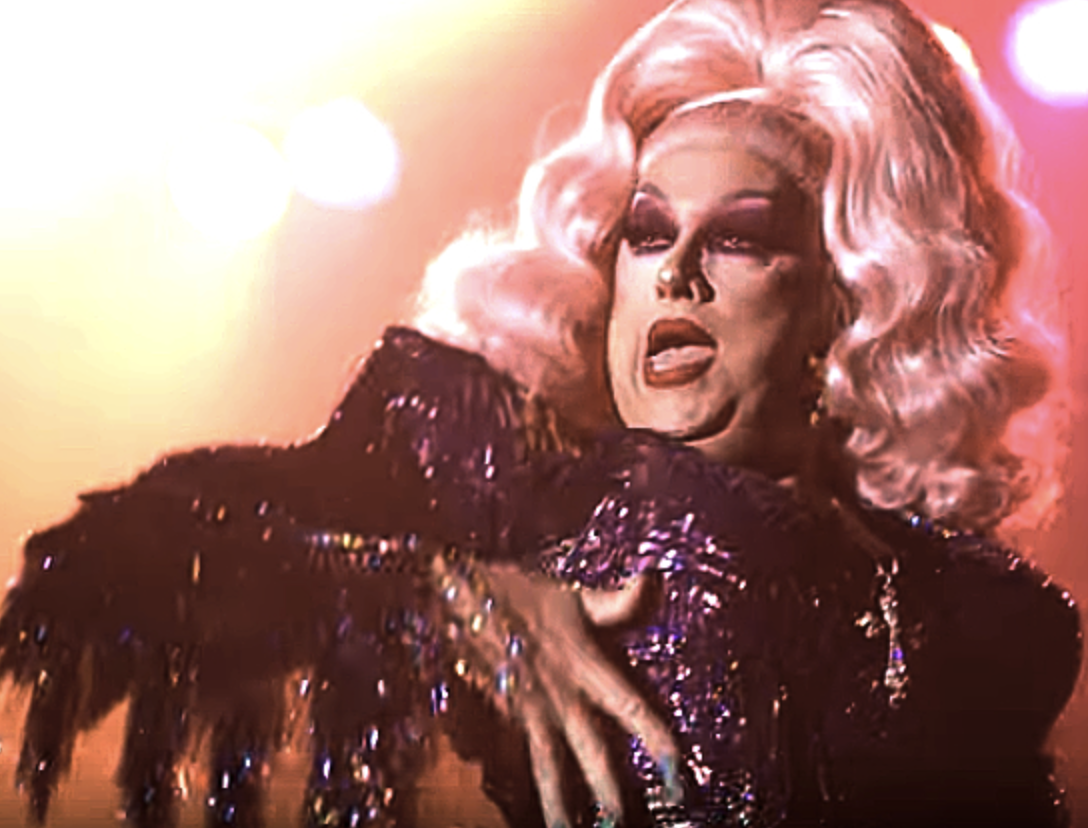
Remember the United Methodist pastor who decided to strut his stuff as a drag queen on HBO?

Well, that story is now bigger than the original Religion News Service coverage, which I discussed in this GetReligion post: “United Methodist pastor dives into HBO drag-queen culture, drawing joyful RNS applause.

That pastor is out of a job, a plot twist that drew coverage from both the Associated Press and USA Today. We will come back to those stories later in this post — especially a jaw-dropping display of slanted language in the AP report, of all places.

But this has been an archetypal RNS mainline Protestant story from the get-go and the wire service’s update contains, well, about half of the essential information that readers needed to know.

What’s missing? The same thing as the first time around — any attempt to accurately reflect the views of conservative United Methodists in the pews of this pastor’s church. It was crucial, of course, to interview United Methodists and LGBTQ activists who backed this progressive pastor. At the same time, it would have helped to interview people on the other side of the debate. Maybe?

Here is the overture of the new RNS report: “Pastor who appeared in drag on HBO’s ‘We’re Here’ forced to leave his church.

When Pastor Craig Duke appeared in drag on the HBO reality show “We’re Here,” he knew that some members of his United Methodist congregation would appreciate the episode and that others wouldn’t even watch it.

He also knew some members of his congregation support the full inclusion of LGBTQ Christians in the church and others don’t, and that would make his performance on the show a “challenging experience.”

But he didn’t think it would cost him his job.


Please respect our Commenting Policy