Mainline

Tops in religion for 2021: Gallup spotlights America's downward Church Lurch

Tops in religion for 2021: Gallup spotlights America's downward Church Lurch

As Religion News Association colleagues vote on the top stories of 2021, here's The Guy's own pick for first place: Gallup spotlights the great downward Church Lurch in 21st Century America.

The polling organization, which is unmatched for data on trends that span decades — including a steady barrage of questions about religion — marked the Easter and Passover seasons by announcing that only a minority of Americans report membership in a religious congregation any longer.

Yes, yet again we confront those religiously unaffiliated "nones,” “nothing in particulars” and the long-emerging flock often called “spiritual, but not religious.”

The much-buzzed-about poll report, full details here, said membership rates held remarkably steady from the 73% in Depression-era 1937, when the question was first asked, through 70% in 2000. But now, self-reported affiliation has plummeted to 47% -- and a mere 36% for younger Americans in the Millennial generation. Equally significant, a three-year aggregate of 6,000 respondents in 2018-2020 also gave membership minority status at 49%.

This slump drew attention from media that rarely mention much less cover religion substantively. Assessing the many reactions, GetReligion boss Mattingly's post back in April — “Thinking with two key Southern Baptists: Concerning those scary Gallup Poll numbers” — astutely focused on two pieces by Baylor historian Thomas Kidd and the Rev. Russell Moore, who was soon to quit as president of the Southern Baptist Convention's Ethics and Religious Liberty Commission. They analyzed Protestantism with little specific to Catholicism or other faiths. Links to both articles are included in Mattingly's post.

Note that responses in 2000 would not capture the potential negative impact of COVID-19 — which was hurting attendance and donations — on future membership counts.

So, what's happening?

Please respect our Commenting Policy

In search of the elusive liberal evangelical: Is this tiny flock worthy of big news coverage?

In search of the elusive liberal evangelical: Is this tiny flock worthy of big news coverage?

I was listening to a podcast the other day and the host asked a guest a question that I have heard way too many times over the last year — “Why did you decide to focus only on conservative evangelicals?”

I fully admit that a lot of my work does focus on conservative evangelicals. Why? Because, in the current political landscape, there’s not a more important force in American politics. The nones are too disorganized at this juncture to have a systemic impact. Catholics and Mainline Protestants are too politically divided to be considered anything close to a coherent voting bloc.

The fact is simply this: 13% of all American adults in 2020 were white evangelical Republicans.

No other group comes even close to that size. Nine percent of Americans are nothing in particular Democrats — but that’s not an easy group to wrap your arms around. There are twice as many white evangelical Republicans as there are white Catholic Republicans. For every Democratic atheist, there are 2.5 white evangelical Republicans.

But, I wanted to devote some time trying to look at the other side of the evangelical coin: those who describe themselves as politically liberal. Because the Cooperative Election Study is so large, even if that group is a relatively small percentage of the population, it’s still possible to do in-depth statistical analysis of liberal evangelicals.

Of all self-identified evangelicals, 58% describe themselves as conservative, 29% indicate they are moderate, while 13% say they are liberal. If that is restricted to just white evangelicals: 8% are liberal, 24% are moderate, and 68% say they are conservative.

That’s obviously much different than the general population. In 2020, 30% of all Americans said they were liberal, along with 28% of just white respondents.


Please respect our Commenting Policy

New podcast: Are some SCOTUS justices asking, 'Are all religious schools equal in Maine?'

New podcast: Are some SCOTUS justices asking, 'Are all religious schools equal in Maine?'

Let’s say that, in the state of Maine, there are two very different “Lutheran” schools. You could, in this hypothetical case, also say “Episcopal,” or “Presbyterian” or “Congregational.”

Leaders at one of these schools insist that their school is in “the Lutheran tradition,” and it may retain ties to a doctrinally liberal flock. The school has a chapel, but attendance is optional since its students (it may be an elite boarding school) come from all kinds of religious faiths or have no stated faith at all. Classes on hot-button moral issues — sexuality, for example — stress this church’s progressive doctrines.

Academic life is very different at the other Lutheran school, which draws most of its students and financial support from a conservative Lutheran body. Chapel attendance is required and classes linked to moral theology are quite countercultural — defending 2,000 years of Christian tradition.

The question, in the latest church-state case at the U.S. Supreme Court, is whether the state of Maine has the power to say that the first school is eligible for tuition support — using tax dollars — because it’s policies do not clash with those in public schools. Students at the conservative school are not eligible, because its beliefs are “sectarian.”

This is tricky territory and church-state experts on the Religious Right would certainly disagree with experts from the Religious Left and secular think tanks. The question discussed in this week’s “Crossroads” podcast (click here to tune that in) is whether journalists covering this case allowed readers a chance to understand the views of activists on both sides.

Let me state, right up front, that my dueling Lutherans illustration is based on “equal access” church-state principles that emerged from a left-right coalition during the Bill Clinton administration. The big idea: If state officials create policies that affect nonprofits, they cannot back secular groups while discriminating against religious organizations. States could, however, deny aid to both. In other words, religious faith is not a uniquely dangerous form of speech or activity.

Let me state this another way. Under the separation of church and state, officials are not supposed to use tax dollars to back state-approved forms of religion. Ah! But what if some religious groups have doctrines that are consistent with state policies, while others clash with the doctrines of the state?


Please respect our Commenting Policy

Emerging split inside old mainline: Is U.S. Christianity becoming two different religions?

Emerging split inside old mainline: Is U.S. Christianity becoming two different religions?

THE QUESTION:

Is Christianity in the United States becoming two different religions?

THE RELIGION GUY'S ANSWER:

If the question above seems off the wall, at least look why it has arisen.

Two years ago, The Guy wrote that he was quite astonished by some survey research reported in "The Twentysomething Soul" (Oxford University Press) by Tim Clydesdale of the College of New Jersey and Kathleen Garces-Foley of Marymount University.

Young Americans age 30 and under, quizzed about religion, were asked how they think of God.

One option was "a personal being, involved in the lives of people today." It doesn't get any simpler or more basic than that, whether you're Jewish, Christian or Muslim. Other choices were some impersonal "cosmic life force," or a deistic creator who is "not involved in the world now," or that God does not exist.

Not surprisingly, the evangelical Protestants were virtually unanimous in embracing the first definition. But remarkably, only half of those in the predominantly white, theologically pluralistic "mainline" Protestant church bodies made that choice, while 40 percent favored the vague "life force." Young adult Catholics fell in between the two Protestant groups. (In this random sample, 30 percent were evangelicals, 18 percent Catholic, 14 percent "mainline" Protestant, and 29 percent with no religious affiliation.)

The Guy therefore posed the question whether Protestants' long-running two-party rivalry "could be evolving toward a future with two starkly different belief systems."

Now a more radical version of that scenario is explored at book length in "One Faith No Longer" (New York University Press) by Baylor University sociologist George Yancey and Ashlee Quosigk, a visiting scholar of religion at the University of Georgia. More info here.


Please respect our Commenting Policy

Modernized New Revised Standard Bible is surefire news, landing amid today's language wars

Modernized New Revised Standard Bible is surefire news, landing amid today's language wars

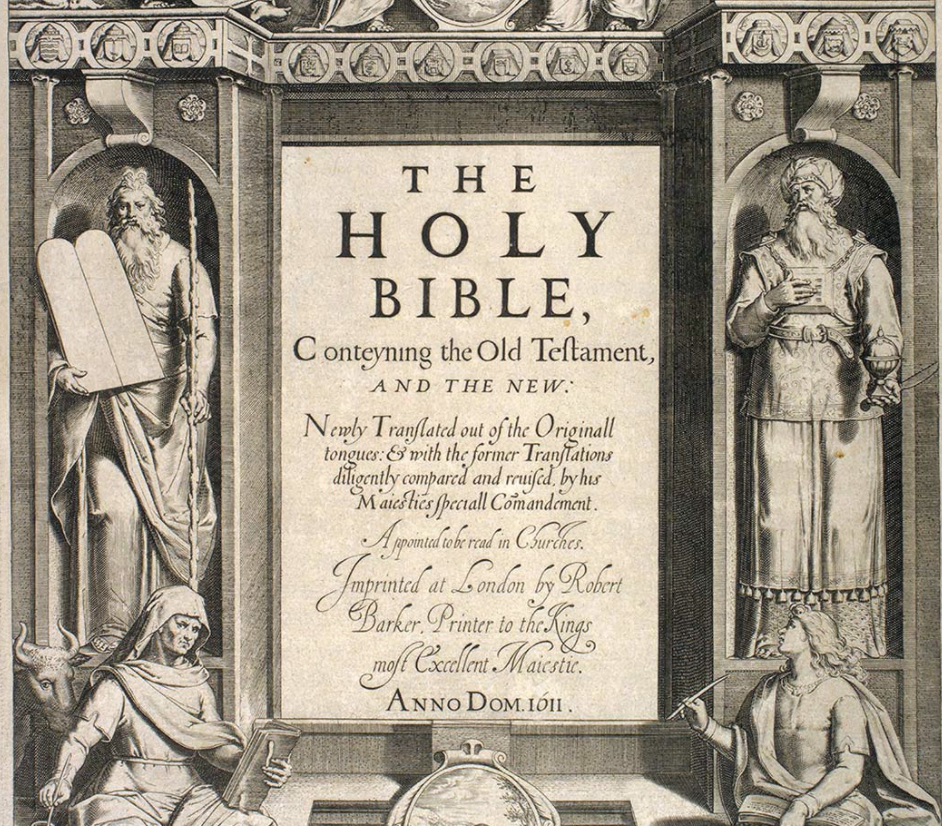
As religion writers (and historians) know, the 1611 King James Version of the Bible begat the 1952 Revised Standard Version, which begat the 1989 New Revised Standard Version which now begets the new "Updated Edition" of the NRSV.

It’s the "NRSVue" — a surefire news topic. This Bible will be available in ebook format by Christmas and in print around next May 1.

Media might issue advance articles about this production or wait for reactions to the complete text from reviewers or local clergy and parishioners. A 36-page media memo provides an advance look, accessible here. For further queries contact Friendship Press at info@friendshippress.org or CEO Joseph Crockett at joseph@frienshippress.org.

The NRSV copyright is held by the National Council of Churches, a cooperative body of the “Mainline” Protestant and Orthodox denominations. It assigned this rewrite to the Society of Biblical Literature, a professional guild of university and seminary scholars, whose 63-member team made approximately 12,000 "substantive" changes and thousands more that are trivial. The team consulted African-American church leaders, a group said to be "historically excluded" from prior Bible translation projects.

The result "improves" upon the original NRSV policy "to eliminate masculine-oriented language when it can be done without altering passages that reflect the historical situation of ancient patriarchal culture." The church council says both of its versions seek to be "as free as possible from the gender bias inherent in the English language."

A typical example is saying "brothers and sisters" when the original Greek literally said only "brothers" but was referring generally to people of both genders. The update omits footnotes that specify what the Greek said. Plural pronouns will abound, which depending on the translation can occasionally make the antecedent unclear or miss the direct force of a singular pronoun. In the rewrite, the Bethlehem "wise men" are now "magi."

Both the 1989 and 2021 renditions leave language about God undisturbed. "He" is still permitted and He remains the "Lord" and "Father."


Please respect our Commenting Policy

New podcast: Left, right, middle? Two giant U.S. seminaries are pro-vaccine, but anti-mandate

New podcast: Left, right, middle? Two giant U.S. seminaries are pro-vaccine, but anti-mandate

Let’s do a COVID-19 religion-news flashback, looking at a storyline or two near the start of the pandemic.

I’m doing this in order to analyze how the press is framing a major new development — the federal-court lawsuit filed by Southern Baptist Theological Seminary and Asbury Seminary challenging the Biden administration’s vaccine mandate. These are, by the way, two of the largest seminaries in the United States and, while other seminaries are collapsing, these two are growing.

Coverage of this lawsuit was the hook for this week’s “Crossroads” podcast. (CLICK HERE to tune that in.)

So now the flashback. Remember when I was writing — at GetReligion and in my national “On Religion” column for the Universal syndicate — about the vast majority of American religious groups who were caught in the middle of the “shelter in place” and lockdown wars linked to COVID-19?

Remember the Catholic priests in Texas who were trying to hear confessions out in the open air (in a big field and parking lot), while following guidelines for social distancing? Or how about the churches that were under attack for holding services in drive-in movie theaters, with the faithful in cars, while it was OK for folks to be in parking-lot scrums at liquor stores and big box super-marts? Then you had the whole casinos are “essential services” while religious congregations were not “essential.”

I argued, at that time, that this was way more complicated than religious people who cooperated with the government and those who didn’t. This was not a simple left vs. right, good vs. bad situation. In fact, there were at least FIVE different groups to cover in these newsy debates:

They are (1) the 99% of religious leaders who cooperated and took worship online, (2) some religious leaders who (think drive-in worship or drive-thru confessions) who tried to create activities that followed social-distancing standards, (3) a few preachers who rebelled, period, (4) lots of government leaders who established logical laws and tried to be consistent with sacred and secular activities and (5) some politicians who seemed to think drive-in religious events were more dangerous than their secular counterparts.

That’s complicated stuff.

The problem is that, in the world of American politics, things have to be crushed down into left and right templates or even, there for a few years, into pro-Donald Trump and the anti-Donald Trump. I’m sure we’re past that last part. Right?


Please respect our Commenting Policy

Journalism tips on: (1) Evangelical crack-ups, (2) campus faith fights, (3) COVID exemptions

Journalism tips on: (1) Evangelical crack-ups, (2) campus faith fights, (3) COVID exemptions

A potential U.S. evangelical crack-up continues as a lively story topic since Guy Memos here since these two Memos here at GetReligion, “Are we finally witnessing the long-anticipated (by journalists) evangelical crack-up?” and also “Concerning evangelical elites, Donald Trump and the press: The great crack-up continues.” In USA Today, Daniel Darling, for one, sought hope despite his recent victimhood in these tensions.

Media professionals considering work on this theme should note a lament at book length coming next week: "Struggling with Evangelicalism: Why I Want to Leave and What It Takes to Stay" by Dan Stringer. The author is a lifelong evangelical, Wheaton College (Illinois) and Fuller Theological Seminary alum, leader of InterVarsity's graduate student and faculty ministries in Hawaii and Evangelical Covenant Church minister. This book comes from InterVarsity Press.

The Guy has yet to read this book, but it looks to be a must-read for reporters covering American evangelicals in the Bible-Belt and elsewhere. Stringer ponders how evangelicalism can move beyond too-familiar sexual scandals, racial and gender conflicts, and Trump Era political rancor -- what a blurb by retired Fuller President Richard Mouw calls "blind spots, toxic brokenness and complicity with injustice."

Regarding the Donald Trump factor, the evangelical elite was largely silent, with one faction openly opposed, while certain outspoken evangelicals backed the problematic populist.

As The Guy has observed, recent politics exposed the already existing gap between institutional officials and the Trumpified evangelical rank and file. Problem is, to thrive any religious or cultural movement needs intelligent leaders united with a substantial grass-roots constituency to build long-term strategy.

Evangelicalism has always combined basic unity in belief with a wide variety of differences. Think denominational vs. independent, Arminian vs. Calvinist, gender "complementarian" vs. "egalitarian," Pentecostal-Charismatic vs. others and a racial divide so wide that many Black evangelicals shun the e-word alltogether.

In an October 21 Patheos article, historian Daniel K. Williams at the University of West Georgia added North vs. South to those internal divisions. He recounts that the Southern Baptist Convention remained mostly apart when northerners began to supplant "fundamentalism" with "evangelicalism" in the World War II era. Eventually, he says, this movement formed a North-South alliance but it's now eroding.


Please respect our Commenting Policy

Is this statement accurate? All true evangelicals wanted to vote for Donald Trump -- period

Is this statement accurate? All true evangelicals wanted to vote for Donald Trump -- period

As a rule, your GetReligionistas strive to avoid writing about analysis features that are published in magazines such as The Atlantic.

However, when I keep hearing people asking questions about one of these “think pieces,” it’s hard not to want to add a comment or two to the discussion.

So first, let’s start with something that GetReligion team members have been saying for nearly two decades, as a reminder to readers who have never worked in mainstream newsrooms: Reporters/writers rarely write the headlines that dominate the layouts at the top of their pieces.

Case in point: The double-decker headline on that buzz-worthy Peter Wehner commentary piece at The Atlantic:

The Evangelical Church is Breaking Apart

Christians must reclaim Jesus from his church.

Yes, I know. There is no such thing as “the evangelical church.”

Do basic facts matter? There are, of course, denominations that are predominantly evangelical. Some of them disagree on all kinds of things — such as baptism or the ordination of women. There are Pentecostal denominations that share many, but not all, doctrines with flocks that are connected with the evangelical movement. There are lots of evangelicals who still sit — though many are quite unhappy — in liberal Protestant pews.

We won’t even talk about that second line: “Christians must reclaim Jesus from his church.”

You can get to the heart of this confusion by — if you are reading the Wehner piece online — glancing at the tagline that appears in the subject line in your computer browser. That semi-headline reads: “Trump is Tearing Apart the Evangelical Church.”

Ah, that’s the heart of this matter.


Please respect our Commenting Policy

Faith and politics: It's hard to tell true believers from those who are simply 'self-identified'

Faith and politics: It's hard to tell true believers from those who are simply 'self-identified'

When political scientists and pollsters discuss faith and politics, one of their biggest challenges is separating the true believers from those who merely say they are believers.

It's kind of like distinguishing between "football fans" and "FOOTBALL FANS," said John C. Green of the University of Akron, who for decades has been a trailblazer in studies of politics, pulpits and pews.

"Lots of people say they're football fans and they like to watch games on television," said Green. "Then there are the people who buy jerseys and get decked out in their team colors. They never miss a home game and everything that goes with that. You can just look at them and know that they're really FOOTBALL FANS."

In terms of faith and politics, oceans of ink have been spilled describing the beliefs and goals of evangelical Protestants, Catholics and members of other religious groups, he said. The problem is that there are "self-identified" evangelicals and then there are truly faithful evangelical Christians. There are plenty of people who tell pollsters they attend worship services every week and that their faith shapes their lives. Then there are those who truly walk that talk.

"All religious communities have lots of highly committed people, and all religious communities have their share of marginal members whose faith isn't all that active," said Green. For pollsters, the challenge is asking questions that help draw lines between "self-identified believers and those who are truly active" in their faith groups, he added.

The American Bible Society, in its "State of the Bible" surveys, has tried to document ways in which beliefs about the Bible, and personal interactions with scripture, separate "practicing Christians" from "self-identified Christians." This matters, in part, because religious groups containing a high percentage of committed believers usually maintain their members, or even make converts, while other groups struggle to survive.

The most recent ABS survey (.pdf here) was completed last January, with data collected from 3,354 online interviews with adults in all 50 states and the District of Columbia. The American Bible Society began studying these kinds of issues as early as 1812.

In this survey, a "practicing Christians" was defined as someone who "identifies as a Christian, attends a religious service at least once a month" and states that "faith is very important" in his or her life.


Please respect our Commenting Policy