LGBTQ

Eastern University changes its doctrines on marriage, which is a totally valid news story

Eastern University changes its doctrines on marriage, which is a totally valid news story

OK, I know that it has only been two months since I wrote about this topic and that recent post’s headline even included a nod to the fact that this is a topic I have addressed before.

Sue me. That headline stated: “Reminder to journalists (again): Private schools – left, right – can defend their core doctrines.”

You see, as a former professor on several Christian campuses, and the graduate of the Baylor University Church-State Studies graduate program (which, alas, closed a decade ago), this is the kind of subject that matters to me. And since this is Thanksgiving, I really need to find a way to frame this quick post as a Thanksgiving offering.

So here goes. I am thankful for the First Amendment and I am thankful that, at this point, it still protects the believers on both the left and the right, in terms of the freedom to exercise their beliefs in the real world.

This First Amendment reminder was inspired by a recent Religion News Service story with this headline: “Eastern University on hold from CCCU after dropping ban on LGBTQ faculty.” I should state, right up front, that I am a former founder and director of the Washington Journalism Center program at the Council for Christian Colleges and Universities and, what do you know, I once interviewed for a proposed faculty slot at Eastern, where it was clear that I was not a good fit, doctrinally speaking.

There is nothing all that unusual about this RNS story. As one would expect, there is zero attempt in this “news” report — as opposed to an analysis piece — to represent small-o orthodox voices in this debate about life on a campus that has, as the story notes, been headed to the doctrinal left for several decades. This niche-news, advocacy journalism approach has, alas, become the norm on this topic. Here is the overture:

Eastern University, a Christian school affiliated with the American Baptist Churches USA, has amended its policies to allow for the hiring of LGBTQ faculty and to add sexual orientation to its non-discrimination statement.

As a result, its membership with the Council for Christian Colleges and Universities has been put on hold during the 2022-23 academic year, and the school is no longer listed online among the 150 U.S. and Canadian schools that belong to the Christian higher education association.

Please respect our Commenting Policy

AP soft-pedals big story: USA progressives winning (sort of) the United Methodist war

AP soft-pedals big story: USA progressives winning (sort of) the United Methodist war

If you have followed the half century of United Methodist Church warfare over the Bible, marriage and sex — I started covering this story in the early 1980s — you know the debates have consistently contained activists in three different camps. Here’s that line-up, for newcomers:

(1) The doctrinal right fighting for enforcement of the doctrines and rules in the church’s Book of Discipline.

(2) The North American establishment that has insisted that it could find a way to tweak the status quo — doctrine would change from zip code to zip code — so that everyone could stay in the same big financial tent, including LGBTQ activists in UMC seminaries and agencies.

(3) The candid doctrinal left — think West and Northeast — that openly proclaims the need to change 2,000 years of Christian tradition to fit the doctrines of the Sexual Revolution.

These divisions only became more complex as the United Methodists evolved into a truly global denomination that included booming churches in Africa and Asia — a form of diversity that made the denomination’s shrinking North American establishment more and more nervous.

In global meetings, a small-o orthodox coalition — most of the Global South plus a conservative U.S. minority — kept winning vote after General Conference vote to defend current doctrines. However, COVID-19 prevented crucial global meetings, allowing the U.S. establishment (Camp 2) several years to steer the ship.

This brings me to a new Associated Press report that does a great job, if that was the goal, of soft-pedaling recent victories by the establishment and candid left. The headline: “LGBTQ-friendly votes signal progressive shift for Methodists.” The overture:

The United Methodist Church moved toward becoming more progressive and LGBTQ-affirming during U.S. regional meetings this month that included the election of its second openly gay bishop. Conservatives say the developments will only accelerate their exit from one of the nation’s largest Protestant denominations.

Each of the UMC’s five U.S. jurisdictions — meeting separately in early November — approved similarly worded measures aspiring to a future of church where “LGBTQIA+ people will be protected, affirmed, and empowered.”

How would these aspirations come to pass?


Please respect our Commenting Policy

Latter-day Saints back proposed same-sex marriage law, but other flocks remain concerned

Latter-day Saints back proposed same-sex marriage law, but other flocks remain concerned

More than a decade ago, I wrote a piece for Christianity Today headlined, “Should the marriage battleground shift to religious freedom?”

In that article, University of Virginia law professor Douglas Laycock made the case that Christian conservatives who opposed same-sex marriage should shift their focus to fighting for their First Amendment religious-liberty rights.

I was reminded of that discussion when The Church of Jesus Christ of Latter-day Saints — in what the Salt Lake Tribune characterized as “a stunning move” — “gave its support to a proposed federal law that would codify marriages between same-sex couples.”

The story by the Tribune’s Tamarra Kemsley and Peggy Fletcher Stack notes:

The Utah-based faith’s doctrine “related to marriage between a man and a woman is well known and will remain unchanged,” the church stated in a news release. “We are grateful for the continuing efforts of those who work to ensure the Respect for Marriage Act includes appropriate religious freedom protections while respecting the law and preserving the rights of our LGBTQ brothers and sisters.”

At Religion News Service, Bob Smietana traces the Latter-day Saints’ surprise backing of the federal law to the fallout from the church’s 2008 support for Proposition 8. That California ballot measure was aimed at banning same-sex marriage.

Smietana writes:

Voters narrowly approved Proposition 8, but their victory proved short-lived. A California court ruled that any ban on same-sex marriage was unconstitutional.

The church’s public image took a beating, said Benjamin Park, a scholar of Mormonism at Sam Houston State University. “Church leaders recognized the writing on the wall,” said Park.

The defeat led LDS leaders to back the Respect for Marriage Act, a bill that would protect same-sex marriage that Congress is now expected to pass this week with bipartisan support. In Wednesday’s 62-37 vote in the U.S. Senate to end debate on the bill and advance it, Republican Sen. Mitt Romney of Utah was among the yeas.


Please respect our Commenting Policy

Podcast: New York Times dwells (#surprise) on right-wing politics in the Latin Mass wars

Podcast: New York Times dwells (#surprise) on right-wing politics in the Latin Mass wars

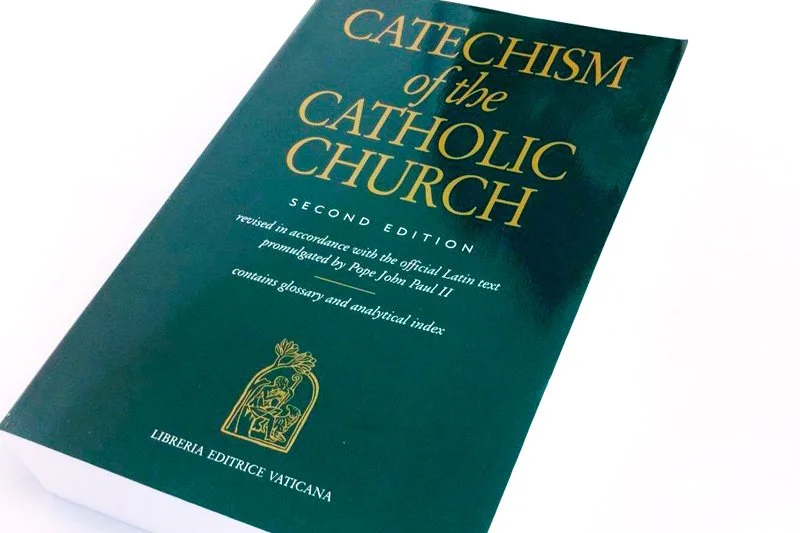
What do you call a Roman Catholic who believes the church’s teachings on centuries of moral theology, as in doctrines stated in great detail in the church’s official, and easily available, Catechism?

For journalists who do not trust the U.S. Conference of Catholic Bishops at this moment in time, here is the Vatican website copy of the Catechism.

According to the New York Times these pro-Catechism Catholics are part of a “rising right-wing strain within American Christianity as a whole” (I added bold text).

Then again, they might simply be “socially conservative and tradition-minded” folks. Or they may be people who support a “brand of new hard-right rhetoric and community” found in nasty corners of the Internet.

Then (yet) again, they may — this is the important part — be Donald Trump supporters.

But one thing they are not is normal Catholics. People who defend the stated teachings of the church are strange Catholics.

I raise this question because of a fascinating recent Times report that gained traction online for some obvious reasons. This feature was the hook for this week’s “Crossroads” podcast (CLICK HERE to tune that in). Here is the double-decker headline on what was, for me, a interesting but at times bipolar story:

Old Latin Mass Finds New American Audience, Despite Pope’s Disapproval

An ancient form of Catholic worship is drawing in young traditionalists and conservatives. But it signals a divide within the church.

What makes this story so strange?

First of all, it offers some interesting information and images about the waves of people — including many, many large young families — who are embracing the ancient Latin Mass. I would, however, note that just as many or more of these believers are choosing Catholic churches that use the modern Novus Ordo rite, but offer services packed with chants, incense, processions, traditional prayers and, yes, even the Latin form of the Vatican II text. Someone should check and see how many people are requesting Eastern Rite Catholic parishes, as well.

In other words, the current campaign by the Vatican and strategic cardinals (in some blue American zip codes, for example) against the Tridentine Mass and, in some cases, other traditional forms of worship, may be part of a broader story.


Please respect our Commenting Policy

To cover Qatar World Cup, journalists will have to understand both soccer and Islam

To cover Qatar World Cup, journalists will have to understand both soccer and Islam

The World Cup in Qatar kicks off in less than a week. It is likely to be the most controversial soccer tournament in FIFA’s history, something that has dogged the host nation since being awarded the tournament in 2010.

The controversy is largely tied to the Muslim country’s beliefs and mores. It’s about human rights, welcoming LGBTQ fans, drinking alcohol and modest dress. It’s as much a cultural and societal issue as it is a sporting one. It is also, of course, a religion-news story.

The focus of the news coverage so far has been around what could happen on the field as much as off of it.

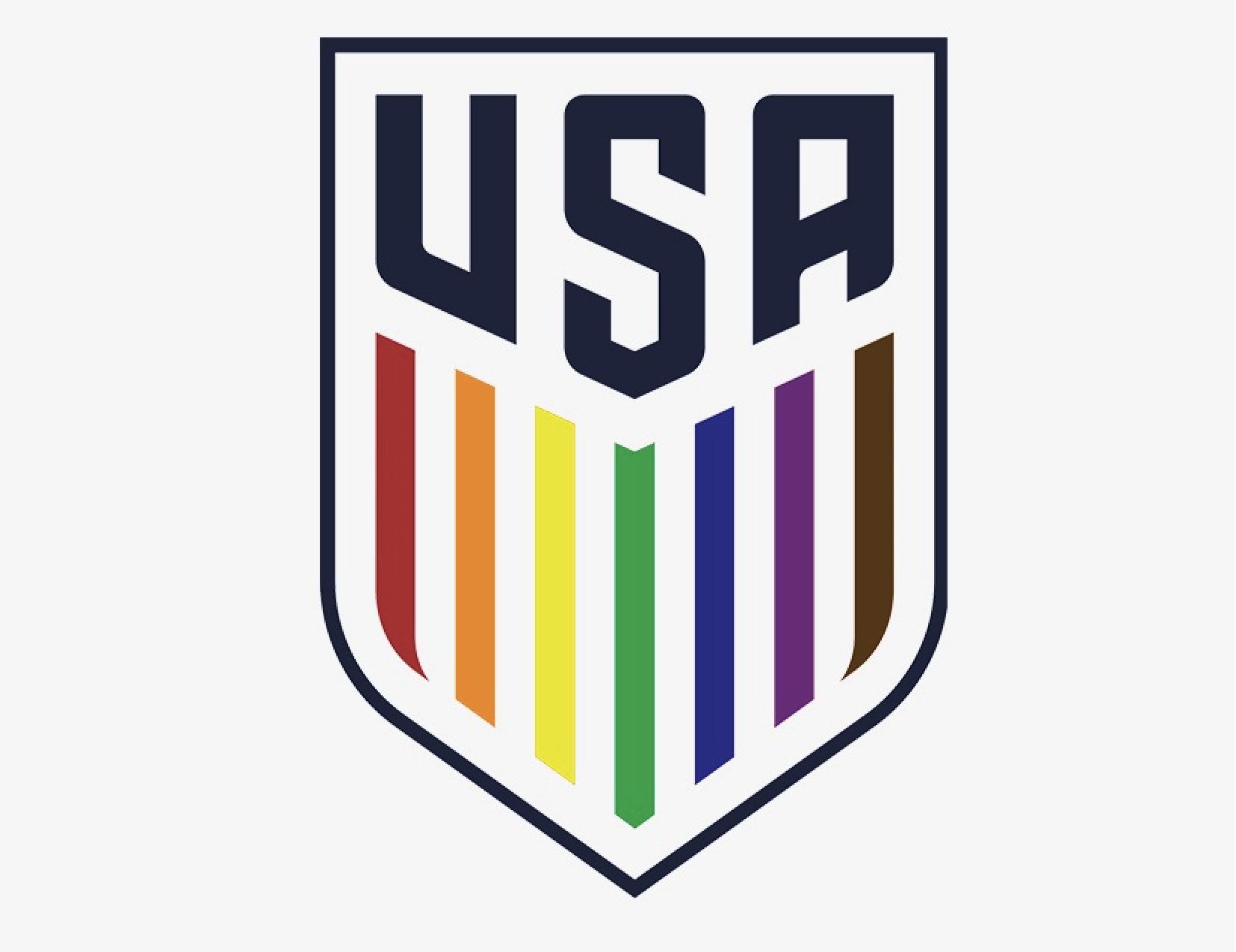
Qatari officials have labeled much of the negative coverage either racist or Islamophobic. Either way, this could be the first global sporting event in history where religion, and understanding it, will be a major part of the overall context of this competition. Even the World Cup’s official mascot is an homage to Islamic garb. And did you notice the Pride logo for the 2022 team USA kit?

I explore many of these themes and issues in my new book on the history of the World Cup. With over a billion followers, Islam is the second-largest religion in the world after Christianity. Muslims are forbidden from drinking alcohol since the Prophet Muhammad, to whom Muslims believe the word of God was revealed in the Quran, spoke against it. This is key for sports editors and journalists to understand when it comes to Qatar 2022 coverage.

For example, Qatari officials have said beer will be sold inside the venues and drinking will be allowed inside designated areas, such as fan zones, hotels and restaurants. I was asked that very question months ago when I was booking my trip to Doha. At the same time, billboards have been put up across the country with quotes from the Prophet Muhammed.

The Associated Press, with bureaus across the globe, put together a great explainer under the headline, “Islam in Qatar explained ahead of FIFA World Cup.” This is a must-read for editors and reporters as well as fans and visitors. Here is how it opens:

Qatar is a Muslim nation, with laws, customs and practices rooted in Islam. The country is neither as liberal as Dubai in the United Arab Emirates nor as conservative as parts of Saudi Arabia. Most of its citizens are Sunni Muslim.


Please respect our Commenting Policy

Revenge-return by Bishop Gene Robinson, seen from two radically different viewpoints

Revenge-return by Bishop Gene Robinson, seen from two radically different viewpoints

It’s been a long time since I stepped into The Falls Church, a historic edifice in the middle of the northern Virginia city of Falls Church, where I lived for 12 years. It’s a spacious, lovely place, with a circular seating arrangement for a large congregation.

Next door is what they call the “historic church,” a much smaller brick building that dates back to 1769. At one time, George Washington was on the vestry. In Beltway culture, this is really important.

It was a major center for the conservative wing of the Diocese of Virginia, the nation’s largest Episcopal diocese back in the first decade of this century,. Then, in December 2006, 11 parishes or missions announced they were leaving for for orthodox theological pastures. The 2003 election of the Rt. Rev. Gene Robinson as the denomination’s first gay bishop was the beginning of the end for these folks, after decades of tensions on other doctrinal issues.

The legal battle over these historic properties lasted for years and the conservatives basically lost everything, including the crown jewel of them all — The Falls Church building. That is the background for Robinson’s recent visit to the church, which is kingdoms apart from what it once was. Whereas it was crowded to the gills on Sundays, the sanctuary is barely one-quarter full and rector (senior pastor) is a gay man, a possibility that would have horrified its former parishioners.

Robinson’s visit was covered by a conservative mainline Protestant website and by a Washington Post reporter. Guess which report had the most information and insights into the status of the current congregation? Juicy Ecumenism posted a piece by Jeffrey Walton, headlined “Gene Robinson Takes Victory Lap at Falls Church Episcopal” — filled with insider knowledge. I’ll begin with Robinson’s reactions.

He also highlighted gratitude for an invitation to speak at a parish that had prominently opposed his election and consecration.

“Words fail me when I try to describe to you what an honor it is to be here,” Robinson exclaimed. “When I got this invitation from [TFCE Rector] Burl [Salmon] I could hardly believe my ears and all day yesterday. When I was here, I just kept pinching myself: ‘you’re actually at the Falls Church in Virginia, oh my God.’”


Please respect our Commenting Policy

Catholic LGBTQ voices rising in volume during Vatican's Synod on Synodality

Catholic LGBTQ voices rising in volume during Vatican's Synod on Synodality

The "Chain of Discipleship" image showed five Catholics celebrating at a church, including a woman in priest's vestments and a person in a rainbow-letters "pride" shirt who is shouting, "We are the young people of the future and the future is now."

This art from the Philadelphia Catholic Higher Education Synod rocked Catholic social media -- especially when it appeared on the Synod of Bishops Facebook page, linked to the ongoing Synod on Synodality that began in 2021.

Catholics at the local, regional and national levels are sending the Vatican input about the church's future. A North Carolina parish submitted testimony from "Matthew (not his real name)," who had been recognized as his Catholic high school's most popular teacher. While "hiding his homosexuality," he married "his partner elsewhere."

"They decide to foster, love and adopt young children internationally," said this report. "Matthew's greatest sadness is that he has to hide his sexuality in order to keep his job in a church institution and that he does not feel welcome in the Catholic Church precisely because of his sexuality which he considers God-given, and this despite his attempt to love the poor and destitute through his pro-life decision to adopt."

Case studies of this kind recently led Belgian bishops to approve a document -- "On Pastoral Closeness to Homosexual People" (.pdf here) -- containing a rite for priests blessing same-sex couples. The bishops appointed a gay layman as inter-diocesan coordinator for LGBTQ care in a land in which 3.6% of baptized Catholics attend Mass on an average Sunday.

Meanwhile, it's important that a Vatican working document includes the term LGBTQ and even LGBTQIA in discussions of topics once considered forbidden, said Francis DeBernardo of New Ways Ministry, a Catholic gay-rights network pushed aside during the Pope St. John Paul II era.


Please respect our Commenting Policy

Podcast: Big Sexual Revolution victory in New York! Where's the elite news coverage?

Podcast: Big Sexual Revolution victory in New York! Where's the elite news coverage?

I think I heard this D.C. Beltway question for the first time during the George W. Bush years, when I moved back to greater Baltimore and began teaching full-time at the Washington Journalism Center. It was a time of high expectations for cultural conservatives. As is usually the case, they faced disappointment when wins by the cultural left continued, even though W. Bush was “in power.”

The question: What happens to culturally conservative Republicans when they get elected to, oh, the U.S. Senate and then immediately start losing their nerve?

I heard an interesting answer during an off-the-record chat session with some Senate staffers. It helps to remember that this was back in the day when many people still had radios in their cars that had button systems that allowed them a limited number of pre-set stations they could quickly punch while driving.

The answer: There are two kinds of Republicans inside the Beltway — those who have NPR as the first button on their car radios and those who do not.

Unpacking that answer was crucial to this week’s “Crossroads” podcast (CLICK HERE to tune that in), which focused on media coverage, or the lack thereof, about a recent court ruling in an important LGBTQ rights case in New York.

Ah, but was this a case that LGBTQ-rights activists and Sexual Revolution evangelists wanted to see publicized? That’s one of the questions that host Todd Wilken and I discussed.

We will work our way back to the NPR symbolism angle. But first, here is some key material from the top of a New York Post report that ran with this headline: “NYC judge rules polyamorous unions entitled to same legal protections as 2-person relationships.” This is long, but important. First, there is this:

In the case of West 49th St., LLC v. O’Neill, New York Civil Court Judge Karen May Bacdayan reportedly concluded that polyamorous relationships are entitled to the same sort of legal protection given to two-person relationships.


Please respect our Commenting Policy

Is Hollywood afraid to be 'woke'? That's a question with moral and religious implications

Is Hollywood afraid to be 'woke'? That's a question with moral and religious implications

It’s one of the most famous quotes ever about the realities of working in Hollywood. That quote: “If you want to send a message, try Western Union.”

Of course, the Tinseltown giant who said that was Frank “It’s a Wonderful Life” Capra, a hero of ordinary people in the heartland. So what would he know about working with the woke powers that be on the left coast, these days?

I bring this up because of a fascinating New York Times lament that ran the other day with this headline: “After #MeToo Reckoning, a Fear Hollywood Is Regressing.” Apparently, progressives in Hollywood are very, very upset with the American people — think heartland folks, again — about some nasty recent returns in ratings and at the box office. Some “message” flicks are bombing.

Here’s the thesis statement: “The takeaway, at least to some agents and studio executives: We tried — these ‘woke’ projects don’t work.”

What does religion have to do with this? Very little, according to the Times (but we will get to that).

It’s clear that, to the team that produced this Times sermon, Middle America simply does not share the concerns of woke artists about systematic racism, sexual abuse and the whole diversity project in general.

Now, you can forget that “Black Panther” juggernaut in multiplexes nationwide, including red zip codes. Stunning, well-crafted Black superhero tales don’t count. Americans just aren’t lining up to watch the morality tales that Hollywood wants them to embrace. But what’s interesting — at least to me — is the degree to which the movies and big-ticket streamed TV series at the heart of this debate often contain content about religious and moral issues that, yes, are LINKED to diversity issues.

In other words, is this a new news story or the latest chapter in an old story about Hollywood’s struggles to understand the more religious and culturally conservative half of the American marketplace?

Let’s start where the Times has chosen to start — with Hollywood’s efforts to clean up its act in the wake of the Harvey Weinstein scandal, etc. Here’s the thesis about the #MeToo aftermath:

The movement led to increased diversity and representation in the entertainment industry, but now there is worry that executives have turned their attention elsewhere.

What happened?


Please respect our Commenting Policy