LGBTQ

This time, will U.S. Supreme Court finally clarify rights of same-sex marriage dissenters?

This time, will U.S. Supreme Court finally clarify rights of same-sex marriage dissenters?

The U.S. Supreme Court’s 2021-2022 term produced biggies on abortion, religious freedom and the separation of church and state. The term that opens October 3 will bring another blockbuster — if the high court finally settles the unending clashes over LGBTQ+ rights versus religious rights.

Newsroom professionals will want to watch for the date set for the oral arguments in 303 Creative v. Elenis (Docket #21-476).

In this six-year dispute, graphic designer Lorie Smith is suing Colorado officials over the state’s anti-discrimination law, seeking to win the right to refuse requests to design websites that celebrate same-sex marriages, which she opposes, based on the teachings of her faith. She does not reject other work requests from LGBQ+ customers.

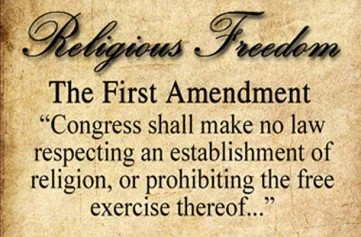
As currently framed, the case involves Smith’s freedom of speech rather than the First Amendment Constitutional right to “free exercise” of religion. The U.S. Supreme Court sidestepped the religious rights problem in 2018 (click here for tmatt commentary) when it overturned Colorado’s prosecution of wedding cake baker Jack Phillips (who is still enmeshed in a similar case per this from the firm that also represents Smith). Nor did the high court rule on religious freedom aspects when it legalized same-sex marriage in the 2015 Obergefell decision.

Last month, the Biden Administration entered 303 Creative (.pdf here) on the side of Colorado and LGBTQ+ interest groups. Essentially, the Department of Justice argues that as enforced in Colorado or elsewhere, “traditional public accommodations laws ... burden no more speech than necessary to further substantial government interests — indeed, compelling interests of the highest order.”

Smith has support from 16 Republican-led state governments and 58 members of Congress, while 21 Democratic states and 137 Congress members take the opposite stance alongside e.g. the American Bar Association.

The issue will face the U.S. Senate after the November elections as Democrats try to “codify” Obergefell into federal law but for passage may need to accept a Republican religious-freedom amendment. The Equality Act, which won unanimous support from House Democrats but is stalled in the Senate, would explicitly ban reliance on federal religious-freedom law in discrimination cases, include crucial laws passed by a broad left-right coalition during the Bill Clinton administration.
Please respect our Commenting Policy

This just in! Southern Baptists are still very conservative on issues of marriage and sex!

This just in! Southern Baptists are still very conservative on issues of marriage and sex!

Let’s face it, it’s rather hard for a congregation to be “removed from fellowship” — that’s Baptist-ese for “kicked out” — from the Southern Baptist Convention.

After all, are we talking about ties being cut to the local association, a state convention (some states, for doctrinal reasons, have more than one) or the various programs linked to the national SBC? Then there are, for extra-conservative or extra-progressive congregations, alternative “fellowship” networks that have their own vague relationships with the larger SBC ship.

Finally, if a church is “removed from fellowship” and any or all of these levels of voluntary association, it may simply become an independent autonomous Baptist church, as opposed to an autonomous SBC church. Most local folks will never know the difference and independent, often nondenominational, congregations are the fastest growing sector of American religious life.

But if you dig into the Google search in my first paragraph, you will see that churches have been pushed out the exit door of SBC life for several reasons and that this is nothing new. However, it is true that these churches are being kicked out for reasons that many (not all) journalists may consider more worthy of coverage than others. Think “politics.”

Consider this summary material from a New York Times piece last year that ran with this headline: “Southern Baptists Expel 2 Churches Over Sex Abuse and 2 for L.G.B.T.Q. Inclusion.”

The Southern Baptist Convention is the nation’s largest Protestant denomination and has been increasingly divided in recent years over a variety of cultural and political issues, including racism, sexuality and white evangelicals’ embrace of former President Donald J. Trump. …

[A]n increasingly influential conservative wing of the denomination accuses those leaders of prioritizing “social justice” over biblical truth. They denounce the encroachment of “critical race theory” — an academic framework intended to capture the deep influence of racism — and accuse the S.B.C.’s national leadership of being out of step with the rank and file.

It’s pretty easy to spot the subjects that would leap into headlines, right?

There is, for example, nothing new about “progressive” Baptist congregations veering to the doctrinal left on issues linked to gender and sexuality.


Please respect our Commenting Policy

Please, NPR, get serious -- professional, even -- when covering religion/trans debates

Please, NPR, get serious -- professional, even -- when covering religion/trans debates

Way back when, there was a time when National Public Radio was known for accurate, decent, cutting-edge religion stories.

But its most recent serious religion specialist, Tom Gjelten, retired last year. So that day is long gone, alas, judging from a mindless story about transgenderism and Christianity that came out this week, one completely lacking in terms of balance and serious research.

Now there are good ways to cover this divisive topic, with thoughtful voices on both sides of the debate. But the following story wasn't one of them.

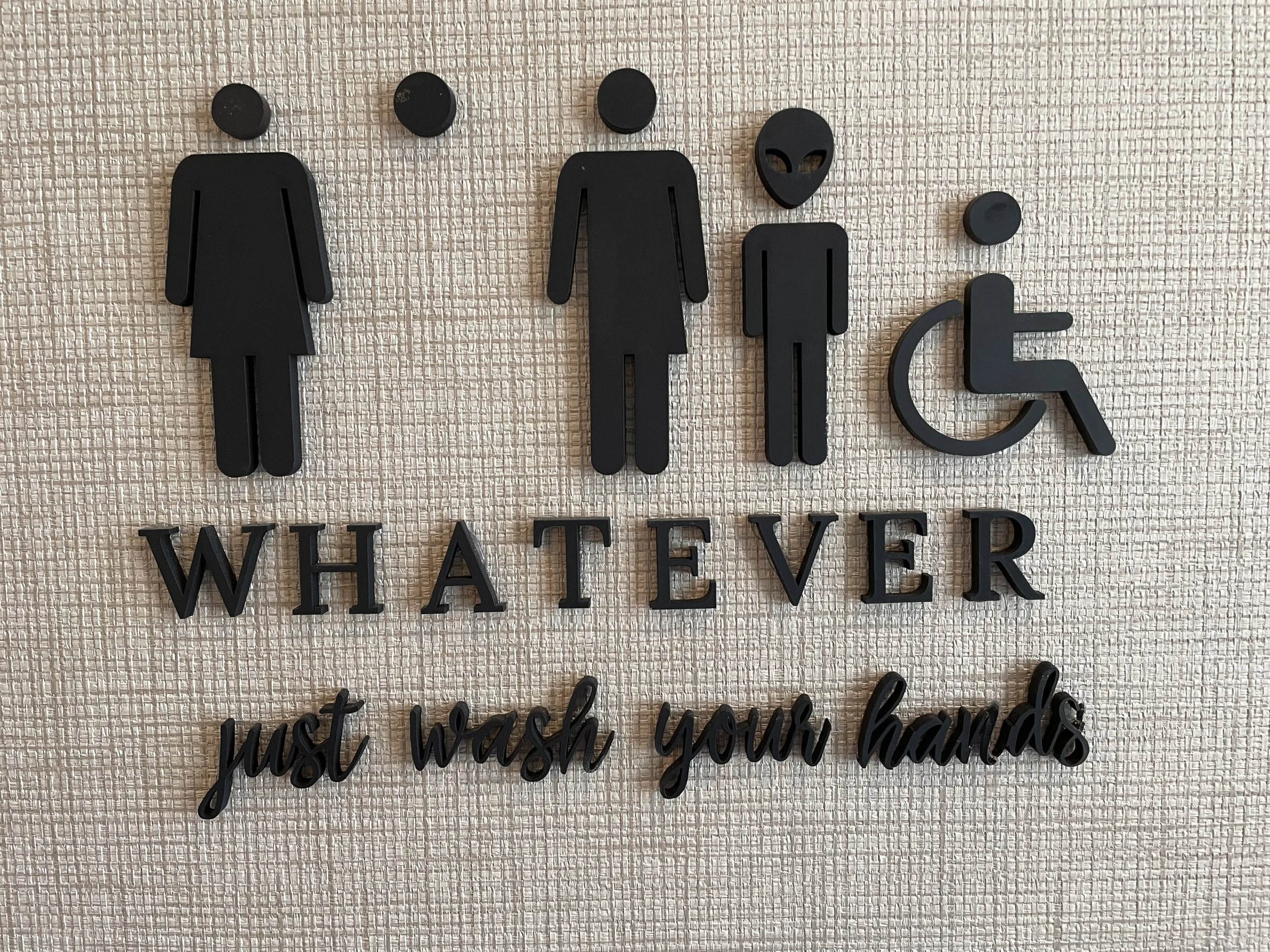
PORTLAND, Ore.— Something as small as signs that say "men" and "women" on the bathrooms in a house of worship can shut the door to trans people.

"For me as a non-binary person, I've been to so many churches where they don't have a bathroom that I feel like I can use," says AJ Buckley, an Episcopal priest in Portland, Ore. "And so I'll just not go to the bathroom there."

Churches are tasked with living out the Bible's message both from the pulpit and in the pews. And it's hard to connect to spiritual concerns if people there to sing and pray literally can't be physically comfortable.

That's why Saint David of Wales Episcopal Church in Portland, where Buckley has been associate rector for the past year, has made changes like putting up signs that say anyone can use any bathroom, including pronouns on name tags and preaching to "siblings in Christ" rather than brothers and sisters.

What has been the result of this cultural innovation? Have more trans people flooded this church in southeast Portland?

We are not told, as the article switches to a Minneapolis man who co-founded QueerTheology.com who says the Bible has several passages transcending gender norms.

"We have women who are judges. We have men who spend their time in the kitchen. There are eunuchs, which were considered this kind of other third gender," he says.

His assertions go unquestioned, even though there’s quite a good argument that eunuchs weren’t by any means considered a third gender.


Please respect our Commenting Policy

Podcast: Are Brigham Young sports controversies about sports, religion or politics?

Podcast: Are Brigham Young sports controversies about sports, religion or politics?

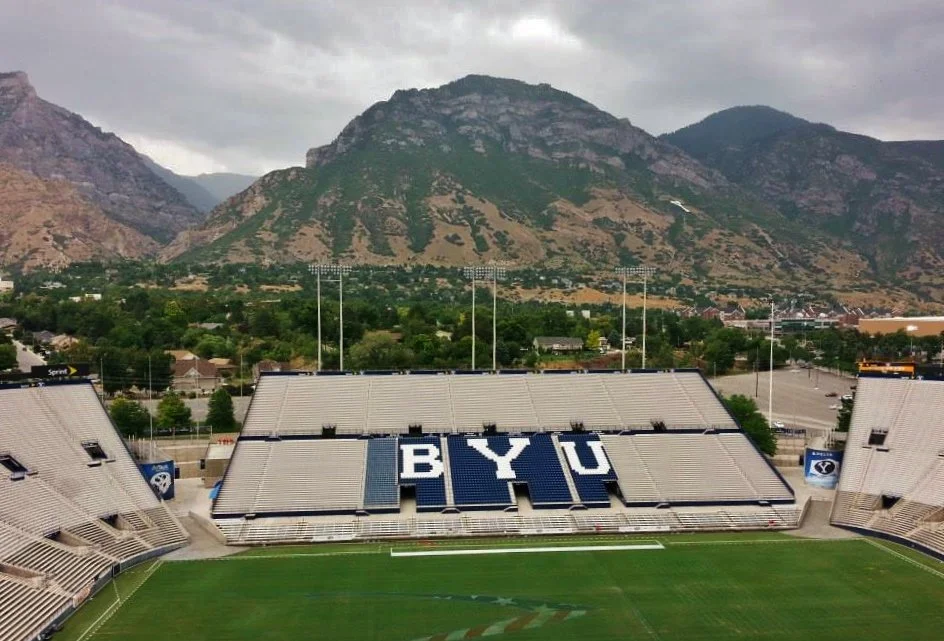
I have a journalism question, one that will require some time travel. Let’s flash back to the 2021 football game between the Brigham Young Cougars and the Baylor Bears, which was played in Waco, Texas, an interesting city known to many as “Jerusalem on the Brazos.”

After the first BYU score, a significant number of Baylor students are heard chanting “F*** the Mormons!” over and over. Or maybe, since we are talking about folks from a Baptist university, the chant is “Convert the Mormons!” The chant doesn’t focus on the “Cougars,” but on BYU’s obvious heritage with the Church of Jesus Christ of Latter-day Saints.

The chants were strong enough to be heard on broadcast media and, within minutes, there are clear audio recordings posted on social media.

My question, a which I asked during this week’s “Crossroads” podcast (CLICK HERE to tune that in): Would this nasty, crude event be considered a valid news story? In national coverage, would the religious ties of the two schools — soon to be rivals in the Big 12 — be discussed? In other words, would this be a religion-news story, as well as a sports story?

I think it’s pretty obvious that the answers would be “yes” and, again, “yes.”

This brings us, of course, to two BYU sports stories from recent weeks — one that received massive national coverage and the other that, well, didn’t get nearly as much ink. I think it’s valid to ask "Why?’ in both cases.

Before I share some links to coverage of the two stories, let’s pause and consider this related Religion News Service report: “Nearly 200 religious colleges deemed ‘unsafe’ for LGBTQ students by Campus Pride.” Here is the overture:

Dozens of religious universities across the country, including Seattle Pacific University in Washington and Brigham Young University in Utah, were listed as unsafe and discriminatory campuses for LGBTQ students by Campus Pride, a national organization advocating for inclusive colleges and universities.

Fewer than 10 of the 193 schools on the list released Thursday (Sept. 8), were not religiously affiliated or did not list a religious affiliation, according to Campus Pride.

The lengthy Campus Pride report on BYU opens with this statement (the shorter Baylor item appears here):

Brigham Young University has qualified for the Worst List because it has an established and well-documented history of anti-LGBTQ discrimination that endangers victims of sexual assault and has resulted in a call for it to not be included as a Big 12 school.

The key word, of course, is “endangers.”


Please respect our Commenting Policy

Reminder to journalists (again): Private schools -- left, right -- can defend their core doctrines

Reminder to journalists (again): Private schools -- left, right -- can defend their core doctrines

Back in the late 1970s, during the cornerstone seminar in Baylor University’s Church-State Studies program, my major professor made an interesting prediction while reviewing some documents that would eventually surface with the Bob Jones University v. United States ruling at the Supreme Court in 1982.

That case pivoted on questions of racism and claims linked to religious doctrine. At some point in the future, my professor said, the high court would face similar cases in which centuries of religious doctrine would clash with beliefs at the heart of the modern Sexual Revolution.

The U.S. Supreme Court would be challenged to equate the facts of racism with the mysteries of sexual identity (or words to that effect). At that point, traditional forms of Christian education would be at risk.

Anyone who has followed American politics in recent decades has watched this conflict march through religious and educational structures and into the headlines. The question, all along, would be if “progressive” thinkers — the word “liberal” is problematic — would find a way for the Sexual Revolution to trump existing legal standards defending free speech, freedom of association and freedom of religion.

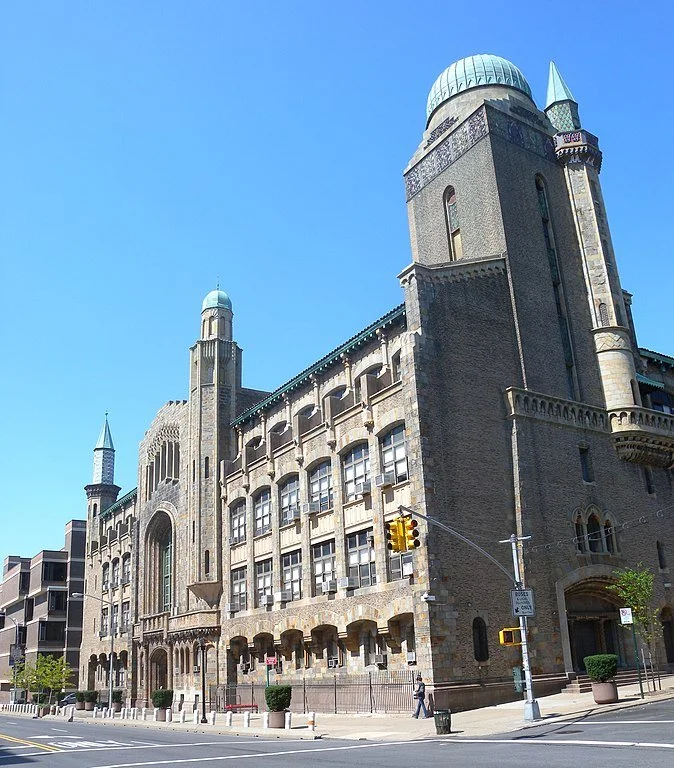
Thus, Julia Duin wrote a recent post describing coverage of SCOTUS moves linked to clashes between the modern Orthodox Judaism of Yeshiva University and LGBTQ groups on its New York campus. See this post: “New York Times pursues ultra-Orthodox yeshivas in massive story that raises (some) Jewish ire.

One of the stories she discussed was a Jewish Telegraphic Agency piece with this headline, linked to an earlier stage in this legal struggle: “Yeshiva U can block LGBTQ club for time being, Supreme Court says.” This case provides, Duin noted, an:

… interesting counterweight on what’s happening in Christian colleges across the country. Last week a group called Campus Pride released a list on what it considers “the absolute worst, most unsafe campuses” for LGBTQ students. Not surprisingly, Yeshiva University is one.

She then stressed this crucial passage in the JTA report:

Yeshiva University’s case could be complicated by the fact that it removed religion from its charter, essentially the text that gives it permission to operate in New York State, in 1967 in an effort to secure more state funding.


Please respect our Commenting Policy

DeSantis as 'culture warrior' or theocrat: Coverage depends on a newsroom's worldview

DeSantis as 'culture warrior' or theocrat: Coverage depends on a newsroom's worldview

A Republican politician with presidential aspirations visits a Christian college. What happens next, in terms of the way the event is covered by the mainstream press, is predictable — during this era of niche news, with stories written to appeal to the beliefs of specific political flocks.

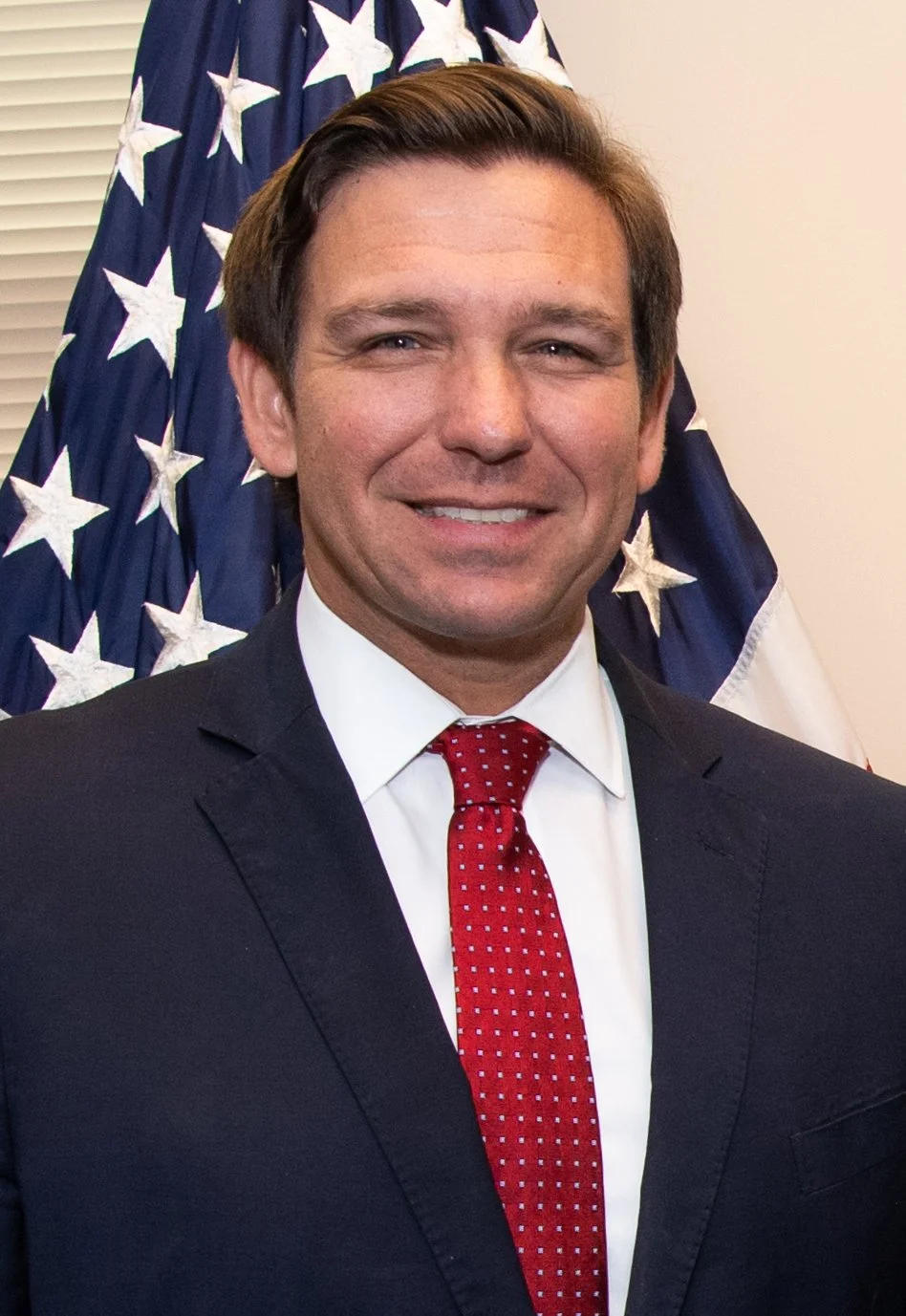
The politician in question is Florida Gov. Ron DeSantis and the school is Hillsdale College in Michigan. The visit took place this past February and was used as an example in a recent Miami Herald article of DeSantis’ mingling of faith and politics.

This is how the paper opens its Sept. 13 piece:

While visiting a private Christian college in southern Michigan that wields influence in national politics, Gov. Ron DeSantis rephrased a biblical passage to deliver a message to conservatives.

“Put on the full armor of God. Stand firm against the left’s schemes. You will face flaming arrows, but if you have the shield of faith, you will overcome them, and in Florida we walk the line here,” DeSantis told the audience at Hillsdale College in February. “And I can tell you this, I have only begun to fight.”

The Republican governor, a strategic politician who is up for reelection in November, is increasingly using biblical references in speeches that cater to those who see policy fights through a morality lens and flirting with those who embrace nationalist ideas that see the true identity of the nation as Christian.

That’s followed by the thesis:

He and other Republicans on the campaign trail are blending elements of Christianity with being American and portraying their battle against their political opponents as one between good and evil. Those dynamics have some political observers and religious leaders worrying that such rhetoric could become dangerous, as it could mobilize fringe groups who could be prone to violence in an attempt to have the government recognize their beliefs.

The article has no problem finding experts who warn of impending danger.


Please respect our Commenting Policy

New York Times pursues ultra-Orthodox yeshivas in massive story that raises (some) Jewish ire

New York Times pursues ultra-Orthodox yeshivas in massive story that raises (some) Jewish ire

The past week has been Jewish education week in the media as there were several stories that hit the fan all at once. We’re talking about:

* This Washington Post piece on New York state forcing ultra-Orthodox schools to teach secular subjects;

* This New York Times blockbuster — no other word for it — on how Hasidic Jewish schools are operating a network of madrassa-like institutions whereby students barely learn English, much less basic education staples such as history or math.

* The Jewish Telegraphic Agency on a decision by liberal Supreme Court Justice Sonia Sotomayor who ruled that Yeshiva University in New York City could — for doctrinal reasons — ban an official LGBTQ club/advocacy group on its campus.

The Times investigation is the behemoth of the lot, taking more than a year to compile and be published before the state’s Board of Regents votes today (Sept. 13) on whether a yeshiva’s (religious school’s) secular curriculum (such as it is) could be rejected by the state.

It was a massive amount of work in terms of plowing through public records, 275 people interviewed, tons of Yiddish documents translated and, according to Brian Rosenthal, one of the two lead reporters, it’s probably the first time the Grey Lady has published a Yiddish translation or a news report. Here’s the beginning:

The Hasidic Jewish community has long operated one of New York’s largest private schools on its own terms, resisting any outside scrutiny of how its students are faring.

But in 2019, the school, the Central United Talmudical Academy, agreed to give state standardized tests in reading and math to more than 1,000 students.

Every one of them failed.

Which was by design, the article continued, because these schools are meant to steep students solely in Jewish law and tradition in Yiddish-only surroundings to the point that many students never learn English, so find it impossible to get a job in the outside world.


Please respect our Commenting Policy

Podcast: New York Times talks to a Catholic 'star' and (#triggerwarning) things went OK

Podcast: New York Times talks to a Catholic 'star' and (#triggerwarning) things went OK

It isn’t everyday that I get emails from Catholic readers, of one tribe or another, praising a New York Times article, especially one in which a Catholic leader is asked tough questions about some controversial points of doctrine.

That’s strange, in a sad kind of way. This phenomena was almost worth a “Crossroads” podcast in and of itself (CLICK HERE to tune that in).

But there are other worthwhile reasons to discuss the New York Times Magazine feature that ran with what was clearly meant to be a grabber headline: “A Catholic Podcasting Star Says Theocracy Is Not the Way.”

Yes, yes, we all know that there are armies of Catholics out there who believe that this diverse and rapidly secularizing nation can be turned into some kind of Catholic or ecumenical Christian theocracy. Try to imagine either of those political options in a culture dominated by Big Tech, Big Academia and Hollywood.

Before we get to the “theocracy” discussion, let’s note the identity and the credentials of the priest featured in this interview. In the end, we want to know: Why was this priest able to emerge relatively unscathed by this dance with the Gray Lady, to the degree that many Catholics were pleased with this encounter? Here is some of the introduction:

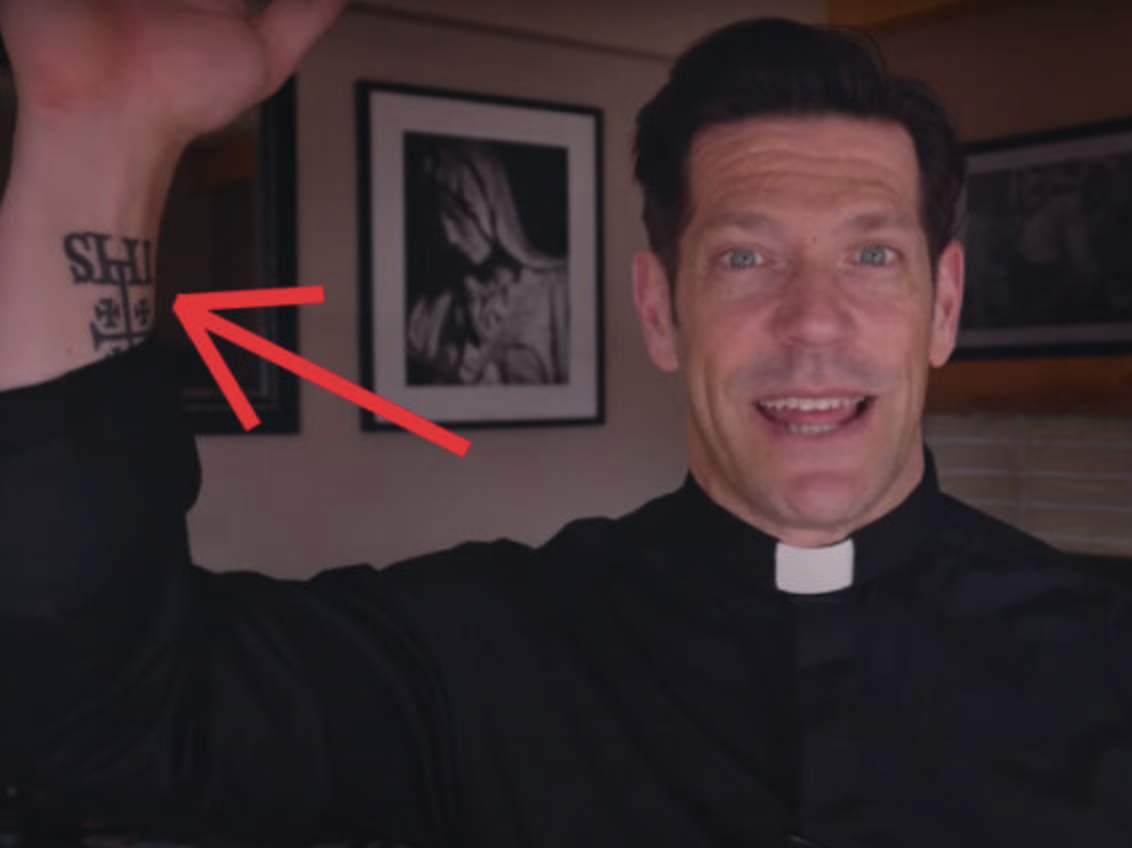
Since it was introduced by the Catholic priest Mike Schmitz, who goes by Father Mike, in January 2021, the little-heralded “The Bible in a Year (With Fr. Mike Schmitz)” has been the most popular Apple religion podcast for a majority of 2021 and 2022 and has even, on two occasions, reached the No. 1 spot among all podcasts on Apple’s platform. The show has been downloaded 350 million times and an average of 750,000 times a day.

That’s credibility, in our tech-defined world — even to Times-people. Let’s continue:

Each 20-to-25-minute installment … features two or three short scriptural readings and a pithy reflection by Father Mike, an affable 47-year-old Midwesterner whose upbeat and self-deprecating manner — not to mention regular-guy good looks — exude strong Ted Lasso vibes. The staggering success of the podcast has helped turn its host, whose day job is as a chaplain at the University of Minnesota Duluth and the director of the youth ministry for the Duluth diocese, into a kind of celebrity. He travels the country giving speeches, and some of his YouTube videos have racked up millions of views.

Now, on to the content that provided that click-bait headline for faithful New York Times readers.


Please respect our Commenting Policy

What will American Protestantism look like after the wars inside the 'Seven Sisters' are done?

What will American Protestantism look like after the wars inside the 'Seven Sisters' are done?

Over decades, the map of U.S. Protestantism has been redrawn by splits over the authority and interpretation of the Bible that eventually focused on the LGBT dispute. Now we have a major case study that journalists will need to cover at the local, regional, national and global levels.

A balanced coalition of leaders in the large United Methodist Church (UMC) developed a treaty for mutually respectful separation — the Reconciliation and Grace Through Separation protocol — for that’s currently degenerating into a wasteful fight like other groups have suffered.

Reporters and concerned readers will want to dive into these commentaries and news stories:

* Look at a United Methodist timeline: Why are conservatives going nuclear with lawsuits?

* What happened to United Methodists’ proposal to split the denomination?

* Time is Running Out for Traditionalist United Methodists!

* For United Methodists, the center is not holding

* Special sessions of United Methodist annual conferences 2022

* United Methodist Church bishops mount defense amid conservative attacks (paywall protected)

* Liberal Bishops Have Redefined United Methodist Polity

The current maneuvers by the North American UMC establishment may well limit the number of dropouts joining the Global Methodist Church. Its vision has been to unite a million or more U.S. Methodist evangelicals with the growing Methodist churches in Africa and Asia, creating an effective and innovative international denomination dedicated to defending current Methodist doctrines. This could help counteract some U.S. conservatives’ drift into Christian nationalism. Is that still feasible?


Please respect our Commenting Policy