LGBTQ

United Methodist prelude: Small denomination faces its own split over Bible and sex

United Methodist prelude: Small denomination faces its own split over Bible and sex

The Reformed Church in America, one of those small denominations that usually get little ink despite rich history and accomplishments, is set to celebrate its 400th anniversary in 2028. But what will the RCA consist of by then?

At an October 14-19 General Synod meeting in Tucson, Arizona, this venerable church will decide whether to split up.

Reporters can think of this as a prelude to the formal divorce that the huge United Methodist Church (UMC) is expected to approve next year. In both churches, the central problem is the dispute over proper Bible interpretation, especially on sexual morality.

The goal of this Memo is to sketch out a few basics for journalists who'll cover the RCA showdown, which was postponed from 2020 because of COVID-19. The United Methodists have faced similar legal delays, of course.

Like the UMC, the RCA (www.rca.org) has spent nearly half a century discussing its traditional teachings on marriage and sexuality, which shaped rules on same-sex marriages and ordinations. All sides have reached a consensus that the divide is unbridgeable and the status quo untenable.

In 2018 the RCA commissioned a study team to consider future options that included "grace-filled separation." In July, the team issued its final recommendations with a proposed process for splitting.

The report offers a different and unusual path that avoids formal schism by reorganizing RCA regional units ("classes," singular "classis") on the basis of "affinity" in belief rather than the usual geography, in effect creating two churches within a church. In yet another proposal. those staying within the RCA and those leaving would still cooperate in a new, non-denominational foreign mission agency.

In the schism plan, the RCA would change an existing policy and let any unhappy local congregation leave and keep ownership of its building and other assets. A request to depart would need three-fourths approval by the congregation's governing board and then three-fourths of voting members (two-thirds margins are the more common Protestant practice).

Then there are other hoops to jump through.


Please respect our Commenting Policy

What a minute: What do New York Times editors think Pope Francis believes about Grindr?

What a minute: What do New York Times editors think Pope Francis believes about Grindr?

Yes, faithful readers, I saw the New York TImes story that ran under this headline: “Catholic Officials on Edge After Reports of Priests Using Grindr.” Why didn’t I write — pronto — about this story?

I guess because it seemed like an echo of an echo of an echo, fitting neatly into the template established by numerous articles in progressive Catholic media. It was an investigation of the methods and motives of a conservative Catholic blog — The Pillar, of course. TheTimes was not (#DUH) all that interested in the phenomenon that concerned The Pilliar, as in evidence that some Catholic priests have been using Grindr, that smartphone ap that a Vanity Fair feature once called “The World’s Biggest, Scariest Gay Bar.

In a way, this Times story was yet another example of an old truth: Conservatives are wrong — simplistic, at the very least — when they claim that elite mainstream news publications are “anti-religion.”

In this Times piece, it’s clear that there are good Catholics and bad Catholics and that the Gray Lady gets to tell readers who is who. This is not the same as saying that there are Catholics who want to defend church doctrines and those who want key doctrines to evolve and we (the editors) will offer coverage in which readers read accurate, fair-minded discussions about why people on each side believe what they believe.

So yes, for Times editors this is clearly a story about bad Catholic journalists. But it’s clear that the Times is not an anti-Catholic newspaper; it totally approves of the Catholic left. It’s using the same basic doctrinal lens as progressive Catholic newspapers. Click here for a famous Times op-ed explaining the basics on this: “Is the Pope Catholic?”

There are, however, two things I would like to note in this Times feature. First, read the following carefully:

The reports by the blog, The Pillar, have unnerved the leadership of the American Catholic Church and have introduced a potentially powerful new weapon into the culture war between supporters of Pope Francis and his conservative critics: cellphone data, which many users assume to be unavailable to the general public.


Please respect our Commenting Policy

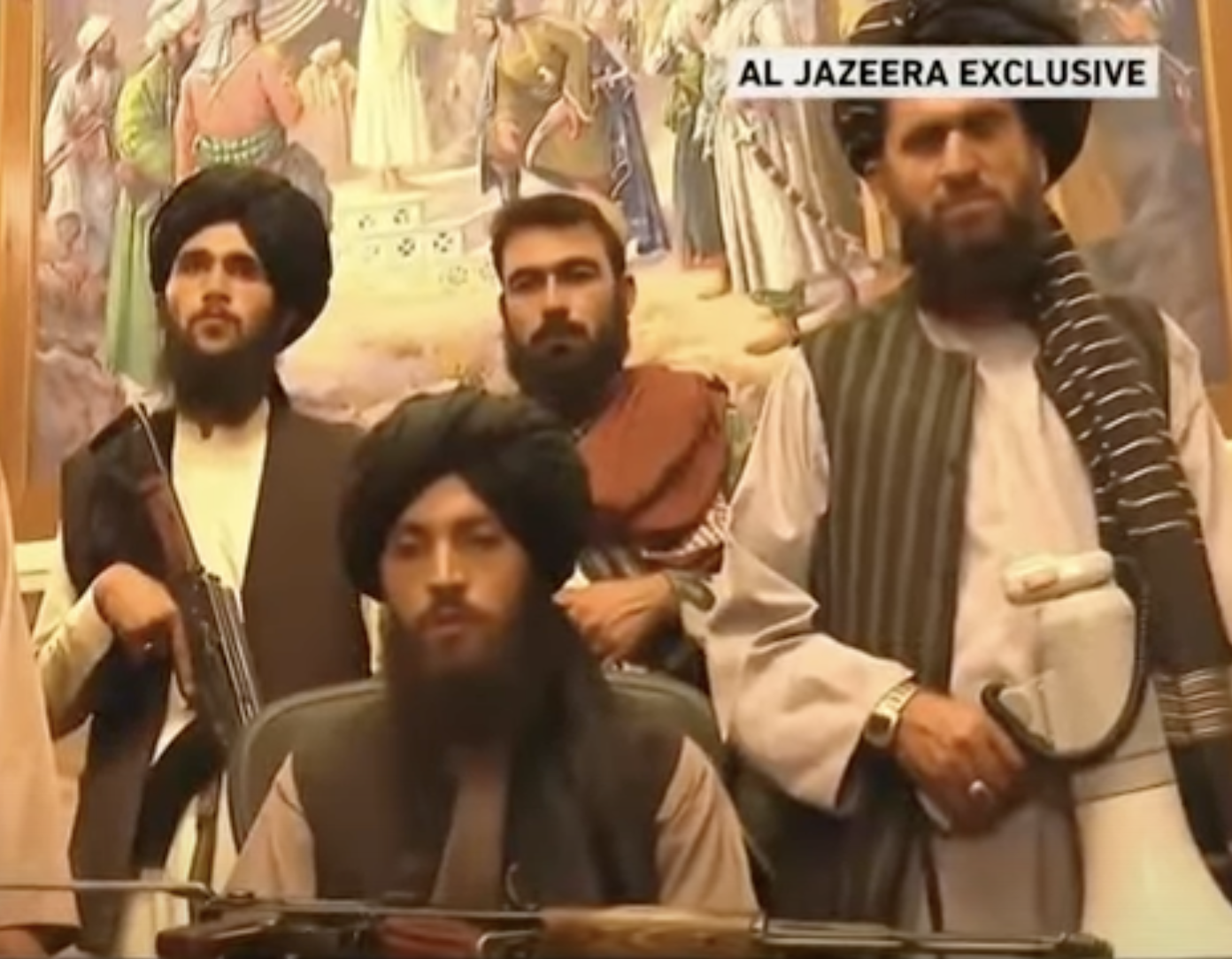
New podcast: When the Taliban cracks down, will all the victims be worthy of news coverage?

New podcast: When the Taliban cracks down, will all the victims be worthy of news coverage?

There’s no question that the botched U.S. efforts to evacuate at-risk people in Afghanistan is the big story of the hour, the day, the week and for the foreseeable future — especially if this turns into a grand-scale hostage nightmare.

But who is at risk? What kinds of people are trapped inside the new kingdom of the Taliban?

That was the subject that dominated this week’s “Crossroads” podcast (click here to tune that in). And as you would expect, host Todd Wilken and I were especially interested in the role that religion has been playing in this story — if journalists are willing to cover that angle.

So who is at risk? Here is a typical wording, care of an Associated Press update:

The Kabul airport has been the focus of intense international efforts to get out foreigners, Afghan allies and other Afghans most at risk of reprisal from the Taliban insurgents.

With the Taliban controlling the Afghan capital, including the airport’s outer perimeter, White House national security adviser Jake Sullivan said that U.S. citizens are able to reach the airport, but were often met by large crowds at the airport gates.

But, wait. What about the news reports that U.S. forces cannot help U.S. citizens avoid Taliban checkpoints in order to reach the airport, while British and French military personnel are doing precisely that for their own people? That’s a very hot story right now, with U.S. diplomats and the White House saying that the can work with the Taliban to ensure safety.

So let’s pause and flesh out some of the details in that AP phrase about who is at risk, as in “foreigners, Afghan allies and other Afghans most at risk.” Who is most at risk, right now?

* Obviously, American journalists have every right to focus on risks to American citizens.

* In particular, we can assume that Taliban activists are tracing Americans who have led or worked with NGOs, religious aid groups, churches. Then there are the Western-style think tanks, schools, medical groups, etc.

* Obviously, there are the thousands of Afghans who cooperated with and even worked for the U.S. government, U.S.-backed Afghan military units and the kinds of “foreign” organizations mentioned in the previous item.


Please respect our Commenting Policy

For Albania's 'sworn virgins,' the West's culture war over gender roles is a non-starter

For Albania's 'sworn virgins,' the West's culture war over gender roles is a non-starter

Few issues are more contentious in today’s culture wars than those involving gender and sexuality, which is why they attract a substantial amount of hot-button media attention. That includes religion-beat coverage, of course.

Those labeled traditionalists generally feel one way on the issue and so-called progressives tend to feel just the opposite way. It’s a divide that cuts across virtually every faith group, leading to schisms and a great deal of congregational and individual pain.

Nor, I should point out, is there across-the-board agreement on these issues in secular circles.

On occasion a story turns up that seems to turn the issue on its head, scrambling our easy use of the traditionalist and progressive labels. The New York Times recently ran one such piece out of Albania. I found it fascinating. The headline: “With More Freedom, Young Women in Albania Shun Tradition of ‘Sworn Virgins’.”

Reading between the lines, one unstated point I take from the story is that today’s growing acceptance, by some, of more fluid gender roles predates the post-modern influences that today’s cable TV news polemists, and others — including politicians — argue are causative.

On the other hand, I’d be remiss to not also note that this Albanian cultural quirk is an isolated and rapidly disappearing practice as the small Balkan nation’s rigid gender roles loosen in the age of globalization. So be careful not to draw too many broad generalizations from it.

In short, gender roles, like everything else in life worth serious attention, are complicated concepts and have been across human history. Here’s the story’s top, which is long, but essential:

LEPUSHE, Albania — As a teenager locked in a patriarchal and tradition-bound mountain village in the far north of Albania, Gjystina Grishaj made a drastic decision: She would live the rest of her life as a man.


Please respect our Commenting Policy

Trying to spot religion 'ghosts' in the dramatic fall of America's version of Afghanistan (#FAIL)

Trying to spot religion 'ghosts' in the dramatic fall of America's version of Afghanistan (#FAIL)

The whole idea of Axios, as a news publication, is to take massive, complex stories and — using a combination of bullet lists and URLs to additional information — allow readers to quickly scan through the news of the previous day. The Axios team calls this “smart brevity.”

More often than not, this turns out to be a crunched summary of the big ideas in mainstream coverage. Thus, it’s logical to look at this online newsletter’s take — “1 big thing: System failure” — on the horrific scenes that unfolded yesterday in Kabul, Afghanistan.

The big question: What did American diplomats, intellectuals and politicos miss in the big picture?

* The United States was literally run out of town after 20 years, $1 trillion and 2,448 service members' lives lost.

* Mohammad Naeem, the spokesman for the Taliban's political office, told Al Jazeera today: "Thanks to God, the war is over in the country."

Why it matters: A friend who spent more than a decade as a U.S. official in Afghanistan and Iraq texted me that the collapse "shows we missed something fundamental — something systemic in our intel, military and diplomatic service over the decades — deeper than a single (horrible) decision."

* As the BBC's Jon Sopel put it: "America's attempt to export liberal democracy to Afghanistan is well and truly over. …”

What were the key tasks in this “export of liberal democracy”? Here is my two-point summary.

First, the United States and its allies had to build an Afghan military that could protect this project. #FAIL

Second, the Western nation builders had to sell a vision of an Islamic culture that, somehow, embraced American values on a host of different issues — from free elections to freedom for women, from Western-style education to respect for the Sexual Revolution in all its forms. This Georgetown University faculty lounge vision of Islam needed to be more compelling than the one offered by the Taliban. #FAIL

Looking at this from a journalism perspective, I think it is more than symbolic that most of the elite media coverage of the fall of this new, alternative Afghanistan have almost nothing to say about Islam and, in particular, the divisions inside that stunningly complex world religion. Was this, in any way, a “religion story”? Apparently not. #FAIL

There is way too much coverage to look at, of course. However, it does help to look at The New York Times, since that is the straw that stirs the drink in American media. My goal was to find material that contrasted the Taliban’s vision of Islam with the vision offered by the U.S. State Department.


Please respect our Commenting Policy

New podcast: Yes, religious issues are part of the great divide in media and, thus, America

New podcast: Yes, religious issues are part of the great divide in media and, thus, America

When journalism profs talk about “old-school journalism,” we are actually discussing a rather modern phenomenon which is often called the American Model of the Press. It was born when printing presses started speeding up in the mid-to-late 19th century and, as it evolved, it stressed accuracy, fairness and balance when dealing with controversial issues.

What does that mean? At the very least, it meant showing respect for competing points of view — in part to allow newspapers (and advertisers) to reach a broad, diverse audience of readers.

This model replaced, at least in newspapers and wire services, what is often called the European Model of the Press. In this model, accuracy is still emphasized, but newsroom coverage is clearly and honestly based on specific editorial points of view — liberal, conservative, labor, business, etc. It is openly biased.

I offer this journalism history flashback because these terms played a major role in this week’s “Crossroads” podcast (click here to tune that in). The key question this week: How are readers supposed to relate to journalists and newsrooms when they claim to use the American Model, but their news coverage (especially online) is, on most issues (especially topics mixing politics and religion), clearly being crafted to fit a particular cultural or political template? Yes, we are talking about “Kellerism,” a term long used here at GetReligion (click here and then here for background).

In part, host Todd Wilken and I focused on a viral tweetstorm by the Russian-British comedian Konstantin Kisin, instead of dissecting the contents of one or more mainstream news reports.

It’s crucial to note that Brexit — as opposed to Donald Trump-era America — was the first hook for Kisin’s long, long commentary. Also, the ultimate goal here is to understand why so many people are skeptical when it comes to the COVID-19 vaccines (whether one agrees with that point of view or not).

(Reminder to readers: As a 67-year-old grandfather with asthma, I got my COVID shots as soon as possible. I also wear a mask when visiting institutions that ask me to do so. As for church, I follow the instructions of my bishop and our priests. It also helps to know that, after decades as a pro-life Democrat, I am now a third-party voter.)

Here is the opening of the Kisin thread. Whether he knew it or not, it is a litany mourning the loss of the American Model of the Press.


Please respect our Commenting Policy

Washington Post still thinks sin and repentance have nothing to do with Holy Communion

Washington Post still thinks sin and repentance have nothing to do with Holy Communion

For years now, quite a few mainstream journalists have made it pretty obvious that they think the bishops of the Catholic church have a moral and perhaps even legal obligation to let Catholics do whatever they want to do in public life while continuing to take Holy Communion.

All that matters, according this newsroom version of the evolving spirit of Vatican II, is that these Catholic individuals believe — as a matter of conscience — that they are good to go. Catholics who are on the right side of history even have the right to openly state, in word and deed, that they believe Catholic doctrine is wrong and should be changed. This used to be called Protestantism, but nevermind.

This brings us to yet another Washington Post report about the life and times of a Michigan judge named Sara Smolenski, her same-sex wife Linda and the East Grand Rapids parish in which she is not allowed to take Holy Communion. (For a flashback to earlier coverage, please see this Julia Duin post: “Press doesn't get why a Catholic priest would withhold Communion from outspoken gay judge.”)

This story does a great job of proving that progressive Catholics have strong views on this issue. The story also offers small bites of material from Catholics stating the church’s doctrinal stance on this matter. If you are looking for any sense of fairness and balance — such as Catholics explaining or defending church doctrine — then you are not going to find it in the Post coverage. Again.

One other key point: This story contains zero references to the role that Confession — the Sacrament of Penance — plays in Catholic teachings on sin, repentance, forgiveness, salvation and, thus, Holy Communion. Hold that thought, because we will return to that point.

The Post headline, this time around, states: “Bishops’ debate over Communion sparked by Biden seeps into holiest sacrament for Catholics.” Here’s the overture:

St. Stephen Catholic Church is the parish and school where Sara Smolenski grew up with her nine siblings, where her parents were married, where she worshiped on Sundays and served as a volunteer distributing Communion. It was also the place where the priest called in late 2019 to tell her she should no longer come up during Mass to receive the holy sacrament.

“He says: ‘I’m going to have to ask you not to take Communion because you’re married to Linda in the state of Michigan. He just kept saying: ‘Respect the church,’” said Smolenski, 63, a longtime District Court judge.


Please respect our Commenting Policy

Ticking United Methodist clock: Will the church's establishment Zoom to the left?

Ticking United Methodist clock: Will the church's establishment Zoom to the left?

As one of the founders of the United Methodist Centrist Movement, the Rev. Doug Damron spend years hiding his rejection of his church's rule that the "practice of homosexuality is incompatible with Christian teaching."

Centrists used a "perfectly delicious" theological platform defined by words such as "unity," "peace" and "moderate," he said, during a recent guest sermon at the historic Broad Church United Methodist Church in Columbus, Ohio. After decades of fighting about sex, many hoped "traditionalists" and "progressives" could keep "United" attached to "Methodist."

The goal was "compromise," he said, a "sweet word" that hid a "status quo of oppression." But there was "an institution to protect" and many clergy feared being honest. Thus, they didn't openly attack the denomination's Book of Discipline.

"By nature, I am a rule follower," he said. "I knew that such defiance may have cost me my clergy credentials."

Now it's time for candor and courage, said Damron. When United Methodists finally split, conservatives will build a church defined "by who they will exclude today and who they will exclude tomorrow." The question is whether progressives will act on their convictions.

"It is time to speak into existence, following the Spirit's leading, a church which fully welcomes, includes, affirms not only God's beloved gay and lesbian ones, but a host of other folks who have found the door of the church closed," he said. This would include embracing and ordaining "trans folks, bi folks, kink folks, poly folk, gender-fluid folk and others."

The United Methodist clock kept ticking this summer, even as COVID-19 realities delayed -- again -- votes on the "Protocol of Reconciliation and Grace Through Separation" negotiated by activists on the left and right. The General Conference will not meet until August 2022, since the UMC establishment has declined to take actions in virtual forums.


Please respect our Commenting Policy

Conservative Catholic media set the journalism agenda on Latin Mass and Burrill resignation

Conservative Catholic media set the journalism agenda on Latin Mass and Burrill resignation

It’s been a busy month on the Catholic beat. There’s rarely a dull moment, especially in the Pope Francis era, as debates over the past few weeks focused on the Latin Mass and Grindr-clicking gay clergy in high places.

These are two different issues, of course, but ones where conservative Catholic media outlets have excelled. I’d even go as far as to say that the coverage in various corners of the Catholic press has set the agenda on these two raging issues — for everyone.

I have written about the importance of the growing independent Catholic press before. At a time when mainstream media very often ignores one side on hot-button issues, a healthy alternate media that covers the church and isn’t afraid to give those voices space has helped readers fully understand the broader spectrum of U.S. and global Catholicism.

The health scare that Pope Francis recently went through has seemingly inflamed the culture wars within Roman Catholicism. There is a feeling that this pope’s time may be coming to an end and that reformers need to move quickly before conservative bishops and priests embark on a takeover.

I have lauded The Pillar in this space for their ability to explain complicated issues as well as break stories and embark on investigations. This has been a wonderful month for them, even as they have been catching flak from the Catholic left (and, thus, from key mainstream news outlets).

The story they broke on July 20 is what we in the journalism business call “a bombshell.” The story revealed that Monsignor Jeffrey Burrill, former general secretary of the U.S. bishops’ conference, had resigned after The Pillar “found evidence the priest engaged in serial sexual misconduct, while he held a critical oversight role in the Catholic Church’s response to the recent spate of sexual abuse and misconduct scandals.”

This is what The Pillar’s reporting found (this is long, but essential):


Please respect our Commenting Policy