LGBTQ

Religion ghosts? The New Yorker offers hellish glimpse of pedophile science in Germany

Religion ghosts? The New Yorker offers hellish glimpse of pedophile science in Germany

As Ross Douthat of The New York Times noted the other day, every now and then there is a scary news story that demands serious attention, even if readers want to avert their eyes.

That is certainly the case with a recent Rachel Aviv feature at The New Yorker than ran with this headline: “The German Experiment That Placed Foster Children with Pedophiles.

This is not a religion story. If readers do a few quick searches through the text, they will find no references to words such as “religion,” “faith,” “church” or “Bible.” The word “morality” shows up, but only in a negative context. Hold that thought.

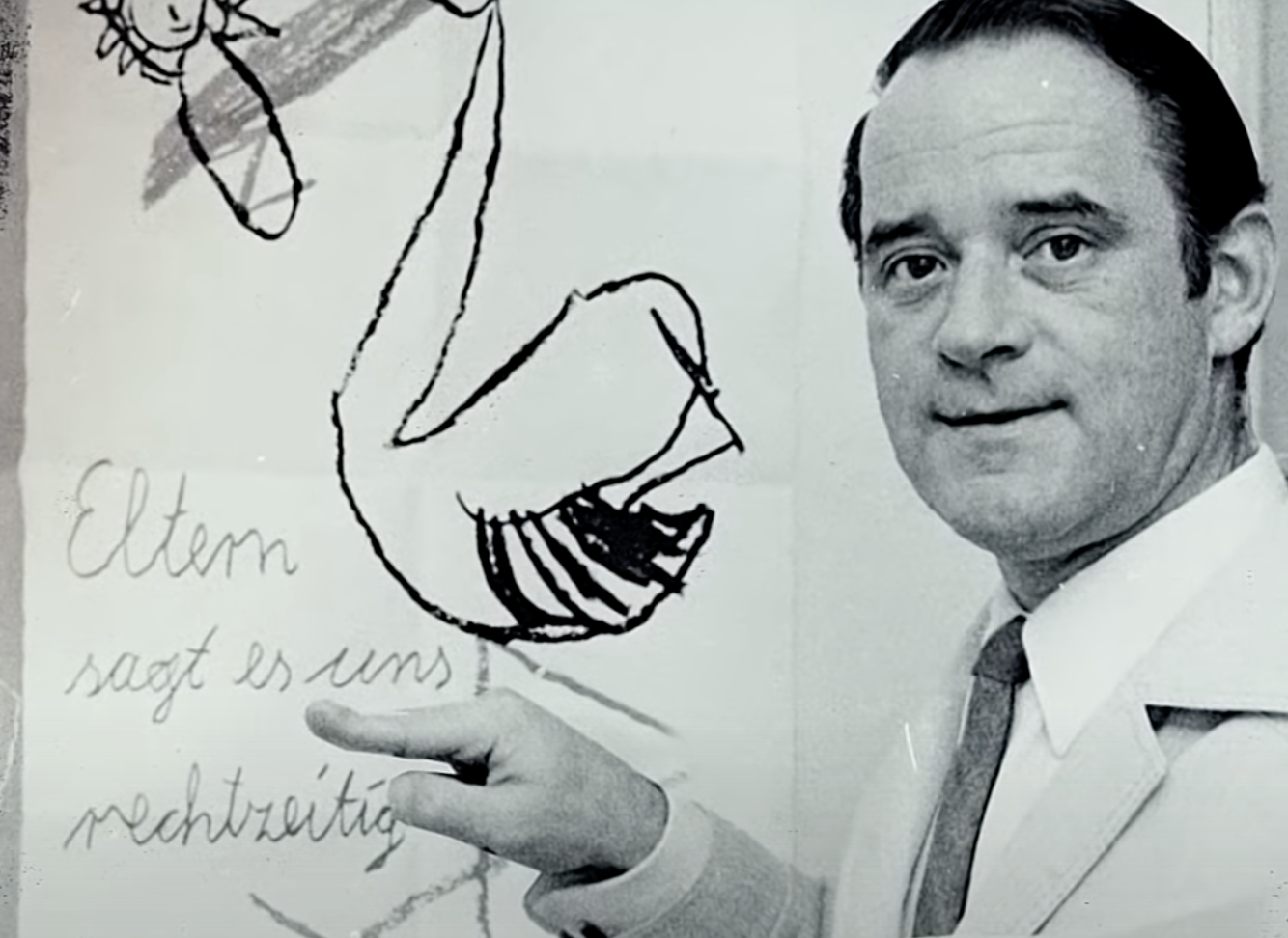
The man at the center of this horror story is Helmut Kentler, a Sexual Revolution hero in post-World War II Germany who sincerely believed, for reasons personal and professional, that it would be a good thing for the government to fund experiments in which lonely, abandoned children were placed in the homes of male pedophiles.

This was not a religious conviction — other than the fact that it was seen as a way of attacking traditional religions.

This raises journalism questions, methinks. The unstated theme running through this stunning New Yorker piece is that the Sexual Revolution has become part of a new civil religion. On the moral and cultural left, sexual liberation helps citizens to escape the chains of the nasty old faiths. Concerning Kentler’s work, Douthat notes:

It seems almost impossible that this really happened. But the past is another country, and Aviv explains with bracing clarity how the context of the 1960s and 1970s made the experiment entirely plausible. The psychological theory of the Sexual Revolution, in which strict sexual rules imposed neurosis while liberation offered wholeness, was embraced with particular fervor in Germany, because the old order was associated not just with prudery but with fascism and Auschwitz.

If traditional sexual taboos had molded the men who built the gas chambers, then no taboos could be permitted to endure. If the old human nature had ended in fascism, then the answer was a new human nature — embodied, in Aviv’s account, by “experimental day-care centers, where children were encouraged to be naked and to explore one another’s bodies,” or appeals from Germany’s Green Party to end the “oppression of children’s sexuality,” or Kentler’s bold idea that sex with one’s foster children could be a form of love and care.

All this was part of a wider Western mood, distilled in the slogan of May 1968: It is forbidden to forbid.

This brings us to the feature’s primary discussion of “morality.”

Please respect our Commenting Policy

Future scenarios emerge as the media debate the health of U.S. Mainline Protestantism 

Future scenarios emerge as the media debate the health of U.S. Mainline Protestantism 

What has long been called “Mainline” Protestantism suffered inexorable shrinkage this past generation, eroding so much of its once-potent U.S. cultural impact that the news media tend to neglect these moderate-to-liberal churches. Yet a new Public Religion Research Institute poll reported what it argues is a sudden comeback and indicates Mainliners even outnumber the rival conservative "evangelicals" widely thought to dominate Protestantism.

True? The Religion Guy assembled devastating statistics that raise questions about that claim.

U.S. religion's hot number-cruncher Ryan Burge is even more doubtful and notes the Harvard-based Cooperative Election Study found a recent rise in Americans who self-identify as "evangelical."

As reporters ponder that debate, they should also play out longer-term Mainline scenarios, for instance for the Episcopal Church and United Methodist Church.

The hed on another Burge article proclaimed that "The Death of the Episcopal Church is Near."

"I don't think it's an exaggeration at all to believe that Episcopalians will no longer exist by 2040," he contended.

His gloomy forecast relied partly on a stark, candid piece from the blog of the Living Church magazine. It reasoned that annual marriages and baptisms foretell how the denomination will fare. If trends continue, the former would fall from 39,000 in 1980 to 750 as of 2050, and the latter from 56,000 to 2,500, over decades when average worship attendance would plummet from 857,000 to 150,000.

Similarly, in 2019 the Evangelical Lutheran Church in America's research agency projected that this now-sizable denomination would dip below 67,000 members by 2050 and average Sunday attendance would hit 16,000 by 2041. Two years before that, Wheaton College's Ed Stetzer notably warned that Mainline Protestantism has "23 Easters left."


Please respect our Commenting Policy

New podcast: What kinds of Catholic fears are hiding in these Latin Mass wars?

New podcast: What kinds of Catholic fears are hiding in these Latin Mass wars?

Over the past 40 years or so, I have learned this lesson: If you are covering a controversial story and you find a key point where an activist or two in the clashing armies agree with one another, that’s probably something worth noting.

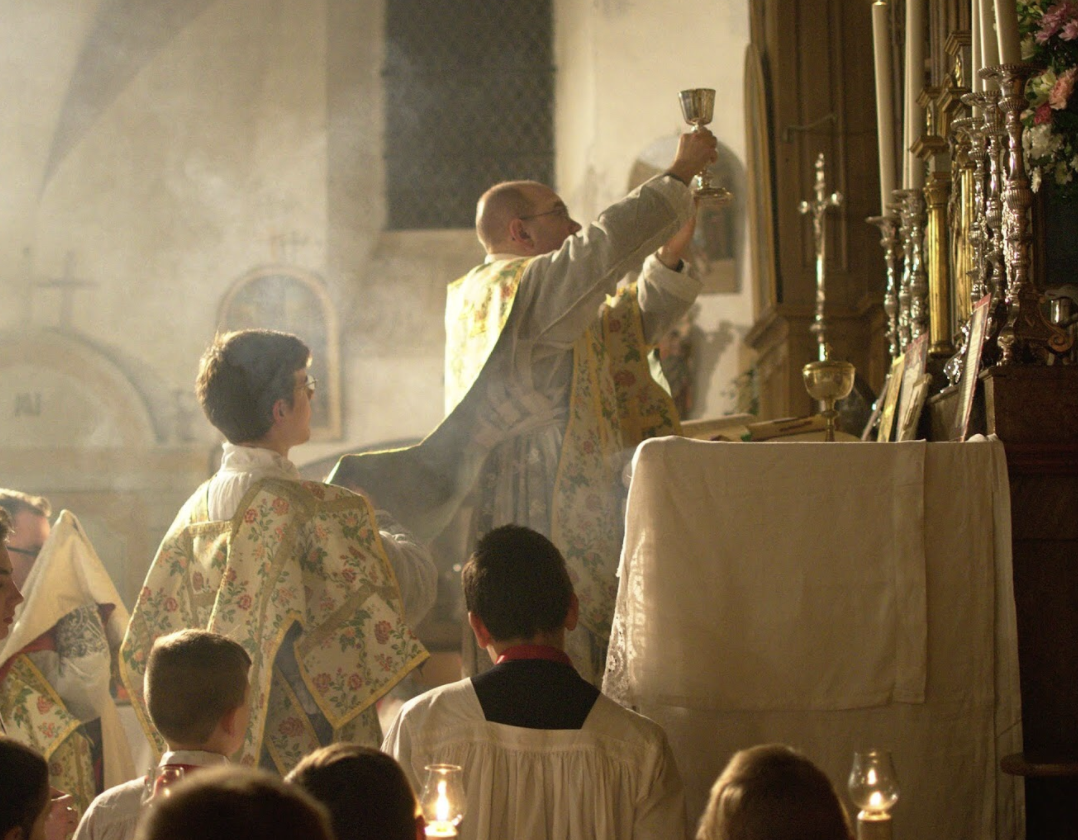
That happened this week while reading a couple of thousand words of commentary about the decision by Pope Francis to all but crush some of the growing communities of priests and traditional Catholics who choose to celebrate the old Latin Mass. To catch up on that, see: “'Where there is incense there is fire.' True, but reporters can seek voices in middle of that war.” And check out this one, too: “Ties that bind? Concerning journalism, Grindr, secrecy, homophobia and the Latin Mass.”

While recording this week’s “Crossroads” podcast (click here to check that out), I read two quotations — one from the Catholic right and one from the left. They offer two completely different takes on what’s happening in the Latin Mass wars, except that they seem to agree on one crucial reality.

The goal is to spot that common ground. Ready?

Quote No. 1 comes from conservative Amy Welborn, writing at her “Charlotte was Both” weblog:

Let’s do an Occam’s Razor on this new Motu Proprio.

It seems pretty simple to me: A number of bishops wanted the tools to restrict celebration of the Traditional Latin Mass, and Pope Francis gave it to them.

There you go.

I mean, we can talk history, ecclesiology, theology and liturgy all day long, but that’s about as basic as it gets or needs to be. I was there. Well, not literally, but I can tell you that this generation of clergy and church activists – now maybe from their late 60’s on up – were formed in a way that they cannot envision a healthy Church in which the TLM is still a part. At all.

What we see here is a papacy, backed by strategically placed cardinals loyal to this pope, that:

… in words, emphasizes synodality, accompaniment, listening, dialogue outreach to the margins and consistently condemns “clericalism” — has issued a document that embodies a rigid approach to the issue, and then restricts, limits and directs more power, ultimately, to Rome. And shows no evidence of actually “listening” to anyone except bishops who are annoyed by the TLM and TLM adherents who conveniently fit the “divisive” narrative.

Now, let’s contrast and compare that view of the conflict with the contents of quote No. 2.


Please respect our Commenting Policy

Ties that bind? Concerning journalism, Grindr, secrecy, homophobia and the Latin Mass

Ties that bind? Concerning journalism, Grindr, secrecy, homophobia and the Latin Mass

Early in my religion-beat career, a veteran Catholic leader gave me wise advice about the challenges reporters would face covering the emerging national scandals about sexual abuse by bishops and priests.

Never forget, he said, that these scandals are not about “left vs. right.” Plenty of people, across the whole spectrum of Catholic life, have secrets in the past and some in the present.

Soon after that, I heard almost exactly the same take from the late A.W. Richard Sipe, the former Benedictine monk, priest and psychotherapist who spent more than a half-century studying the sexual secrets of Catholic clergy. A strong voice for progressive Catholic causes, he served as a witness or consultant in at least 250 civil legal actions. As I wrote in an “On Religion” column, soon after Sipe’s death:

"Sooner or later it will become broadly obvious that there is a systemic connection between the sexual activity by, among and between clerics in positions of authority and control, and the abuse of children," he wrote, in a 2016 letter to his local shepherd, San Diego Bishop Robert McElroy.

"When men in authority — cardinals, bishops, rectors, abbots, confessors, professors — are having or have had an unacknowledged secret-active-sex-life under the guise of celibacy an atmosphere of tolerance of behaviors within the system is made operative."

Once again, the key is secrecy, because a fog of secrecy, sin and shame can be use to hide all kinds of painful issues.

I bring this up, of course, because of the firestorm that has greeted an investigative report from The Pillar that ran with this headline: “USCCB gen sec Burrill resigns after sexual misconduct allegations.” Here is the overture:

Monsignor Jeffrey Burrill, former general secretary of the U.S. bishops’ conference, announced his resignation Tuesday, after The Pillar found evidence the priest engaged in serial sexual misconduct, while he held a critical oversight role in the Catholic Church’s response to the recent spate of sexual abuse and misconduct scandals.

“It is with sadness that I inform you that Msgr. Jeffrey Burrill has resigned as General Secretary of the Conference,” Archbishop Jose Gomez wrote July 20 in a memo to U.S. bishops.

The key evidence was information drawn from signals on the hookup app Grindr, which a Vanity Fair feature once called “The World’s Biggest, Scariest Gay Bar.


Please respect our Commenting Policy

'Where there is incense there is fire.' True, but reporters can seek voices in middle of that war

'Where there is incense there is fire.' True, but reporters can seek voices in middle of that war

Raise your hand if you are old enough to remember the Vietnam era.

That may sound like a strange question to ask after a weekend of reading the tsunami of online reactions to the decision by Pope Francis to all but crush the 2007 Summorum Pontificum apostolic letter by the now retired Pope Benedict XVI, the document defending the use of the old Latin Mass, now called the Extraordinary Form of the Roman Rite.

Now the fighting — another sign of real divisions between Catholic bishops almost everywhere — will almost certainly be turned up to 11. As Father Raymond J. de Souza of the National Catholic Register put it: “Where there is incense there is fire.”

This brings me back to Vietnam. Here’s the phrase that jumped into my mind, about an hour or two into watching the firestorm on Catholic Twitter: “We had to burn the village in order to save it,” the popular paraphrase of a line in an Associated Press report from that era stating, “It became necessary to destroy the town to save it.”

There appear to be people on both side of the Latin Mass war who are ready to do something like that. Pope Francis has clearly stated that he believes the “ordinary” modern form of the Vatican II Mass cannot live peacefully with rules allowing many Catholics to embrace the faith’s earlier liturgical traditions.

This is an unbelievably complex story and I feel only compassion for the wire-service reporters who had to write short hard-news stories about this action by Pope Francis.

Why? At one point, I started listing some basic facts built into the foundations of this story.

Truth be told, there are:

* Latin Mass activists who reject Vatican II and, from time to time, refer to this pope simply as “Bergoglio,” meaning they still consider him to be Cardinal Jorge Mario Bergoglio of Argentina — not the real pope. They reject Vatican II, period. Pope Benedict XVI has never been in this camp.

* Progressive Catholics whose hatred of the traditional Mass and its proponents is so fierce that they are willing to roll the dice on schism. They believe the “spirit,” not the actual teachings, of Vatican II must be defended at all costs. Some of these liberal Catholics are openly sympathetic to the doctrinal “reforms” sought by German bishops, which could lead to schism in some form.


Please respect our Commenting Policy

Any kind of turnaround for 'Mainline' Protestantism would be big news, but is it true? 

Any kind of turnaround for 'Mainline' Protestantism would be big news, but is it true? 

One danger facing religion-beat veterans is that a broad trend becomes so familiar we overlook its continuing journalistic importance. One example is the year-by-year-by-year decline of America's once-influential "Mainline" Protestant churches over the past half-century, even as conservative or "Evangelical" Protestants generally kept up with population growth -- until recently.

(For additional background, please note that the June 24 Guy Memo lamented media neglect of Mainline angles in spot news coverage. See also this recent Ryan Burge post.)

The Mainline shrinkage is one of this era's momentous changes in American religion, a great void in the public square into which evangelicals moved. Other major trends include the substantial rise of unaffiliated "nones," immigration-driven increases in Hispanic Catholics and followers of Asian religions, and white Catholics' shift from loyal Democrats to pivotal Republican constituency.

It's big stuff if that Mainline Protestant slide has bottomed out or that’s any kind of upswing. And what if Mainliners now suddenly outnumber the rival white Evangelicals (leaving aside the distinctive Black and Hispanic Evangelicals). Such is the scenario in a major new survey released July 8 by the Public Religion Research Institute (contacts at press@prri.org or 202-238-9424).

PRRI tells us that white Mainliners are now 16.4% of the U.S. population, a remarkable gain from 13% as recently as 2016, while white Evangelicals have fallen to 14.5% from a 23% peak in 2006. White Catholics constitute a pretty stable 11.7%.

Politically, Mainliners are divided and thus have less clout than other groups, identifying as 35% Democrats, 33% Republicans, and 30% Independents.

As journalists ponder what to make of this surprising report, begin with what's “Mainline” in the church marketplace. The Guy (and others) say the word designates those Protestant denominations — the so-called “Seven Sisters” — born in Colonial America or the early Republic, with predominantly white memberships, that are affiliated with the National Council of Churches and are tolerant or favorable toward liberal belief. We could add that the well-educated Mainliners typically enjoy relatively high incomes and social status.

Here is the key: This PRRI survey at hand identified Mainliners by what they are not instead of what they are.


Please respect our Commenting Policy

Once again, U.S. Supreme Court chooses to punt on a major religious liberty case

Once again, U.S. Supreme Court chooses to punt on a major religious liberty case

Florist Barronelle Stutzman and Robert Ingersoll have shared many details from the 2013 conversation that changed their lives and, perhaps, trends in First Amendment law.

For nine years, Ingersoll was a loyal customer at Arlene's Flowers in Richland, Wash., and that included special work Stutzman did for Valentine's Day and anniversaries with his partner Curt Freed. Then, a year after the state legalized same-sex marriages, Ingersoll asked her to design the flower arrangements for his wedding.

Stutzman took his hand, Ingersoll recalled, and said: "You know I love you dearly. I think you are a wonderful person, but my religion doesn't allow me to do this."

In a written statement to the Christian Science Monitor, Ingersoll wrote: "While trying to remain composed, I was … flooded with emotions and disbelief of what just happened." He knew many Christians rejected gay marriage but was stunned to learn this was true for Stutzman.

As stated in recent U.S. Supreme Court documents: "Barronelle Stutzman is a Christian artist who imagines, designs and creates floral art. … She cannot take part in or create custom art that celebrates sacred ceremonies that violate her faith."

This legal drama appears to have ended with Stutzman's second trip to the high court and its July 2 refusal to review a Washington Supreme Court decision the drew a red line between a citizen's right to hold religious beliefs and the right to freely exercise these beliefs in public life. Supreme Court justices Clarence Thomas, Samuel Alito and Neil Gorsuch backed a review, but lacked a fourth vote.

"This was shocking" to religious conservatives "because Barronelle seemed to have so many favorable facts on her side," said Andrew T. Walker, who teaches ethics at Southern Baptist Theological Seminary.

Stutzman is a 76-year-old grandmother and great-grandmother who faces the loss of her small business and her retirement savings. She has employed gay staffers. She helped Ingersoll find another designer for his wedding flowers. In the progressive Northwest, her Southern Baptist faith clearly makes her part of a religious minority.

"Barronelle is a heretic because she has clashed with today's version of progressivism," said Walker.


Please respect our Commenting Policy

Lawsuits and scarce donors: Religious colleges could be facing tough years ahead

Lawsuits and scarce donors: Religious colleges could be facing tough years ahead

A narrowly-framed Supreme Court victory — the Fulton v. Philadelphia case — will allow Catholic Charities (at least for now) to preserve religious conscience and avoid placing foster children and children available for adoption with same-sex couples, despite the city's non-discrimination statute.

However, this does not settle the many similar legal disputes the media will be covering the next few years.

In particular, reporters will want to carefully monitor Hunter v. U.S. Department of Education, a potentially huge lawsuit filed in Oregon federal court March 29. This is a class action with 33 plaintiffs represented by Portland attorney Paul Southwick, director of the Religious Exemption Accountability Project or REAP (paul@paulsouthwick.com and 503-806-9517). Alliance Defending Freedom, a familiar participant in such matters, has filed a bid to defend the religious schools (media@adflegal.org or 480-444-0020). There are questions about the degree to which the current Justice Department will help in this defense.

The suit charges that LGBTQ students suffer "abuses and unsafe conditions" at "hundreds" of U.S. religious colleges with traditional doctrinal covenants so government should cut off their financial aid. Except for Brigham Young University and the Church of Jesus Christ of Latter-day Saints, REAP's targets are Protestant, led off by Oregon's George Fox University, a venerable Quaker campus attended by Herbert Hoover when it was a mere secondary school. George Fox's mission statement declares that "we desire the presence of Christ to be at the core of all we do."

Others include the likes of Azusa Pacific University, Baylor University, Bob Jones University, Dordt University, Eastern University, Fuller Theological Seminary, Liberty University, Messiah University, Moody Bible Institute, Seattle Pacific University, Union University and Westmont College. (Notably missing: Calvin, Gordon, Wheaton.)

Loss of aid for students would be a severe competitive blow in coming years when all colleges and especially private and religious ones expect to suffer declines in the student-age population and thus in applications, this on top of the institutional damage wrought by COVID-19. There are also prospective attacks on such schools' tax exemption and academic accreditation over sexuality. The status of athletic programs is also a hot-button issue.


Please respect our Commenting Policy

Scouting membership numbers collapse: AP totally ignores role of religion in this drama

Scouting membership numbers collapse: AP totally ignores role of religion in this drama

It’s the question that I have been trying to answer for 40 years or so: Why do news organizations ignore basic religion facts and trends when it is clear they are relevant in a major news story?

Ever since the first GetReligion post, back in 2004, we’ve been talking about religion “ghosts” in mainstream news coverage. Some “ghosts” are rather subtle and, frankly, it’s easy to understand why journalists with zero religion-beat experience would miss some facts and trends linked to religious law, history or doctrine.

But then you have “ghosts” — super ghosts, maybe — that are much, much more obvious and harder to explain. Consider, for example, the Associated Press story that came out the other day with this headline: “Boy Scouts, Girl Scouts suffer huge declines in membership.” Here’s the overture:

America’s most iconic youth organizations — the Boy Scouts of America and the Girl Scouts of the USA — have been jolted by unprecedented one-year drops in membership, due partly to the pandemic, and partly to social trends that have been shrinking their ranks for decades.

While both organizations insist they’ll survive, the dramatic declines raise questions about how effectively they’ll be able to carry out their time-honored missions. … Membership for the BSA’s flagship Cub Scouts and Scouts BSA programs dropped from 1.97 million in 2019 to 1.12 million in 2020, a 43% plunge, according to figures provided to The Associated Press. Court records show membership has fallen further since then, to about 762,000.

Other than the COVID-19 crisis, what else caused this massive drop?

Reasons for the drop include competition from sports leagues, a perception by some families that they are old-fashioned, and busy family schedules. The pandemic brought a particular challenge.

Wait a minute. Parents were worried that the Scouts are “old-fashioned,” which implies that Scouting would be growing if its leaders made more efforts to modernize their methods and beliefs?

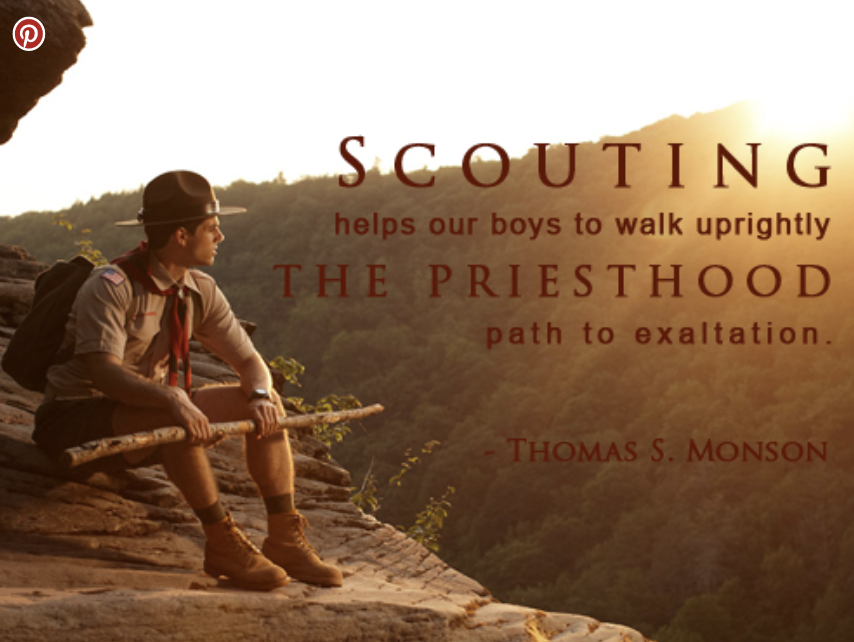
Then again, maybe it would help if the story mentioned decisions by leaders of the Church of Jesus Christ of Latter-Day Saints to cut ties to the Boy Scouts (click here for AP story on that bombshell) because of changes linked to gender and sexuality in the name of becoming more modern and, well, woke? Not that long ago, LDS congregations hosted 37% of all Scout troops. At the same time, many — perhaps most — Southern Baptist Convention churches have dropped out of Scouting for the same reasons.


Please respect our Commenting Policy