Journalism

Mainstream coverage of Pelosi-Communion story mangled doctrine, ignored canon law

Mainstream coverage of Pelosi-Communion story mangled doctrine, ignored canon law

Too often in the mainstream press there is a tendency for newsrooms to parrot the taking points of progressive activists. It’s due to a number of factors.

One is the type of schools most present-day journalists attend. The other is that they mostly grew up, live and work in blue zip codes along the New York-DC Acela corridor. Those values often come into direct conflict with reality, and that’s when journalism often fails to report facts and context that matter to news coverage. And always remember this GetReligion theme — politics is “real.” Religion? Not so much.

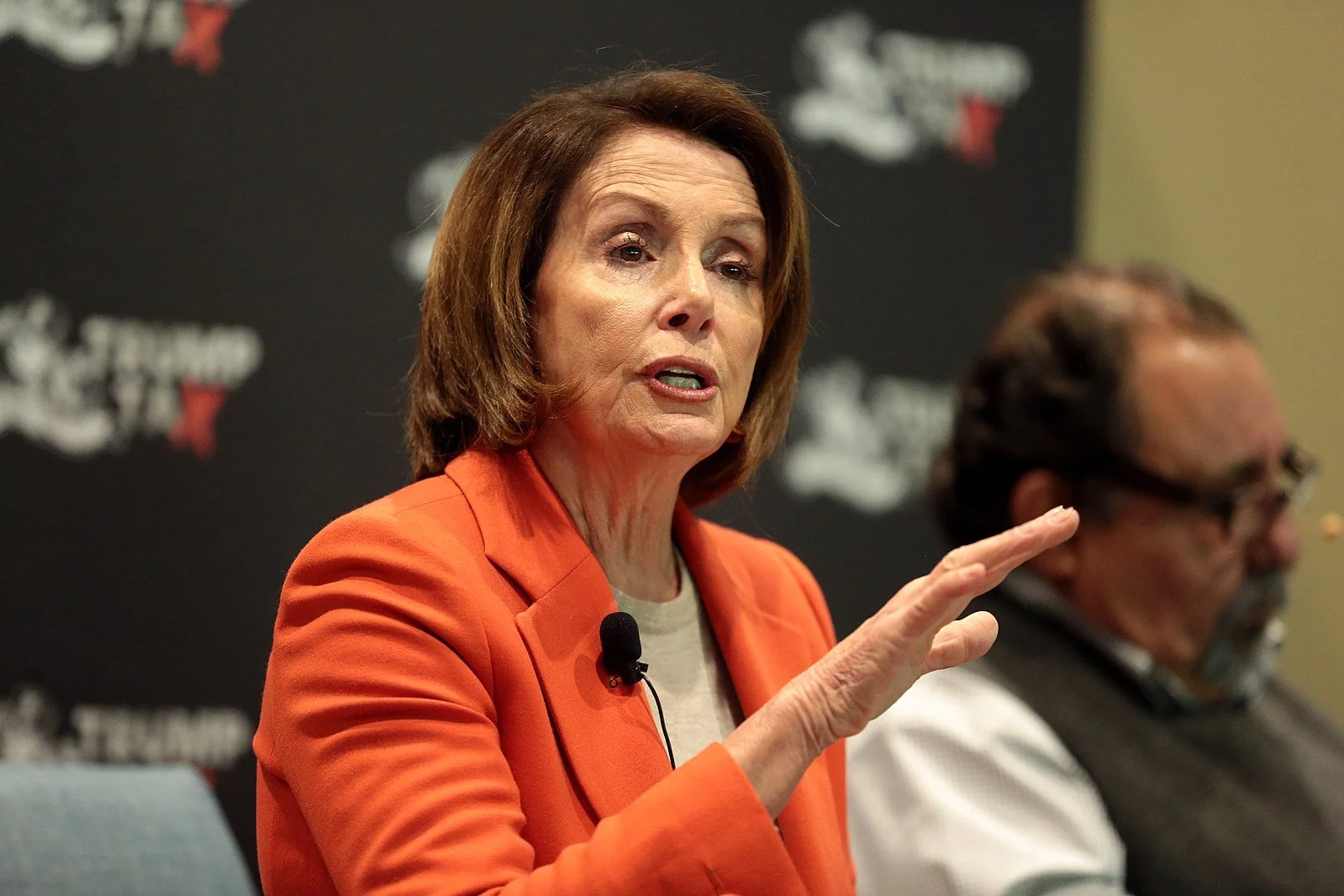
This brings us to the national news story regarding House Speaker Nancy Pelosi being banned by San Francisco Archbishop Salvatore Cordileone from taking Holy Communion because of her continued support — in words and deeds — for abortion rights.

The ensuing coverage, depending on what sources you read, spanned from very good (especially in Catholic news sources such as America magazine and The Pillar) to baffling and very poor.

These last two traits were mostly found in mainstream secular outlets where the focus was predominantly on politics rather than religion. It also highlighted the blind spots of today’s journalists, where a lack of religion knowledge — or even understanding that religious voices need to be included in their coverage — was on full display in the Pelosi-Holy Communion story.

As a result, some of the news coverage surrounding Pelosi and the archbishop denying her the Eucharist openly attempted to rewrite Catholic doctrine on this issue. Since most news coverage has a good guy-bad guy quality to it, omitting what the church teaches on this particular issue helped cast the California Democrat as the aggrieved party and Cordileone as a MAGA-loving prelate (who does not deserve the red hat of a cardinal).

It really didn’t matter whether it was a news story, editorial or opinion piece — centuries of Catholic doctrine on who should receive the Eucharist and the authority of a bishop was swept to the side.

The San Francisco Examiner, in a May 23 editorial, called for Pope Francis to replace Cordelione.
Please respect our Commenting Policy

U.S., world religious press suffers big hit with plans to shutter Catholic News Service

U.S., world religious press suffers big hit with plans to shutter Catholic News Service

The Catholic press — in print, online and television — is one of the most active and vibrant sources of news about trends and current events in U.S. Catholic life and the Catholic world as a whole.

It is often well-funded and essential to understanding Catholicism, but the changing journalism landscape — spurred on by the Internet — has made it tough for religious media to thrive, even if they have large and loyal audiences.

But, as we are seeing in the news market as a whole, readers are becoming more and more loyal to news sources with strong editorial points of view linked to the wide rifts in American Catholicism. This makes it hard for journalists to speak to readers on both sides.

This trend manifested itself recently with the pending closures of two highly venerated and popular Catholic news organizations: Catholic News Service and Catholic New York.

Catholic New York was one of those publications that used CNS stories. That’s one thing that connected the two. The other was that both news organizations were run by the church hierarchy.

CNS, founded in 1920, is a wire service with reporters and editors that write up stories for subscriber newspapers across the country. The other, Catholic New York, was the official newspaper of the archdiocese and one of the largest of its kind in the country in terms of geographical reach and circulation.

CNS announced two weeks ago that it was shutting down a main part of its operation in “a dramatic reorganization of its communications department” — including the closure of the Washington, D.C., and New York offices.

In meetings with newsroom staff, James Rogers, the chief communications officer of the United States Conference of Catholic Bishops, said the Washington office would be closed at year’s end. The Rome bureau will remain open and continue to report on the Vatican.


Please respect our Commenting Policy

Growing Haredi numbers poised to alter global Judaism. Maybe press should cover this?

Growing Haredi numbers poised to alter global Judaism. Maybe press should cover this?

The Holocaust devastated European Jewry. The most strictly religious among them — the mystical-oriented Hasidic followers of historic rabbinic lineages and the mitnagdim, Hasidism’s more intellectually focused religious critics — suffered some of the worst losses.

Their insularity and suspicion of the larger world served them poorly at a time when maneuverability and adaptability might have helped them flee Nazi Europe for safety. Instead, they turned their noses up at non-Orthodox Jews and avoided dealing with non-Jews as much as possible.

This was true for both Hasidic and mitnagdim Jews, who are often lumped together by outsiders under the rubric “ultra-Orthodox.”

It’s a label many of them reject; they argue there’s nothing “ultra” about them and that they’re only adhering closely to what they think of as “normative” rabbinic Judaism.

In Hebrew, they’re called Haredi or Haredim, the plural. That’s how I’ll refer to them in this post.

Samuel Heilman, an American academic expert on Haredi life, wrote the following on the subject for a PBS show on Hasidic Jews.

The three things the rebbes told their Hasidim to do led to their being blown away. The rebbes said: "Don't go to America, the treyfe medina (the unclean country), and don't go to the Zionist state, Palestine. Don't change your clothes or learn the surrounding language." So they couldn't disguise themselves or pass as gentiles. And, the rebbes said, "Stay close to me." They did stay close to the rebbes, but many of the rebbes [the Belzer, the Satmar, the Gerer] ran off and left all their people to die.

David Ben-Gurion, the secular Jewish Zionist leader who was Israel’s first prime minister, was convinced that circumstances following World War II would further depress Haredi numbers. Back then, the Haredim comprised just 5 percent of Mandatory Palestine’s pre-state Jewish population.

However to gain United Nations backing for an independent Jewish state, Ben-Gurion believed he had to show full Jewish unity for such a move. That included Haredi support.


Please respect our Commenting Policy

Pro-abortion rights activists hit Catholic churches, but you probably didn't read about it

Pro-abortion rights activists hit Catholic churches, but you probably didn't read about it

If there was ever a doubt that Americans are living in two, separate news universes, then the past two weeks certainly crystallized that reality even more than the polarizing presidential elections of 2016 and 2020.

Americans who lean left politically, comfortable with reading just The New York Times or Washington Post, have been treated to apocalyptic news stories and opinion pieces — it is often hard to tell which is which — stemming from the leak of the draft decision that could overturn Roe v. Wade.

Did you know that gay marriage is now at risk? Did you know that this incarnation of the U.S. Supreme Court is illegitimate? For these elite news organizations and their readers, reversing the right to abortion is just the first attack by fascist Republicans — you wait and see.

On the right, conservatives who watch opinion shows on Fox News Channel or read Brietbart can’t get enough of how President Joe Biden has been an abject failure, particularly when it comes to inflation.

Have you seen how high gas prices are? Did you read about the baby formula shortage? To those news organizations, it’s all about fixing these problems by “owning the libs” by getting the GOP in control of the House and Senate in the November midterm elections.

I have friends on both sides of the political aisle and it’s shocking to me how much one side doesn’t know about what the other is reading and thinking. It often takes weeks for stories that one side repeatedly reported on to ever make it into the pages and onto screens of the other side.

It’s not a failure of our politics. Those have always been polarized. This is a failure of journalism.

Let me explain how these two news universes (while great for the bottom line of news organizations catering to their bases) led to a major news story being totally ignored by many mainstream news sites.

The protests — deemed an issue with “a lot of passion” by the White House — over abortion spilled over into houses of worship, especially Catholic churches. Is the First Amendment right to protest on private property more important than freedom of religion? Not according to the Constitution, and that’s what the news media should be concerned with reporting, not with managing narratives.

It’s therefore not a surprise that pro-abortion rights folks protesting outside churches — and in some cases disrupting Mass — received little to no coverage in most mainstream national news organizations.


Please respect our Commenting Policy

Political reporter says journalism has made him a better Christian. He's not alone

Political reporter says journalism has made him a better Christian. He's not alone

Say what?

Jon Ward, chief national correspondent for Yahoo! News, writes in an essay for Christianity Today that his profession has made him a better Christian.

Ward knows many of his fellow Christians may find that hard to believe:

Conservative Christians are far more hostile toward the media now than they were when I was growing up. Some of my own family members have told me I should be ashamed of myself for doing my job. In fact, most people don’t like the media — and that’s bad for society. The media shares some of the blame for that, as I’ve written recently for Yahoo! News.

But he explains the profession’s role in his own life:

Journalism has empowered many of the most noble, the most Christian elements of my character. I have been discipled for two decades in how to discern what is true and false, and — probably more importantly — how to discern when there are no easy answers or solutions. I have been trained in pursuing truth without regard to whom it offends.

I have also been given a sense of humility about what we can know for sure and how often we need to acknowledge that our point of view is limited and incomplete. This is sometimes called “epistemological modesty,” and it is a quality that we badly need more of in our discourse.

Hey dude, you’re preaching to the choir.

Seriously, I authored a recent Christian Chronicle editorial that focused on the faith of one of my journalistic heroes: Jerry Mitchell, a Mississippi investigative reporter whose stories helped put four Klansmen and a serial killer behind bars.

From that editorial:

Mitchell recalled that a radio show host asked him once, “How can you be a Christian and a journalist?”


Please respect our Commenting Policy

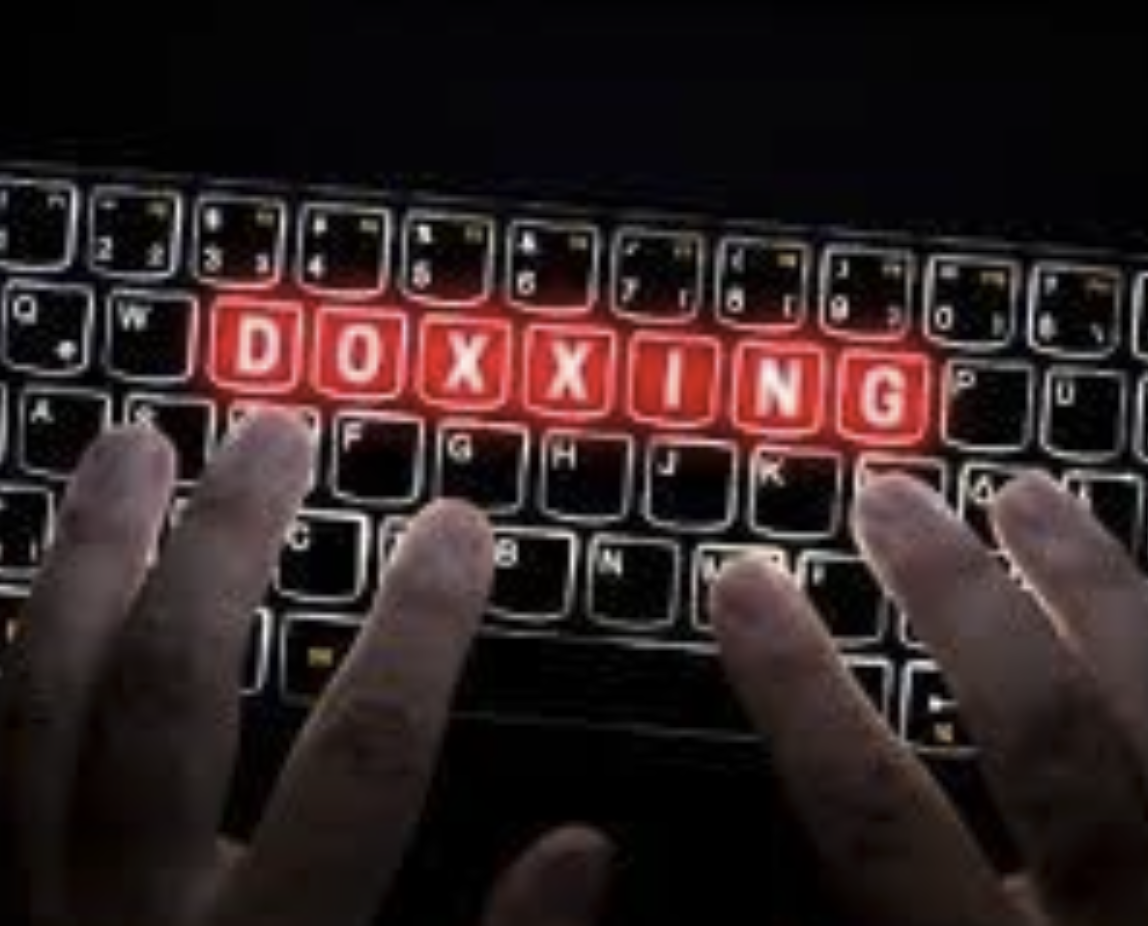
Ordinary protests at doxxed SCOTUS homes, Masses and a generic firebomb, as well

Ordinary protests at doxxed SCOTUS homes, Masses and a generic firebomb, as well

The Roe v. Wade related events of the past three or four days have created a very obvious case study that can be stashed into that ongoing “mirror image” case file here at GetReligion.

Start here. Let’s say that, during the days of the Donald Trump White House, something important happened related to LGBTQ rights — something like a U.S. Supreme Court decision that delivered a major victory to the trans community. At that point, some wild people on the far cultural right published the home addresses of the justices that backed the decision and, maybe, even any hospital that Justice Ruth Bader Ginsburg might be visiting for cancer treatments.

Another group, let’s call it “Bork Sent Us,” announces plans for protests at Episcopal Church parishes because of that denomination’s outspoken support for LGBTQ causes. Some protestors promise to invade sanctuaries and violate the bread and wine used in the Holy Eucharist. Along the way, what if someone firebombed a Planned Parenthood facility?

Obviously, Trump’s press secretary would be asked to condemn this madness, including violations of a federal law against intimidating protests at the homes of judges.

Let’s set that aside for a moment. I want to ask a “mirror image” journalism question: Would this be treated as a major news story in elite media on both sides of our divided nation and, thus, divided media? Would this, at the very least, deserve a story or two that made it into the basic Associated Press summary of the major news stories of the weekend?

Let me say that these events would have deserved waves of digital ink, with good cause.

This brings us, of course, to the leaked copy of a draft of a majority opinion by Justice Samuel Alito that points to a potential 5-3-1 decision to overturn Roe v. Wade. Twitter users may know many of the details of the anger this has unleashed in mass media and among Sexual Revolution clergy, both secular and sacred. There has been some coverage, including (#DUH) at Fox News. A sample on the church angle:

The White House on Sunday defended people's "fundamental right to protest" but warned against efforts to "intimidate" others during pro-abortion protests planned at Catholic churches across the country.

Multiple activist groups are planning protests defending abortion rights outside Catholic churches on Mother's Day and the following Sunday after a draft opinion from the Supreme Court threatened to overturn Roe v. Wade.


Please respect our Commenting Policy

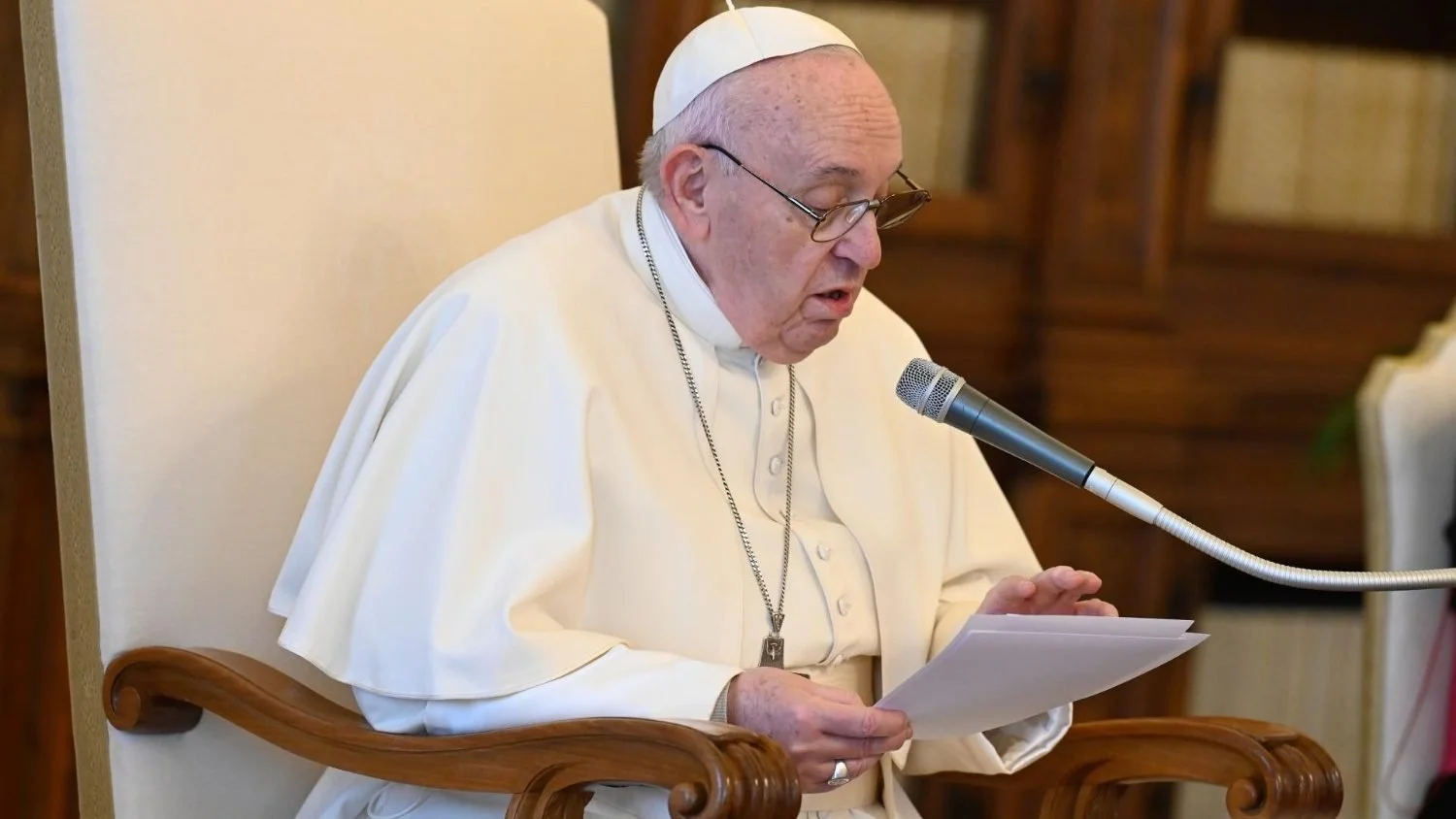
The pope, Cardinal Becciu and bad real estate deals: Concerning the Vatican 'Trial of the Century'

The pope, Cardinal Becciu and bad real estate deals: Concerning the Vatican 'Trial of the Century'

The news media loves the term “Trial of the Century.”

This phrase gained widespread acceptance and use during the 1935 trial that stemmed from the kidnapping of Charles Lindbergh’s son three year earlier. That was in an era when newspapers and sensationalism went hand in hand.

The moniker came back in a more modern context when O.J. Simpson went on trial for double homicide in 1995 — a salute to the power of celebrity in American life, as well as debates about race. This era included both newspapers and TV (the trial was televised live), along with a nascent Internet that would eventually come to dominate the news landscape a few decades later.

Something akin to a Catholic “Trial of the Century” has gotten underway in Rome and there’s plenty of palace intrigue to go around. The trial involving corruption, bad real estate deals and financial wrongdoing has placed Pope Francis in the center of a controversy that for the first time doesn’t involve doctrine or theology.

Familiar journalism questions leap to mind: What did the pope know and when did he know it? What if a witness implicates Francis? Hold that thought.

Pope Francis may not be on trial, but he might as well be, as news coverage of this trial attempts to cut through all the noise and get readers what’s most important. Catholic media has done a very good job covering the trial, although I expect coverage to expand in the mainstream press should Francis become a central figure during testimony.

It’s moments such as this trial, delayed over the past year by preliminary hearings and COVID-19, that highlight the Vatican as both a religious institution as well as a political one, with all the headaches that come with managing a city state with immense wealth and properties. News coverage of this trial and its lead up has been interesting to dissect — depending on whether you read mainstream media or the Catholic press — and exactly what this latest scandal means for the church.


Please respect our Commenting Policy

What is religion's role if powerful social media trends are endangering America?

What is religion's role if powerful social media trends are endangering America?

Whew! Within a matter of days Elon Musk bids $44 billion to get full control of Twitter, Netflix's market value plummets $54 billion, Florida's conservative version of "cancel culture" penalizes the Disney empire, and CNN kills off its streaming service in a month after investing $300 million -- perhaps the worst industry flop since Time Warner's 2001 merger with AOL.

Anchor Kasie Hunt, who left MSNBC for CNN+, embraced a life-goes-on attitude: "The news is the news is the news is the news." (She was quickly named CNN's Chief National Affairs Analyst.)

By the way, a certain influential newspaper in New York City also named a new team of top editors. Did you see those photos of incoming editor Joseph Kahn?

Maybe all that media turbulence is far less important than the inexorable accumulation of 21st Century cultural power by Twitter and other "social media: giants.

Thus, readers will want to consider this warning from Jonathan Haidt, a social psychologist at New York University's business school, in the May issue of The Atlantic: “Why the Past 10 Years of American Life Have Been Uniquely Stupid.”

American democracy is now operating outside the bounds of sustainability. If we do not make major changes soon, then our institutions, our political system, and our society may collapse during the next major war, pandemic, financial meltdown, or constitutional crisis.

Religion writers: Despite Haidt's imagery of failed communication taken from the biblical Tower of Babel (Genesis 11:1-9), his article sidesteps whether faith groups could help restore societal calm and how they're being reshaped by ubiquitous media. Perhaps he'll get into that in his book "Life After Babel Adapting to a World We Can No Longer Share," due from Penguin next year.

Though critics often say conflicting religions erode social cohesion, is it only coincidence that organized religion's slump to near-Depression status since A.D. 2000 occurred simultaneously with the disintegration Haidt decries?


Please respect our Commenting Policy

Thinking about 'bothsidesism' and sad changes in American politics and journalism

Thinking about 'bothsidesism' and sad changes in American politics and journalism

This is Holy Week for those of us in the ancient churches of the East. Thus, I am spending lots of time at my local parish as we march through many hours of ancient prayers, scriptures and liturgy. Yes, we are hearing more than a few prayers for peace in Ukraine and for the victims of that hellish fratricidal conflict. Will there, at the very least, be a ceasefire for Pascha (Easter)?

At the same time, my “Crossroads” partner — Todd Wilken of Lutheran Public Radio — was on the road to attend a funeral, so we didn’t record the podcast at our usual time. That should go live here at GetReligion tomorrow (mid-day Saturday).

Thus, I would like to point readers to a “think piece” that I have had in the hopper for some time now. It’s an opinion essay by Damon Linker that ran at The Week with this headline: “The noble and needful philosophical tradition of bothsidesism (no, really) — A call for equanimity in a polarized time.”

The term in question — “bothsideism” — is closely linked with another hot-button word that is frequently used as a semi-curse in social media. That would be “whataboutism.” Click here to read Merriam-Webster on that.

My interest in “bothsideism” is rooted in journalism theory, as opposed to pure political science.

During my days leading the Washington Journalism Center, two of the key lectures focused on four models of the press that dominate journalism debates in religious circles. For some people these days, discussions of balance, fairness and even accuracy — think the “American model of the press” — are one jump away from “bothsideism.” Here is a bite of an essay based on those lectures (.pdf here):

The American Model fit well with other American values — promoting a lively public square in which citizens could believe that their views would be treated with respect. It was possible, reading coverage over a period of time, to see which newsrooms were striving to be accurate and fair-minded. This approach meshed with a liberal approach to the First Amendment, as well.

Yes, this is a challenge for journalists as they do their work. I’ll be blunt. I think the most important skill in journalism is the ability to accurately report the views of a person with whom you disagree. Journalists are supposed to strive to show respect to people on both sides of hot- button debates.

This brings us to Linker.


Please respect our Commenting Policy