International News

Plug-In: Updates on faith angles in America's post-Roe cultural landscape

Plug-In: Updates on faith angles in America's post-Roe cultural landscape

Since the most recent Plug-In edition, the gunman in the 2018 Tree of Life synagogue massacre that killed 11 Jewish congregants was found guilty, as The Associated Press’ Peter Smith reports.

Pittsburgh’s Jewish community came together after last Friday’s conviction, according to the Pittsburgh Post-Gazette’s Megan Guza. Next up is the death penalty phase of Robert Bowers’ trial, which could take six weeks.

In other news, close to 1.5 million foreigners have arrived in Saudi Arabia for Islam’s annual Hajj pilgrimage, the first without the restrictions imposed during the COVID-19 pandemic.

This is our weekly roundup of the top headlines and best reads in the world of faith. We start with Saturday’s one-year anniversary of the landmark U.S. Supreme Court decision that overturned Roe v. Wade.

What To Know: The Big Story

Post-Roe America: On June 24, 2022, federal protections for abortion that had been in place nearly 50 years came to an end.

Such was the result of the high court’s ruling in Dobbs v. Jackson Women’s Health Organization.

A year after Roe’s fall, 25 million women live in states with abortion bans or tighter restrictions, AP’s Geoff Mulvihill, Kimberlee Kruesi and Claire Savage report.

People of faith split: At the anniversary, the nation’s religious leaders remain sharply divided over abortion, as AP’s David Crary points out:

In the year since the Supreme Court struck down the nationwide right to abortion, America’s religious leaders and denominations have responded in strikingly diverse ways — some celebrating the state-level bans that have ensued, others angered that a conservative Christian cause has changed the law of the land in ways they consider oppressive.

Please respect our Commenting Policy

Five big takeaways from the Southern Baptist Convention's 2023 annual meeting

Five big takeaways from the Southern Baptist Convention's 2023 annual meeting

Making headlines this past week: A tornado has devastated the Texas Panhandle town of Perryton, killing three people and injuring at least 75. As always, look for the “faith-based FEMA” to be among the helpers.

In Rome, Pope Francis has left the hospital where he had abdominal surgery nine days earlier. His surgeon says the pontiff is “better than before,” The Associated Press’ Francis D’Emilio reports.

This is our weekly roundup of the top headlines and best reads in the world of faith. We start with five key takeaways from the Southern Baptist Convention’s big annual meeting in New Orleans.

What To Know: The Big Story

1. No women pastors: As nearly 19,000 people — including 12,737 registered messengers — attended the SBC meeting, the nation’s largest evangelical denomination expanded restrictions on women in leadership.

See coverage by the New York Times’ Ruth Graham and Elizabeth Dias, Religion News Service’s Adelle M. Banks, the USA Today Network’s Liam Adams and Katherine Burgess, the Wall Street Journal’s Francis X. Rocca and the Washington Times’ Mark A. Kellner.

2. Saddleback out: The SBC rejected an appeal by Rick Warren to reinstate the California megachurch that he founded.

The reason for its ouster: It has women pastors. Also denied reinstatement: a smaller church with a female pastor in Louisville, Kentucky.

See coverage by The Associated Press’ Peter Smith, Christianity Today’s Kate Shellnutt, the Oklahoman’s Carla Hinton, RNS’ Banks and Bob Smietana and the Washington Post’s Michelle Boorstein.

3. Sex abuse reform: The debates about women’s roles threatened to push the issue that dominated last year’s meeting to the background.

But the slow work to address the abuse issue plodded on, as Christianity Today’s Kate Shellnutt explains.

4. The Rev. Bart Barber reelected: The small-town pastor from Farmersville, Texas, will serve a second one-year term as the SBC’s president.


Please respect our Commenting Policy

200-plus North American Muslim authorities join the sexuality culture wars

200-plus North American Muslim authorities join the sexuality culture wars

North America’s Christian and Jewish leaders have long been active, politically and legally, in taking differing sides on same-sex and transgender issues. Authorities in Islam are comparatively disengaged. That changes in dramatic fashion with a new declaration of alarm from a broad group of 59 authorities, quickly joined by 150 further endorsers from Muslim organizations and local mosques.

Journalists will want to ponder the May 23 “Navigating Differences” statement, which is publicized on Muslim websites and social media, though The Guy has seen no “mainstream media” coverage. Yet?

The ad hoc grouping upholds the “immutable” teaching on sexuality defined by the Quran and Hadith sayings of the Prophet Muhammad, then “unanimously agreed upon” in Islamic jurisprudence over the succeeding 14 centuries.

The newer news is that these scholars also assert that believers have been unfairly put on the defensive. The signers acknowledge that North American law and culture have moved away from traditional beliefs on marriage, sexual relations and gender identity, and affirm that citizens of a democracy who disagree with Islam have every right “to live in peace and free from abuse.”

However, they say, religious dissenters face “unwarranted accusations of bigotry” and, more troubling, “an increasing push to promote LGBTQ+ beliefs among children through legislation and regulations, disregarding parental consent” and suppressing Muslims’ “conscientious objection.” This is said to “subvert” parents, worsen “intolerance” in society and violate citizens’ religious freedom.

“We call on policymakers to protect our constitutional right to practice our religious beliefs freely, without fear of harassment, and to oppose any legislation seeking to stifle the religious freedoms of faith communities.”

These thinkers also urge public figures who are Muslims to “uphold the sanctity of our faith” and shun “erroneous pronouncements” on “sexual and gender ethics that contravene well-established Islamic teachings” and spurn or misrepresent “the will of God.” They “categorically reject” as indefensible any efforts to reinterpret tenets that are “not subject to revision.”

Journalists need to assess the importance of the declaration, which agrees with other religious conservatives.


Please respect our Commenting Policy

World watches as Sufi singer awaits death in Nigeria -- for lyrics said to be 'blasphemy'

World watches as Sufi singer awaits death in Nigeria -- for lyrics said to be 'blasphemy'

This much is clear: Kano State authorities in northern Nigeria accused the Sufi Muslim singer Yahaya Sharif-Aminu of circulating social-media messages containing lyrics they said attacked the Prophet Muhammad.

 What did the song say? It's impossible to find direct quotations, although his accusers say he sang praises for his Sufi faith and, thus, spread false teachings about Islam.

 Did Sharif-Aminu actually send those WhatsApp messages? Again, it's hard to separate facts from rumors backed by mob attacks.

But this much is clear: Sharif-Aminu was found guilty of blasphemy in 2020 by a regional sharia court and sentenced to death by hanging. He remains imprisoned, while human-rights activists around the world -- including the European Union parliament -- keep urging his release and the end of blasphemy laws.

"You're not sure, in many of these cases, what the person is actually accused of doing or saying because key people are afraid to discuss the details," said scholar Paul Marshall, who teaches at Baylor University in Waco, Texas, and lectures around the world. He is the coauthor of "Silenced: How Apostasy and Blasphemy Codes Are Choking Freedom Worldwide," with Nina Shea of the Center for Religious Freedom at the Hudson Institute in Washington, D.C.

The result is a deadly puzzle. Anyone who shares facts about blasphemy accusations may then be accused of spreading blasphemy. Depending on the time and location, any public opposition to blasphemy laws may be considered an act of blasphemy.

Meanwhile, the definitions of "apostasy" and "blasphemy" keep evolving when used in cultures as different as Pakistan, Iran, Iraq, Syria, Egypt, India and parts of Africa controlled by Islamic State leaders and its sympathizers, Marshall explained.


Please respect our Commenting Policy

New Ipsos survey includes newsworthy updates on religious attitudes worldwide

New Ipsos survey includes newsworthy updates on religious attitudes worldwide

There’s obvious news potential in a poll about religious attitudes that covers 26 nations and with fresh data (collected between January 20 and February 3).

Media chart-makers could have fun with the many numbers in the 40-page “Global Religion 2023: Religious Beliefs Across the World,” issued May 11 by Ipsos, the noted international market research and polling firm. For more information, see the full document (.pdf here) and the basic press release (.pdf here).

Coverage by the Southern Baptist Convention’s press service plucked out one notable number that others also emphasized: “Nearly half, 47%, of the global population believes that religion does more harm than good [though Ipsos] did not explore the reasons behind the perception . …”

By contrast, there were heavily positive attitudes toward religion’s impact in Thailand, Turkey and four South American nations. The U.S. fell in the middle range with 39% seeing “more harm.”  

But journalists need to note this: The harshly negative view was especially powerful in both secularized Sweden and in India, which on many other Ipsos measures has the globe’s most devout population! Go figure.

Before plunging into other data, The Guy offers colleagues a few preliminary thoughts on news reporting about this survey, which follows a similar Ipsos project in 2017, and whether instead it’s wiser to just keep the report on file for selective later use where pertinent.

The “26-country average” used by Ipsos lumps together all its findings, suggesting numbers like the 47% who see “more harm” represent the entire global population.

The Guy thinks these numbers may be too sketchy to tell us much.


Please respect our Commenting Policy

It will be easy for journalists to find God connections in Turkey's run-off election

It will be easy for journalists to find God connections in Turkey's run-off election

A few weeks ago, I got the opportunity to spend a few days in Turkey (recently re-branded as Türkiye), a country I’d not visited in 19 years. Back then, I was in Turkey’s mainly Kurdish southeastern sector — near the location of Turkey’s Feb. 6 earthquakes. It was like a visit to America’s Jim Crow past, as Kurds are a despised minority in Turkey.

My most recent journey (courtesy of the country’s tourism board) was very different — a swing around the country’s south-central precincts tracing the steps of St. Paul, who zig-zagged about Turkey during several visits.

While there, I experienced plenty of reminders (billboards and cars parades blasting slogans) that this was Turkey’s election season and that the country’s future very much hung on whether the current president, Recep Tayyip Erdoğan could be unseated in the upcoming May 28 run-off election.

Stay with that thought, because we will return to some observations on religion angles in the upcoming presidential run-off election.

Whatever happens, Erdogan will be a footnote in history. As Turkey’s most famous native son throughout the ages, Paul grew up in Tarsus, about 10 miles from the Mediterranean coast. It’s thought that his Jewish forebears arrived there a few centuries before and were made Roman citizens due to them being landowners. Tarsus was our first stop and because it’s impossible to know exactly where Paul’s family lived, the government has had to rely on where church tradition says it might have been.

So, there’s a “St. Paul’s well” with water you can still drink; some first-century ruins under protective glass, a St. Paul Museum surrounded by mulberry bushes and even an Islamic site purporting to be the biblical prophet Daniel’s tomb. One needs a tour guide to get about this town; these sites would have been difficult to locate in a rental car.

Those of us who live in the New World have difficulty imagining life in a country built on layers and layers of archeological sites; where’s it’s nothing to find a 2,000-year-old piece of statuary in one’s back yard and where the earliest Christians hung out.


Please respect our Commenting Policy

Yes, what about that meeting between Pope Francis and an exiled Russian Orthodox leader?

Yes, what about that meeting between Pope Francis and an exiled Russian Orthodox leader?

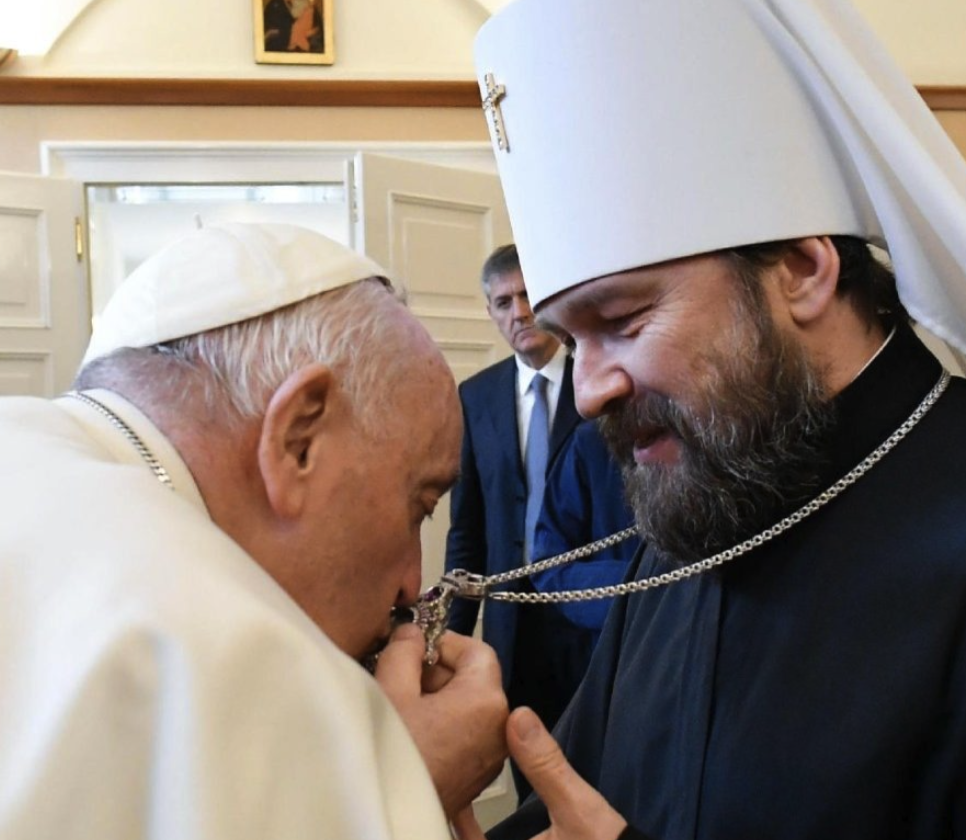
So, my gentle readers, please allow me to flash back to a recent news story that I intended to discuss, but travel got in the way. This was a story that may or may not have been important, but we really don’t know because it centered on a private meeting between Pope Francis and a very symbolic Russian Orthodox leader.

Why to I say that Metropolitan Hilarion of Budapest is a highly”symbolic” Orthodox leader, especially at this point in the hellish conflict between Russia and Ukraine?

To explain my use of “symbolic,” we need to look at the Associated Press story that ran with this headline: “Pope in Hungary meets with Ukrainian refugees, Russian envoy.”

Ah, but was Metropolitan Hilarion a “Russian envoy,” in this case? Hold that thought, because things get more complex in the AP lede:

BUDAPEST, Hungary (AP) — Pope Francis plunged into both sides of Russia’s war with Ukraine on Saturday, greeting some of the 2.5 million Ukrainian refugees who have fled across the border to Hungary during a public prayer service and then meeting privately with an envoy of the Russian Orthodox Church that has strongly supported the war.

First, an important point of grammar in the final clause of that sentence, as in “meeting privately with an envoy of the Russian Orthodox Church that has strongly supported the war.” I added the bold italics, stressing that this is “that,” rather than “who.”

As we will see, it appears that the AP team covering this event knew little or nothing about the recent personal history of Hilarion. Then again, AP may have — for for some reason — chosen to omit interesting and potentially important information.

Hold that thought (again), as we read some material that appears later in this story:

Immediately after greeting and encouraging the refugees, Francis … met with the Russian Orthodox Church’s representative in Hungary, Metropolitan Hilarion, who developed close relations with the Vatican during his years as the Russian church’s foreign minister. The Vatican said the 20-minute meeting at the Holy See’s embassy in Budapest was “cordial.”

The Russian church’s strong support for the Kremlin’s war has rankled the Vatican and prevented a second papal meeting with Patriarch Kirill, the head of the Russian Orthodox Church and an ally of Russian President Vladimir Putin.


Please respect our Commenting Policy

View from Rome: Italian press aims to inform, but loves tabloid-style Vatican scandals

View from Rome: Italian press aims to inform, but loves tabloid-style Vatican scandals

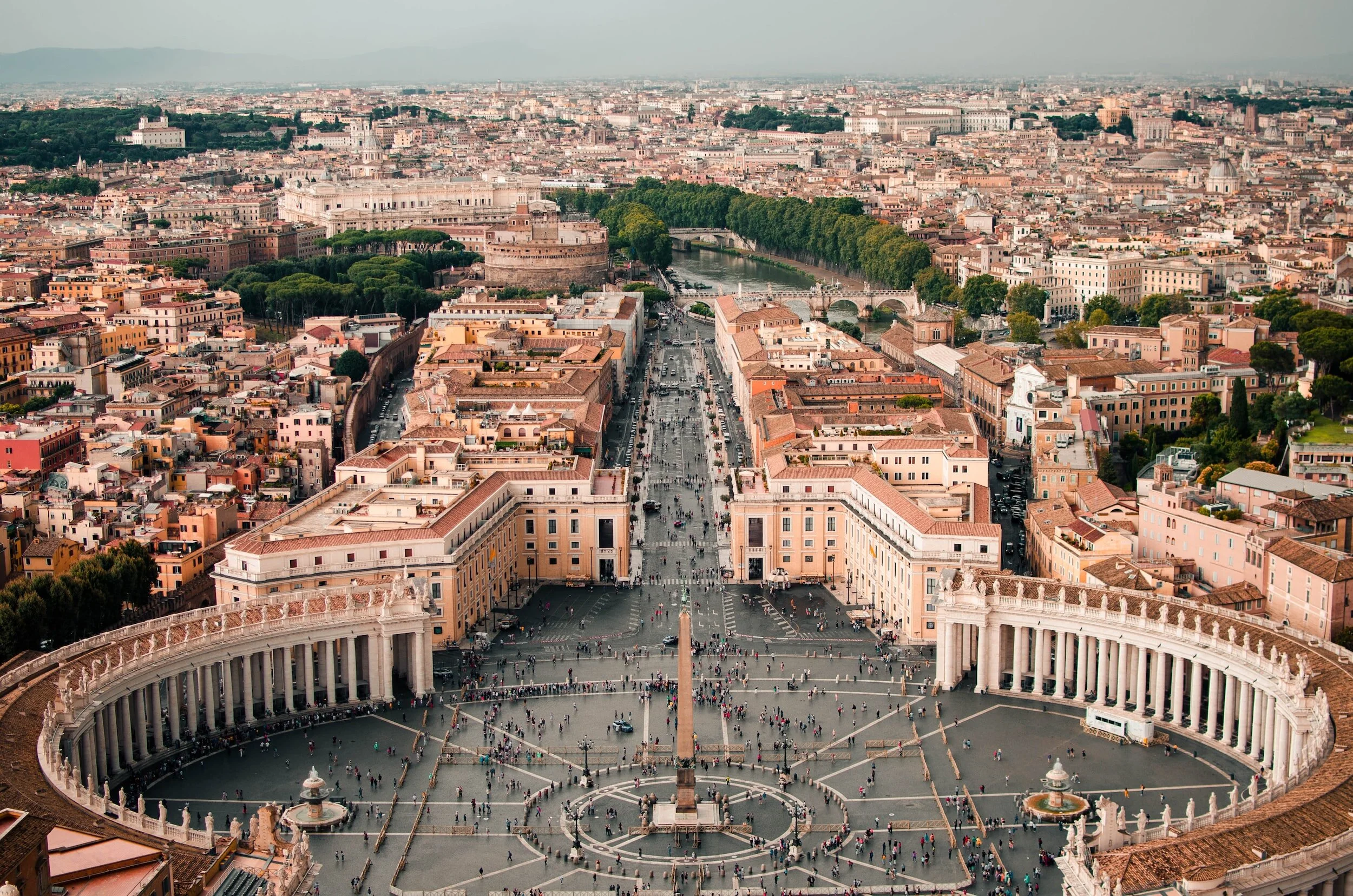
There’s nothing like walking down Via della Conciliazione in Rome. It’s a very long street, bustling with cars and tourists, that feeds into St. Peter’s Square at the Vatican. It’s a reminder of how big and imposing the Vatican can be, at least physically, in the increasingly secular West.

Italy, however, remains a Catholic nation, at least culturally, with reminders everywhere you look.

I am back in Italy for the first time since 2018. Unable to visit in recent years because of the pandemic, I am happy to be back to visit family and watch some soccer.   

My return to Italy also gives me the chance to observe how Italian journalists cover the Vatican and Pope Francis. What this close look reveals is a press fixated less on the doctrinal battles and culture-war issues we see in the American press. Instead, it’s all about international politics, the disappearance of a young girl (more on that later) and banking scandals.  

Let me explain. Italian media very much cover the papacy as a political force (it still very much is in this part of the world) and less of a religious one. As we say here at religion, many journalists believe religion is news to the degree that if affects politics.

Scandals involving the Holy See, even ones that are decades old and unsolved, continue to intrigue readers. It’s true that culture war issues were increasingly a factor in Italy’s elections that led to Giorgia Meloni becoming the country’s first female prime minister. It’s also true that Italian newspapers are not objective — many belong to political parties — but they don’t hide that fact from readers. That’s how the press works in Europe.

The big stories the Italian press have covered lately are the pope’s recent meeting with Ukraine’s President Vladimir Zelensky at the Vatican, the unsolved “Vatican Girl” scandal from 1983 and an ongoing trial that has revealed a series of financial scandals. Another big issue for the Vatican and Italy is falling birth rates, a story with strong religious overtones.

These stories transcend whatever political bias Italian newspapers bring to the table. They are seen as important to the country’s geo-political situation (in the case of Ukraine and birth rates).

The other stories reveal a Vatican that is very much involved in shadowy behavior — a corrupt institution that makes for attention-grabbing headlines meant to get clicks and sell newspapers. A murder mystery and alleged financial wrongdoing on the part of bishops will do that.


Please respect our Commenting Policy

Global South Anglicans are convinced that it's time to look forward (Part II)

Global South Anglicans are convinced that it's time to look forward (Part II)

Want to know how to cause a church split?

The deepest fault lines -- sex, money and pride -- have been obvious for centuries, said Archbishop Kanishka Raffel of the Anglican Diocese of Sydney, Australia.

"We use nationality or age or gender or wealth or clothing or accent or profession or politics -- to show off and communicate who we are and what sort of person we will or will not engage with," said Raffel, who was born in London, of Sri Lankan descent, and raised Buddhist.

"God's people are frail and very human. We bear the marks of weakness and humiliation. We can be loveless, faithless, tolerant of the intolerable and wretchedly self-satisfied. … God is angry about the abuse of people that comes through sexual immorality, greed and hateful, deceitful and cruel speech. We are not surprised."

For decades, he acknowledged, the 42 churches in the Anglican Communion have been rocked by divisions over biblical authority and colonial-era ecclesiastical structures -- with LGBTQ disputes grabbing headlines.

During the recent Global Anglican Future Conference, held in Kigali, Rwanda, Raffel was one of several bishops -- 315 attended, from 52 nations -- who stressed that traditionalists now need to look forward. It's time to focus on life in their rapidly growing churches, while dedicating less time and energy to clashes with declining churches in England, America, Canada and elsewhere.

This will, Raffel stressed, require looking in the mirror.

"We have been engaged in decades long conversation about sexual immorality. But we have often focused on one form of sexual sin, to the neglect of sexual sins which perhaps are more common among us and just as displeasing to God," he said. "How many women ... have shed rivers of tears over the way their sexuality has been misused by others? I suppose it would be millions. There is a self-serving blind spot of which we must repent, a log in our own eyes with which we are yet to deal. Lord, have mercy."


Please respect our Commenting Policy