International News

Attention mass-media leaders: What should Americans know about each others' faiths?

Attention mass-media leaders: What should Americans know about each others' faiths?

America’s three biggest hamburger chains have 27,000 local outlets.

The three biggest of America’s 2,800 or so religious denominations alone have 97,000 local congregations.

Which is to simply remind readers that faiths retain powerful impact in society despite the increase of people with no religious affiliation and other secular inroads.

Relations among major faiths feel especially pertinent in 2023, since Islam’s holy month of Ramadan with concluding Eid festival overlaps Jewish Passover and the two Easter dates observed by Christians.

Zeenat Rahman, executive director of the University of Chicago’s Institute of Politics, thinks American religion is “increasingly polarizing” and yet at the same time is “essential to rebuilding a strong civil society,” which means Americans “need a basic understanding of the faith of others.”

So, in practice what do people know about other major world religions? What should they know?

Those are important questions for regional or national journalists to explore via interviewing, plus polling if your medium has the money. Or consider commissioning brief articles where religious leaders sum up the basics they think others should know about their faiths and — especially helpful — what’s often misunderstood.

How about books? Stephen Wylen accepted this sort of challenge with his self-published “You Should Know This: A Rabbi Explains Christianity to Jews.” For years now, Terry Mattingly has also been recommending this classic by religion-beat veteran Mark Pinsky: “A Jew among the Evangelicals: A Guide for the Perplexed.”

Some standard book publisher should put together a non-sectarian and up-to-date anthology in which experts would depict their own religions for outsiders, including the main internal branches and variants.

Political scientist (and GetReligion contributor) Ryan Burge recently took up these matters, in a Religion News Service analysis, by re-examining 2019 interfaith data from the ubiquitous Pew Research Center.

Please respect our Commenting Policy

Debates in England about free speech and religion veer into 'thoughtcrimes' zone

Debates in England about free speech and religion veer into 'thoughtcrimes' zone

Wherever he goes, Father Sean Gough prays for the people he encounters -- sometimes out loud and often silently.

This isn't unusual, since he is a priest in the Catholic Archdiocese of Birmingham, England. Gough was praying silently when he was arrested near an abortion facility in a Public Spaces Protection Order protected zone, while holding a "Praying for free speech" sign. His car was parked nearby, with a small "unborn lives matter" bumper sticker.

The priest was charged with "intimidating service users," although the facility was closed at the time. The charges were later dropped.

Officers also raised questions about his clothing.

"When interrogated by police for silently praying in the censorship zone, they challenged me for wearing a cassock," said Gough, on Twitter. "When do I normally wear one? Don't I realize it'll be perceived as intimidating? These are not questions a person should be asked under caution in a democracy!"

Clause 11 of a recent Public Order Bill -- waiting to be signed into law -- would criminalize all forms of "influence" inside a 15-meter "buffer zone" around every abortion facility in England and Wales. An amendment to permit silent prayer and consensual conversations failed by a 116-299 vote in Parliament.

After years of debates about religious liberty and freedom of speech, recent events in England have veered into what activists and politicos have described as "thoughtcrimes," a term used in George Orwell's dystopian novel "1984" to describe thoughts that violate ruling-party dogmas.

In the U.S. House of Representatives, eight Republicans circulated a letter claiming it's "imperative that the U.S. speak boldly and clearly to its friend when the U.K. has failed to protect unalienable rights." The document condemned policies that "persecute Christians and other pro-life citizens for thoughtcrimes."


Please respect our Commenting Policy

Podcast: Painful fighting inside Ukrainian Orthodoxy? Schism began long before the war

Podcast: Painful fighting inside Ukrainian Orthodoxy? Schism began long before the war

Nearly 15 years ago, I traveled to Kiev to speak during a forum with Ukrainian journalists, and a few activists, focusing on religion coverage in that already tense nation. I was there as a representative of the Oxford Centre for Religion & Public Life.

Obviously, this meant talking about the fractured state of Eastern Orthodox Christianity in Ukraine, with bitter tensions between the historic (in many ways ancient) Ukrainian Orthodox Church and new rival churches — including leaders who had previously been excommunicated from canonical Orthodoxy.

Again, let me stress that this was in 2009, during a time when the Ukrainian government was, basically, content to let global Orthodox leaders work this out — oh so slowly — as an Orthodox canon-law issue.

These conflicts were truly byzantine (small “b”) and Ukrainian journalists said it was obvious that most journalists from Europe and America knew next to nothing about the Orthodox splits and, frankly, didn’t care to learn the details.

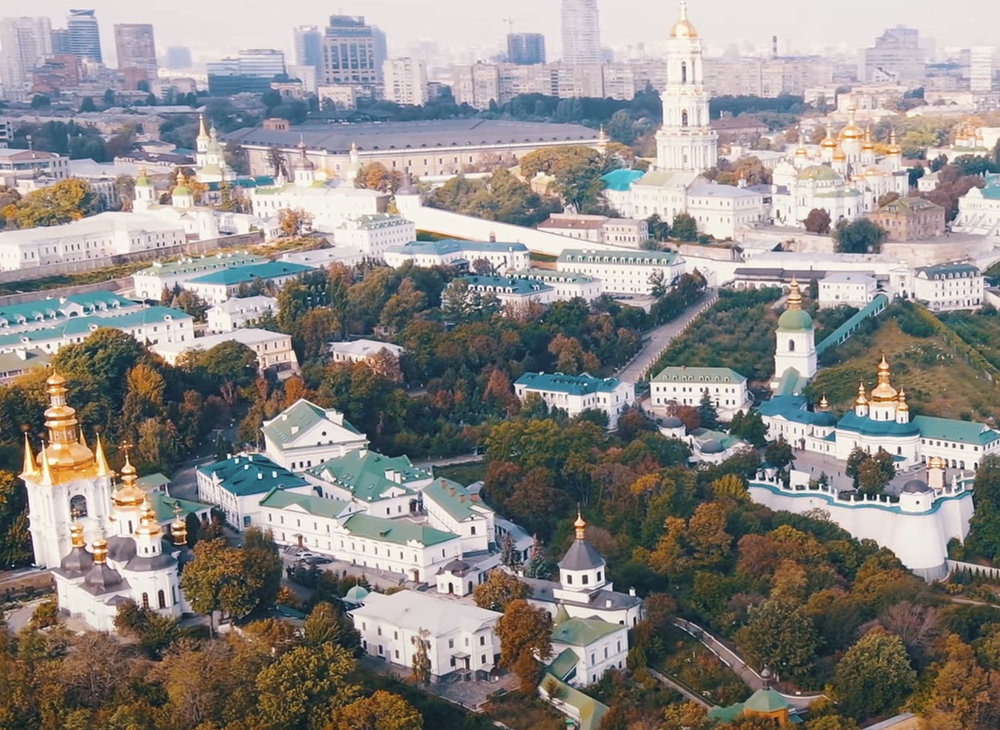
The Holy Dormition-Kiev Caves Lavra? That’s just a historic site. End of story.

Things have changed, sort of, but for all the wrong reasons.

With Vladimir Putin’s invasion of Ukraine, journalists now care about the state of Orthodoxy in this war. The question discussed during this week’s “Crossroads” podcast (click here to tune that in) is whether elite journalists have any interest in the centuries of facts behind the current Orthodox conflict. The church conflict is linked, of course, to the February 24, 2022, invasion — but also to earlier actions by leaders in the United States, the European Union, the current Ukrainian government and, last but not least, a strategic 2019 move by the Ecumenical Patriarchate in Istanbul.

Note: All of these events took place before the Russian invasion. The Orthodox schism in Ukraine predates the war — by decades.

Where to begin? Let’s start with some of what I learned, and described, 15 years ago, in a column with this title: “Religion ghosts in Ukraine.”


Please respect our Commenting Policy

How the press (mainstream and Catholic) chose to cover Francis' pontificate turning 10

How the press (mainstream and Catholic) chose to cover Francis' pontificate turning 10

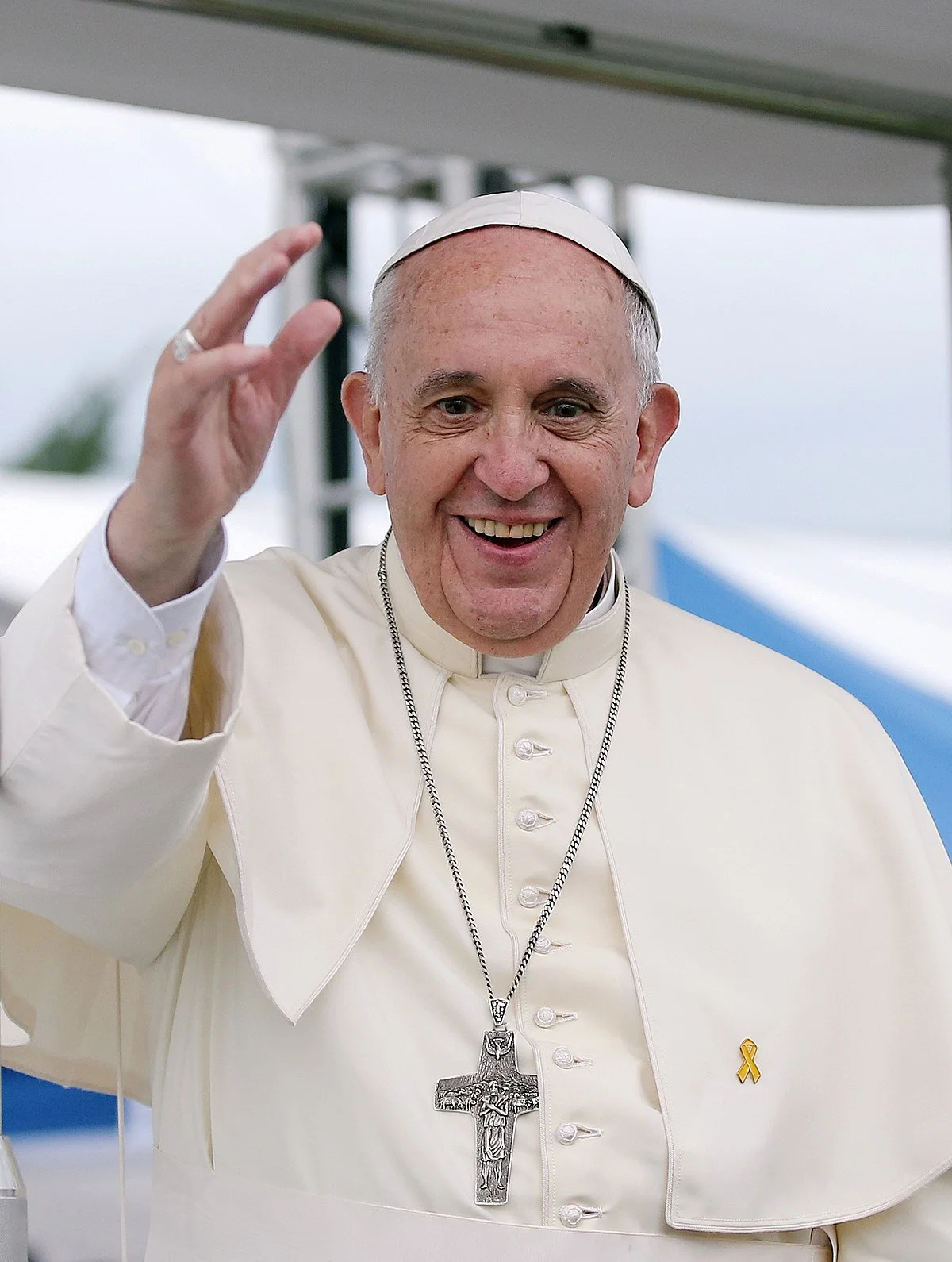
Pope Francis’ pontificate turned 10 years old last week and — like with an anniversary or milestone — became a time for the news media to reflect and reassess.

What will continue to matter — at least what I will be keeping an eye on — is how this pope will be covered both by the mainstream and Catholic press going forward. And, once again, news coverage of this pope often says as much about the journalists doing the coverage as it does about Pope Francis.

I wrote my own piece for Religion Unplugged on Francis reaching the milestone.

This is how I set up that feature:

The former Cardinal Jorge Mario Bergoglio, who was born in Argentina and is of Italian descent, was elected the 266th pope on March 13, 2013. It marked the first time a pontiff from South America has held the position. 

Following the resignation of Pope Benedict XVI in 2013, a papal conclave elected Bergoglio as his successor. He chose Francis as his papal name in honor of Saint Francis of Assisi.

Over that span of time, Catholics, especially in the West, have become much more polarized around political lines, a trend that has exacerbated divisions among Catholics. The 86-year-old Pope Francis, on a great number of issues, has been seen as a polarizing force for his progressive stances on several issues.

In fact, the “polarizing force” this papacy has brought with it was the major theme throughout the much of the coverage regarding Francis’ 10th anniversary as head of the Catholic church. The question? Was the force put to good use?

The narrative over the past 10 years has been that Francis’ papacy has largely steered the church leftward, in terms of doctrine and culture, after more than three decades of conservative leadership under Popes John Paul II and Benedict XVI.

But ambiguity has been the main issue with what this pope says, as opposed to what he does.


Please respect our Commenting Policy

Plug-In: At least six dead, plus unborn child, in Jehovah's Witnesses shooting In Germany

Plug-In: At least six dead, plus unborn child, in Jehovah's Witnesses shooting In Germany

Good morning, Weekend Plug-in readers!

Among the stories we’re following this week: A South Carolina church held a prayer vigil after two members of its community were abducted and killed by a Mexican drug cartel, as WPDE-TV’s Jenna Herazo reports.

Here in my home state of Oklahoma, voters trounced — somewhat surprisingly — a proposal to legalize recreational marijuana. Given the millions of dollars spent by the pro-marijuana side, a faith coalition leader who fought the initiative calls the outcome a “David beats Goliath” victory. I report that story at ReligionUnplugged.com.

Every weekend, Plug-in rounds up the best reads and top headlines in the world of faith.

We start this edition with tragic news out of Germany.

What to Know: The Big Story

Mass shooting at house of worship: “A former member of the Jehovah’s Witnesses shot dead six people at a hall belonging to the congregation in the German city of Hamburg before killing himself after police arrived, authorities said Friday. Police said an unborn baby also died, without clarifying whether the baby’s mother was among the dead. Eight people were wounded, four of them seriously.”

That’s the lede at this hour from The Associated Press’ Pietro de Cristofaro and Geir Moulson.

The shooting is “a rare kind of attack in a country where gun ownership is severely restricted,” the Wall Street Journal’s Georgi Kantchev notes.

More from the Journal:

The Jehovah’s Witnesses in Germany association said the community was “deeply saddened by the horrific attack on its members.” 

Jehovah’s Witnesses, a Christian denomination, have some 175,000 members in Germany, including 3,800 in the state of Hamburg, according to the organization. 

The attack took place around 9 p.m. on Thursday at a Jehovah’s Witnesses Kingdom Hall building in the northern part of the city after a service.

Motive emerging: Authorities are investigating the background of the shooting, according to news reports.


Please respect our Commenting Policy

Got news? Concerning a boring AP story that ignored info about controversial cardinal

Got news? Concerning a boring AP story that ignored info about controversial cardinal

Want to read a really boring Associated Press news story?

You know, the kind of short hard-news, nothing-but-facts AP report in which an important person — Pope Francis, in this case — releases a list of appointees to some inside-baseball this or that, people who are either unknown or vaguely familiar to a dozen or so readers who are into that kind of thing?

In this case, one ends up with a boring headline — sure to appear in a few newspapers — that reads like this: “Pope renews cabinet of cardinal advisers, adds new members.” Here’s the riveting overture:

ROME (AP) — Pope Francis has renewed his cabinet of cardinal advisers from around the world, naming a handful of new members Tuesday and reconfirming others to help him run the Catholic Church.

Francis instituted the Council of Cardinals one month into his papacy, on April 13, 2013, with a primary goal of advising him on the reform of the Vatican bureaucracy. After nearly a decade of consultation, Francis issued a new blueprint for the Vatican bureaucracy last year.

Nevertheless, the Jesuit pope clearly appreciated the regular opportunities to consult with a small number of hand-picked cardinals representing the church on nearly every continent, and decided to keep the cabinet alive, albeit with some new members.

Now, would that story be a bit more interesting — “newsy” even — if it noted that one of the new members of this papal “inner ring” was a cardinal who, at this moment in time, may be the world’s most controversial prince of the church?

I mean, in this case we are talking about a cardinal who said the following, in an interview with KDA, a German news agency:

"The Church's positions on homosexual relationships as sinful are wrong. … I believe that the sociological and scientific foundation of this doctrine is no longer correct. It is time for a fundamental revision of Church teaching, and the way in which Pope Francis has spoken of homosexuality could lead to a change in doctrine. …


Please respect our Commenting Policy

Archbishop of Canterbury offers to stand down, as England OKs gay-union blessings

Archbishop of Canterbury offers to stand down, as England OKs gay-union blessings

In England, proclaiming God's blessing on same-sex relationships has become the new orthodoxy for clergy with established ties to the powers that be.

But not in Nigeria and the Global South, where Anglican leaders have urged the Church of England to consider the impact of its actions on believers facing conflict with Jihadi terrorists.

"I am genuinely torn by this," said Archbishop of Canterbury Justin Welby, about an appeal for General Synod leaders to consult with Anglican primates around the world before proceeding. "It isn't just about listening to the rest of the world -- it's caring. Let's just be clear on that. It's about people who will die, women who will be raped, children who will be tortured.

"So, when we vote, we need to think of that. It's not just about what people will say -- it is about what they will suffer."

But after years of tense dialogues and visiting war zones, Welby told the synod to proceed. Thus, the General Synod bishops, clergy and laity voted 250-181 to offer blessing rites for same-sex couples married by the state -- while retaining church doctrine that marriage is between a man and a woman.

"For the first time, the Church of England will publicly, unreservedly and joyfully welcome same-sex couples in church," said Welby and Archbishop of York Stephen Cottrell, in their Feb. 9 statement. Anglicans have "deep differences on these questions which go to the heart of our human identity."

This move angered LGBTQ activists who said mere "blessings" were not enough, while leaders of giant Anglican churches in Africa and Asia also rejected the compromise.

Welby said he had little or no choice, when addressing a Feb. 12 meeting of the Anglican Consultative Council in Accra, Ghana.

After the synod vote, he said, "I was summoned twice to Parliament and threatened with parliamentary action to force same-sex marriage on us, called in England 'equal marriage.'"


Please respect our Commenting Policy

Podcast: Zero elite press coverage of 'heresy' accusations against an American cardinal?

Podcast: Zero elite press coverage of 'heresy' accusations against an American cardinal?

The question at the heart of this week’s “Crossroads” podcast (click here to tune that in) was not whether Springfield (Ill.) Bishop Thomas Paprocki was on target with his First Things essay that all but accused San Diego Cardinal Robert McElroy of heresy.

The question was not whether Cardinal Jean-Claude Hollerich of Luxembourg — a strategic leader in the Vatican’s Synod on Synodality — was right when he said the church's teaching on homosexuality are “no longer correct,” and added, “I think it is time for a fundamental revision of the doctrine."

The question was not whether Chicago Cardinal Blase Cupich was correct when he suggested, in print, that priests should absolve Catholics who come to Confession, allowing them to receive Holy Communion, even if these individuals refuse to repent of behaviors that Catholic doctrine insists are sin.

The question was not what Pope Francis meant when he told bishops in the Congo, “Always. Always forgive in the Sacrament of Reconciliation” — even if there is confusion about whether penitents are repenting of their sins or not.

No, the journalism question discussed during this podcast was this: Why are these developments — especially that stunning “Imagining a Heretical Cardinal” essay by Paprocki — receiving (as of this morning) zero coverage in the mainstream press?

By the way, it’s important that Bishop Paprocki is the chairman-elect of the Canonical Affairs and Church Governance Committee of the United States Conference of Catholic Bishops.

It may also be relevant that, in 2017, Paprocki and McElroy clashed — in print — over the Springfield bishop’s decision not to allow Catholics to receive Holy Communion if they are openly living in same-sex marriages and, thus, rejecting centuries of Catholic doctrines on marriage and sex.

Why the lack of coverage? I have several theories.


Please respect our Commenting Policy

When writing about Iran, women and hijab, stress the Islamic roots of it all.

When writing about Iran, women and hijab, stress the Islamic roots of it all.

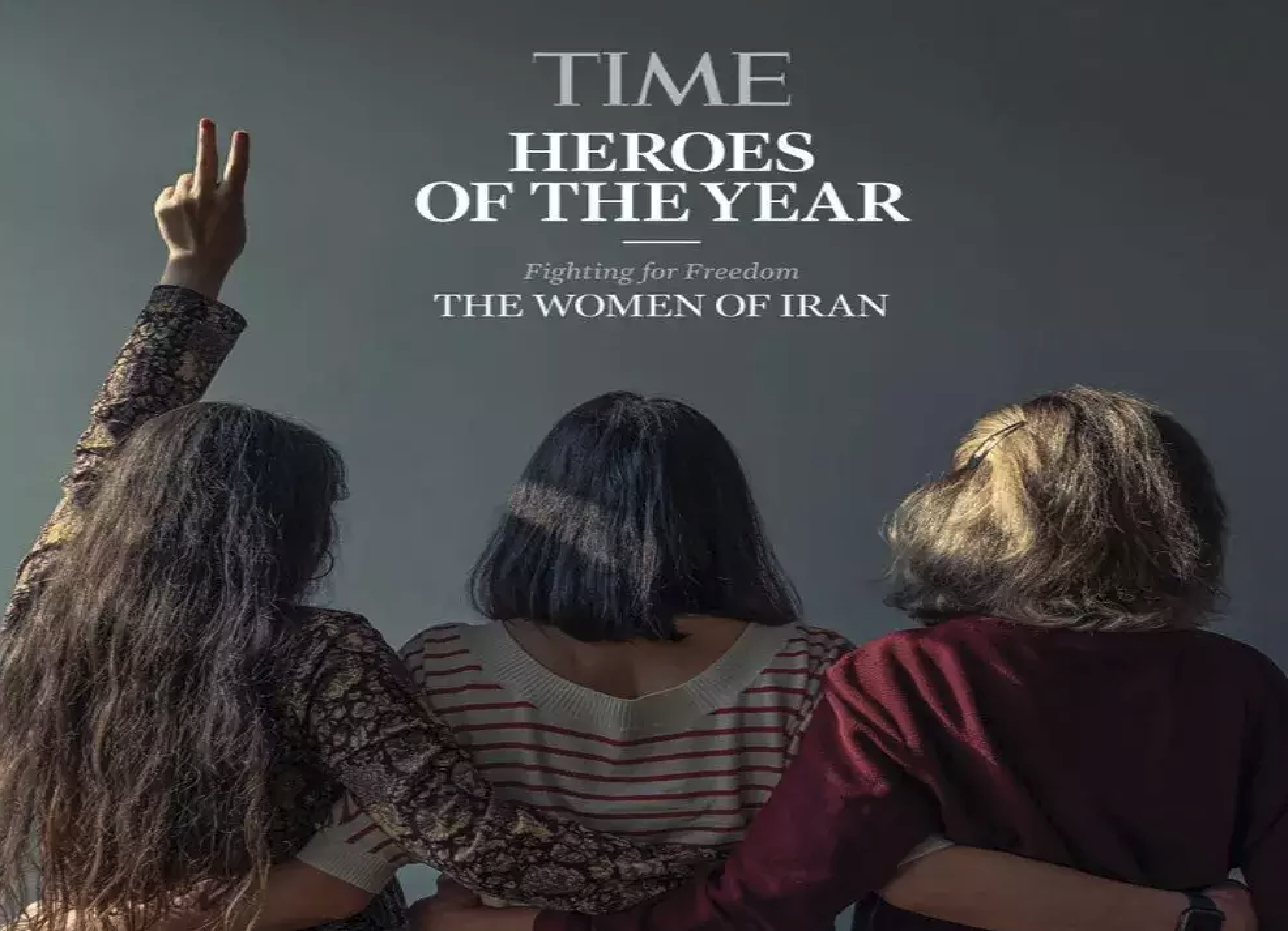
The female protestors in Iran have received a lot of positive press recently. Not only did they win Time magazine’s 2022 Person of the Year reader poll, they were also named the magazine’s 2022 Heroes of the Year.

Their bravery, even in the face of death — a number of them are being tortured and killed — has gained the attention of the world.

Recenty, the New York Times did a piece on how so many women are ditching their head coverings, the police aren’t bothering to arrest them. The issue here at GetReligion, of course, is whether journalists are coving the role that debates about specific Islamic traditions and laws are playing in all of this.

An engineer strode onstage at an event in Tehran, wearing tight pants and a stylish shirt, and clutching a microphone in one hand. Her long brown hair, tied in a ponytail, swung freely behind her, uncovered, in open defiance of Iran’s strict hijab law.

“I am Zeinab Kazempour,” she told the convention of Iran’s professional association of engineers. She condemned the group for supporting the hijab rules, and then she marched offstage, removing a scarf from around her neck and tossing it to the floor under a giant image of Iran’s supreme leader, Ayatollah Ali Khamenei.

The packed auditorium erupted in cheers, claps and whistles. A video of Ms. Kazempour went viral on social media and local news sites, making her the latest champion for many Iranians in a growing, open challenge to the hijab law.

Something has cracked wide open in the consciousness of Persian women.

Recently I’ve been fascinated by the refusal by Iranian women to wear head coverings. I’ve checked out Iranian activist Masih Alinejad’s “The Wind in My Hair” and Maryam Rostampour and Marziyeh Amirizadeh’s “Captive in Iran,” the latter about these two Christian women’s 259-day stay in Evin, Iran’s most notorious prison, to get a feel for what women experience in this sad and terrifying country.

Both give a snapshot of what it’s like to live in a real-life “Handmaid’s Tale” society.


Please respect our Commenting Policy