International News

Five Catholic storylines journalists will need to follow closely as we enter 2023

Five Catholic storylines journalists will need to follow closely as we enter 2023

There are only a few days left to go in 2022. It was a busy news year — loaded with stories with strong religion angles.

Many of those stories had Catholic angles that were important to highlight and report on. A year ago, I took a look at the top Catholic angles journalists needed to focus on heading into 2022. I was prescient in my outlook, highlighting the Supreme Court decision regarding abortion among the top things to focus on.  

This is what I wrote a year ago looking ahead to 2022:

Issues around politics and religion will likely dominate once again in 2022. The abortion issue and a pending Supreme Court decision regarding access to it will be a big story in the coming year. The Catholic church, a major part of the abortion debate in this country for decades, will play a major role in news stories that will be written over the coming months.   

As we prepare to ring in 2023, I want to highlight five big storylines and trends to look for over the next 12 months:

(5) Catholic politicians vs. bishops

The culture war that has embroiled many societies, especially in the United States and now Western Europe, will continue to pit Catholic bishops and politicians. It will be especially pronounced when it involves Catholic lawmakers.

We’ve already seen this with President Joe Biden and outgoing House Speaker Nancy Pelosi. Both are practicing Catholics who have butted heads with many bishops who keep noting public remarks and actions by these politicians that directly clash with centuries of Catholic doctrines on a great number of moral issues.

The U.S. Conference of Catholic Bishops recently elected a new president. As conference president, Archbishop Timothy Broglio of the Archdiocese of the Military Services will have to focus on many hot-button issues. Above all, fights over issues surrounding abortion and contraception will continue, including questions about whether politicians who openly clash with church teachings should receive Holy Communion.
Please respect our Commenting Policy

Final 2022 podcast: What parts of the Roe v. Wade story deserved additional coverage?

Final 2022 podcast: What parts of the Roe v. Wade story deserved additional coverage?

Everyone had to know that the fall of Roe v. Wade would be the top pick in the Religion News Association’s annual poll to determine the Top 10 religion-beat stories of 2022. That would have been the case, even if the RNA hadn’t created two lists this year, one for U.S. stories and one for international stories.

Why? I’ve been following this poll closely since the late 1970s and once interviewed the legendary George Cornell of the Associated Press about his observations on mainstream religion-news coverage trends during his decades on the beat.

Let’s briefly review some of the factors that shape this list year after year, since this topic was discussed during the final 2022 “Crossroads” podcast (CLICK HERE to tune that in). This episode was recorded while we wrestled with rolling power blackouts here in the frigid hills of East Tennessee. See if you can guess where we had to do a patch and start again!

First of all, the RNA top story will almost always be a hot political event or trend — with a religion angle. Politics, after all, is REAL news. Think White Evangelicals and Bad Man Orange. Second, it helps if stories feature clashes between religion and sex, usually in one of the progressive Mainline Protestant churches or, ideally, Roman Catholicism. Think Joe Biden, Catholic bishops and just about anything (especially if Pope Francis is involved). After that, you have slots for wars, natural disasters and newsy papal tours.

The fall of Roe v. Wade had it all, putting a core Sexual Revolution doctrine at risk, to one degree or another, depending on the blue, red or purple state involved.

I will not run through the contents of the whole RNA list. However, it’s interesting to note the wordings in some poll items, paying attention to what is included and what is NOT included therein. For example, here is No. 1 in the U.S. list:

The Supreme Court overturns the 1973 Roe v. Wade precedent and says there is no constitutional right to abortion, sparking battles in courts and state legislatures and driving voters to the November polls in high numbers. More than a dozen states enact abortion bans, while voters reject constitutional abortion restrictions in conservative Kansas and Kentucky and put abortion rights in three other states’ constitutions.

What is missing in that complex item?


Please respect our Commenting Policy

Buried story of 2022? The persecution of Christians keeps surging around the world

Buried story of 2022? The persecution of Christians keeps surging around the world

You want news?

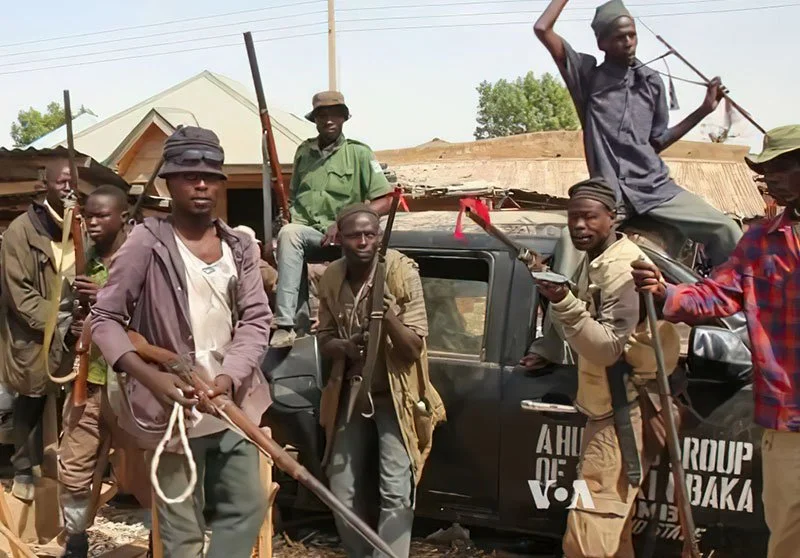
The 2022 report from the Open Doors organization (CLICK HERE) says “persecution of Christians has reached the highest levels” since it began accumulating data for its annual “World Watch List” three decades ago. Hostile incidents have increased by 20% since just 2014, and some 360 million Christians, or 14% of the worldwide total, are said to have faced persecution, harassment, or discrimination.

Open Doors reports that it has documented the murders in one year’s time of 5,898 Christians for their faith (up 24% from the prior year); attacks on 5,110 local churches (up 14%); 3,829 abductions (a new high, up 124%); 6,175 victims held without trial; 24,678 subjected to beatings, death threats and other abuse; 6,449 with homes or businesses attacked; and 3,147 women targeted for rape or sexual harassment. 

Since that report was issued, the Nigeria-based civil rights group Intersociety reports that in just that one nation 4,020 additional killings and 2,315 abductions occurred from January through October, 2022.

The Memo therefore proclaims this international upsurge the Buried Story of the Year, a major, newsworthy global scourge widely featured by religious media — yet all but ignored by much of the “Mainstream Media.”

Journalists will have another peg for remedying this sin of omission when Open Doors issues its 2023 report early in the new year.

One noteworthy media exception, timed for Christmas a year ago, was a thorough New York Times survey of widespread harassment of Christians in India. Also, Reuters this month produced a massive investigation of 10,000 forced abortions conducted by the military in chaotic Nigeria, indicating rape is a widespread tactic used to terrorize Christian women.

On a broader time frame, the Center for the Study of Global Christianity estimates that 1 million Christian martyrs were killed in the first 10 years of the 21st Century.


Please respect our Commenting Policy

Soccer and God-talk: Lionel Messi's Catholic faith was part of epic World Cup drama

Soccer and God-talk: Lionel Messi's Catholic faith was part of epic World Cup drama

LUSAIL, Qatar — Soccer superstar Lionel Messi went out of his way to avoid a gaggle of French defenders throughout the World Cup final.

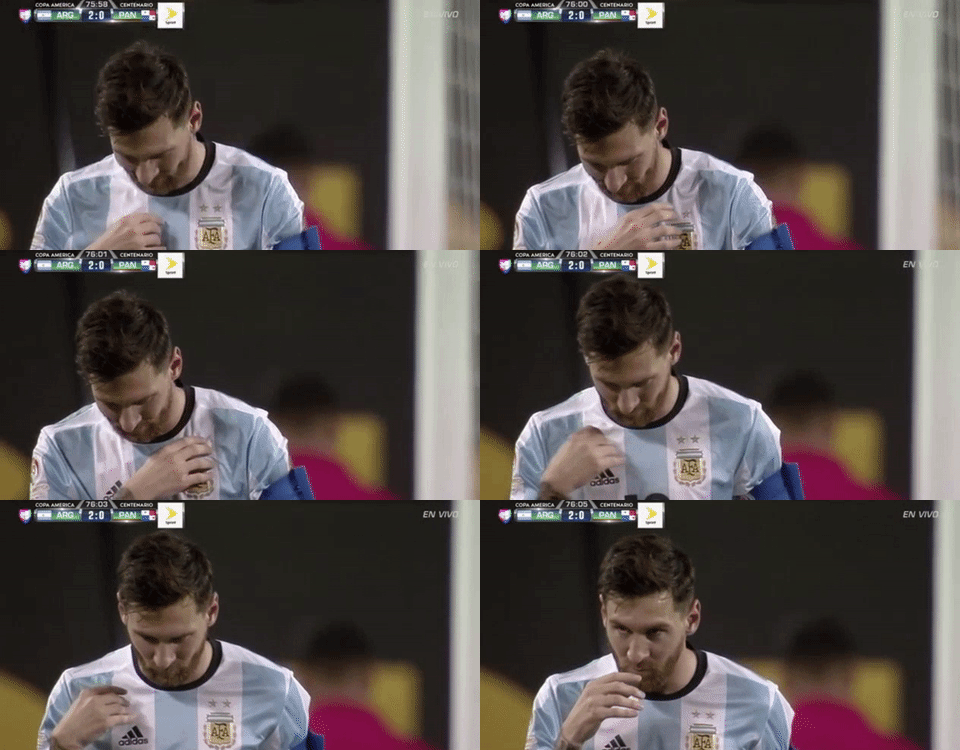
But Messi didn’t dodge the role that his Catholic faith played in Argentina’s epic win over France, praising God for his personal career success after the penalty-kick shootout in a World Cup final that will be remembered as the best in the tournament’s 92-year history.

“It’s just crazy that it became a reality this way,” Messi said. “I craved this for so long. I knew God would bring this gift to me. I had the feeling that this time was the one.”

Messi, a practicing Catholic, answered questions from reporters after Argentina’s victory at the 89,000-seat Lusail Stadium in the suburbs of the capital Doha. It was a game of ups and downs. Argentina twice squandered a lead (2-0 at halftime and 3-2 in extra time), but triumphed in the end on penalties after the game ended 3-3.

In leading Argentina to a third World Cup — after wins in 1978 and 1986 — Messi also replaced countryman Diego Maradona’s and even Brazilian legend Pele as the greatest player to have ever kicked a soccer ball.

Maradona, who died two years ago, is a global icon. In Argentina, he has enjoyed a status reserved for a deity. There’s even a church in which the faithful gather in his name. It’s impossible to avoid faith when talking about football in Argentina.

In an interview following the win against France, Messi, who typically makes the sign of the cross and points towards the sky after scoring goals, again mentioned God as the reason for the victory.

“I just said that God was going to give it to me,” Messi told TyC Sports, an Argentine sports TV channel, referring to the World Cup trophy. “I was sure I had a feeling that this was the moment. We suffered a lot — but now it’s time to enjoy it.”


Please respect our Commenting Policy

Battles over 'Holy Rus' -- Centuries of history behind the bitter Orthodox schism in Ukraine

Battles over 'Holy Rus' -- Centuries of history behind the bitter Orthodox schism in Ukraine

After the Soviet Union's collapse, Orthodox Christians throughout the Slavic world celebrated the slow, steady, construction of churches after decades of persecution.

In 2004, the poet Nina Borodai wrote a long prayer -- "Song of the Most Holy Theotokos (Greek for God-bearer)" -- seeking the prayers of St. Mary for the lands of "Holy Rus," a term with roots dating to the 988 conversion Prince Vladimir of Kiev.

"Mother of God, Mother of God / … All Holy Rus prays to you / And valleys and mountains and forests. … / Consecrate all the churches to you," wrote Borodai (computer translation from Russian). "Domes, domes in the sky are blue / I can't count the bells / The ringing floats, floats over Russia / Mother Rus is awakening."

Borodai's prayer of joy and repentance was an unlikely spark for an explosion of religious conflict inside Ukraine. Leaders of the Ukrainian Orthodox Church -- with centuries of canonical ties to Russian Orthodoxy -- face Security Service of Ukraine accusations of collusion with President Vladimir Putin of Russia. Some churches have been seized or padlocked as pressures rise for conversions to the rival Orthodox Church of Ukraine, officially born in 2019 with recognition by Ecumenical Patriarch Bartholomew I of Istanbul and Western governments.

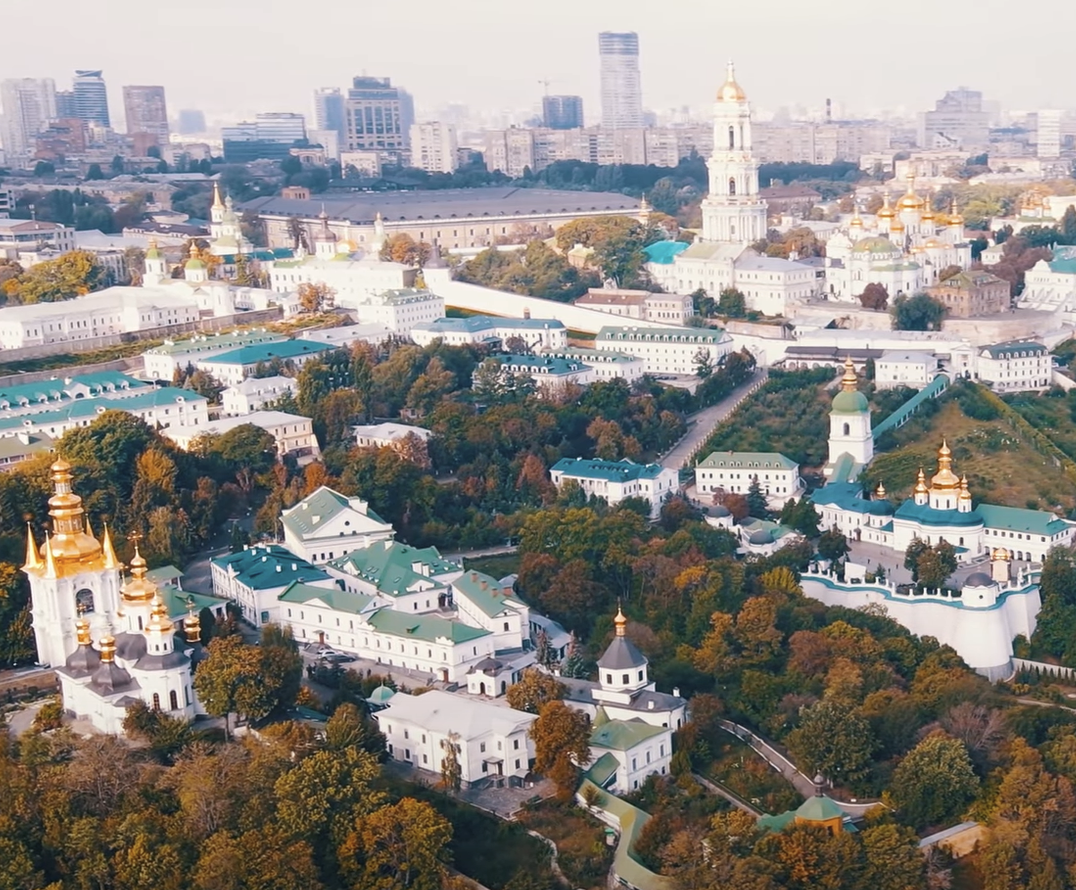
In November, an OCU priest posted a video showing laypeople singing Borodai's poem after a service inside the Kiev Pechersk Lavra, the font of Slavic monasticism since its birth in 1051 in caves above the Dnieper River. Monastery critics made headlines by claiming the video proved the monks -- part of the historic UOC -- are disloyal to Ukraine. Lavra visitors, according to the New York Times, were "cheering for Russia."

Days later, security forces raided the monastery and, in the weeks since, officials have accused bishops and priests of aiding Russia. They released photos of Russian passports, theological texts in Russian and pamphlets criticizing the newly created Ukrainian church.

The UOC synod responded by pleading for fair, open trials of anyone accused, while noting: "From the first day of the invasion of Russian troops, the Ukrainian Orthodox Church has condemned this war and has consistently advocated the preservation of the sovereignty, independence and territorial integrity of Ukraine. Our believers, with God's help and the prayers of their fellow believers, courageously defend their Motherland in the ranks of the Armed Forces of Ukraine. … Memory eternal to all victims of this terrible war!"

This echoed waves of UOC statements condemning the invasion.


Please respect our Commenting Policy

Podcast: Is Christmas 'news'? Not really, unless it is a case of 'Christmas AND ...'

Podcast: Is Christmas 'news'? Not really, unless it is a case of 'Christmas AND ...'

At least once a year, back in the days when I was in a newsroom full-time, I would have a semi-argument with an editor about this question: Are debates about worship issues “hard news”?

Every now and then I would win and we’d run a story — like a feature about United Methodists arguing about gender-neutral language for God (this was in the 1980s). When it ran, all hellfire broke loose, which convinced some editors that I was right. Others, however, were upset that so many readers disagreed with their conviction that a religion-religion story was news, as opposed to religion-politics stories.

This brings me to Christmas — which is on a Sunday this year. This has led to some interesting polling and emotional online debates, but, so far, not much news coverage about the central worship question: Should churches celebrate Christmas on Christmas, even if Dec. 25 falls on a Sunday? This was the hook for this week’s “Crossroads” podcast (CLICK HERE to tune that in).

Research? The team at Lifeway Research has done two studies linked to Christmas worship. For example, see this Baptist Press headline: “Most churches plan to open on Christmas and New Year’s Day.” I wrote a column the other day with this headline: “When is Christmas? That depends on the person asking.”

Back to the question about worship being news. You end up with an equation that goes something like this:

* Flocks of people attending Latin Mass rites is not news.

* The pope questioning the motives of traditional Catholics who support the Latin Mass is news.

* A major American political leader — Joe Biden, perhaps — supporting the pope’s take on the Latin Mass would be big news.

See how this works? You can see how this would apply to the whole “When is Christmas?” debate. It matters to millions of people in pews. It doesn’t matter to the political desk.


Please respect our Commenting Policy

Escaping that 'comfort zone': Press keeps missing obvious religion news at '22 World Cup

Escaping that 'comfort zone': Press keeps missing obvious religion news at '22 World Cup

The World Cup in Qatar continues to roll along into the semifinals. So far, the premier soccer tournament — and arguably the planet’s biggest sporting event — has showcased skill, drama and even some upsets. 

What the tournament has also generated are plenty of different kinds of storylines for news reporters and sports writers to focus on. As is the case with sporting events in general there are lots of storylines connected to religion that have gone unnoticed. 

It should come as no surprise that sports writers, and very often their editors back in the newsroom, don’t “get” religion. Go-to websites such as Fox Sports and ESPN, for instance, have failed to cover obvious stories in the past. They’ve also failed to do it in regards to the 2022 World Cup. For starters, think location, location and location. Why? Click here.

There are a few faith storylines — on and off the field — that did get coverage. Some of that coverage was great; some not so great.  

An example of a very good piece came via The New York Times. The newspaper found a way to discuss Qatar’s use of migrant workers to build stadiums and other infrastructure projects related to the World Cup in a new way.

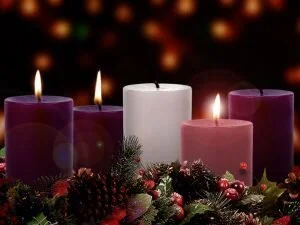
The feature, which ran on a Sunday during Advent, looked at Qatar’s only Catholic church, located on the outskirts of the capital city Doha — in an area in which the government sanctions eight houses of worship, from Anglican to Eastern Orthodox. This feature, written by John Branch, is one of the rare times when a sports writer left his or her “comfort zone” and ventured outside the bubble of stadiums and press conferences to cover a story. 

Here’s the key section, showing why this story matters

Qatar is a nation deeply rooted in Islam. Calls to prayer can be heard five times a day throughout Doha. World Cup stadiums have prayer rooms for fans, and some staff at the games will stop what they’re doing to kneel in prayer.


Please respect our Commenting Policy

Plug-In: Religious liberty vs. gay rights -- LGBTQ debates escalate around the world

Plug-In: Religious liberty vs. gay rights -- LGBTQ debates escalate around the world

The latest clash of religious liberty versus gay rights at the U.S. Supreme Court.

Friction over LGBTQ issues in traditional faiths around the world, from the global Anglican Communion to the vast Muslim world.

Final congressional passage of a bill to protect same-sex marriage rights.

No doubt, there’s a common theme to some of this past week’s top headlines.

At The Associated Press, Jessica Gresko and Mark Sherman report:

The Supreme Court’s conservative majority sounded sympathetic Monday to a Christian graphic artist who objects to designing wedding websites for gay couples, the latest collision of religion and gay rights to land at the high court.

The designer and her supporters say that ruling against her would force artists — from painters and photographers to writers and musicians — to do work that is against their beliefs. Her opponents, meanwhile, say that if she wins, a range of businesses will be able to discriminate, refusing to serve Black, Jewish or Muslim customers, interracial or interfaith couples or immigrants.

Meanwhile, AP’s global religion team partners with its Lilly Endowment grant partners — Religion News Service and The Conversation — to examine LGBTQ belief and belonging around the world.

Among the specific stories:

Friction over LGBTQ issues worsens in global Anglican church (by AP’s Chinedu Asadu and David Crary and RNS’ Catherine Pepinster)

Across vast Muslim world, LGBTQ people remain marginalized (by AP’s Edna Tarigan, Mariam Fam and David Crary)

LGBTQ students wrestle with tensions at Christian colleges (by AP’s Giovanna Dell’Orto and RNS’ Yonat Shimron)


Please respect our Commenting Policy

Machine guns in the Monastery of the Kiev Caves: Can reporters find sources for facts?

Machine guns in the Monastery of the Kiev Caves: Can reporters find sources for facts?

Let me begin with some personal remarks, since it would be valid for readers to raise these issues.

Yes, I am an Orthodox believer who has — twice — worshipped with the monks of the Monastery of the Kiev Caves. I have walked its matrix of underground sanctuaries, tombs and monastic cells. It’s hard for me to imagine something more horrifying than soldiers with machine guns inside the Lavra, passing the bodies of numerous saints. I confess that, for a decade, I have prayed that we would not see a military takeover of this sacred site by forces on either side of the divides inside Ukraine.

Yes, I saw the New York Times report with this headline: “Ukraine Raids Holy Site Amid Suspicion of Orthodox Church Tied to Moscow.” I have read a dozen or so other mainstream media accounts of the rising tensions about the current Ukrainian administration considering some kind of Lavra takeover.

All of these reports are based on information from government officials and the leaders of the new Orthodox Church of Ukraine, which was — depending on the sources cited —created by Western Ukrainian leaders, the U.S. State Department (under the administrations of Donald Trump and Joe Biden), the government of Turkey and/or the first-among-equals Ecumenical Patriarch who leads the tiny Orthodox body that remains based in Istanbul.

These reports continue to ignore or downplay the statements and actions of the historic Ukrainian Orthodox Church, led by Metropolitan Onuphry, which has — since the day of the Russian invasion — stressed its total opposition to this action of the Vladimir Putin government in Moscow. This church, the canonical church of Ukraine for many generations, has taken steps to cut its ties to Orthodox leaders in Moscow, even as its leaders have recognized they do not have the clear authority to do so. They appear to be pleading for the wider world of Orthodoxy (as in patriarches of multiple ancient churches, not just Istanbul) to intervene, somehow, in this crisis.

As a rule, mainstream journalists have expressed little interest in the actual Orthodox traditions and laws linked to this tragedy. In particular, the press has ignored the global voices of the Orthodox who oppose Putin, but support Metropolitan Onuphry and, thus, the monks of the Lavra.

Frankly, my head is spinning as I try to deal with the myriad journalism issues involved in covering this massive story. I am aware that most journalists are limited in what they can cover, due to language issues and the difficulty of on-site work in the midst of this conflict. I want to look at two issues in this Times report because — this is a positive — it includes some remarks from an actual monk from the Kievan Caves. Such as:

Father Hieromonk Ioan, a member of the Kyiv monastery, said that the clergy there were not loyal to Moscow but did not shy away from the close historic ties with Russia. “We have certain relations with Russia and it’s painful for us what is going on now,” he said in an interview outside the monastery. …


Please respect our Commenting Policy