International News

Plug-In: Canadian trucker protests echo U.S. Christian nationalism? Press says 'yes'

Plug-In: Canadian trucker protests echo U.S. Christian nationalism? Press says 'yes'

“Honk if you love Jesus.”

That headline on a recent story by the Ottawa Citizen’s Blair Crawford sets the scene as the Canadian newspaper explains “Why so many Evangelical Christians have joined the ‘Freedom Convoy.’”

Unfamiliar with the Freedom Convoy? The Wall Street Journal explains the protest in Canada’s capital city this way:

Since late January, downtown Ottawa has served as a parking lot for hundreds of heavy-duty trucks, pickup trucks and other vehicles, operated by individuals who say they are fed up with the social restrictions and vaccine mandates meant to contain the spread of Covid-19.

Back to the faith angle: The Ottawa newspaper notes:

At the ongoing demonstration … Jesus references and Bible quotes share space alongside “F*ck Trudeau” signs. The evangelical Christian message of love and peace clashes with reports of Ottawa residents being harassed for wearing masks, houses displaying the rainbow pride flag vandalized and the sight of Confederate flags and swastikas among the demonstrators. At one booth on Wellington Street you could get buttons with the yellow Star of David, likening the plight of Jewish people in Nazi Germany to the unvaccinated.

CBC News’ Jorge Barrera reports that “For many inside the freedom convoy, faith fuels the resistance.”

According to Barrera’s story:

Christian faith — with an overtly evangelical feel — flows likes an undercurrent through the Freedom Convoy in Ottawa.
Please respect our Commenting Policy

Yes, a cardinal with strong Pope Francis ties said church doctrines on LGBTQ issues are wrong

Yes, a cardinal with strong Pope Francis ties said church doctrines on LGBTQ issues are wrong

It isn't every day that a prince of the Roman Catholic Church, and a strategic Jesuit ally of the pope, openly rejects centuries of Christian teachings that clash with core doctrines of the Sexual Revolution.

"The Church's positions on homosexual relationships as sinful are wrong," said Cardinal Jean-Claude Hollerich of Luxembourg, in a recent interview with KDA, a German Catholic news agency. "I believe that the sociological and scientific foundation of this doctrine is no longer correct. It is time for a fundamental revision of Church teaching, and the way in which Pope Francis has spoken of homosexuality could lead to a change in doctrine. …

"In our archdiocese, in Luxembourg, no one is fired for being homosexual, or divorced and remarried. I can't toss them out, they would become unemployed, and how can such a thing be Christian? As for homosexual priests, there are many of these, and it would be good if they could talk about this with their bishop without his condemning them."

The latest unorthodox proclamations by Cardinal Hollerich commanded attention because he leads the Commission of the Bishops' Conferences of the European Union, as well as being the pope's choice as "relator general" for the October 2023 global Synod of Bishops, helping shape its work to weigh the church's future.

"This Cardinal seems to be claiming a private revelation which is contrary to scripture & the Catechism of the Catholic Church," tweeted Bishop Joseph Strickland, an outspoken conservative who is Bishop of Tyler, Texas. "Any private revelation that contradicts public revelation must be condemned."

However, the recent "Synodal Way" meetings of German Catholic leaders voted to approve draft texts that affirmed some of Cardinal Hollerich's beliefs, including overwhelming approval for a document entitled "Blessing celebrations for couples who love each other." Support was just as strong for a "Magisterial reassessment of homosexuality" text stating that official church teachings on chastity and homosexuality "should be revised."


Please respect our Commenting Policy

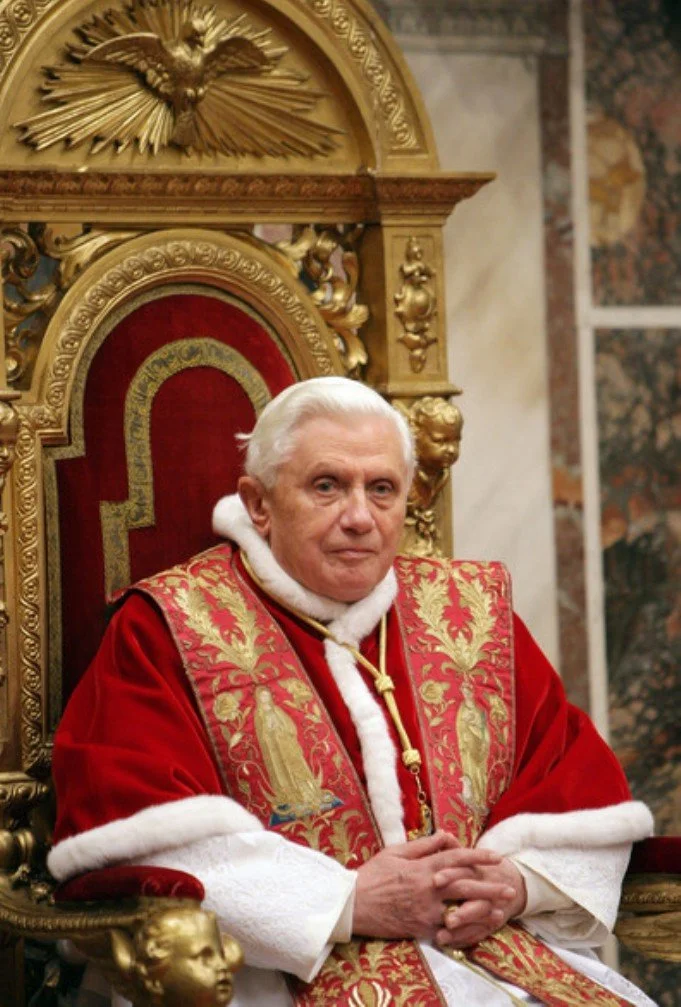
Pope Benedict's blunder and ensuing media coverage have put his legacy on the line

Pope Benedict's blunder and ensuing media coverage have put his legacy on the line

It has been 20 years since The Boston Globe broke open the decades of sexual abuse by Catholic priests, dragging into the light a hellish story that had lingered on the edge of elite media coverage since the 1980s (see this GetReligion post: “That gap between 1985 and 2002”).

Two decades later, this is a story that continues in the form of questions about who in the Catholic hierarchy knew what and when in a variety of dioceses around the world.

The issue wasn’t limited to Boston. Predator priests were everywhere — a scandal that may have been unearthed in the United States, but one that continues to plague other parts of the world.

The focus the past few weeks has been on Germany and the involvement of Benedict XVI in the handling of some abuse cases, decades before he became a key church official in Rome and, eventually, pope. This was also long before the church — in part due to his leadership — adopted stricter policies on how to handle cases of clergy sexual abuse.

This is a complex subject for journalists to cover, in part when events in the past are viewed through the lens of present church policies and standards. How is the press doing?

Here’s a timeline of these fast-moving developments. This latest chapter in the decades-long clergy sex abuse saga began on Jan. 20 when a law firm released a report, commissioned by the German church, to look into how cases of sexual abuse were handled in Munich between 1945 and 2019. Benedict, the former Cardinal Joseph Ratzinger, headed that archdiocese from 1977 to 1982, when he was named to head the Vatican’s Congregation for the Doctrine of the Faith.

The report’s authors found that Ratzinger failed to stop the abuse in four cases. The report also faulted his predecessors and, this is crucial, his successors for their own misconduct in allowing clergy accused of sex abuse to stay in ministry.

The 2,000-page report also criticized Cardinal Reinhard Marx, currently the archbishop of Munich and Freising, for his role in two cases dating back to 2008. Marx offered his resignation to Pope Francis last year, saying he was willing to take responsibility for his part in the sexual abuse crisis. Francis did not accept the resignation, which says something about what this pontiff thinks of the German prelate.


Please respect our Commenting Policy

In Afghanistan, believers in religious minorities have every reason to go underground

In Afghanistan, believers in religious minorities have every reason to go underground

There's a logical reason that Taliban forces have not been accused of destroying any churches in Afghanistan.

"That's the dirty little secret. There were no churches before the Taliban returned to power," said Nina Shea, director of the Hudson Institute's Center for Religious Freedom and a human-rights activist for 30 years. "Christians were already underground because of the constant threats to their lives, so they didn't have any church buildings to blow up."

Everyone remembers the shocking videos when desperate Afghans chased a U.S. military plane on a Kabul runway, pleading to be among those evacuated. At least two people fell to their deaths after clinging to a plane during takeoff.

Ever since, there have been reports about the dangers faced by those left behind, especially Afghans with ties to the U.S. military, the fallen government or workers in secular or religious non-profit groups that remained behind to continue humanitarian work.

Christians, Hindus, Sikhs, Ahmadis, Shia Muslims and members of other religious minorities are also living in fear.

"They are all on the run. They are all in hiding," said Shea, reached by telephone. "People are being hunted down and beaten and are threatened with death if they don't betray members of their families who are considered apostates" by the Taliban.

It's impossible not to discuss religious freedom during this crisis, she added. "Everything the Taliban does is about religion. Religion is involved when they hang people for violating their approach to Islamic law or when they attack women and girls who want to go to school. For the Taliban, this is all connected."

The problem is that religious freedom concerns are often drowned out during debates about politics, economics, climate change and other issues in violent flashpoints around the world.


Please respect our Commenting Policy

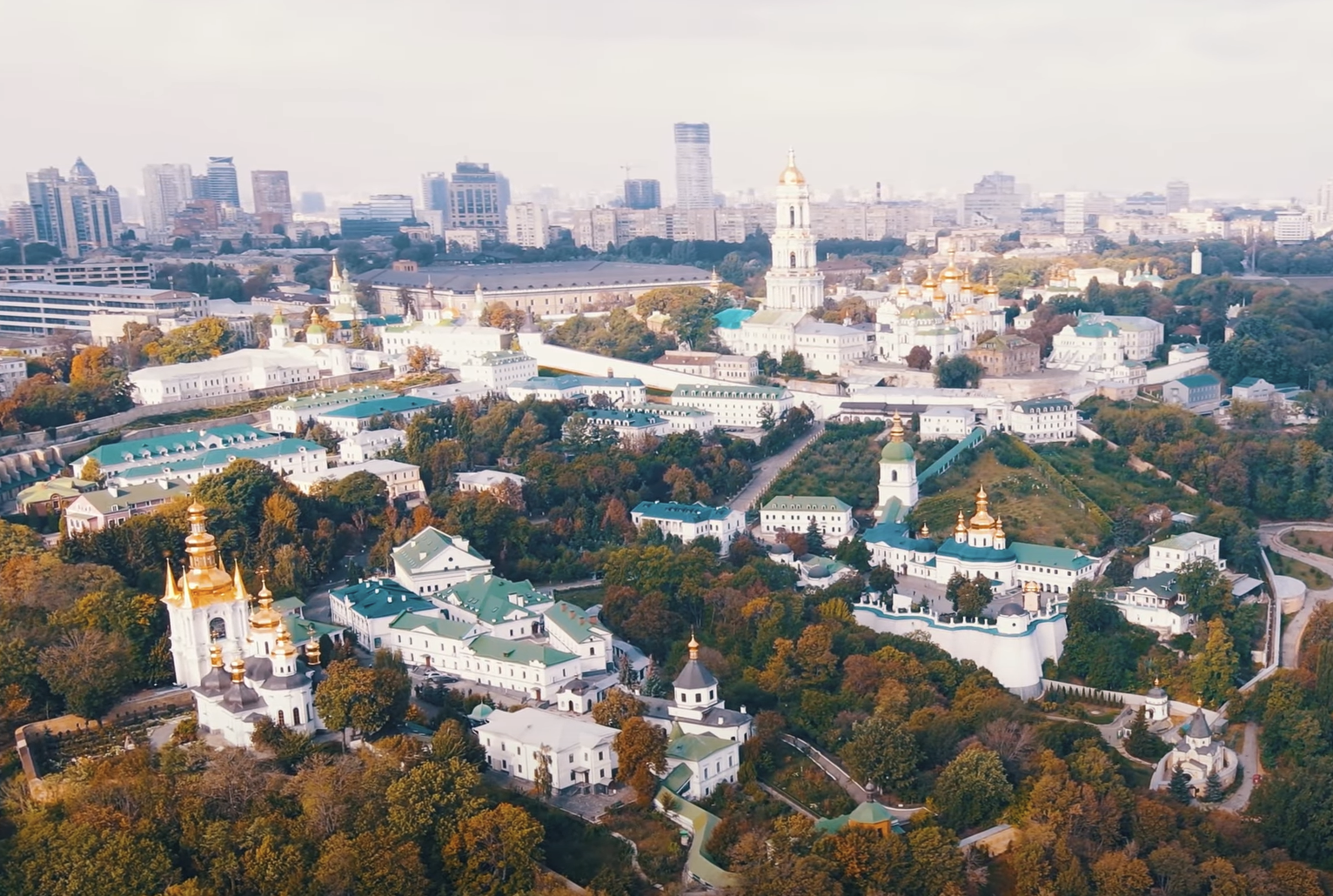
In reportage on Russia and Ukraine, don't neglect the importance of two rival churches 

In reportage on Russia and Ukraine, don't neglect the importance of two rival churches 

On top of the 2014 seizure of Crimea and years of infiltration in eastern borderlands, Russia now poses a more severe threat to neighboring Ukraine.

Whether the nation faces a military invasion, or even a World War 2.5, or less bloody subversion and hoped-for domination, journalists these next few years will need to understand and depict the religious aspect of Ukraine's rising nationalism and resistance against Russian expansionism.

Here are some basics. Russia and Ukraine contain by far the two largest national populations in Eastern Orthodox Christianity. The new World Christian Encyclopedia edition (which belongs in every media and academic library) counts 114 million Orthodox in Russia for 79% of the population, and 32 million in Ukraine for 73%.

Terminology note for writers: "Eastern Orthodox" is the precise designation for such churches, related historically to the Ecumenical Patriarchate based in Turkey, that affirm the definition of Jesus Christ's divinity by the Council of Chalcedon (A.D. 451). The separate branch of so-called "Oriental Orthodox" is non-Chalcedonian; its largest national church is in Ethiopia.

Ukraine's ecclesiastical history, like its political history, is highly complex. The saga began with the A.D. 988 "baptism of Rus" in Kyiv (Russians prefer "Kiev") when Prince Vladimir proclaimed Orthodoxy the religion of his realm and urged the masses to join him in conversion and baptism.

Russians see Christendom's entry into Eastern Europe as the origin of their homeland and the Russian Orthodox Church. Russian President Vladimir Putin cites this history to support his claim for Ukraine as a client area within greater Russia instead of a validly independent nation. His post-Soviet Kremlin maintains close bonds with the Russian Church's Moscow Patriarchate, which in turn has centuries of ecclesiastical authority within Ukraine.


Please respect our Commenting Policy

Visiting the monks at Christ in the Desert monastery, during a pandemic that closed its gates

Visiting the monks at Christ in the Desert monastery, during a pandemic that closed its gates

Religion-beat work is complicated, in part because of the many different ways that believers use the same words when describing their lives. The word “charismatic” has a rather different meaning in a Pentecostal flock than when Baptists — or maybe most Baptists — use it to describe preachers.

Here at GetReligion, we frequently note the challenges faced when journalists from other beats cover complex stories that are baptized in religious language and imagery.

That brings me to a feature that ran the other day at The Washington Post with this headline: “Monks in New Mexico desert dedicated to hospitality reflect on two years without guests.”

There is much to praise in this piece, along with a few word choices that would be challenged by insiders in specific religious traditions. Also, I should note that the author of this piece is Chris Moody, a CNN veteran who is a former student of mine at both Palm Beach Atlantic University and the Washington Journalism Center.

It’s rather hard to critique and praise the work of a talented former student! However, I know that many GetReligion readers will want to see this feature. Plus, I love New Mexico and, early in my religion-beat work, I wrote similar pieces about monasteries in North Carolina and later Colorado.

Let’s start with the overture, which is long, but shows the larger context of this COVID-tide story:

CHAMA RIVER CANYON, N.M. — Hidden in this canyon of crimson sandstone cliffs encompassed by miles of federally protected wilderness, the Monastery of Christ in the Desert seems like an ideal place to ride out a pandemic.

For more than 50 years, a small community of Benedictine monks has quietly lived, worked and worshiped here in a cluster of off-grid adobe buildings along the banks of northern New Mexico’s Chama River. Considered the most remote Catholic monastery in the hemisphere, it can be reached only by a 13-mile single-lane earthen road that winds through the canyon. Abiquiú, the closest village — population 151 — is 25 miles away. Groves of cottonwood and willows line the river where bald eagles hunt for rainbow trout. Black bears, coyotes and cougars prowl the pinyon- and sage-scented Santa Fe National Forest, which surrounds the monastery.

Despite the difficult journey, outsiders have flocked to this serene abbey for decades in search of spiritual renewal.


Please respect our Commenting Policy

Do athletes have a moral duty to protest Chinese authoritarianism? How about Elon Musk?

Do athletes have a moral duty to protest Chinese authoritarianism? How about Elon Musk?

Do elite international athletes have a moral responsibility to publicly comment or act in a way that acknowledges their awareness of oppressive — or worse — political conditions in nations in which they compete?

Do societal moral standards require them to speak up, even when criticism and confrontation jeopardize their ability to compete and may threaten to derail an entire career?

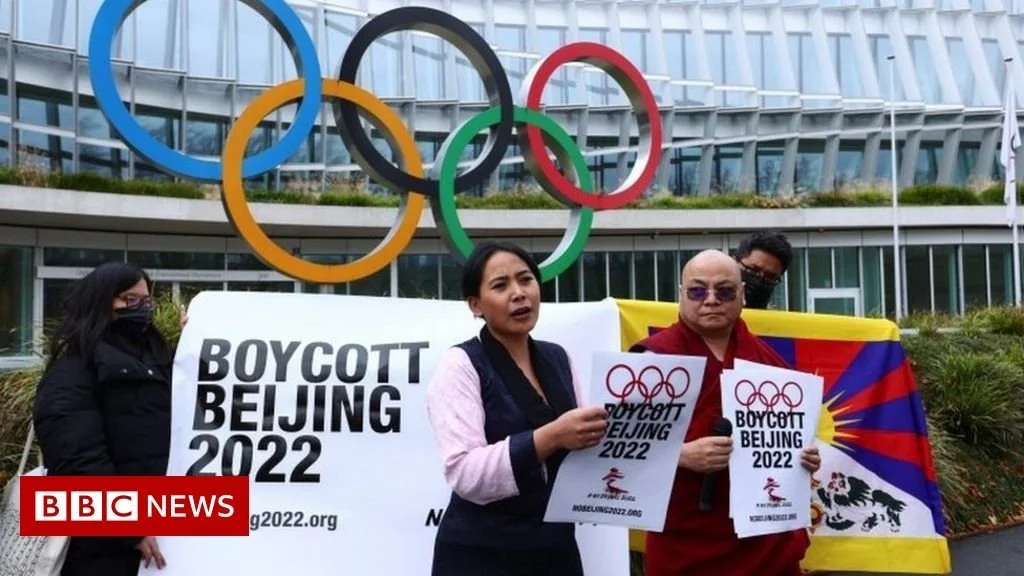
The Beijing Winter Olympics — scheduled to begin in early February in and around China’s capital city — makes this a timely question.

Several democratic nations have announced “diplomatic” boycotts of the Beijing competition. They include the United States, Australia, Britain, Canada, Denmark, and Japan. (To be clear: democratic claims alone do not necessarily stifle a nation’s darker impulses and render it “moral.”)

That means that no political office holders from the the boycotting nations will attend these Games, but qualifying athletes are free to make their own choices about competing.

The following paragraphs from the above linked Washington Post article explain the limits on free speech China is demanding (with International Olympic Committee acquiescence).

The IOC has said athletes will be free to express themselves during the Games as long as they abide by IOC rules barring any demonstrations during sporting events or medal ceremonies.

Athletes could raise any number of issues, including allegations of cultural genocide against the Uyghurs in Xinjiang, the erasure of civil freedoms in Hong Kong, and the arrests of human rights lawyers, activists and outspoken Chinese citizens. [Note that the Post left Tibetan issues, a major international sticking point for the West, off this list.]

But Chinese authorities are extremely sensitive to criticism about the country’s human rights record, its role in the outbreak of the covid-19 pandemic, and even the country’s efforts during the Korean War.


Please respect our Commenting Policy

Wall Street Journal: Catholics are losing ground -- rapidly -- in Brazil. What else is new?

Wall Street Journal: Catholics are losing ground -- rapidly -- in Brazil. What else is new?

I’ll always remember a Spanish-speaking woman I interviewed years ago when I was doing an article for the Houston Chronicle on why Catholic immigrants from Latin America switched over to Protestantism soon after they immigrated to the United States.

The answer, this woman told me, was the Rev. Jimmy Swaggart and his radio broadcasts into Central and South America. “Before, we didn’t know we had a choice on who to believe,” is approximately what this woman told me. “But once we heard Jimmy Swaggart on the radio, we knew there was something else out there other than the Catholic Church.”

In the past 40 years, much of the population of Latin America has likewise realized they have faith options and a recent Wall Street Journal piece claims that this trend of mass conversions to Protestantism — and specifically Pentecostalism — has reached a tipping point.

This is news all of a sudden?

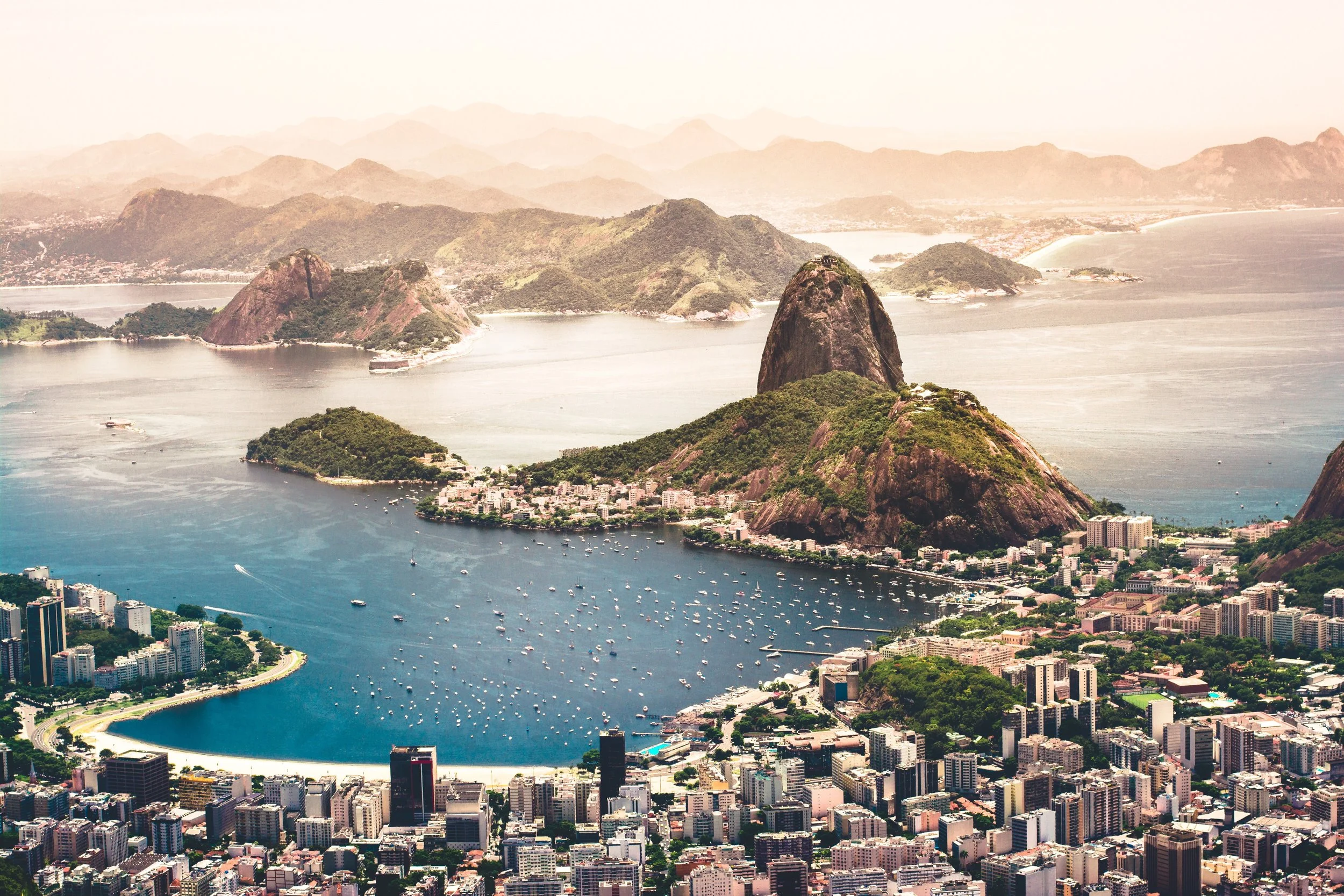
RIO DE JANEIRO—Tatiana Aparecida de Jesus used to walk the city’s streets as a sex worker, high on crack cocaine. Last year, the mother of five joined a small Pentecostal congregation in downtown Rio called Sanctification in the Lord and left her old life behind.

“The pastor hugged me without asking anything,” said Ms. de Jesus, 41, who was raised a Catholic and is one of more than a million Brazilians who have joined an evangelical or Pentecostal church since the beginning of the pandemic, according to researchers. “When you are poor, it makes so much of a difference when someone just says ‘good morning’ to you, ‘good afternoon,’ or shakes your hand,” she said.

This has been a huge advantage that the Protestants have pressed home.

These emerging Protestant flocks don’t have a shortage of priests as does the Catholic Church does –- where parishioner-to-clergy ratio mean there’s one priest per several thousand parishioners. Let’s keep reading:

For centuries, to be Latin American was to be Catholic; the religion faced virtually no competition. Today, Catholicism has lost adherents to other faiths in the region, especially Pentecostalism, and more recently to the ranks of the unchurched. The shift has continued under the first Latin American pope.


Please respect our Commenting Policy

Plug-In: A fascinating look back at the last year in the life of the Rev. Martin Luther King, Jr.

Plug-In: A fascinating look back at the last year in the life of the Rev. Martin Luther King, Jr.

Today is Martin Luther King Jr. Day, a day of remembrance for the influential civil rights leader.

Adelle M. Banks, longtime national reporter for Religion News Service, marks the holiday with a fascinating look back at King’s last full year of life.

Among the details that Banks uncovered in a review of RNS’ 1967 archives: The Baptist pastor’s “growing outspokenness against the Vietnam War and his advocacy for the poor, while it garnered support from celebrities such as Dr. Benjamin Spock, drew criticism from evangelist Billy Graham and others.”

Banks, a 27-year RNS veteran, spearheaded an exceptional 2018 project on the 50th anniversary of King’s April 4, 1968, assassination.

Those stories, still worth a read, include:

Remembering King’s last sermon with renewed hope

A faithful journey from cotton field to White House: Q&A with a sanitation worker

Three Memphis sites key to King’s legacy draw visitors

Power up: The week’s best reads

1. Why the Catholic Church Is losing Latin America: “The rise of liberation theology in the 1960s and ’70s, a time when the Catholic Church in Latin America increasingly stressed its mission as one of social justice, in some cases drawing on Marxist ideas, failed to counter the appeal of Protestant faiths,” report the Wall Street Journal’s Francis X. Rocca, Luciana Magalhaes and Samantha Pearson.

“Or, in the words of a now-legendary quip, variously attributed to Catholic and Protestant sources: ‘The Catholic Church opted for the poor and the poor opted for the Pentecostals.’”

The Journal’s story from Brazil follows The Associated Press’ recent trend piece (highlighted in last week’s Plug-in) on a surge of evangelicals in Spain, fueled by Latin Americans.


Please respect our Commenting Policy