International News

Religion news 2021: Which story was No. 1? Return of Taliban or Jan. 6 riot at U.S. Capitol?

Religion news 2021: Which story was No. 1? Return of Taliban or Jan. 6 riot at U.S. Capitol?

For journalists who braved the chaos, the Jan. 6th riot on Capitol Hill offered a buffet of the bizarre -- a throng of Proud Boys, QAnon prophets, former U.S. military personnel and radicalized Donald Trump supporters that crashed through security lines and, thus, into history.

Many protestors at Trump’s legal "Save America" rally carried signs, flags and banners with slogans such as "Jesus is my Savior, Trump is my president" or simply "Jesus 2020." In this context, "Jesus saves" took on a whole new meaning.

Some of that symbolism was swept into the illegal attack on the U.S. Capitol.

In its poll addressing major religion events in 2021, members of the Religion News Association offered this description of the top story: "Religion features prominently during the Jan. 6 assault on the U.S. Capitol by pro-Trump insurrectionists. Some voice Christian prayers, while others display Christian or pagan symbols and slogans inside and outside the Capitol."

Consider, for example, Jacob Anthony Chansley -- or Jake "Yellowstone Wolf" Angeli. With his coyote-skin and buffalo-horns headdress, red, white and blue face paint and Norse torso tattoos, the self-proclaimed QAnon shaman, UFO expert and metaphysical healer became the instant superstar of this mash-up of politics, religion and digital conspiracy theories.

"Thank you, Heavenly Father … for this opportunity to stand up for our God-given inalienable rights," he said, in a video of his U.S. Senate remarks from the vice president's chair. "Thank you, divine, omniscient, omnipotent, omnipresent Creator God for filling this chamber with your white light and love. Thank you for filling this chamber with patriots that love you and that love Christ. …

“Thank you for allowing the United States of America to be reborn. Thank you for allowing us to get rid of the communists, the globalists and the traitors within our government."

That was one loud voice. A big question that must be answered, in future trials and the U.S. House investigation, is whether it's true -- as claimed by the New York Times -- that the "most extreme corners of support for Mr. Trump have become inextricable from some parts of white evangelical power in America."
Please respect our Commenting Policy

Old, nagging conflicts will continue to dominate religion news in the coming year

Old, nagging conflicts will continue to dominate religion news in the coming year

Yes, there will be a hotly contested U.S. election in 2022. And pretty much every secular and religious faction is keyed up awaiting the U.S. Supreme Court's decision on whether to revise or revoke its rulings that legalized abortion.

Big decisions like this typically land in late June.

Other lingering disputes on the news coverage agenda include the following.

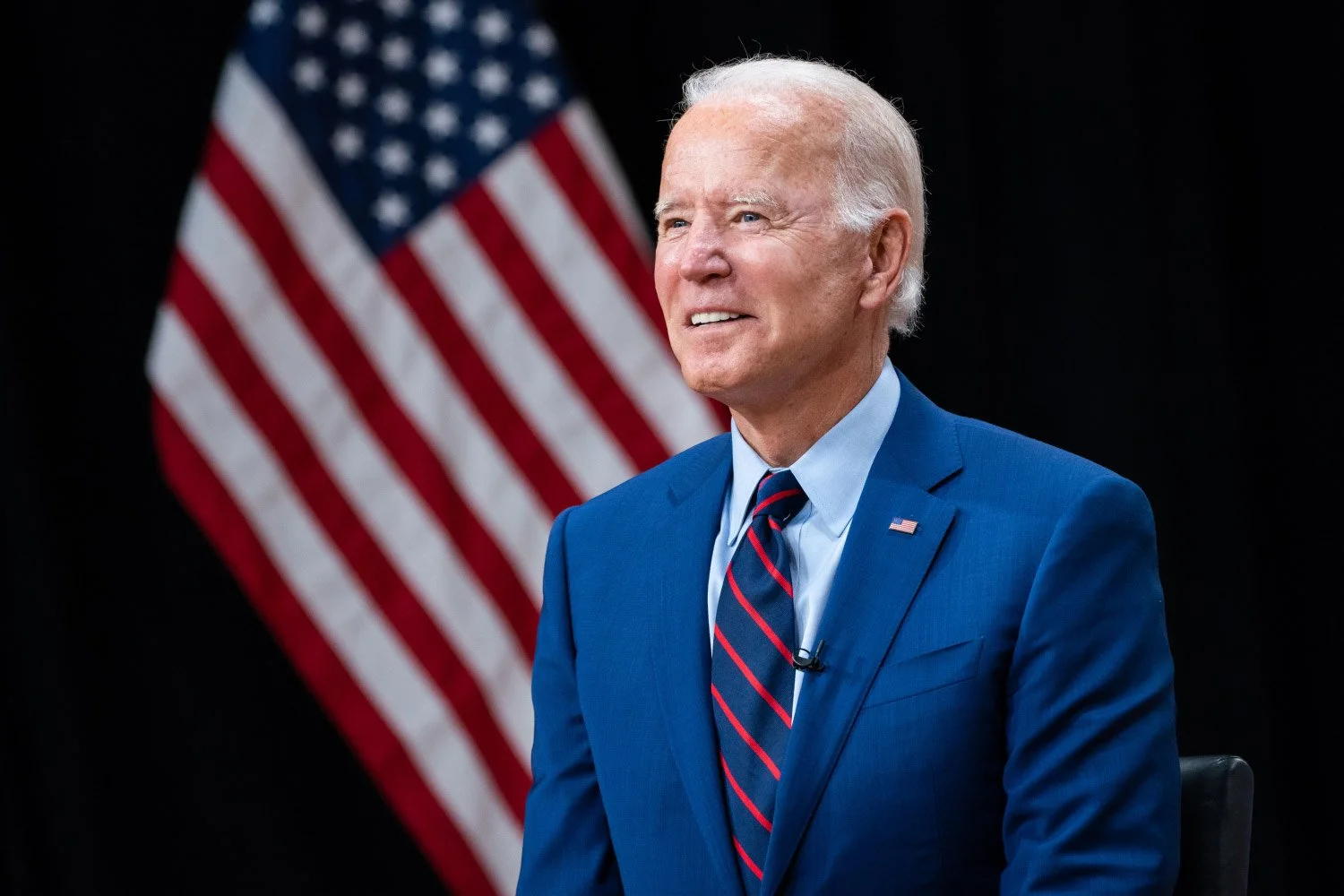
* As the U.S. Senate struggles with a rewrite of the Catholic President Joe Biden's elephantine social-spending bill, the Catholic bishops' conference vehemently opposes any inclusion of abortion funding.

The bishops, along with Orthodox Judaism's synagogue union, also fear (.pdf here) this law will cripple funding for widespread religious preschools. In yet another church-state debate, Biden hopes to end religious exemption from anti-discrimination rules, which went into effect in January.

* Inside the world of Mainline Protestantism, the unending dispute over the Bible and LGBTQ+ issues may produce the biggest U.S. church split since the Civil War at the United Methodist Church's General Conference. Early in 2022, a commission must decide whether the twice-postponed conference, now scheduled for August 29-September 6 in Minneapolis, can finally occur despite two years of COVID-related snarls and, some say, stalling by the UMC establishment.

* The T in LGBTQ won new Methodist attention as just-retired Pennsylvania Bishop Peggy Johnson and her husband, a Methodist pastor, publicized the latter's gender transition while identifying publicly as a "cisgender" male.

Last March, a sizable body of U.S. conservatives announced plans to leave the denomination and unite with former mission churches overseas — primarily in Africa and Asia — to form the "Global Methodist Church," led temporarily by Virginia Pastor Keith Boyette (540-898-4960).


Please respect our Commenting Policy

Five big Catholic news angles that journalists will need to cover during 2022

Five big Catholic news angles that journalists will need to cover during 2022

As 2021 comes to a close, everyone is looking towards 2022. The news cycle over the last two years has been dominated by COVID-19 and that doesn’t seem to be subsiding — given the rash of infections the past few weeks as a result of the Omicron variant.

The Catholic world, meanwhile, had in 2021 one of its busiest years. The election of Joe Biden as president — this January will officially mark his first year in office — also dominated news coverage. That Biden was also a Catholic (only second after John F. Kennedy in 1960) thrust Catholicism into the political news coverage. Politics plus religion equals news. It’s a familiar formula.

Biden, a practicing Catholic who attends Mass on Sundays, was at odds this year with many U.S. bishops — setting up a year-long debate over whether he (and other pro-abortion politicians) should receive Holy Communion. In the end, the bishops offered more clarification in the importance of the Eucharist without singling out Biden. Truth is, no one knows if the bishops actually considered mentioning Biden or other pro-abortion-rights Catholics.

Issues around politics and religion will likely dominate once again in 2022. The abortion issue and a pending Supreme Court decision regarding access to it will be a big story in the coming year. The Catholic church, a major part of the abortion debate in this country for decades, will play a major role in news stories that will be written over the coming months.

At the same time, Pope Francis, who recently turned 85, will again be surrounded by rumors that he will either resign or die. Whether this pope — the most polarizing in centuries — can chip away at his agenda to change the church in the 21st century will continue to pit traditionalists versus progressives.

Here are the five big news trends and stories journalists need to keep an eye on in the new year:

(5) Pope Francis and his focus on a progressive agenda

This coming year could be the one where the battle between this pontiff and doctrinal traditionalists intensifies even further. A Dec. 17 Associated Press story set the stage for such a confrontation in what will be Francis’ ninth year as head of the Catholic church.


Please respect our Commenting Policy

When is the Midnight Mass? All humor aside, there's history (and news) linked to this rite

When is the Midnight Mass? All humor aside, there's history (and news) linked to this rite

Once upon a time, before the creation of the Internet, there were these very, very powerful and all-knowing professionals known as “church secretaries.” Yes, I know that they have evolved into office managers and web czarinas.

But, long ago, if anyone needed to know something about church life, or really needed to reach the pastor (this is before smartphones, too), they called the “church secretary,” who basically served as an air-traffic-controller for everything happing in the church family.

Back in the 1980s, I wrote a news piece for The Rocky Mountain News (#RIP) about the question that church secretaries in Catholic parishes used to dread hearing over and over during the three or four days ahead of Christmas Eve. That question, of course, was: “When is the Midnight Mass?”

Honest. People would ask that and, truth be told, the Midnight Mass, in some parishes, doesn’t start at midnight. Hold that thought, because we will come back to it.

But this post, in the week before Christmas (for most Christians in America), is about the importance of the Midnight Mass and other Christmas Eve and Christmas services. You see, there are potential news stories here. Let’s discuss several of them, briefly.

First, there is an interesting fact that I learned long ago from the late Lyle Schaller, a Mainline Protestant maven who was an often-quoted expert on church growth and, as the Mainline world imploded, church survival. The easiest way to sum up the Christmas news angle that I learned from him is to share the top of a 2015 tribute column that I wrote about his work (“Lyle Schaller, the church fix-it man in rapidly changing times”):

All pastors know that there are legions of "Easter Christians" who make it their tradition to dress up once a year and touch base with God.

What can pastors do? Not much, said the late, great church-management guru Lyle Schaller, while discussing these red-letter days on the calendar. Rather than worrying about that Easter crowd, he urged church leaders to look for new faces at Christmas.


Please respect our Commenting Policy

Religion's impact on global migrant crisis: RNS concludes that it's Gordian Knot complicated

Religion's impact on global migrant crisis: RNS concludes that it's Gordian Knot complicated

Globalization has been a decidedly mixed bag.

On the plus side, it’s managed to knit diverse people together economically and, to a lesser degree, culturally. But it’s also further divided others along religious, political, race, and class lines.

It’s introduced us to a myriad of once exotic consumer products at relatively cheaper prices (cheaper for many Westerners, that is). Globalization has also brought us fresh ideas and life choices that — while I certainly don’t agree with every new view put forth — has enormously enriched my own life experience.

On the negative side — and this is huge — it’s allowed multi-national corporate boards (and shareholders) to escape the full weight of responsibility for the enormous environmental degradation their decisions have produced in exploited regions thousands of miles distant from their posh corporate headquarters.

Also, let’s not forget the foreign workers, including child laborers, exploited by unscrupulous employers trying to satisfy their Western customers insatiable demands for rock bottom prices.

For the United States and other Western nations, globalization’s complex outcomes has produced still another key Gordian Knot dilemma. I’m referring to the vast numbers of desperate human refugees heading, most often without proper documentation, to the United States, Europe, Australia — and even to neighboring countries that may be only relatively better off.

The latter group includes situations American news media rarely cover. They include Nicaraguans fleeing to Costa Rica and South Africa’s burgeoning refugee population comprised of hopeful immigrants from a variety of sub-Saharan African nations.

Is it any surprise to anyone with a working knowledge of Homo sapiens that we demand globalization’s creature comforts without us wanting to deal with those actual Homo sapiens that globalization has negatively impacted.


Please respect our Commenting Policy

Plug-In: Americans favor religious exemptions for COVID-19 vaccine mandates — sort of

Plug-In: Americans favor religious exemptions for COVID-19 vaccine mandates — sort of

What a difference a year makes.

Or not.

Fifty-two weeks ago, this news topped Weekend Plug-in.

Sound familiar?

Trump calls COVID-19 vaccine ‘a medical miracle,’ but many religious people are skeptical

Guess what? Many religious people remain highly skeptical of the vaccines, despite their strong effectiveness at preventing serious illness, hospitalization and death from COVID-19.

Which leads us to this week’s news: a new public opinion poll on religious exemptions to the vaccines.

Religion News Service’s Jack Jenkins reports:

WASHINGTON (RNS) — A new poll reveals most Americans are in favor of offering religious exemptions for the COVID-19 vaccines, yet express concern that too many people are seeking such exemptions. In the same survey, more than half of those who refuse to get vaccinated say getting the shot goes against their personal faith.

The poll, conducted by the Public Religion Research Institute and Interfaith Youth Core and released Thursday (Dec. 9), investigated ongoing debates about COVID-19 vaccines as well as emerging divisions over whether religious exemptions to the shots should even exist.

According to the survey, a small majority (51%) of Americans favor allowing individuals who would otherwise be required to receive a COVID-19 vaccine to opt out if it violates their religious beliefs, compared with 47% who oppose such religious exemptions.

See additional coverage of the poll by the Washington Times’ Mark A. Kellner, a former contributor at GetReligion, and NPR’s Megan Myscofski.


Please respect our Commenting Policy

Just how big is the Mississippi abortion case at U.S. Supreme Court? Well, THIS BIG

Just how big is the Mississippi abortion case at U.S. Supreme Court? Well, THIS BIG

“The most important abortion case in decades” is how the New York Times’ Adam Liptak describes it.

“The most significant abortion case in a generation,” agree the Wall Street Journal’s Jess Bravin and Brent Kendall.

“The biggest challenge to abortion rights in decades,” echo The Associated Press’ Mark Sherman and Jessica Gresko.

It’s not hyperbole: Roe v. Wade, the 1973 U.S. Supreme Court decision that legalized abortion nationwide, faces its biggest test yet. The Washington Post’s Robert Barnes explains:

The Supreme Court on Wednesday signaled it is on the verge of a major curtailment of abortion rights in the United States, and appeared likely to uphold a Mississippi law that violates one of the essential holdings of Roe v. Wade established nearly 50 years ago.

Whether the court would eventually overrule Roe and its finding that women have a fundamental right to end their pregnancies was unclear.

But none of the six conservatives who make up the court’s majority expressed support for maintaining its rule that states may not prohibit abortion before the point of fetal viability, which is generally estimated to be between 22 and 24 weeks of pregnancy.

At Christianity Today, Kate Shellnutt reports that “pro-life evangelicals who had rallied for the cause for decades were encouraged that the conservative-leaning court appeared willing to uphold a contentious Mississippi law that bans abortion after 15 weeks.”

Other helpful religion coverage:

How faith groups feel about this major abortion case (by Kelsey Dallas, Deseret News)

Before there was Roe: Religious debate before high court’s historic ruling on abortion (by Adelle M. Banks, Religion News Service)

Religion abortion rights supporters fight for access (by Holly Meyer, The Associated Press)


Please respect our Commenting Policy

Holiday musings from Brazil: Is it time for missionaries to leave indigenous tribes alone?

Holiday musings from Brazil: Is it time for missionaries to leave indigenous tribes alone?

It’s that time of year again.

We’re talking about The Holidays, the season when Thanksgiving and Christmas bookend America’s annual celebration of its history of Christian influences, even if today’s mass-media crush obscures that. It’s a season of family gatherings, annual notes to far-flung friends and acquaintances, garish holiday-themed sweaters designed to provoke smiles, and, for some, even a few religious services.

It’s a big deal journalistically, too, of course. Editors/producers and reporters/content providers seek out warm-and-fuzzy, feel-good features meant to remind media consumers of the genuine goodness individual humans are capable of showing others, including strangers.

We call it the holiday spirit and, except for the rampant consumerism, I appreciate the seasonal goodwill. And why not? Upbeat news is a welcome change from the disconcerting stories we’re usually fed. It’s good for the soul, and I need not subscribe to the traditional beliefs for it to warm my heart.

It’s also a time when journalists seek to probe the theological aspects of our holiday narratives, often to the distaste of those news consumers who prefer the comforting familiarity of traditional tellings or even the more sobering messages of traditional Christian faith in Advent and Christmas.

Such stories — here’s one example from a few years back that ran in the Guardian — are tricky, requiring solid sourcing and clear, even-handed and respectful explanations.

Another category of holiday stories addresses the consequences of past Christian actions that a reporter can link to the season, even if the link is indirect at best. Take this recent Washington Post story — “This tribe helped the Pilgrims survive for their first Thanksgiving. They still regret it 400 years later” — on how the indigenous tribe, the Wampanoag, that first encountered the Pilgrims in what is now Massachusetts were decimated by the encounter. Here’s a large bite of it:

Just as Native American activists have demanded the removal of Christopher Columbus statues and pushed to transform the Columbus holiday into an acknowledgment of his brutality toward indigenous people, they have long objected to the popular portrayal of Thanksgiving.

For the Wampanoags and many other American Indians, the fourth Thursday in November is considered a day of mourning, not a day of celebration.


Please respect our Commenting Policy

How will media cover the secretive Afghan mullah who will shape Islam's global status?

How will media cover the secretive Afghan mullah who will shape Islam's global status?

Showing his age, The Guy notes with amusement that early in his career "Afghanistanism" meant "the practice (as by a journalist) of concentrating on problems in distant parts of the world while ignoring controversial local issues" (per the authoritative Merriam-Webster)!

Today, many will argue that no nation is more important in news terms than the Islamic Emirate of Afghanistan, which affects both international turmoil and Islam's global status and cultural direction.

Journalists may ask, “Why?” This is probably the most heavily Muslim of nations and the Taliban who regained power in August proudly proclaim totalist governance based upon strictly interpreted and enforced Sharia (Islamic religious law). This example of Islam in action presents a huge challenge to the world religion.

A two-page (paywalled) Wall Street Journal status report by chief foreign correspondent Yaroslav Trofimov last weekend said the militantly Sunni Taliban have yet to impose the harshest policies that provoked wide condemnation during the prior Taliban years in power.

But the future is iffy.

For the moment, females seem able to attend primary school, but mostly not high school and college. Rigid bans on women leaving home unless accompanied by male relatives have not reappeared, and some women continue careers though many do not.

Public spectacles of beheading of opponents, and street beatings by religious police, have not resumed (though there are social-media rumors), nor have music and visual art yet been restricted. Shia and Sufi Muslims, and the tiny enclaves of non-Muslims, are understandably anxious, along with Christians, both coverts and missionaries who chose to remain after the exodus. (Other aspects of autocratic rule are commonplace in that part of the world.)


Please respect our Commenting Policy