Godbeat

Plug-In flashbacks: Several religion-news questions and answers with Bobby Ross, Jr.

Plug-In flashbacks: Several religion-news questions and answers with Bobby Ross, Jr.

GetReligion readers really don’t need an introduction to religion-beat veteran Bobby Ross, Jr.

After all, he has been a contributor here since 2010 — which is longer than anyone other than the founders of the blog. There’s about 15 million words in our files, at this point, and Ross has to have written about 25% of them. And don’t forget that his wife, religion-beat veteran Tamie Ross, was a contributor here for several years, as well.

Bobby, of course, covered religion and all kinds of other topics for The Oklahoman and also spent several years with the Associated Press, working with religion-beat patriarch Richard Ostling, which is as good a credential as you can get. These days, readers around the world know him as editor-in-chief at The Christian Chronicle. He continues to write his weekly Plug-In feature for Religion Unplugged, which still runs here at GetReligion.

As a re-introduction to Ross, Religion Unplugged recently ran this short Q&A with him (and offered a short list of some of his top recent Plug-in pieces). I thought GetReligion readers who have followed him for a decade or more would like to see them.

You've covered religion since 1999. How did you first get onto the beat, and what's a favorite story you reported in your early days?

I had covered a religion story or two in my career up to then, including writing a 1994 piece about the Christian conversion of serial killer Jeffrey Dahmer. But in 1999, the editors at The Oklahoman assigned me to cover Pope John Paul II's visit to St. Louis. That was an important and challenging assignment, and my favorite story probably was the one I wrote about a big youth rally where dc Talk sang "Jesus Freak" to an "arm-waving, hip-shaking, foot-stomping" crowd before John Paul appeared on stage, and the decibel level got even louder.

As the news industry has changed since you began your career, the religion beat has certainly changed too. What's been the biggest challenge you've faced as a religion reporter because of these changes?

Please respect our Commenting Policy

'I Love Jesus, But I Want to Die' -- A sobering message to church leaders on mental health

'I Love Jesus, But I Want to Die' -- A sobering message to church leaders on mental health

The first time Sarah J. Robinson tried to kill herself was eight months after she became a born-again Christian.

She had struggled with suicidal thoughts since elementary school. She would imagine jumping into highway traffic or fill her hand with pills and consider swallowing them. But her depression only deepened after she was baptized as a teen and poured herself into Bible studies and upbeat youth-group projects.

She felt like a failure. Finally, she pressed a knife harder and harder into her skin -- but she couldn't force herself to end it all on the kitchen floor. Looking back, she wrote: "I didn't want my family to find me there, so I got up and put the knife away. I climbed into bed, put on a worship CD, cursed God and went to sleep."

Robinson kept stacks of journals and they provided crucial material for "I Love Jesus, But I Want to Die," a book written during three years of struggle and research. Her battles with depression have continued, even during her years working as a youth minister.

Images of handwritten pages appear in the book, including this 2007 plea: "Lord, I'm struggling. I need your help. This week has been really rough -- I've been sad & lonely & angry & numb. I cut myself and berated myself, wished for the end, tried so hard to hide it. I'm not just empty -- I've become a vacuum, taking on more and more of the absence of your presence. … God, please don't let me be lost."

It was hard to be that vulnerable, said Robinson, reached by telephone in Nashville. But including actual journal pages "seemed like a no-brainer" if the goal was to "let other people who are hurting know they are not alone. I wanted them to know that I've been there -- in that kind of midnight."

Among secular researchers, it's common to find two views of mental-health issues, said Robinson, citing the work of Stanford University researcher Carol Dweck. The first is a "fixed mindset" that assumes these conditions are predetermined and unchangeable. Thus, "setbacks and failures reveal who we really are and will always be," said Robinson." The second is a "growth mindset" that says individuals can adapt and change.

In pews and pulpits, many believers simply assume all mental-health struggles represent a lack of faith. Strugglers will be healed if they dedicate themselves to Bible study and prayer, while turning away from their sins. Church-based "pastoral counseling" is an option.

"The idea is that if I put the right things into the spiritual vending machine, then I'll get the right things out," said Robinson.


Please respect our Commenting Policy

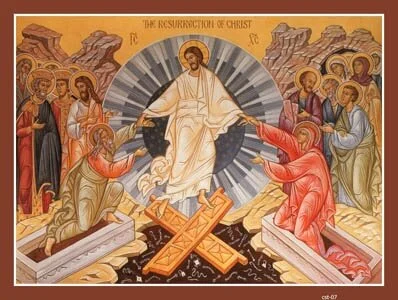
Big question linked to Easter: Does Christianity believe in 'the immortality of the soul'?

Big question linked to Easter: Does Christianity believe in 'the immortality of the soul'?

THE QUESTION:

Does Christianity believe in the “immortality of the soul”?

THE RELIGION GUY’S ANSWER:

No.

Not exactly. And before anyone has a heart attack reading that, The Guy hastens to explain that Christianity has always vigorously affirmed the Easter message that earthly death is followed by everlasting life. But the oft-used phrase about a mere “immortality of the soul,” which stems from ancient Greek philosophy, could suggest bodily life is problematic and mistakenly suppose that our soul exists through all eternity as only a disembodied spirit.

Instead, Christianity teaches that just as Jesus arose bodily from the grave, so the promise of everlasting life involves a person’s eventual resurrection that unites the soul with the body in a newly glorified state. As with the central belief that Jesus was God incarnate in full human and bodily reality, this Christian affirmation about the afterlife proclaims that, as in Judaism, our bodies are God’s good creation and fundamental to each person’s human identity.

This understanding of New Testament teaching was defined orthodoxy as early as A.D. 180 in Against Heresies by Bishop Irenaeus of Lyons, an authority and saint for Catholic and Orthodox Christians:

“… It is manifest that the souls of his disciples also, upon whose account the Lord underwent these things, shall go away into the invisible place allotted to them by God, and there remain until the resurrection, awaiting that event; then receiving their bodies, and rising in their entirety, that is bodily, just as the Lord arose” (from book 5, chapter 31).

A precise Protestant formulation appears in the Westminster Confession of Faith, the Presbyterian credo from 1647 (here “men” refers to both genders):


Please respect our Commenting Policy

Welcome to Holy Days 2021: How to handle the latest sensational claim about the Bible

Welcome to Holy Days 2021: How to handle the latest sensational claim about the Bible

The New York Times often ignores developments in religious scholarship, an especially serious deficiency of its Sunday Book Review (where Nash K. Burger, who was hired by fellow Mississippian Eudora Welty, long and carefully monitored the field until he retired in 1974).

Thus, hallelujahs should greet a huge article by culture reporter Jennifer Schuessler, posted March 10 and granted two full pages in the Arts & Leisure section of last Sunday's print edition.

The piece reports that young Israeli-American scholar Idan Dershowitz may have identified "the oldest known biblical manuscript by far," which offers "an unprecedented window into origins and evolution of the Bible" and, in particular, the Book of Deuteronomy. If substantiated, some say, this "will be the most consequential Bible-related discovery since the Dead Sea Scrolls in 1947."

Or not. Journalists assessing what's hot should consider that across the years, manuscript frauds and ill-supported speculations about the Bible have been rife.

The Times is known to sometimes "bury the lede," and in this case it buried the news peg. The piece was nicely timed for Jewish Passover and Christian Holy Week when media often dig into biblical mysteries and controversies. But the news here is the April publication of Dershowitz's book "The Valediction of Moses: A Proto-Biblical Book."

The book will fill in the missing element in the Times story and thus provide major fresh substance for reporters to develop: Which portions of Deuteronomy are involved in this discussion, and how do specific wordings and passages in today's Bibles compare with the purportedly ancient texts Dershowitz cites? On that basis, what do the agreements and contrasts tell us and why?

Dershowitz seeks to rehabilitate Wilhelm Moses Shapira, whose 19th Century Jerusalem shop sold both tourist trinkets and allegedly valuable ancient manuscripts. He tried to sell these Deuteronomy fragments to a regular customer, the British Museum, but its expert and others declared them forgeries in 1883, based on what Dershowitz considers slipshod study.

Shamed, Shapira soon committed suicide in Rotterdam. The leather fragments themselves then disappeared.


Please respect our Commenting Policy

Returning to Kamp Kanakuk: Is this new expose a work of journalism, theology or both?

Returning to Kamp Kanakuk: Is this new expose a work of journalism, theology or both?

Readers with long memories will recall that, when the Internet arrived it had an immediate impact on important subjects that rarely received adequate coverage in mainstream media.

Take religion, for example. The lower cost of publishing online led to an explosion of forums, listservs, newsletters, online “radio” channels, podcasts and weblogs. Some failed or evolved into new forms — consider the long and complicated histories of Beliefnet and Patheos — and others became, well, normal.

Now, in the “cancel culture” era, it’s clear that another example of online evolution is affecting serious coverage of religion, as well as other complicated topics.

I am referring to the controversies surrounding Substack and the myriad newsletters and alternative publications thriving there. For a sample of the fea paranoia surrounding Substack, click into this thread from a professor at the UCLA Center for Critical Internet Inquiry or read between the lines of this Washington Post column: “The Substack controversy’s bigger story.” Here is a sample of that:

Substack is a start-up for self-publishing email newsletters: Writers decide how often to write and whether and how much to charge; Substack sends the newsletters and collects any fees. The ease of use has made it popular with journalists. …

Some of the most prolific users are heterodox political writers who had found mainstream publications an increasingly poor fit. A number quickly rose to the top of the Substack leader boards. This attracted the gimlet eye of the cancelers: Other online writers — some of whom had their own Substack newsletters — have leveled accusations of transphobia and other offenses. A nascent boycott aims to pressure Substack into deplatforming the alleged offenders. Reportedly, their campaign is having some effect.

“Heterodox” is an interesting word. It appears, in this context, to define the work of various kinds of conservatives or, even worse, free thinkers (Andrew Sullivan and Bari Weiss, for example) who accuse many “liberals” or “progressives” of turning dangerously illiberal.

This brings me to this weekend’s must-read missive from Nancy and David French, care of The Dispatch, an alternative conservative online publication that is thriving in this new online environment. Here is the dramatic double-decker headline atop this long feature:

‘They Aren’t Who You Think They Are’

The inside story of how Kanakuk — one of America’s largest Christian camps — enabled horrific abuse.


Please respect our Commenting Policy

Plug-in: Double standard? Treatment of Boulder suspect's faith raises tough question

Plug-in: Double standard? Treatment of Boulder suspect's faith raises tough question

Another week.

Another mass shooting.

Another 21-year-old suspect.

Last week's news coverage of Robert Aaron Long, charged in the deaths of eight people — including six women of Asian descent — at three Atlanta-area spas, focused on his ties to a Southern Baptist congregation.

Long's arrest sparked a barrage of stories and columns on evangelical theology, racism and "purity culture," including a Religion News Service op-ed headlined "Blaming Christians for the Atlanta shootings isn't persecution, it's prosecution."

On the other hand, Ahmad Al Aliwi Alissa's Muslim background has figured less prominently — so far — in reporting on the suspect in Monday's massacre that claimed 10 lives at a King Soopers grocery store in Boulder, Colorado.

In profiling the suspect, some major news organizations haven’t mentioned his religious affiliation at all. RNS has emphasized concerns that Alissa's arrest might ramp up "Islamophobia" and spark hate crimes as Muslims gather in congregational settings. (It’s a familiar storyline, going at least back to 9/11.)

"I think there definitely is a double standard," said Warren Smith, an evangelical who serves as president of the independent charitable giving watchdog MinistryWatch.com.

Smith, a longtime investigative reporter, offers this advice for covering a mass shooting: Stick to the facts. Avoid speculating on the gunman’s motives. Focus on the victims and the helpers.

"The perpetrator’s story will have an opportunity to come out in the legal process,” Smith said. “Let coverage of that process be the place where the perpetrator’s story is told factually, dispassionately, empathetically."

But the facts, not a double standard, are the reason for the different emphases in the Georgia and Colorado cases, said a journalist friend who is reporting on the Boulder massacre.

"The big difference to me is that police investigators brought up the 'sex addiction' question quickly and directly in Atlanta, which led people to seek where that guilt came came, which led to religious background," my friend said.


Please respect our Commenting Policy

Catholic left seeks (and finds?) signs of hope after Vatican ruling on same-sex unions

Catholic left seeks (and finds?) signs of hope after Vatican ruling on same-sex unions

After a media firestorm ignited by a Vatican condemnation of same-sex unions -- because God "cannot bless sin" -- Catholic progressives immediately looked for hope in the words of bishops, President Joe Biden and even Pope Francis.

In his Sunday Angelus address after the March 15 ruling, the pope stressed that modern seekers want to "see Jesus" in acts of love, not persecution.

Catholics must promote "a life that takes upon itself the style of God -- closeness, compassion and tenderness," said the pope. "It means sowing seeds of love, not with fleeting words but through concrete, simple and courageous examples, not with theoretical condemnations, but with gestures of love. Then the Lord, with his grace, makes us bear fruit, even when the soil is dry due to misunderstandings, difficulty or persecution, or claims of legalism or clerical moralism."

While Pope Francis gave "his assent" to this ruling, the Jesuit publication America cited anonymous Vatican sources saying the Angelus remarks suggested that he was "distancing himself" from the work of the Congregation for the Doctrine of the Faith.

That document said God "does not and cannot bless sin: He blesses sinful man, so that he may recognize that he is part of his plan of love and allow himself to be changed." As for same-sex unions, it added: "The presence in such relationships of positive elements … cannot justify these relationships and render them legitimate objects of an ecclesial blessing, since the positive elements exist within the context of a union not ordered to the Creator's plan."

Bishop Johan Bonny of Antwerp -- who represented Belgium at the 2015 Vatican Synod on Marriage and the Family -- said those words left him "ashamed on behalf of my Church. … I want to apologize to all those for whom this 'responsum' is painful and incomprehensible: faithful and committed Catholic homosexual couples, the parents and grandparents of homosexual couples and their children, pastoral workers and counsellors of homosexual couples," he wrote on Facebook.

"I know homosexual couples who are legally married, have children, form a warm and stable family, and moreover, actively participate in parish life. A number of them are employed full-time in pastoral work or ecclesial organizations." Why, he added, deny the "similarity or analogy with heterosexual marriage here?"


Please respect our Commenting Policy

Purity culture questions: A friendly, but crucial, dialogue between two evangelical thinkers

Purity culture questions: A friendly, but crucial, dialogue between two evangelical thinkers

The purity culture wars continue over on Twitter, where a crucial question — from a journalism perspective — can be seen in the following sequence.

There is no question that some church leaders went too far with purity culture themes and rites, including hellish actions by abusive men. Can anyone deny that? However, can journalists (and their academic and activist sources) assume that because evil happened in some cases means that it happened in all cases? And, to be specific, do journalists have on-the-record evidence that the alleged shooter in Atlanta was, in fact, warped by abusive people at an abusive church?

GetReligion published two posts linked to these debates. Check out Julia Duin’s post here: “Panning purity culture: What the press doesn't get about basic Christian doctrines on sex.”

Then, I raised other basic journalism questions here: “Wait a minute: How is a sermon on the Second Coming linked to shootings in Atlanta?

Before we get to this weekend’s two “think pieces” on this topic — by religious-liberty activist David French and Crossway books executive Justin Taylor — here is a flashback to a key passage in my post, which is linked to some of Taylor’s constructive criticism of the French piece.

It’s not enough to say that this or that conservative congregation, or counseling center, or parachurch ministry is “evangelical” and, thus, the public can assume that Christian doctrines were used in manipulative ways. …

Ponder this equation: Journalists cannot assume that a specific evangelical flock advocates dangerous doctrine X, simply because there are experts (progressive evangelicals even) who insist that all evangelicals teach dangerous doctrine X and, thus, we know that dangerous doctrine X causes broken, manipulated individuals to do hellish things.

At some point, journalists need to find specific people advocating specific ideas and actions — using research methods that are deeper than second-hand reports and the convictions of hostile experts on one side of fights about the Sexual Revolution.

This brings us to French’s must-read piece:


Please respect our Commenting Policy

Catholic journalists are must-read sources for those seeking reality of Cuomo scandals

Catholic journalists are must-read sources for those seeking reality of Cuomo scandals

It was just two months ago, in the aftermath of the U.S. Capitol riot, that an idea was floated that could help stop all the misinformation in our society: a “reality czar.”

It was a New York Times piece by tech columnist Kevin Roose (his new book “Futureproof is a must read if you’re interested in automation replacing you at work) on Feb. 2 that quoted experts who floated ideas to stop what the paper called the “scourge of hoaxes and lies.”

Roose’s piece threw out some interesting solutions — although “reality czar” is Orwellian, a Soviet-style solution to misinformation.

The harsh reality is that news consumers will need to read a wider variety of news sources if they are interested in finding solid facts, on-the-record sources and some sense of balanced reporting. On issues linked to religion, culture and politics, that will mean paying more attention to independent religious publications — including Catholic websites — that are now punching way above their weight. Hold that thought, because we will come back to it.

The truth is reality used to be what journalism purported to report on.

That’s no longer true given how polarized the news media has become over the past decade, a progression that sped up during the Donald Trump years and following the proliferation of partisan news sources during the internet age.

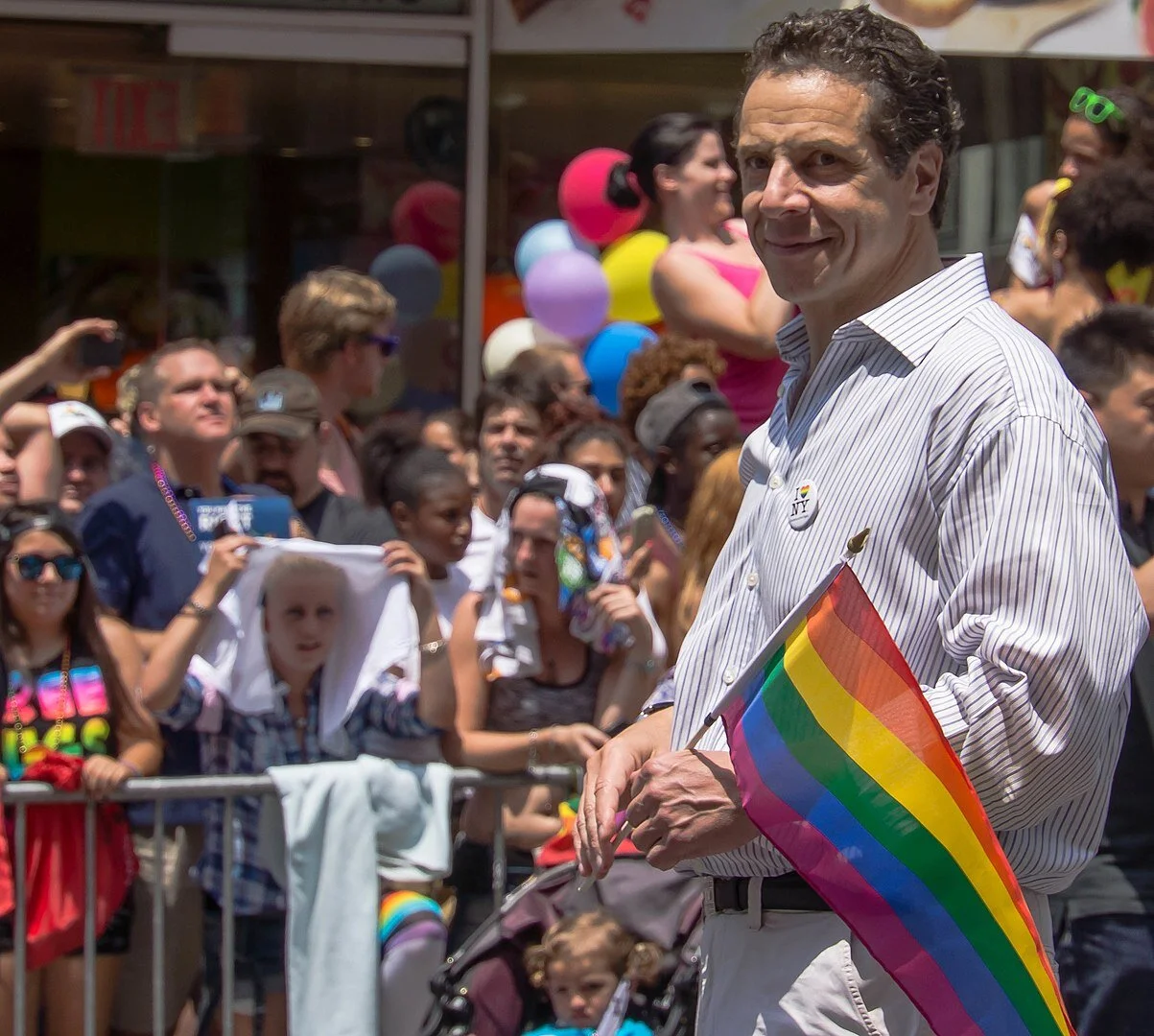
From a political standpoint, this brand of one-sided journalism has allowed politicians to earn cover from many mainstream newsrooms for alleged wrongdoings. On the left, New York Gov. Andrew Cuomo, embroiled in dual scandals regarding nursing home deaths during COVID-19 and growing claims of sexual harassment, is a prime example of this phenomena.

At this time last year, professionals at news organizations were fawning all over his press conferences as the country plunged into the pandemic. Many journalists considered Cuomo the coronavirus reality czar.

Why? Cuomo, a Democrat, served as the counterweight to then-President Trump.


Please respect our Commenting Policy