Evangelicals

Here's a soundbite for you: In the Bible, does St. Peter call women the 'weaker sex'?

Here's a soundbite for you: In the Bible, does St. Peter call women the 'weaker sex'?

THE QUESTION:

In the Bible, does St. Peter call women the “weaker sex”?

THE RELIGION GUY’S ANSWER:

Yes.

But why? What did that mean? What was he saying about women’s status in a culture far different from that of the 21st Century?

A preliminary point. Word limits do not allow adequate examination here of liberal scholars’ contention that St. Peter did not really write the two New Testament letters the texts attribute to him, or of the reasons conservatives are convinced that these are authentic words from the figure Catholicism uplifts as the first pope and all Christians revere as an apostle, founder and martyr. The following discussion will assume Peter was the author.

Jackson Wu, an evangelical theologian with the Global Training Network, raised the question about I Peter 3:7 in this June 29 blog item. The verse at issue reads “likewise you husbands, live considerately with your wives, bestowing honor on the woman as the weaker sex, since you are joint heirs of the grace of life. …”

That’s the Revised Standard Version translation. Using the ever-handy www.BibleGateway.com, you can quickly compare 60 other English renditions.

Others that say “weaker sex” are the Living Bible, a modern U.S. paraphrase; Expanded Bible, which includes alternate translations; and the original New Revised Standard Version, but not last year’s updated edition. Others say weaker “partner” and many have weaker “vessel,” which is the more exact translation of the original Greek. That’s important.

Peter’s letter is abundantly clear that women are not inferior spiritually, or morally, or of any lesser status than men in the eyes of God.
Please respect our Commenting Policy

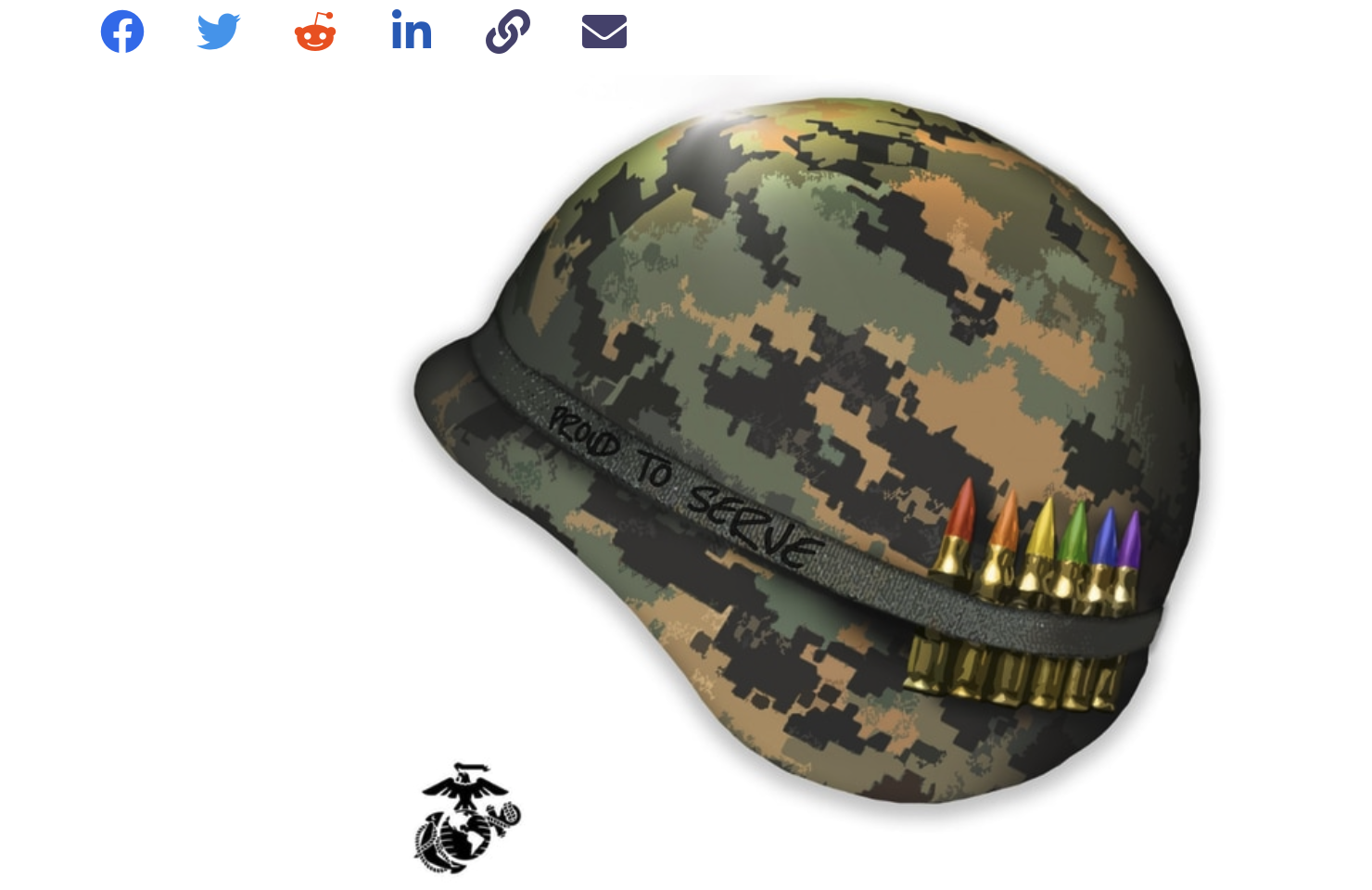
Podcast: Are many Bible Belt military families losing faith in the U.S. armed services?

Podcast: Are many Bible Belt military families losing faith in the U.S. armed services?

On Feb. 1, 2004, GetReligion co-founder Doug Leblanc opened the digital doors here at GetReligion and our first post went live. The headline: “What we do, why we do it.

I tweaked that post a bit in 2019, but left the main point intact. The key was that GetReligion was going to try to spot what I called religion “ghosts” in hard-news stories in the mainstream press. What, precisely, was a religion “ghost”? I raise this issue once again because this week’s “Crossroads” podcast (CLICK HERE to tune that in) focused on a “ghost” question in a very important topic in the news. Hold that thought.

That first post opened with Americans sitting down to read their newspapers or watch television news.

They read stories that are important to their lives, yet they seem to catch fleeting glimpses of other characters or other plots between the lines. …

One minute they are there. The next they are gone. There are ghosts in there, hiding in the ink and the pixels. Something is missing in the basic facts or perhaps most of the key facts are there, yet some are twisted. Perhaps there are sins of omission, rather than commission.

A lot of these ghosts are, well, holy ghosts. They are facts and stories and faces linked to the power of religious faith. Now you see them. Now you don’t.

This brings us to a recent Associated Press report with this headline: “Army cuts force size amid unprecedented battle for recruits.” There are zero references to religion in this report, which is kind of the point.

Is there a religion “ghost” somewhere in this story? Here are some crucial paragraphs:

With just two and a half months to go in the fiscal year, the Army has achieved just 50% of its recruiting goal of 60,000 soldiers, according to Lt. Col. Randee Farrell, spokeswoman for Army Secretary Christine Wormuth. Based on those numbers and trends, it is likely the Army will miss the goal by nearly 25% as of Oct. 1. …


Please respect our Commenting Policy

What's the role of religion as social trust unravels in American public life?

What's the role of religion as social trust unravels in American public life?

Time for a Religion Guy Memo that sidesteps the onrushing news of the moment for a broader-brush assessment of America and American religion that the media need to be thinking about.

Last Saturday, CNN host Michael Smerconish asked whether the United States is experiencing “a national nervous breakdown,” and conducted a (non-scientific) online poll in which 78% of 22,000-plus viewers answered “no” to this question: “Are concerns about America’s unraveling overblown?”

Devastating documentation on the situation came the morning after Independence Day from the Gallup Poll’s annual survey on the population’s confidence in the various institutions that lead, bind and shape the nation.

The Gallup organization stands out among pollsters for its data on identical or similar questions across many years. Writers who pursue this will want to examine the year-by-year “confidence in institutions” data, which in many cases date back to 1973.

Since this is GetReligion, we start with how much confidence this year’s 1,015 respondents have in “the church or organized religion.”

The following numbers combine the “a great deal” and “quite a lot” answers to yield a confidence index. (The poll’s other choices were “some,” “very little,” “none” and “no opinion.”) Note that these percentages track opinions among the general public, not just Americans who are personally involved or knowledgeable about religion.

Simply put, the populace’s confidence in organized religion has hit rock bottom in 2022 at 31%, compared with a 52% majority as recently as 2009, and consistent scores of 60% or better from 1973 through 1985. Digging into the internals we find 46% confidence among self-identified Republicans vs. a paltry 26% among Democrats.

What happened? The Guy sees no clear pattern of immediate reactions to, for instance, news eruptions regarding Catholic priestly predators or the abortion or the same-sex marriage disputes, though gradual accumulating impact seems likely. There’s possibly a bit of damage from a Christian faction’s visible conservative politicking, particularly in the Trump years, but even that is debatable.

The Guy proposes an explanation based upon all institutions gauged by the poll.


Please respect our Commenting Policy

Why are United Methodists at war? Readers need to know that sexuality isn't the only fault line

Why are United Methodists at war? Readers need to know that sexuality isn't the only fault line

If you read most of the mainstream news coverage about chaos inside the United Methodist Church, then you know that this war centers on LGBTQ issues.

Readers who use niche websites offering the views of conservative United Methodists, in the United States and around the world, will learn that the war is about sex, salvation, biblical authority and core doctrines in ancient Christian creeds. Hold that thought.

Before we look at recent events in the divided United Methodist Church, let’s consider an important political-science term — “condensation symbol” — that journalists may want to ponder. In a 2021 post (“Queer Santa As A Condensed Symbol Of Progressivism”) — blogger Rod “Live Not By Lies” Dreher offered this material from a reader:

A condensation symbol is “a name, word, phrase, or maxim which stirs vivid impressions involving the listener’s most basic values and readies the listener for action,” as defined by political scientist Doris Graber. Short words or phrases such as “my country,” “old glory” “American Dream,” “family values,” are all condensation symbols because they conjure a specific image within the listener and carry “intense emotional and effective power.” … Graber identified three main characteristics of condensation symbols, as they: (1) Have the tendency to evoke rich and vivid images in an audience. (2) Possess the capacity to arouse emotions. (3) Supply instant categorizations and evaluations.

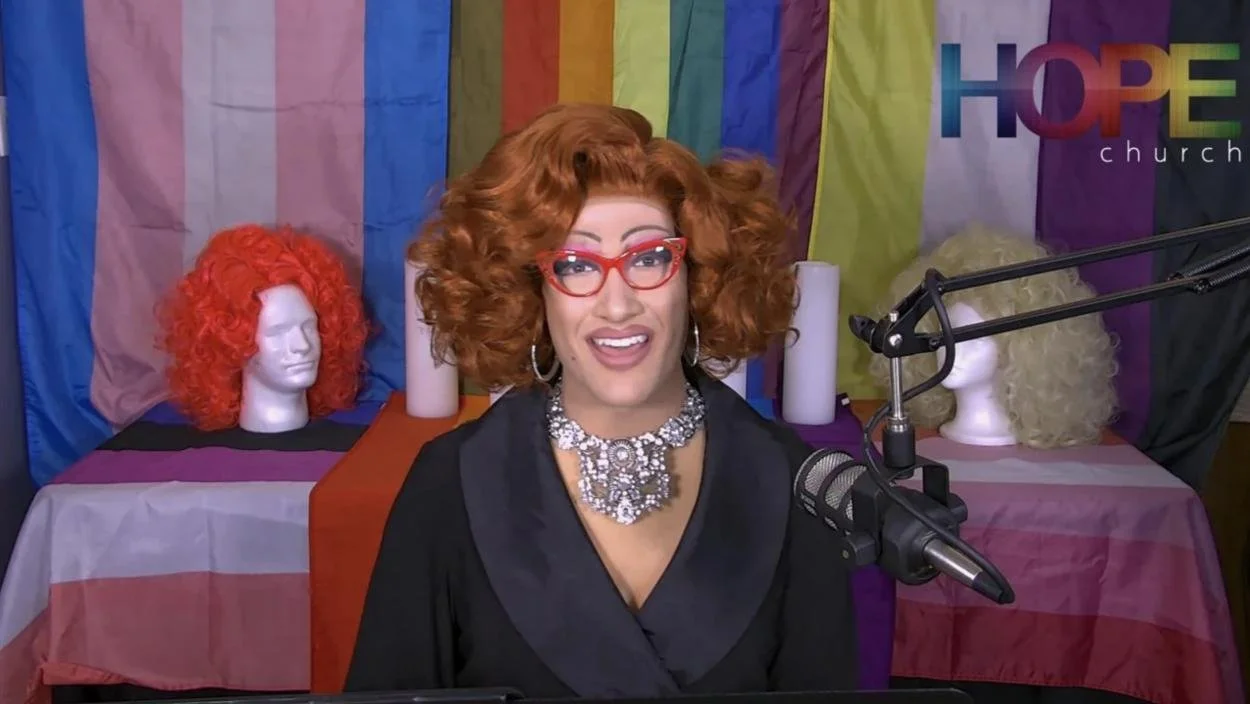
With that in mind, consider the ministry of Isaac Simmons — currently associate pastor at Hope United Methodist Church in Bloomington, Ill. — who has been accepted as a candidate for UMC ordination. Simmons (they/them) is best known as the drag-queen preacher Penny Cost.

At first glance, it would appear that Penny Cost is a perfect example of the LGBTQ issues causing the UMC split. However, I would argue that Simmons is a “condensed symbol” of the wider concerns of the global United Methodist coalition that wants to retain and defend the denomination’s current doctrines on a host of issues.

Consider the following from The American Spectator piece with this headline: “Methodist Church’s First Drag Queen Pastor: ‘God Is Nothing’.” This is, of course, a conservative publication. However, the following passage focuses on direct quotes from a new slam poem posted online by Penny Cost:

“God is nothing,” the self-described “dragavangelist” repeats throughout the poem, adding, “the Bible is nothing” and “religion is nothing.” In the end, he concludes God and the Bible are nothing “unless we wield it into something.”

“God must be f***ing nothing,” he says, “if her boundaryless, transubstantiated bodies of color are run down, beaten, and strewn in the streets of America instead of ruling the runways of life.”


Please respect our Commenting Policy

Pew gap in blue America? David French and Ryan Burge offer much to think about

Pew gap in blue America? David French and Ryan Burge offer much to think about

If you have followed GetReligion over the past decade or two then you have probably spotted some common themes linked to ongoing news trends (and I’m not talking about the musings of one Bill “Kellerism” Keller).

Here is a quick refresher with a few big ones:

* The press tends to ignore the RELIGION side of liberal faith groups, focusing only on their political stands.

* One of the biggest news stories of the late 20th century was the demographic implosion of Mainline Protestantism, leaving a public-square void filled, for the most part, by evangelicals.

* The rise of nondenominational evangelicals, with zero ties to existing evangelical power structures, has really confused lots of political reporters.

* It’s hard to do accurate, balanced, fair-minded journalism in an age when the technology pushes people into concrete media silos full of true believers. Preaching to the choir, alas, is good for business (but not for America).

* Newsroom managers need to hire experienced, trained religion-beat pros. That helps prevent lots of tone-deaf mistakes.

Here is one more. The political “pew gap” is real. Citizens who are committed members of traditional faiths tend to have radically different beliefs than those who are not. All together now: “Blue Movie.

This brings me to a rare business-week “think piece” built on a remarkable David French piece at The Dispatch that will be helpful to journalists who are — to name one trend GetReligion jumped on in 2016 — trying to make sense of the changing choices of Latino (as opposed to Latinx) voters. After watching the chatter on Twitter, I have added two relevant tweet-charts from Ryan Burge, a helpful scholar who cooperates with GetReligion. That French headline:

The God Gap Helps Explain a 'Seismic Shift' in American Politics

The most important religious divide isn't between right and left, but between left and left

The Big Idea: A funny thing happened on the way to that Democratic dream of dominating the future with a multiethnic coalition fighting a lily-white GOP.


Please respect our Commenting Policy

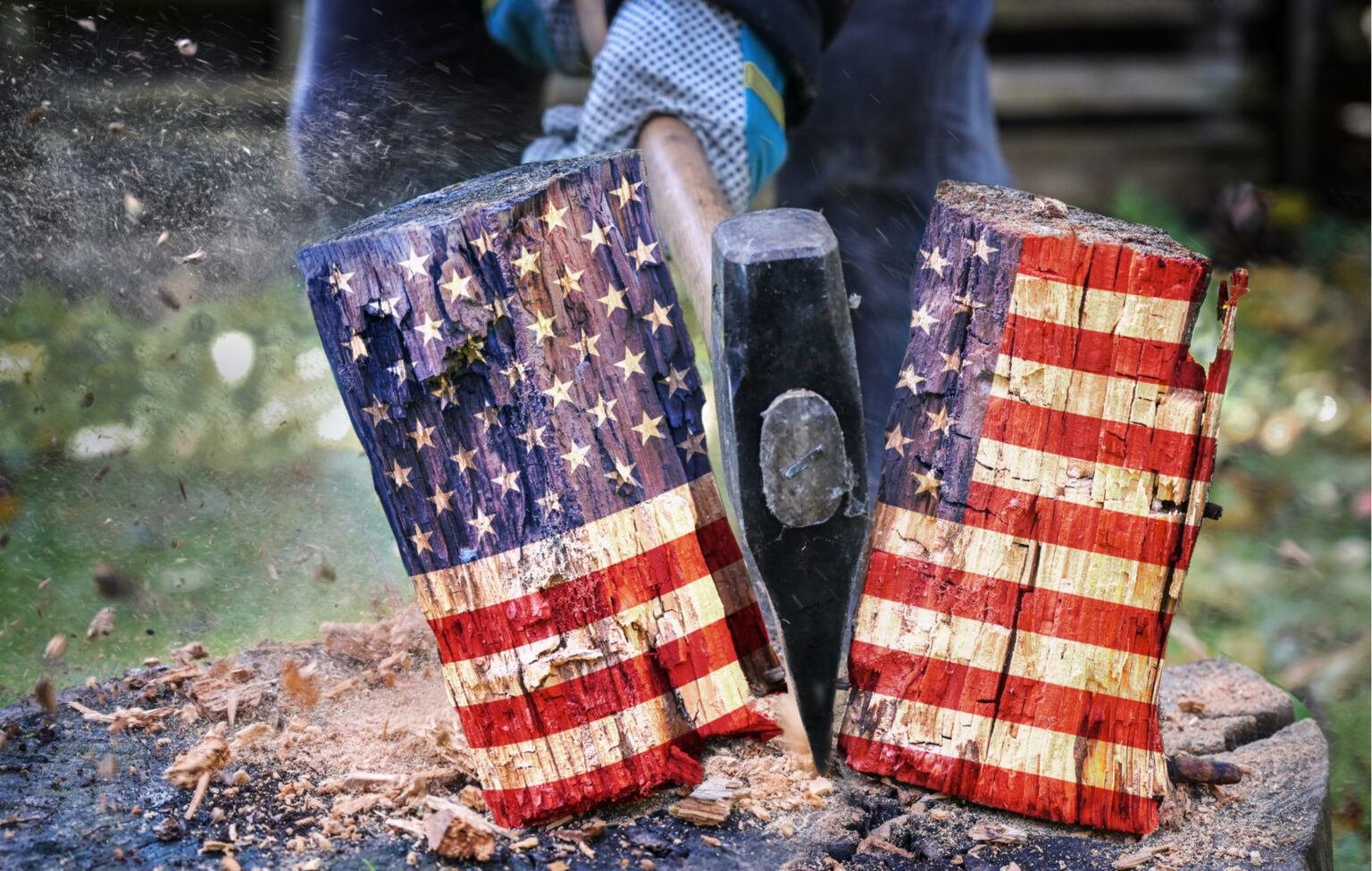
Fringe Trump-style conservatives propose a HUGE legal rewrite on religion in public life

Fringe Trump-style conservatives propose a HUGE legal rewrite on religion in public life

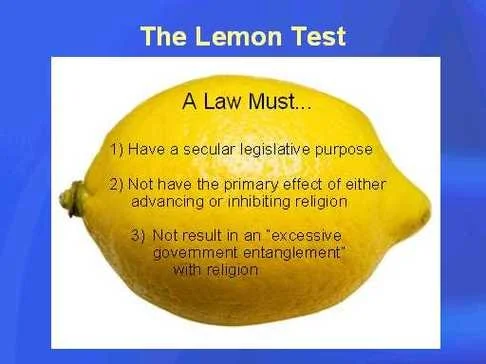
All but overshadowed by the U.S. Supreme Court’s dramatic elimination of nationalized abortion rights, the just-concluded term was vital in terms of how the Constitution applies to religion.

There were moments of unity. The Court’s liberals joined emphatic rulings that Boston must allow the Christian flag to be shown on the same terms as other displays, and that a death-row inmate is entitled to religious ministrations.

But then there were two highly contentious rulings, both in June. The high Court said a football coach is free to openly pray on the field after games and that a Maine program must include sectarian high schools if it pays tuition for other non-public campuses. That second decision explicitly erased key doctrine on what constitutes an “establishment of religion” that the Constitution forbids.

The current Court has become “exceedingly accommodating of people’s religious views,” and is “blowing a hole in the wall between church and state,” summarized the displeased New Yorker magazine.

Reporters should be watching one conservative faction’s hope for more radical renovation on the “establishment” clause. The Religion Guy learned about this, of all places, in a June 28 Rolling Stone item about the friend-of-the-court brief filed in the football prayer case, Kennedy v. Bremerton, by the group America First Legal. AFL became a player in the political litigation game only last year.

Where to begin? Repeat after me: “incorporation” and “disincorporation.”

No, not the formation and dissolution of a business, but an extremely important and often overlooked doctrine in Constitutional law. Simply put, the Supreme Court has extended the rights guaranteed in the First Amendment to cover all the states because — believe it not — the U.S. Constitution as written involved only the federal government.

The first incorporation decision was in the 1925 Gitlow case, when it required New York State to recognize freedom of speech, followed by the Near case (Minnesota, press freedom, 1931), De Jonge (Oregon, freedom of assembly, 1937) and Edwards (South Carolina, petitioning government, 1963).


Please respect our Commenting Policy

Podcast: New York Times probes abortion 'abolitionist' movement, but buries the big story

Podcast: New York Times probes abortion 'abolitionist' movement, but buries the big story

Where is the whole “life after Roe v. Wade” story headed? And while we are asking questions, shouldn’t we be saying “life after Dobbs v. Jackson Women’s Health Organization,” since that is now the defining U.S. Supreme Court decision?

Anyway, during last week’s “Crossroads” podcast (“America is splitting, says trending Atlantic essay. This is news? Actually, it's old news”), I predicted that we would be seeing more mainstream press coverage of crisis pregnancy centers — an old story hook that is, sure enough, getting lots of ink all of a sudden (see this Julia Duin post and also this one by yours truly).

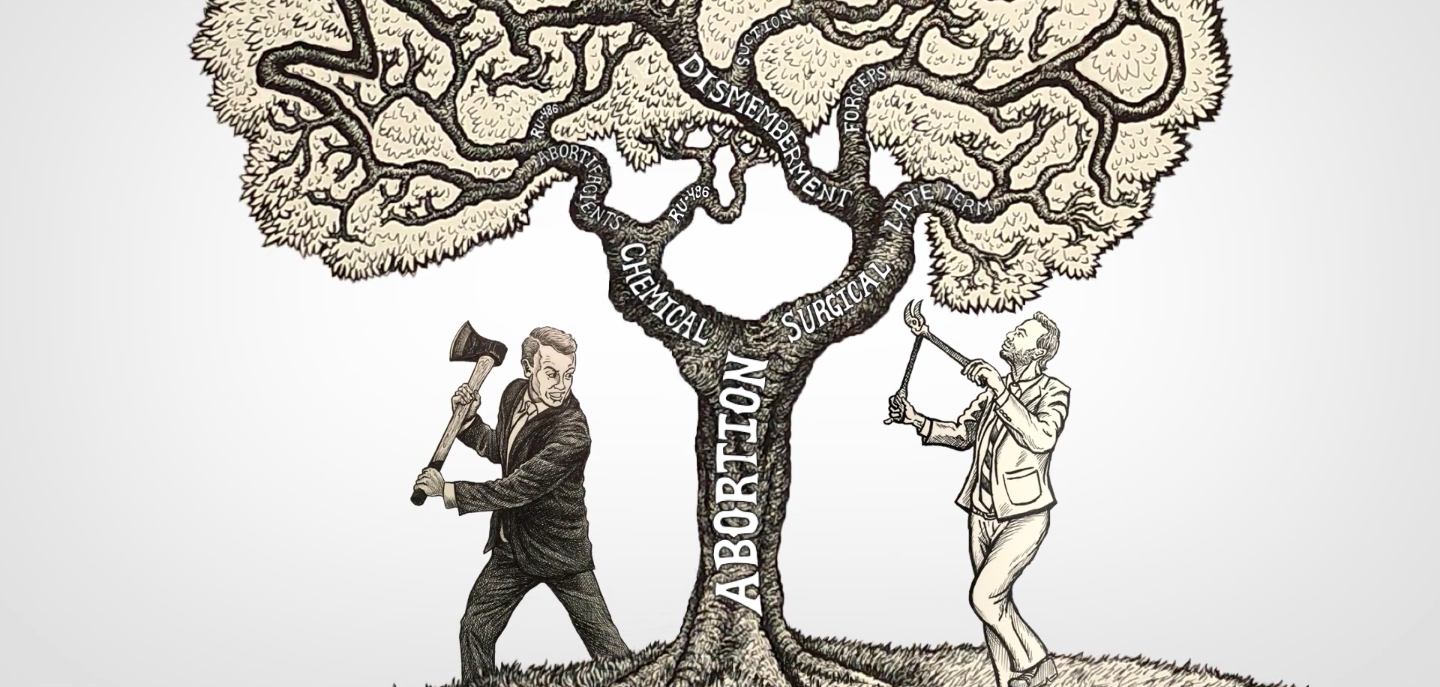
I also predicted that major newsrooms would discover the abortion “abolitionists,” a small but loud flock of activists who reject all compromises in laws to restrict abortion, including exceptions for victims of rape and incest. The key: They want laws that prosecute women who have abortions, not just the people who perform abortions.

I made that prediction for two reasons, a good reason and a bad reason. First, this is a valid story, because these activists are making noise in some crucial settings (hold that thought). However, this story also allows blue-zone newsrooms to focus lots of attention on these specific anti-abortion activists (NPR reports here and then here) whose views are outrageous to most Americans, while downplaying efforts by moderate and even centrist pro-life groups seeking more nuanced legislation, mostly in “purple” states.

This brings us to this week’s “Crossroads” episode (CLICK HERE to tune that in), which focuses on a New York Times story that ran with this headline: “Abortion Abolitionists Want to Punish Women for Abortion.” This story continues some important information. Please read it. However, it also downplays (this is strange) its most important information about the abolitionists, while dedicating lots of ink to yet another independent social-media preacher who provides lots of scary quotes. Let’s start with the overture:

Hours after the Supreme Court overturned Roe v. Wade last week, a man with a wiry, squared-off beard and a metal cross around his neck celebrated with his team at a Brazilian steakhouse. He pulled out his phone to livestream to his followers.

“We have delivered a huge blow to the enemy and to this industry,” the man, Jeff Durbin, said. But, he explained, “our work has just really begun.”

A brief pause: Why isn’t it “the Rev. Jeff Durbin”? This raises big questions: What evangelical body or denomination ordained this man? Where did he go to seminary? Does he have ties to institutions in mainstream evangelicalism?

OK, continuing.


Please respect our Commenting Policy

A key anti-Donald Trump evangelical ponders what seven years have wrought in America

A key anti-Donald Trump evangelical ponders what seven years have wrought in America

This is the 11th Guy Memo in a year guiding the media and other observers on dynamics within U.S. evangelical Protestantism. There are growing signs of a crack-up including, for sure, sexual scandals and self-inflicted wounds, but also the gap between institutional elites and the grassroots, creating division, instability and, we can expect, long-term damage.

If 11 articles seem like overkill, The Guy notes this has long been the most dynamic segment in American religion, and probably the largest in terms of active attendance. Though made up of organizationally chaotic fiefdoms, the movement’s impact rested upon substantial solidarity in belief and social outlook compared with other religious sectors.

Then seven years ago the disruptive force known as Donald J. Trump emerged.

Which brings us to last week’s significant scan by prominent evangelical Marvin Olasky in the conservative National Review.

Importantly, this does not come from some well-meaning outsider (thinking of you, David Brooks) but a career-long insider who’s profoundly conservative in both biblical belief and politics. But he is also anti-Trump.

Here we need to pause to sketch the landscape in evangelical journalism.

Olasky says the “big three” news outlets of evangelicalism are World magazine, where he was longtime editor-in-chief, the 66-year-old Christianity Today and Charisma, voice of the Pentecostal-charismatic wing of this hard-to-define world. (Beat specialists would of course add other informative websites without print editions.)

During Trump’s 2020 campaign, Charisma CEO Stephen Strang issued a book subtitled “Why He [Trump] Must Win and What’s at Stake for Christians If He Loses,” followed by a magazine piece telling readers “Why We Must Support Trump in Prayer and at the Polls.

But the other two top editors disagreed. In World, Olasky proclaimed Trump morally “unfit for power” just before the 2016 election. In 2019, Christianity Today editor-in-chief Mark Galli called for Trump’s impeachment and removal from office over Ukraine meddling for partisan purposes.


Please respect our Commenting Policy

Life after Roe: What role will churches and faith play in work of pro-life Democrats?

Life after Roe: What role will churches and faith play in work of pro-life Democrats?

As outraged Democrats jumped on social media after the fall of Roe v. Wade, some symbolic voices in the party offered careful words of celebration.

"Let's Stand Together and Support Women and Children!!!", tweeted state Sen. Katrina Jackson, the African-American Democrat who sponsored Louisiana's trigger bill that includes potential 10-year prison sentences for those who perform abortions.

Jackson's added calls for "womb to tomb" legislation raising wages for childcare workers, funds to fight human-trafficking and new state programs helping families.

Louisiana Gov. John Bel Edwards, also a Democrat, posted several Twitter messages, including: "My position on abortion has been unwavering. I am pro-life and have never hidden from that fact." He stressed that this Louisiana bill included clauses protecting procedures in cases of "medical futility" and ectopic pregnancies and added that he believes it needed "an exception to the prohibition on abortion for victims of rape and incest."

The Democratic Party, in its 2020 platform, remained committed to "protecting and advancing reproductive health, rights and justice," while promising to "fight and overturn federal and state laws" limiting or opposing abortion rights.

But in the wake of the Supreme Court's recent Dobbs vs. Jackson Women's Health Organization decision, crucial debates about abortion laws will move to state governments. Some have already passed bills protecting unborn children and others have taken equally strong stands defending abortion rights.

Many states are located somewhere in between, noted Kristen Day, leader of Democrats for Life of America. In these states there will be tense negotiations over legislation -- such as "heartbeat bills," usually defined as abortion bans after six weeks of gestation -- that were impossible under court actions linked to Roe v. Wade.

While "pro-life" Democrats are an endangered species inside the D.C. Beltway, there are "hundreds of us active in state governments," said Day, reached by telephone. Many of these Democrats are linked to Black and Latino churches -- grassroots workers that national party leaders may not want to attack or alienate.


Please respect our Commenting Policy