Evangelicals

Plug-In: A fascinating look back at the last year in the life of the Rev. Martin Luther King, Jr.

Plug-In: A fascinating look back at the last year in the life of the Rev. Martin Luther King, Jr.

Today is Martin Luther King Jr. Day, a day of remembrance for the influential civil rights leader.

Adelle M. Banks, longtime national reporter for Religion News Service, marks the holiday with a fascinating look back at King’s last full year of life.

Among the details that Banks uncovered in a review of RNS’ 1967 archives: The Baptist pastor’s “growing outspokenness against the Vietnam War and his advocacy for the poor, while it garnered support from celebrities such as Dr. Benjamin Spock, drew criticism from evangelist Billy Graham and others.”

Banks, a 27-year RNS veteran, spearheaded an exceptional 2018 project on the 50th anniversary of King’s April 4, 1968, assassination.

Those stories, still worth a read, include:

Remembering King’s last sermon with renewed hope

A faithful journey from cotton field to White House: Q&A with a sanitation worker

Three Memphis sites key to King’s legacy draw visitors

Power up: The week’s best reads

1. Why the Catholic Church Is losing Latin America: “The rise of liberation theology in the 1960s and ’70s, a time when the Catholic Church in Latin America increasingly stressed its mission as one of social justice, in some cases drawing on Marxist ideas, failed to counter the appeal of Protestant faiths,” report the Wall Street Journal’s Francis X. Rocca, Luciana Magalhaes and Samantha Pearson.

“Or, in the words of a now-legendary quip, variously attributed to Catholic and Protestant sources: ‘The Catholic Church opted for the poor and the poor opted for the Pentecostals.’”

The Journal’s story from Brazil follows The Associated Press’ recent trend piece (highlighted in last week’s Plug-in) on a surge of evangelicals in Spain, fueled by Latin Americans.
Please respect our Commenting Policy

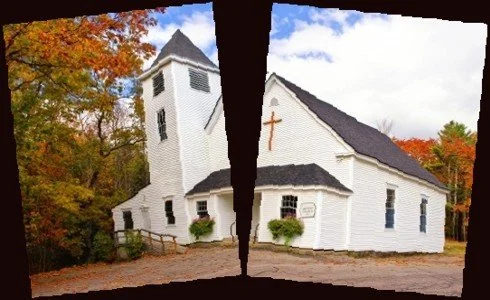
New podcast: Reformed Church in America split points to rising tensions in Calvin country

New podcast: Reformed Church in America split points to rising tensions in Calvin country

Growing up as a Texas Baptist (long ago) I was predestined to know next to nothing about what some have called the great “northern kingdom” of American evangelicalism. Yes, we can debate whether “evangelical” is an accurate description of the Calvinist world based in Grand Rapids, Mich., and other cities and towns in the Midwest.

I had to learn some of this lingo when I moved to Central Illinois and then when I broke into religion-beat work in Charlotte, N.C., a city with every imaginable form of Presbyterian and Reformed church life.

As I mentioned in this week’s “Crossroads” podcast (CLICK HERE to listen), I quickly learned that the Reformed Church in America was a rather centrist flock, while the Christian Reformed Church was much more conservative, in terms of doctrine and culture. I would not have called either of these bodies a “Mainline Protestant” denomination.

Things change. Eventually, the RCA started arguing about the familiar subjects that have divided so many religious bodies — biblical authority and sex. This leads us to a Religion News Service report: “Reformed Church in America splits as conservative churches form new denomination.” Here is the overture:

(RNS) — On New Year’s Day, 43 congregations of the Reformed Church in America split from the national denomination, one of the oldest Protestant bodies in the United States, in part over theological differences regarding same-sex marriage and the ordination of LGBTQ clergy.

The departure of the theologically conservative congregations to the new group, the Alliance of Reformed Churches, leaves some who remain in the RCA concerned for the denomination’s survival. Before the split, the nearly 400-year-old denomination had fewer than 200,000 members and 1,000 churches.

At least 125 churches from various denominations are in conversation with ARC leaders about joining.

“Various denominations?” Hold that thought.


Please respect our Commenting Policy

Add that forthcoming U.S. House report on Jan. 6 riot to your 2022 religion news calendar

Add that forthcoming U.S. House report on Jan. 6 riot to your 2022 religion news calendar

We can expect that the U.S. House select committee investigating the Jan. 6 Capitol attack will unveil findings in time to help Democrats' Nov. 8 prospects and, thus, spur Republican ire.

Even if the report ignores the matter, this report can peg thoughtful and thorough journalistic re-examination of the religious significance of continuing furor over the nine troublesome weeks from the 2020 vote through Jan. 6. Carefully balanced, non-partisan contexting will be needed.

Media and amateur videos show us that -- yes -- some of the rioters uttered prayers and brandished Christian signs, slogans and symbols. Were they isolated cranks, or representative of a broader religious phenomenon, or a bit of both?

A New York Times anniversary walkup last week counted 275 defendants with federal charges for obstructing Congress, 225 or so for acts against police, and another 300 for minor trespass or disorderly conduct. So far, a fifth of these defendants have admitted legal guilt.

Importantly, the Times reported that the mob included "church leaders" (plural).

In a national newspaper, that phrase suggests not some small-time parsons from independent churches but notable media stars, denominational and "parachurch" officials, influential college and seminary thinkers, or at least local pastors from "big steeple" congregations. In fact, that reference appears to echo this Times passage that has been discussed several times here at GetReligion, referring to religious image on Jan. 6:

The blend of cultural references, and the people who brought them, made clear a phenomenon that has been brewing for years now: that the most extreme corners of support for Mr. Trump have become inextricable from some parts of white evangelical power in America.

At some point, it would be good to cite examples of “church leaders” linked to “evangelical power.”

By contrast, last year The Washington Post's Michelle Boorstein perceptively profiled certain of the rioters to highlight Americans' growing trend of concocting idiosyncratic "do it yourself" religions for themselves.


Please respect our Commenting Policy

Plug-In: The top religion-beat stories of 2022? Here are some likely scenarios

Plug-In: The top religion-beat stories of 2022? Here are some likely scenarios

What stories will religion reporters be chasing in 2022?

Veteran Godbeat pro Kimberly Winston asked a handful of national journalists — myself included — that question on Interfaith Voices’Inspired” radio show.

“Every one of the reporters we asked had a different answer,” Winston noted.

That’s certainly true.

But a few common themes emerged.

The Washington Post’s Michelle Boorstein, The Conversation’s Kalpana Jain and I all mentioned abortion as the U.S. Supreme Court contemplates overturningor at least severely curtailing Roe v. Wade.

Other topics cited: the COVID-19’s pandemic ongoing impact on religion and the role of faith and Christian nationalism — so evident in the Jan. 6, 2021, Capitol riot — in the midterm elections.

The Los Angeles Times’ Jaweed Kaleem said he’ll be reporting on religious activism related to the climate and environment. Faithfully Magazine’s Nicola Menzie expects to keep monitoring issues of importance to Christian communities of color, such as mental health.

By the way, the 2022 question was just one part of a fascinating show in which Winston delved into how religion reporters get their stories.

I was truly captivated, except for the parts where I had to listen to my own voice. I’d highly recommend it.

Look for more predictions for the coming year — including a major global story — in this week’s Inside the Godbeat section.


Please respect our Commenting Policy

Two think pieces on changes in American religious life, with a few political twists

Two think pieces on changes in American religious life, with a few political twists

It’s time for another “think piece” weekend double-shot.

In other words, I want to point readers toward two different online features that, at first, may not seem to be related. However, when you look closer you can see the DNA that connects them.

The first is a blog post by my friend Rod “Live Not By Lies” Dreher, but I want readers to consider his post as a mere frame work around a blast of data from the Pew Research Center team. The headline on Dreher’s post states, once again, an old trend (think “Sheilaism”), but one that is being more — not less — important: “Christianity Declines — But Not ‘Spirituality’.”

Dreher points to this quotation from a recent Pew feature, which digs deeper into the center’s mine of religiously unaffiliated research:

The secularizing shifts evident in American society so far in the 21st century show no signs of slowing. The latest Pew Research Center survey of the religious composition of the United States finds the religiously unaffiliated share of the public is 6 percentage points higher than it was five years ago and 10 points higher than a decade ago.

Christians continue to make up a majority of the U.S. populace, but their share of the adult population is 12 points lower in 2021 than it was in 2011. In addition, the share of U.S. adults who say they pray on a daily basis has been trending downward, as has the share who say religion is “very important” in their lives.

Currently, about three-in-ten U.S. adults (29%) are religious “nones” — people who describe themselves as atheists, agnostics or “nothing in particular” when asked about their religious identity. Self-identified Christians of all varieties (including Protestants, Catholics, members of the Church of Jesus Christ of Latter-day Saints, and Orthodox Christians) make up 63% of the adult population. Christians now outnumber religious “nones” by a ratio of a little more than two-to-one. In 2007, when the Center began asking its current question about religious identity, Christians outnumbered “nones” by almost five-to-one (78% vs. 16%).

The recent declines within Christianity are concentrated among Protestants.

A trend this massive will affect almost every area of American life, including politics.


Please respect our Commenting Policy

Return of a Godbeat F-bomb: The 'curse of Ham,' Twelve Tribes history and a Colorado fire

Return of a Godbeat F-bomb: The 'curse of Ham,' Twelve Tribes history and a Colorado fire

Let’s start with a journalism question about the news coming out of Colorado about possible links between the Marshall Fire and a controversial religious group known as the Twelve Tribes.

The New York Times has used that popular journalism F-word — “fundamentalist” — in a major story that ran with this headline: “Colorado Wildfire Inquiry Focuses on Christian Sect.” The read-out under that headline states: “Investigators are looking at the possibility that a fire that destroyed more than 900 homes started on property owned by a fundamentalist Christian sect known as Twelve Tribes.”

Once again, we need to talk about what the word “fundamentalist” means and what it does not mean. Let me ask this question, before we proceed: Is the “Twelve Tribes” movement a “fundamentalist Christian” group in the same sense that Black or White independent Baptist churches found in many or most American cities are accurately described, in doctrinal terms, as “fundamentalist”?

Perhaps the crucial question for journalists covering this story is whether the Twelve Tribes movement is a “sect” or, in sociological terms, an actual “cult”? Hold that thought.

First, here is the overture of the Times story, showing the context for this religion-beat F-bomb:

Investigators looking into the cause of a colossal wildfire in Colorado that forced the evacuation of tens of thousands of people are focusing on a property owned by a Christian fundamentalist sect, after witnesses reported seeing a structure on fire there moments before the blaze spread with astonishing speed across drought-stricken suburbs.

Sheriff Joe Pelle of Boulder County said at a news briefing … that the property owned by Twelve Tribes, which was founded in Tennessee in the 1970s, had become a target of the inquiry after investigators ruled out the possibility that downed power lines might have sparked the fire.

With that in mind, let’s return to the pages of the journalism bible know as the Associated Press Stylebook (h/t to Bobby Ross, Jr., for checking the evolving online edition).

Let us attend.

fundamentalist The word gained usage in an early-20th-century fundamentalist-modernist controversy within Protestantism. In recent years, however, fundamentalist has to a large extent taken on pejorative connotations except when applied to groups that stress strict, literal interpretations of Scripture and separation from other Christians.

In general, do not use fundamentalist unless a group applies the word to itself.


Please respect our Commenting Policy

Give the charismatic world's 'new prophets' more ink? Julia Duin still says 'yes' (updated)

Give the charismatic world's 'new prophets' more ink? Julia Duin still says 'yes' (updated)

Surely you’ve heard of the “new prophets” in the rowdy world of charismatic Christianity?

In terms of hooks for news, these folks have everything.

We’re talking about lots of energy and egos, with the kind of on-camera talent that produces megachurches and social-media outbursts that go viral. There are also plenty of links to the powers that be around Donald Trump. This is “charisma” in every sense of that word.

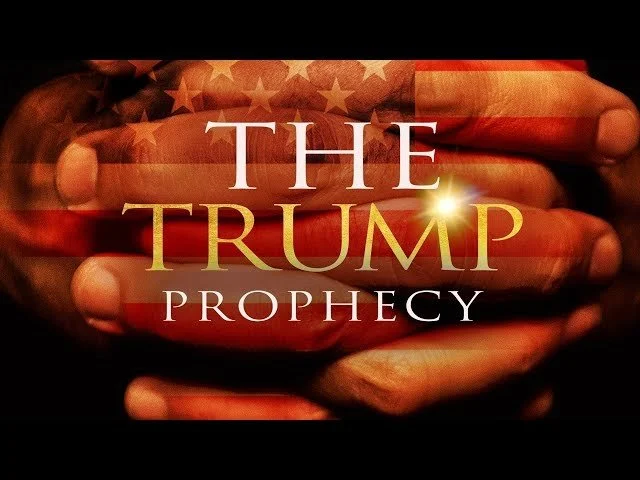
Julia Duin has been sounding this horn here at GetReligion for years, long before the events surrounding January 6th caught the attention of Big Media. Here is a chunk of a 2018 post: “Religion News Service — Movie claims 'red tsunami' will vindicate Donald Trump in November.”

… (S)ecular America doesn’t get how vehemently many people believe that God orchestrated President Trump’s 2016 victory. And what’s more, many of those people believe God has mandated another victory for Trump in 2020.

You’ve not heard this? Folks, you’re not reading the right websites. …

It’s not so much evangelical Protestants who are pushing this idea, but a daughter movement made up of charismatics and Pentecostals (linked up with Liberty University film people). I’ve been amazed over the years how few religion reporters follow these folks, even though this demographic was instrumental in getting Trump elected. Plus, a growing percentage of world Christianity is Pentecostal/charismatic (see this classic major Pew Forum study). Visit Brazil, if you don’t believe me. And much of Africa.

You want more? How about this piece early in 2020: “About Todd Bentley and 2020 prophecies: How are reporters supposed to cover this stuff?

Julia was back with more information and news hooks linked to the this new generation of self-proclaimed prophets (and the people who warned about getting tied up in politics) months later with this piece: “Who's covering this? Are charismatics and Pentecostals behind Trump's refusal to concede?

Everyone remembers that viral “strike and strike and strike” rap from the Rev. Paula White-Cain.


Please respect our Commenting Policy

Religion news 2021: Which story was No. 1? Return of Taliban or Jan. 6 riot at U.S. Capitol?

Religion news 2021: Which story was No. 1? Return of Taliban or Jan. 6 riot at U.S. Capitol?

For journalists who braved the chaos, the Jan. 6th riot on Capitol Hill offered a buffet of the bizarre -- a throng of Proud Boys, QAnon prophets, former U.S. military personnel and radicalized Donald Trump supporters that crashed through security lines and, thus, into history.

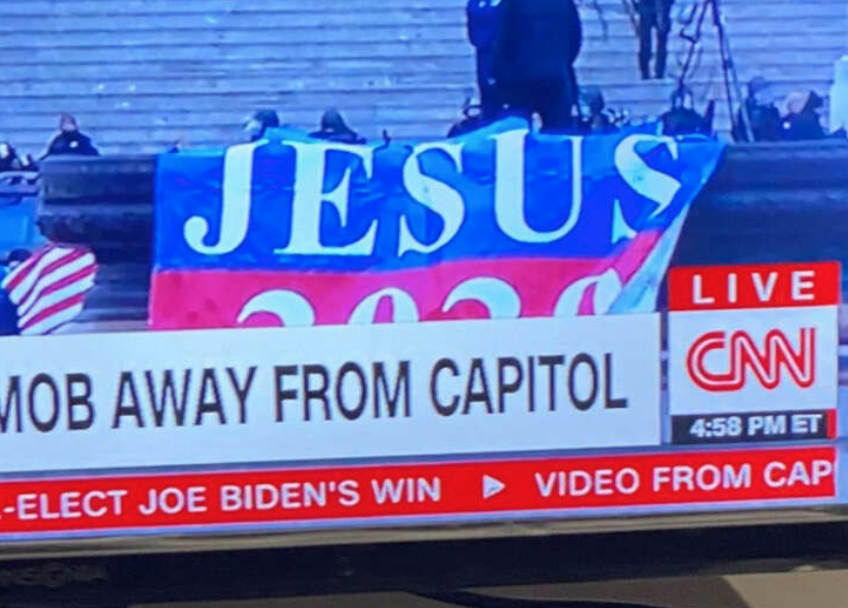
Many protestors at Trump’s legal "Save America" rally carried signs, flags and banners with slogans such as "Jesus is my Savior, Trump is my president" or simply "Jesus 2020." In this context, "Jesus saves" took on a whole new meaning.

Some of that symbolism was swept into the illegal attack on the U.S. Capitol.

In its poll addressing major religion events in 2021, members of the Religion News Association offered this description of the top story: "Religion features prominently during the Jan. 6 assault on the U.S. Capitol by pro-Trump insurrectionists. Some voice Christian prayers, while others display Christian or pagan symbols and slogans inside and outside the Capitol."

Consider, for example, Jacob Anthony Chansley -- or Jake "Yellowstone Wolf" Angeli. With his coyote-skin and buffalo-horns headdress, red, white and blue face paint and Norse torso tattoos, the self-proclaimed QAnon shaman, UFO expert and metaphysical healer became the instant superstar of this mash-up of politics, religion and digital conspiracy theories.

"Thank you, Heavenly Father … for this opportunity to stand up for our God-given inalienable rights," he said, in a video of his U.S. Senate remarks from the vice president's chair. "Thank you, divine, omniscient, omnipotent, omnipresent Creator God for filling this chamber with your white light and love. Thank you for filling this chamber with patriots that love you and that love Christ. …

“Thank you for allowing the United States of America to be reborn. Thank you for allowing us to get rid of the communists, the globalists and the traitors within our government."

That was one loud voice. A big question that must be answered, in future trials and the U.S. House investigation, is whether it's true -- as claimed by the New York Times -- that the "most extreme corners of support for Mr. Trump have become inextricable from some parts of white evangelical power in America."


Please respect our Commenting Policy

Old, nagging conflicts will continue to dominate religion news in the coming year

Old, nagging conflicts will continue to dominate religion news in the coming year

Yes, there will be a hotly contested U.S. election in 2022. And pretty much every secular and religious faction is keyed up awaiting the U.S. Supreme Court's decision on whether to revise or revoke its rulings that legalized abortion.

Big decisions like this typically land in late June.

Other lingering disputes on the news coverage agenda include the following.

* As the U.S. Senate struggles with a rewrite of the Catholic President Joe Biden's elephantine social-spending bill, the Catholic bishops' conference vehemently opposes any inclusion of abortion funding.

The bishops, along with Orthodox Judaism's synagogue union, also fear (.pdf here) this law will cripple funding for widespread religious preschools. In yet another church-state debate, Biden hopes to end religious exemption from anti-discrimination rules, which went into effect in January.

* Inside the world of Mainline Protestantism, the unending dispute over the Bible and LGBTQ+ issues may produce the biggest U.S. church split since the Civil War at the United Methodist Church's General Conference. Early in 2022, a commission must decide whether the twice-postponed conference, now scheduled for August 29-September 6 in Minneapolis, can finally occur despite two years of COVID-related snarls and, some say, stalling by the UMC establishment.

* The T in LGBTQ won new Methodist attention as just-retired Pennsylvania Bishop Peggy Johnson and her husband, a Methodist pastor, publicized the latter's gender transition while identifying publicly as a "cisgender" male.

Last March, a sizable body of U.S. conservatives announced plans to leave the denomination and unite with former mission churches overseas — primarily in Africa and Asia — to form the "Global Methodist Church," led temporarily by Virginia Pastor Keith Boyette (540-898-4960).


Please respect our Commenting Policy