Evangelicals

As Mississippi abortion case arrives, key religion stories vote views of Jews, evangelicals

As Mississippi abortion case arrives, key religion stories vote views of Jews, evangelicals

Let’s start with the basics, for those who have not been following weeks of heated commentary in the mainstream press.

On today’s docket at the U.S. Supreme Court is Dobbs v. Jackson Women’s Health Organization, a case out of Mississippi some say is designed to overturn Roe v. Wade, the 1973 landmark case that legalized abortion.

It involves a 2018 Mississippi law that bans most abortions after 15 weeks, with few exceptions. If decided favorably, states with more restrictive laws (i.e. Texas) would be able to enforce them. Abortion would not be outlawed, but it would be greatly limited — which is why it’s annoying to hear broadcasts, such as the Fox TV item featured at the top of this post, saying the case could “end Roe v. Wade.”

Well, not quite. Because of its new “heartbeat” law, abortions in Texas are down 50% from what they were this time last year, to give you an idea of what may lie ahead.

As for me, I’d like to think that SCOTUS would actually make a decisive ruling on something that has divided the American public for 48 years and resulted in 60 million abortions. These justices have dithered a lot in similar cases and I’m guessing they will bail on this case as well — as they did with Masterpiece Cakeshop case in 2017 in refusing to rule on the merits of the case. I do realize the makeup of the high court has shifted since then. I’m guessing they’ll refuse to give Dobbs a definitive ruling and base their decision on some technicality.

So yes, I’m a pessimist. Key members of this court appear to shun clarity. But at least abortion is on the table again in terms of public discussion, with religion as one of its many permutations, which makes covering this case important for religion reporters.

On the left, this Slate piece argues that abortion rights are in dire peril:

On the eve of Dobbs — before a tsunami of protesters descend upon the court, before nerve-racking oral arguments before a partly empty courtroom, before months of tense deliberations behind the velvet curtains — the smart money counts five votes to gut Roe. …

Please respect our Commenting Policy

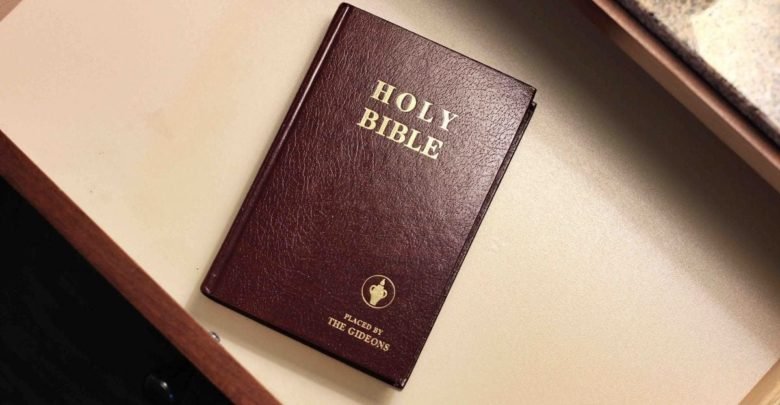
Thinking about a newsy mystery: Why are Gideon Bibles vanishing from hotel nightstands?

Thinking about a newsy mystery: Why are Gideon Bibles vanishing from hotel nightstands?

Thanksgiving is once again upon us and with it the official start of the busy holiday travel season that extends through Christmas.

As Americans continue to cope with the ongoing pandemic, travel has seen a steady increase once again. That means packed airports and bumper-to-bumper traffic on most major highways starting Wednesday. It also means more people will be staying in hotels.

This brings us to an interesting and highly symbolic news story, one that deserves coverage.

I have done my share of travel — both in the United States and internationally — over my two decades working as a journalist. The few things you could always count on for much of that time was a newspaper at the front desk, usually USA Today, and a Bible in your nightstand.

Not anymore. Print is slowly dying, and newspaper readers have migrated to the internet in recent years.

What about those Bibles?

They, too, seem to be slowly disappearing. I noticed this past summer, while on a trip to Washington, D.C., that there was no Bible in my hotel room.

The phasing out of Bibles in hotel rooms is actually part of a steady trend across the country over the past few years. In 2016, Marriott International, the world’s largest hotel chain, typically supplied both a Bible and Book of Mormon in its rooms. But the company decided that forgoing religious materials was the way to go at two of its hipper hotel brands such as Moxy and Edition. Note that both of these chains target younger guests.


Please respect our Commenting Policy

Holiday musings from Brazil: Is it time for missionaries to leave indigenous tribes alone?

Holiday musings from Brazil: Is it time for missionaries to leave indigenous tribes alone?

It’s that time of year again.

We’re talking about The Holidays, the season when Thanksgiving and Christmas bookend America’s annual celebration of its history of Christian influences, even if today’s mass-media crush obscures that. It’s a season of family gatherings, annual notes to far-flung friends and acquaintances, garish holiday-themed sweaters designed to provoke smiles, and, for some, even a few religious services.

It’s a big deal journalistically, too, of course. Editors/producers and reporters/content providers seek out warm-and-fuzzy, feel-good features meant to remind media consumers of the genuine goodness individual humans are capable of showing others, including strangers.

We call it the holiday spirit and, except for the rampant consumerism, I appreciate the seasonal goodwill. And why not? Upbeat news is a welcome change from the disconcerting stories we’re usually fed. It’s good for the soul, and I need not subscribe to the traditional beliefs for it to warm my heart.

It’s also a time when journalists seek to probe the theological aspects of our holiday narratives, often to the distaste of those news consumers who prefer the comforting familiarity of traditional tellings or even the more sobering messages of traditional Christian faith in Advent and Christmas.

Such stories — here’s one example from a few years back that ran in the Guardian — are tricky, requiring solid sourcing and clear, even-handed and respectful explanations.

Another category of holiday stories addresses the consequences of past Christian actions that a reporter can link to the season, even if the link is indirect at best. Take this recent Washington Post story — “This tribe helped the Pilgrims survive for their first Thanksgiving. They still regret it 400 years later” — on how the indigenous tribe, the Wampanoag, that first encountered the Pilgrims in what is now Massachusetts were decimated by the encounter. Here’s a large bite of it:

Just as Native American activists have demanded the removal of Christopher Columbus statues and pushed to transform the Columbus holiday into an acknowledgment of his brutality toward indigenous people, they have long objected to the popular portrayal of Thanksgiving.

For the Wampanoags and many other American Indians, the fourth Thursday in November is considered a day of mourning, not a day of celebration.


Please respect our Commenting Policy

Plug-In: Minichurches and burned-out pastors -- four crucial COVID-19 trends to follow

Plug-In: Minichurches and burned-out pastors -- four crucial COVID-19 trends to follow

COVID-19 rages on.

So does the pandemic’s big impact on American religion.

From in-person attendance declining to pastors burning out, here are four related trends to watch:

(1) Churches changed during the pandemic and many aren’t going back (by Janet Adamy, Wall Street Journal)

“The number of churchgoers has steadily dropped in the U.S. over the past few decades,” Adamy reports. “But Covid-19 and its lockdown restrictions accelerated that fall. In-person church attendance is roughly 30% to 50% lower than it was before the pandemic, estimates Barna Group, a research firm that studies faith in the U.S.”

(2) Why the minichurch is the latest trend in American religion (by Bob Smietana, Religion News Service)

Smietana profiles a small church in Wisconsin, noting, “Cornerstone is part of the fastest-growing group of congregations in America: the minichurch. According to the recently released Faith Communities Today study, half of the congregations in the United States have 65 people or fewer, while two-thirds of congregations have fewer than 100.”

(3) The pastors aren’t all right: 38% consider leaving ministry (by Kate Shellnutt, Christianity Today)

“Pastoral burnout has worsened during the pandemic,” Shellnutt explains. “A Barna Group survey released (this week) found that 38 percent of pastors are seriously considering leaving full-time ministry, up from 29 percent in January.”

See related coverage from the Washington Times, by former GetReligionista Mark A. Kellner.

(4) Most churches find financial stability in 2021 (by Aaron Earls, Lifeway Research)

“Emerging from the pandemic, most churches don’t seem to be underwater financially, but many are treading water,” Earls reports.


Please respect our Commenting Policy

Podcast: Why was the New York Times so interested in Marvin Olasky? Take a guess ...

Podcast: Why was the New York Times so interested in Marvin Olasky? Take a guess ...

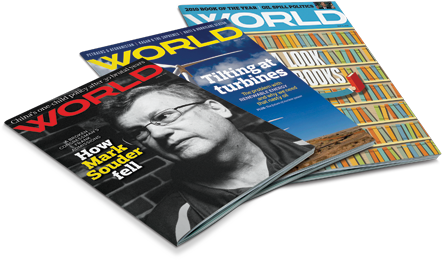
Why was The New York Times so interested in Marvin Olasky and his views on journalism and Christian faith?

That’s a question that I heard several times this week from readers and others.

Actually, the Times published a previous article on Olasky, which I mentioned in a post here earlier this week (“Wut happened? Tensions behind World's move to push Olasky out of his editor's chair”). So let’s tweak that question a bit, to get to the point that host Todd Wilken and I discussed in this week’s “Crossroads” podcast (click here to listen to it).

Why was the Times team so interested — it’s a long, complex feature — in Olasky right now?

Actually, the answer to that question is pretty clear. Read the headline: “His Reasons for Opposing Trump Were Biblical. Now a Top Christian Editor Is Out.” Now,. read the thesis statement:

At one level, Mr. Olasky’s departure is just another example of the American news media sinking deeper into polarization, as one more conservative news outlet, which had almost miraculously retained its independence, is conquered by Mr. Trump.

It also marks the end of a remarkable era at a publication that has shaken evangelical churches and related institutions with its deeply reported articles. … At a time when hot takes get the clicks, these articles offered something old-fashioned and hard for any community to take: accountability reporting.

That’s actually two answers, isn’t it.

Answer No. 1: Trump, Trump, Trump, Trump. Answer No. 2: Olasky has built a magazine known for producing hard-news articles. That’s rare, in today’s digital world dominated by a quick-click business model that loves opinions and commentary work. The editorial approach at World was shaped by cultural, religious conservatism, more than partisan politics.

Think of this magazine as an evangelical version of the late, great New Republic.


Please respect our Commenting Policy

Wut happened? Tensions behind World's move to push Olasky out of his editor's chair

Wut happened? Tensions behind World's move to push Olasky out of his editor's chair

First things first: Readers need to know that Marvin Olasky has been a friend of mine for yearly three decades. If I was dangling off a cliff, I’d trust Olasky to hold the rope.

Through the years, Marvin and I have disagreed on many journalism issues and had some stimulating debates. For example: He was dead right when, in the first years of Internet life, he predicted that life in the digital world — think social media in particular — would undercut old-school standards of balance and objectivity in journalism. In GetReligion terms, think “Kellerism” and much of today’s New York Times.

Back to the present, and a pretty solid Times piece that is lighting up Twitter. Here’s the double-decker headline:

His Reasons for Opposing Trump Were Biblical. Now a Top Christian Editor Is Out.

A clash over culture and politics comes to World, a groundbreaking journalistic institution that covers evangelical Christians.

There is, of course, no way to leave Donald Trump out of this story, with Olasky submitting his resignation (he was planning to retire next summer) after a coup in the World board after several years of tensions. Among the hot-button issues, readers learn, were COVID-19 masks and voter fraud (#DUH).

As I said, the story is pretty good, with Olasky — rare, this — portrayed in the elite press as a good guy. However, there is one statement that I need to challenge right up front:

At one level, Mr. Olasky’s departure is just another example of the American news media sinking deeper into polarization, as one more conservative news outlet, which had almost miraculously retained its independence, is conquered by Mr. Trump.

Has the newsroom at World been “conquered by Trump”?

I would say that we do not know that, yet. It’s clear that the World board signed off on the creation of an ambitious World-branded commentary website — without Olasky’s approval as editor. But do we know that the news team will not bravely carry on with its work?

We do not know that, do we?


Please respect our Commenting Policy

Plug-in: Supreme Court questions inmate's demand for vocal prayers in Texas death chamber

Plug-in: Supreme Court questions inmate's demand for vocal prayers in Texas death chamber

Last week, we set the scene for the U.S. Supreme Court’s hearing of a religious freedom case involving a Texas death-row inmate.

This week, we summarize the mixed response justices gave in that inmate’s case.

Christianity Today’s Daniel Silliman lays out the plot aptly:

If you give a man in a Texas execution chamber the right to a prayer, is he entitled to two?

Can he ask for candles?

Or Communion?

If the United States Supreme Court says a condemned man has the religious right to have his pastor touch his foot while the state injects a lethal dose of chemicals into his veins, then will the court also have to allow a pastor to touch a man’s hand, his head, or even the place where the needle pierces the skin?

The justices quizzed attorney Seth Kretzer about the slippery slope of death penalty prayer on Tuesday morning, as they weighed whether the First Amendment and the Religious Land Use and Institutionalized Persons Act (RLUIPA), passed by Congress in 2000, give 37-year-old John Henry Ramirez the right to have his pastor lay hands on him and pray aloud when the state of Texas puts him to death.

The high court was skeptical of the inmate’s “demand that his pastor be allowed to pray out loud and touch him during his execution,” according to The Associated Press’ Jessica Gresko.

Justice Clarence Thomas raised concerns “about inmates ‘gaming the system’ by asserting dubious religious claims that served to delay their executions, notes the Wall Street Journal’s Jess Bravin.

The court “seemed divided,” explains the Washington Post’s Robert Barnes, who produced a “deeply reported and evocative” advance piece on the case, reporting from Corpus Christi, Texas.


Please respect our Commenting Policy

New podcast: Left, right, middle? Two giant U.S. seminaries are pro-vaccine, but anti-mandate

New podcast: Left, right, middle? Two giant U.S. seminaries are pro-vaccine, but anti-mandate

Let’s do a COVID-19 religion-news flashback, looking at a storyline or two near the start of the pandemic.

I’m doing this in order to analyze how the press is framing a major new development — the federal-court lawsuit filed by Southern Baptist Theological Seminary and Asbury Seminary challenging the Biden administration’s vaccine mandate. These are, by the way, two of the largest seminaries in the United States and, while other seminaries are collapsing, these two are growing.

Coverage of this lawsuit was the hook for this week’s “Crossroads” podcast. (CLICK HERE to tune that in.)

So now the flashback. Remember when I was writing — at GetReligion and in my national “On Religion” column for the Universal syndicate — about the vast majority of American religious groups who were caught in the middle of the “shelter in place” and lockdown wars linked to COVID-19?

Remember the Catholic priests in Texas who were trying to hear confessions out in the open air (in a big field and parking lot), while following guidelines for social distancing? Or how about the churches that were under attack for holding services in drive-in movie theaters, with the faithful in cars, while it was OK for folks to be in parking-lot scrums at liquor stores and big box super-marts? Then you had the whole casinos are “essential services” while religious congregations were not “essential.”

I argued, at that time, that this was way more complicated than religious people who cooperated with the government and those who didn’t. This was not a simple left vs. right, good vs. bad situation. In fact, there were at least FIVE different groups to cover in these newsy debates:

They are (1) the 99% of religious leaders who cooperated and took worship online, (2) some religious leaders who (think drive-in worship or drive-thru confessions) who tried to create activities that followed social-distancing standards, (3) a few preachers who rebelled, period, (4) lots of government leaders who established logical laws and tried to be consistent with sacred and secular activities and (5) some politicians who seemed to think drive-in religious events were more dangerous than their secular counterparts.

That’s complicated stuff.

The problem is that, in the world of American politics, things have to be crushed down into left and right templates or even, there for a few years, into pro-Donald Trump and the anti-Donald Trump. I’m sure we’re past that last part. Right?


Please respect our Commenting Policy

United Methodist pastor dives into HBO drag-queen culture, drawing joyful RNS applause

United Methodist pastor dives into HBO drag-queen culture, drawing joyful RNS applause

Religion news consumers who have been alive for a few decades are probably aware that — on issues related to the Bible and sexuality — United Methodists are, in fact, not united.

Anyone looking for deep background on that topic can turn to a classic document from the mid-1980s entitled “The Seven Churches of United Methodism.” Click here for the first of two “On Religion” columns I wrote about the continuing relevance of that report, which was written by Duke University sociologist Robert L. Wilson, who died in 1991, and William Willimon, now a retired bishop.

Of course, there are bipartisan plans for a United Methodist divorce that would create a more LGBTQ-friendly version of the current denomination and a global Methodist body that would retain traditional teachings on marriage and sexuality. Hold that thought.

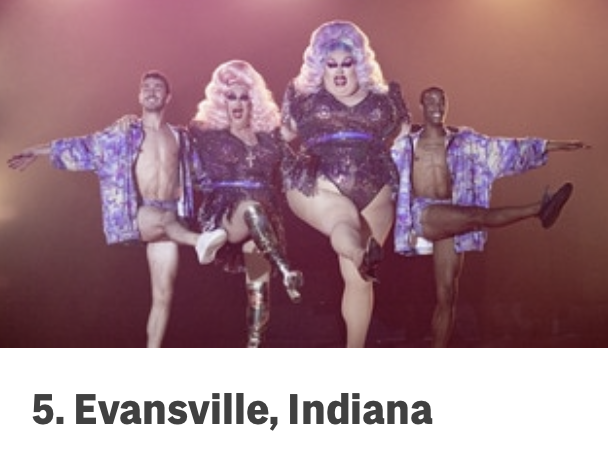
Every now and then, Religion News Service — one of the definitive sources for news on the Christian left — produces a news report that perfectly illustrates just how divided Methodists are on edgy issues related to sexuality. This brings us to the following dramatic double-decker RNS headline:

Meet the United Methodist pastor featured on HBO’s drag reality show ‘We’re Here’

Performing in drag was an ‘incredibly wonderful, refreshing, deepening, powerful spiritual experience,’ said Pastor Craig Duke of Newburgh United Methodist Church in Indiana.

Let me note, right up front, that this story opens all kinds of doors to discussions of the two doctrinal approaches that — on issues of biblical authority and a host of other issues — can be found in the current United Methodist Church. However, the story includes absolute zero voices from Methodists on the traditional side of these debates — even from members of the pastor’s own congregation who can be expected to ask questions about his TV leap into the world of drag culture.

Here is the overture to this advocacy-journalism report. This is long, but essential:


Please respect our Commenting Policy