Evangelicals

Thinking with Ryan Burge: Concerning young Latter-day Saints, third parties and life post-Trump

Thinking with Ryan Burge: Concerning young Latter-day Saints, third parties and  life post-Trump

There are times, when you are reading Ryan Burge on Twitter (which journalists should, of course, be doing) and you see signs that he has read some religion-news related item somewhere that has caused him to do that thing that he does — sift through lots of poll numbers looking for a new angle.

What we have here is a pair of tweets linked to a Christian Sagers think piece at The Deseret News that I had missed. The headline: “Are Latter-day Saint voters turning blue?”

That’s blue as in learning toward the Democratic Party, not feeling sad or depressed. That would be a huge news story hinting at other possible changes among centrists on moral and cultural issues.

Burge send me this comment containing what he thinks is the key question about this possible news twist.

The big question is: have younger LDS really abandoned the Republican Party? I don't think that we will ever know for sure until Trump is off the ballot completely.

So where to begin? Here is the overture in Sager’s piece, noting that a recent:

Cook Political Report concludes that all four of Utah’s congressional districts are among the most Democratic-trending in the country. Latter-day Saint voters in Arizona doubled their Democratic turnout from 2016.

Meanwhile, a Democratic activist group with whom I spoke recently is optimistic about converting Latter-day Saint women, traditionally Republican, who it believes to be rejecting the GOP in greater percentages than other religious demographics.

That candidate Donald Trump fared so poorly among members of The Church of Jesus Christ of Latter-day Saints in 2016 was met with astonishment in national media coverage and a flurry of conjectures that Latter-day Saints were up for grabs.

And yet, the political status of the Latter-day Saint voting bloc doesn’t fit into a tidy narrative. Yes, there are signs that some Latter-day Saints are reconsidering the modern GOP, but at the same time there are suggestions that Latter-day Saints remain reliably Republican.

Sure enough, there are other complications that need to be considered when looking at conservatives in this Donald Trump-warped political age.



Please respect our Commenting Policy

'On Religion' flashback to 1998: Ten years of reporting on a church-state fault line

'On Religion' flashback to 1998: Ten years of reporting on a church-state fault line

Back in the 1980s, I began to experience deja vu while covering event after event on the religion beat in Charlotte, Denver and then at the national level.

I kept seeing a fascinating cast of characters at events centering on faith, politics and morality. A pro-life rally, for example, would feature a Baptist, a Catholic priest, an Orthodox rabbi and a cluster of conservative Methodists, Presbyterians, Episcopalians and Lutherans. Then, the pro-choice counter-rally would feature a "moderate" Baptist, a Catholic activist or two, a Reform rabbi and mainline Methodists, Presbyterians, Episcopalians and Lutherans.

Similar line-ups would appear at many rallies linked to gay rights, sex-education programs and controversies in media, the arts and even science. Along with other journalists, I kept reporting that today's social issues were creating bizarre coalitions that defied historic and doctrinal boundaries. After several years of writing about "strange bedfellows," it became obvious that what was once unique was now commonplace.

Then, in 1986, a sociologist of religion had an epiphany while serving as a witness in a church-state case in Mobile, Ala. The question was whether "secular humanism" had evolved into a state-mandated religion, leading to discrimination against traditional "Judeo-Christian" believers. Once more, two seemingly bizarre coalitions faced off in the public square.

"I realized something there in that courtroom. We were witnessing a fundamental realignment in American religious pluralism," said James Davison Hunter of the University of Virginia. "Divisions that were deeply rooted in our civilization were disappearing, divisions that had for generations caused religious animosity, prejudice and even warfare. It was mind- blowing. The ground was moving."

The old dividing lines centered on issues such as the person of Jesus Christ, church tradition and the Protestant Reformation. But these new interfaith coalitions were fighting about something even more basic – the nature of truth and moral authority.


Please respect our Commenting Policy

Where will American religious groups fit into the newly electrified abortion debate?

Where will American religious groups fit into the newly electrified abortion debate?

The U.S. Supreme Court's agreement to review Mississippi's strict abortion law means that the public argument on this unending dispute will be the most intense in many years -- with a ruling due right in the midst of the 2022 election campaign.

Despite the Court's increased conservative majority, there's no certainty it will clamp new restrictions on abortion. Yet it's also possible that the Court might overthrow its own 1973 Roe v. Wade decision, which legalized most abortions nationwide in 1973.

If so, the impact will be momentous but not quite as apocalyptic as "pro-choice" advocates suggest. Abortion would remain widely available because decision-making would simply be returned to democratically elected state legislatures and many would maintain liberal policies. Charities might aid women in the "pro-life" states needing travel for out-of-state abortions.

For those covering the religion beat, the coming year is a major defining moment as America's variegated denominations state what they now believe about the morality of abortion and why.

After the Roe ruling, the 1976 conventions of the two major political parties began setting opposite stances. The Democrats' platform acknowledged that many Americans had "religious and ethical" concerns but opposed a Constitutional amendment to bar abortions. Similarly, the Republicans' platform stated that some in the party favored the Supreme Court's edict, but advocated such an amendment "to restore protection of the right to life for unborn children."

Religion writers well know how that basic split hardened and reshaped religious voters' political alignments. There's been less attention to the way the advent of open abortion turned around the Social Gospel thinking of Protestant liberals.


Please respect our Commenting Policy

Plug-In: What 'Never Trumper' Russell Moore's departure from ERLC means for SBC

Plug-In: What 'Never Trumper' Russell Moore's departure from ERLC means for SBC

Religion News Service national writer Bob Smietana picked up one Moore big scoop this week.

Back in March, Smietana broke the internet with news of Beth Moore no longer identifying as a Southern Baptist.

This week, Smietana — one-time “longhaired, hippy wannabe songwriter” turned highly content religion reporter — was the first to confirm the embattled Russell Moore leaving the Southern Baptist Convention’s Ethics and Religious Liberty Commission.

The ERLC’s president since 2013 will join Christianity Today, the influential evangelical magazine founded by the late Rev. Billy Graham in 1956. He’ll “serve as a full-time public theologian for the publication and … lead a new Public Theology Project.”

At the Washington Post, religion writers Sarah Pulliam Bailey and Michelle Boorstein point out that Russell Moore “blasted former president Donald Trump and his evangelical fans.” His ERLC resignation prompts questions about the SBC’s future:

Moore’s departure from the convention’s Ethics & Religious Liberty Commission (ERLC) follows other high-profile exits from the denomination, including popular Bible teacher Beth Moore (no relation) and Black pastors. Some evangelicals are wondering what their departures signal about the direction of the convention, which has included louder voices on the far right in recent years.

Read additional coverage from The Tennessean’s Holly Meyer, the Wall Street Journal’s Ian Lovett and GetReligion’s Terry Mattingly.

Also, if you can’t get enough of Smietana and the Southern Baptists, check out this piece on “the grievance studies hoaxer and atheist” who is “on a crusade against what he sees as a ‘woke’ invasion of the nation’s largest Protestant denomination.”


Please respect our Commenting Policy

Bob Dylan turns 80, while Dylanologists keep arguing about signs of faith in his art

Bob Dylan turns 80, while Dylanologists keep arguing about signs of faith in his art

Night after night, Bob Dylan's 1979 Gospel concerts at San Francisco's Warfield Theatre made news for all the wrong reasons, according to angry fans.

The November 11th show opened with Dylan roaring into "Gotta Serve Somebody" from "Slow Train Coming," the first of what Dylanologists called his "born-again" albums.

"You may be a businessman or some high-degree thief," he sang. "They may call you doctor, or they may call you chief, but you're gonna have to serve somebody. … Well, it may be the Devil, or it may be the Lord, but you're gonna have to serve somebody."

To add insult to injury, these concerts included fiery sermons by Dylan, while he avoided classic songs that made him a legend.

"I was 19 years old and that was my first Dylan concert," recalled Francis Beckwith, who teaches Church-State Studies at Baylor University. "The atmosphere was highly charged. Some people booed or walked out. … There were people shouting, 'Praise the Lord!', but you could also smell people smoking weed."

Beckwith kept going to Dylan concerts, while following years of reports about whether the songwriter was still a Christian, had returned to Judaism or fused those faiths. These debates will continue as fans, critics, scholars and musicians celebrate Dylan's 80th birthday on May 24th.

With a philosophy doctorate from Fordham University in New York and a law degree from Washington University in St. Louis, Beckwith is certainly not a conventional music critic. He made headlines in 2007 when -- while president of the Evangelical Theological Society -- he announced his return to Catholicism.

To mark that birthday, Beckwith is publishing online commentaries on what he considers Dylan's 80 most important songs. The Top 10: "Like a Rolling Stone," "My Back Pages," "Stuck Inside of Mobile With the Memphis Blues Again," "Mr. Tambourine Man," "Visions of Johanna," "Tangled Up in Blue," "Blowin' in the Wind," "Precious Angel," "It's Alright, Ma (I'm Only Bleeding) and "Desolation Row."

Beckwith considered three factors -- popularity, lasting cultural significance and, finally, whether each song was "something I could listen to over and over." He stressed that Dylan's entire canon includes images and themes rooted in scripture and faith.


Please respect our Commenting Policy

Catholic News Agency looks at GetReligion (including why Catholics still care about news)

Catholic News Agency looks at GetReligion (including why Catholics still care about news)

There is no “Crossroads” post this week, in part because various people — including me — are engaged in long-awaited in what I think used to be called “vacations.” In my case, I will be trading the lovely mountains of East Tennessee for my old stomping grounds — the Rocky Mountains in Colorado.

If you want to check out some podcasts, by all means click here to head into our online library or go to Apple Podcasts and sign up for the automatic feed.

In place of a podcast, I think GetReligion readers — old and new — will want to check out a new Catholic News Agency feature — “GetReligion points out 'ghosts' in religion reporting among mainstream media“ — about the history of GetReligion and why we keep doing what we do. Here’s the overture:

The news-checking website GetReligion.org is in its 18th year of looking for “ghosts” in mainstream media. The “ghosts,” as co-founder and current editor Terry Mattingly calls them, are holes in news coverage that exist either because the media does not want to cover the religious aspect of a story or because the reporters are unaware that a religious component is present.

“The goal was to openly advocate for an old style, liberal approach to journalism where you are striving for accuracy and striving to let people on both sides of controversial issues have their voices heard in a way that is accurate and shows them respect,” Mattingly said.

GetReligion was founded in 2004. Mattingly and fellow co-founder Douglas LeBlanc set out to dissect news coverage and brought with them a number of experienced religion writers, including Richard Ostling, Ira Rifkin, Julia Duin and Bobby Ross. Together, they hoped to shed light on the inconsistencies in religion reporting or religion bias in the news.


Please respect our Commenting Policy

When covering Moore's exit from SBC power, scribes should ponder what made him 'liberal'

When covering Moore's exit from SBC power, scribes should ponder what made him 'liberal'

This may be a strange place to start when discussing early news coverage of the Rev. Russell Moore moving from the Ethics & Religious Liberty Commission — the crucial Southern Baptist camp in Beltway land — to what looks like a Christianity Today think tank on theology and public life.

So be it. This is where we will start — with the whole Moore is “too liberal” thing.

What does “liberal” mean in that curse that has been tossed about in Baptist social media?

Remember that one of Moore’s primary duties in Washington, D.C., has been to help Southern Baptists defend against attacks on religious liberty and the First Amendment in general. With that in mind, let me return to a question that I have been asking here at GetReligion — while focusing on the role that labels play in American journalism — for a decade or so. This is from a 2015 post:

What do you call people who are weak in their defense of free speech, weak in their defense of freedom of association and weak in their defense of religious liberty (in other words, basic First Amendment rights)?

The answer: I don't know, but it would be totally inaccurate — considering the history of American political thought — to call these people "liberals."

So what do you call someone, like Moore, who has been defending free speech, defending the freedom of association and defending religious liberty?

Wait. For. It. You can accurately call him a “liberal” in that context. In this framework, the New York Times editorial pages and, in many cases, the American Civil Liberties Union, are now — what? What is the accurate term, these days?

Note that this struggle to define “liberal” was at the heart of the celebrated clash between Bari Weiss and the Times. I would argue that it was part of the newsroom warfare that led to the ousting of Liz Spayd as the Times public editor (when she dared to ask if the newspaper was committed to fair, accurate coverage of half of America). It’s at the heart of the growing tensions between gay-rights icon Andrew Sullivan and the LGBTQ establishment. I could go on and on.

But back to another cluster of issues linked to Moore.


Please respect our Commenting Policy

First Baptist in Dallas works to promote COVID-19 vaccines: Was this a big news story?

First Baptist in Dallas works to promote COVID-19 vaccines: Was this a big news story?

If you have followed news coverage of debates about COVID-19 vaccines, you know that the leaders of churches and major religious denominations — Black and White — have been walking a tightrope on this issue.

Once this subject became politicized — like everything else in American life — there was almost no way to tackle it without causing more tension in their flocks.

Nevertheless, the vast majority of major religious leaders have been doing everything they can to make it possible for more people to safely return to the pews. These efforts have received quite a bit coverage at the local level.

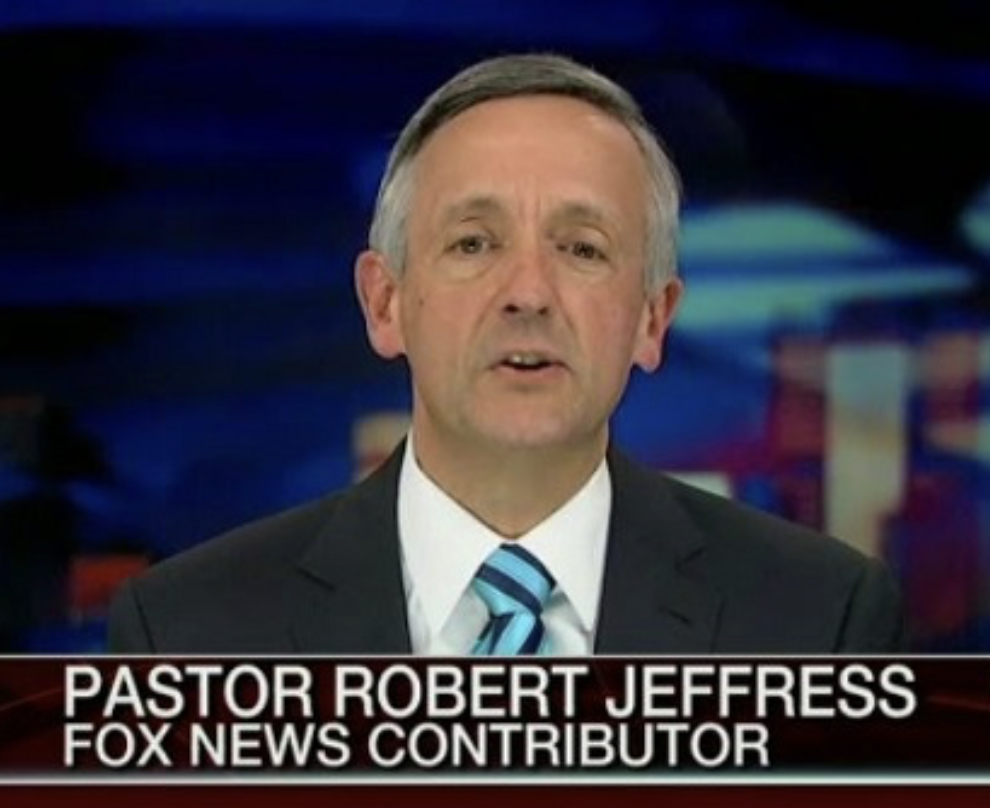
Take, for example, this recent headline in The Dallas Morning News: “Robert Jeffress hopes to combat vaccine fears with First Baptist Dallas’ COVID-19 vaccination effort.” Here is the overture:

To combat vaccine hesitancy among Christian evangelicals, First Baptist Church in Dallas will have a COVID-19 vaccination clinic. …

Senior pastor Robert Jeffress said he hopes the move will encourage people to get shots so more of his 14,000 congregants can come and worship in person.

“Our church will never be what it needs to be until you’re back. The greater risk is the spiritual danger of staying isolated,” Jeffress said in a recent sermon. “I’m not forcing anybody to get the vaccine. That’s your choice. But what I am saying is if you are not back yet, and would like to come back, one option is to take the vaccine, and therefore you don’t have to worry about what other people do or don’t do here in the church.”

Like I said, this was a totally normal local story on this issue.

However, stop and think about this question: Would this have been a bigger story — attracting coverage from TV networks and elite newsrooms such as The New York Times — if Jeffress had taken a stance against the vaccines?

You know it would have been a national story, in part because of this preacher’s past support for former President Donald Trump.


Please respect our Commenting Policy

Movie mogul Tyler Perry preaches tolerance to the woke flock at Oscars 2021

Movie mogul Tyler Perry preaches tolerance to the woke flock at Oscars 2021

It was just like one of those inspiring Tyler Perry movie scenes when a believer does the right thing and helps a struggler have a come-to-Jesus epiphany.

Perry was walking to his car after some Los Angeles production work when he was approached by homeless woman.

"I wish I had time to talk about judgment," said Tyler, after receiving the Jean Hersholt Humanitarian Award during the 93rd Academy Awards. "Anyway, I reach in my pocket and I'm about to give her the money and she says: 'Excuse me sir, do you have any shoes?'

"It stopped me cold because I remember being homeless and having one pair of shoes," he added. "So, I took her into the studio. … We're standing there [in] wardrobe and we find her these shoes and I help her put them on. I'm waiting for her to look up and all this time she's looking down. She finally looks up and she's got tears in her eyes. She says: 'Thank you Jesus. My feet are off the ground.' "

Perry, of course, is a movie mogul who has built a 330-acre studio facility in Atlanta used for all kinds of work, including parts of the Marvel epic "The Black Panther." He has created many profitable films of this own, such as "Diary of a Mad Black Woman," "The Family that Preys" and "Madea's Family Reunion," part of a series in which Perry, in drag, plays a pistol-packing, Bible-quoting matriarch at the heart of Black-family melodramas.

It was logical for Perry to receive the Jean Hersholt award, in part because of his rags-to-riches life and his efforts to help churches and nonprofits help the needy. At the same time, it's unlikely that he could ever win a regular Oscar statue since critics and Hollywood elites have long mocked his movies as soapy parables crafted to appeal to ordinary church folks -- Black and White. It isn't unusual, in the final act of Perry movies, for weeping sinners to pull their lives together during Gospel-music altar calls.

Thus, Perry's sermonette was an unusual twist in an Oscar rite packed with political messages and wins by films that few American moviegoers saw or even knew existed.


Please respect our Commenting Policy