Christianity

As Florida's DeSantis wages culture war, his Catholic faith isn't news -- unless it's used to attack him

As Florida's DeSantis wages culture war, his Catholic faith isn't news -- unless it's used to attack him

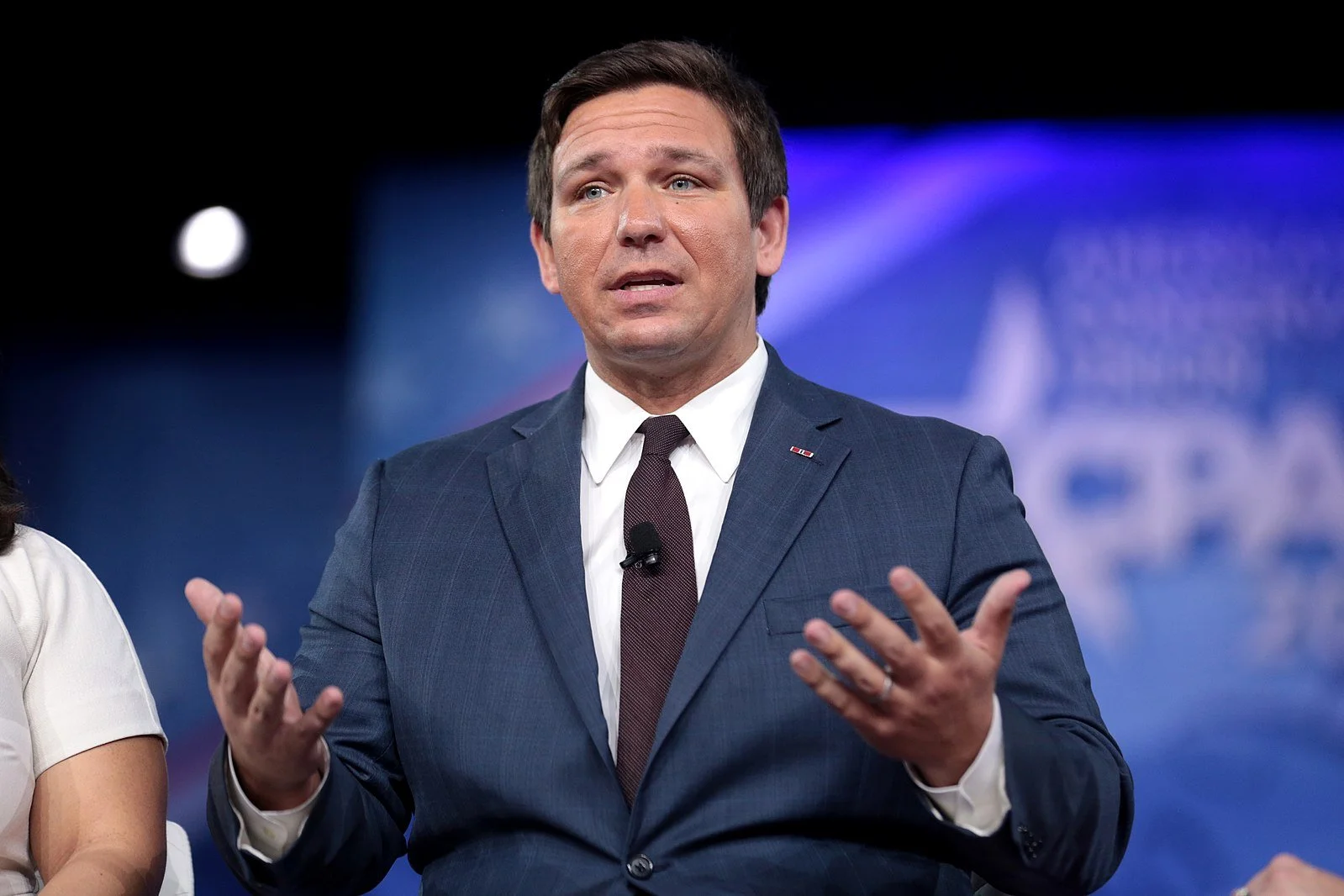
The two things that lots of people don’t want to read about these days is the coronavirus pandemic and Donald Trump, part of a larger trend regarding news fatigue in this country. Unfortunately, this post will mention both and only because it is about Ron DeSantis.

The Florida governor has been in the news the past few years because of his connection to the former president and a virus that paralyzed the planet for two years. A hero to the right and bogeyman to the left, DeSantis has received plenty of mainstream news coverage — much of it one-sided — because of his use of so-called culture war issues to push legislation.

DeSantis, who is running for re-election and among the favorites to run for the White House in 2024, has been a lightning rod for Democrats and a focus of criticism from the mainstream press for the last two years. His actions regarding COVID-19 were at odds with how blue states handled the virus, often catapulting him to national attention.

While the coverage has predictably focused on politics, the religion-news hooks in these stories have largely been ignored — unless they were highlighted to be used against him. The bottom line: DeSantis is not the kind of Catholic who draws cheers from journalists who admire progressive Catholics.

Those angles were once again set aside by the press coverage of the recent debate about the state’s sex-education bill.

As political conservatives and liberals battled it out over the merits of this bill, the press ignored DeSantis’ Catholic faith throughout the past few weeks of coverage.

The legislation — which the press insisted on calling the “Don’t Say Gay” bill — was, as the Associated Press recently noted, the following:

Since its inception, the measure has drawn intense opposition from LGBTQ advocates, students, national Democrats, the White House and the entertainment industry, amid increased attention on Florida as Republicans push culture war legislation and DeSantis ascends in the GOP as a potential 2024 presidential candidate.

There’s a lot to unpack in that paragraph, but mostly for what’s not mentioned.

Please respect our Commenting Policy

Thinking about world Christianity, as Crux digs deep into many overlooked Catholic details

Thinking about world Christianity, as Crux digs deep into many overlooked Catholic details

It’s hard to believe that it has been two decades since historian Philip Jenkins published his groundbreaking essay “The Next Christianity” in The Atlantic Monthly.

It contained key material from the first of three books that Jenkins published on the future of world Christianity and, thus, of the changing face of world religion — period. The first book was entitled: “The Next Christendom: The Coming of Global Christianity.

This piece of the Atlantic subtitle is crucial: “We stand at a historical turning point, the author argues — one that is as epochal for the Christian world as the original Reformation. Around the globe Christianity is growing and mutating in ways that observers in the West tend not to see.”

Sure enough, many reporters didn’t see what Jenkins was describing, even though clashes between the chilly, declining Christian West and the blooming Christian South and East are easy to see looming in the background of many major stories. As the Anglicans and United Methodists about that.

Understanding Jenkins’ work is a crucial first step to understanding the importance of a new Crux think piece by the omnipresent John L. Allen, Jr. The headline: “In new Catholic numbers, an ‘imponderable’ movement shaping history.”

First, consider this from Jenkins:

If we look beyond the liberal West, we see that another Christian revolution, quite different from the one being called for in affluent American suburbs and upscale urban parishes, is already in progress. Worldwide, Christianity is actually moving toward supernaturalism and neo-orthodoxy, and in many ways toward the ancient worldview expressed in the New Testament: a vision of Jesus as the embodiment of divine power, who overcomes the evil forces that inflict calamity and sickness upon the human race. In the global South (the areas that we often think of primarily as the Third World) huge and growing Christian populations — currently 480 million in Latin America, 360 million in Africa, and 313 million in Asia, compared with 260 million in North America — now make up what the Catholic scholar Walbert Buhlmann has called the Third Church, a form of Christianity as distinct as Protestantism or Orthodoxy, and one that is likely to become dominant in the faith.


Please respect our Commenting Policy

Cooper Kupp's spiritual vision: Well, it's hard not to pay attention to the Super Bowl MVP

Cooper Kupp's spiritual vision: Well, it's hard not to pay attention to the Super Bowl MVP

It’s hard not to pay attention to what the winner of the Most Valuable Player award has to say after the Super Bowl.

Thus, a few mainstream media features after the Los Angeles Rams’ victory focused on a bit of very personal testimony by superstar wide receiver Cooper Kupp. In a way, what he said resembled the kind of stereotypical Godtalk that filters into the news when believers are asked to express their first reactions after a major event — glorious or tragic — in their lives.

Long ago (pre-Internet), I interviewed the late, great Dallas Cowboys coach Tom Landry about all of this. People tend to think that believers pray to win football Games and either God hears them or not, he said. The reality is more complex than that and, most of the time, players and coaches are trying to make sense of these events — wins and loses — in the context of how God is working in their lives.

In the case of Kupp, this win in The Big Game linked into what he claimed was a vision after a Super Bowl loss. Here is the top of a story from The Athletic: “How the Rams’ Cooper Kupp’s quiet vision became reality in front of the whole world.” This is long, but essential:

INGLEWOOD, Calif. — The vision arrived with unbelievable clarity. Cooper Kupp long ago saw an unmistakable image of himself not only playing in and winning a Super Bowl but also earning the Most Valuable Player award.

But what was notable about this visualization was its peculiar timing. It came as Kupp was walking off the field at Mercedes-Benz Stadium in Atlanta after watching — not playing in — the Rams’ Super Bowl LIII loss to the Patriots. Kupp missed that game with a knee injury, but he says he received confirmation that night that he’d be back.

“What it was is just this vision that God revealed to me that we were going to come back and we were going to win it and somehow I was going to be the MVP of the game,” Kupp said. “I shared that with my wife because I couldn’t tell anyone else, obviously. But from the moment that this postseason started, there was such a belief in every game. It was written already, and I just had to play free knowing that I got to play from victory, not for victory.”

Kupp finally shared his vision with the world Sunday night. By then, the world had already seen the manifestation of it all. It was no longer was a vision. It was Kupp’s incredible reality.

Note this phrase: “I couldn’t tell anyone else, obviously.”


Please respect our Commenting Policy

In Afghanistan, believers in religious minorities have every reason to go underground

In Afghanistan, believers in religious minorities have every reason to go underground

There's a logical reason that Taliban forces have not been accused of destroying any churches in Afghanistan.

"That's the dirty little secret. There were no churches before the Taliban returned to power," said Nina Shea, director of the Hudson Institute's Center for Religious Freedom and a human-rights activist for 30 years. "Christians were already underground because of the constant threats to their lives, so they didn't have any church buildings to blow up."

Everyone remembers the shocking videos when desperate Afghans chased a U.S. military plane on a Kabul runway, pleading to be among those evacuated. At least two people fell to their deaths after clinging to a plane during takeoff.

Ever since, there have been reports about the dangers faced by those left behind, especially Afghans with ties to the U.S. military, the fallen government or workers in secular or religious non-profit groups that remained behind to continue humanitarian work.

Christians, Hindus, Sikhs, Ahmadis, Shia Muslims and members of other religious minorities are also living in fear.

"They are all on the run. They are all in hiding," said Shea, reached by telephone. "People are being hunted down and beaten and are threatened with death if they don't betray members of their families who are considered apostates" by the Taliban.

It's impossible not to discuss religious freedom during this crisis, she added. "Everything the Taliban does is about religion. Religion is involved when they hang people for violating their approach to Islamic law or when they attack women and girls who want to go to school. For the Taliban, this is all connected."

The problem is that religious freedom concerns are often drowned out during debates about politics, economics, climate change and other issues in violent flashpoints around the world.


Please respect our Commenting Policy

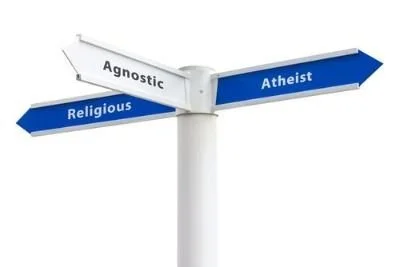
Relevant question for modern Democrats: Are agnostics just 'light' versions of atheists?

Relevant question for modern Democrats: Are agnostics just 'light' versions of atheists?

It’s something that I’ve said before during presentations that felt right, but I wasn’t 100% sure — “Agnostics are a light version of atheists.”

Agnostics seem to get overlooked when it comes to talking about the nones. I know that when I’m writing about the extremes of American religion, I tend to focus on atheists the most. And, in evangelical media circles, there’s never an agnostic philosophy professor — it’s always an atheist.

So, are agnostics just a slightly more religious, slightly less liberal version of atheists? I dug through some data and I think I can say that the answer is pretty clear — “yes.”

A quick aside about the theological differences between the two groups. Atheists, by definition, believe that there is no Higher Power. They contend that everything in the world has scientific explanations and not Divine ones.

Agnostics are a bit more ambivalent about that. While atheists state, “There is no God,” agnostics would say that they don’t know if God exists and there’s no way to prove that either way. The term agnostic was coined by Thomas Henry Huxley in 1869, when he stated “(agnostic) simply means that a man shall not say he knows or believes that which he has no scientific grounds for professing to know or believe.”

Let’s compare those two groups on the religious questions that exist on the Cooperative Election Study to get a sense of their theological differences.

When asked how important religion is to their lives, 92% of atheists say “not at all” while another five percent say “not too.” Agnostics are a bit more ambivalent with 74% saying “not at all” and 20% saying “not too important.”

When it comes to church attendance, the same general pattern emerges — neither group goes to services that much but atheists are even less apt to admit to any church attendance (88% say that they never go vs. 72% of agnostics).

Finally, when it comes to prayer, the gap grows larger.


Please respect our Commenting Policy

Talking to Jesus? This is big New York Times news when a Hollywood spiritualist is involved

Talking to Jesus? This is big New York Times news when a Hollywood spiritualist is involved

Let’s see. If you were going to write a New York Times article in which someone claimed to be channeling the Buddha, would you, at some point, talk to Buddhists? Maybe even a scholar whose work is rooted in Buddhist thought?

What about Judaism? If someone was claiming to channel Moses, would you talk to a rabbi or two about that? Maybe a scholar who has studied Jewish mysticism?

How about Islam? How would a reporter approach the claims of someone who says she is channeling Mohammad? And what would Islamic believers think of this process?

With these questions in mind, let’s look at that chatty first-person piece that ran more than a month ago at the Times with this headline: “In Good Spirits — Carissa Schumacher channels the dead for her A-list celebrity clients. But most days, she’s in the forest.

The headline omits the big reveal: Schumacher claims to channel the spirits of the dead, including her most famous connection — Jesus. This is tricky territory, as demonstrated in the wild correction at the end of this long feature:

Correction: Nov. 29, 2021

An earlier version of this article described incorrectly the biblical name Yeshua. The name refers to multiple people, including Joshua; it does not refer solely to Jesus Christ. The article also referred incorrectly to the Old Testament; while the name Yeshua appears in it, Jesus Christ does not.

Ready for the overture?


Please respect our Commenting Policy

Return of a Godbeat F-bomb: The 'curse of Ham,' Twelve Tribes history and a Colorado fire

Return of a Godbeat F-bomb: The 'curse of Ham,' Twelve Tribes history and a Colorado fire

Let’s start with a journalism question about the news coming out of Colorado about possible links between the Marshall Fire and a controversial religious group known as the Twelve Tribes.

The New York Times has used that popular journalism F-word — “fundamentalist” — in a major story that ran with this headline: “Colorado Wildfire Inquiry Focuses on Christian Sect.” The read-out under that headline states: “Investigators are looking at the possibility that a fire that destroyed more than 900 homes started on property owned by a fundamentalist Christian sect known as Twelve Tribes.”

Once again, we need to talk about what the word “fundamentalist” means and what it does not mean. Let me ask this question, before we proceed: Is the “Twelve Tribes” movement a “fundamentalist Christian” group in the same sense that Black or White independent Baptist churches found in many or most American cities are accurately described, in doctrinal terms, as “fundamentalist”?

Perhaps the crucial question for journalists covering this story is whether the Twelve Tribes movement is a “sect” or, in sociological terms, an actual “cult”? Hold that thought.

First, here is the overture of the Times story, showing the context for this religion-beat F-bomb:

Investigators looking into the cause of a colossal wildfire in Colorado that forced the evacuation of tens of thousands of people are focusing on a property owned by a Christian fundamentalist sect, after witnesses reported seeing a structure on fire there moments before the blaze spread with astonishing speed across drought-stricken suburbs.

Sheriff Joe Pelle of Boulder County said at a news briefing … that the property owned by Twelve Tribes, which was founded in Tennessee in the 1970s, had become a target of the inquiry after investigators ruled out the possibility that downed power lines might have sparked the fire.

With that in mind, let’s return to the pages of the journalism bible know as the Associated Press Stylebook (h/t to Bobby Ross, Jr., for checking the evolving online edition).

Let us attend.

fundamentalist The word gained usage in an early-20th-century fundamentalist-modernist controversy within Protestantism. In recent years, however, fundamentalist has to a large extent taken on pejorative connotations except when applied to groups that stress strict, literal interpretations of Scripture and separation from other Christians.

In general, do not use fundamentalist unless a group applies the word to itself.


Please respect our Commenting Policy

Five big Catholic news angles that journalists will need to cover during 2022

Five big Catholic news angles that journalists will need to cover during 2022

As 2021 comes to a close, everyone is looking towards 2022. The news cycle over the last two years has been dominated by COVID-19 and that doesn’t seem to be subsiding — given the rash of infections the past few weeks as a result of the Omicron variant.

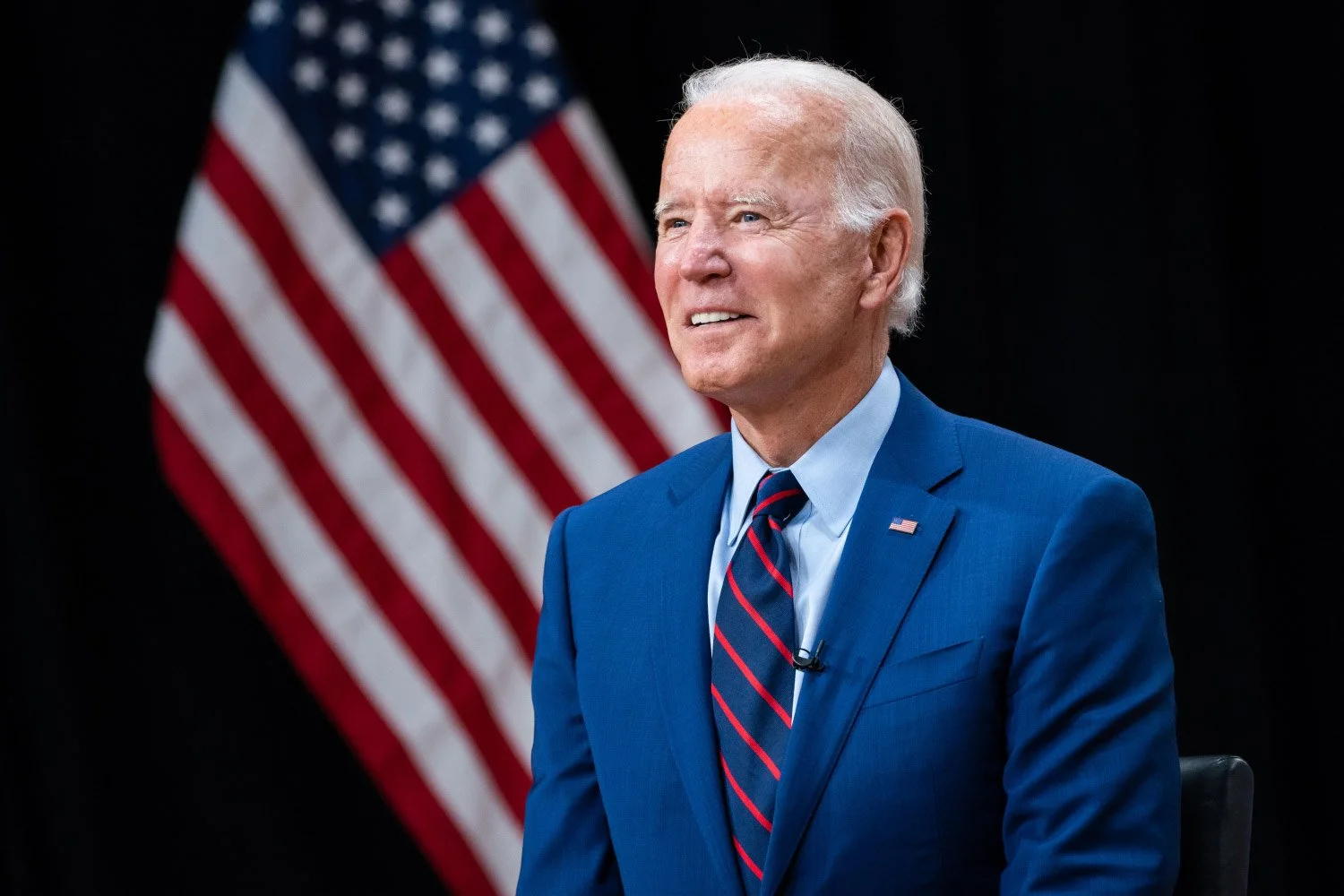
The Catholic world, meanwhile, had in 2021 one of its busiest years. The election of Joe Biden as president — this January will officially mark his first year in office — also dominated news coverage. That Biden was also a Catholic (only second after John F. Kennedy in 1960) thrust Catholicism into the political news coverage. Politics plus religion equals news. It’s a familiar formula.

Biden, a practicing Catholic who attends Mass on Sundays, was at odds this year with many U.S. bishops — setting up a year-long debate over whether he (and other pro-abortion politicians) should receive Holy Communion. In the end, the bishops offered more clarification in the importance of the Eucharist without singling out Biden. Truth is, no one knows if the bishops actually considered mentioning Biden or other pro-abortion-rights Catholics.

Issues around politics and religion will likely dominate once again in 2022. The abortion issue and a pending Supreme Court decision regarding access to it will be a big story in the coming year. The Catholic church, a major part of the abortion debate in this country for decades, will play a major role in news stories that will be written over the coming months.

At the same time, Pope Francis, who recently turned 85, will again be surrounded by rumors that he will either resign or die. Whether this pope — the most polarizing in centuries — can chip away at his agenda to change the church in the 21st century will continue to pit traditionalists versus progressives.

Here are the five big news trends and stories journalists need to keep an eye on in the new year:

(5) Pope Francis and his focus on a progressive agenda

This coming year could be the one where the battle between this pontiff and doctrinal traditionalists intensifies even further. A Dec. 17 Associated Press story set the stage for such a confrontation in what will be Francis’ ninth year as head of the Catholic church.


Please respect our Commenting Policy

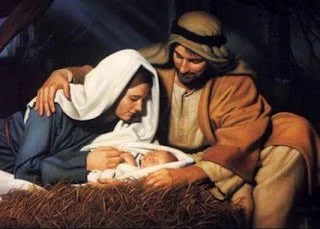
This is actually a doctrinal question: Did the infant Jesus cry?

This is actually a doctrinal question: Did the infant Jesus cry?

MARY (the appropriate name for person asking this question) ASKS: Did the infant Jesus cry?

THE RELIGION GUY'S ANSWER:

That’s a good one. A beloved Christmas carol says “the little Lord Jesus no crying he makes,” which would have been a tiny miracle.

But newborn reality -- and Christian doctrine -- are better expressed by Jesus' "tears" in “Once in Royal David’s City.” This charming children’s carol always begins the majestic “Festival of Nine Lessons & Carols" in King's College Chapel at Britain’s Cambridge University, sung by a choir of men and boys. As always, this service will be heard live at 10 a.m. (Eastern) Christmas Eve over U.S. public radio stations and internationally on the BBC.

Cecil Alexander's words:

For He is our childhood’s pattern; / Day by day, like us, He grew. / He was little, weak, and helpless; / Tears and smiles, like us, he knew. / And he feeleth for our sadness, / And He shareth in our gladness. …

The New Testament Gospels of Matthew and of Luke, which provide the earliest accounts of Jesus’ birth, tell us nothing about what his infancy or childhood were like, except for the incident of teaching in the Jerusalem Temple at age 12. But if pondered in terms of what Christianity has always believed, there’s every reason to assume the Babe of Bethlehem cried just like all other infants, and for the same physiological and emotional reasons.

That’s a solid inference from the faith’s central and mysterious belief that Jesus was God incarnate and at the same time fully a human being (“yet without sin”). The New Testament reports that just like everyone else the adult Jesus could be tired, hungry and perturbed, and experienced pain, grief and death.

In other words, truly and fully human, not inhuman.


Please respect our Commenting Policy