Charities-Nonprofits

Press braces for the Supreme Court's big one: Religion and abortion (phase I)

Press braces for the Supreme Court's big one: Religion and abortion (phase I)

In late July the U.S. Supreme Court's in-box was clogged with dozens of secular and religious briefs that oppose its 1973 Roe v. Wade decision, which established women's right to abortion, further defined in the 1992 Planned Parenthood v. Casey case.

Next up, watch for briefs that back the high Court's existing abortion-rights regime, which are due by mid-September. There should be keen journalistic interest in which religions decide to bless "pro-choice" policies and why, with likely contentions that 1st Amendment religious liberty requires legalized abortion even as other Christian and Jewish thinkers disagree.

The media are well aware that the Court's upcoming decision in the Dobbs v. Jackson Women's Health case (docket #19-1392) will be epochal, and the new briefs show the issue is as politically contentious as ever.

Dobbs involves rigid abortion limits even before fetal "viability" as legislated by Mississippi.

In response, fully 25 of the 50 states, all with Republican attorneys general, are asking the Court to scuttle Roe and Casey. Also, 87% of the Republicans in the U.S. House and Senate, from 40 states, want the two decisions overturned "where necessary" while lower courts clean up legal muddles. Also filing on this side are 396 legislators in 41 states.

Briefs also come from "pro-life" or religious physicians, nurses, and attorneys, "pro-family" organizations, and notable intellectuals like John Finnis of the University of Oxford, Robert George of Princeton University (click here for his recent tweetstorm), and Mary Ann Glendon of Harvard Law School.

Also Dr. Ben Carson, the world-renowned pediatric neurosurgeon and Donald Trump Cabinet member. He argues not from his Seventh-day Adventist faith but from embryology, saying the existence of a "new unique human life" at conception is "objective scientific fact. " He considers life to be a "natural right" that "does not depend on theology."

Writers will find a similar approach in the most important religious organization brief.

Please respect our Commenting Policy

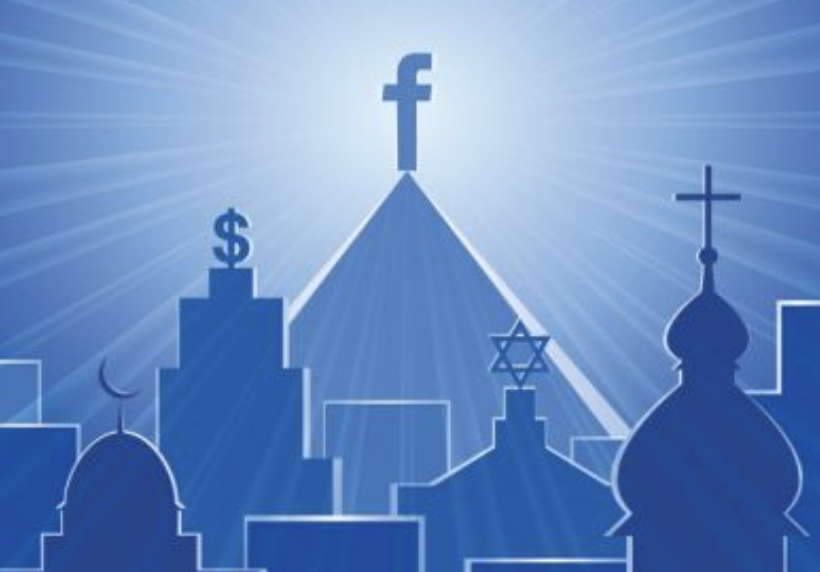
New podcast: What could go wrong? NYTimes explores Facebook's religious ambitions

New podcast: What could go wrong? NYTimes explores Facebook's religious ambitions

Truth be told, I am not prone to flashbacks — even though I did come of age in the late 1960s and early 1970s.

Anyway, I had a big flashback recently while reading a very interesting New York Times feature that ran with this headline: “Facebook’s Next Target: The Religious Experience.” In this case, the subhead is also crucial:The company is intensifying formal partnerships with faith groups across the United States and shaping the future of religious experience.”

Whoa. What does “shaping the future of religious experience” mean? I imagine that to learn details, readers would have to hear from some of the participants in this trailblazing online work. But there’s a problem with that. When asked about some specifics, an official with the Atlanta branch of the trendy Hillsong Church couldn’t answer, because “he had signed a nondisclosure agreement.”

Don’t you hate it when that happens?

Anyway, here’s the passage the stirred up lots of conversation, and my multi-decade flashback, during the recording of this week’s “Crossroads” podcast (click here to tune that in).

A Facebook spokeswoman said the data it collected from religious communities would be handled the same way as that of other users, and that nondisclosure agreements were standard process for all partners involved in product development.

Many of Facebook’s partnerships involve asking religious organizations to test or brainstorm new products, and those groups seem undeterred by Facebook’s larger controversies. This year Facebook tested a prayer feature, where members of some Facebook groups can post prayer requests and others can respond. The creator of YouVersion, the popular Bible app, worked with the company to test it.

Now, combine that mind-spinning information with this passage, which very gently raises the issue that millions of Americans — on the cultural right and left — are convinced that the Facebook gods have lost control of much of the information that is located on their platform:

The company’s effort to court faith groups comes as it is trying to repair its image among Americans who have lost confidence in the platform, especially on issues of privacy. Facebook has faced scrutiny for its role in the country’s growing disinformation crisis and breakdown of societal trust, especially around politics, and regulators have grown concerned about its outsize power.

This brings me to my flashback to a graduate-school class at the University of Illinois in Urbana-Champaign that changed my life.


Please respect our Commenting Policy

Plug-In: Who is the alleged Baptist minister accused in Haiti's presidential assassination?

Plug-In: Who is the alleged Baptist minister accused in Haiti's presidential assassination?

In 2018, I was blessed to visit Haiti with an American mission team and write about a Christian humanitarian aid organization that drills water wells around the world.

I keep thinking about that trip — and the amazing people I met — as I read about the latest turmoil facing that Caribbean island nation.

This week, I hand off the top part of my column to ReligionUnplugged’s managing editor, Meagan Clark. She found an interesting detail about the self-described pastor accused in the Haitian president’s assassination:

By Meagan Clark

An American suspect in Haiti’s presidential assassination, Christian Emmanuel Sanon, 63, was arrested at his gated home in Port-au-Prince by Haitian police last week.

Sanon identifies himself on social media as a “Medical Doctor and Christian Minister.” The Sun Sentinel of Fort Lauderdale, Florida, may have been the first to unearth that Sanon did not have a license to practice medicine in Florida. At ReligionUnplugged, we wondered about his faith background, credentials and motivations.

The New York Times, TIME and others reported that Sanon attended Midwestern Baptist Theological Seminary, citing the Florida Baptist Historical Society. But when I called Midwestern, the registrar’s office said the school has no records of Sanon ever attending, online or in-person.

A Florida Baptist Society representative told ReligionUnplugged that Sanon wrote in a biographical profile of himself that he attended Midwestern, and the society relies on honesty to compile its biographies. The representative said that in fact, the society has since learned that Sanon attended a training course that Midwestern sponsored, not the seminary itself. The Florida Baptist Society has updated its website.


Please respect our Commenting Policy

New podcast: Spot any 'ghosts' in New York Times story about aid for (large) U.S. families?

New podcast: Spot any 'ghosts' in New York Times story about aid for (large) U.S. families?

At first glance, it looks like another New York Times story about all those public policy debates between the entrenched Republicans and White House, along with the narrow Democratic majorities on Capitol Hill.

But if you look carefully, there is a reason that this Gray Lady update about the arrival of the expanded Child Tax Credit was, to use a turn of phrase from “Crossroads” host Todd Wilken, a “haunted house” of religion-news ghosts. He was riffing on a term your GetReligionistas have used since Day 1 at this blog. (Click here to tune in this week’s GetReligion podcast.)

OK, let’s play “spot the religion ghost.” First, here is the double-decker headline on this report:

Monthly Payments to Families With Children to Begin

The Biden administration will send up to $300 per child a month to most American families thanks to a temporary increase in the child tax credit that advocates hope to extend.

Nine out of 10 children in the United States will be eligible for these payments, which are linked to the COVID-19 crisis, but call back memories of policies from the old War on Poverty. The program will expire in a year, at which point the debates over its effectiveness will crank into a higher gear. Here’s the Times overture:

WASHINGTON — If all goes as planned, the Treasury Department will begin making a series of monthly payments in coming days to families with children, setting a milestone in social policy and intensifying a debate over whether to make the subsidies a permanent part of the American safety net.

With all but the most affluent families eligible to receive up to $300 a month per child, the United States will join many other rich countries that provide a guaranteed income for children, a goal that has long animated progressives. Experts estimate the payments will cut child poverty by nearly half, an achievement with no precedent. …

While the government has increased many aid programs during the coronavirus pandemic, supporters say the payments from an expanded Child Tax Credit, at a one-year cost of about $105 billion, are unique in their potential to stabilize both poor and middle-class families.

As you would expect, many Republicans oppose what they consider a return to old-style “welfare” payments of this kind.

That’s many Republicans, but not all.


Please respect our Commenting Policy

Lawsuits and scarce donors: Religious colleges could be facing tough years ahead

Lawsuits and scarce donors: Religious colleges could be facing tough years ahead

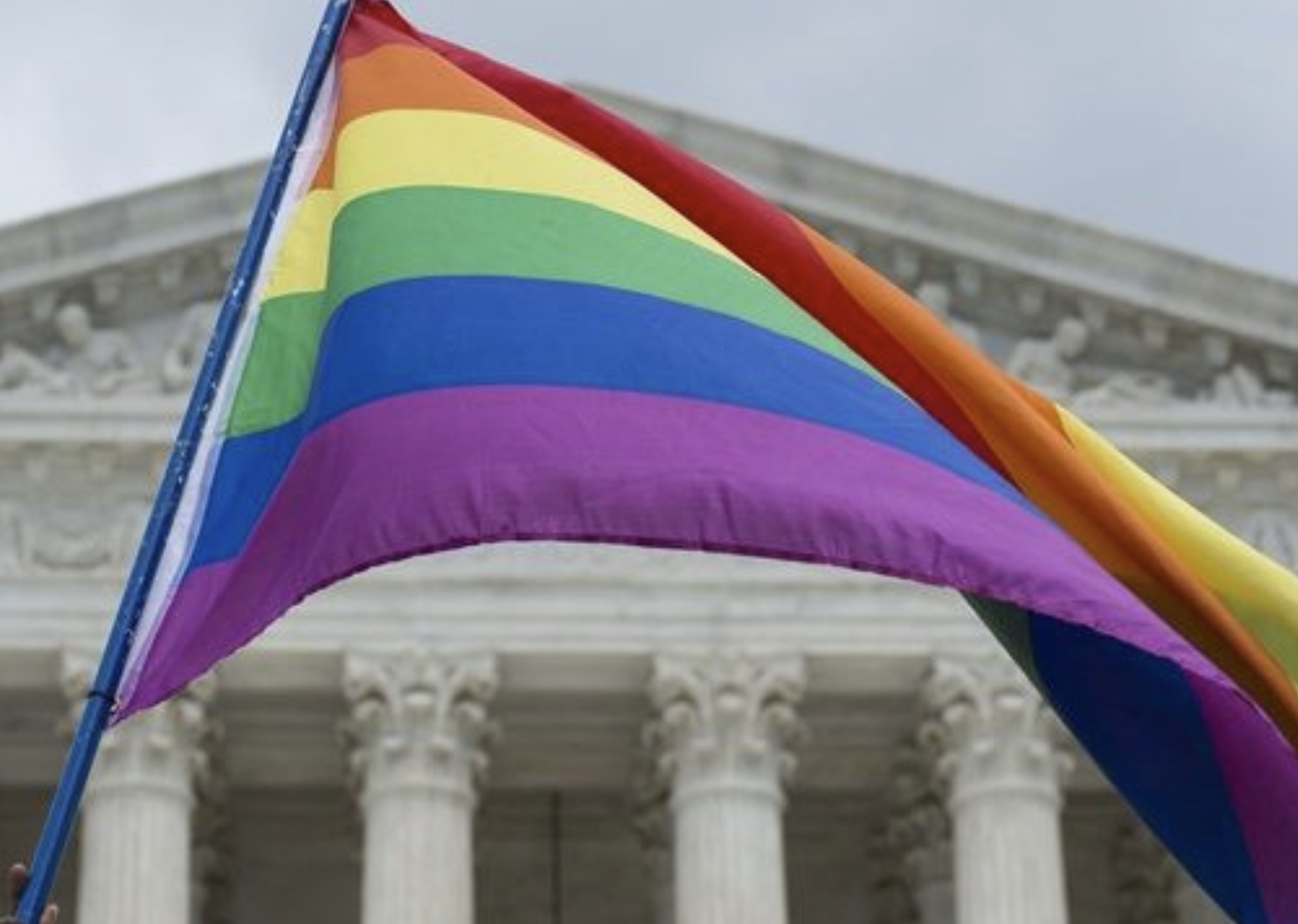
A narrowly-framed Supreme Court victory — the Fulton v. Philadelphia case — will allow Catholic Charities (at least for now) to preserve religious conscience and avoid placing foster children and children available for adoption with same-sex couples, despite the city's non-discrimination statute.

However, this does not settle the many similar legal disputes the media will be covering the next few years.

In particular, reporters will want to carefully monitor Hunter v. U.S. Department of Education, a potentially huge lawsuit filed in Oregon federal court March 29. This is a class action with 33 plaintiffs represented by Portland attorney Paul Southwick, director of the Religious Exemption Accountability Project or REAP (paul@paulsouthwick.com and 503-806-9517). Alliance Defending Freedom, a familiar participant in such matters, has filed a bid to defend the religious schools (media@adflegal.org or 480-444-0020). There are questions about the degree to which the current Justice Department will help in this defense.

The suit charges that LGBTQ students suffer "abuses and unsafe conditions" at "hundreds" of U.S. religious colleges with traditional doctrinal covenants so government should cut off their financial aid. Except for Brigham Young University and the Church of Jesus Christ of Latter-day Saints, REAP's targets are Protestant, led off by Oregon's George Fox University, a venerable Quaker campus attended by Herbert Hoover when it was a mere secondary school. George Fox's mission statement declares that "we desire the presence of Christ to be at the core of all we do."

Others include the likes of Azusa Pacific University, Baylor University, Bob Jones University, Dordt University, Eastern University, Fuller Theological Seminary, Liberty University, Messiah University, Moody Bible Institute, Seattle Pacific University, Union University and Westmont College. (Notably missing: Calvin, Gordon, Wheaton.)

Loss of aid for students would be a severe competitive blow in coming years when all colleges and especially private and religious ones expect to suffer declines in the student-age population and thus in applications, this on top of the institutional damage wrought by COVID-19. There are also prospective attacks on such schools' tax exemption and academic accreditation over sexuality. The status of athletic programs is also a hot-button issue.


Please respect our Commenting Policy

To tithe or not to tithe: Should 21st Century Christians give church 10% of their income?

To tithe or not to tithe: Should 21st Century Christians give church 10% of their income?

THE QUESTION:

Should 21st Century Christians still give 10% of their income to the church?

THE RELIGION GUY'S ANSWER:

A bad pun says that the week of a church's annual budget pledge drive the pastor preaches the Sermon on the Amount. Many churches are fretting about amounts these days, hoping attendance and offering-plate receipts will recover from the COVID crisis.

How much should modern-day Christians donate to support their churches? The oft-cited standard is the "tithe," a biblical term for 10% of income. But Keith Giles, a "progressive Christian" blogger at Patheos.com, argued that there are "very good reasons to stop tithing your 10% every week."

Definitions: Should that be 10% of wealth and accumulated assets or only income? Should all 10% go to the church only with any other giving counted beyond the 10%, or does the tithe cover all religious and charitable donations? Also, of course, the very different biblical situation involved gifts of agricultural produce, not money.

Speaking of the ancient context, Giles's main theme is that tithing was part of a bypassed Old Testament system that provided upkeep for the Jerusalem Temple and the priests working there who had no other livelihood. The Romans destroyed the Temple in A.D. 70 so there's no Temple or priesthood that need support.

However, that argument ignores that today's clergy similarly live off believers' financial support in order to carry out religious work. In fact, clergy typically get lower pay than other professionals with comparable years of training.


Please respect our Commenting Policy

How will this Supreme Court decide, or sidestep, pivotal religious liberty questions?

How will this Supreme Court decide, or sidestep, pivotal religious liberty questions?

The major U.S. Supreme Court ruling in Fulton v. Philadelphia (.pdf here) allows a Catholic agency to avoid placing foster-care children with same-sex couples. Importantly, the Catholics will place gay children and will place children with gay singles since there's no conscience crisis over defying the church's doctrines on marriage.

For decades there's been confusion and acrimony over the court's applications of the Constitution's ban on government "establishment of religion," but now disputes over the religious "free exercise" clause grab the spotlight. The Fulton ruling sidestepped the heart of this generation's conflagration between religious rights and LGBTQ+ rights and, thus, may even have added logs to the fire.

The justices backed the Catholic claim with what The Economist's headline correctly labeled "The 3-3-3 Court." The narrow technical grounds for the decision enabled the three liberals (Stephen Breyer, Elena Kagan, Sonia Maria Sotomayor) to make the ruling unanimous. The conservatives were split between three demanding a thorough overhaul of "free exercise" law (Justice Samuel Alito, in a vigorous 77 pages, joined by Neil Gorsuch and Clarence Thomas) and three unwilling to take the plunge at this time (Chief Justice John Roberts and the two newest members, Brett Kavanaugh and Amy Coney Barrett).

Similar caution apparently underlies the court's majority decision this week not to review transgender student Gavin Grimm's victory against his Virginia school over bathroom access.

Journalists should prepare for more years of extensive -- and expensive -- politicking and litigation before the Supreme Court defines -- or decides not to define -- how First Amendment guarantees apply in 21st Century culture.

For those on the religion beat, it is easy to see that this case has hardened the related conflict among major denominations.


Please respect our Commenting Policy

Newsy thinking about SCOTUS, sports images, religious liberty and the Sexual Revolution

Newsy thinking about SCOTUS, sports images, religious liberty and the Sexual Revolution

Wait, you mean there was another important religion story during the traffic jam of stories about the right vs. further right showdown at the Southern Baptist Convention and America’s Catholic bishops arguing about Holy Communion, the Catechism and liberal Catholic politicos?

Obviously, I noticed headlines such as this one in the Washington Post: “Supreme Court unanimously rules for Catholic group in Philadelphia foster-care dispute.”

The word “unanimous” is certainly important, in the fractured age in which we live. But look for the other crucial word in the overture on that story:

The Supreme Court ruled unanimously … that Philadelphia was wrong to end a Catholic group’s contract to provide foster-care services because the organization refused to work with same-sex couples.

It was the latest victory for religious organizations at the increasingly conservative court, and the second time it has ruled against governments trying to enforce an anti-discrimination law protecting LGBTQ rights against those claiming religious liberty.

But the opinion, written by Chief Justice John G. Roberts Jr., was narrow enough to draw the support of the court’s three liberals — and the consternation of its three most conservative members for not going further.

Obviously, the crucial word is “but.” This ruling encouraged some church-state conservatives, but also provided some hope for those who believe that the Sexual Revolution will, more often than not, trump the free exercise of religion.

So, it’s time for two think pieces that explore the degree to which this ruling was a win for religious liberty.

No surprise here: Religious liberty pro David French, of The Dispatch, was encouraged: “Four Things You Need to Know After a Huge Day at SCOTUS — ‘Good night, Employment Division v. Smith. Good work. Sleep well. I’ll most likely kill you in the morning​.’ “ Here is his reaction, at the level of SCOTUS personalities:


Please respect our Commenting Policy

Friends of Friendless Churches: Trying to save sacred pieces of past in England and Wales

Friends of Friendless Churches: Trying to save sacred pieces of past in England and Wales

The structure of St. Baglan's Church in North Wales is simple, with plastered stone walls and whitewashed timbers between the slate slabs of its roof and floor.

The 13th Century sanctuary was rebuilt in the 1800s, but the carved doorway lintel dates from the 5th or 6th century. An adjacent field contains the 7th Century well of St. Baglan and for ages the faithful sought healing in its waters.

"This church was built on the site of an earlier church and there were sanctuaries here before that. People in Wales have been coming to sites like this for worship back into pre-Christian times," said Rachel Morley, director of the Friends of Friendless Churches since 2018.

During a visit to Llanfaglan parish in Wales, this tiny, abandoned sanctuary was surrounded by sea mists and low clouds from the mountains, she said. Then the sunset light over the Irish Sea "shot under the eaves and the church lit up inside with golden light. It was a complete sensory overload. That had to mean something."

Was this church designed so that this light would illumine the prayers of evensong? That's the kind of question members of the Friends of Friendless Churches have been asking since 1957, when Welsh journalist Ivor Bulmer-Thomas founded the charity with the help of poet T.S. Eliot, artist John Piper, British politician Roy Harris Jenkins and others.

The goal was to preserve historic, "significant" churches "threatened by demolition, decay, or inappropriate conversion." By the end of 2021, the charity will control 60 churches in England and Wales, almost all of them Anglican sanctuaries.

Year after year, the Friends of Friendless Churches watch as 30 or so truly historic churches go on sale and "there could be many more closed at any time," said Morley, reached by telephone.


Please respect our Commenting Policy