
Charities-Nonprofits

New podcast: Who stands in the middle of American politics? Often, that's a religion question

New podcast: Who stands in the middle of American politics? Often, that's a religion question

There were two major stories in American life this week, when it seemed like the world turned in a matter of minutes.

The riot at the U.S. Capitol grew out of yet another legal Donald Trump rally, with its familiar mix of hero worship, populist rage and, yes, rhetoric and symbols used by conservative, often Pentecostal, Christians. Fired up by a truly radical message from the president, many (not all) of these protestors marched to Capitol and turned into an illegal mob, crashing through security fences and then through doors and windows. Yes, some of the Christian banners and signs went with them.

We will be learning more about the makeup of that mob as participants are identified, arrest and tried — perhaps under (irony alert) Trump’s June 26th executive order authorizing a “penalty of up to 10 years’ imprisonment for the willful injury of Federal property.”

There have been waves of statements by religious leaders condemning the violence, including many by evangelicals who (a) opposed Trump, (b) reluctantly voted for him or (c) enthusiastically backed him. I expect more coverage on all of that (I’m collecting material for an “On Religion” column). Readers can start with this piece from the left, care of HuffPost.com: “Trump’s Evangelical Allies Condemn Violence At The Capitol.” It focuses on evangelicals who are still finding it hard to attack Trump, while — almost hidden at the end — noting views from some of condemned both the violence and the president’s role in it.

Let me know, via comments or email, if you see more religion-driven riot coverage.

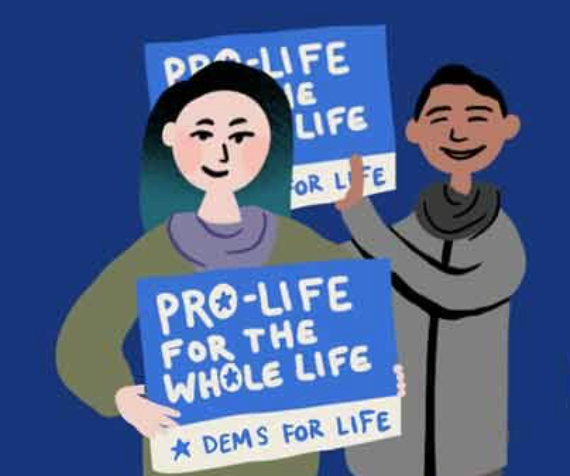
Meanwhile, this week’s “Crossroads” podcast (click here to tune that in) centered on a GetReligion post that was written about two hours before the riots began: “Life after Georgia — Questions about a pro-life Democrat in U.S. Senate and other issues ...

The key is that victories by two Democrats (one a liberal Baptist pastor) put a very interesting conservative (and Catholic) senator at the middle of America’s increasingly divided and even bloody political map.

That man, Sen. Joe Manchin of West Virginia, is a living symbol of what used to be a major force in American politics — the white Southern Democrat. Although he has been endorsed by Democrats For Life, his pragmatic political views on that topic will not be found in the Democratic or Republican platforms, but do resemble the views of millions of centrist Americans.

Many Democrats, in the past, have insisted that Manchin is not really a Democrat. Well, how many want to toss him out of the party right now (with that 50-50 Senate split)?

Please respect our Commenting Policy

Yearenders-palooza -- Bobby Ross Jr. with positive, poignant ways to look at 2020 religion news

Yearenders-palooza  -- Bobby Ross Jr. with positive, poignant ways to look at 2020 religion news

A church shooting. Deadly twisters. Racial justice protests. And the biggest news in this tumultuous year: COVID-19.

These were among the most memorable stories that I covered in 2020.

Here is my personal year-end Top 10 list, mostly in chronological order:

• Texas church shooting: A gunman opened fire at the West Freeway Church of Christ in White Settlement, Texas, killing two worshipers before an armed member fatally shot him. While the attack occurred at the end of 2019, it remained an important story in 2020. In the immediate aftermath, I covered a members-only prayer vigil, recounted minister Britt Farmer’s experience and explained why Farmer chose to talk to me. I profiled victims Richard White and Tony Wallace. Later, I moderated a panel discussion on church shootings. And I wrote about the church’s emotional return to its auditorium.

Women in the church: My Christian Chronicle colleagues and I produced an in-depth package of stories on women’s roles in Churches of Christ. I focused on two distinct congregations: an Arlington, Texas, church that embraces traditional gender roles and a Los Angeles church that has added female elders.

Tennessee tornadoes: On my last flight before COVID-19 grounded me, I traveled to Middle Tennessee to report on tornadoes that cut an 80-mile swath of death and destruction. I highlighted the leading role that Churches of Christ played in the disaster relief effort. I interviewed a church teen who was serving her community while grieving her 4-year-old friend, Hattie Jo Collins. I covered the funeral for a Christian family killed in the storm. And I reflected on how sadness gave way to gladness on the Sunday after the tornadoes.

COVID-19: As of this moment, the global pandemic has killed 1.8 million people around the world.


Please respect our Commenting Policy

Top 10 religion-news stories of 2020: Coronavirus pandemic touched almost everything

Some years, picking the No. 1 religion story is a real challenge.

This year? Not so much.

Give the global pandemic credit for making at least one thing easy during 2020.

Let’s count down the Top 10 stories, as determined by Religion News Association members (including yours truly). I’ll sprinkle a few links to related stories into the RNA summaries:

10. “Liberty University president Jerry Falwell Jr. resigns amid controversies including a risqué photo and an alleged sex scandal. Claims of sexual misconduct also made against late evangelical apologist Ravi Zacharias and Hillsong pastor Carl Lentz.”

9. “Pandemic-related limits on worship gatherings spur protests and defiance by Hasidic Jewish groups and evangelicals led by pastor John MacArthur and musician Sean Feucht. Supreme Court backs Catholic and Jewish groups' challenge to New York's limits.”

8. “A Vatican investigation into defrocked ex-cardinal Theodore McCarrick found that bishops, cardinals and popes failed to heed reports of his sexual misconduct. Debate ensues over the legacy of sainted Pope John Paul II, who promoted him to cardinal.”

7. “Dozens of nations decry what they term widespread human-rights abuses by China against predominately Muslim Uighurs and others in Xinjiang region, many in detention camps. New U.S. law authorizes sanctions against Chinese officials deemed complicit.”

6. “White evangelicals and other religious conservatives again vote overwhelmingly for President Trump, despite some vocal dissent. Protestants fuel his gains among Hispanic voters. Some religious supporters echo his denials of the election results.”

5. “Police, using tear gas, drive anti-racism protesters from Lafayette Square in Washington, clearing way for President Trump to pose for a controversial photo with a Bible at historic St. John’s Church. Episcopal, other faith leaders express outrage.”


Please respect our Commenting Policy

How would Democrats, journalists and bishops view a centrist abortion stance by Biden?

Journalists who have studied the history of Catholic disputes about politicians and Holy Communion are probably familiar with this name — Archbishop Joseph Francis Rummel of New Orleans.

There’s a good reason that that.

In 1962, Rummel infuriated segregationists by ordering the integration of all local parish schools. This was especially important in the intensely Catholic culture of Louisiana and it led to debates about how bishops relate to Catholic politicians that continue to this day. That was the topic that loomed in the background during this week’s “Crossroads” podcast (click here to tune that in) focusing on this recent GetReligion post: “Washington Post explores Joe Biden's faith, while embracing language of Catholic left.

Back to Rummel. The 1964 New York Times obituary for this archbishop noted that he had, as early as 1949, taken actions expressing his opposition — clearly rooted in Catholic teachings — to segregation and other expressions of racism. In 1953 he issued an order stating that Black Catholics no longer had to wait at the end of the line to receive Holy Communion.

But it was the battle over integrating Catholic schools that put this archbishop’s name in the history books. The Times obit noted:

Archbishop Rummel's stand was publicly opposed by three prominent church members: Leander H. Perez Sr., president of the Plaquemines Parish Council, Jackson G. Ricau, executive director of the South Louisiana Citizens Councils, and Mrs. B. J. Gaillot Jr., head of Save Our Nation. Inc.

The three were excommunicated by the Archbishop after they failed to accept letters of “paternal admonition.”

Yes, they were excommunicated. That’s a big step beyond informing them that they should not receive Holy Communion. But note: These Louisiana politicians rejected a direct order from their bishop.

In recent decades, Catholic leaders have argued about whether Rummel’s action is relevant during discussions of how to handle Catholic politicians — especially those seeking national office — who openly support abortion on demand and take other actions to oppose church teachings on marriage and sex.

The question, of course, is where to draw the line when discipling Catholics in public life. American bishops have ended up in a tense standoff linked to controversial actions taken by a rather controversial Catholic — Theodore McCarrick. Yes, that is “Uncle Ted.” As I noted in a recent “On Religion” column:


Please respect our Commenting Policy

Fights over First Amendment rights will likely top religion-beat agenda in 2021 and beyond

What's on the agenda for journalism about religion in the United States in 2021 and beyond?

Ongoing fights about the First Amendment and religious liberty are likely to prove the most newsworthy, but two other themes deserve attention.

A prior Religion Guy Memo here at GetReligion surveyed the competing partisan concepts of "religious freedom" that face the United States and the incoming Joe Biden-Kamala Harris administration, with potential for big conflicts if Democrats win both Senate runoffs in Georgia.

One aspect is religious groups' desire to be exempt from anti-discrimination laws so they can hire doctrinally like-minded employees, while qualifying for federal grants. Lame duck Labor Secretary Eugene Scalia (son of the late Supreme Court justice) wrapped up the Donald Trump years with an important "final rule" to nail down and clarify exemption rights. It goes into effect a dozen days before Biden's inauguration.

Understandably, much news like this was all but ignored by media focused on COVID-19developments and President Trump's remarkable, fruitless efforts to erase the 2020 election returns, supported at the U.S. Supreme Court by 60 percent of House Republicans and the GOP attorneys general of 18 states.

Labor's “final rule” policies could be re-examined in the Biden years. The huge text (.pdf here) provides journalists full documentation on religious employment disputes as seen from the conservative side of the culture wars, and summarizes 109,000 officially filed comments pro and con.

The rule clarifies that exempt groups need not be connected to specific house of worship (as with many schools and Protestant "parachurch" organizations) and that even for-profit companies can qualify if they have "a substantial religious purpose." It states that "religion" covers not only creedal beliefs but "all aspects of religious observance and practice." The rule allows exemptions of religious groups that provide "secular" help, relying on the 9th Circuit appeals ruling in Spencer v. World Vision (read text here).

Importantly, Labor's new rule says religious organizations cannot ignore anti-discrimination protections regarding "sexual orientation" and "gender identity" in situations where "there is no religious basis for the action."


Please respect our Commenting Policy

Washington Post explores Joe Biden's faith, while embracing language of Catholic left

Any serious discussion of Catholicism and national politics has to include material from the 1960 speech by Democratic candidate John F. Kennedy to the Greater Houston Ministerial Association.

This would certainly be true — #DUH — of discussions of the life and times of President-elect Joe Biden. I would say the same thing about citing the “personally opposed, BUT … “ approach to doctrine seen in the 1984 speech by the late New York Gov. Mario Cuomo at the University of Notre Dame.

Right now, there are Catholics arguing about whether Biden is “a Roman Catholic.” It’s safer to say, at this point, that he is an American Catholic or even a Cuomo at Notre Dame Catholic.

This brings us to the must-read Washington Post story that ran the other day with this headline: “Biden could redefine what it means to be ‘a Catholic in good standing.’ Catholics are divided on whether that is a good thing.” The key words are “in good standing” — referring to Biden continuing to be active in the sacraments of the Catholic faith, as symbolized by him going to Mass and receiving Holy Communion.

In terms of journalism, the good news is that this Post story quotes Catholic voices on both sides of this doctrinal debate. The bad news is that key passages in this report are worded — oh so precisely — in ways that will please Catholics on the doctrinal left and infuriate those on the doctrinal right.

Hold that thought. First, what did Kennedy say in 1960? Here is a crucial summary passage, with JFK stressing that his personal Catholic beliefs would never force his hand when making political decisions.

… (These) are my views. For contrary to common newspaper usage, I am not the Catholic candidate for president. I am the Democratic Party's candidate for president, who happens also to be a Catholic. I do not speak for my church on public matters, and the church does not speak for me.

Whatever issue may come before me as president — on birth control, divorce, censorship, gambling or any other subject — I will make my decision in accordance with these views, in accordance with what my conscience tells me to be the national interest, and without regard to outside religious pressures or dictates. And no power or threat of punishment could cause me to decide otherwise.

Later, a witty critic noted (my online searches haven’t yielded the name) that anyone who knew anything about JFK’s private life would have to say this was the rare example of a presidential candidate making a campaign promise that it was absolutely certain that he would keep.

Kennedy makes his first appearance at the end of the Post article’s overture:


Please respect our Commenting Policy

Thinking about Xavier Becerra: A conservative Catholic checklist of sure-fire news stories

First things first. Yes, the following think piece is from a conservative Catholic news source.

But there are times when doctrinally conservative Catholic folks need to read the National Catholic Reporter. And this is a time when doctrinally liberal Catholics — and journalists, especially — should read and mark up an article from the National Catholic Register.

Here’s why: This essay contains a long checklist of valid story ideas, as in issues from the past that are almost certain to come up again in the near future. You can see this in the long, long second line in this Register headline:

What a Xavier Becerra HHS Could Mean for Catholics

Becerra’s record in California shows that he, perhaps more than any other state attorney general, has been willing to wield the power of the state to enforce pro-abortion policies against religious and pro-life groups.

Now it’s true that, for conservative Catholics, this story is packed with potential public-policy nightmares, in terms of their impact on traditional Catholic groups and ministries. Can you say “Little Sisters of the Poor”?

At the same time, many — but not all — Catholic liberals will cheer if some of these policy showdowns come to pass.

In terms of doctrine and church-state law, Catholics on the left and right will have radically different views of Becerra being handed this crucial high ground in the culture wars. Evangelicals who lead colleges and universities will be concerned, as well.

But that’s beside the point, if one looks at this piece through the eyes of a religion-beat professional (or even an open-minded scribe on the political desk) who is looking for valid stories to cover. Journalists need to read all of this, but here are a few items that demonstrate what I am saying. Spot the potential stories in this passage:


Please respect our Commenting Policy

SCOTUS flips script on COVID-19 worship bans, but Francis Collins of NIH urges closures

First New York.

Now California.

With the addition of a fifth, solidly conservative member — new Justice Amy Coney Barrett — the U.S. Supreme Court has flipped the script on months of legal battles over pandemic-era worship gatherings.

“It is time — past time — to make plain that, while the pandemic poses many grave challenges, there is no world in which the Constitution tolerates color-coded executive edicts that reopen liquor stores and bike shops but shutter churches, synagogues, and mosques,” Justice Neil Gorsuch wrote last week as the 5-4 court blocked New York from imposing strict attendance limits on religious services.

Then on Thursday, the court “sided with a California church protesting Gov. Gavin Newsom’s pandemic-related restrictions on indoor worship services,” noted the Washington Post’s Robert Barnes. The brief, unsigned order returned the issue to lower court judges and “suggests the state’s ban on indoor services is likely to fall,” reported the Los Angeles Times’ David G. Savage.

In San Francisco, Catholic Archbishop Salvatore Cordileone has complained that the city’s “treatment of churches is discriminatory and violates the right to worship,” as explained by the Catholic News Agency. For more details on the California battle, see Sacramento Bee writer Dale Kasler’s story this week on churches defying Newsom’s order.

In related news, the Deseret News’ Kelsey Dallas highlighted a clash over in-person classes in religious schools in Kentucky. And Boston.com’s Nik DeCosta-Klipa covered Massachusetts Gov. Charlie Baker’s concerns over “COVID-19 clusters stemming from religious gatherings.”

Here in my home state of Oklahoma, Gov. Kevin Stitt has refused to issue a statewide mask mandate that might help slow the spread of COVID-19. But he declared Thursday a day of prayer and fasting over the coronavirus, as reported by The Associated Press’ Ken Miller.

Amid a surge in COVID-19 hospitalizations and deaths nationally, a top public health official Thursday “called on religious leaders to keep their worship spaces closed, despite rising protests from some church leaders,” according to NPR’s Tom Gjelten:


Please respect our Commenting Policy

Biden and the US bishops: Compromise crafted by 'Uncle Ted' McCarrick still in place

Biden and the US bishops: Compromise crafted by 'Uncle Ted' McCarrick still in place

While doing groundwork for the pivotal South Carolina primary, Democrat Joe Biden went to a local church to do what he does on Sundays -- go to Mass.

What happened next made headlines, raising an issue that looms over the president-elect's personal and political lives. The priest at St. Anthony's Catholic Church in Florence declined to give Biden communion.

"Holy Communion signifies we are one with God, each other and the Church. Our actions should reflect that," said Father Rev. Robert E. Morey, in a press statement. "Any public figure who advocates for abortion places himself or herself outside of Church teaching. As a priest, it is my responsibility to minister to those souls entrusted to my care."

The priest, a former attorney with the Environmental Protection Agency, ended by saying: "I will keep Mr. Biden in my prayers."

Biden told MSNBC: "That's just my personal life and I am not going to get into that at all."

Nevertheless, Biden continued to make his faith -- he is a "devout" Catholic in news reports -- a key element of the campaign, as he has throughout his career. He also pledged to defend Roe v. Wade, to the point of codifying the decision into national law.

Catholic conservatives and liberals remain divided on how the church should respond, a tension demonstrated in a carefully worded statement by Los Angeles Archbishop José H. Gomez, president of the U.S. Conference of Catholic Bishops.

"The president-elect has given us reason to believe that his faith commitments will move him to support some good policies. This includes policies of immigration reform, refugees and the poor, and against racism, the death penalty and climate change," said Gomez, after the recent online USCCB meeting.

However, it is obvious that Biden's actions have clashed with "fundamental values that we hold dear as Catholics," the archbishop added. This includes supporting the federal funding of abortions, the return of the Health and Human Services contraceptive mandate and passage of the Equality Act, a sweeping LGBTQ rights bill that could lead to "unequal treatment of Catholic schools," said Gomez.

"We have long opposed these policies strongly. … When politicians who profess the Catholic faith support them, there are additional problems. Among other things, it creates confusion among the faithful about what the Church actually teaches on these questions."


Please respect our Commenting Policy