Catholicism

Pope Francis enforces secrecy even while saying that he hopes for 'synodality'

Pope Francis enforces secrecy even while saying that he hopes for 'synodality'

There’s no better indicator of how fraught things have become in the upper echelons of the Catholic Church than Pope Francis’s surprising, last-minute decision to clamp strict secrecy upon his all-important Synod of Bishops. This Vatican assembly, very likely the major event of his reign, is running through October 29 with a second, concluding session a year from now.

GetReligion editor Terry “tmatt” Mattingly surveyed the pope’s decision last week, but to repeat the basics: Regulations governing the synod, reinforced in Francis’s opening address, direct participants to reveal absolutely nothing about the discussions, including even what they themselves have to say, not just now but forever after (though the Vatican says violators are not under threat of excommunication).

Paradoxically, Francis’s purpose for this synod was to foster openness, flexibility and “synodality,” a vague buzzword for broader participation of all Catholics in their church’s life and governance! His Kremlin-esque blackout breaks from prior synod policy under five popes — including Francis himself.

We’ll see how things play out, but as of this writing the media have been offered only official briefings that are far more anodyne than usual.

The problem with secrecy rules is that they usually work imperfectly or not at all.

A gag order upon actual participants hands the power of information to outsiders’ interest groups, speculations, suspicions and gossip that inevitably influence news coverage and historical interpretation. For instance, note this paywalled New York Times account — “Vatican Conference Draws All Stripes to Rome, Welcome or Not” — of the “Catholic menagerie" assembled in Rome outside the secret Synod.
Please respect our Commenting Policy

Relevant numbers, right now: Culture wars are alive and well on college campuses

Relevant numbers, right now: Culture wars are alive and well on college campuses

I write a lot about religion and politics.

That’s led to some speaking engagements about my research to a wide variety of groups. I wish I could list all the audiences I have spoken to but it’s really run the gamut. I’ve given talks to some of the most liberal Protestants in the United States, but also to Southern Baptist church planters. I’ve spoken to non-religious groups in a variety of contexts including major corporations and members of Congress.

One thing that I try to do when I’m asked to give a talk is show up before my scheduled engagement and get a sense of the room. I want to see what type of people are gathered, if they have any reading materials handed out to participants and eavesdrop a little on conversations happening among attendees. I need to figure out the political and theological viewpoints of folks before I plow through my material — which can sometimes cause friction.

I mean, I talk about religion and politics. It may not go over well with every attendee in every room.

I would like to think that we all do things like that in our own lives when we are confronted with a new environment. We need to get a lay of the land before we strategize about how we fit in.

That’s certainly the case with the college experience. I think most students want to desperately fit in (it’s something we all do), and one way to make that easier is to make sure your politics aligns with the politics of your local environment.

That’s really the point of this post — trying to understand the political climate of college campuses right now and how individuals fit in to those larger environments. I am using the terrific dataset from The FIRE that I’ve been exploring in several posts this month. Like prior sets of analysis, I restricted my sample to just 18-25 year old folks who are attending a college or university in the United States.

Let’s start with a basic, yet important, question: what is the political partisanship of young folks based on their religious affiliation?

Pretty clearly there are two groups with a strong contingent of Republicans.


Please respect our Commenting Policy

Memory eternal for Marius Aurelius Spartanicus, the priest's dog

Memory eternal for Marius Aurelius Spartanicus, the priest's dog

Catholic priests are not used to hearing penitents laughing while lined up for confession.

When Father Joseph Krupp peered out of the booth one day, he saw that his broad-chested, 72-pound Boxer was in a chair and, when the line moved, the dog took the next chair.

Everyone knew this hound had sins to confess, after raiding wedding receptions, opening church fridges and, on one occasion, scarfing down a three-pound roast. Krupp laughs when describing how the latest of his rescue dogs "absolutely murdered" a rabbit -- next to a statue of St. Francis of Assisi, patron saint of all creatures great and small.

The priest said he has intentionally adopted old dogs, hoping to "give them a few happy years. … I always thought that I was trying to heal the dogs. This time, God sent the dog to heal me."

This canine parable began during a tough stretch of the priest's work in a number of Michigan parishes. Krupp has served as chaplain for the Michigan State University football team, led the university Catholic campus ministry and now supervises the state's Northeastern deanery, with 12 parishes and four schools.

The priest went to the Hillsdale Humane Society eight years ago to donate a bed, toys and food after his latest dog died. Then he saw a battered, "broken-hearted" Boxer no one wanted.

"He was found tied to a tree, along with another dog. The other dog had died of starvation, and he was close to it. He had been shot with numerous pellets, his tail was broken, and a lot of his teeth were missing," wrote Krupp, to his many @JoeInBlack readers on X (formerly Twitter).

The dog was hours from death, but shelter workers saved him.

As Krupp arrived, a former student "sent me a message. She told me she was praying for me, and God told her that He was going to give me a remarkable gift that day. I walked in just as they were walking a dog out," he wrote. "He lifted his head, saw me and ran at me so hard and fast that the leash came out of the volunteer's hand. I sat on the floor, and he jumped on me, licking me and pushing me to the ground. I just couldn't quit laughing."


Please respect our Commenting Policy

The rise of singleness and how organized religion is being impacted, big time

The rise of singleness and how organized religion is being impacted, big time

A few months ago, I wrote a post about falling marriage rates and the possible link to religion: “Marriage rates are falling. Is the decline of religion to blame? (behind paywall).

But when I read over those graphs I think I had a big blind spot — gender.

Obviously marriage rates aren’t the same for men and women for a wide variety of reasons. For instance, an article in the New York Times in late July was focused on how online communities have sprouted up to help other women know that specific men they find on dating apps are safe to be around.

Dan Cox, from the American Enterprise Institute did some polling and found that younger women (18-29) were significantly more likely to report that they were single in 2022 compared to 2020 (45% vs 38%). And a book published in 2015 called, “Date-onomics: How Dating Became a Lopsided Numbers Game,” found that educated women just didn’t have that many options when it came to finding a potential mate because the share of men going to college has declined sharply in recent decades.

So, I wanted to explore that gender gap on marriage a bit. But also I wanted to see how all of that related back to religion.

I think it goes without saying that lots of people have found their current spouse at a house of worship. But is being single driving women further away from religion than unmarried men? These are questions worth some analysis and reflection.

Let’s start with the broadest question: are women more likely to report that they have never been married compared to men? 

In 2008, about 20% of all women in the sample reported that they had never been married — it was 30% of all men. That’s not a small gap and it’s persisted for the entire length of the Cooperative Election Study. Both trend lines have slowly edged up every year.

However, I would be remiss to point out that the line for women has stayed relatively stable beginning in about 2018 when 26-27% say that they were never married.

For men, the number continues to climb. In the most recent data collected from 2022, about 37% of men say that they have never been married. The overall conclusion is pretty unmistakable: singleness is on the rise for both men and women, but women are still 8-10 points less likely to never be married.

This is clearly a function of age, of course. Older people have just had more opportunities to get married compared to younger ones.


Please respect our Commenting Policy

Synod on Synodality secrets: Are elite journalists concerned about zipped lips?

Synod on Synodality secrets: Are elite journalists concerned about zipped lips?

As a rule, journalists are not fond of secrecy and powerful leaders telling their followers to avoid the press.

This is especially true during high-profile meetings that could end up affecting the lives of a billion or so believers and institutions — parishes, schools, hospitals, you name it — affecting millions more.

Thus, I have been waiting to see what the mainstream press, especially in its most elite forms, would do with the decision by Pope Francis to ask participants in the global Synod on Synodality to, well, zip their lips when it comes to talking to the press. At the very least, I expected in-depth coverage of this angle and a hint of muted outrage.

Nope. Once again, we seem to have an interesting and highly symbolic Catholic story that is, apparently, only “news” to religion-market publications and the “conservative” press. Perhaps it is crucial whether journalists identify more with the views of the leader calling for secrecy than they do with the newsmakers who are anxious see an event proceed “on the record”?

Just asking. I, for one, remember how reporters (including me) pushed hard to open (or even invade) closed-door Catholic proceedings when they focused on clergy sexual abuse and earlier Vatican efforts to discipline adventurous (shall we say) American theologians and even bishops. Journalists were certainly convinced that “Reform Dies in Darkness,” or words to that effect.

Anyway, the Associated Press did include the following way down in a “news you can use” round-up at the start of the synod: “Things to know about the Vatican’s big meeting on the future of the Catholic Church.

The two-year preparatory phase of the synod was marked by a radical transparency in keeping with the goals of the process for participants to listen to each other and learn from one another. So it has come as something of a surprise that Francis has essentially imposed a media blackout on the synod itself.

While originally livestreams were planned, and several extra communications officers were hired, organizers have made clear this is a closed-door meeting and participants have been told to not speak to journalists. 

Paolo Ruffini, in charge of communications for the meeting, denied the debate had been put under the pontifical secret, one of the highest forms of confidentiality in the church.


Please respect our Commenting Policy

Plug-In: Pope Francis, the nones and an embattled pastor's life after Mars Hill Church

Plug-In: Pope Francis, the nones and an embattled pastor's life after Mars Hill Church

The next generation is leaving the Christian faith faster than parents realize, Lifeway Research’s Aaron Earls writes.

Religion cases are notably absent from the U.S. Supreme Court’s fall schedule, the Deseret News’ Kelsey Dallas notes. The question: Is that a good thing?

Surprisingly, state-level pandemic restrictions had no measurable, lasting impact on American churches, according to data cited by Christianity Today’s Daniel Silliman.

This is our weekly roundup of the top headlines and best reads in the world of faith. We start with major news we previewed last week: the Catholic Church’s Synod of Bishops on Synodality.

What To Know: The Big Story

Blessing same-sex unions: Even before the synod opened Wednesday, a doctrinal earthquake shook the Catholic world, as our own Clemente Lisi explains:

In a move that would signal a seismic shift for the Catholic Church, Pope Francis said he’s open to blessing same-sex unions and to studying the possibility of ordaining women to the priesthood.

The comments came in an eight-page letter Francis penned this past July — and released by the Vatican on Monday — in response to five cardinals who had written to the pope expressing concern about a number of issues that will be discussed at a meeting of bishops set to start Wednesday at the Vatican.

“Pastoral prudence must adequately discern whether there are forms of blessing, requested by one or several people, that do not transmit a mistaken conception of marriage,” Francis wrote.

A welcome for “everyone” — Lisi, a veteran journalist who has reported on the Vatican for years — offers additional insight in his coverage of the synod’s opening day:

Pope Francis opened a meeting of bishops at the Vatican on Wednesday by warning that the Catholic church needs to put aside “political calculations or ideological battles” and welcome “everyone” to dialogue about the faith.


Please respect our Commenting Policy

Five cardinals ask hard questions about doctrine and get a stunning Pope Francis response

Five cardinals ask hard questions about doctrine and get a stunning Pope Francis response

The same-sex blessings near Cologne Cathedral were a public salute to scores of private ceremonies among European Catholics in recent years.

The crowd waved rainbow flags and, according to media reports, sang "All You Need Is Love" by the Beatles. The mid-September rites included Catholic priests reciting blessings for same-sex and heterosexual couples and, though held outside of Cardinal Rainer Maria Woelki's cathedral, represented a bold ecclesiastical affront to the city's conservative archbishop.

Are these rites "weddings"? That was a crucial issue raised by five cardinals in "dubia" (Latin for "doubts") questions sent to Pope Francis weeks before the Vatican's global "Synod on Synodality," which opened this week. The five cardinals requested "yes" or "no" answers.

Instead, the pope offered a detailed analysis in which he restated established Catholic doctrines, noting that "the reality that we call marriage has a unique essential constitution that demands an exclusive name." Thus, the church should avoid rites giving the "impression that something that is not marriage is recognized as marriage."

Nevertheless, Pope Francis -- writing in July -- urged "pastoral charity" in this issue. Thus, the "defense of objective truth is not the only expression of this charity, which is also made up of kindness, patience, understanding, tenderness, and encouragement. Therefore, we cannot become judges who only deny, reject, exclude.

"For this reason, pastoral prudence must adequately discern whether there are forms of blessing … that do not transmit a mistaken conception of marriage. For when a blessing is requested, one is expressing a request for help from God, a plea for a better life, a trust in a Father who can help us to live better."

This drew praise from Francis DeBernardo, leader of the New Ways Ministry for Catholics seeking changes in centuries of Christian doctrine on sexuality.

"The allowance for pastoral ministers to bless same-gender couples implies that the church does indeed recognize that holy love can exist between same-gender couples, and the love of these couples mirrors the love of God," he wrote.


Please respect our Commenting Policy

Centuries of theology loom over this newsworthy question: Is Ukraine a 'Just War'?

Centuries of theology loom over this newsworthy question: Is Ukraine a 'Just War'?

QUESTION:

Is Ukraine a “Just War”?

THE RELIGION GUY’S ANSWER:

The good news for Russia’s Vladimir Putin: A significant national leader announces that his invasion of Ukraine is a “just fight” that will end with “a great victory in the sacred struggle.”

The bad news: The speaker is  North Korea’s Kim Jong Un, so what’s “just” is defined by probably the most despised despot on the planet and what’s “sacred” by an atheist who works to exterminate all  religion.

Each international conflict raises the matter of what constitutes a “just war,” the theory by which Christians over centuries have sought to define what reaasons make the destruction of war morally acceptable. New York Times columnist Thomas Friedman asserts that Ukraine presents “as obvious a case of right versus wrong, good versus evil, as you will find in international relations since World War II.”

Except for Putin allies who head the huge Russian Orthodox Church, Christian leaders agree that Russia’s war is unjust and Ukraine’s response is justifiable. If for no other reason, in the 1994 pact when Ukraine surrendered its Soviet-era nuclear weapons Russia pledged “to “refrain from the threat or use of force against the territorial integrity or political independence of Ukraine.”

As we’ll see, there are complications and hesitations on the Catholic left since the invasion in February, 2022. The Catholic discussion on war-making is particularly notable due to the church’s global reach and the history of saints Augustine and Thomas Aquinas formulating the “just war” doctrine.

Most early Christians were de facto pacifists who opposed military participation, both extending Jesus’ “blessed are the peacemakers” teaching from interpersonal relations into national and international affairs, and shunning pagan oaths and rites that Rome imposed upon soldiers. But Christians began gaining responsibility for setting defense policy after the Roman Empire granted their faith legal toleration during the 4th Century.


Please respect our Commenting Policy

Podcast: Pope Francis tips his white hat on (location, location, location) same-sex blessing rites

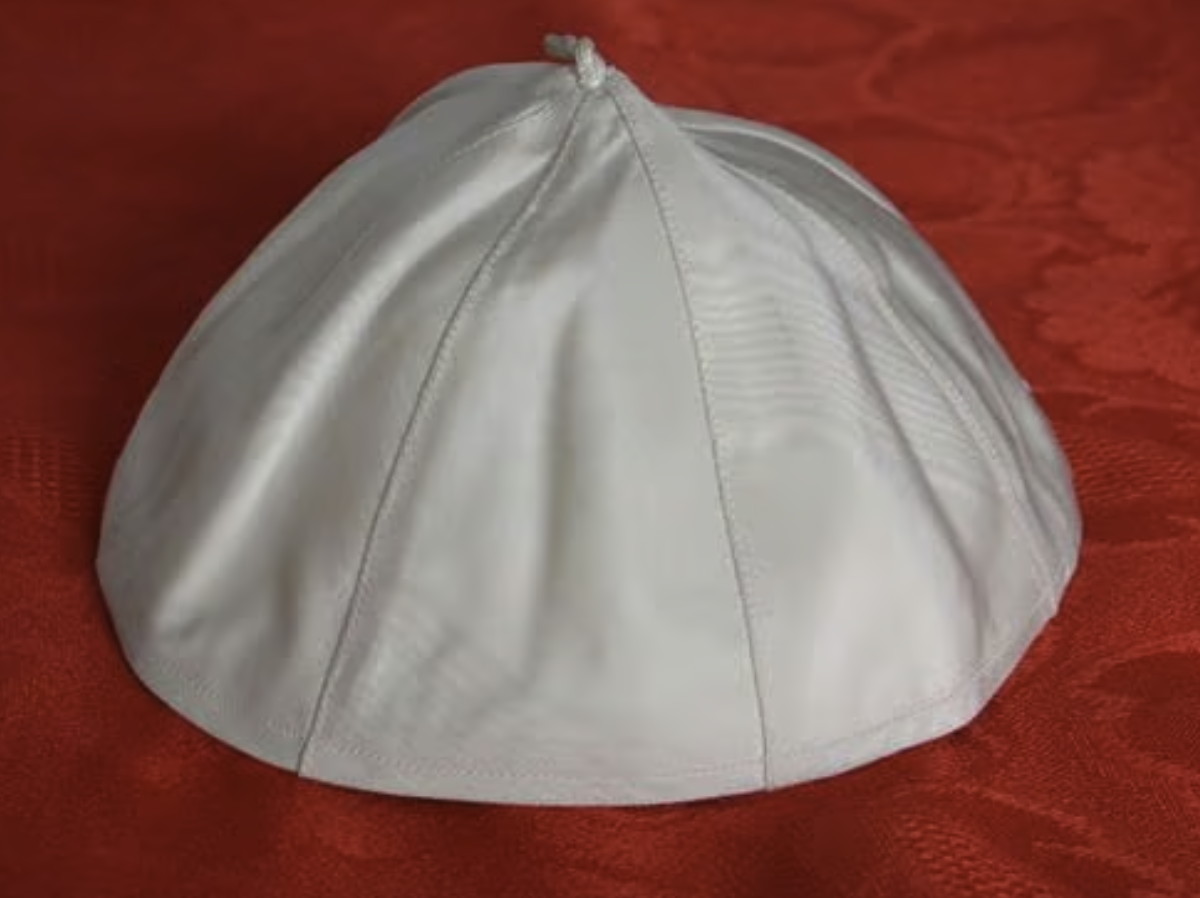
Podcast: Pope Francis tips his white hat on (location, location, location) same-sex blessing rites

If you have ever bought a home, or looked for property for a business (or a church), you may have heard a realtor say this: “Location, location, location.” The Urban Dictionary defines this term as follows: “Phrase to remind people that the most determining factor in the price of a house is the location.”

Money isn’t the only thing that matters, of course.

Back in the 1980s, I began to realize that this location-times-three mantra was affecting many major religion-beat stories that I was covering, especially in Christian flocks that include folks called “bishops.” In so many cases, what happened in churches — even what was taught from pulpits — was shaped by what that congregation’s bishop encouraged, discouraged or even punished.

This basic equation loomed in the background during this week’s “Crossroads” podcast (CLICK HERE to tune that in), which focused on the stunning responses that Pope Francis offered to “dubia” (Latin for “doubts”) documents from five doctrinally conservative cardinals.

Did he or did he not signal his support for same-sex blessing rites (or sort-of rites) in Catholic parishes around the world? Well, this pope is a Jesuit, which means that he declined to give a “yes” or “no” answer. But what he seemed to say was this: There are Catholic clergy who can find ways to show “pastoral charity” to LGBTQ+ Catholics and, if this is OK with their local bishops, they can proceed with blessing gay couples (since that is what many of them are already doing).

Now, this is long and quite Jesuit (the adjective form of the word). But readers need to see all of this to understand what may or may not be showing up in the news that they read. Francis proclaimed:

a) The Church has a very clear conception of marriage: an exclusive, stable, and indissoluble union between a man and a woman, naturally open to the begetting of children. It calls this union “marriage.” Other forms of union only realize it “in a partial and analogous way” (Amoris Laetitia, 292), and so they cannot be strictly called “marriage.”

b) It is not a mere question of names, but the reality that we call marriage has a unique essential constitution that demands an exclusive name, not applicable to other realities. It is undoubtedly much more than a mere “ideal.“

c) For this reason the Church avoids any kind of rite or sacramental that could contradict this conviction and give the impression that something that is not marriage is recognized as marriage.

d) In dealing with people, however, we must not lose the pastoral charity that must permeate all our decisions and attitudes. The defense of objective truth is not the only expression of this charity, which is also made up of kindness, patience, understanding, tenderness, and encouragement.


Please respect our Commenting Policy