Catholicism

Escaping that 'comfort zone': Press keeps missing obvious religion news at '22 World Cup

Escaping that 'comfort zone': Press keeps missing obvious religion news at '22 World Cup

The World Cup in Qatar continues to roll along into the semifinals. So far, the premier soccer tournament — and arguably the planet’s biggest sporting event — has showcased skill, drama and even some upsets. 

What the tournament has also generated are plenty of different kinds of storylines for news reporters and sports writers to focus on. As is the case with sporting events in general there are lots of storylines connected to religion that have gone unnoticed. 

It should come as no surprise that sports writers, and very often their editors back in the newsroom, don’t “get” religion. Go-to websites such as Fox Sports and ESPN, for instance, have failed to cover obvious stories in the past. They’ve also failed to do it in regards to the 2022 World Cup. For starters, think location, location and location. Why? Click here.

There are a few faith storylines — on and off the field — that did get coverage. Some of that coverage was great; some not so great.  

An example of a very good piece came via The New York Times. The newspaper found a way to discuss Qatar’s use of migrant workers to build stadiums and other infrastructure projects related to the World Cup in a new way.

The feature, which ran on a Sunday during Advent, looked at Qatar’s only Catholic church, located on the outskirts of the capital city Doha — in an area in which the government sanctions eight houses of worship, from Anglican to Eastern Orthodox. This feature, written by John Branch, is one of the rare times when a sports writer left his or her “comfort zone” and ventured outside the bubble of stadiums and press conferences to cover a story. 

Here’s the key section, showing why this story matters

Qatar is a nation deeply rooted in Islam. Calls to prayer can be heard five times a day throughout Doha. World Cup stadiums have prayer rooms for fans, and some staff at the games will stop what they’re doing to kneel in prayer.

Please respect our Commenting Policy

Religion News Service, and AP, offer the latest news from the left side of Christian higher ed

Religion News Service, and AP, offer the latest news from the left side of Christian higher ed

It’s another day, with yet another Religion News Service story about Christian higher education that fails to add one or two sentences of crucial material about ongoing clashes between centuries of Christian doctrine and the Sexual Revolution.

The setting for this news story, once again, is Seattle Pacific University — a Free Methodist institution in the progressive Pacific Northwest. Click here for flashbacks to GetReligion posts about news coverage of what is clearly a bitterly divided campus.

Once again, RNS readers never learn whether students and faculty on this campus sign — at enrollment or employment — what is usually called a “doctrinal covenant” or “lifestyle agreement.” This is a document in which members of a voluntary community pledge to support, or at the very least not openly oppose, a private school’s beliefs on a variety of moral and theological issues.

Many faith-based schools (on the religious left or right) have these covenants, but many do not. Thus, it’s crucial for news readers to know if students and faculty involved in a doctrinal conflict have chosen to sign covenants and, of course, the details of what is contained in the documents. This brings us to this RNS update, with a double-decker headline:

SPU board members seek dismissal of lawsuit over LGBTQ exclusion

The lawsuit, board members say, is an effort to 'intimidate and punish leaders of a religious institution for the exercise of protected First Amendment rights.'

This is a short story, based on documents linked to the lawsuit. Here is the overture:

Members of Seattle Pacific University’s board of trustees are asking a Washington state court to dismiss a lawsuit brought against the body by a group of students and faculty at the school, arguing that the suit is an effort to “intimidate and punish leaders of a religious institution for the exercise of protected First Amendment rights.”


Please respect our Commenting Policy

When is 'Christmas,' anyway? For many church leaders, that's a complicated question

When is 'Christmas,' anyway? For many church leaders, that's a complicated question

On church calendars, parents and grandparents circle this December event with red ink.

The problem for clergy is simple: When do they schedule that special Christmas service, or that concert full of Christmas classics?

"Evangelicals, and especially Baptists, tend to be rather pragmatic about these decisions. We want the most bang for our bucks and we want as many people as possible" in the pews, said Joshua Waggener, professor of church music and worship at Southwestern Baptist Theological Seminary in Fort Worth, Texas.

One thing is certain: "You have to have those little kids up there singing 'Little Drummer Boy.' It's pragmatic. For most people, I don't think theology has anything to do with" the timing.

This reality affects when churches schedule special events, especially in December -- when their members wrestle with school calendars, travel, office parties, family traditions and, yes, worship services. Meanwhile, civic groups, shopping malls and mass media offer "The Holidays," a cultural tsunami that begins weeks before Thanksgiving.

In churches with centuries of liturgical traditions, the Nativity of Our Lord Jesus Christ is Dec. 25, following the quiet season of Advent (Latin for "toward the coming"). This year, Christmas falls on Sunday and, for Catholics, Anglicans and others, the Christmas Eve Midnight Mass is one of the year's most popular rites. This opens a festive season that continues through Jan. 6, the Feast of the Epiphany. Many Eastern Orthodox Christians follow the ancient Julian calendar and celebrate Christmas on Jan. 7, after Nativity Lent.

In the United States, some kind of Christmas Eve service remains the big draw, according to almost half (48%) of Protestant pastors contacted in a new study by Lifeway Research. The frequency of high-attendance church events builds until Christmas Eve, then declines sharply.


Please respect our Commenting Policy

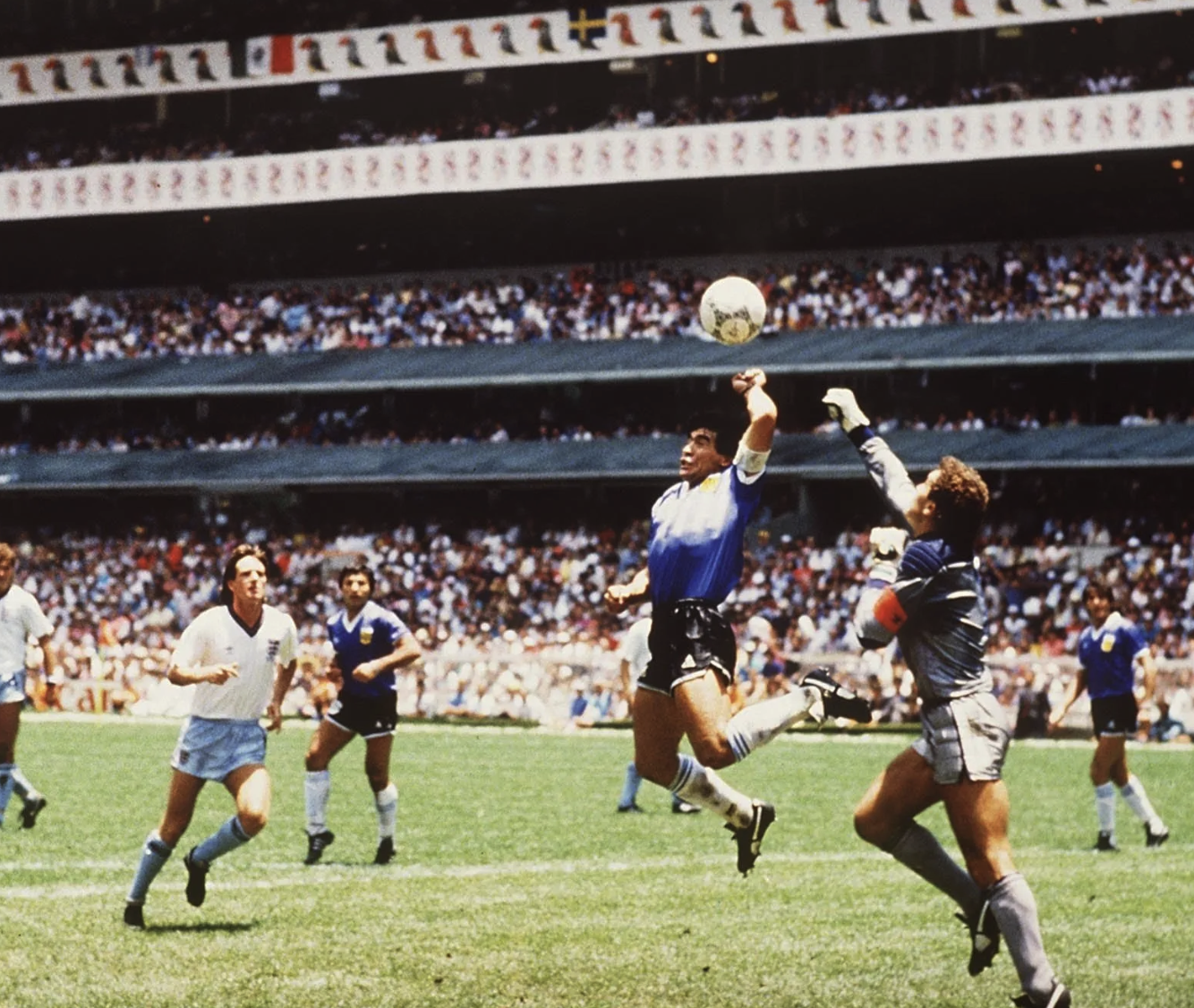
Clemente Lisi off to World Cup: Soccer, faith and memories of Maradona's 'hand of God'

Clemente Lisi off to World Cup: Soccer, faith and memories of Maradona's 'hand of God'

Long, long ago, I told the managing editor of The Rocky Mountain News (#RIP) that I should be part of the newsroom team sent to cover the Super Bowl.

My logic was simple: If the Denver Broncos were not a religious organization for a majority of people in the Rocky Mountain Time Zone, there was no such thing as a cultural definition of religion.

With that in mind, it makes all kinds of sense that our own Clemente Lisi is about to get on an airplane and head to Qatar to cover the final rounds of World Cup 2022. In addition to being our Catholic-news specialist here at GetReligion, he is also the author of the new book “The FIFA World Cup: A History of the Planet's Biggest Sporting Event.

You know that there will be religion angles all over the place, in part because of the location. And, once again, if soccer isn’t — for most of the world — a near-religion, then I don’t know what is. After all, one of my all-time favorite book titles is this: “How Soccer Explains the World.”

Yes, the favored samba-style evangelicals of Brazil lost in a heartbreaker yesterday — to a Croatia team with a coach with a rosary in his hands, on the sideline. I’ll keep my eyes open for GetReligion-friendly copy from Lisi, once he arrives in Qatar.

Meanwhile, we ran a piece by Lisi that ran with this headline: “Sports, passion, faith — The ties that bind are always there, even if journalists miss them.” Here is the highly relevant overture:

Sports, in so many ways, are almost like a religion for many people. Like religion, sports can convey important lessons about culture and values. From the times of the Ancient Greeks, athletes were sometimes accorded the status of gods.

Not much has changed since ancient times. Modern society has given god-like status to many athletes. Lebron James, Tiger Woods and Lionel Messi are just three athletes who garner such adulation on a global scale.

The question here at GetReligion is how this relationship shows up in news stories about sports, especially stories in which religious faith is — according to the athletes themselves — a key element in their lives and their success.


Please respect our Commenting Policy

Podcast: What happens when drag-queen culture meets the Christmas Wars? Take a guess ...

Podcast: What happens when drag-queen culture meets the Christmas Wars? Take a guess ...

Just the other day, someone tweeted out a challenge asking readers to share, in five words or less, something that would annoy die-hard Texans. As a prodigal Texan, I responded: “Austin, Austin, Austin, Austin, Austin.”

You see, the People’s Republic of Austin — I heard that label in the 1970s — is located inside Texas and it is even the capital of Texas, but it has long been deep-blue urban zip code (there are now others) in a rather red state.

This creates tensions. Which brings us to that interesting Christmas Wars headline the other day in The Washington Post: “A Texas culture clash: Dueling parades over the meaning of Christmas,” which was the hook for this week’s “Crossroads” podcast (CLICK HERE to tune that in).

Let me offer a bit of “Christmas Wars” background. For decades, the most powerful institutions in American life — government, mass media, public schools, shopping malls, etc. — have argued about what kind of language and symbolism can be used during the cultural tsunami known as The Holidays. As one Baptist progressive said long ago, people may want to play it safe and say, "Merry Christmas, Happy Hanukkah, and a Joyous Kwanzaa, Martyrdom Day of Guru Tegh Bahadur, Bodhi Day, Maunajiyaras Day, Beginning of Masa'il, Nisf Sha'ban and Yalda Night, Yule and Shinto Winter Solstice, and Ramadan! Or, happy holidays!"

But there is a serious church-state issue looming in the background: Is religious speech and symbolism a uniquely dangerous force in public life? In practical terms, can public institutions — especially if there are tax dollars involved — let “Christmas be Christmas.”

Strange things have happened in these debates, such as some (repeat “SOME”) religious and cultural conservatives celebrating when, let’s say, Menorahs and even Nativity scenes are acceptable since they have become “secular” symbols that no longer have offensive religious content. That’s a win for religion?

With that in mind, let’s look at the overture of this Washington Post story, about Christmas Wars in greater Austin:

TAYLOR, Tex. — The trouble started at last year’s Christmas parade, when students from St. Mary’s Catholic School watched as two drag queens aboard the first Taylor Pride float danced and lip synced to Christmas carols beneath a glittering rainbow arch.


Please respect our Commenting Policy

Podcast: ProPublica probes for-profit hospice horrors, but ignores faith-based networks

Podcast: ProPublica probes for-profit hospice horrors, but ignores faith-based networks

Every now and then, your GetReligionistas run into a story that puts us in a real bind, in terms of the basic media-criticism work that we do here.

The nonprofit journalism group ProPublica, in this case working with The New Yorker, recently published a great example of this kind of report. We are talking about a deeply researched piece that is a must-read story — period. Reporter Ava Kofman’s work is painful, even agonizing, to read, for all the right reasons.

At the same time, the story is seriously lacking when it comes to exploring religious facts and beliefs that are essential to its subject, which is hospice care.

The feature does include a nod to the Christian history of hospice care, but avoids any meaningful discussion of the differences between the work done in faith-based hospice networks — which are massive — and what happens with some (maybe many) for-profit hospices, such as those at the hellish heart of this report. The headline: “Endgame: How the Visionary Hospice Movement Became a For-Profit Hustle.”

This must-read report was the hook for this week’s “Crossroads” podcast (CLICK HERE to tune that in) and I will stress that this subject was deeply personal for host Todd Wilken and for me. Wilken is a Missouri-Synod Lutheran pastor and has years of experience assisting with end-of-life issues and questions. My father was a Southern Baptist pastor who spent the last decade of his ministry working in Houston’s hospital complex, include the Texas Children’s Hospital.

This story does a great job of the “follow the money” components of scandals linked to for-profit hospice care. Here is the anecdotal lede:

Over the years, Marsha Farmer had learned what to look for. As she drove the back roads of rural Alabama, she kept an eye out for dilapidated homes and trailers with wheelchair ramps. Some days, she’d ride the one-car ferry across the river to Lower Peach Tree and other secluded hamlets where a few houses lacked running water and bare soil was visible beneath the floorboards. Other times, she’d scan church prayer lists for the names of families with ailing members.


Please respect our Commenting Policy

NPR offers a faithful Mike Pence interview: But readers will need the transcript to know that

NPR offers a faithful Mike Pence interview: But readers will need the transcript to know that

National Public Radio posted a story the other day with a totally predictable headline: “Mike Pence, pondering a presidential run, condemns Trump's rhetoric on Jan. 6.

What we have here is a perfect chance to meditate on that concept that readers see all the time here at GetReligion, when dealing with the political lens through which most (#IMHO) elite-market journalists view the world. That would be: “Politics is real. Religion? Not so much.”

Things are a bit more nuanced with this particular NPR feature. To be blunt: The Steve Inskeep interview is way, way better than the feature that someone — an intern, perhaps — wrote about the contents of the interview.

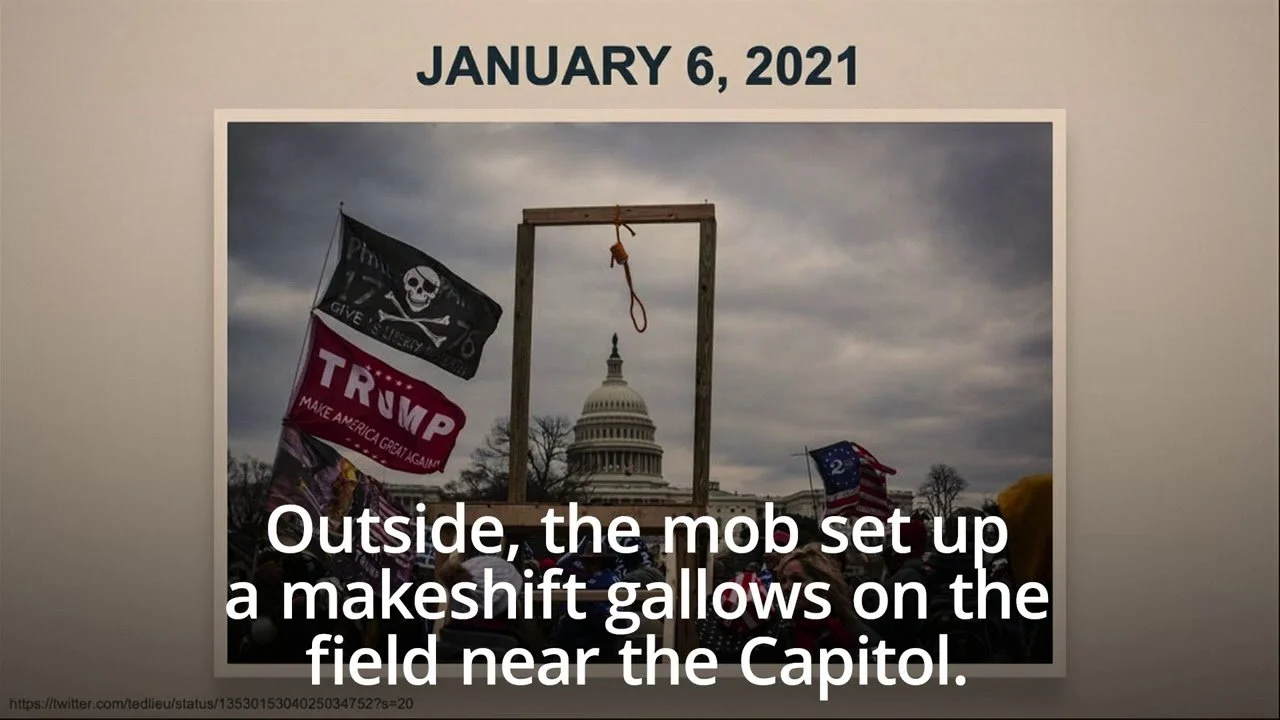
The text version is — I am sure this will shock many — all about Donald Trump, Donald Trump and Donald Trump, with a near-laser focus on the events of January 6th at the U.S. Capitol.

Now, that’s a crucial subject, since Vice President Mike Pence was the man that many Trump-inspired rioters wanted to hang (or they chanted words to that effect). That’s a topic that cannot be avoided, and I get that. This is an interview that will infuriate Trump disciples and, at the same time, will leave the progressive left just as mad.

The bottom line: The interview is about Pence’s memoir “So Help Me God,” and that’s a book that has a much broader focus than recent partisan politics. I would argue — based on the interview itself — that the book’s most important contents are not linked to Trump, Trump, Trump. The most provocative parts of the interview are about federalism and (#triggerwarning) the First Amendment. But, first, here is the highlighted Trump material:

Pence faces an extraordinary challenge as a political leader whose national reputation is closely tied to the record of the Trump administration but who says the Constitution and his conscience would not allow him to follow Trump's ultimate demand. …

When a mob disrupted the proceedings, Pence retreated with family members to an office within the U.S. Capitol and then to an underground parking garage, but refused to flee the building.


Please respect our Commenting Policy

New religion census: That means more numbers, more maps and more hooks for news stories

New religion census: That means more numbers, more maps and more hooks for news stories

It’s always a fun day when one of my trusted sources publishes some new raw data that I can use to better understand the religious and political world of the United States. That’s doubly true when it’s something other than survey data because it allows me to make data visualizations that are a bit different than the run of the mill bar and line graphs.

Earlier this month the Association of Statisticians of American Religion Bodies released the results of their 2020 Religion Census, which is a one of a kind dataset. Every 10 years, this very capable research team tracks religious organizations all the way down to the county level — which is a granularity that is astonishing.

For example, most surveys would be lucky to give you a sample that is large enough to understand religion at the state level. So, to have access to county level data unlocks thousands of possibilities.

This is the kind of detail that helps researchers — and journalists — look for news trends at the local and regional levels. There are news stories hidden in these numbers. The key is spotting them.

So, with that in mind, I took to map-making the last few weeks. I think that there’s a lot of surprising results in this new data.

Where is religion the most concentrated in the United States? Probably not where most people would guess.

According to data from the 2020 Religion Census, there’s obviously a strong pocket of believers in the Bible Belt — that isn’t surprising.


Please respect our Commenting Policy

Archbishop Broglio elected to lead USCCB: Press focuses on (#surprise) political issues

Archbishop Broglio elected to lead USCCB: Press focuses on (#surprise) political issues

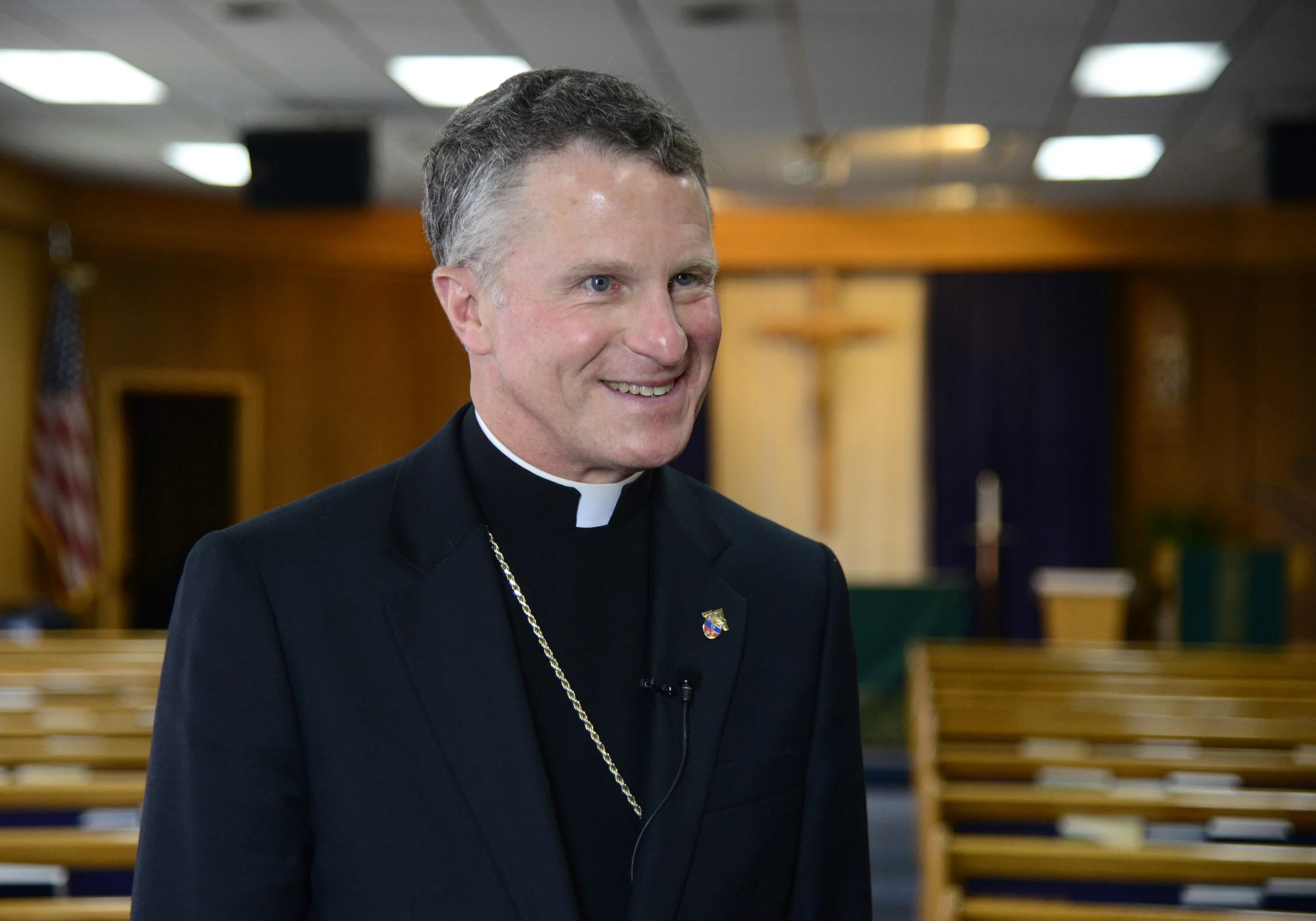
The United States Conference of Catholic Bishops assembled in Baltimore two weeks ago to elect a new president. Archbishop Timothy Broglio of the Military Services, tasked with overseeing Catholic ministries to members of the U.S. armed forces, was elected to lead the USCCB.

The 70-year-old archbishop won election to a three-year term on Nov. 15 after emerging victorious from a field of 10 candidates. What Broglio’s election means for the church, our national politics and for everyday Catholics depends on whom you ask.

Certainly, news coverage of Broglio’s election seemed to focus on the priorities of the media organization’s own political priorities rather than impartial, fact-based reporting that included the church’s own positions on an array of subjects Broglio will have to deal with in his term.

As we say here at GetReligion: Politics is real. Religion? Not so much.

The New York Times framed their coverage under the headline, “U.S. Catholic Bishops Elect Leaders for Anti-Abortion Fight.” This is how their story opened:

BALTIMORE — A week after bruising losses for anti-abortion forces in the midterm elections, America’s Roman Catholic bishops rededicated themselves to ending abortion and elected a slate of new leaders to support that goal during their annual meeting. …

The job ahead is “perhaps even more massive than we thought,” said Archbishop William E. Lori of Baltimore, who has chaired the bishops’ Committee on Pro-Life Activities. “We have to engage in this with mind and heart and soul.”

The bishops chose Archbishop Timothy P. Broglio, who leads the Archdiocese for the Military Services, as their new president. Archbishop Lori, the runner-up for the presidency, will serve as vice president. Both men have taken strong positions against abortion and are expected to continue the conservative leanings of the hierarchy on an array of social issues.

Archbishop Broglio supported religious exemptions for military service members who did not want to receive the Covid-19 vaccine “if it would violate the sanctity of his or her conscience.” The Vatican had approved of the vaccines, but some Catholics and others opposed to abortion asked for religious exemptions because of the use of stem cells derived from aborted fetuses to develop some vaccines.

He has previously suggested that homosexuality was to blame for the church’s sexual abuse crisis, though studies have found no connection between homosexuality and child abuse.

There’s a lot to unpack there, but the news story managed to get the words abortion, vaccines and homosexuality in the first five paragraphs. Broglio is made out to be some deranged right-wing politician.


Please respect our Commenting Policy