Catholicism

Thinking about online temptations: Maybe Catholics should log off now and then?

Thinking about online temptations: Maybe Catholics should log off now and then?

If you know anything about religion and social-media, you know that Catholic Twitter can be a wild place.

Niche digital religion is really something. I mean, if Elon Musk decided to swim the Tiber, all of the Big Tech servers would probably turn to pillars of salt. If he became an evangelical Protestant this White House might resort to nuclear weapons.

The question many Catholic priests, and other mainstream religious folks, have asked is rather basic: Is something like Twitter a good, safe, worthy place to invest their talents? Or should they consider it a dangerous waste of time?

I’ve read some interesting essays on topics related to this question and, this time, I will share one as this weekend’s think piece. The headline at RealClearReligion.org is rather blunt: “Catholics, Log Off.” The author is Jack Butler, an editor at National Review Online and a fellow at the Institute for Human Ecology at the Catholic University in America.

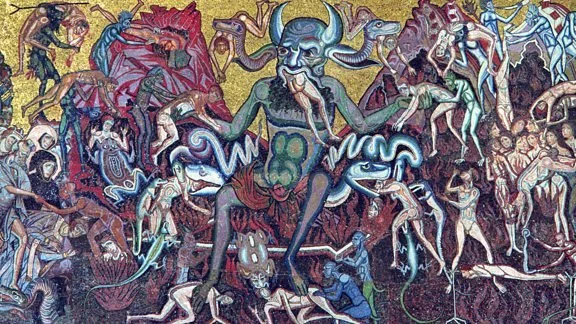
Let’s start with the obvious: What would Satan tweet?

The fight against Lucifer was going pretty well — until the devilish enginery appeared. As John Milton depicts the battle of Satan's rebellious angels against the forces of Heaven in his epic poem "Paradise Lost," the demons were on the backfoot, until they devise "implements of mischief" that will "dash/To pieces, and orewhelm whatever stands/Adverse, that they shall fear we have disarmd/The Thunderer of his only dreaded bolt."

Not all artifices are inherently evil. But if the prayer to St. Michael the Archangel is true and demons "prowl about the world, seeking the ruin of souls," they can show up in our devices, too. William Peter Blatty suggests this in his novel "The Exorcist." The demon Pazuzu, having possessed a young girl, is asked if it minds being recorded. "Not at all," the demon says. "Read your Milton and you'll see that I like infernal engines. They block out all those damned silly messages from him."

But what does it mean for technology to obstruct our path to God?

To put this in small-o “orthodox” theological terms, technology is merely another development in a world that is both glorious and fallen.
Please respect our Commenting Policy

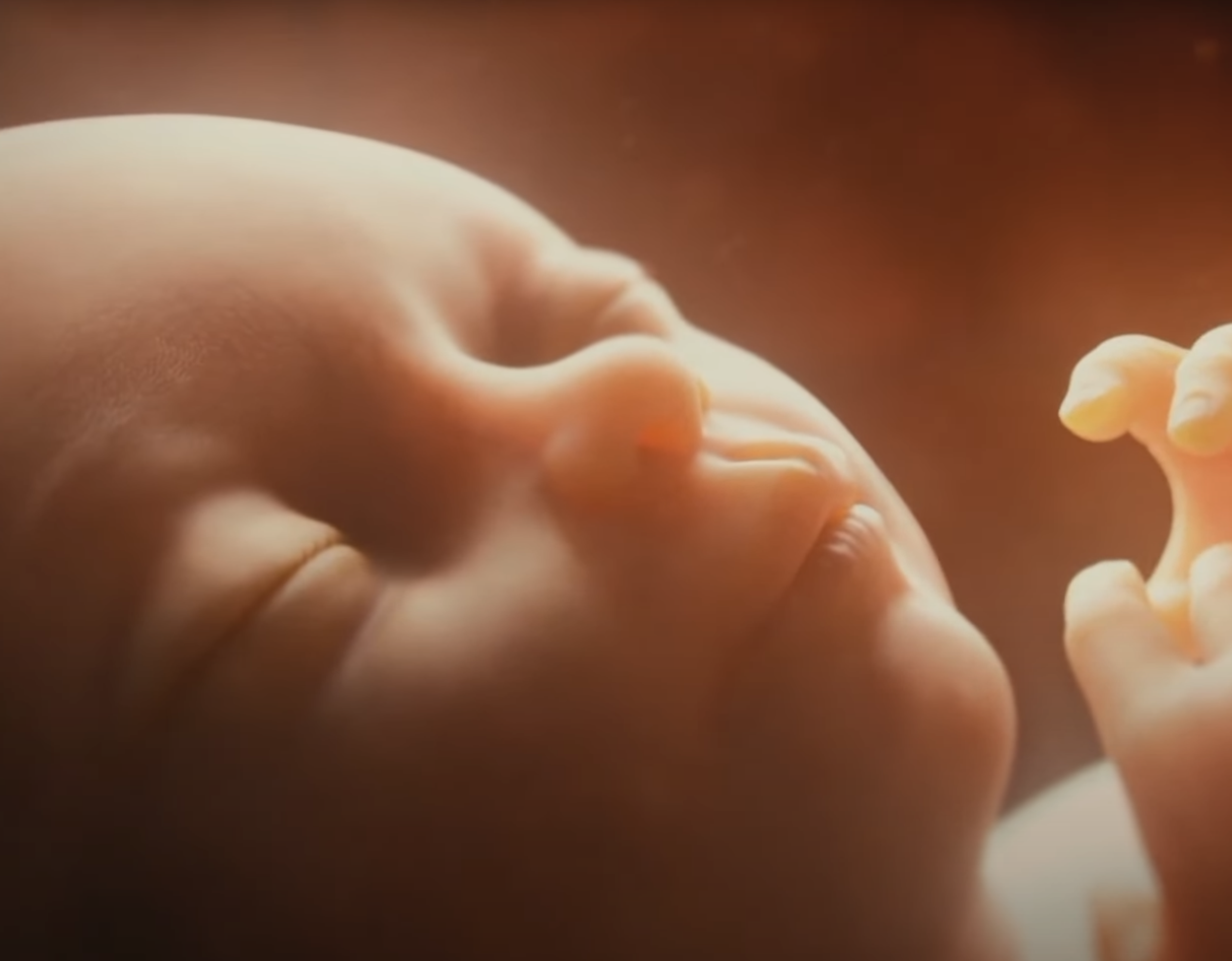
Podcast: Talking fetus scene in 'Blonde' has created another media storm about abortion

Podcast: Talking fetus scene in 'Blonde' has created another media storm about abortion

Ask any pastor about times when Americans tend to take stock of their religious commitments and it’s likely you will hear something like the following.

For most people, but especially for those who are married or/or have children, there are obvious gateways from one stage of life to another and, frequently, there are religious teachings and rites that go with them. Think birth, baptism, marriage, children, aging and, finally, death. In many lives, there are moments of conversion or doubt, as well as life-threatening illnesses and tragedies. Divorce? Broken relationships with children? Yes, more symbolic gates.

Clergy know they will have to help women and men deal with these gates. I have always argued, in discussions with editors, that these gateways are often linked to important trends and news events. Changing a prayerbook or hymnal, for example, may threaten doctrines and symbols that, for the devout, are linked to rites that frame these life events.

This brings us to this week’s “Crossroads” podcast (CLICK HERE to tune that in), which focuses on some news and commentary about the life of one of Hollywood’s greatest superstars — Marilyn Monroe. The problem is that the controversial, lurid new movie “Blonde” includes events and images that clearly link abortion to other life-defining events, especially horrors such as rape and other forms of sexual and emotional abuse.

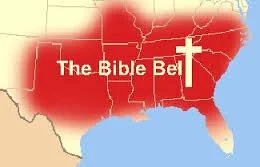
Abortion can lead to grief and may be viewed as a form of violence against women? That pushes several hot buttons at the same time, and not just for right-wing Christians in the Bible Belt. Consider the symbolism of mourners visiting the famous Garden of Unborn Children in Japan.

As always, let me stress that abortion is a topic that, for many, raises religious issues — as well as moral, legal and political questions. This raises challenges for journalists and artists alike.

First, let’s look at the obvious news hook — that Planned Parenthood officials needed to react to this brutal NC-17 movie, a flick that is creating Oscar buzz surrounding the work of actress Ana de Armas.

The headline at The Hollywood Reporter proclaims, “Planned Parenthood: ‘Blonde’ Is “Anti-Abortion Propaganda.”


Please respect our Commenting Policy

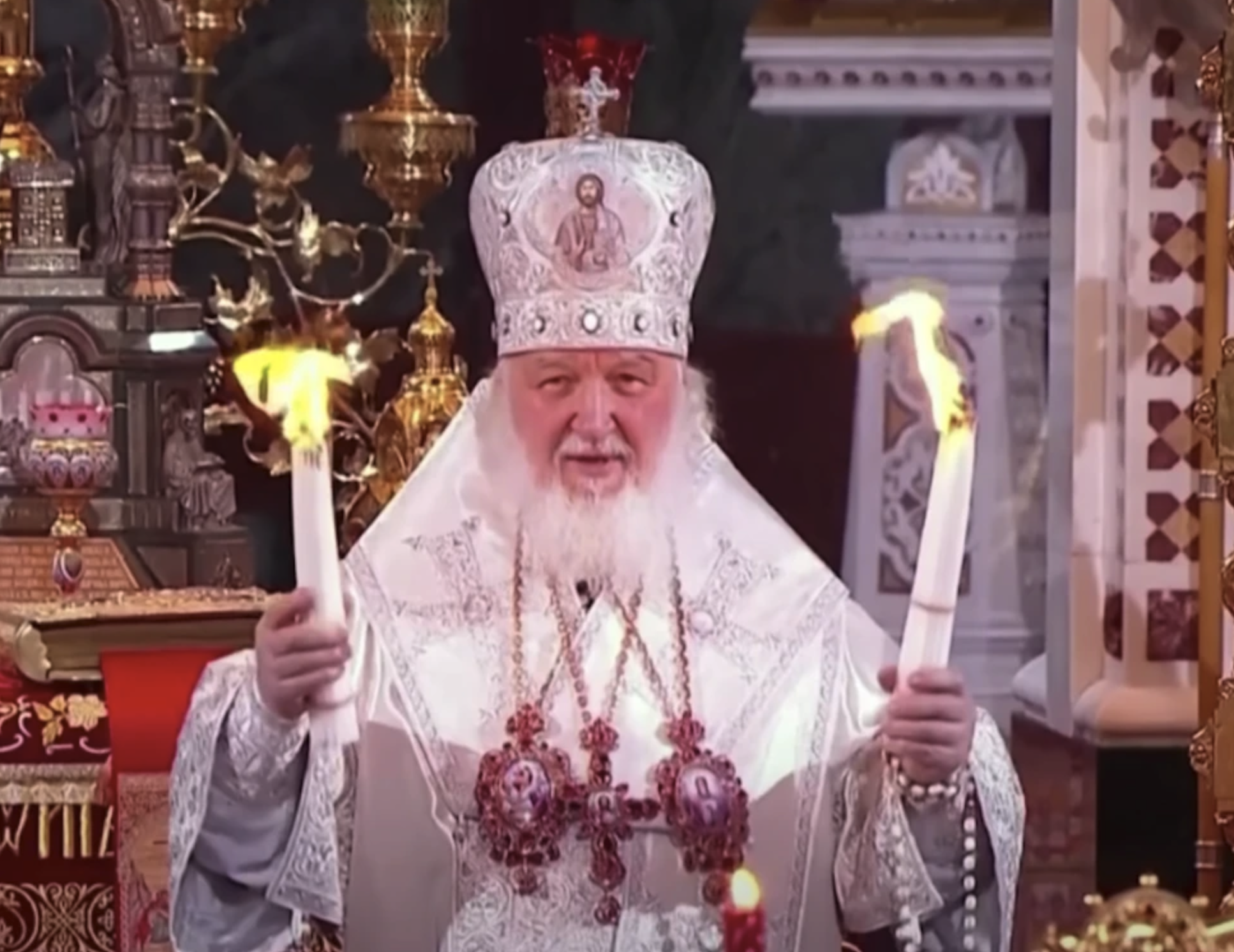
'Indulgences' for Russian soldiers killed in Ukraine? Remember that Moscow speaks for Moscow

'Indulgences' for Russian soldiers killed in Ukraine? Remember that Moscow speaks for Moscow

Once again, the thought for the day is this: Eastern Orthodoxy is not the Church of Rome. There is no pope at the top of a unified Orthodox ecclesiastical structure that speaks for everyone.

I’m talking, of course, about the most recent controversial — to say the least — comments by the patriarch of Moscow. As one reader asked: “I'm interested to know what the buzz is in the Orthodox world about Patriarch Kirill's recent statements in support of Russia's mobilization. I'm sure you've seen it 100 times.”

I saw it 100 times. But I’ve been traveling for nearly a week, so I apologize for the delay in this post.

What’s up? There was this headline at Reuters, which was typical of several reports: “Orthodox Church leader says Russian soldiers dying in Ukraine will be cleansed of sin.” Here is the top of that:

The head of the Russian Orthodox Church has said that Russian soldiers who die in the war against Ukraine will be cleansed of all their sins, days after President Vladimir Putin ordered the country's first mobilisation since World War Two.

Patriarch Kirill is a key Putin ally and backer of the invasion. He has previously criticised those who oppose the war and called on Russians to rally round the Kremlin.

"Many are dying on the fields of internecine warfare," Kirill, 75, said in his first Sunday address since the mobilisation order. "The Church prays that this battle will end as soon as possible, so that as few brothers as possible will kill each other in this fratricidal war."

"But at the same time, the Church realises that if somebody, driven by a sense of duty and the need to fulfil their oath ... goes to do what their duty calls of them, and if a person dies in the performance of this duty, then they have undoubtedly committed an act equivalent to sacrifice. They will have sacrificed themselves for others. And therefore, we believe that this sacrifice washes away all the sins that a person has committed."

Yes, Patriarch Kirill speaks for Patriarch Kirill and does not speak for all of Eastern Orthodoxy (and may not be speaking for all of his own synod). Meanwhile, the “first among equals” Ecumenical Patriarch in Istanbul does not speak for all Orthodox leaders, even if — at times — it appears that he thinks that he has that authority (such as his intervention in decades of Orthodox divisions in Ukraine).

Will Orthodox leaders speak out against the remarks by Kirill?


Please respect our Commenting Policy

English-language coverage of Italian elections packs lots of Meloni media baloney

English-language coverage of Italian elections packs lots of Meloni media baloney

I have received more texts than usual the past two weeks. Most of them were about a rather unusual subject — Italy’s national elections. I say unusual subject because it’s not every day that this subject is discussed among my American friends.

Many readers of this space may know that I am the son of immigrant parents who moved to the United States from Italy. As a result, I am bilingual (I read Italian news sites almost as voraciously as American ones) and also a dual citizen, meaning I can vote in Italian elections.

But the texts I was getting was coming from a place of fear. They feared that the center-right would win the election (they ultimately did on Sept. 25) and bring Italy back 100 years to an era marked by fascism.

This sentiment came as a result of the English-language press (predominantly the United States and England) that framed the political rise of Giorgia Meloni as threat to democracy. It was this skewed news coverage that got me to write about her twice in pieces for for Religion Unplugged, which included an analysis piece last week on what her election means and the Vatican’s reaction.

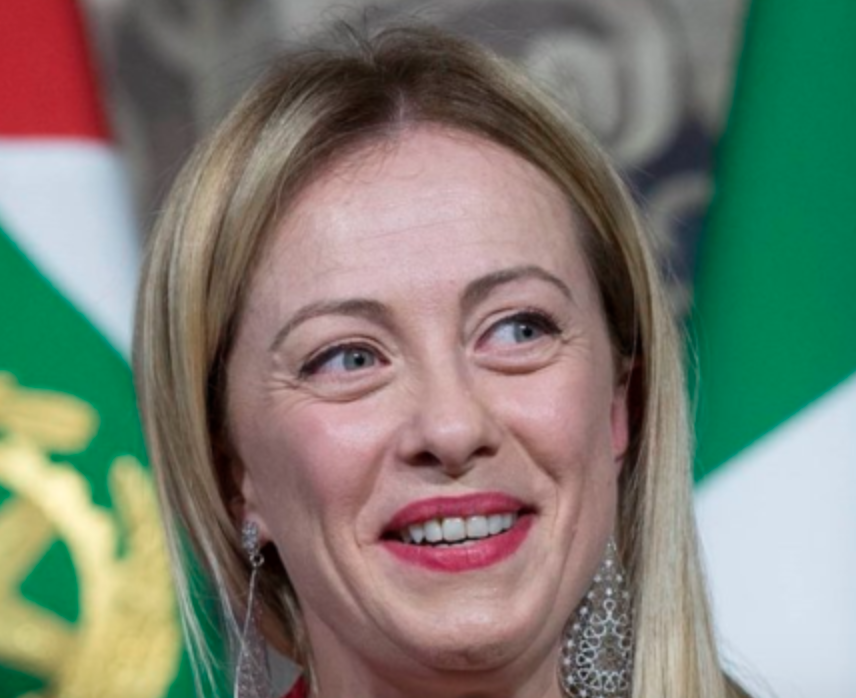
Running on a “God, homeland and family” platform, the 45-year-old was labeled a “neo-fascist” and “hard right” by The New York Times largely because of her traditional Catholic views regarding marriage and her anti-abortion views. The Times hailed Meloni’s election this way:

ROME — Italy turned a page of European history on Sunday by electing a hard-right coalition led by Giorgia Meloni, whose long record of bashing the European Union, international bankers and migrants has sown concern about the nation’s reliability in the Western alliance.

Results released early Monday showed that Ms. Meloni, the leader of the nationalist Brothers of Italy, a party descended from the remnants of fascism, had led a right-wing coalition to a majority in Parliament, defeating a fractured left and a resurgent anti-establishment movement.

It will still be weeks before the new Italian Parliament is seated and a new government is formed, leaving plenty of time for political machinations and horse trading in a coalition with major differences. But Ms. Meloni’s strong showing, with about 26 percent of the vote, the highest of any single party, makes her the prohibitive favorite to become the country’s first female prime minister.

The opening of this news story reads more like an opinion piece, loaded with adjectives such as “hard-right coalition.”

This was parroted by other U.S. newspapers as well as major television networks and cable news channels.


Please respect our Commenting Policy

This time, will U.S. Supreme Court finally clarify rights of same-sex marriage dissenters?

This time, will U.S. Supreme Court finally clarify rights of same-sex marriage dissenters?

The U.S. Supreme Court’s 2021-2022 term produced biggies on abortion, religious freedom and the separation of church and state. The term that opens October 3 will bring another blockbuster — if the high court finally settles the unending clashes over LGBTQ+ rights versus religious rights.

Newsroom professionals will want to watch for the date set for the oral arguments in 303 Creative v. Elenis (Docket #21-476).

In this six-year dispute, graphic designer Lorie Smith is suing Colorado officials over the state’s anti-discrimination law, seeking to win the right to refuse requests to design websites that celebrate same-sex marriages, which she opposes, based on the teachings of her faith. She does not reject other work requests from LGBQ+ customers.

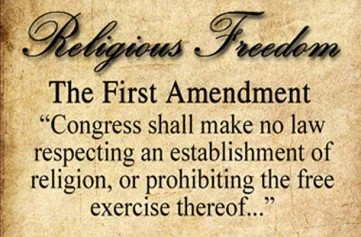
As currently framed, the case involves Smith’s freedom of speech rather than the First Amendment Constitutional right to “free exercise” of religion. The U.S. Supreme Court sidestepped the religious rights problem in 2018 (click here for tmatt commentary) when it overturned Colorado’s prosecution of wedding cake baker Jack Phillips (who is still enmeshed in a similar case per this from the firm that also represents Smith). Nor did the high court rule on religious freedom aspects when it legalized same-sex marriage in the 2015 Obergefell decision.

Last month, the Biden Administration entered 303 Creative (.pdf here) on the side of Colorado and LGBTQ+ interest groups. Essentially, the Department of Justice argues that as enforced in Colorado or elsewhere, “traditional public accommodations laws ... burden no more speech than necessary to further substantial government interests — indeed, compelling interests of the highest order.”

Smith has support from 16 Republican-led state governments and 58 members of Congress, while 21 Democratic states and 137 Congress members take the opposite stance alongside e.g. the American Bar Association.

The issue will face the U.S. Senate after the November elections as Democrats try to “codify” Obergefell into federal law but for passage may need to accept a Republican religious-freedom amendment. The Equality Act, which won unanimous support from House Democrats but is stalled in the Senate, would explicitly ban reliance on federal religious-freedom law in discrimination cases, include crucial laws passed by a broad left-right coalition during the Bill Clinton administration.


Please respect our Commenting Policy

Ryan Burge at RNS: Thinking about the impact of political sermons, on left and right

Ryan Burge at RNS: Thinking about the impact of political sermons, on left and right

Hey churchgoers: How long has it been since you heard a political sermon?

Wait. We need to pause and discuss what a political sermon might sound like. For example, I think everyone would agree that an open endorsement of a political candidate from the pulpit would be “political.”

But what if a congregation or a denomination invited a political leader to speak in a worship service or some other event? This is something that happens on the political left and right. For generations, to name one example, Democrats have accepted warm, strategic invitations to speak — or perhaps simply exchange greetings — in African-American churches. It makes headlines when GOP leaders address major evangelical bodies (think Vice President Mike Pence and the Southern Baptist Convention).

More questions: What if a bishop or a preacher addresses issues that are clearly both doctrinal AND political, such as right-to-life concerns or threats to the environment? What about a conference focusing on ways religious groups can defend First Amendment rights, such as freedom of speech, freedom of association and freedom of religious practice? Is a liberal rally on abortion more “theocratic” than one organized by believers on the doctrinal right?

I ask these questions because of a piece GetReligion contributor Ryan Burge, he of the omnipresent charts and info on Twitter, wrote for Religion News Service. Here’s the newsy headline “When preachers get political, do they change minds? Preachers tend to risk political speech only when they know it will receive a warm reception.” The overture:

One of the most important and difficult questions among those who study religion and politics is just how important a pastor, rabbi, imam or other religious leader is when it comes to shaping the worldviews of their congregation. These figures get a weekly chance to dominate the attention of the people who come to listen to their sermons. They have a nearly unique opportunity to mold their congregants’ view of the theological, social and political world around them.

How often do pastors actually use that opportunity to speak out about the pressing issues of the day? Some new data gives us a look.

A Pew Research Center poll fielded in March of 2021 asked people if they had heard sermons that contained references to the fallout from the 2020 presidential election in the previous month. The survey asked about four topics specifically: the possibility that the 2020 election was rigged, former President Donald Trump’s inaccurate statements about election fraud, as well as support for or opposition to those who stormed the U.S. Capitol on Jan. 6, 2021.

That is certainly a rather Donald Trump-era dominated list, but that reflects several years of headlines. Meanwhile, it’s safe to say that President Joe Biden is in the White House, in large part, because of support from voters in Black churches during several primaries. But I digress.


Please respect our Commenting Policy

DeSantis as 'culture warrior' or theocrat: Coverage depends on a newsroom's worldview

DeSantis as 'culture warrior' or theocrat: Coverage depends on a newsroom's worldview

A Republican politician with presidential aspirations visits a Christian college. What happens next, in terms of the way the event is covered by the mainstream press, is predictable — during this era of niche news, with stories written to appeal to the beliefs of specific political flocks.

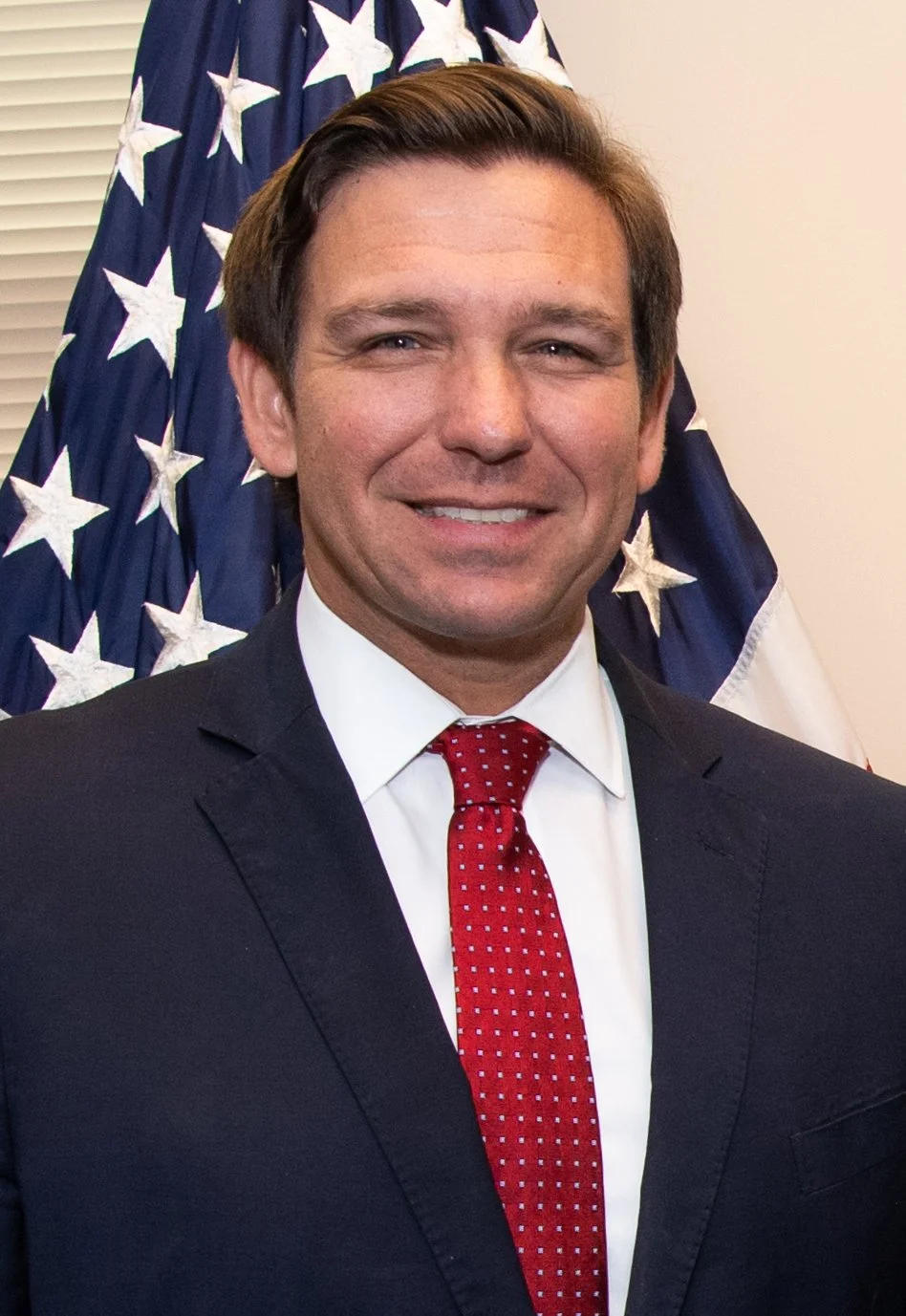
The politician in question is Florida Gov. Ron DeSantis and the school is Hillsdale College in Michigan. The visit took place this past February and was used as an example in a recent Miami Herald article of DeSantis’ mingling of faith and politics.

This is how the paper opens its Sept. 13 piece:

While visiting a private Christian college in southern Michigan that wields influence in national politics, Gov. Ron DeSantis rephrased a biblical passage to deliver a message to conservatives.

“Put on the full armor of God. Stand firm against the left’s schemes. You will face flaming arrows, but if you have the shield of faith, you will overcome them, and in Florida we walk the line here,” DeSantis told the audience at Hillsdale College in February. “And I can tell you this, I have only begun to fight.”

The Republican governor, a strategic politician who is up for reelection in November, is increasingly using biblical references in speeches that cater to those who see policy fights through a morality lens and flirting with those who embrace nationalist ideas that see the true identity of the nation as Christian.

That’s followed by the thesis:

He and other Republicans on the campaign trail are blending elements of Christianity with being American and portraying their battle against their political opponents as one between good and evil. Those dynamics have some political observers and religious leaders worrying that such rhetoric could become dangerous, as it could mobilize fringe groups who could be prone to violence in an attempt to have the government recognize their beliefs.

The article has no problem finding experts who warn of impending danger.


Please respect our Commenting Policy

NBC News promotes its own Satanism-scare report, which is itself a kind of scare-news device

NBC News promotes its own Satanism-scare report, which is itself a kind of scare-news device

I have always found it interesting when major news organizations conduct a public-relations blitz — primarily with messages to other journalists — promoting one of their own news reports.

Obviously, the message to other journalists is this: We deserve praise for doing this story. The implied message is usually: We were brave to do this story. Now, all you other newsroom folks should follow our courageous example and cover this story, too.

In this case, we are talking about an NBC News press release with this dramatic double-decker headline:

NBC NEWS: SATANIC PANIC IS MAKING A COMEBACK, FUELED BY QANON BELIEVERS AND GOP INFLUENCERS

Baseless Accusations Are Branding People As Satanist Pedophiles At The Speed Of The Internet — Just Ask A GOP Prosecutor Who Recently Lost Re-Election.

There are several levels to This. Big. Story.

(1) There is a totally valid story about Internet-based attacks against a progressive Republican — David Leavitt, the prosecuting attorney for Utah County — attempting to smear him with wild stories about Satanic, cannibalistic attacks on children. Leavitt is active in the Church of Jesus Christ of Latter-day Saints and the younger brother of a former Utah governor, Mike Leavitt.

(2) There is a valid, and by now very familiar, story about QAnon, politicians, pedophiles, cannibalism, pizza and, of course, the work of Satan in one form of another (hold that thought). If you have followed GetReligion, you know that we think the world of QAnon conspiracy theories is important and worthy of tight, fact-based coverage.

(3) There are some, repeat “some,” Republicans on the right fringe who now rush to connect Satanic worship to all kinds of trends in the free-for-all that is modern American culture. These politicos have been known to blur the line between organized, public Satanic religious groups and the secret world (it’s hard to know the size of this phenomenon) of people attempting to practice dark arts of various kinds.

(4) There are many conservative, and very mainstream, religious believers who openly state their beliefs that incarnate evil — as in the biblical Satan — is at work, on one level or another, in activities including child abuse, domestic violence, terrorism, warfare, etc. Yes, some believe that using permanent forms of gender-transition surgery and puberty blockers on children fall into this category.

It’s important to note, however, that someone like Pope Francis saying that he sees Satanic forces at work in our world is not the same thing as people making accusations against, for example, the specific and official Church of Satan. Yes, Pope Francis has probably used more Satan-based language than any pope in several generations, including on some issues linked to the Sexual Revolution.

This NBC News report takes the important story at level (1) and links it to level (2) — which is valid. The problem, from my journalistic point of view, is that NBC News then attempts to take some poll-based information about questions at level (3) and even (4) and then blend that material with (2) Qanon and the (1) attacks on someone like Leavitt, arguing that belief in the reality of incarnate evil (a mainstream Christian belief, as in this Catholic Catechism reference) is creating a wider trend that threatens American democracy, or words to that effect.


Please respect our Commenting Policy