Catholicism

Podcast: Journalists should ask if faith-based schools clearly state their doctrines on sexuality

Podcast: Journalists should ask if faith-based schools clearly state their doctrines on sexuality

I forget who originally came up with the term “Romeaphobia.”

This can be defined as the hatred or fear of all things that can be viewed as links to Roman Catholicism or the early church in general. Obviously, this affects issues linked to worship and church governance. However, in my experience (I grew up in Texas), many evangelicals (especially Baptists) have a fear of clear, authoritative doctrinal statements that, you know, might be interpreted as “Roman” creeds. All together now: We are “Bible Christians” and that’s that.

I am not saying this to take a shot at my heritage (I am very thankful for the deep faith and examples of my family and my father was a Southern Baptist pastor). The reason I mention this up is because, in my opinion, this anti-creedal Romeaphobia is playing a major role in an important news story all over America. This was the hook for this week’s “Crossroads” podcast (CLICK HERE to tune that in).

Does this USA Today headline sound familiar? It should, for readers from sea to shining sea: “Christian Florida school tells parents gay and transgender students must 'leave immediately'.”

My goal here is to offer advice to reporters who want to do accurate, fair-minded coverage of these church-state skirmishes (let’s hope there are some out there). I’m also offering press-relations advice to terrified leaders of Christian schools at all levels, from kindergartens to colleges. The Romeaphobia angle? That takes us into legal nuts-and-bolts questions about these conflicts.

Let’s start with the rather familiar USA Today overture:

A Florida-based Christian school sent out an email informing parents that LGBTQ-identifying students "will be asked to leave the school immediately."

According to the email obtained by NBC News, the top administrator of Grace Christian School in Valrico, Florida, Barry McKeen, sent the email to the families for the kindergarten-grade 12 school on June 6. He later confirmed and doubled down on the policy in an Aug. 18 video on the school's official Facebook page.

The June email read: "We believe that any form of homosexuality, lesbianism, bisexuality, transgender identity/lifestyle, self-identification, bestiality, incest, fornication, adultery and pornography are sinful in the sight of God and the church. Students who are found participating in these lifestyles will be asked to leave the school immediately."

For starters, private schools — liberal and conservative — have First Amendment rights, including the right to clearly state their foundational doctrines and, thus, disciplines that apply to staff, faculty and students. Tip No. 1 for reporters and church leaders: Get to know the details of the UNANIMOUS 2011 U.S. Supreme Court decision commonly referred to as the Hosanna Tabor case.

But we need to figure out what actually happened in this Florida case.


Please respect our Commenting Policy

Relevant fact? The great broadcaster Vince Scully had a rosary and he knew how to use it

Relevant fact? The great broadcaster Vince Scully had a rosary and he knew how to use it

OK, here we go again. Sports and God. God and sports, and that old question: Why do many journalists ignore the faith component in the lives of some sports heroes and celebrities?

If you read GetReligion, you know that Vin Scully — the greatest sports broadcaster ever (click here for a collection of his greatest hits) — was a faithful Catholic and that this was a big part of his life, that is if you paid attention to the actions of the man himself. Bobby Ross, Jr. — one of several baseball fanatics who have written for GetReligion — has written about Scully’s faith several times (click here and then here).

It also helps to click on this YouTube link and then close your eyes as you listen to that famous Scully voice speak these words, probably from memory:

Hail, Mary, full of grace, the Lord is with thee.
Blessed art thou amongst women and blessed is the fruit of thy womb, Jesus.
Holy Mary, Mother of God, pray for us sinners, now and at the hour of our death. Amen.

I don’t know about you, but I think that the whole “pray for us sinners, now and at the hour of our death” thing might have been relevant when writing a mainstream media obituary for Scully.

Sure enough, readers who dig into the lengthy New York Times obit for the legendary Dodgers broadcaster — Brooklyn before Los Angeles, of course — will learn that Scully went to a Catholic prep school, played for a Catholic baseball team and graduated from a Catholic University. All of that, without a single mention of the word “Catholic.” How did the Gray Lady pull that off? Here’s a hint:

For all the Dodgers’ marquee players since World War II, Mr. Scully was the enduring face of the franchise. He was a national sports treasure as well, broadcasting for CBS and NBC. He called baseball’s Game of the Week, All-Star Games, the playoffs and more than two dozen World Series. In 2009, the American Sportscasters Association voted him No. 1 on its list of the “Top 50 Sportscasters of All Time.”

Mr. Scully began broadcasting at Ebbets Field in 1950, when he was a slender, red-haired 22-year-old graduate of Fordham University and a protégé of Red Barber.

Ah, the word “Fordham” stands in for “Catholic,” in several crucial references. That’s the ticket.


Please respect our Commenting Policy

Tip for reporters: Don't assume what Catholics believe based on politics or Internet memes

Tip for reporters: Don't assume what Catholics believe based on politics or Internet memes

There are moments in journalism that stand out more than others. One of those moments is when a certain piece — whether it’s a news story, analysis or opinion — gets a lot of attention by a large group of people for good and/or for bad reasons.

For a set of bad reasons, The Atlantic piece on the weaponization of the rosary was that piece for many Catholics and those who keep a watchful eye on media coverage of matters pertaining to the largest Christian denomination in the United States.

The piece — not necessarily a news story, but it was not labeled as commentary or even analysis — became a viral conversation topic among many family and friends over the last week. While the issue of Christian nationalism is important to understand, the bigger discussion — and questions I had to field — was more like this: What’s wrong with journalism these days?

That’s the central preoccupation of many — especially those of us who have been doing this for decades. (For more on that, please check out tmatt’s post and podcast from this past Friday. This view of what was going on in this piece may shock you.)

There were many lines from the Atlantic piece that stood out, but one that did most was this one:

The theologian and historian Massimo Faggioli has described a network of conservative Catholic bloggers and commentary organizations as a “Catholic cyber-militia” that actively campaigns against LGBTQ acceptance in the Church. These rad-trad rosary-as-weapon memes represent a social-media diffusion of such messaging, and they work to integrate ultraconservative Catholicism with other aspects of online far-right culture. The phenomenon might be tempting to dismiss as mere trolling or merchandising, and ironical provocations based on traditionalist Catholic symbols do exist, but the far right’s constellations of violent, racist, and homophobic online milieus are well documented for providing a pathway to radicalization and real-world terrorist attacks.

There’s the thesis of the piece, the connect-the-dots language linking strange behavior to current tensions in Catholic life in America.

There’s plenty to unpack here, but the reality is that citing a few political websites claiming to represent Catholic thought and then adding a smattering of social media memes is no way to gauge for what anyone really thinks and believes.


Please respect our Commenting Policy

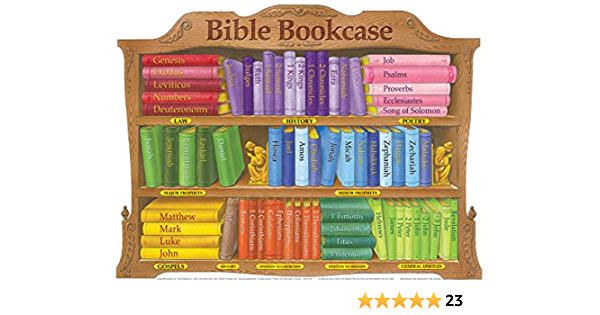
A religion, academic and business story: Is there a 'best' Bible to use and quote?

A religion, academic and business story: Is there a 'best' Bible to use and quote?

RACHAEL ASKS:

Is there a Bible that’s the most accurate?

THE RELIGION GUY’S ANSWER:

Almost all the varied 20th and 21st Century English translations on sale are sufficiently accurate and can be relied upon, though debates will never end on some details.

The first and fundamental aspect of accuracy is experts’ shared consensus on the best available texts in the original languages of Hebrew and Greek that underlie all translations, based upon a far richer body of surviving manuscripts than we have for other ancient writings. Here’s a somewhat over-simplified rundown.

Hebrew versions of the Jewish Bible or Tanakh, which Christians call the Old Testament, employ Judaism’s authoritative Masoretic Text. The ancient Hebrew language did not use written vowels, so medieval scholars known as Masoretes added “vowel points,” markings that standardized oral traditions on the correct readings of the words. This led to the 9th Century Aleppo Codex, corroborated by the 11th Century Leningrad Codex and other rabbinical manuscripts.

These carefully preserved texts are virtually identical in wording, though with some variations in pointing, and provide the basis for Jewish and Christian Bibles. The 15th Century emergence of printed Bibles further standardized the Hebrew text. The 20th Century rediscovery of biblical books among the 2,000-year-old ”Dead Sea Scrolls” added certain variations that translators consider.

With the New Testament, thousands of Greek manuscripts and fragments from Christianity’s early centuries exist. Today’s translators work from a standard “eclectic” Greek version formulated from these by specialists in “textual criticism” who decide which variants are closest to the original writings. Technical note: “earliest” does not necessarily mean “best” manuscript.

The resulting shared resource for translations is the German Bible Society’s continually updated text with all important variations, most recently the 2017 “Nestle-Aland Greek New Testament, 28th Edition, with Critical Apparatus.” Major translations undergo periodic tweaking based on this ongoing work. A prominent evangelical, the late Bruce Metzger of Princeton Theological Seminary, was the American leader in this international project.

Modern English Bibles provide candid footnotes that alert readers to important textual variants, which rarely affect basic biblical doctrines.


Please respect our Commenting Policy

Podcast: Concerning the right-wing rosary attack -- was that Atlantic feature really 'news'?

Podcast: Concerning the right-wing rosary attack -- was that Atlantic feature really 'news'?

No doubt about it. The early favorite for the wild headline of 2022 has to be “How the Rosary Became an Extremist Symbol” atop that viral feature from The Atlantic. And that now-deleted graphic with the rosary made of bullet holes? That will show up in media-bias features for years (maybe decades) to come.

Yes, I know that the editors tried to tone that down with a replacement headline — but it’s the original screamer that perfectly captured the article’s thesis. Oh, and the editors updated a mistake in the second line of the original headline with that new sub-headline: “Why are sacramental beads suddenly showing up next to AR-15s online?”

Attention Atlantic editors: Here is a quick guide to the seven Roman Catholic sacraments. Correction, please.

So here was the first question in this week’s “Crossroads” podcast (CLICK HERE to tune that in). It’s a question your GetReligionistas have been asking more often in the past decade (even before Orange Man Bad): What WAS this thing? A news feature? A piece of blunt analysis? An opinion screed? And here’s the question I saw several people ask: Did the Atlantic editors set out to publish an anti-Catholic classic?

Here’s my hot take: I think the Atlantic editors thought they were publishing a PRO-Catholic piece that set out to defend GOOD Catholics who want to change centuries of church teachings from the BAD Catholics who want to defend those teachings, especially orthodox doctrines on marriage, sexuality, abortion, etc.

Why do I think that? Here is the crucial part of the article, from my point of view, starting with the overture:

Just as the AR-15 rifle has become a sacred object for Christian nationalists in general, the rosary has acquired a militaristic meaning for radical-traditional (or “rad trad”) Catholics. On this extremist fringe, rosary beads have been woven into a conspiratorial politics and absolutist gun culture. These armed radical traditionalists have taken up a spiritual notion that the rosary can be a weapon in the fight against evil and turned it into something dangerously literal.

Their social-media pages are saturated with images of rosaries draped over firearms, warriors in prayer, Deus Vult (“God wills it”) crusader memes, and exhortations for men to rise up and become Church Militants.


Please respect our Commenting Policy

Sports, passion, faith: The ties that bind are always there, even if journalists miss them

Sports, passion, faith: The ties that bind are always there, even if journalists miss them

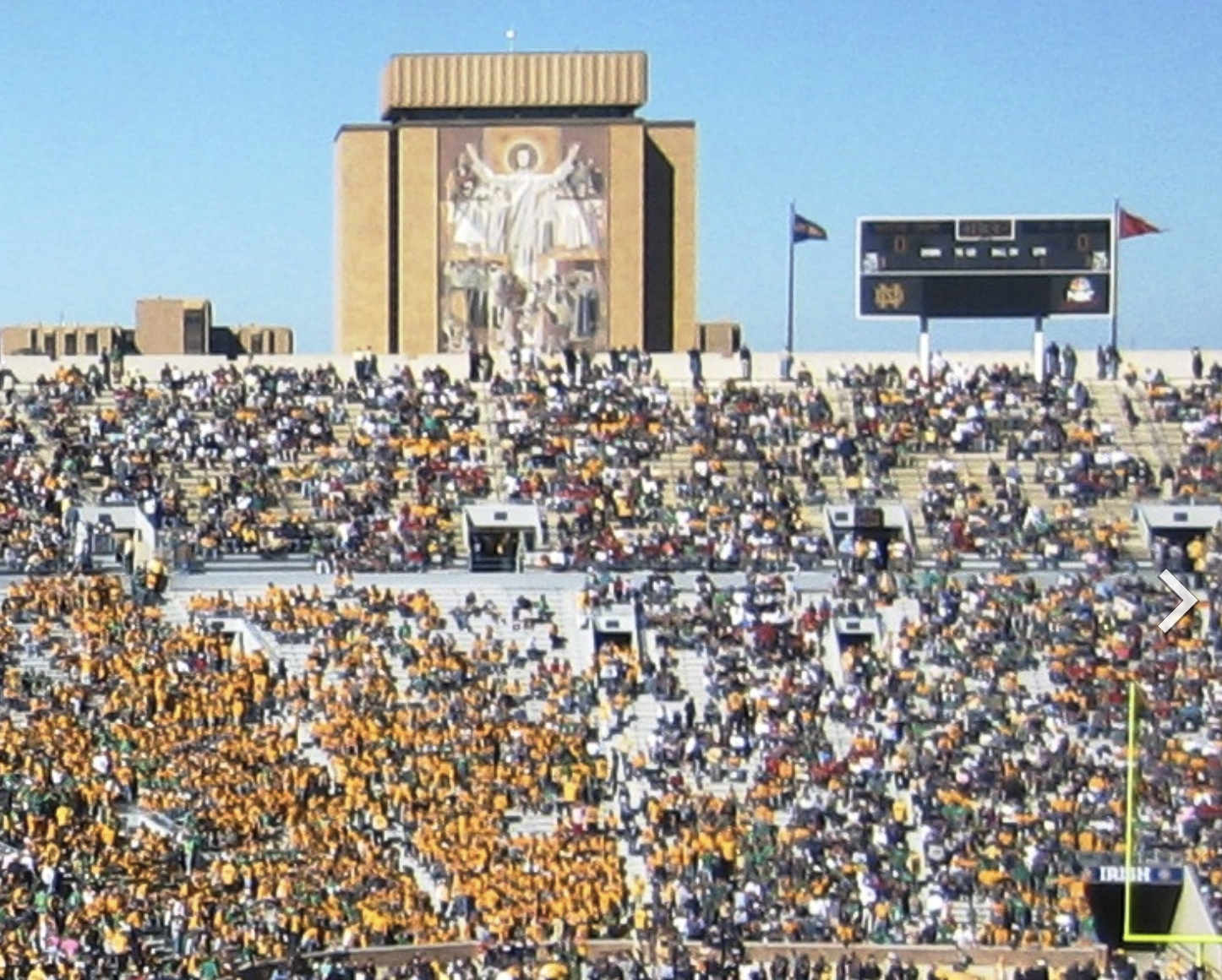
Sports, in so many ways, are almost like a religion for many people. Like religion, sports can convey important lessons about culture and values. From the times of the Ancient Greeks, athletes were sometimes accorded the status of gods.

Not much has changed since ancient times. Modern society has given god-like status to many athletes. Lebron James, Tiger Woods and Lionel Messi are just three athletes who garner such adulation on a global scale.

The question here at GetReligion is how this relationship shows up in news stories about sports, especially stories in which religious faith is — according to the athletes themselves — a key element in their lives and their success.

A new book by Randall Balmer, a historian who holds the John Phillips Chair in Religion at Dartmouth University, called “Passion Plays: How Religion Shaped Sports in North America” (University of North Carolina Press) explores the relationship between sports and religion. It will be available starting Sept. 20. For journalists and news readers, this book can be a door into some important topics in the news.

Balmer is an academic, not a journalist. Yet, he is on to something here -- something most sports writers miss altogether when they cover games or write player features. This is a book about subjects that religion-beat pros need to consider, since so few sports pros appear willing to do so.

GetReligion hasn't shied away from sports in the past and how it often intersects with faith and religion, as seen in this Google search for “GetReligion,” “sports” and “ghosts.”

For years, GetReligion has noted God-sized gaps in sports stories. We refer to these holes as "holy ghosts." Consider the titles of these posts: “Tragic death of NBA coach's wife Ingrid Williams and a missing element in the news,” “God credited with shrinking figure skater's brain tumor, but otherwise terrific story haunted by ghost” and “Haunted house Olympics: How many of the faith-driven stories did you see in Rio coverage?

Balmer writes in the introduction that the book “examines how the history of religion across North America connects in fascinating ways to the emergence of modern team sports.” He also argues, very persuasively, that modern sports have “evolved into a phenomenon that generates at least as much passion as traditional religion.”

I can relate to Balmer’s general argument.


Please respect our Commenting Policy

Thinking about missing pieces of Axios report on changes in Latino life, politics and, yes, faith

Thinking about missing pieces of Axios report on changes in Latino life, politics and, yes, faith

GetReligion, as a rule, has never been interested in public-relations features.

So why lead the top of a weekend “think piece” with a Baptist Press story that is obviously the kind of glowing public-relations work that is a stable in church-market, denominational media of all kinds?

That’s easy to explain. You see, this feature — “Church ESL camp preps Hispanic elementary students for school year” — is a perfect example of a trend in the wider evangelical world that is linked to one of the most important political, and religious, stories in America right now.

Why is that?

Read the top of this story and think to yourself: This is an absolutely normal story in Southern Baptist Convention life at this point in time.

Fanny Baltanado planned to spend just six months visiting her new granddaughter in Texas when the unanticipated COVID-19 pandemic thwarted her return to Nicaragua. She would need to find a church home near Humble, Texas.

An adult English as a second language class attracted Baltanado in March to Cross Community Church, where she became a regular attendee and in August, helped the church teach ESL to local Hispanic elementary students in a back-to-school camp.

“For me, this was an amazing experience because we are able to bring the love of Jesus Christ to the people, especially kids,” Baltanado said. “I think they are the base of the society, and we need to help them to be more comfortable, to be more confident with themselves, because they are (in) difficult times.”

ESL classes ranked as a top community need when Del Traffanstedt and his wife Charmaine planted Cross Community Church in the majority Spanish-speaking Eastex-Jensen area of northeast Houston in September 2021. The couple learned of the need for the ESL camp for children after launching their first adult class in March, said Charmaine Traffanstedt, who directs the church’s ESL ministry.

What is the political angle in that local-church story?

Answer: Flash back a few days ago to my post that ran with this headline: “Axios looks at the hot political (of course) trend of Latinos becoming evangelical voters.”

I am returning to that topic again because (a) this truly is a story that news consumers will be hearing about as we head into midterm elections and beyond and (b) because I had an obvious “senior moment” when writing that earlier post.


Please respect our Commenting Policy

Podcast: What's up with this Gray Lady 'mind meld' with readers worried about Biden's faith?

Podcast: What's up with this Gray Lady 'mind meld' with readers worried about Biden's faith?

Popes rarely, in my experience, produce the kinds of five-star news soundbites that go viral.

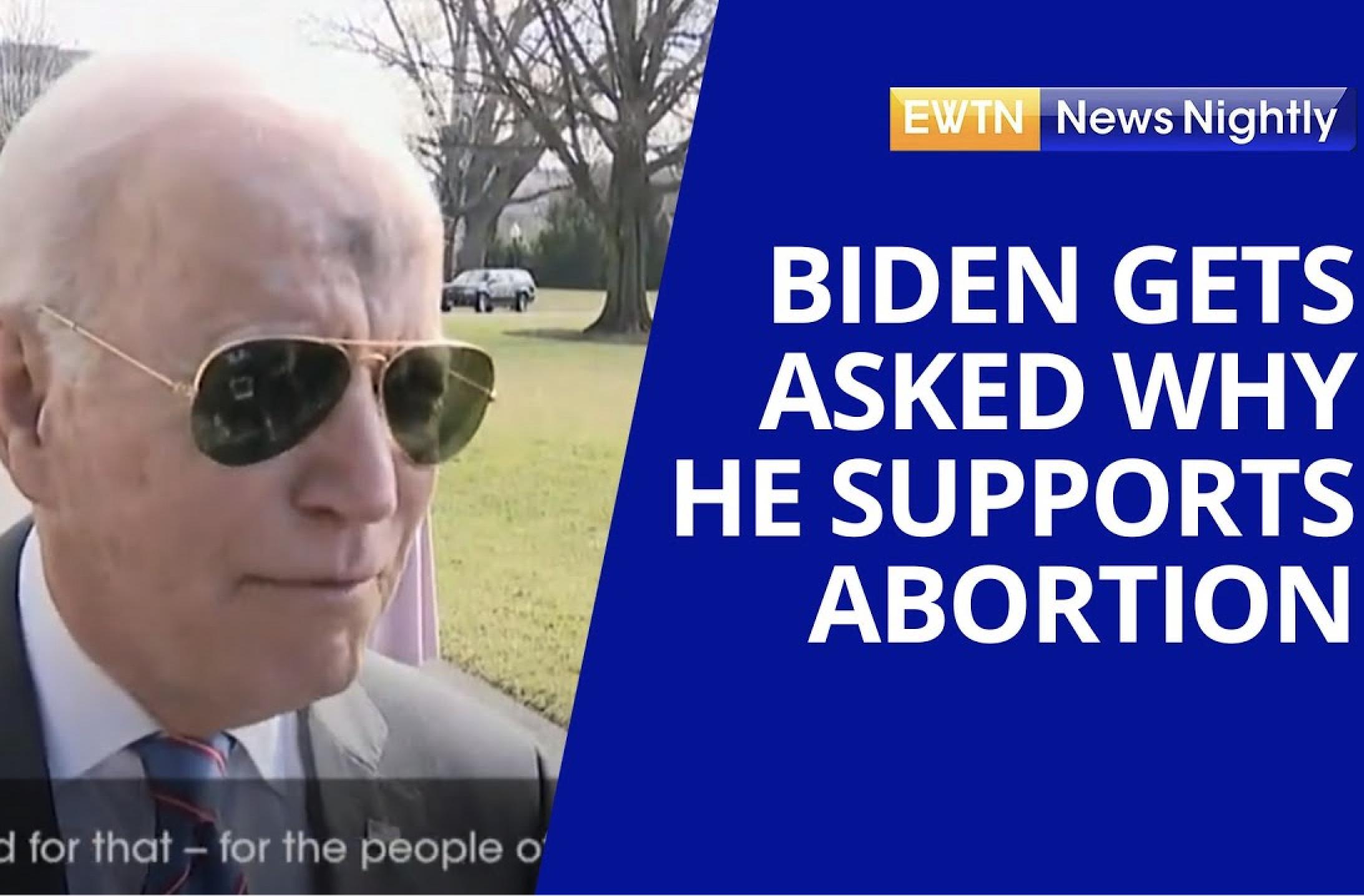
However, Pope Francis has used striking language when addressing one of the hot-button issues of this or any other age — abortion. That was one of several topics woven into this week’s “Crossroads” podcast (CLICK HERE to tune that in), which focused on another elite-media political feature about President Joe Biden’s “devout” approach to practicing the Catholic faith.

Here is that New York Times headline: “Biden Is an Uneasy Champion on Abortion. Can He Lead the Fight in Post-Roe America?” The sub-head is just as provocative: “A practicing Catholic, President Biden has long sought a middle ground on abortion. But activists see the decision to overturn Roe v. Wade as a sign that Democrats have tiptoed too carefully around the issue.”

Back to Pope Francis. Some of his abortion bytes have even made it into news reports. Does anyone remember this one, offering “hitman” imagery he has used many times (even adding Mafia imagery):

Abortion is more than an issue. Abortion is murder. Abortion, without hinting: whoever performs an abortion kills. … It’s a human life, period. This human life must be respected. This principle is so clear. And to those who can’t understand it I would ask two questions: Is it right, is it fair, to kill a human life to solve a problem? Scientifically it is a human life. Second question: Is it right to hire a hitman to solve a problem?

How about this one?

When I was a boy, the teacher was teaching us history and told us what the Spartans did when a baby was born with deformities: they carried it up the mountain and cast it down, to maintain “the purity of the race.” … Today we do the same thing. Have you ever wondered why you do not see many dwarfs on the streets? Because the protocol of many doctors — many, not all — is to ask the question: “Will it have problems?” It pains me to say this. In the last century the entire world was scandalized over what the Nazis were doing to maintain the purity of the race. Today we do the same thing, but with white gloves.

“White gloves.” Yes, there are many other Francis quotes along these lines. Of course, the pope has also angered Catholic conservatives with words and deeds that seem to downplay church teachings on abortion, especially in high-profile contacts with powerful Catholic politicians.

In other words — President Biden. This brings us to the content of that Times political-desk feature.


Please respect our Commenting Policy

Axios looks at the hot political (of course) trend of Latinos becoming evangelical voters

Axios looks at the hot political (of course) trend of Latinos becoming evangelical voters

It’s the question that I get all the time from frustrated, fair-minded people when I speak to civic or church groups: “Where can I go, these days, for unbiased news?”

There is, of course, no easy answer. We live in an age in which pretty much every news organization — even the Associated Press on moral and cultural issues — is preaching to choirs of believers huddled in digital bunkers on the left and the right.

I recommend that people get on Twitter and follow about 10-20 journalists and public intellectuals who consistently tick off people on both sides of the political spectrum. The goal is follow their tweets and retweets and see who THEY are reading and what articles they have found helpful or horrible. You know, people like David French, Bari Weiss and Andrew Sullivan (and, I would hope, moi).

I also advise listeners to look for newsletters and websites, even if they lean left or right, that provide lots and lots of direct links to other sources of information. This list includes, of course, Axios. This brings me to one of that websites quick-hit pieces with this headline: “Mapped: Power of Latino Protestants.”

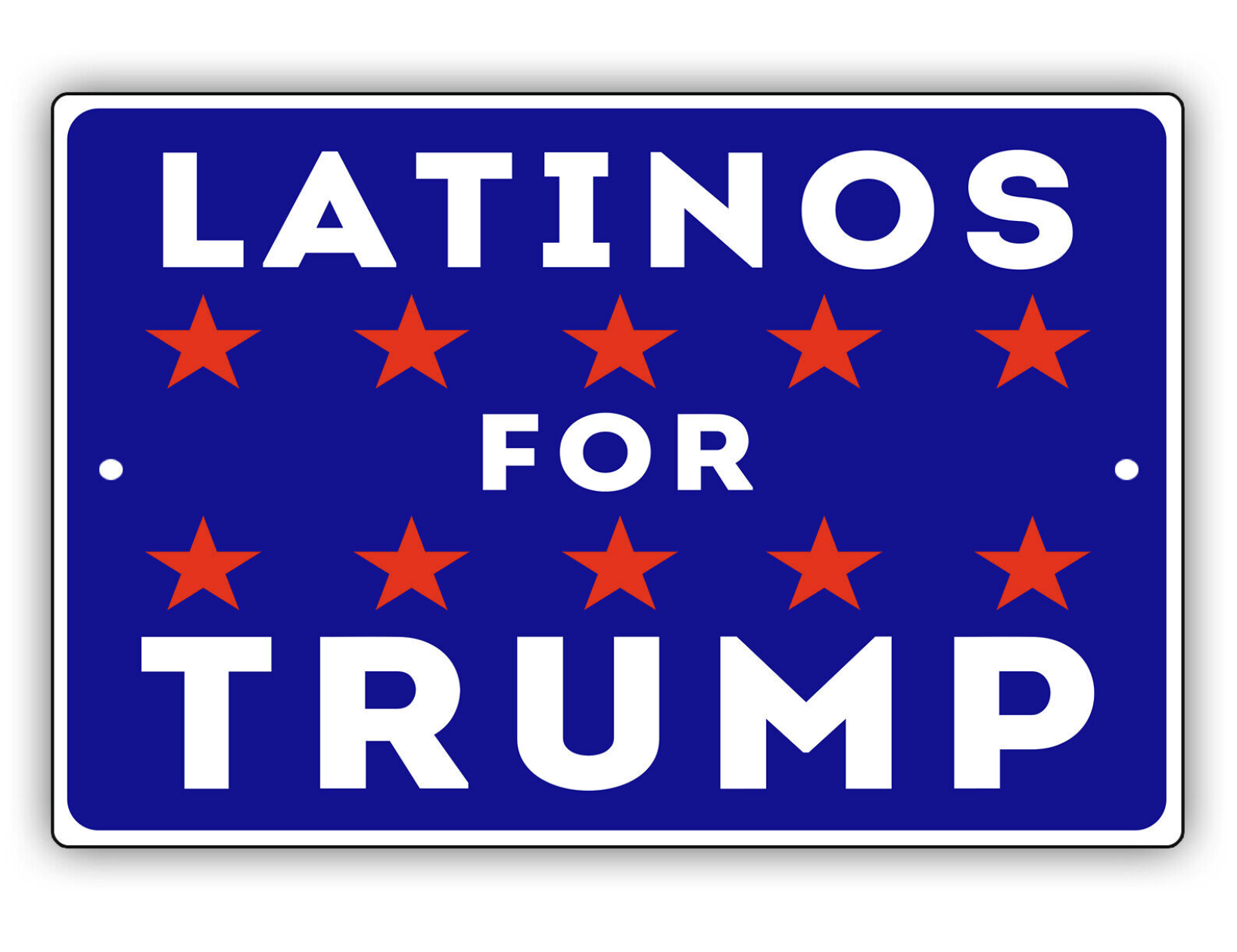
One of the stories that everyone missed in 2016 — but we discussed it here at GetReligion (and CNN, for a fleeting moment, on election night) — was that Donald Trump never would have reached the White House without the support of a surprisingly high number of Latino voters in Florida. Many of them were in the Orlando suburbs, an area dotted with evangelical and Pentecostal megachurches popular. Here is the lede on this Axios piece (with its own must-see map):

The Latino exodus from Catholicism and toward more politically conservative evangelical faiths is one important reason for the rightward shift that could shape the future of the electorate.

Pause for a moment. Look at the phrase “politically conservative evangelical faiths.”

Now, name a moral or cultural issue on which the STATED doctrines of evangelicalism are more conservative than the PRINTED contents of the Catholic Catechism.


Please respect our Commenting Policy