Catholicism

AP visits a small circle of Dominicans in Greece -- a lovely story with some missing details

AP visits a small circle of Dominicans in Greece -- a lovely story with some missing details

Contrary to popular belief, there are more than a few GetReligion readers who haven’t given up on the mainstream press.

I know this because, every now and then, I will get emails that praise the same news story or feature. Often these missives come from readers who have been known to send me the URLs of news reports that contain errors or are radically unbalanced in how they approach covering complex issues.

In other words, these readers are reading the news and looking for “good” journalism — defined as work built on an old-liberal American Model of the Press approach seeking accuracy and some sense of balance (maybe even respect for diverse voice) when covering complex debates.

With all of this in mind, let’s look at a recent Associated Press report that several readers have written me to praise: “On Greece’s Santorini, 13 cloistered nuns pray for the world.” This is an unusually beautiful feature — the photography is stunning (please check that out) — written by Giovanna Dell'Orto, a journalism professor at the University of Minnesota who does freelance work for AP.

How did this piece come about, since it clearly involved a travel budget for in-depth religion work (rare in this thin-budget age), research time and a commitment to a detailed feature with strong photography? The credit line offers this: “Associated Press religion coverage receives support through the AP’s collaboration with The Conversation US, with funding from Lilly Endowment Inc.”

What is right with this piece? A regular reader noted, via email:

… I guess I submit this because a story that focuses so much on the joy of cloistered contemplatives is not what you expect to see in most newsfeeds. By letting the community speak for itself and by bringing nothing but honest curiosity to the story, look how even this short article opens a door on a whole other world. I'm reading "Desert Fathers: Sayings of the Early Christian Monks" at the moment, and this news story brought an ancient practice to vivid life.

I agree with all of that and, in this post, I will stress the positive — because it’s there.

At the same time, let me note that it was rather strange that this story focuses exclusively on “God” language and doesn’t contain a single reference to, well, Jesus (other than the name of one of the sisters). This is strange when writing about women religious whose Dominican vows joyfully declare them to be the Brides of Christ.



Please respect our Commenting Policy

Plug-In: Pope Francis in Canada -- five key facts to look for in the news coverage

Plug-In: Pope Francis in Canada -- five key facts to look for in the news coverage

Pope Francis traveled to Canada this weekend.

The purpose of the Catholic leader’s seven-day trip: to apologize to Indigenous peoples for abuses at church-run residential schools.

In advance of his visit, which started Sunday, here are five key facts:

1. It’s a “one-of-a-kind” papal trip.

Christopher White, the National Catholic Reporter’s Vatican correspondent, reports:

When he touches down in Edmonton, Alberta, Francis will find a dramatically altered scene than that of past airport arrivals. Gone will be the jubilant sights and sounds of marching bands and cheering crowds.

When he arrives on the ground — almost certainly via hydraulic lift, given that his limited physical mobility has added another layer of complication to this difficult trip — the first hands he will shake will be that of Indigenous elders and survivors of residential schools. Indigenous drummers will provide background percussion and there will be no customary meetings with the head of state or speeches to civic authorities on his first day in the country.

2. Francis will find a nation where Catholicism is in decline.

Jessica Mundie, a fellow for the National Post, explains:

The role of the Catholic Church in society is not what it once was. What used to be a pillar in the social and political life of communities has now, for some, become the building they pass on the way to the grocery store. Its reputation has been tarnished by sex abuse scandals in Canada and around the world, and after last summer, when hundreds of suspected unmarked graves were discovered on the sites of past residential schools, many were reminded of the church’s role in this country’s controversial history.

Canadian Catholics are hoping that a visit from the Pope, which includes stops in Quebec City and Iqaluit, and meetings with First Nations, can begin to address past wrongs.


Please respect our Commenting Policy

Podcast: Are many Bible Belt military families losing faith in the U.S. armed services?

Podcast: Are many Bible Belt military families losing faith in the U.S. armed services?

On Feb. 1, 2004, GetReligion co-founder Doug Leblanc opened the digital doors here at GetReligion and our first post went live. The headline: “What we do, why we do it.

I tweaked that post a bit in 2019, but left the main point intact. The key was that GetReligion was going to try to spot what I called religion “ghosts” in hard-news stories in the mainstream press. What, precisely, was a religion “ghost”? I raise this issue once again because this week’s “Crossroads” podcast (CLICK HERE to tune that in) focused on a “ghost” question in a very important topic in the news. Hold that thought.

That first post opened with Americans sitting down to read their newspapers or watch television news.

They read stories that are important to their lives, yet they seem to catch fleeting glimpses of other characters or other plots between the lines. …

One minute they are there. The next they are gone. There are ghosts in there, hiding in the ink and the pixels. Something is missing in the basic facts or perhaps most of the key facts are there, yet some are twisted. Perhaps there are sins of omission, rather than commission.

A lot of these ghosts are, well, holy ghosts. They are facts and stories and faces linked to the power of religious faith. Now you see them. Now you don’t.

This brings us to a recent Associated Press report with this headline: “Army cuts force size amid unprecedented battle for recruits.” There are zero references to religion in this report, which is kind of the point.

Is there a religion “ghost” somewhere in this story? Here are some crucial paragraphs:

With just two and a half months to go in the fiscal year, the Army has achieved just 50% of its recruiting goal of 60,000 soldiers, according to Lt. Col. Randee Farrell, spokeswoman for Army Secretary Christine Wormuth. Based on those numbers and trends, it is likely the Army will miss the goal by nearly 25% as of Oct. 1. …


Please respect our Commenting Policy

Plug-In: NASA's amazing space images, fighting in Ukraine and the top religion stories

Plug-In: NASA's amazing space images, fighting in Ukraine and the top religion stories

“Monsters are everywhere in the Bible — and some are even human.”

These are some of the religion headlines that caught my attention this past week.

To be honest, though, I haven’t paid as close attention to the news as I normally do.

As I previewed in the last Weekend Plug-in three weeks ago, I took off a week for vacation (I had a wonderful time seeing country shows with my sister and parents in Branson, Mo.). Then I took off a week for a reporting trip to the Chicago area.

But in the Windy City, I came down with what at first I thought were allergies. Eventually, I tested positive for COVID-19. The experience threw me for a loop. I finally tested negative Friday night. I’m feeling much better.

However, I have no doubt I’ve missed a whole lot of the best reads in the world of faith. Feel free to catch me up!

One thing I didn’t miss: those amazing first images from NASA’s James Webb Space Telescope. Think there might be a religion angle there? Enter the Washington Times’ Mark A. Kellner with this fascinating take:

The images raise issues for followers of the Abrahamic faiths (Judaism, Christianity, Islam) and affirm the thoughts of Enlightenment philosopher Immanuel Kant, who in the 1700s imagined the possibility of galaxies beyond our own, says Harvard government professor Michael Rosen.

Religion News Service’s Claire Giangravé quotes Vatican astrophysicist Brother Guy Consolmagno:

“The science behind this telescope is our attempt to use our God-given intelligence to understand the logic of the universe,” Consolmagno wrote, adding that “the universe wouldn’t work if it weren’t logical.”


Please respect our Commenting Policy

Pride meets Father's Day: Gay dads preach the 'radical inclusivity' of their Chicago parish

Pride meets Father's Day: Gay dads preach the 'radical inclusivity' of their Chicago parish

Landon Duyka and Alex Shingleton had almost given up on Catholicism.

Then they found Old St. Patrick's Church in Chicago, where their family was welcomed because the parish practices what its clergy call "radical inclusivity." This year, the two husbands created an online buzz when, after a decade in these pews, they shared the pulpit during a symbolic Sunday Mass.

“Chicago is celebrating Pride and, of course, today is Father's Day and, conveniently, we tick both of those boxes," said Duyka. "In all honesty, if you had told us as young boys who wasted countless hours of our lives in church trying to 'pray the gay away' that we someday would be standing in front of all of you in our Catholic church talking about our family on Father's Day, we would never have believed you."

At this historic parish, their adopted daughters are thriving. The youngest was baptized with no complications, unlike the "secret ceremony" for their first daughter at a previous church. In 2016, the Old St. Pat's altar featured -- for a month -- photos of victims from Orlando's Pulse nightclub massacre. Parishioners shook their hands during the Sign of the Peace. There was no need to worry about sermons opposing gay marriage or seeing conversion-therapy pamphlets.

The Father's Day "reflection" by Duyka and Singleton filled the homily slot in the Mass, following the Gospel reading. There was no homily, even though Canon law requires a "priest of deacon" to deliver one during Sunday Masses with a congregation.

The details of this Pride-season Mass inspired online debates since it occurred in the powerful Archdiocese of Chicago, led by Cardinal Blase Cupich.

Pope Francis recently named Cupich to the Vatican's Dicastery for Divine Worship and the Discipline of the Sacraments. The Chicago cardinal has been a fierce defender of the pope's Traditionis Custodes ("Guardians of the Tradition") document limiting use of the Tridentine Latin Mass. With its authority, Cupich has also restricted other worship traditions favored by Catholic conservatives, such as priests celebrating Mass "ad orientem," as opposed to the modern "versus populum" stance in which, when at the altar, they face their congregations.

On LGBTQ issues, Cupich made news with his response to a 2021 Congregation for the Doctrine of the Faith text forbidding blessings for same-sex couples.


Please respect our Commenting Policy

Thinking about Internet-age ethics with J.D. Flynn, especially rumors about dead popes

Thinking about Internet-age ethics with J.D. Flynn, especially rumors about dead popes

Everyone was talking about this story last week: Pope Benedict XVI is (a) dead, (b) not dead or (c) come on, what’s up with this tired Internet game again?

In that final category, I offer you the following mini-think piece from J.D. Flynn of The Pillar, that must-bookmark source of Catholic news, commentary and Canon law-specifics.

This whole circus was a classic example of people being tempted to report, as semi-news, the fact that online people were TALKING ABOUT something that was being reported with zero creditable attribution. Thus, Flynn starts with this basic equation:

… Pope emeritus Benedict XVI is still not dead. …

Why is that news?

Because last night an Italian schoolteacher named Tommaso De Benedetti created a moral panic online, with a hoax that seems to have been in the works for nearly a year.

“Moral” panic?

That’s an interesting choice of words. The key is that journalists had to stop and ponder whether they had the fortitude to not push the “RETWEET” button on a story that was essentially about Internet chatter.

Let’s keep walking through Flynn’s piece as he works his way through this:

Back in August 2021, the guy created a Twitter account for Bishop Georg Bätzing, who is president of the German bishops’ conference. The account managed to amass thousands of followers. He didn’t use the account, but he built that following by strategically following the right people, and allowing the Twitter algorithms to do the rest.

Then yesterday evening, he tweeted in German, English, and Spanish that Pope emeritus Benedict XVI had died.

The tweets took off like wildfire. Several media outlets picked them up, and a lot of producers and journalists retweeted them. My phone started blowing up — priests, bishops, and other journalists were all asking me if it was true.

What to do?


Please respect our Commenting Policy

Reporters speculate on Pope Francis retiring, but where are the sources in this reporting?

Reporters speculate on Pope Francis retiring, but where are the sources in this reporting?

Age is something the press is fixated on. Donald Trump’s age when he occupied the White House became a major news story that went on for several years.

President Joe Biden has now been in office almost two years and the speculation whether or not his age has become a fatal political flaw is slowly becoming a big news story. Every public appearance that includes a flub, limp or fall becomes a big deal, especially in conservative media.

Now we have the supposedly uncertain status of Pope Francis. The speculation over whether Francis’ age — he turns 86 on Dec. 17 — will cause him to resign has increasingly become a story, first in the Italian press, and subsequently around the world.

Italy’s many national dailies cover the Vatican akin to the way the American press reports on the White House. It’s those news reports out of Italy that started in late spring, raising the specter that the pope would follow in the footsteps of Pope Benedict XVI and resign from his post. Add to this hubbub papal announcements that have been twisted in translation and (#DUH) waves of speculation in Catholic Twitter and other forms of social media.

Benedict resigned from the papacy in 2013 — and as a result took on the emeritus moniker — eight years after he was elected by the College of Cardinals. The unexpected resignation came after Benedict cited a “lack of strength of mind and body” due to his age. He was 86 at the time. In doing so, he became the first pope to resign since Gregory XII in 1415 and the first to do so on his own initiative since Celestine V in 1294.

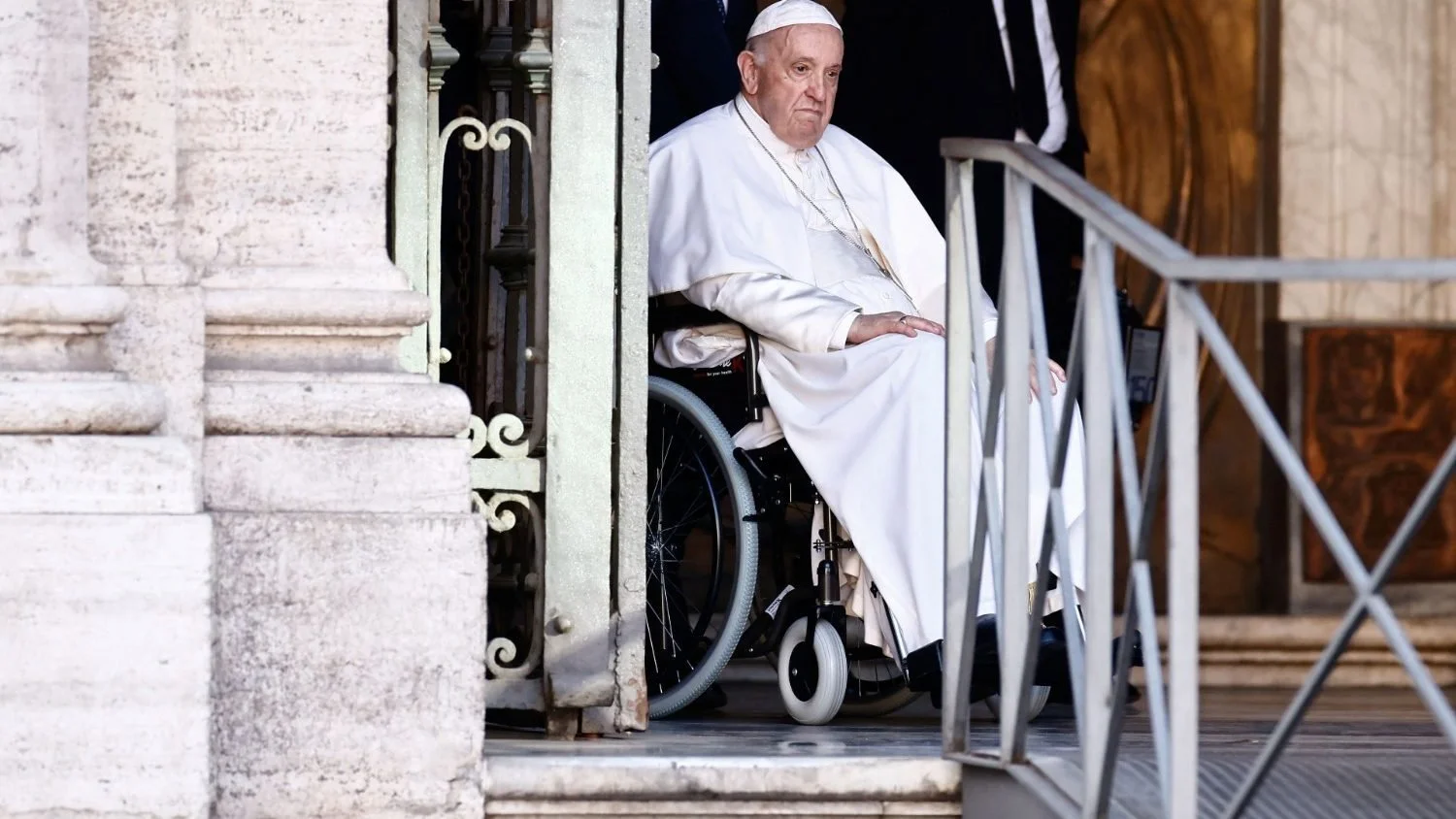
It's a symbolic series of events — including a canceled papal trip to the Democratic Republic of Congo and South Sudan scheduled for the first week of July, his recent use of a wheelchair to get around and events with connections to Celestine V and a central Italian city — that led many Italian reporters to raise speculation about what Pope Francis might do next.

In June 12 column in Crux by omnipresent Vatican watcher John L. Allen, Jr., connected the dots, as he always does, for the the English-speaking press.

The resulting wave of speculation — fueled by no sources whatsoever, either anonymous or named — has created headlines in newspapers on websites around the world. Everything has been based on observation and reading of tea leaves. Day after day, GetReligion team members have bumped into stories online or have been sent URLs by readers.

At a time when news organizations increasingly aggregate reporting from other places in order to garner mouse clicks, this story has been reported everywhere. Also, smaller newsrooms, due to layoffs over the past two decades, has made it more difficult for reporters to confirm a story. In the case of Francis’ retirement, there never was anything there to confirm.


Please respect our Commenting Policy

Americans who oppose abortion: Who are they in terms of demographics, faith and ideology?

Americans who oppose abortion: Who are they in terms of demographics, faith and ideology?

It’s more than likely the most important Supreme Court case in my lifetime: the overturning of Roe v. Wade means that each individual state gets to decide if and how it will regulate abortion inside its boundaries. According to NPR, that means that at least 20 states will effectively ban abortion in the coming weeks.

When the draft of the Dobbs opinion was leaked back in early May, I put together a thread of graphs about abortion opinion from a variety of angles and came to a clear conclusion: an outright ban is not where most American are when it comes to the issue of abortion.

But, now that Dobbs has been decided and many abortion clinics have been forced to shut their doors across the United States, who are the ones cheering this decision the most? Put simply: who favors an all-out ban on abortion and how does this subset of Americans compare to the general public? That’s the aim of this post — a deep dive into a descriptive analysis of those who favor a total ban on abortion.

The data comes from the 2020 Cooperative Election Study. The statement is simple enough: “Do you favor or oppose making abortions illegal in all circumstances.”

When I post this question on Twitter, there is always someone in the replies who tries to parse this statement. They don’t know how to deal with the phrase “all circumstances.” [Editor’s note: See recent Pew Research Center poll for more information.]

After conducting surveys for more than a decade, I can say that the average survey taker spends about two seconds reading each question and just responds with their gut. In this case, they more than likely interpreting the question to mean, “I’m completely opposed to abortion.”

In the 2020 CES that equals out to just under 20% of the American population. In a sample of 61,000 folks, that equals out to 12,093 individuals (weighted). So, my N size is just fine to proceed with this analysis.


Please respect our Commenting Policy

Associated Press: Today's Supreme Court contains too many pro-Catechism Catholics

Associated Press: Today's Supreme Court contains too many pro-Catechism Catholics

A long time ago, in Internet years, I got tired of trying to define “liberal” and “conservative” during discussions of Catholic life.

Truth is, the teachings of ancient Christianity (I am Eastern Orthodox) don’t fit neatly into the templates of American politics. If you believe, for example, that human life begins at conception and continues through natural death the you are going to be frustrated reading the Republican and Democratic party platforms.

At one point, I started using this term — pro-Catechism Catholics. I soon heard from readers who were upset that I was linking Catholic identity with the idea that Catholics were supposed to believe and even attempt to practice the teachings of the Roman Catholic Church.

This brings me to a new Associated Press story with a very familiar, in recent years, theme. The headline: “Anti-Roe justices a part of Catholicism’s conservative wing.” Here is the overture, which includes — #SHOCKING — a reference to the Catechism of the Catholic Church.

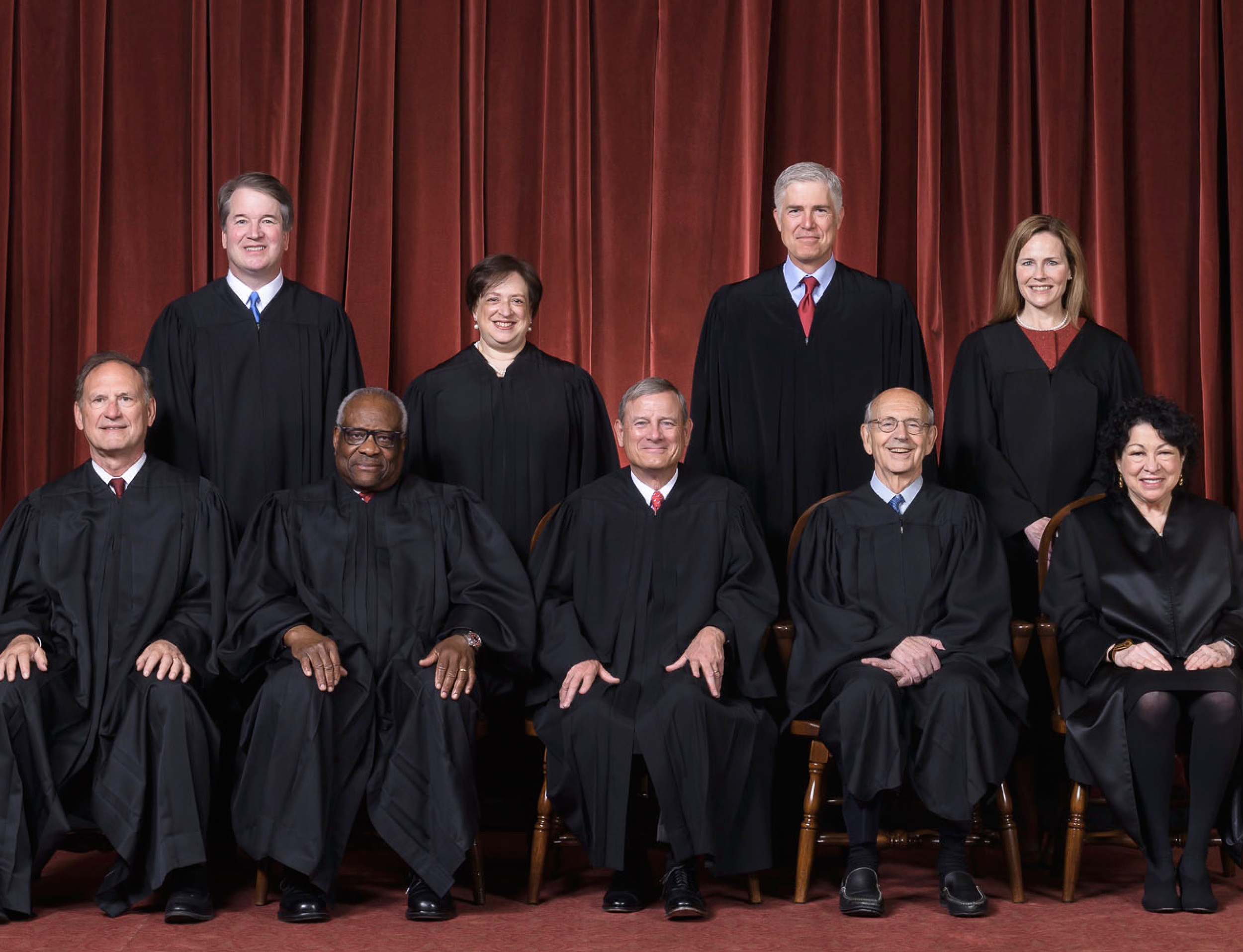
The Supreme Court overturned Roe v. Wade at a time when it has an unprecedented Catholic supermajority.

That’s not a coincidence. Nor is it the whole story.

The justices who voted to overturn Roe have been shaped by a church whose catechism affirms “the moral evil of every procured abortion” and whose U.S. bishops have declared opposition to abortion their “preeminent priority” in public policy.

But that alone doesn’t explain the justices’ votes.

U.S. Catholics as a whole are far more ambivalent on abortion than their church leaders, with more than half believing it should be legal in all or most circumstances, according to the Pew Research Center.

The problem, you see, is that there are justices who appear to embrace the Catechism, on issues linked to the Sexual Revolution, of course. They are clashing with generic “U.S. Catholics,” who are not defined, as usual, in terms of Mass attendance or other references to belief and practice (such as choosing to go to Confession).

What we have here is yet another clash between American Catholics and dangerous Catholics.


Please respect our Commenting Policy