Catholicism

Vatican game that never ends: Knowns and unknowns with covering next papal election

Vatican game that never ends: Knowns and unknowns with covering next papal election

It might seem ghoulish to outsiders, but the media have a duty to closely monitor news personalities’ retirement plans, health woes, aging processes and impending deaths, whether that of a British queen, U.S. president, Supreme Court justices, tycoons or even Hollywood superstars.

Or a pontiff.

Currently, there’s a season of speculation about Pope Francis’s future and whether his newly chosen cardinals to be installed August 27 are his final bid to shape the conclave that will elect the next pope.

Careful. If you figure he’s making sure it will be a fellow liberal, don’t forget that the conservative Popes John Paul II and Benedict XVI named the cardinals who elected Francis.

Speaking of successors, AP Correspondent Nicole Winfield follows the Rome bureau’s legendary Victor Simpson, who covered four popes across 41 years. On Sunday, she knowledgeably sifted some Francis scenarios.

Francis has just announced that when the cardinals gather in August he’ll visit the Italian hometown of Celestine V, the pope who famously resigned in A.D. 1294.

Surprisingly, Benedict did the same in 2013. So, is this trip a signal, or only a trip? Francis has remarked that Benedict was “opening the door” for resignation by future popes, hinting he might consider the idea. But Vaticanologists figure Francis will not resign so long as another ex-pope is alive.

At age 95, Benedict is alert but frail. Francis, age 85, appears reasonably healthy but underwent colon surgery last year and recently appeared in public in a wheelchair for the first time due to chronic knee pain.

Then there’s this. The cardinals elected Francis partly in hopes he’d reform the perpetually troubled Roman Curia (as in the sprawling Vatican bureaucracy). Restructure is now set in a Francis edict that took effect on Sunday. But fully implementing the scheme may be thorny and Francis may feel a responsibility to pursue his project.

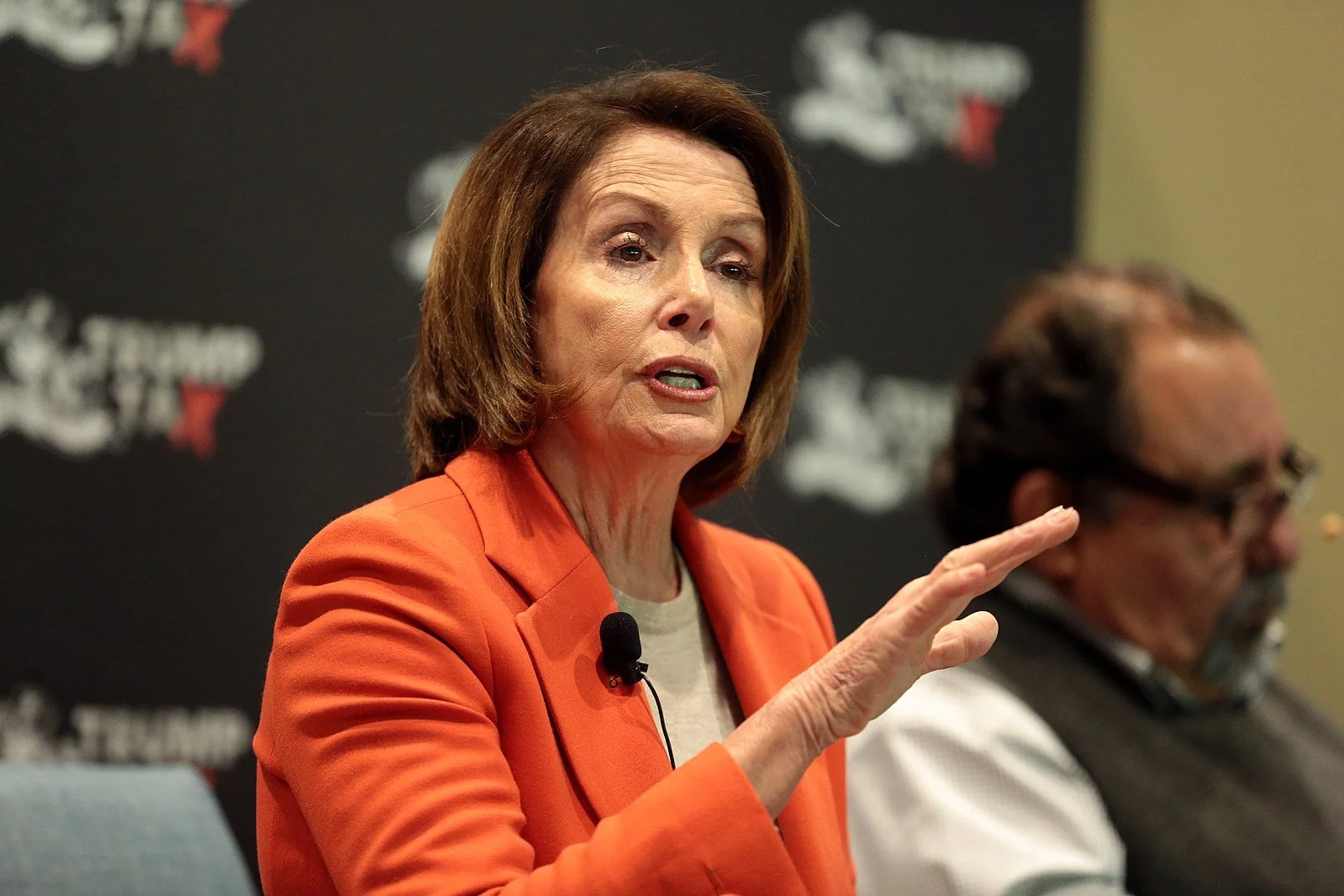
Surveying the batch of incoming cardinal electors, Bishop Robert McElroy of San Diego stands out as the only American and as a mere bishop, not an archbishop (see this tmatt “On Religion” column about this drama). Francis again snubbed nearby Los Angeles Archbishop Jose Gomez, the Mexico-born head of the nation’s largest archdiocese and the elected president of the U.S. bishops. Did membership in the Opus Dei organization count against him?

Please respect our Commenting Policy

Latest massacre of Nigerian Christians? It would help to know this was the Feast of Pentecost

Latest massacre of Nigerian Christians? It would help to know this was the Feast of Pentecost

In my experience, if you ask most newsroom managers and copy-desk pros to name the most important Christian holy day, the majority will say “Christmas.”

Actually, that’s the biggest holiday, from the perspective of the surrounding culture. The correct answer is Easter, the feast of the Resurrection of Jesus Christ.

Now, here is a tricky question — one linked to yet another hellish massacre of Christians in the tense land of Nigeria. What holy day would be ranked No. 2 in the calendar of ancient Christianity?

There may some debates about this, but many historians will say it is the joyous Feast of Pentecost (click here for background material), which closes the great season of Easter. Hold that thought, because we will come back to it. Meanwhile, something very important is missing from the top of this Reuters report: “At least 50 killed in massacre at Catholic church in southwest Nigeria.”

LAGOS, June 5 (Reuters) — Gunmen attacked a Catholic church in southwest Nigeria during mass on Sunday, killing at least 50 people including women and children, according to a hospital doctor and media reports.

The gunmen shot at people outside and inside the church building, killing and injuries worshippers, said Funmilayo Ibukun Odunlami, police spokesperson for Ondo state. She did not say how many people were killed or injured at St Francis Catholic Church in the town of Owo but added police were investigating the cause of the attack.

Ondo state Governor Arakunrin Oluwarotimi Akeredolu, who visited the scene of the attack and injured persons in hospital, described Sunday's incident as "a great massacre" that should not be allowed to happen again. The identity and motive of the attackers was not immediately clear.

The motive was unclear?


Please respect our Commenting Policy

The New Yorker profiles a pro-life ob-gyn student and the Twitter mobs descend

The New Yorker profiles a pro-life ob-gyn student and the Twitter mobs descend

When Emma Green announced she was leaving the religion beat at The Atlantic to cover cultural conflicts in academia for the New Yorker, many of us hoped that she could squeeze a bit of religion reporting into the mix.

I’ve got to say this about her first piece for the latter: One cannot accuse her of dodging controversy. This is the story of a pro-life obstetrics student in an occupation that is formidably bent in the other direction and what it’s like to get consistently slammed by one’s professional peers.

Green had no sooner posted the story on Twitter than a cascade of hateful responses sprung up.

In the past there have been many stories in the mainstream media about what aspiring pro-abortion-rights ob-gyns go through in terms of training — but this is the first one I’ve seen in a major publication about what the abortion opponents go through.

After introducing Cara Buskmiller as a millennial Catholic woman desiring to become an ob-gyn, the story continues:

But in 2010, as Buskmiller prepared to apply to medical school, she worried that admissions committees would be skeptical of her beliefs, and how her personal objections to abortion and birth control would affect her practice as an ob-gyn. What would program directors think of the volunteer stints she’d done at a crisis pregnancy center? And, when it came time for residency, would she be able to duck out of certain clinical rotations to avoid assisting with abortions?

Buskmiller got into medical school at Texas A. & M., and she went on to do her residency at St. Louis University, a Catholic school. But she felt that students like her needed more backup. So, during her second year as a resident, she launched a Web site called Conscience in Residency, a support network for doctors-in-training who have moral objections to abortion. The site’s tagline is “You’re not crazy, and you’re not alone.”

It feels that way to people like Buskmiller whose faith forbids them from taking part in abortions, sterilizations and dispensing with contraceptives.

The hatred shown toward such young professionals is almost pathological. There’s no middle ground here.


Please respect our Commenting Policy

Thinking about that 'Define evangelical' thing, with Andrew Walker, Ryan Burge (and Mark Noll)

Thinking about that 'Define evangelical' thing, with Andrew Walker, Ryan Burge (and Mark Noll)

If you search for “define evangelical” in the 18 years worth of material stored here at GetReligion you will find about four screens worth of information. Here’s what that looks like in a Google search.

Believe it or not, this was a hot topic before the advent of Orange Man Bad and the dreaded “81% of White evangelicals” mantra.

Debates about the meaning of the church-history term “evangelical” are so old that I once asked the Rev. Billy Graham for his take. Here’s some information about his answer, drawn from this “On Religion” column: “Define 'evangelical' – please.”

… You might assume that the world's most famous evangelist has an easy answer for this tricky political question: "What does the word 'evangelical' mean?" If you assumed this, you would be wrong. In fact, Graham once bounced that question right back at me.

"Actually, that's a question I'd like to ask somebody, too," he said, during a 1987 interview in his mountainside home office in Montreat, N.C. This oft-abused term has "become blurred. ... You go all the way from the extreme fundamentalists to the extreme liberals and, somewhere in between, there are the evangelicals."

Wait a minute, I said. If Billy Graham doesn't know what "evangelical" means, then who does? Graham agreed that this is a problem for journalists and historians. One man's "evangelical" is another's "fundamentalist."

That leads us to the topic of this quick, and rather rare, Monday “think piece” (I’m traveling right now and rather unplugged, so I wrote this several days ago).

Thus, at the top of this post you will see a video feature from The Gospel Coalition in which two academics — political scientist Ryan Burge ( a GetReligion contributor) and ethicist-apologist Andrew Walker — debate this topic: “Is ‘Evangelical’ a Political or Theological identity?” (Careful readers may have noticed that, a few lines earlier, I called it a “church-history term” and I’m sticking to that.)

I will let Burge and Walker speak for themselves.


Please respect our Commenting Policy

Red hat for San Diego Bishop Robert McElroy: Vatican message to U.S. Catholic bishops?

Red hat for San Diego Bishop Robert McElroy: Vatican message to U.S. Catholic bishops?

Two years before long-standing rumors about Cardinal Theodore McCarrick leapt into headlines worldwide, America's most outspoken activist on clergy sexual abuse met with his local bishop -- San Diego Bishop Robert McElroy.

"It was clear to me during our last meeting in your office, although cordial, that you had no interest in any further personal contact," wrote the late Richard Sipe, a former Benedictine priest who then worked for the Seton Psychiatric Institute in Baltimore. While church officials asked him to report to McElroy, "your office made it clear that you have no time in your schedule either now or 'in the foreseeable future' to have the meeting that they suggested."

Sipe's 2016 letter to the San Diego bishop was later posted online and is frequently cited as an example of a bishop ignoring warnings about the now defrocked McCarrick, who often boasted about his clout as a Vatican kingmaker. Now it will receive more attention because Pope Francis has named McElroy to the Sacred College of Cardinals. This promotes the San Diego bishop over several prominent archbishops -- including Los Angeles Archbishop Jose Gomez, who leads America's largest Catholic archdiocese and is president of the U.S. Conference of Catholic Bishops.

In his hand-delivered report, Sipe told McElroy that his ongoing research indicated that 6% of American priests were guilty of sex with minors. Meanwhile, a "systemic" trend was clear: "At any one time no more than 50% of priests are practicing celibacy."

As for the powerful McCarrick, Sipe noted: "I have interviewed twelve seminarians and priests who attest to propositions, harassment, or sex with McCarrick, who has stated, 'I do not like to sleep alone.' "

Debates about McElroy's elevation have focused on other divisive issues in Catholic life, although decades of sexual-abuse crimes loom in the background. He has, for example, supported the ordination of women to the diaconate, allowing them to preach, perform weddings and serve -- one step from the priesthood -- at Catholic altars.

McElroy has openly clashed with American bishops anxious to address "Eucharistic coherence" as prominent Catholics, especially President Joe Biden and House Speaker Nancy Pelosi, support -- with words and deeds -- abortion and LGBTQ rights.


Please respect our Commenting Policy

Podcast: Americans have long been divided (and often confused) on abortion issues

Podcast: Americans have long been divided (and often confused) on abortion issues

When people ask me to list some must-read books — if the goal is understanding religion and the news — the first one I mention is “Culture Wars: The Struggle to Define America” by sociologist James Davison Hunter.

Pundits love to toss “culture wars” around as a kind of journalism hand grenade, but few bother to flash back to this 1991 classic and note how Hunter defined that term. In 1998 I wrote a column — “Ten years of reporting on a fault line” — in which I noted Davison’s description of America’s ongoing legal and political wars about religion, morality and culture.

The key: Americans were no longer debating specific religious beliefs or traditions. Instead, he said they were fighting about “something even more basic — the nature of truth and moral authority.”

… America now contains two basic worldviews, which he called "orthodox" and "progressive." The orthodox believe it's possible to follow transcendent, revealed truths. Progressives disagree and put their trust in personal experience, even if that requires them to “resymbolize historic faiths according to the prevailing assumptions of contemporary life."

The book Hunter wrote in 1994, right after “Culture Wars”? It was called “Before the Shooting Begins: Searching for Democracy in America's Culture Wars.” Hold that thought.

All of this brings me to this week’s “Crossroads” podcast (CLICK HERE to tune that in) focusing on a new Lifeway Research study — on behalf of the Land Center for Cultural Engagement at Southwestern Baptist Theological Seminary — probing how religious faith and practice affect what Americans believe about abortion. The survey took place days before the leak of the draft opinion by Justice Samuel Alito indicating that the U.S. Supreme Court is poised to overturn Roe v. Wade.

The survey results are complex and will provide little comfort for those committed to a consistent pro-life stance or. on the other side, the defense of America’s pro-abortion-rights legal structures built on Roe.

In the podcast, I argued that this survey deserves mainstream media coverage — but I sincerely doubt that this will happen. Why?


Please respect our Commenting Policy

Yes, the Gray Lady made a somewhat understandable error in its stolen-tabernacle story

Yes, the Gray Lady made a somewhat understandable error in its stolen-tabernacle story

Let’s face it, liturgical traditions in ancient Christian flocks are complicated.

With that in mind, let me respond to an error in an otherwise solid story in The New York Times — the latest in what seems like an endless river of news reports about attacks on sanctuaries around the world. Our own Clemente Lisi has written many posts on this topic and, alas, it seems that journalists will be writing more crime stories of this kind in the future.

Here is the dramatic double-decker headline on this latest tragic story:

Theft of a Church’s Tabernacle Leaves More Than a Physical Void

A Brooklyn congregation condemned the desecration of their sacred sanctuary in a burglary that the pastor called “one more blow” to a struggling church.

As I said, this Times story does contain an error that I think is worth a correction.

However, I will have to admit that I read right past this error when I first saw this story and I can understand why it might have slipped past copy-desk professionals (unless a traditional Catholic was in the mix). Why would I have missed it? I’ll deal with that in a moment. First, here is the overture, which contains the error:

Deflated, Father Frank Tumino stepped into the pulpit at St. Francis Xavier Church in Brooklyn on Tuesday morning. Six blocks away, St. Augustine’s, the other church where he serves as pastor, was closed and cordoned off with police tape. At its center was a literal and figurative hole.

“This is just one more blow,” Father Tumino said after presiding over Mass. He was referring to the theft of St. Augustine’s tabernacle, a $2 million gold treasure that was separated from its 19th-century foundation last week with a power saw before presumably vanishing into the murky underground of stolen artifacts.

The ornate tabernacle box that held the eucharist — the wine and consecrated wafers that the faithful believe embody Jesus Christ — disappeared from the Park Slope church’s sanctuary sometime between last Thursday evening and Saturday afternoon, the police said.

The error?


Please respect our Commenting Policy

Mainstream coverage of Pelosi-Communion story mangled doctrine, ignored canon law

Mainstream coverage of Pelosi-Communion story mangled doctrine, ignored canon law

Too often in the mainstream press there is a tendency for newsrooms to parrot the taking points of progressive activists. It’s due to a number of factors.

One is the type of schools most present-day journalists attend. The other is that they mostly grew up, live and work in blue zip codes along the New York-DC Acela corridor. Those values often come into direct conflict with reality, and that’s when journalism often fails to report facts and context that matter to news coverage. And always remember this GetReligion theme — politics is “real.” Religion? Not so much.

This brings us to the national news story regarding House Speaker Nancy Pelosi being banned by San Francisco Archbishop Salvatore Cordileone from taking Holy Communion because of her continued support — in words and deeds — for abortion rights.

The ensuing coverage, depending on what sources you read, spanned from very good (especially in Catholic news sources such as America magazine and The Pillar) to baffling and very poor.

These last two traits were mostly found in mainstream secular outlets where the focus was predominantly on politics rather than religion. It also highlighted the blind spots of today’s journalists, where a lack of religion knowledge — or even understanding that religious voices need to be included in their coverage — was on full display in the Pelosi-Holy Communion story.

As a result, some of the news coverage surrounding Pelosi and the archbishop denying her the Eucharist openly attempted to rewrite Catholic doctrine on this issue. Since most news coverage has a good guy-bad guy quality to it, omitting what the church teaches on this particular issue helped cast the California Democrat as the aggrieved party and Cordileone as a MAGA-loving prelate (who does not deserve the red hat of a cardinal).

It really didn’t matter whether it was a news story, editorial or opinion piece — centuries of Catholic doctrine on who should receive the Eucharist and the authority of a bishop was swept to the side.

The San Francisco Examiner, in a May 23 editorial, called for Pope Francis to replace Cordelione.


Please respect our Commenting Policy

Prayers and laments in Uvalde: 'May God heal their little hearts, their little souls'

Prayers and laments in Uvalde: 'May God heal their little hearts, their little souls'

Another week.

Another mass shooting — this time at an elementary school in Uvalde, Texas.

I lack the words to convey the enormity of this tragedy. Instead, as we mourn the 19 innocent children and two teachers slain Tuesday, let’s reflect on these expressions of faith and lament:

“We don’t know what to pray. … We just know we’re hurting, and our God hurts with us.” — Zach Young, worship pastor for Crossroads Community Church in San Antonio (via San Antonio Express-News story by Jacob Beltran)

“We’re just trying to encourage each other and trying to get through this.” — John Juhasz, outreach minister for Getty Street Church of Christ in Uvalde (via story by Washington Post team)

“The only way we can fix this country is to get down on our knees and humble ourselves before God. I am here to support this community and to ask God to heal our land.” — Jennifer Fry, mother of two young children, interviewed at a prayer vigil in Uvalde (via story by Wall Street Journal team)

“We may not understand what happened … but we seek the Lord, as best we can.” — Carlos Contreras, minister at Primera Iglesia Bautista (First Baptist Church) in Uvalde (via Texas Tribune story by Erin Douglas and Jason Beeferman)

“Prayer should be where we start, not where we finish. If we were praying genuine prayers about gun violence, we would see a lot more genuine action.” — Taylor Schumann, author of ”When Thoughts and Prayers Aren’t Enough: A Shooting Survivor’s Journey Into the Realities of Gun Violence” (via Religion News Service story by Emily McFarlan Miller)

“The Catholic Church consistently calls for the protection of all life; and these mass shootings are a most pressing life issue on which all in society must act — elected leaders and citizens alike.” — Catholic Archbishop Gustavo Garcia-Siller of San Antonio (via America story by Michael O’Loughlin).


Please respect our Commenting Policy